Malibu Lagoon Trip Report: 25 January, 2015
NOTE: The comment on Selasphorus hummingbirds was relocated to a separate blog.
“This seems really hot for January,” I said to Lillian upon arriving at the beach before 8:30am and it was already 73°. I then remembered thinking that exact same thing in previous Januarys. So I checked. [This is the sort of thing we retired accountants find amusing.] The Pt. Mugu temperatures below are from Weather Underground.
| Year | 1996 | 1997 | 1998 | 1999 | 2000 | 2001 | 2002 | 2003 | 2004 | 2005 |
| High | 62 | 59 | 64 | 57 | 59 | 59 | 55 | 81 | 60 | 68 |
| Low | 50 | 56 | 39 | 48 | 48 | 37 | 46 | 55 | 42 | 46 |
| Year | 2006 | 2007 | 2008 | 2009 | 2010 | 2011 | 2012 | 2013 | 2014 | 2015 |
| High | 68 | 55 | 59 | 57 | 57 | 75 | 59 | 61 | 66 | 85 |
| Low | 39 | 48 | 52 | 46 | 42 | 44 | 44 | 44 | 48 | 57 |
This distribution looked a little odd, so I ran a few calculations and got the following results. For those who may be a little fuzzy about “standard deviation,” your school years long vanished in the rear view mirror, it’s often called the “mean of the mean.” The “mean” being what most people call “average”, it’s a measure of how far away from the average of a data point collection do the individual data points wander. In the case of our set of temperature highs, they wander a long way.
| Temp. Range Distribution | |||||||||||||
| Mean | Standard Deviation | 35- 39 |
40- 44 |
45- 49 |
50- 54 |
55- 59 |
60- 64 |
65- 69 |
70- 74 |
75- 79 |
80- 84 |
85- 89 |
|
| High | 63.3 | 8.2 | 10 | 4 | 3 | 1 | 1 | 1 | |||||
| Low | 46.6 | 5.4 | 3 | 5 | 7 | 2 | 3 | ||||||
In the table above, the distribution of lows are roughly centered on the middle range of 45-49°F. If graphed, they would look like the typical “bell curve.” [Feel free to Google these phrases.] But the highs are whacky, or “skewed.” Half of the highs are in the lowest range of 55-59° with 3 outliers in the top ranges. Why, you ask? Very well, here’s my guess. Santa Anas! Hot winds out of the desert, raising temperatures high enough and often enough to skew the average upwards. If we eliminate the top three numbers, which were certainly Santa Ana conditions, the mean drops to 60.3° and the standard deviation drops to 4.0, which is a “heck of a drop” (a technical statistical term).
Now we’re not proving global warming (cue screams of terror) here, but this sort of thing does give us some insight into what over 99% of climatologists now find alarming. It’s not just that global temperature averages are creeping upward, which they are, but that the number of record highs are increasing while numbers of record lows are decreasing. Thus lows, means and highs are all shifting upwards. That’s something to think about the next time you stomp on the accelerator. Few of those old enough to be reading this blog will be greatly affected. But your kids, grandkids and great-grandkids will be around and will no doubt think of you often (e.g. “Why didn’t those lazy, greedy morons do something when they had the chance!”)
That said, it was a warm January day at the beach, hitting 73° before 8:30am and 81° before noon. I wonder if the high of 85° was a record?
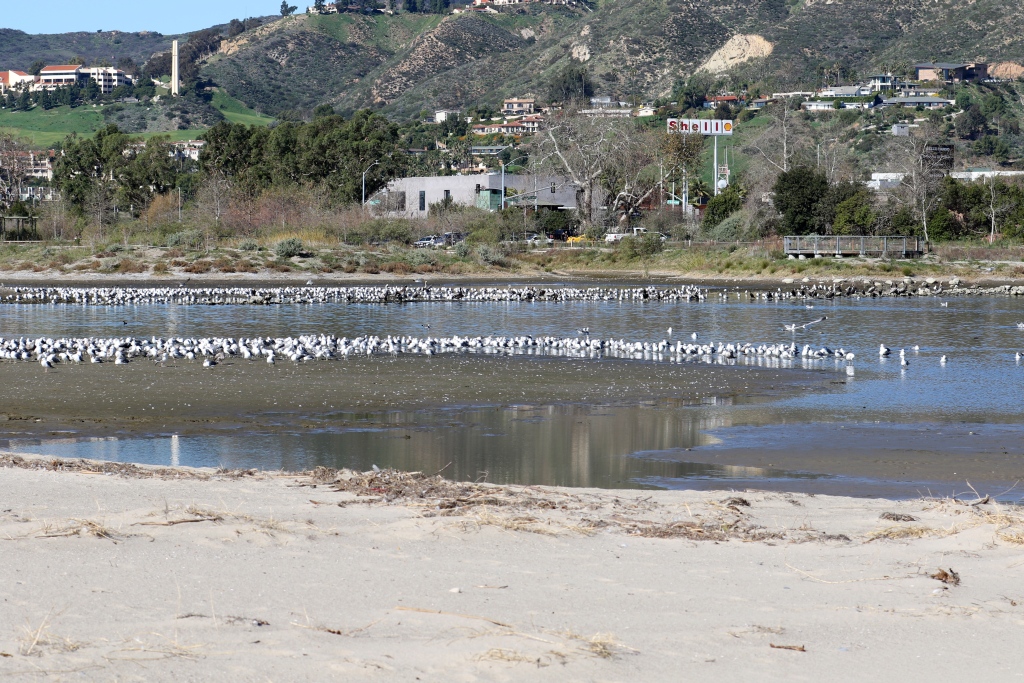
Gull flock, Pepperdine in background (R. Ehler 1/25/15)
Speaking of records, around forty birders showed up, possibly a record. We dallied, answering many questions, and by the time we reached the beach, many had wandered off in various directions.
And now it’s time for the puzzle!
The bird below is not rare at the lagoon, so you can put away that Field Guide to the Birds of Bezerkistan. Send us your guess and reasoning why. Honor and fame shall ever be yours!
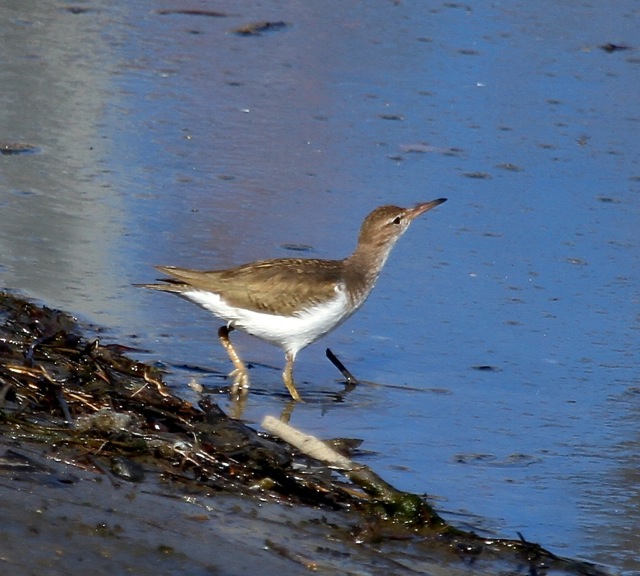
Mystery bird (J. Waterman 1/25/15)
Gull numbers were still high but diversity remained at six species, as the Boneparte’s was replaced by a Herring. The 42 Royal Terns set a new high, beating 32 Boyals on 2/28/10. More kept arriving as morning passed; my guess is that fishing was good offshore and they were coming in to rest.
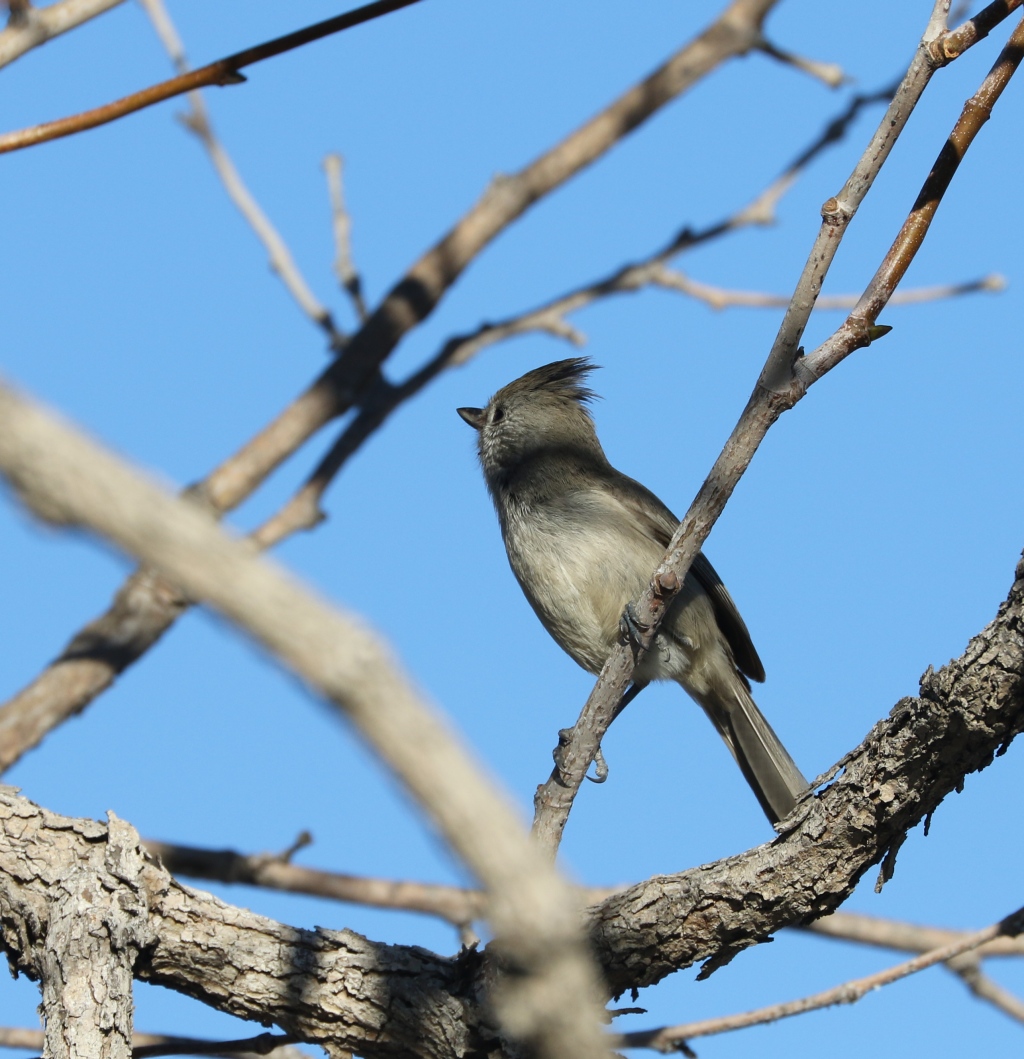
Oak Titmice are more often heard than seen (R. Ehler 1/25/15)
We don’t get a lot of Oak Titmice at the lagoon – only 15 visits totaling 19 birds – as the habitat is not great for them, but photographer Randy Ehler got proof that they do appear. (Encyclopaedia Britannica claims the plural is titmice, not titmouses.)
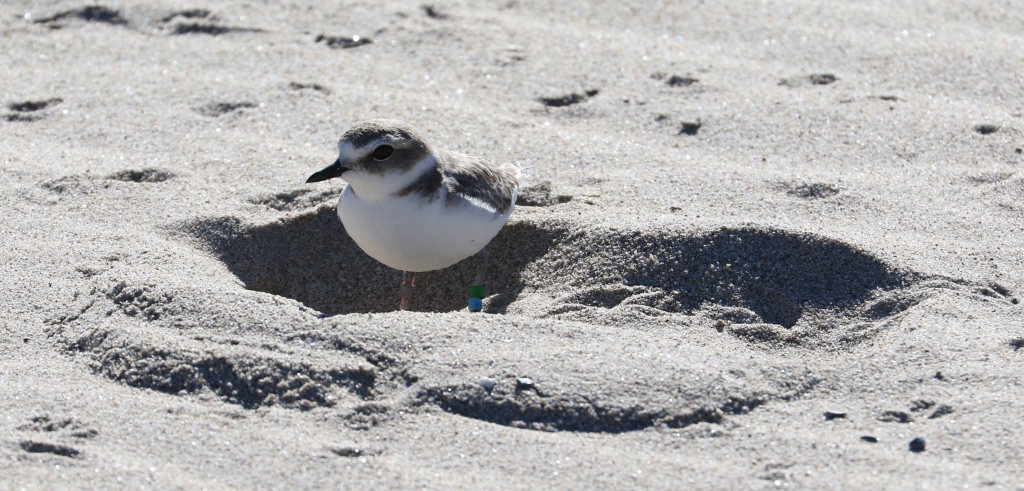
Dwarfed by a footpring – Snowy Plover GA:OY (R. Ehler 1/25/15)
Among the 24 Snowy Plovers on the beach we found banded bird: GA:OY (Left: green over aqua; Right: orange over yellow), his/her third appearance this year. That it fits easily into a human footprint shows just how small these birds are.
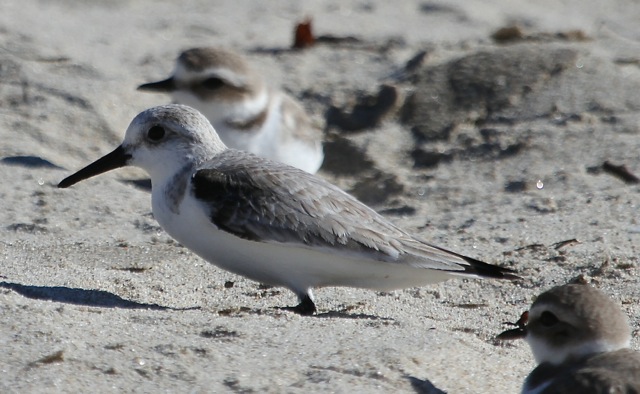
The Sanderling (foreground) is often mistaken for a Snowy Plover, their winter roost-mate (J. Waterman 1/25/15)
We had some good experiences with how sunlight affects our view of birds; e.g. they’re a lot more colorful and easy to see when the light is behind you. Photographers know this, of course, but birders are often surprised by it.
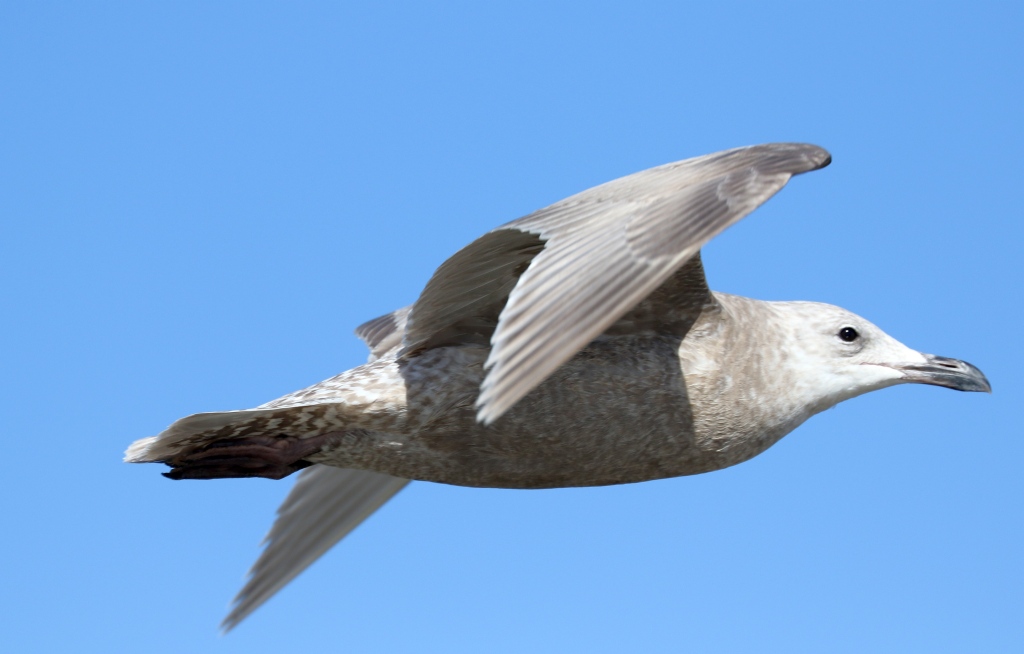
No dark wing-tips on this Glaucous-winged Gull, a winter visitor in small numbers
(Glaucous: having a powdery or waxy coating that gives a frosted appearance and tends to rub off. – Merriam-Webster) (R. Ehler 1/25/15)
Birds new for the season were: Pintail, Surf Scoter, Pelagic Cormorant, Herring Gull, Mourning Dove, Anna’s Hummingbird, Oak Titmouse, Blue-gray Gnatcatcher, Townsend’s Warbler, House Finch. We’ve not consistently gotten over to Adamson House the past few months, which may be why birds that are always around like Mourning Dove, Anna’s Hummingbird and House Finch have been missed.
Our next three scheduled field trips: Salton Sea Weekend, 7-8 Feb, 9am; Malibu Lagoon, 22 Feb, 8:30 & 10am; Hiker Lu’s Santa Monica Area Explorama, 14 Mar, 8:30am.
Our next program: Tuesday, 3 Feb., 7:30 pm. The Trancas Lagoon Restoration Project, presented by Clark Stevens. PLEASE NOTE THAT OUR MEETING PLACE HAS CHANGED TO DOUGLAS PARK, 2439 WILSHIRE BLVD.
NOTE: Our 10 a.m. Parent’s & Kids Birdwalk meets at the shaded viewing area. Watch for Willie the Weasel.
Links: Unusual birds at Malibu Lagoon
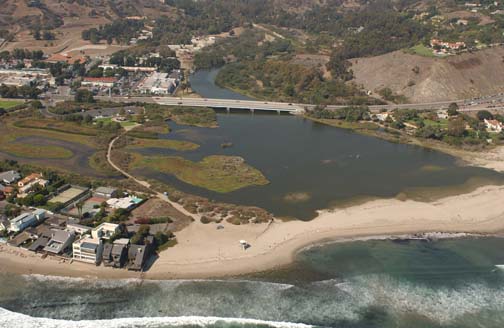
Aerial photo of Malibu Lagoon from 9/23/02.
Prior checklists:
2014: Jan-July, July-Dec
2013: Jan-June, July-Dec
2012: Jan-June, July -Dec
2011: Jan-June, July-Dec,
2010: Jan-June, July-Dec.
2009: Jan-June, July-Dec.
The 10-year comparison summaries created during the project period remain available on our Lagoon Project Bird Census Page. Very briefly summarized, the results unexpectedly indicate that avian species diversification and numbers improved slightly during the period Jun’12-June’14. [Chuck Almdale]
| Trip List 2014-15 | 8/25 | 9/28 | 10/26 | 11/23 | 12/28 | 1/25 |
| Temperature | 72-80 | 68-75 | 62-72 | 60-70 | 39-61 | 73-81 |
| Tide Lo/Hi Height | H+4.52 | H+5.35 | H+5.93 | H+6.41 | L+1.70 | L+1.32 |
| Tide Time | 0954 | 1149 | 1044 | 0849 | 0903 | 0705 |
| Gadwall | 2 | 3 | 26 | 22 | ||
| American Wigeon | 10 | 18 | ||||
| Mallard | 12 | 23 | 3 | 2 | 10 | 12 |
| Northern Shoveler | 4 | |||||
| Northern Pintail | 2 | |||||
| Green-winged Teal | 1 | 12 | 25 | |||
| Surf Scoter | 13 | |||||
| Bufflehead | 8 | 4 | ||||
| Hooded Merganser | 4 | |||||
| Red-brstd Merganser | 2 | 25 | 25 | 4 | ||
| Ruddy Duck | 2 | 36 | 42 | 38 | ||
| Red-throated Loon | 3 | |||||
| Pacific Loon | 6 | 1 | ||||
| Common Loon | 1 | |||||
| Pied-billed Grebe | 6 | 11 | 3 | 1 | 8 | 2 |
| Horned Grebe | 2 | 2 | 4 | 2 | ||
| Eared Grebe | 6 | 18 | 8 | 12 | 3 | |
| Western Grebe | 1 | 6 | 12 | 2 | 5 | |
| Brandt’s Cormorant | 2 | 1 | 2 | 130 | ||
| Dble-crstd Cormorant | 58 | 45 | 26 | 9 | 120 | 35 |
| Pelagic Cormorant | 1 | 3 | 1 | 1 | ||
| Brown Pelican | 29 | 42 | 26 | 32 | 95 | 50 |
| Great Blue Heron | 4 | 1 | 2 | 4 | 3 | 2 |
| Great Egret | 3 | 3 | 4 | 4 | 4 | |
| Snowy Egret | 12 | 15 | 20 | 20 | 18 | 16 |
| Blk-crwnd N-Heron | 4 | 1 | ||||
| Turkey Vulture | 1 | |||||
| Osprey | 1 | 1 | 1 | 1 | 1 | |
| White-tailed Kite | 1 | |||||
| Sharp-shinned Hawk | 1 | |||||
| Cooper’s Hawk | 1 | |||||
| Red-shouldered Hawk | 1 | 1 | 1 | |||
| Red-tailed Hawk | 3 | 1 | 1 | |||
| American Coot | 9 | 85 | 20 | 100 | 135 | 88 |
| Blk-bellied Plover | 93 | 95 | 40 | 45 | 38 | 62 |
| Snowy Plover | 39 | 40 | 34 | 40 | 25 | 29 |
| Semipalmated Plover | 3 | |||||
| Killdeer | 5 | 18 | 1 | 1 | 17 | 12 |
| Spotted Sandpiper | 5 | 5 | 4 | 2 | 6 | 3 |
| Greater Yellowlegs | 1 | |||||
| Willet | 14 | 45 | 6 | 4 | 10 | 4 |
| Whimbrel | 17 | 9 | 1 | 1 | 1 | 4 |
| Marbled Godwit | 1 | 4 | 5 | 3 | 12 | 12 |
| Ruddy Turnstone | 9 | 12 | 4 | 6 | 6 | 5 |
| Black Turnstone | 3 | |||||
| Sanderling | 2 | 10 | 32 | 32 | 28 | 8 |
| Least Sandpiper | 6 | 2 | 1 | |||
| Western Sandpiper | 1 | |||||
| Boneparte’s Gull | 2 | 2 | 1 | |||
| Heermann’s Gull | 10 | 4 | 5 | 1 | 18 | 17 |
| Ring-billed Gull | 3 | 60 | 65 | 150 | ||
| Western Gull | 89 | 95 | 40 | 81 | 230 | 170 |
| California Gull | 1500 | 1650 | ||||
| Herring Gull | 1 | |||||
| Glaucous-winged Gull | 3 | 5 | ||||
| Least Tern | 2 | |||||
| Forster’s Tern | 2 | 3 | ||||
| Royal Tern | 6 | 8 | 22 | 42 | ||
| Elegant Tern | 4 | 18 | 17 | 4 | ||
| Rock Pigeon | 5 | 15 | 6 | 6 | 4 | |
| Mourning Dove | 1 | 3 | ||||
| Vaux’s Swift | 3 | |||||
| Anna’s Hummingbird | 1 | 1 | 1 | |||
| Allen’s Hummingbird | 4 | 6 | 3 | 4 | 2 | |
| Belted Kingfisher | 1 | |||||
| Nuttall’s Woodpecker | 1 | |||||
| American Kestrel | 1 | 1 | 1 | |||
| Peregrine Falcon | 1 | |||||
| Yellow-chevroned Parakeet | 2 | |||||
| Willow Flycatcher | 1 | |||||
| Pac.Slope Flycatcher | 1 | |||||
| Black Phoebe | 9 | 12 | 2 | 1 | 2 | 1 |
| Say’s Phoebe | 3 | 2 | 2 | 1 | ||
| Cassin’s Kingbird | 1 | |||||
| Warbling Vireo | 2 | |||||
| Western Scrub-Jay | 1 | |||||
| American Crow | 4 | 6 | 7 | 8 | 4 | |
| Rough-wingd Swallow | 15 | 3 | ||||
| Barn Swallow | 45 | 1 | ||||
| Cliff Swallow | 3 | |||||
| Oak Titmouse | 1 | |||||
| House Wren | 1 | |||||
| Blue-gray Gnatcatcher | 1 | |||||
| Ruby-crowned Kinglet | 1 | 2 | ||||
| Wrentit | 1 | |||||
| Northern Mockingbird | 9 | 3 | 2 | 2 | 1 | |
| European Starling | 55 | 115 | 60 | 60 | 25 | 45 |
| Cedar Waxwing | 2 | |||||
| Ornge-crwnd Warbler | 3 | |||||
| Nashville Warbler | 2 | |||||
| Common Yellowthroat | 3 | 9 | 4 | 2 | 4 | 3 |
| Yellow Warbler | 3 | 1 | ||||
| Yellow-rumpd Warbler | 40 | 2 | 15 | 7 | ||
| Townsend’s Warbler | 1 | |||||
| Spotted Towhee | 1 | |||||
| California Towhee | 3 | 4 | 1 | |||
| Savannah Sparrow | 3 | |||||
| Song Sparrow | 8 | 7 | 2 | 3 | 2 | |
| White-crwnd Sparrow | 15 | 15 | 35 | 4 | ||
| Bobolink | 1 | |||||
| Western Meadowlark | 6 | 6 | 7 | 14 | 24 | |
| Great-tailed Grackle | 6 | 1 | 3 | 1 | 5 | |
| House Finch | 8 | 22 | 4 | |||
| Lesser Goldfinch | 6 | 15 | 3 | 1 | 2 | |
| Totals by Type | Aug | Sep | Oct | Nov | Dec | Jan |
| Waterfowl | 16 | 26 | 5 | 64 | 141 | 138 |
| Water Birds – Other | 106 | 193 | 102 | 166 | 516 | 187 |
| Herons, Egrets & Ibis | 23 | 20 | 26 | 28 | 25 | 18 |
| Quail & Raptors | 1 | 7 | 4 | 2 | 5 | 2 |
| Shorebirds | 198 | 240 | 127 | 135 | 144 | 139 |
| Gulls & Terns | 111 | 128 | 66 | 151 | 1839 | 2035 |
| Doves | 6 | 15 | 6 | 0 | 6 | 7 |
| Other Non-Passerines | 5 | 13 | 3 | 1 | 4 | 3 |
| Passerines | 172 | 242 | 150 | 76 | 114 | 106 |
| Totals Birds | 638 | 884 | 489 | 623 | 2794 | 2635 |
| Total Species | Aug | Sep | Oct | Nov | Dec | Jan |
| Waterfowl | 16 | 26 | 5 | 64 | 141 | 138 |
| Water Birds – Other | 106 | 193 | 102 | 166 | 516 | 187 |
| Herons, Egrets & Ibis | 23 | 20 | 26 | 28 | 25 | 18 |
| Quail & Raptors | 1 | 7 | 4 | 2 | 5 | 2 |
| Shorebirds | 198 | 240 | 127 | 135 | 144 | 134 |
| Gulls & Terns | 111 | 128 | 66 | 151 | 1839 | 2035 |
| Doves | 6 | 15 | 6 | 0 | 6 | 7 |
| Other Non-Passerines | 5 | 13 | 3 | 1 | 4 | 3 |
| Passerines | 172 | 242 | 150 | 76 | 114 | 106 |
| Totals Species – 104 | 638 | 884 | 489 | 623 | 2794 | 2630 |
Discover more from SANTA MONICA BAY AUDUBON SOCIETY BLOG
Subscribe to get the latest posts sent to your email.



 SANTA MONICA BAY AUDUBON SOCIETY BLOG
Was your shorebird a Spotted Sandpiper? Virginia Norwood. Sent: Thursday, January 29, 2015 4:07 PM
LikeLike
Yes, Spotted Sandpiper. Your correct response was the earliest.
BUT…you didn’t say why you thought Spotted Sandpiper. Tsk, tsk.
LikeLike