Songs of Spring: Malibu Creek State Park, 11 May 2024
[Text by Chuck Almdale, photos & 5/11/24 trip list by Chris Tosdevin]
While Chris Tosdevin and I agreed to co-lead this announced-at-the-last-minute trip, I think it was Ruth Tosdevin who pointed the way and kept us moving along. Whomever was in charge (if anyone) it was a beautiful day. It warmed from a cool upper 50s to a lovely 70° or so, the air was filled with bird song, especially the burble-babbling of House Wrens, and the landscape was dotted with flowers and butterflies. And no pesky biting insects. We’ll introduce you to a few of the more interesting and beautiful birds, then beleaguer you with a quiz. Some of the best photos will be in the quiz, so don’t ho-hum yourself into skipping it.
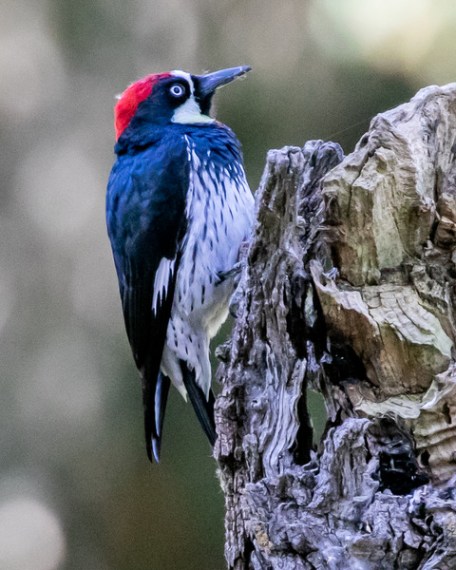
Acorn Woodpeckers were not the most abundant bird in the park but perhaps the most commonly seen as they fly around a lot, sit on bare branches, make loud weird calls, are relatively big and chunky and look like clowns. I spotted five in one tree next to the parking lot as I got out of my car. They were mobbing a perched youngish (not particularly red on the chest) Red-shouldered Hawk in a bare tree, who appeared imperturbable but left within a few minutes.
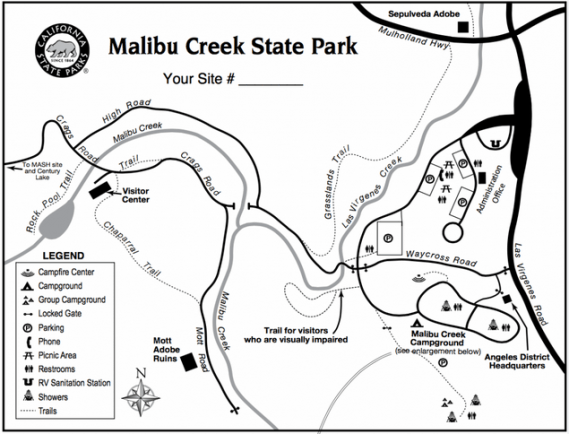
We first wandered up the former entrance road (Waycross) towards Las Virgenes Rd., crossing Stokes Creek which runs down from King Gillette SP on the other side of Las Virgenes, cut past the District HQ building whose roof was thoroughly plasticized against winter rains, back through the jam-packed campground ($45/night!) dodging frisbees and footballs on our way to the Braille Trail, then along Crags Rd. past the former Malibu Creek crossing, then about 1/2-way along the High Road to the Visitor Center, at which point we turned around. It took us about 3.5 hours to cover this short distance. Lots to look for, look at, listen to, poke at, and sniff. Then repeat.
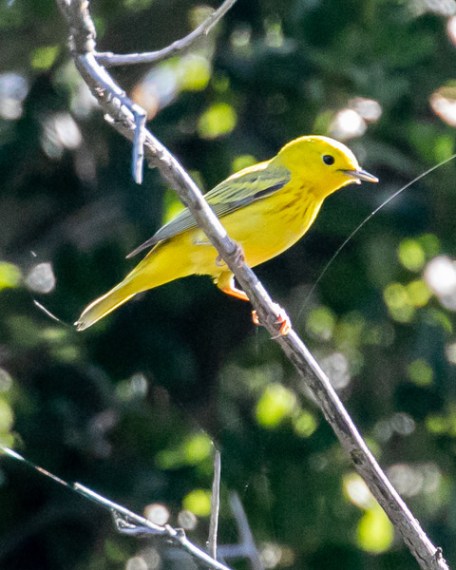
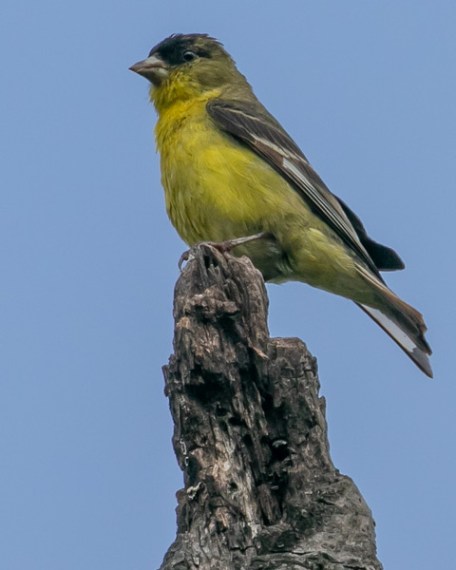
There was an abundance of yellow(ish) birds, the first of which was a Lesser Goldfinch, mournfully singing from a high twig. We also had multiple Yellow Warblers, Common Yellowthroats, Western Tanagers and a vaguely-yellow-underneath Ash-throated Flycatcher.
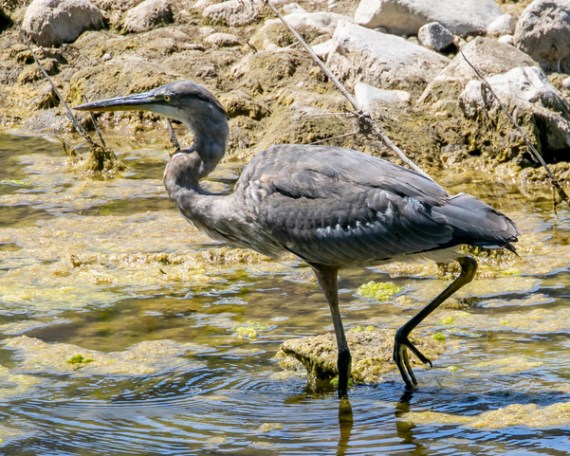
About every 20 minutes we’d see this Great-blue Heron go sailing by overhead, on its way to elsewhere. We finally caught up to it at Malibu Creek, upstream a bit from where the crossing roadway used to be (everyone knows where that is, right?). This where the creek becomes its widest and slowest, where Killdeer often nest on the sand & gravel banks. No Killdeer today, though.
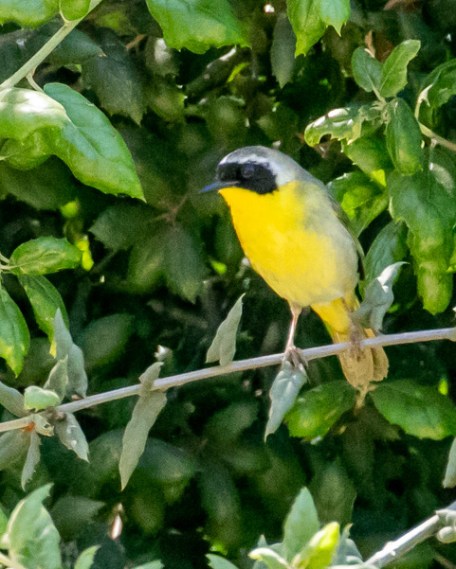
Some of the birds were blindingly colorfully bright. I don’t think I’ve ever seen a Common Yellowthroat look so uncommonly yellow as did one individual. The forehead/crown was so intensely gray that it looked blue.
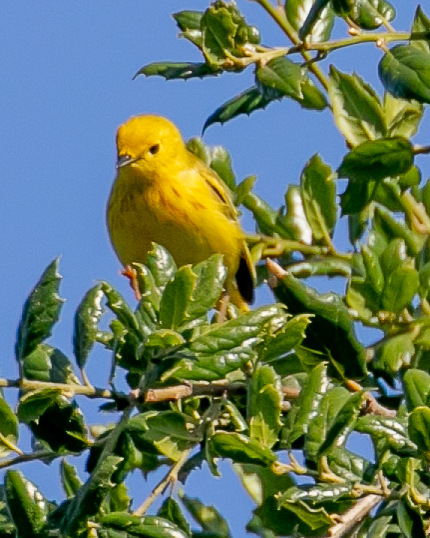
Some of the many male Yellow Warblers had bright thick red breast streaks. This one below was a bit less fervently marked. Of the many singing birds, this was probably the second-most commonly heard species, and the most common, the House Wrens, were everywhere, loudly singing. It seemed sometimes there were ten at a time burbling at the top of their lungs. For every one we actually saw, we could easily have heard 5-10 more.
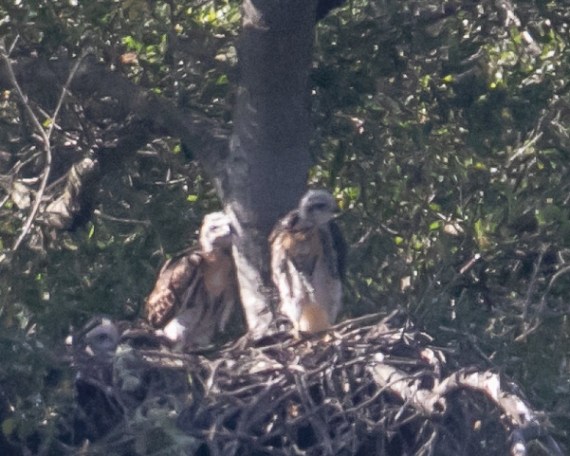
Chris and Ruth had a secret, which they kept to themselves until Chris’ telescope was properly focused. In a distant tree within a long line of trees there was a nest full of young Red-tailed Hawks. We counted four, although I can’t see more than two in the photo below. Sometimes they crouched down. Their heads were very white. Their feathers are growing out, but they were not yet anywhere near flying.
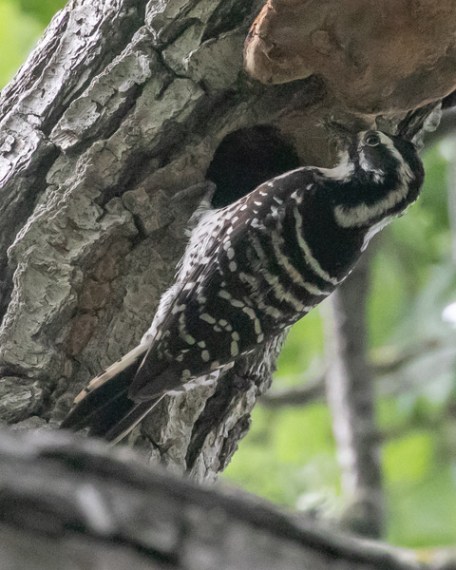
We found four Nuttall’s Woodpeckers, proving Acorn Woodpecker wasn’t the only woodpecker around. The female below was carrying food to her nest, which was on the underside of a mostly-horizontal limb, so she was literally hanging by her toes, although you can’t really tell that from the photo below. Chris had to lean way back and point the camera straight up to take this. The nest is just above her feet, so the entrance is more of a manhole (birdhole?) than a sidehole.
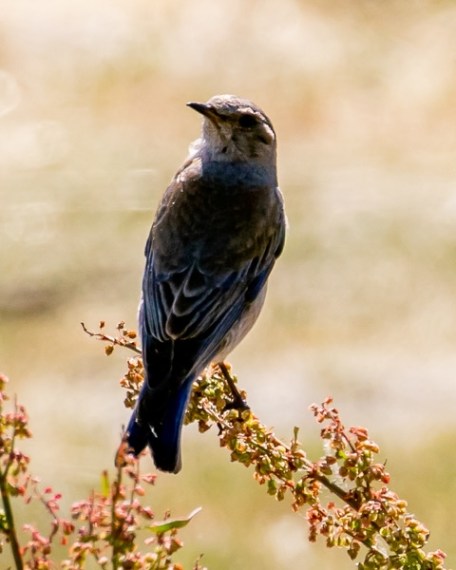
It’s pretty hard to see any blue on this female Western Bluebird, but the reddish breast and that innocent facial expression gives her away.

Male Blue-gray Gnatcatchers in breeding (alternate) plumage have a dark line over the eyes which meets just over the bill, giving them a slightly meaner expression.

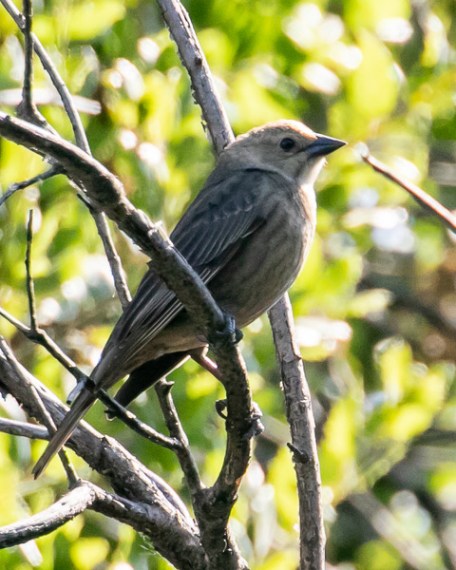
We came upon this female Brown-headed Cowbird, sitting sedately on a bare branch. For an Icterid (blackbird-oriole family) they have a very thick, almost finch-like bill, and this one’s plumage seemed a bit pale, although it could just have been an artifact of sunlight. She probably had her eye on someone’s nearby nest, waiting for the owners to leave so she could dump an egg or two into it.
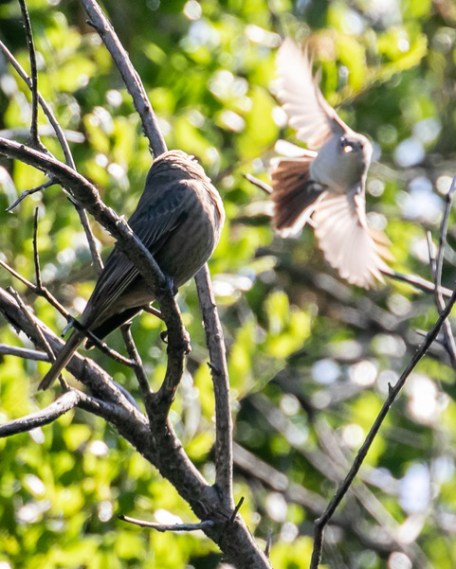
Unfortunately for her, she was seen and recognized by some of the smaller birds in the vicinity. A family of Bushtits moved in to drive her away, joined by Blue-gray Gnatcatchers and at least one Yellow Warbler and perhaps a few other species. This suggests that our local birds, unfamiliar with Cowbirds only a century ago, have now picked up on and passed on to others just what she’s really up to.

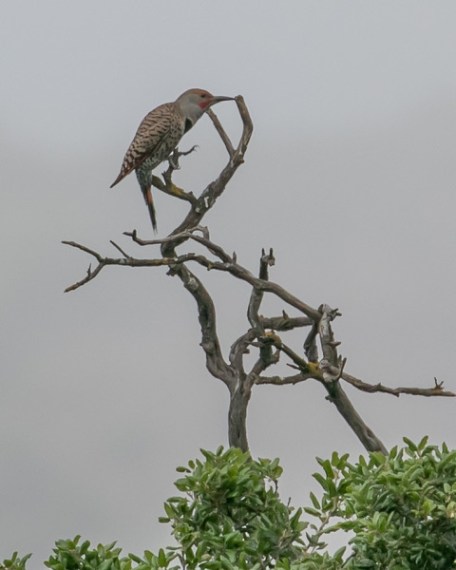
We’ll end with the traditional show-ending “flicker in the fog” photo. This is a true Red-shafted Flicker, just to show you that even with all the hybrid Red-shafted x Yellow-shafted Flickers and flat-out Yellow-shafted Flickers flying around SoCal these days, there are still some Red-shafted around. Note the red moustachial stripe, gray face, lack of red nape and a very faint ting of red in the side of the tail.
Last but not least we heard a Yellow-breasted Chat chortling down in the creek bed as we walked along Crags Rd. Couldn’t find it from the road, though, and the dirt cliff down to the water and brush looked too lethally slippery-steep for my sneakers.
Bird Quiz!
Fun for the whole family, for kids from three to one-hundred-and-three! All birds were photo’d on this field trip, no ringers snuck in from Colombia or Kavortistan or someone’s fevered imagination. We’ll begin with a few easy underhand pitches.

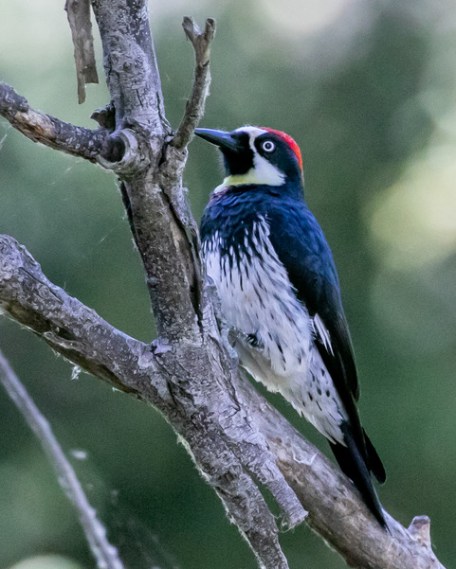
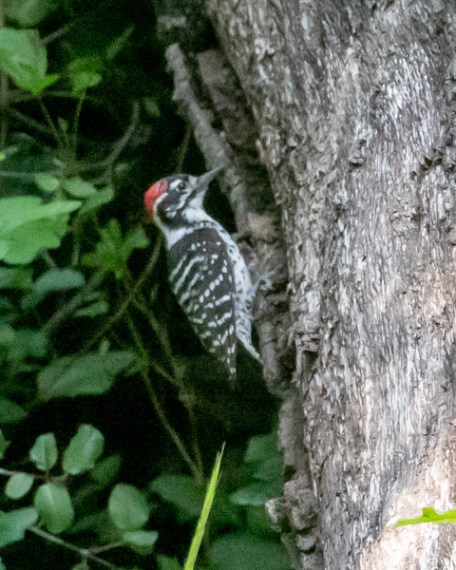

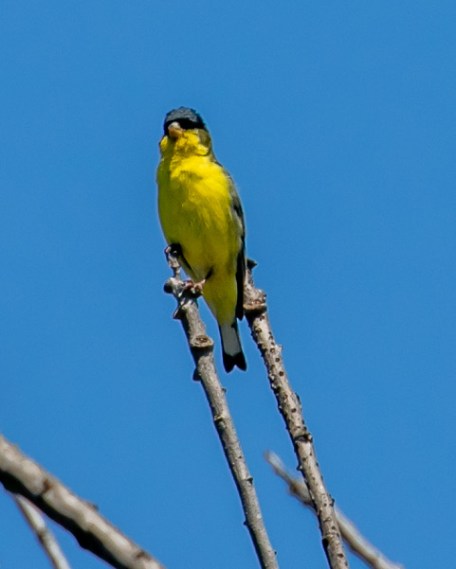
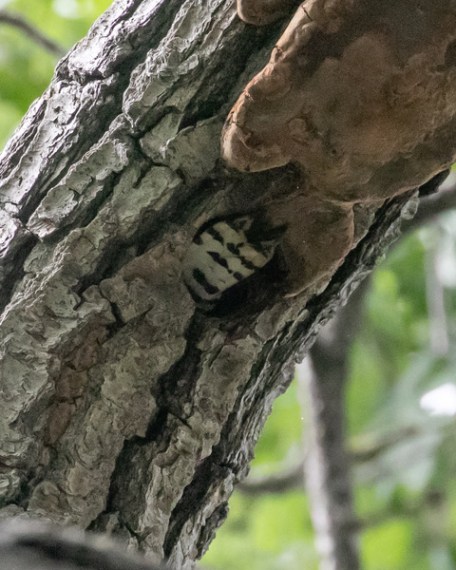

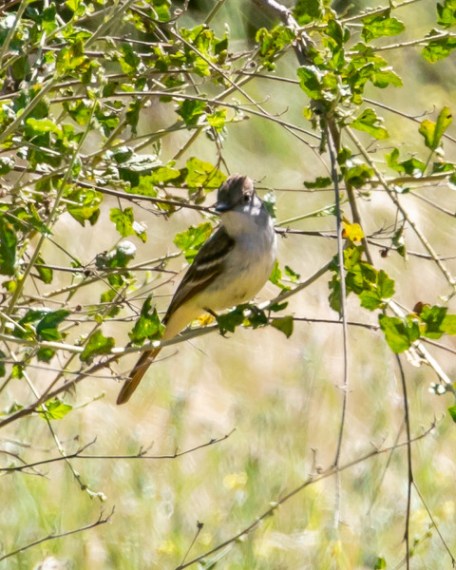

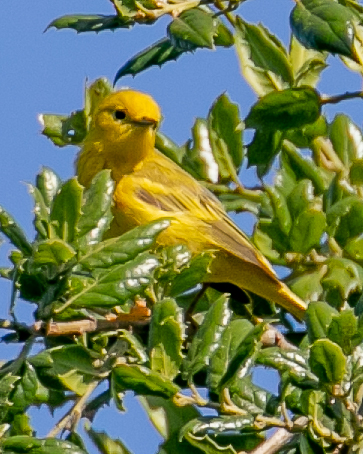

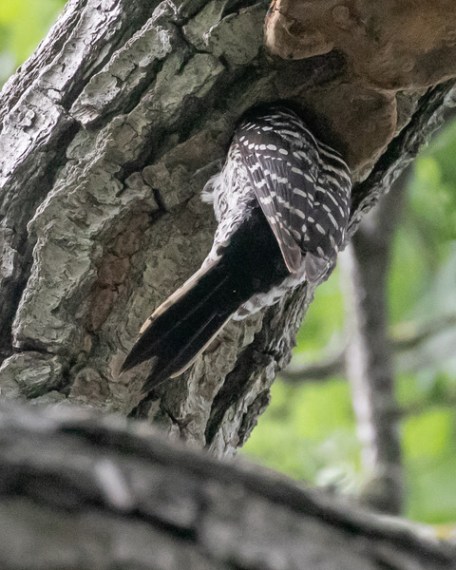
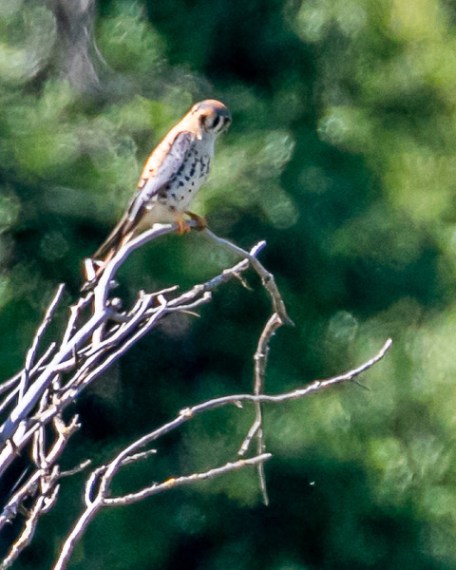
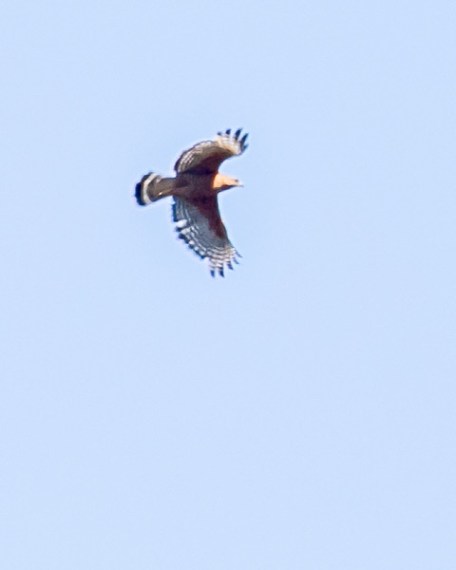
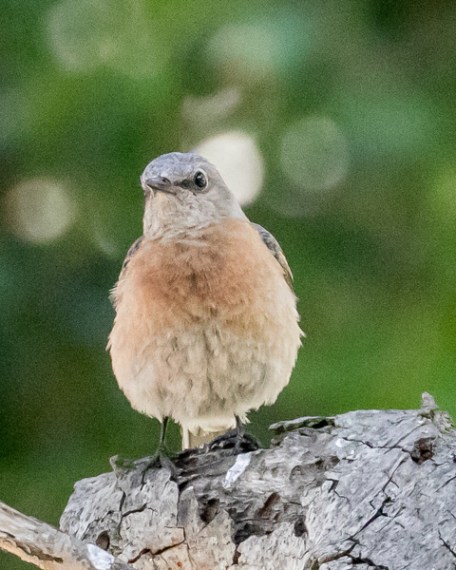
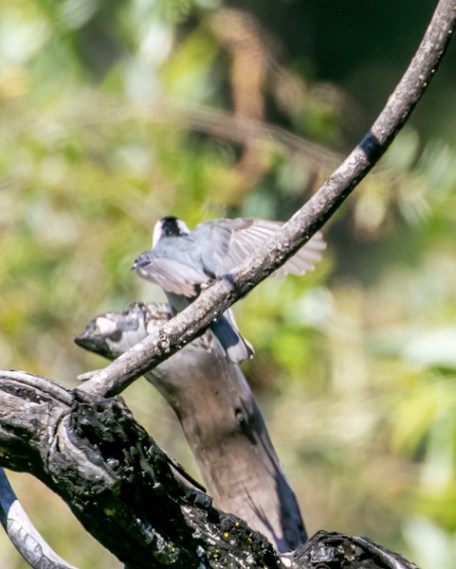
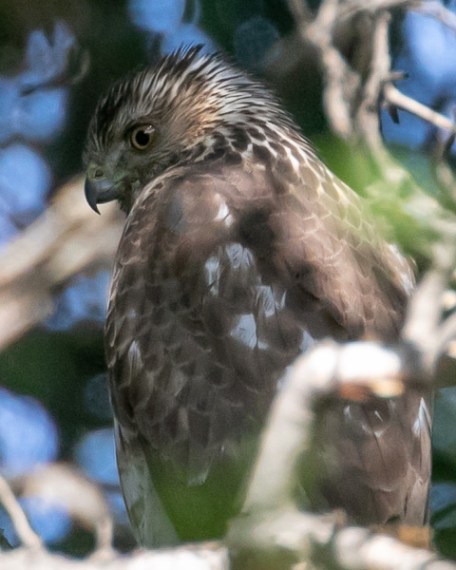


Quiz Answers: All photos by Chris Tosdevin, 11 May 2024, Malibu Creek State Park
#1. Dark-eyed Junco, Oregon-type
#2. Acorn Woodpecker, male
#3. Nuttall’s Woodpecker, male
#4. Song Sparrow
#5. Lesser Goldfinch, male
#6. Nuttall’s Woodpecker, female, not that you could tell sex from this photo.
#7. Blue-gray Gnatcatcher, male; note dark eyebrows.
#8. Ash-throated Flycatcher, who sings prrrrrt!
#9. Common Yellowthroat, male, unusual amount of white on head.
#10. Yellow Warbler, probably male but red streaks hidden.
#11. Western Tanager, young male, very faint red on crown.
#12. Nuttall’s Woodpecker, female, a bit more visible.
#13. American Kestrel
#14. Red-shouldered Hawk, previously mobbed by Acorn Woodpeckers.
#15. Western Bluebird, female.
#16. White-breasted Nuthatch, inconveniently viewed.
#17. Cooper’s Hawk, deep in foliage.
#18. Blue-gray Gnatcatcher on nest, female
#19. Brown-headed Cowbird, female, about to be mobbed.
#20. Brown-headed Cowbird, male, looking twisted.
#21. Western Bluebird, female, awkwardly perched.
In the interest of full disclosure and complete transparency, I didn’t know what #21 was and wasn’t too sure about #20 either.
The list below is the only record we have for our Malibu Creek SP bird walks. It’s odd to note that each trip had 47 species, but the total for all three species was 70 species, or 67% of the total. From the results of many other trips elsewhere I’ve learned that on any given trip to any particular location, a reasonably – but not obsessively – diligent search will turn up about 2/3rds of the birds likely to be present at that time of year.
| Malibu Creek S.P. Field Trips | 5/11/24 | 11/12/11 | 11/13/10 |
| Mallard | 5 | 20 | 15 |
| Ring-necked Duck | 1 | ||
| Bufflehead | 2 | ||
| Pied-billed Grebe | 1 | ||
| Band-tailed Pigeon | 6 | 80 | 12 |
| Mourning Dove | 5 | 2 | 2 |
| White-throated Swift | 20 | ||
| Anna’s Hummingbird | 3 | 1 | 2 |
| Allen’s Hummingbird | 2 | 1 | |
| American Coot | 20 | 15 | |
| Double-crested Cormorant | 1 | ||
| Great Blue Heron | 2 | 1 | 1 |
| Turkey Vulture | 10 | ||
| White-tailed Kite | 2 | 2 | |
| Cooper’s Hawk | 2 | 1 | |
| Red-shouldered Hawk | 2 | 3 | 1 |
| Red-tailed Hawk | 6 | 4 | 3 |
| Belted Kingfisher | 1 | ||
| Red-naped Sapsucker | 1 | ||
| Red-breasted Sapsucker | 2 | 1 | |
| Acorn Woodpecker | 15 | 8 | 15 |
| Downy Woodpecker | 1 | 2 | |
| Nuttall’s Woodpecker | 4 | 4 | 1 |
| Northern Flicker | 1 | 5 | 2 |
| American Kestrel | 2 | 4 | 1 |
| Nanday Parakeet | 8 | H | |
| Western Flycatcher | 4 | ||
| Black Phoebe | 2 | 6 | 6 |
| Say’s Phoebe | 3 | 2 | |
| Ash-throated Flycatcher | 5 | ||
| Cassin’s Kingbird | 2 | ||
| Hutton’s Vireo | 2 | 1 | |
| Loggerhead Shrike | 2 | 1 | |
| California Scrub-Jay | 6 | 2 | 6 |
| American Crow | 10 | 30 | 30 |
| Common Raven | 4 | 8 | 10 |
| Oak Titmouse | 10 | 20 | 12 |
| Violet-green Swallow | 1 | ||
| Northern Rough-winged Swallow | 5 | ||
| Cliff Swallow | 20 | ||
| Bushtit | 10 | 15 | 15 |
| Wrentit | 2 | 3 | 1 |
| Ruby-crowned Kinglet | 4 | 3 | |
| White-breasted Nuthatch | 3 | 6 | 6 |
| Blue-gray Gnatcatcher | 3 | ||
| Canyon Wren | 1 | ||
| House Wren | 12 | 1 | 3 |
| Bewick’s Wren | 2 | 2 | |
| Western Bluebird | 2 | 20 | 1 |
| American Robin | 1 | ||
| Phainopepla | 1 | 2 | |
| House Finch | 10 | 30 | 4 |
| Purple Finch | 6 | 2 | |
| Pine Siskin | 5 | ||
| Lesser Goldfinch | 10 | 1 | |
| Lark Sparrow | 20 | ||
| Dark-eyed Junco | 8 | 30 | 12 |
| White-crowned Sparrow | 40 | 20 | |
| Song Sparrow | 6 | 4 | 1 |
| California Towhee | 9 | 12 | 4 |
| Spotted Towhee | 8 | 8 | 4 |
| Yellow-breasted Chat | 1 | ||
| Red-winged Blackbird | 1 | ||
| Brown-headed Cowbird | 3 | ||
| Orange-crowned Warbler | 5 | ||
| Common Yellowthroat | 6 | 2 | 1 |
| Yellow Warbler | 12 | ||
| Yellow-rumped Warbler | 40 | 40 | |
| Western Tanager | 2 | ||
| Lazuli Bunting | 1 | ||
| Total Species: 70 | 47 | 47 | 47 |
Discover more from SANTA MONICA BAY AUDUBON SOCIETY BLOG
Subscribe to get the latest posts sent to your email.



 SANTA MONICA BAY AUDUBON SOCIETY BLOG
Excellent trip report and amazing photos!
LikeLike
Great photos! Looks like a nice outing.
LikeLike
Yup. It was.
LikeLike