Back Bay Newport & San Joaquin Marsh field trip: Dec 15, 2024
[By Chuck Almdale; photos by Chuck Bragg, Elyse Jankowski & Ray Juncosa]

Somehow we all made it to the southeast corner of Back Bay Newport (aka Upper Newport Bay) at the crack of 8 am. High tide at the Newport Bay entrance was 6.91 ft. at 8:10 am, and I doubt that I’ve ever seen the water so high. Most reed beds were completely submerged – vanished without a trace – and we were confronted with large expanses of water dotted with ducks trying to figure out what to do. If you’re a “dabbling” duck who feeds by tipping at the surface rather than diving, there’s not much you can do beyond waiting for the water to retreat.

The birder’s theory is that the various rails – Virginia’s, Ridgeway’s and the Sora, and of course the Black and the Yellow (as if!) – will be forced into view when their hiding places are submerged, and we’ll be able to easily see these reed-skulkers walking around on whatever reedtops remain. The rails have perhaps figured this out, though, and we managed to travel the length of the bay and not see one single bleeping rail, not even a Sora!, which at Malibu Lagoon come out and tromp around the mud flats for all to see (well…sometimes). We did see loads of Coots – honorary rails by ancestry – plus two young American Gallinule for a bit of a surprise.

Wondering what the rail situation was, I called the Sea & Sage office to see if they did rail censuses at the bay. [I think they used to, long ago.] The short answer is no. They do rent a boat and tool around the bay, once a month I think, but it’s not a census per se. The volunteer I spoke to said she’d seen no rails at all on her last two boat trips in November’24 and May’24. It occurs to me that perhaps the only spot they are reliable is close to the nature preserve office/museum on the north side, exactly where you can’t see anything from the path from because the wooden wall is too confangled high. Why did they build that wall so high?
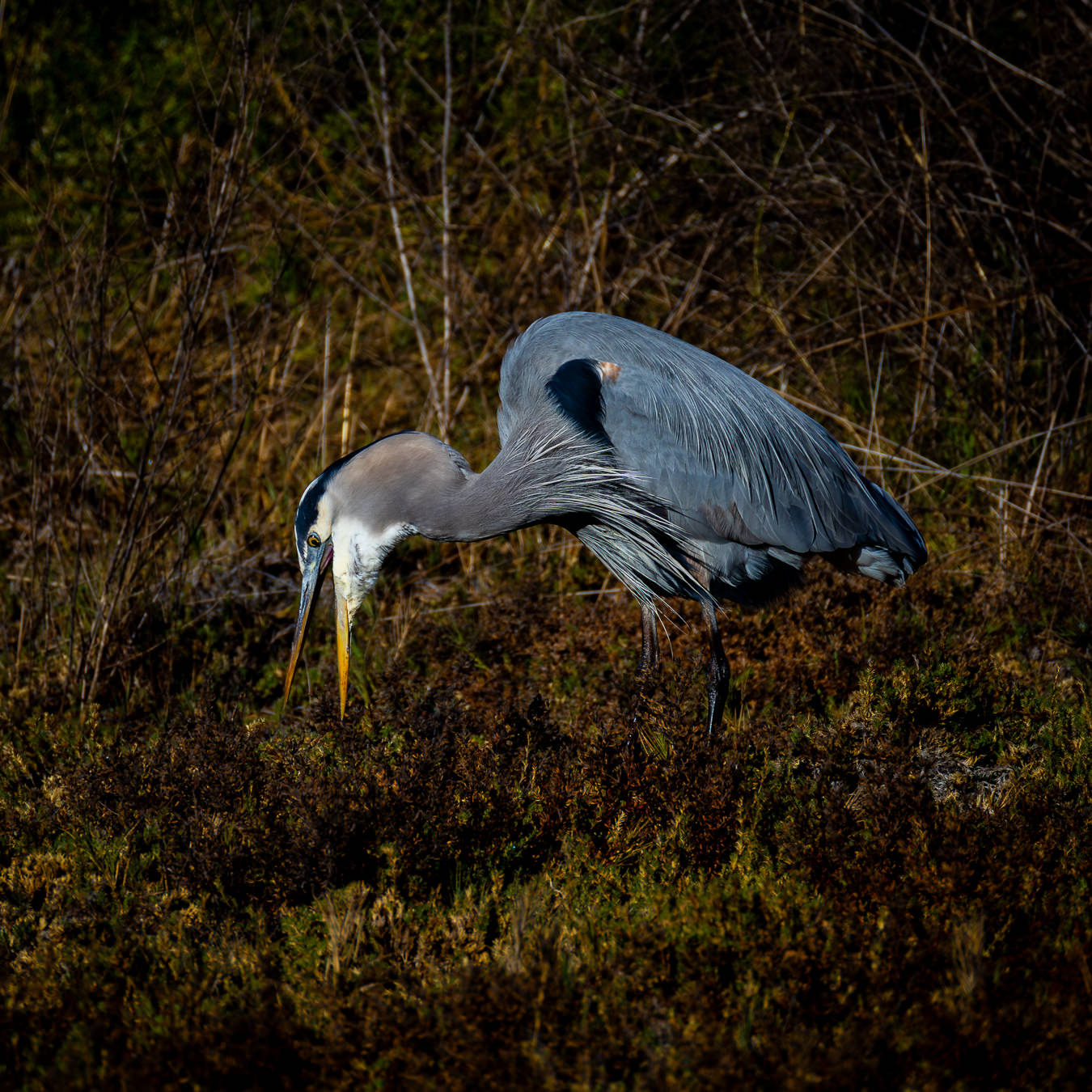
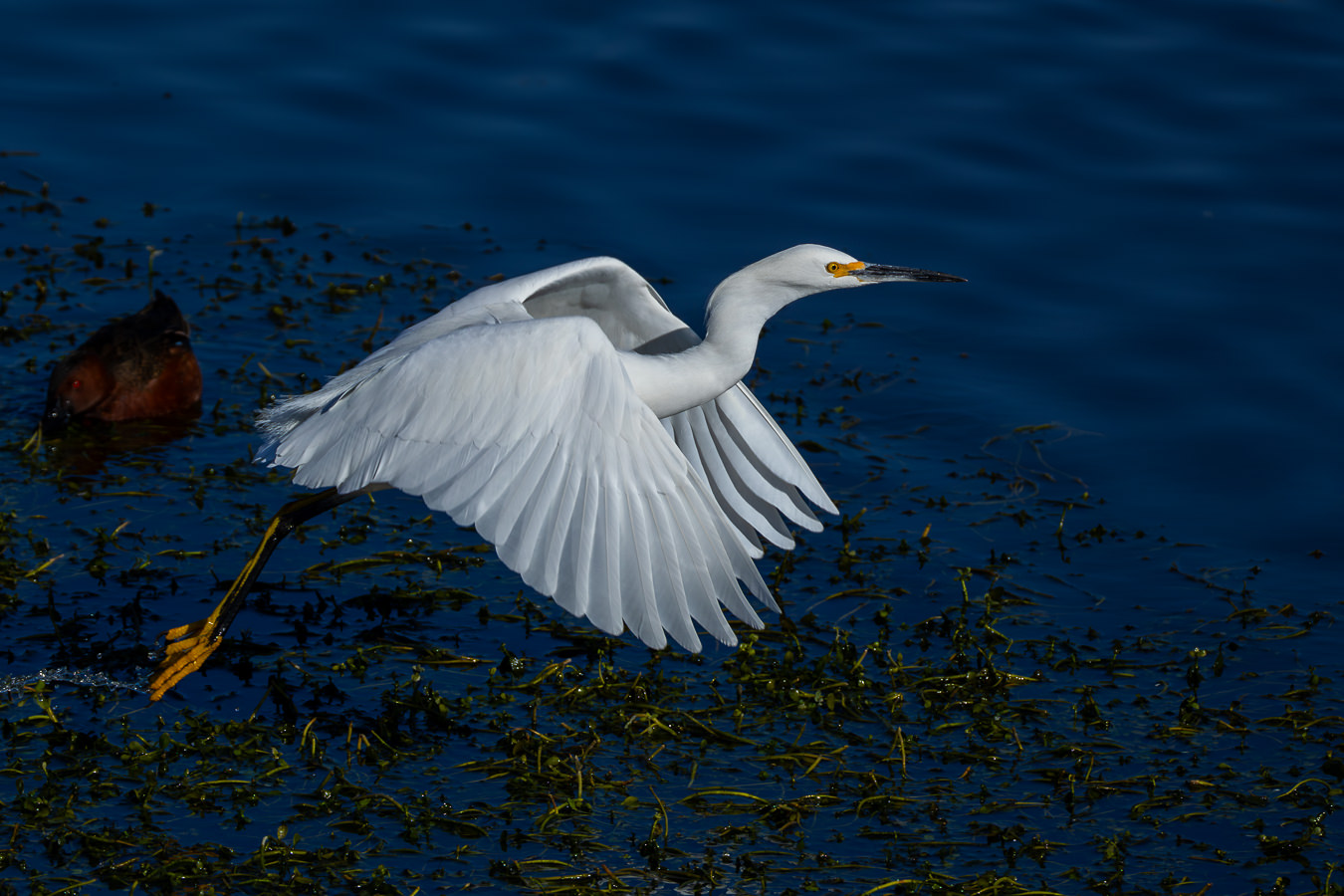
We did see plenty of egrets and herons: Great Blue, Great, Snowy and Black-crowned Night Heron, plus a surprise coming up later.
We also saw plenty of shorebirds, aka members of the sandpiper order Charadriiformes of various sizes. Best represented were the larger ones: Long-billed Curlew, Marbled Godwit, Whimbrel, Willet, even a few Greater Yellowlegs.

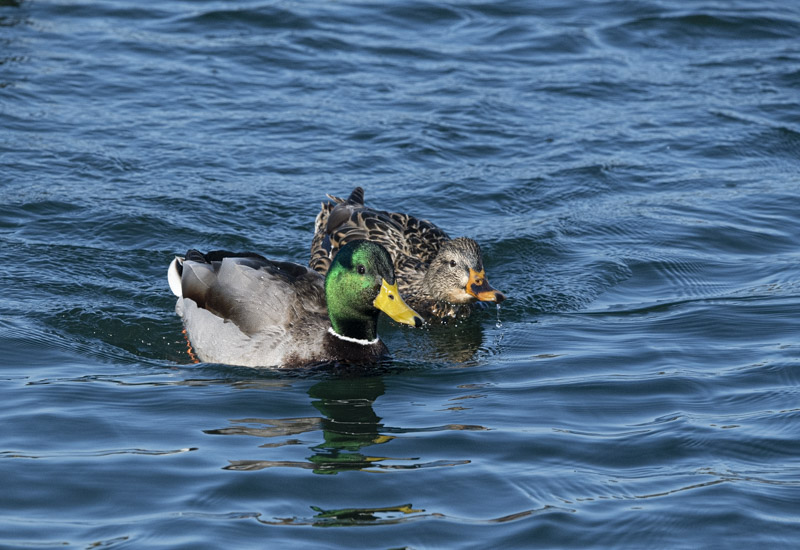
And, of course, ducks.

There were not hordes of gulls and terns. Ring-billed Gulls were well represented. The only terns were scattered singletons and small groups of Forster’s.

Raptors were also few. We didn’t see any of the dark Red-tailed Hawks usually present, nor Harriers, nor the Bald Eagle, resident over the past two winters and reported earlier in December at the bay.

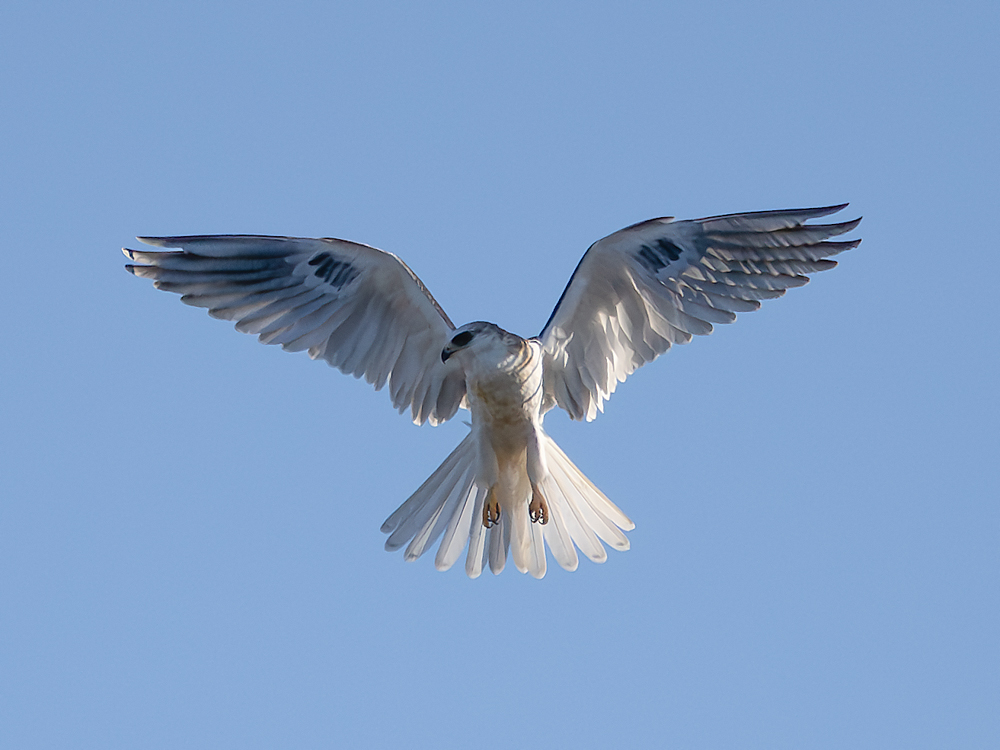
In addition to the Osprey were several White-tailed Kite. This one below, living up to its name and hovering like a pro, reminded me of that tale about Roman Emperor Constantine and his sign in the sky. “In hoc signo vinces” indeed. It’s thought-provoking to know that the Black-shouldered Kite Elanus caeruleus which ranges from Spain to New Guinea, looks and behaves so much like our White-tailed Kite Elanus leucurus that the two were lumped (along with the Australian Kite Elanus axillaris) into a single species in the late 20th century, then later re-split. Put any one of these birds kiting in the sky with the sunlight streaming behind it and who knows what people lacking binoculars might think they’re seeing. One takes their favorable omens where they can.
An one point all of the shorebirds in our vicinity stood up on high alert. It might have been because of a raptor, but we saw none around. Perhaps we were the cause?
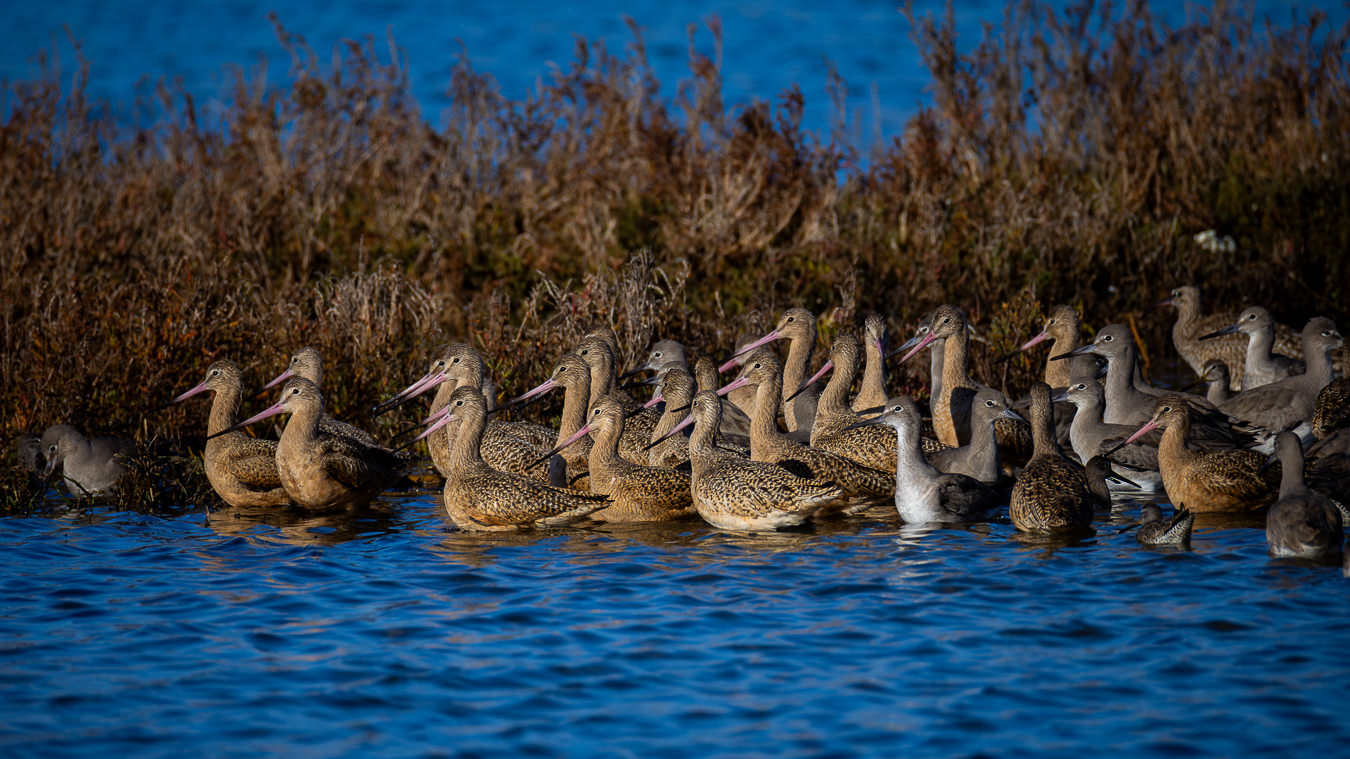
Some flew off only to soon return and settle back down to important matters.

In the extreme distance we spotted a single Black Skimmer coming from farther up-bay. It graciously flew over almost to our feet to settle in among the Willets.


We stopped at a spot with a small pool under some low trees which in the past has often yielded passerines in the trees and rails in the grass. A Great Blue Heron which we mostly ignored was in the high grass out near the water’s edge. When someone paying closer attention that the rest commented that the heron “looked a little odd,” we all took a look, this time with our binoculars. Sure enough, not a GBH at all!
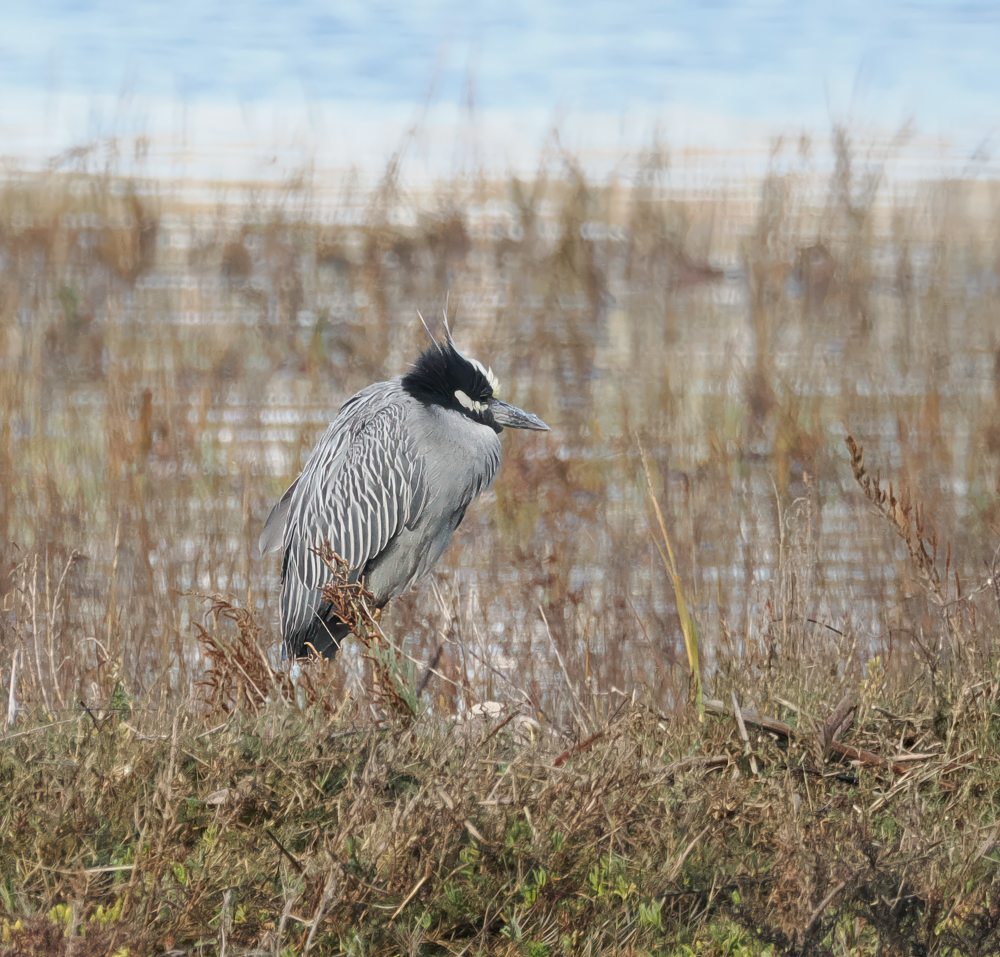
While Yellow-crowned Night Herons (who – along with the other six species of Night Heron – recently lost a hyphen) continue to very slowly spread through SoCal, I’d never seen one at Back Bay. This was a very nice adult, not one of those pesky streaky juveniles or even worse, a hybrid Black-crowned X Yellow-crowned.
We stopped at the top of the bay near the Jamboree Road bridge, found some more ducks, plus Western & Clark’s Grebes, but sorry to say, not a single small sandpiper. Amazingly we had traveled the length of the bay and the only shorebird smaller than a Killdeer was one Spotted Sandpiper. No Dunlin, Western’s or Least. No nothin’.
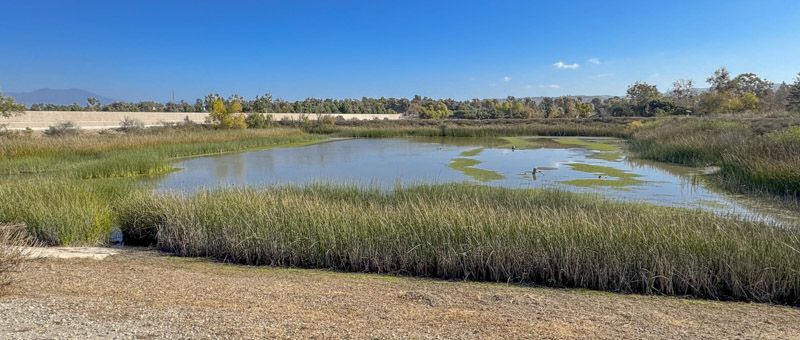
We then went to San Joachin Marsh, home of Sea & Sage Audubon, where we had lunch and again found no peeps. There were ducks, though, including quite a few Teal: Cinnamon, Blue-winged and Green-winged.

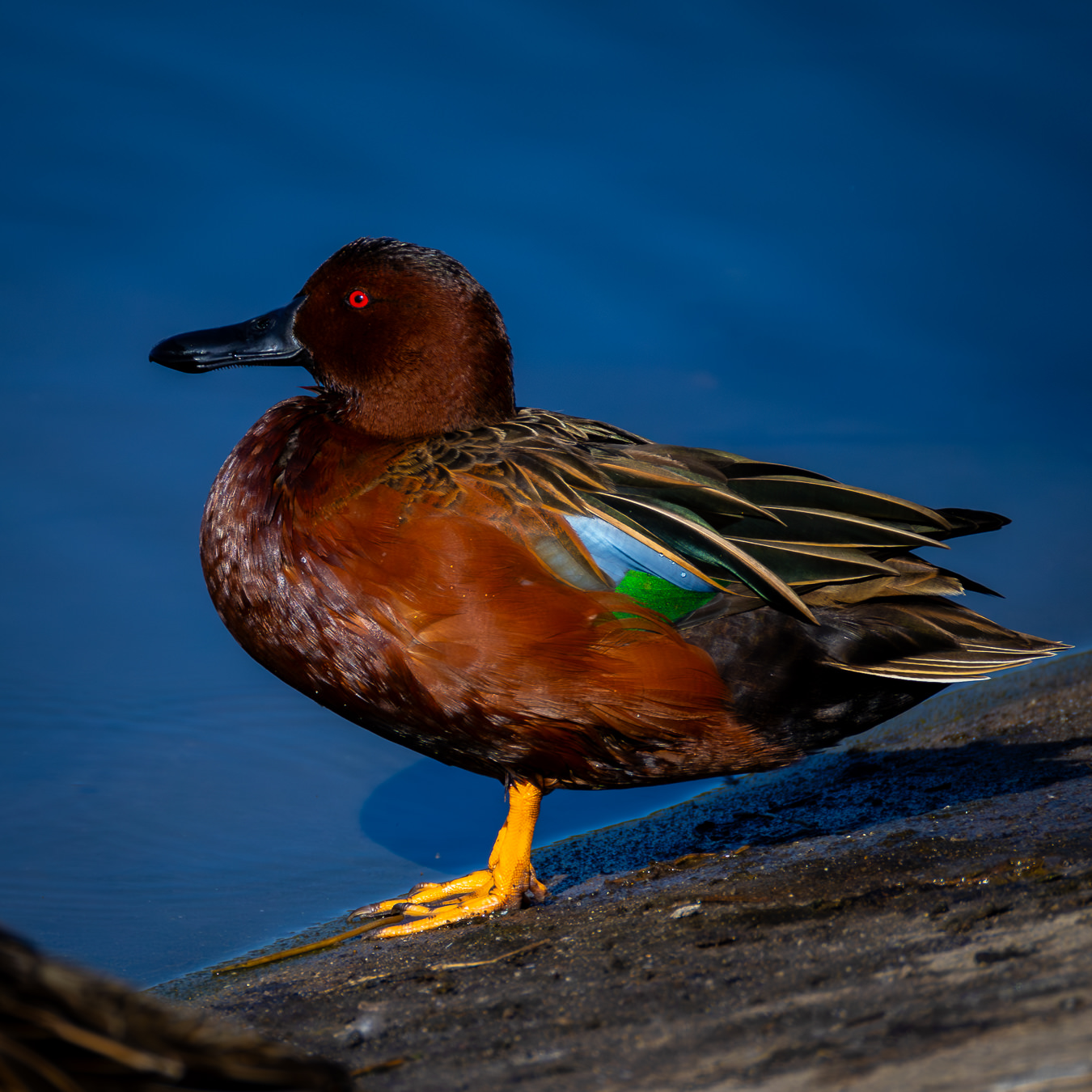
We also were visually treated to the little-appreciated fact that all three of these teal species – whatever claim their name may make – have iridescent green in their wings.

Note the baby blue color in the Cinnamon Teal’s wing above and below. This color is located in the upper secondary lesser coverts of the forewing.
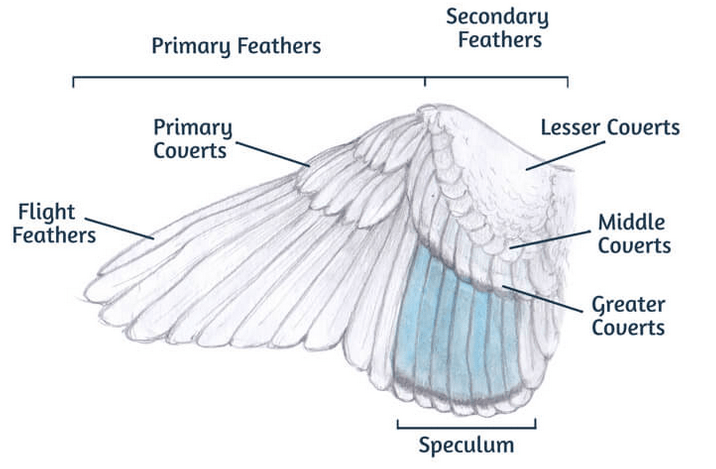
However, the iridescent green is the speculum, located in the upper secondary hindwing (trailing edge). Here’s a diagram.
The same thing goes for the Blue-winged Teal below.

The Northern Shoveler also has this pattern of blue & green. Plus they all have varying amounts of white in the middle and greater coverts, just to keep you on your toes. Knowing something, even a little, about these secondary wing feather patterns can help when you’re trying to tell the females apart, especially female Mallard and Gadwall, and the three teals. Plus they’re lovely to look at.
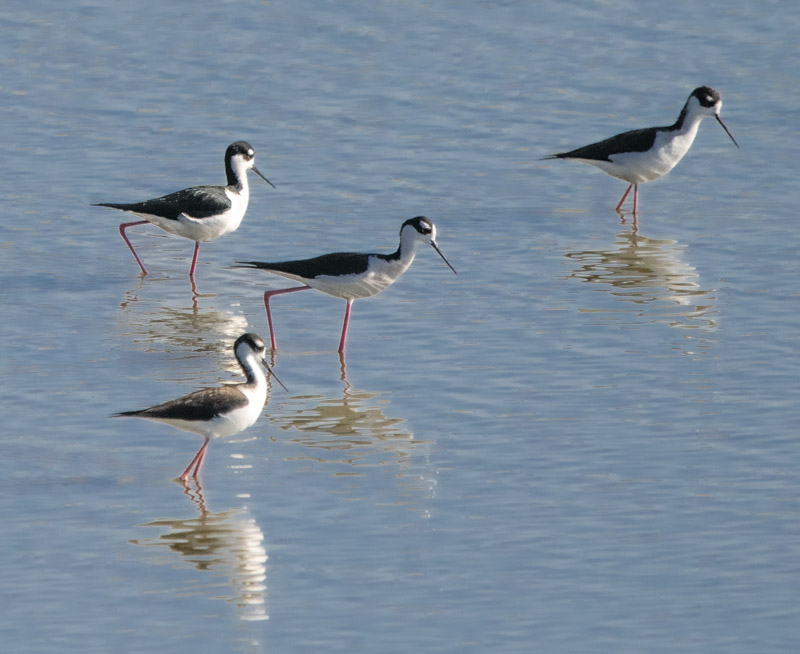
There were quite a few Black-necked Stilts at the marsh, as well as White Pelicans.
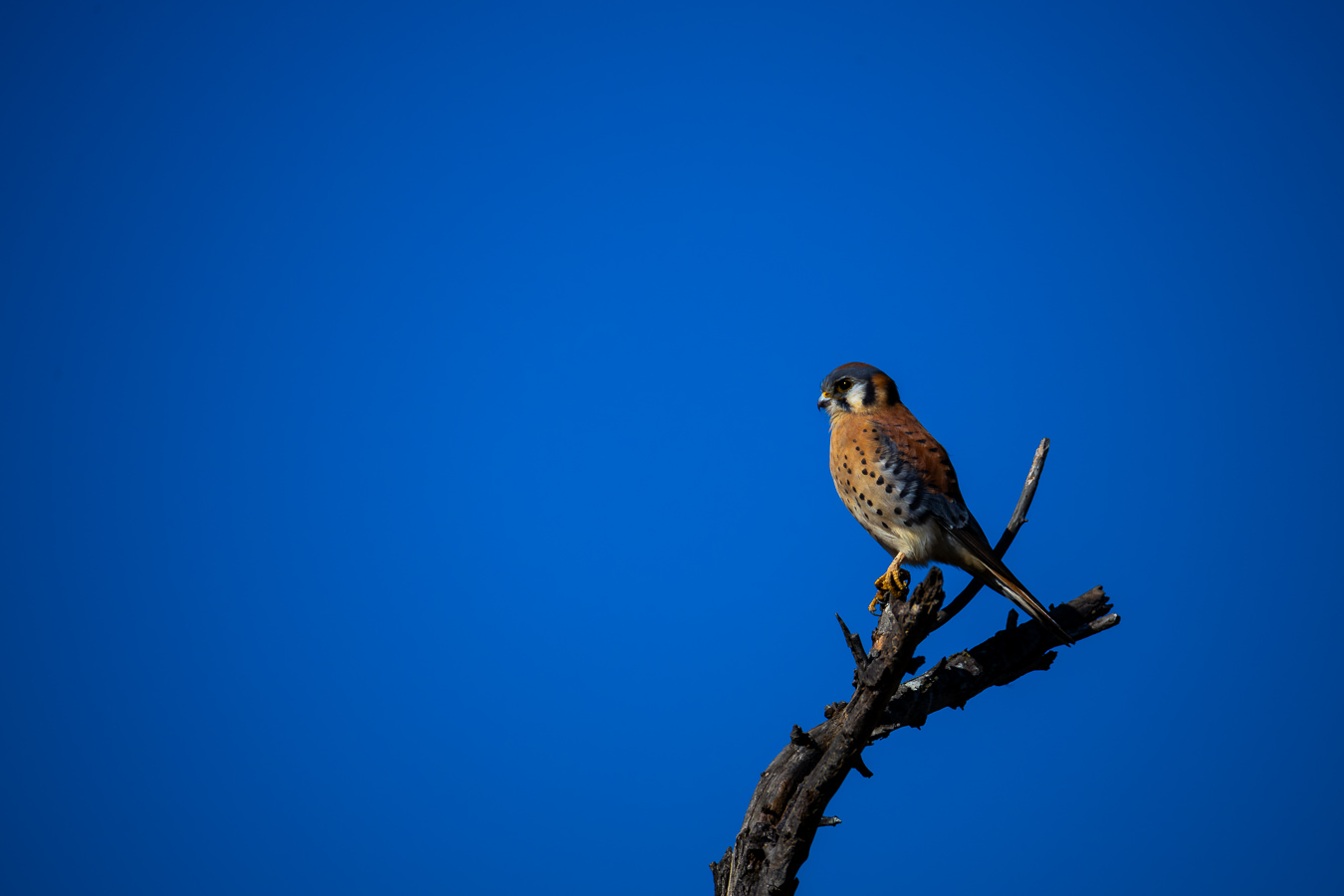
One kestrel we saw was eating something too small to be identified, but which looked lizardish.
We had our lunch at the picnic spot near the Sea & Sage bookstore. At one point three small birds flew into a nearby Toyon bush and began checking out the red berries for ripeness. They turned out to be Swinhoe’s White-eye (formerly Japanese White-eye). When I asked at the bookstore if they should be added to their posted sightings list, they seemed a bit surprised at the sighting, so perhaps this introduced-and-spreading species isn’t all that common there. Yet.
We managed to squeak out a trip list of 79 birds, 63 at Back Bay Newport and and additional 16 (out of 50 species) at San Joaquin Marsh. And that was without any rails or peeps! I think next year we’ll go during a dropping or low tide, or a rising-from-low tide. With any luck at all we’ll get hordes of peeps and perhaps a rail or two out wandering around.
| Back Bay Newport / San Joaquin Marsh | 12/09/24 Back Bay | 12/15/24 San Joaquin | 12/09/23 Back Bay | 12/09/23 San Joaquin | 12/10/22 Back Bay |
| Egyptian Goose | 1 | ||||
| Canada Goose | 50 | X | X | X | |
| Gadwall | 20 | X | |||
| American Wigeon | 400 | 70 | X | X | X |
| Mallard | 50 | 20 | X | X | X |
| Blue-winged Teal | 4 | 10 | X | X | |
| Cinnamon Teal | 15 | X | |||
| Northern Shoveler | 50 | X | X | ||
| Northern Pintail | 20 | X | X | X | |
| Green-winged Teal | 30 | 30 | X | X | X |
| Canvasback | X | ||||
| Redhead | 5 | X | X | ||
| Greater Scaup | 1 | X | |||
| Lesser Scaup | 5 | X | X | ||
| Scaup sp | 25 | ||||
| Surf Scoter | X | X | X | ||
| Bufflehead | 30 | 20 | X | X | X |
| Red-Breasted Merganser | X | ||||
| Ruddy Duck | 20 | 20 | X | X | |
| Pied-billed Grebe | 70 | 6 | X | X | X |
| Eared Grebe | 2 | X | X | X | |
| Western Grebe | 10 | 10 | X | X | X |
| Clark’s Grebe | 4 | 10 | X | ||
| Rock Pigeon | 10 | X | X | X | |
| Mourning Dove | 2 | X | X | X | |
| Anna’s Hummingbird | 2 | 2 | X | ||
| Allen’s Hummingbird | 1 | X | |||
| White-throated Swift | 20 | X | |||
| Ridgway’s Rail | 12 | ||||
| Common Gallinule | 1 | 1 | |||
| American Coot | 200 | 50 | X | X | X |
| Black-necked Stilt | 20 | X | |||
| American Avocet | 6 | X | |||
| Black-bellied Plover | X | X | |||
| Killdeer | 30 | X | |||
| Whimbrel | 20 | 10 | X | X | X |
| Long-billed Curlew | 15 | X | X | ||
| Marbled Godwit | 80 | 30 | X | X | X |
| Dunlin | X | ||||
| Least Sandpiper | X | X | |||
| Western Sandpiper | X | X | |||
| Long-billed Dowitcher | 6 | X | X | ||
| Spotted Sandpiper | 1 | X | |||
| Willet | 100 | 50 | X | X | X |
| Greater Yellowlegs | 2 | X | X | ||
| Ring-billed Gull | 100 | 30 | X | X | X |
| Western Gull | 20 | X | X | X | |
| California Gull | 100 | 50 | X | X | X |
| Black Skimmer | 1 | ||||
| Forster’s Tern | 20 | 6 | X | ||
| Double-crested Cormorant | 30 | 20 | X | X | X |
| American White Pelican | 2 | 20 | X | ||
| Brown Pelican | X | X | |||
| Great Blue Heron | 10 | 2 | X | X | X |
| Great Egret | 6 | 2 | X | X | X |
| Snowy Egret | 20 | 10 | X | X | X |
| Yellow-crowned Night Heron | 1 | ||||
| Black-crowned Night Heron | 3 | ||||
| Reddish Egret | X | ||||
| Turkey Vulture | 2 | 3 | X | X | X |
| Osprey | 2 | X | X | X | |
| White-tailed Kite | 2 | ||||
| Northern Harrier | X | ||||
| Cooper’s Hawk | 1 | 1 | X | ||
| Bald Eagle | X | X | |||
| Red-shouldered Hawk | X | ||||
| Red-tailed Hawk | X | X | X | ||
| Belted Kingfisher | 2 | 1 | X | ||
| Nuttall’s Woodpecker | X | ||||
| American Kestrel | 1 | 1 | X | X | |
| Peregrine Falcon | 1 | ||||
| Black Phoebe | 6 | 3 | X | X | X |
| Say’s Phoebe | 5 | 2 | X | X | X |
| Cassin’s Kingbird | 1 | X | X | ||
| California Scrub-Jay | 2 | X | |||
| American Crow | 4 | X | X | X | |
| Tree Swallow | X | ||||
| Barn Swallow | 1 | ||||
| Bushtit | 2 | 6 | X | X | |
| Marsh Wren | H | X | X | ||
| Bewick’s Wren | 1 | X | |||
| Blue-gray Gnatcatcher | 1 | 2 | X | ||
| California Gnatcatcher | 1 | ||||
| Swinhoe’s White-eye | 3 | ||||
| Ruby-crowned Kinglet | 1 | ||||
| Wrentit | H | ||||
| No. Mockingbird | X | X | X | ||
| House Finch | 6 | 10 | X | X | X |
| Lark Sparrow | 1 | ||||
| California Towhee | 1 | X | |||
| Savannah Sparrow | 4 | X | |||
| Song Sparrow | 8 | 20 | X | X | X |
| White-crowned Sparrow | 3 | 15 | X | X | X |
| Common Yellowthroat | 20 | 6 | X | X | X |
| Yello-rumped Warbler | 2 | X | X | X | |
| Western Meadowlark | 1 | ||||
| Red-winged Blackbird | 1 | ||||
| Lesser Goldfinch | X | ||||
| Total Species – 97 | 63 | 50 | 54 | 49 | 68 |
| Total Day BB & SJ | 79 | 65 | |||
| X – Seen | |||||
| H – Heard only | |||||
| 1, 15 – Number seen |
Discover more from SANTA MONICA BAY AUDUBON SOCIETY BLOG
Subscribe to get the latest posts sent to your email.



 SANTA MONICA BAY AUDUBON SOCIETY BLOG