Two Oddities
[Chuck Almdale]
If you’ve never heard of Bill Oddie…well…you’re either new to birding or have led a very sheltered, protected life. If you’ve ever played the video game Gone Birding, he’s the short, chubby, hairy weird one who is always dropping things and banging into/tripping over other things. However, as he’s also a Brit and many American birders are utterly unaware of the Brits’ contributions to birding, you might have missed his name. But no longer! Now you’ve heard it and we can now move on.
Move on to his books, that is, of which he has written many, mostly about birds and birders and birding. He’s avid, a real birdo and twitcher. I currently have two of his books at hand. A third book – which among other things contained a narration about that bird tour leader in India who wandered away from his elephant, was attacked by a tiger and the tour participants had to carry on for the rest of the tour without him – went missing somewhere, probably to a sticky-fingered birder friend. Look for it. Good story, that, plus other good stories. Onward.

Bill Oddie’s Little Black Bird Book
Published in 1980, this book contains all the information you need to survive in the cutthroat, back-stabbing, prevaricating and otherwise dirty rotten scoundrelish world of birding…British Birding anyway. American birders are far kinder, helpful, less likely to steal your car, bins or brimmed hat or send you down the wrong canyon or waaaay across the marsh, probably due to the fact that our school teachers aren’t allowed – let alone encouraged – to beat us with bamboo canes.
Among the book’s many features is a Glossary of Twitching Terms, such as:
Twitcher: Someone who races around the countryside chasing ticks and uses all the weird words below. There are various stories concerning the origin of “twitcher” and they all refer to uncontrollable spasmodic bodily twitching, from either the cold or excitement at the prospect of having a megatick.
Tick: The little check mark you put next to the name of a bird on a list which you’ve just seen, and by extension the bird itself.
Megatick: A very good tick; a rare bird.
Lifer: A bird you’ve never before seen. It can be a world, country, state, county, city, backyard or any other geographical area lifer.
Countable: Unless you’re a Kiwi, the bird better not be dead. Introduced birds can be present for decades before they’re considered countable. Need to know what’s countable in California? Go here: https://www.californiabirds.org/checklist.asp.
To Have a Bird: “Get over here right now. I have a megatick.” Birdos are possessive of bird sightings.
Flog: To really work over an area, beat the bushes looking for a bird, usually a particular bird.
Dip (out): Failure to see the desired bird. Particularly annoying when you’ve flogged the bush for hours for a megatick.
Gripped Off: Someone else saw the megatick you dipped on, probably easily and just before you arrived. Perhaps they then intentionally drove it off.
Duff Gen: Bad information (sometimes intentionally bad) about a location or identification.
String: As in “stringing me along,” i.e. intentional deceit. A report can be “stringy.” Report too many megaticks and grip off too many birders with duff gen, and you’ll become known as a stringer; unreliable.
Cock-up: Completely blowing an identification.
Birdwatcher: Bill doesn’t say this, but “birdwatcher” is what non-birders call birders. Birders call themselves birders. Birdwatchers tend to say things like: “What an admirable dickey-bird that is, twittering his little heart out” when a birder might say “Whoa, megatick,” or “Trashbird, move on.”
Bill includes tips on clothing and equipment. Besides the mandatory bins and scope, anoraks, hats and wellies are basic British birding gear, preferably sufficiently filthy to connote your seriousness. Never use the hood of your anorak (which need not be an actual anorak) for anything other than stowing your lunch. The hat can be almost anything but must be covered with badges and never removed from your head.
Both this and the next book are filled with delightful and informative ink drawings both large and small.
There are plenty of tips on other matters of import, such as how to mislead others or otherwise obscure your ignorance. For example:
Sound honest and modest while implying you know more than you do: “Couldn’t see the bill (or legs, etc.)” implies that you know it is an Important Field Mark but just couldn’t make it out. Saying “It had the jizz [the completely misspelled acronym for General Impression of Size and Shape] of a Least Sandpiper” implies that it wasn’t actually a Least when in fact you know very well it was a Least Sandpiper.
Covering your Cock-Up with the Two-bird Theory: They tell you: “I looked for the Red-throated Stint exactly where you said, but all I saw was a Western Sandpiper,” thereby implying that you made a mistake. You reply, “Yes, of course, there was a Western there too in an intermediate plumage, but the stint was a few yards farther off west. Unmistakably different. I guess you missed it.”
The Aberrant Bird: You admit that perhaps it was a Western Sandpiper after all, but it was an aberrant one. That you even know this word is usually sufficient to get off the hook.
There is much much more on field guide books, birding etiquette, finding birds, listening to birds, calling birds, songs for birders on the march and wonderful birding locations. You may have birded at the reeking Lancaster sewage farm or on the beach under the flight path at LAX (and if you haven’t you don’t know what you’re missing) and seen great birds but can you imagine the wondrous birds you’d see if you could combine both spots into one? The Brits do this daily by going to the odiferous Perry Oaks poop farm in Middlesex located under the Heathrow Airport main flight path.
And if someone comes up to you on the beach or in a bar and says, “So you’re a bird watcher, eh? I’m a bit of a bird-watcher myself, know what I mean?, know what I mean?” [Nudge nudge, wink wink, knowing look], you’ll know exactly what to say. But if you don’t read this book, you won’t.

The Bid Bird Race
Bill Oddie & David Tomlinson
Forward by Roger Tory Peterson [yes, that Roger Tory Peterson]
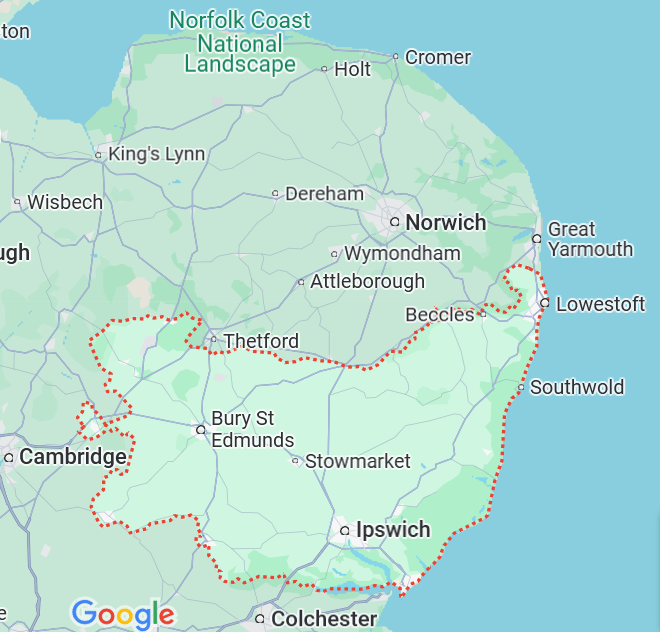
Published in 1983, being the account of the fourth Country Life Record Birdwatch, held on 14 May 1983, as narrated blow by blow and bird by bird by the leaders of both teams. With Land Rovers and Range Rovers, Saabs, helicopters, armies of scouts, awash in sponsor’s money and loaned equipment, Bill and David lead their teams (respectively Flora & Fauna and Country Life) around the East Anglian countryside of Norfolk and Suffolk counties.
If you’ve ever done a big day, or raced around either with or against a friend trying to outwit and outsee the other, you’ll have a vague idea of what’s going on here. But as the Brits invented (as far as I’m concerned) the hobby/sport/science/exercise/amusement of birding, it seems inevitable that they’d be the weirdest and the best at it.
“Superbly fit, their reflexes honed to a knife-edge of paranoia, the eight birders conquer hunger, thirst, exhaustion and duff information to reach the finishing line on the Suffolk coast.”
It’s quite a ride.
The region covered is roughly that between Norfolk in the north, Ipswitch in the southeast and a tad east of Cambridge in the southwest. Fine birding country.
Discover more from SANTA MONICA BAY AUDUBON SOCIETY BLOG
Subscribe to get the latest posts sent to your email.



 SANTA MONICA BAY AUDUBON SOCIETY BLOG