Stranded Sailors on the Sand
[Posted by Chuck Almdale, Photos by Chris & Ruth Tosdevin]

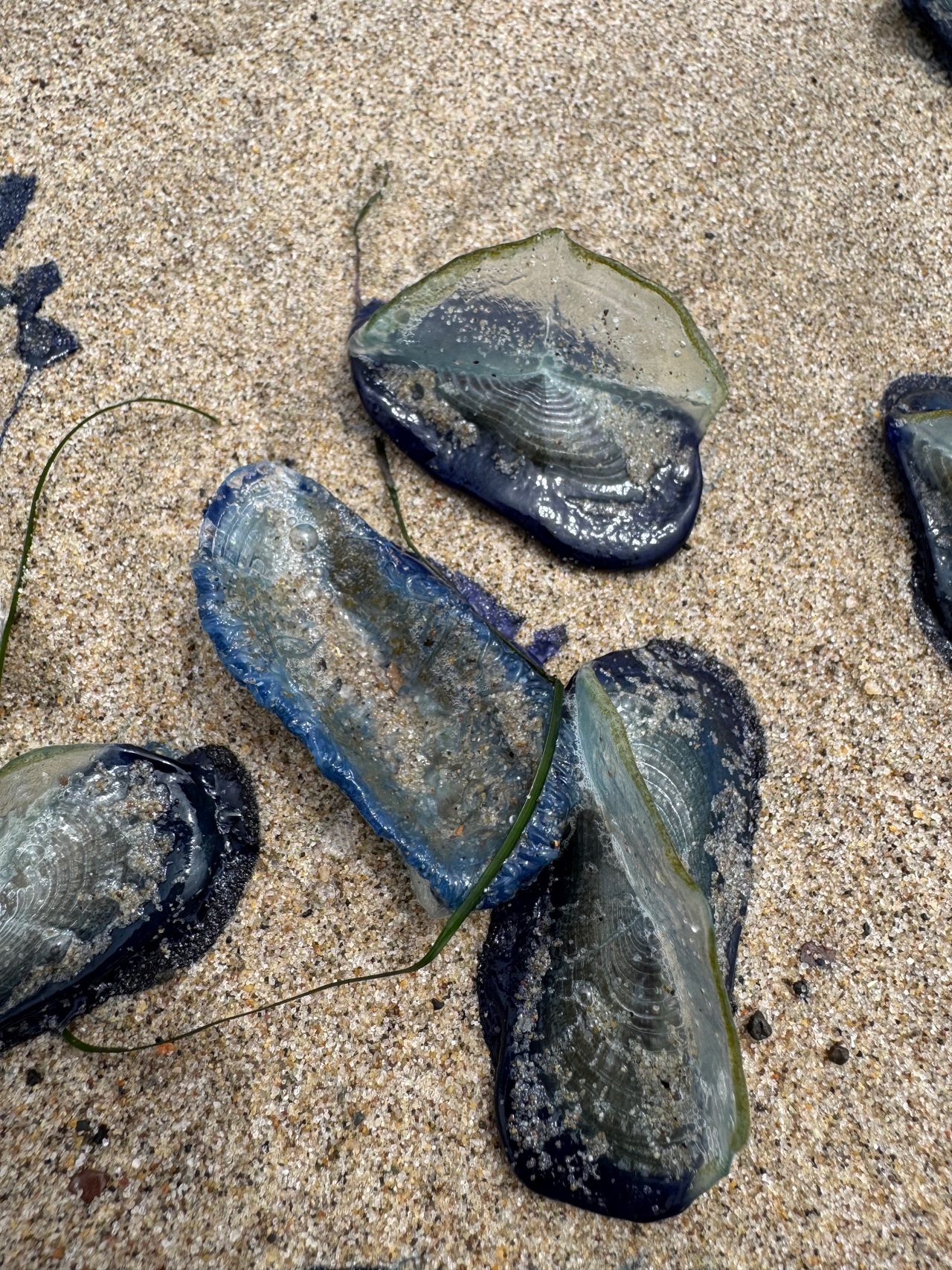
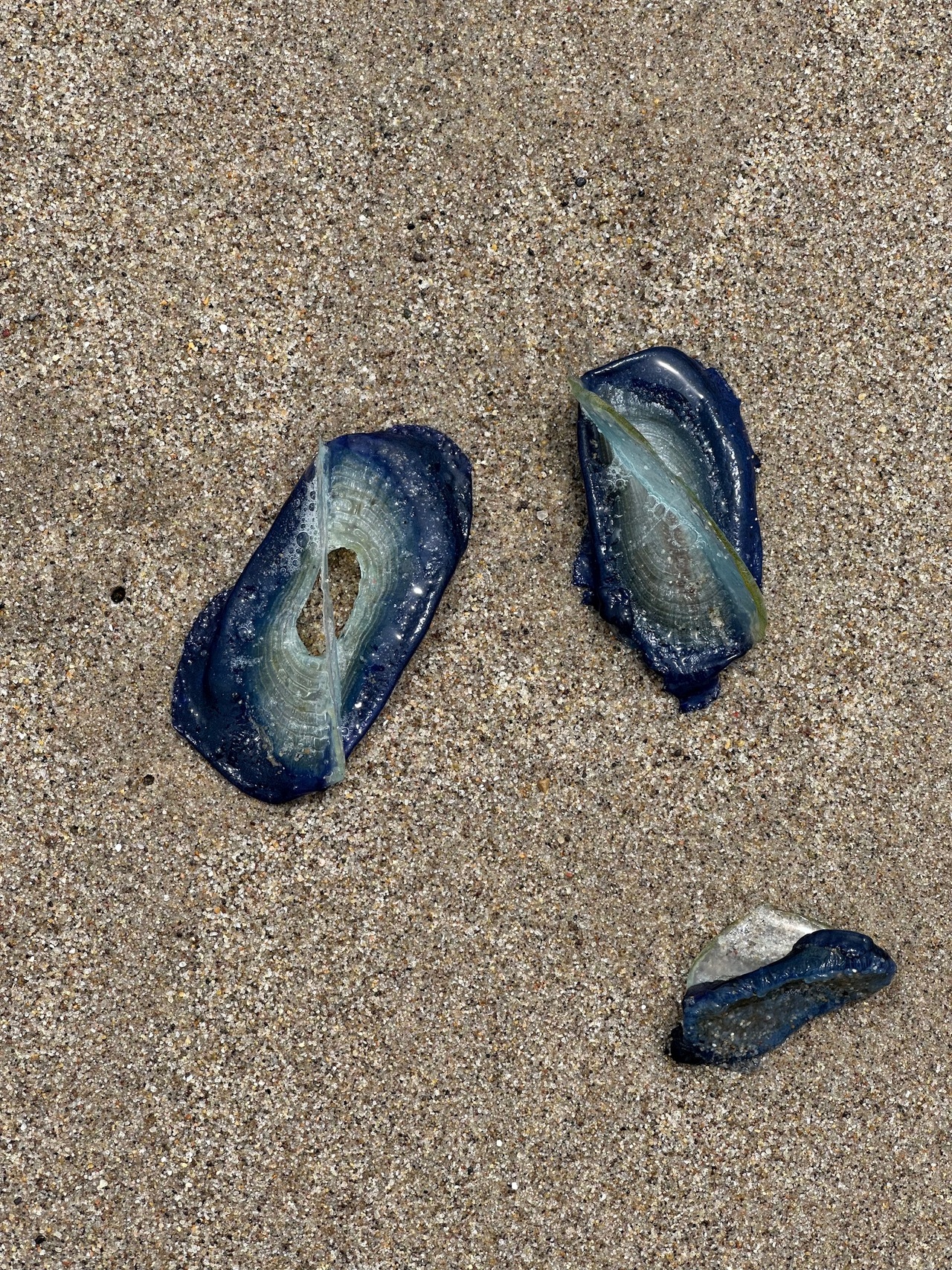
Velella Velella is also known as Velella, or sea raft, purple sail, little sail, or my preferred name, By-the-wind Sailor. They are a hydrozoa in the family Porpitidae, genus Velella. Velella is a monotypic genus, its only known species is Velella velella, a widely distributed free-floating hydrozoan that lives on the surface of the open ocean, mostly in tropical or temperate waters.

If you look closely, you can see the sail is oriented about 30-45° counter-clockwise to the long axis of the polyp’s top layer (the part with the whorl structure). The effect is that if the long axis of the body is parallel to the wind’s direction (as is normal), they will be pushed off to the right by the wind blowing from their rear. In the western pacific the predominate wind direction is from the northwest, which will push Velella off the wind’s direction 30-45% towards the south or southwest. This causes them to float “by-the-wind” approximately parallel to the eastern shore of the Pacific.

But when the wind shifts and comes from the west or southwest, this causes the sailors to be blown eastward, towards our shores. They can be washed onto the western shores of the Americas by the millions.
Velella velella is the only species in genus Velella.
Classification:
Kingdom: Animalia
Subkingdom: Eumatazoa
….. https://en.wikipedia.org/wiki/Eumetazoa
Clade: ParaHoxozoa
….. https://en.wikipedia.org/wiki/ParaHoxozoa
Phylum: Cnidaria (stinging cells)
….. https://en.wikipedia.org/wiki/Cnidaria
Subphylum: Medusozoa (jellyfish or jellies)
….. https://en.wikipedia.org/wiki/Medusozoa
Class: Hydrozoa (water animal)
….. https://en.wikipedia.org/wiki/Hydrozoa
Subclass: Hydroidolina
….. https://en.wikipedia.org/wiki/Hydroidolina
Order: Anthoathecata (always have polyp stage)
….. https://en.wikipedia.org/wiki/Anthoathecata
Suborder: Capitata (tentacles end in “heads”)
….. https://en.wikipedia.org/wiki/Capitata
Family: Chondrophora (Porphitidae) (gas-filled float) .
….. https://en.wikipedia.org/wiki/Chondrophore
Genus: Velella (sail)
….. https://en.wikipedia.org/wiki/Velella
In the Western Pacific, the sails are oriented 30-45° clockwise to keep them from blowing ashore in Japan and China. There is still much that is unknown about these small creatures. Some sources consider each sailor a colony, others say no, each sailor is a single animal. Are the east and west Pacific varieties different species, if not, what is the mechanism of differentiation?
This is an excellent article about the sailors and their adventures in the San Francisco Bay area.
A nice YouTube about them.

After a while they begin to lose their color and become crispy. Their tentacles do contain stinging cells which are strong enough to subdue their tiny zooplankton prey, but won’t do much to human skin.
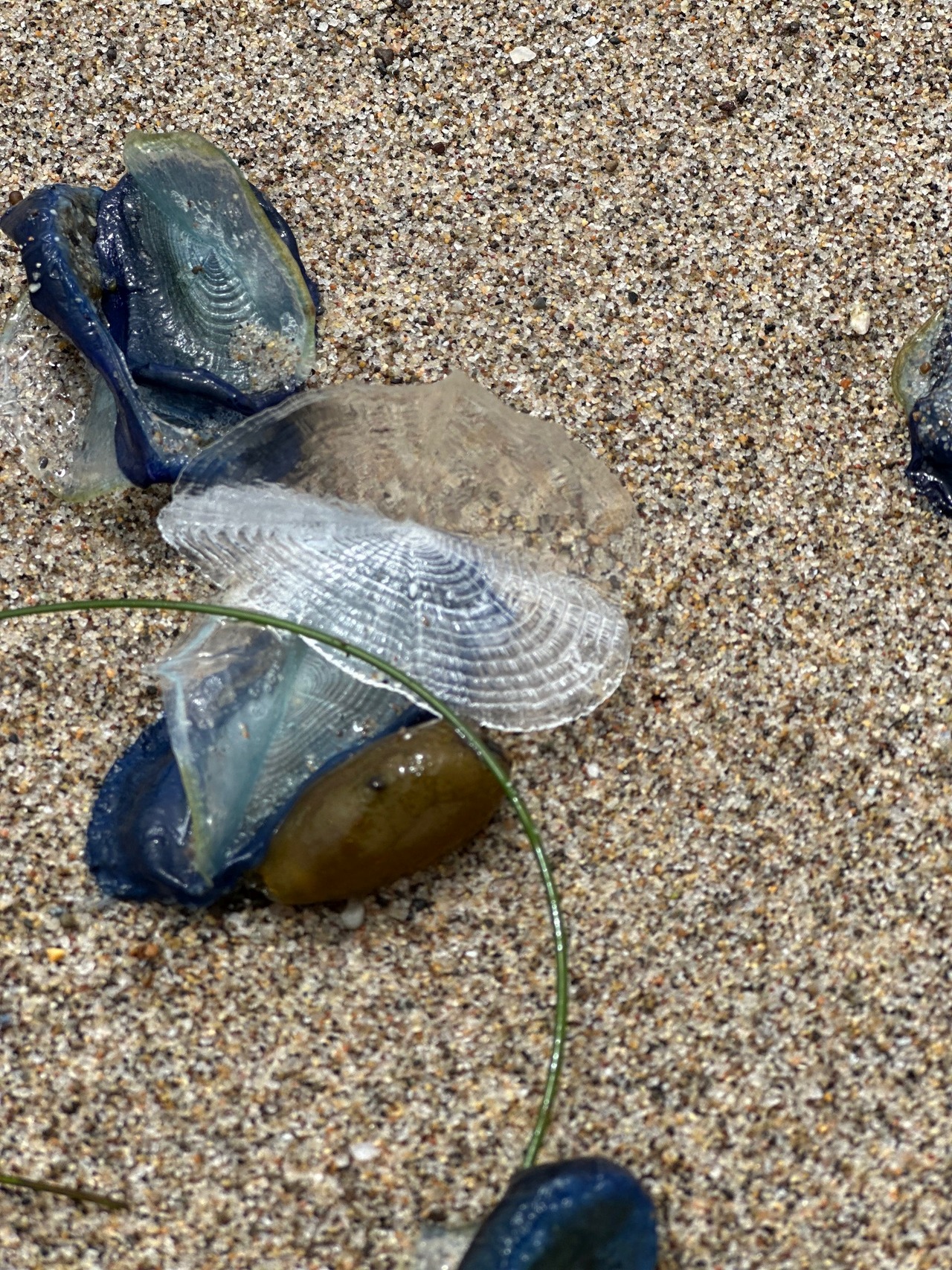
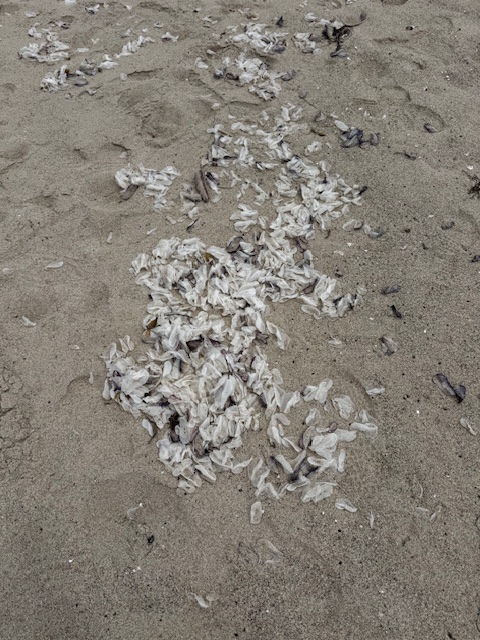
When they dry out they look like plastic….
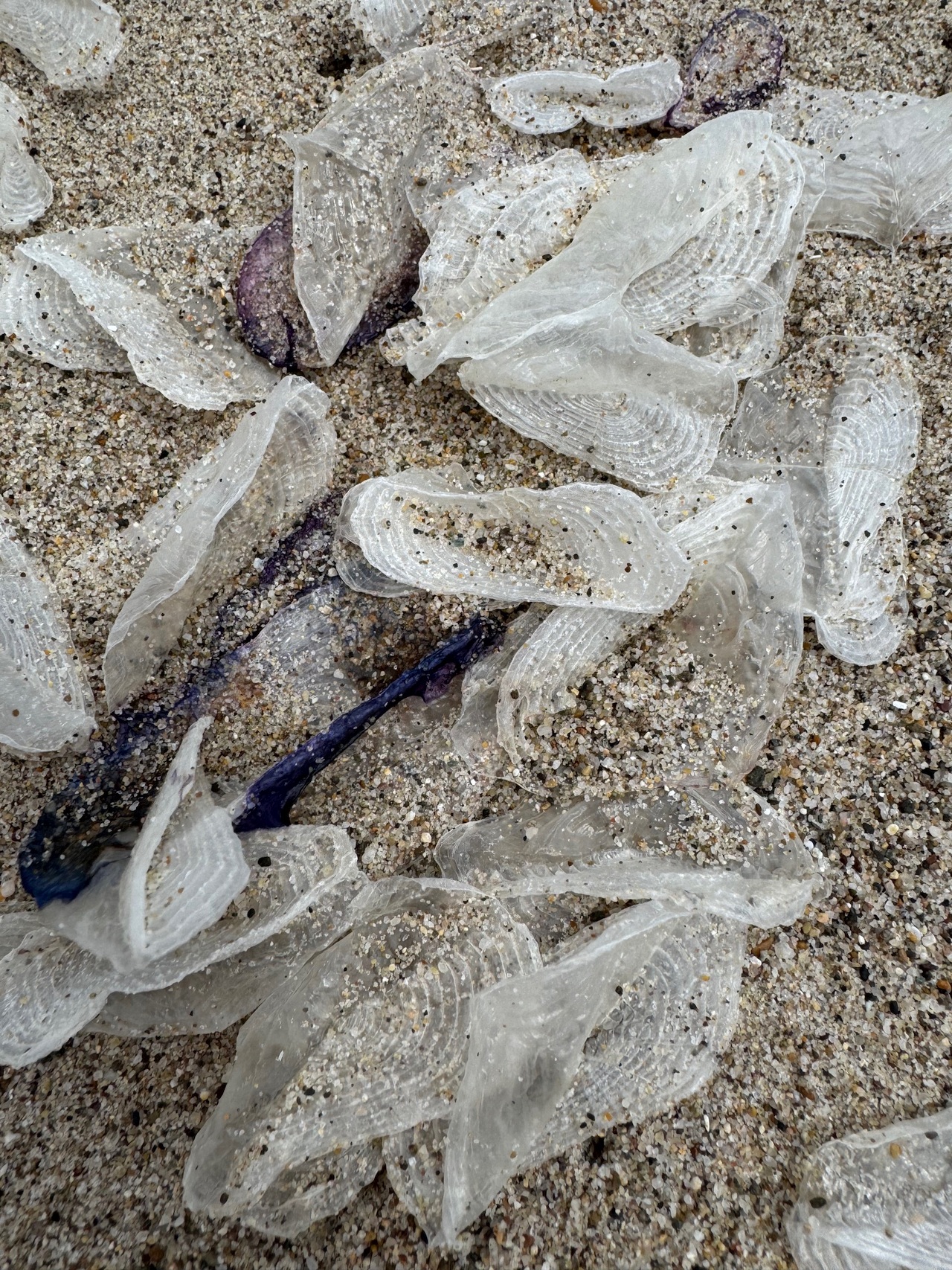
…..and their bodies look like litter on the breach.
Miscellaneous peeps and pipers can find something edible here, like this Short-billed Dowitcher.

When the winds blow badly for them, they can die by the millions.

Adaptations to one’s environment need not work all the time to be of overall benefit to survival of the species.
Discover more from SANTA MONICA BAY AUDUBON SOCIETY BLOG
Subscribe to get the latest posts sent to your email.



 SANTA MONICA BAY AUDUBON SOCIETY BLOG