Kenneth Hahn Park field trip, 12 April 2025
[By Lucien Plauzoles, photos by Ray Juncosa, domestic waterfowl comment by Chuck Almdale]
A typical spring day in coastal California starts with a cloudy chill and it was in fine tradition that we started our exploration in the native plant garden at the Stoneview Nature Center in the Blair Hills neighborhood of Culver City. We spotted a number of typical species there but were surprised by a captive quail exhibit probably used by educators when they welcome school groups.
Chris Tosdevin who has quail frequently in his Topanga yard opined that the young birds were not our usual CA quail. Having reviewed some of my photos I would guess they were Sooty Grouse, native to the Sierra ecosystem rather than the local mountains. (On the other hand, they could have been Northern Bobwhite Colinus virginianus, common in the eastern U.S., widely kept in cages and introduced elsewhere.–Ed.)
Near the quail enclosure was a small pond with a variety of waterfowl.

Notice the curly tail on this “pond duck.”

It’s not a goiter on this goose.
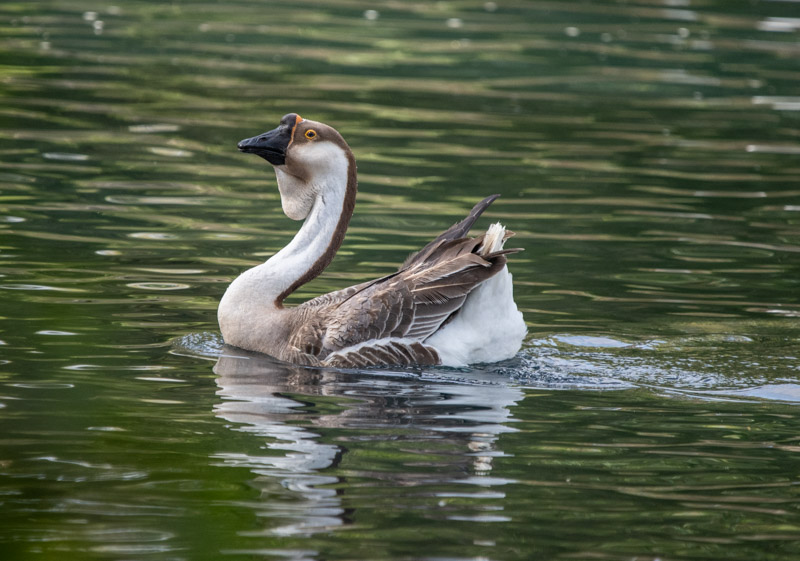
Domestic geese and ducks can go by many names which only those who fancy domestic wildfowl need concern themselves with. Most domesticated ducks that live in barnyards and wind up on someone’s plate are descended from the ubiquitous Mallard Anas platyrhynchos. The males have a little curl in their tail (see duck above), even if they’re totally white. In the Americas from Mexico southward, domestic Muscovy Ducks Cairina moschata, the ones with the knobbly red faces, are fairly common, not so much in the USA. Most domestic geese in the world are descended from Graylag Goose Anser anser, common in the wild from England to east Asia. The other species of domesticated goose is the Swan Goose Anser cygnoides, breeding in the wild in Mongolia, northeastern China and adjacent Siberia. In its domesticated versions, it is often called the Knob Goose, and it comes in two flavors: Chinese Goose and African Goose. (Some good photos on these two sites.) The latter is not from Africa but from China, as is the Chinese Goose, as you probably guessed, but it got hung up in Madagascar before making its domesticated way onward to Europe, so…African Goose it is. The chin wattle or dewlap can be found in both domestic versions, but the African seems to have it more commonly and larger. So…the goose in the pond at Kenneth Hahn park may be a Chinese Goose but in my mind the dewlap suggests a Brown African Goose, which is also called the African Wattled Goose, Knob Goose, African Knob Goose, Brown Goose, African Brown Goose, Super Goose, Super African Goose, and Dewlap African Goose. But they’re all Anser cygnoides or Swan Goose, so call then what you like, just don’t call them late for dinner or you’ll wind up with an angry goose banging on your kneecaps. – Ed.
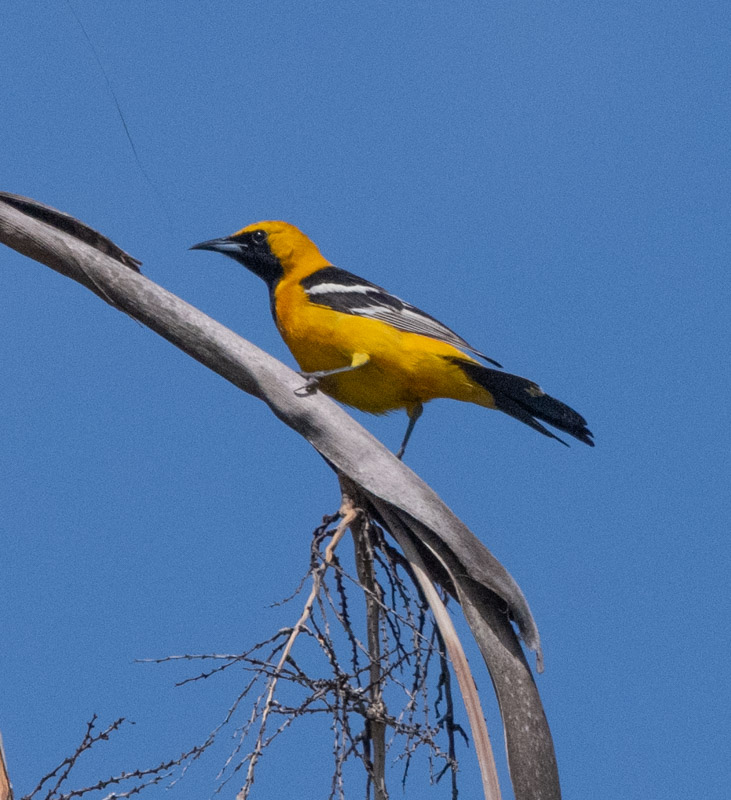
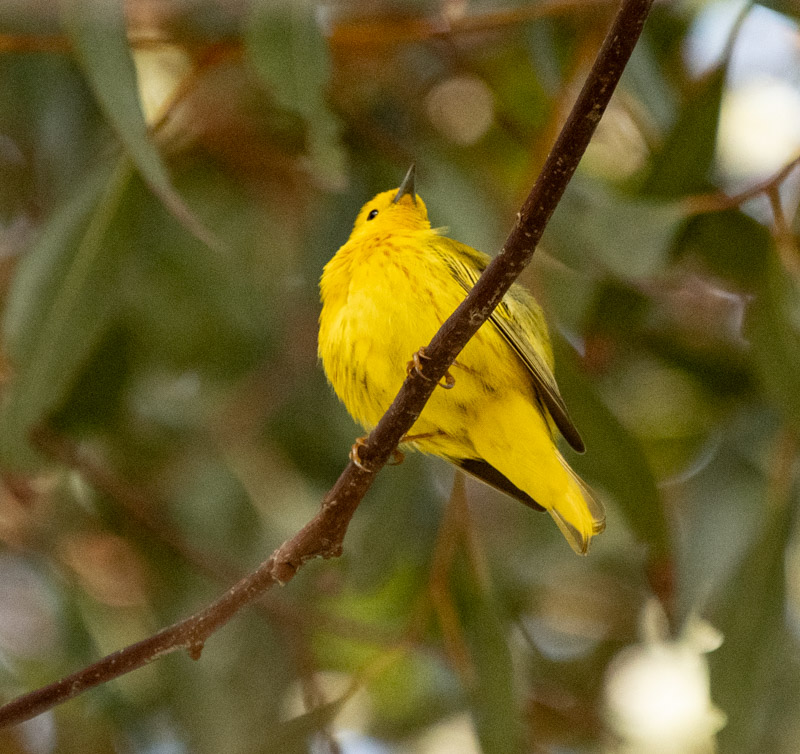
The walk continued over the steel pedestrian bridge over La Cienega Blvd and we spent an hour and half exploring the grassy areas of Kenneth Hahn Park A decent number of species seen and heard, but surprisingly few warblers. The exception was a show-off singing male yellow Warbler who welcomed the sunny half of our trip, but nary a Yellow-rumped Warbler! For next year, I would suggest a date in late March rather than waiting for April, despite the general opinion of many SoCal birders that we are in a late migration year.

Discover more from SANTA MONICA BAY AUDUBON SOCIETY BLOG
Subscribe to get the latest posts sent to your email.



 SANTA MONICA BAY AUDUBON SOCIETY BLOG