A few special birds at Huntington Beach Central Park, 11 Oct. 2025
[Written by Liz Galton; Photos by Armando Martinez and Emily Roth; comments & editing by Chuck Almdale]

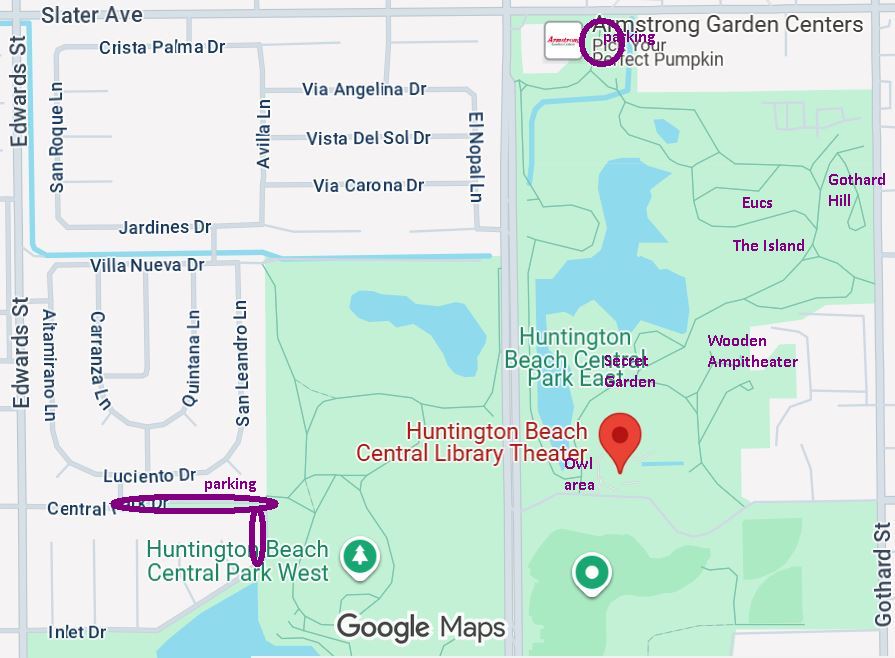
I am always happy when a number of people sign up for the Huntington Beach Central Park birding trip: eleven including me (the leader). It was a perfect day, good light, and not too hot. Maybe it’s the fabulous restaurant at the end!

Several other groups and individuals were already there, to see some previously sighted unusual birds, most of them in the process of migrating. This included vireos such as Cassin’s, Philadelphia and Yellow-green; warblers such as American Redstart, Blackburnian, Black-and-white, Magnolia and Tennessee; the perennial park visitor Rose-breasted Grosbeak; a rare Dickcissel (a species of cardinal), plus an Arctic Warbler, extremely rare in the lower 48 states. Groups of birders were gathered in certain locations, which caused us to go and join them and share the sightings. (“It was here an hour ago!” or “Oh, you just missed it by 30 seconds!” or “It’s right there, in the green tree.”) There had been reports of Tropical Kingbird, Cassin’s Vireo and others, almost none of which we saw, but not for lack of looking. In fact, at one point, we doubled back over territory we’d already covered, because someone running by said there had been a Blackburnian Warbler, but…no luck. But we did see quite a variety of good birds.
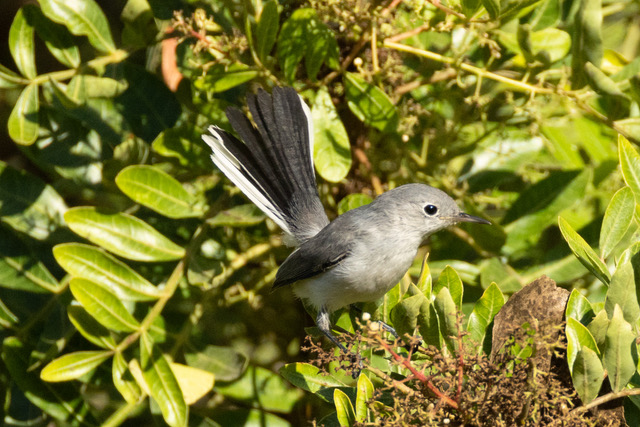
The central lake of the park has become even more covered with algae, duck weed or some other dense covering, which limited the number of waterbirds. Rumor had it that some action might be taken to remove it.

What clear water was left, had some (few) Great and Snowy Egrets, Mallards and Coots, one White-faced Ibis, a Great Blue Heron and a lovely female Belted Kingfisher, who obligingly perched for photos.
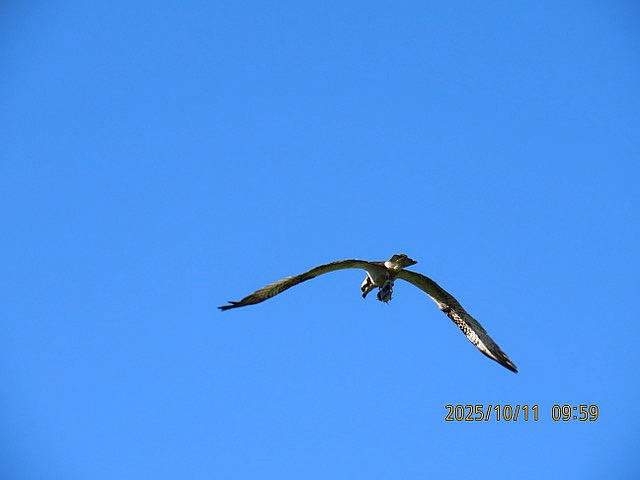
One Spotted Sandpiper was “spotted.” Also an Osprey dived and captured a good size fish, which was transported in suitably aerodynamic fashion, head first (so the wind wouldn’t get caught in the scales and slow the Osprey’s flight). When birds swallow fish whole, they do it the same way for the same reason — head first, so the scales and gill edges don’t get caught in their throat.
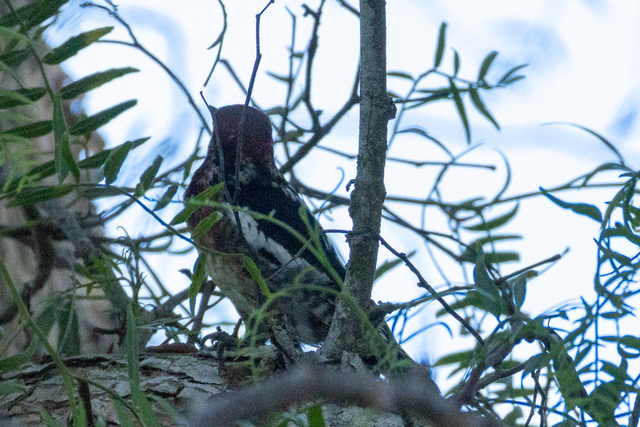
We had a good selection of land-based birds. Of the woodpeckers, we saw Downy and Nuttall’s Woodpeckers, a Red-breasted Sapsucker and a Northern Flicker. Warblers were well represented by Townsend’s, Orange-crowned, the especially Yellow-rumped, and a solitary Magnolia Warbler, seen only by Jean. We had a Black-headed Grosbeak slurping from a small protected patch of water. When initially mis-identified as a Red-breasted Grosbeak, much excitement developed, only to dwindle upon proper identification.
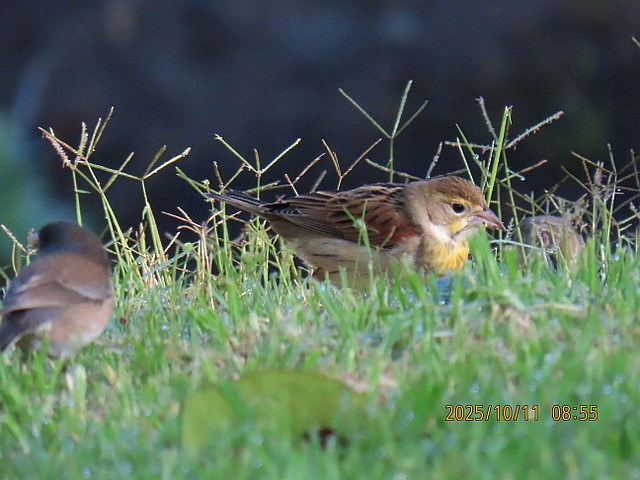
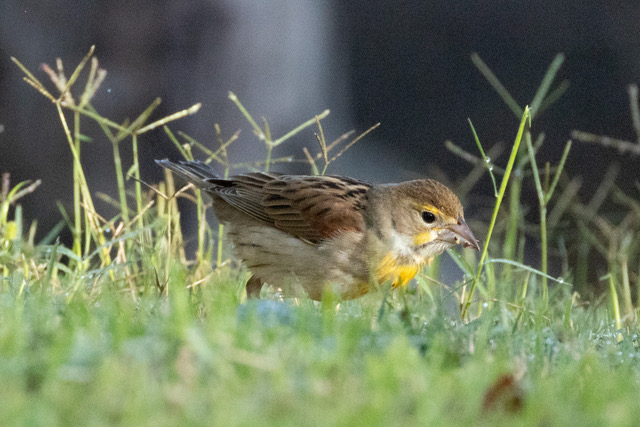
The rarest bird by far that we saw was the Dickcissel, in fact it was my first ever. The reddish-brown and yellow on it were very notable.

Dickcissel’s breed in the grasslands of the Great Plains, and rarely get west of the Rockies. Chuck Almdale reports that he has seen them before in California, all of…once.

A Hermit Thrush was near the lake-edge. At one small pond was a pair of Egyptian Geese, leading their small flock of goslings.


This very plain Western Bluebird in the shade baffled those who saw it, and even those later studying this photo. As Sherlock Holmes often said, “Eliminate the impossible, and whatever is left is the truth.” A printed field guide is very handy when you need to skim through 400 illustrations of passerines.
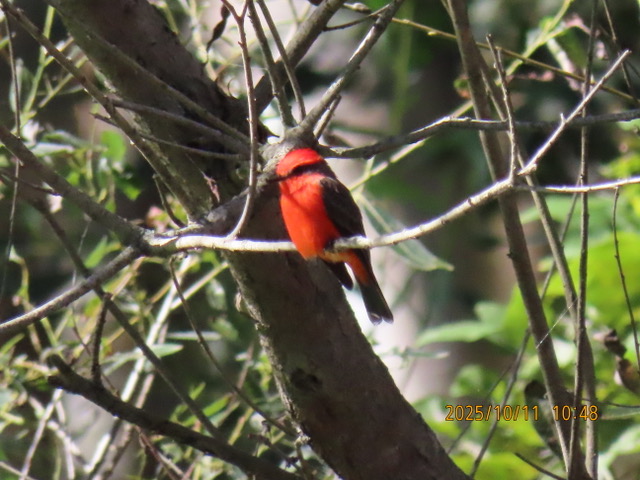
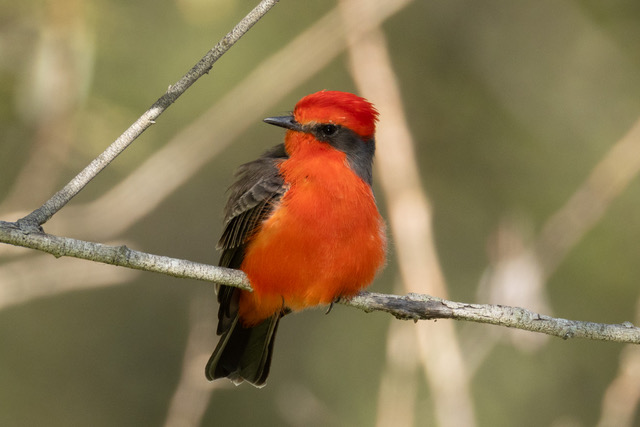
A spectacular bird was the Vermilion Flycatcher, who attracted a good audience.

Exotic birds were well represented by the Whydah (of African origin), present in numbers on a tree, including a spectacular male with his 8 inch tail, and all with their red beaks.

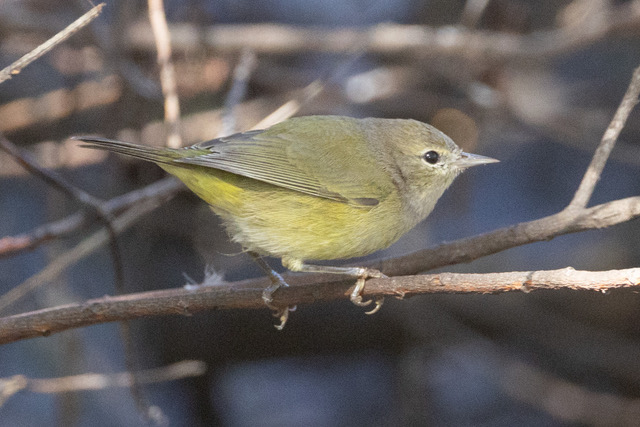
Here’s another look at an Orange-crowned Warbler, living up to its name. What? You can’t see the orange crown? Change the name!
The other exotics were the Scaly Breasted Munia, well established in the park, and the Swinhoe’s White-eyes of which we saw at least a dozen.
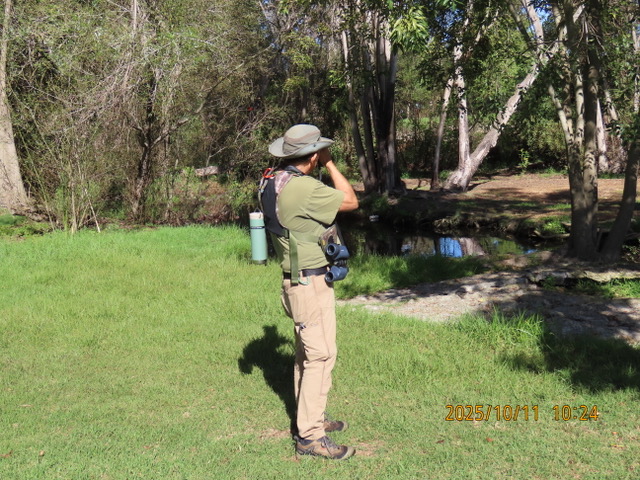
Sadly, eager searching turned up no library-owl, from which we deduce that he has probably moved away. We heard reports that his favorite tree was cut down, but as we’d seen them in at least a half-dozen different trees over the years, we don’t know which one was his “favorite.”
We didn’t photo any Townsend’s Warblers this year, so this one from last year will have to stand in for the many we saw.
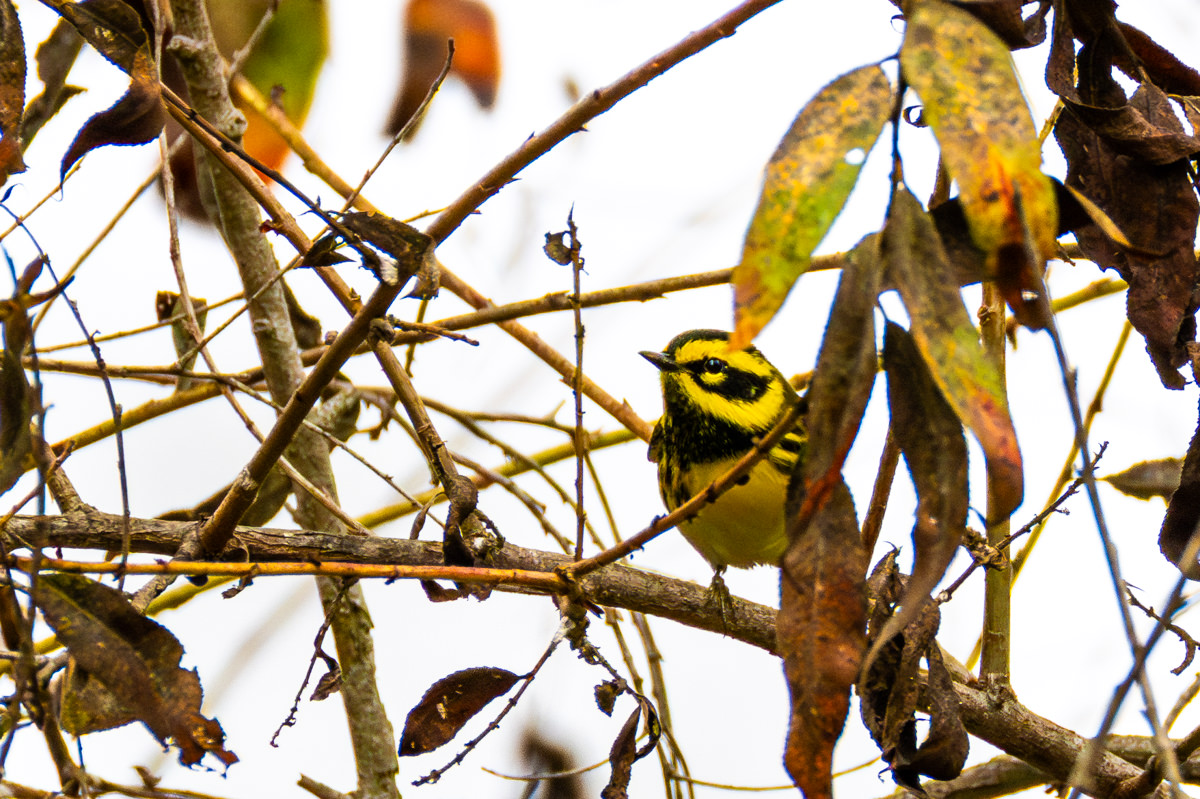
(Elyse Jankowski 10-12-24)
Huntington Beach Central Park on eBird as of 10-21-25: 10837 lists, 2049 eBirders, 304 species.
Most recent species added: Yellow-green Vireo, 20 Sep 2025, reported by Jill Dale.
Key: X – present; Bold – recent exotics; sub 1– heard; sub 2 – species intergrade; sub 3 – Eastern U.S. species.
| Huntington Beach Central Park | |||||||||
| Year | 2025 | 2024 | 2023 | 2022 | 2019 | 2018 | |||
| Date | 10/11 | 10/12 | 10/14 | 10/15 | 10/12 | 10/13 | |||
| 1 | Canada Goose | 35 | 40 | ||||||
| 1 | Egyptian Goose | 8 | 2 | 4 | X | X | |||
| 1 | Cinnamon Teal | 1 | 1 | ||||||
| 1 | Gadwall | X | |||||||
| 1 | Eurasian Wigeon | X | |||||||
| 1 | American Wigeon | 25 | 16 | 1 | 5 | X | |||
| 1 | Mallard | 35 | 40 | 16 | 37 | X | |||
| 1 | Green-winged Teal | 2 | |||||||
| 2 | Pied-billed Grebe | 2 | 4 | ||||||
| 7 | Feral Pigeon | 6 | 1 | ||||||
| 7 | Mourning Dove | 2 | 2 | 5 | X | ||||
| 8 | Anna’s Hummingbird | 2 | 1 | 2 | X | X | |||
| 8 | Allen’s Hummingbird | 4 | 3 | 2 | 7 | X | X | ||
| 2 | Virginia Rail | 1 | |||||||
| 2 | American Coot | 50 | 50 | 11 | 30 | X | X | ||
| 5 | Long-billed Dowitcher | 18 | |||||||
| 5 | Spotted Sandpiper | 1 | 2 | 2 | |||||
| 5 | Greater Yellowlegs | 1 | |||||||
| 6 | Western Gull | 1 | |||||||
| 6 | California Gull | 1 | |||||||
| 6 | Gull (species) | 1 | |||||||
| 2 | Double-crested Cormorant | 1 | 1 | X | |||||
| 3 | Great Blue Heron | 2 | 4 | 2 | 1 | X | |||
| 3 | Great Egret | 1 | 2 | 1 | 2 | X | X | ||
| 3 | Snowy Egret | 5 | 12 | 1 | 3 | X | X | ||
| 3 | Green Heron | 4 | 1 | 1 | X | ||||
| 3 | Black-crowned Night-Heron | 3 | 1 | 3 | X | X | |||
| 3 | White-faced Ibis | 1 | 30 | 4 | 1 | X | X | ||
| 4 | Turkey Vulture | 1 | 1 | 1 | |||||
| 4 | Osprey | 1 | 1 | 2 | 1 | ||||
| 4 | Cooper’s Hawk | 1 | 1 | 2 | X | ||||
| 4 | Red-shouldered Hawk | 1 | 1 | 1 | 3 | X | X | ||
| 4 | Red-tailed Hawk | 1 | 1 | 1 | |||||
| 8 | Belted Kingfisher | 1 | 1 | 1 | 1 | X | |||
| 8 | Red-breasted Sapsucker | 1 | |||||||
| 8 | Downy Woodpecker | 2 | 2 | 1 | 2 | X | X | ||
| 8 | Nuttall’s Woodpecker | 2 | 3 | 2 | X | ||||
| 8 | Northern Flicker | 1 | 1 | 1 | 2 | X | X | ||
| 4 | American Kestrel | 1 | 1 | 1 | X | X | |||
| 4 | Peregrine Falcon | 2 | 1 | ||||||
| 9 | Cassin’s Kingbird | 1 | 4 | 1 | |||||
| 9 | Western Wood-Pewee | X | |||||||
| 9 | Western Flycatcher | X | |||||||
| 9 | Black Phoebe | 12 | 15 | 5 | 8 | X | X | ||
| 9 | Say’s Phoebe | 1 | 2 | ||||||
| 9 | Vermilion Flycatcher | 2 | 3 | ||||||
| 9 | Hutton’s Vireo | 1 | |||||||
| 9 | Warbling Vireo | 1 | 1 | ||||||
| 9 | California Scrub-Jay | 1 | |||||||
| 9 | American Crow | 8 | 6 | 1 | 10 | X | X | ||
| 9 | Common Raven | X | |||||||
| 9 | Bushtit | 20 | 12 | 30 | X | X | |||
| 9 | Swinhoe’s White-eye | 12 | 7 | 4 | 10 | X | |||
| 9 | Ruby-crowned Kinglet | 1 | 2 | 1 | |||||
| 9 | Blue-gray Gnatcatcher | 3 | 2 | 1 | 1 | X | X | ||
| 9 | House Wren | 1 | 4 | 2 | 2 | X | X | ||
| 9 | Western Bluebird | 4 | 4 | 10 | 25 | ||||
| 9 | Hermit Thrush | 1 | 2 | X | |||||
| 9 | American Robin | 2 | X | ||||||
| 9 | Bronze Mannikin | X | |||||||
| 9 | Scaly-breasted Munia | 1 | 5 | X | X | ||||
| 9 | Pin-tailed Whydah | 10 | 5 | X | |||||
| 9 | House Finch | 3 | 10 | 6 | 12 | X | X | ||
| 9 | Lesser Goldfinch | 5 | 4 | 2 | 4 | X | X | ||
| 9 | American Goldfinch | 12 | 2 | X | |||||
| 9 | Dark-eyed Junco | 15 | 1 | ||||||
| 9 | White-crowned Sparrow | 6 | 3 | X | X | ||||
| 9 | Song Sparrow | 4 | 8 | 2 | 1 | X | X | ||
| 9 | California Towhee | X | X | ||||||
| 9 | Hooded Oriole | X | |||||||
| 9 | Red-winged Blackbird | 2 | |||||||
| 9 | Brewer’s Blackbird | X | |||||||
| 9 | Great-tailed Grackle | 3 | |||||||
| 9 | Black-and-white Warbler | 1 | 1 | ||||||
| 9 | Orange-crowned Warbler | 6 | 4 | 1 | 4 | X | X | ||
| 9 | Nashville Warbler | X | |||||||
| 9 | MacGillivray’s Warbler | 1 | |||||||
| 9 | Common Yellowthroat | 4 | 12 | 1 | 7 | X | X | ||
| 9 | Magnolia Warbler3 | 1 | |||||||
| 9 | Yellow Warbler | 3 | 1 | X | |||||
| 9 | Yellow-rumped Warbler | 35 | 14 | 16 | 14 | X | X | ||
| 9 | Black-throated Gray Warbler | 1 | X | ||||||
| 9 | Townsend’s Warbler | 15 | 4 | 4 | 1 | X | X | ||
| 9 | Wilson’s Warbler | X | |||||||
| 9 | Western Tanager | X | |||||||
| 9 | Black-headed Grosbeak | 1 | |||||||
| 9 | Dickcissel3 | 1 | |||||||
| Totals by Type | 2025 | 2024 | 2023 | 2022 | 2019 | 2018 | |||
| 1 | Waterfowl | 103 | 101 | 21 | 43 | ||||
| 2 | Water Birds – Other | 52 | 55 | 12 | 31 | ||||
| 3 | Herons, Egrets & Ibis | 9 | 55 | 10 | 11 | ||||
| 4 | Quail & Raptors | 8 | 7 | 5 | 7 | ||||
| 5 | Shorebirds | 1 | 2 | 3 | 18 | ||||
| 6 | Gulls & Terns | 1 | 1 | 0 | 0 | ||||
| 7 | Doves | 13 | 2 | 5 | 1 | ||||
| 8 | Other Non-Passerines | 14 | 11 | 9 | 12 | ||||
| 9 | Passerines | 188 | 130 | 98 | 77 | ||||
| Totals Birds | 389 | 364 | 163 | 200 | 42 | 41 | |||
| Total Species | 2025 | 2024 | 2023 | 2022 | 2019 | 2018 | |||
| 1 | Waterfowl | 4 | 6 | 3 | 3 | 3 | 3 | ||
| 2 | Water Birds – Other | 2 | 3 | 2 | 2 | 1 | 2 | ||
| 3 | Herons, Egrets & Ibis | 4 | 6 | 6 | 6 | 4 | 6 | ||
| 4 | Quail & Raptors | 7 | 7 | 4 | 4 | 2 | 3 | ||
| 5 | Shorebirds | 1 | 1 | 2 | 1 | 0 | 0 | ||
| 6 | Gulls & Terns | 1 | 1 | 0 | 1 | 0 | 0 | ||
| 7 | Doves | 2 | 1 | 1 | 1 | 1 | 0 | ||
| 8 | Other Non-Passerines | 7 | 6 | 6 | 4 | 5 | 5 | ||
| 9 | Passerines | 29 | 24 | 24 | 13 | 26 | 22 | ||
| Totals Species – 85 | 57 | 55 | 48 | 35 | 42 | 41 | |||
Discover more from SANTA MONICA BAY AUDUBON SOCIETY BLOG
Subscribe to get the latest posts sent to your email.



 SANTA MONICA BAY AUDUBON SOCIETY BLOG