A foggy foggy morn: Back Bay Newport & San Joaquin Marsh, 12-13-25
[By Chuck Almdale; photos by Ray Juncosa, Armando Martinez and Pam Susemiehl]
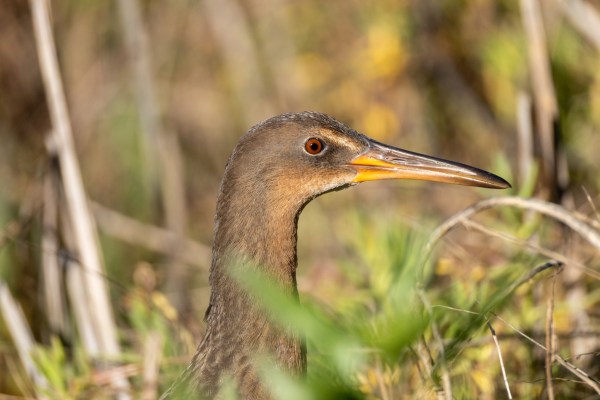
I arrived a little early at the meeting place – a roadside patch of dirt large enough for at least 8 cars – and was the only one there, although I’d passed Armando examining a roadside reedbed. A quick look around through the heavy fog revealed several species of duck, some egrets, a couple of coots and…a Ridgway’s Rail, about 50 yards away among the reeds across the water. A nice surprise. Unfortunately he soon disappeared, never to be seen again.
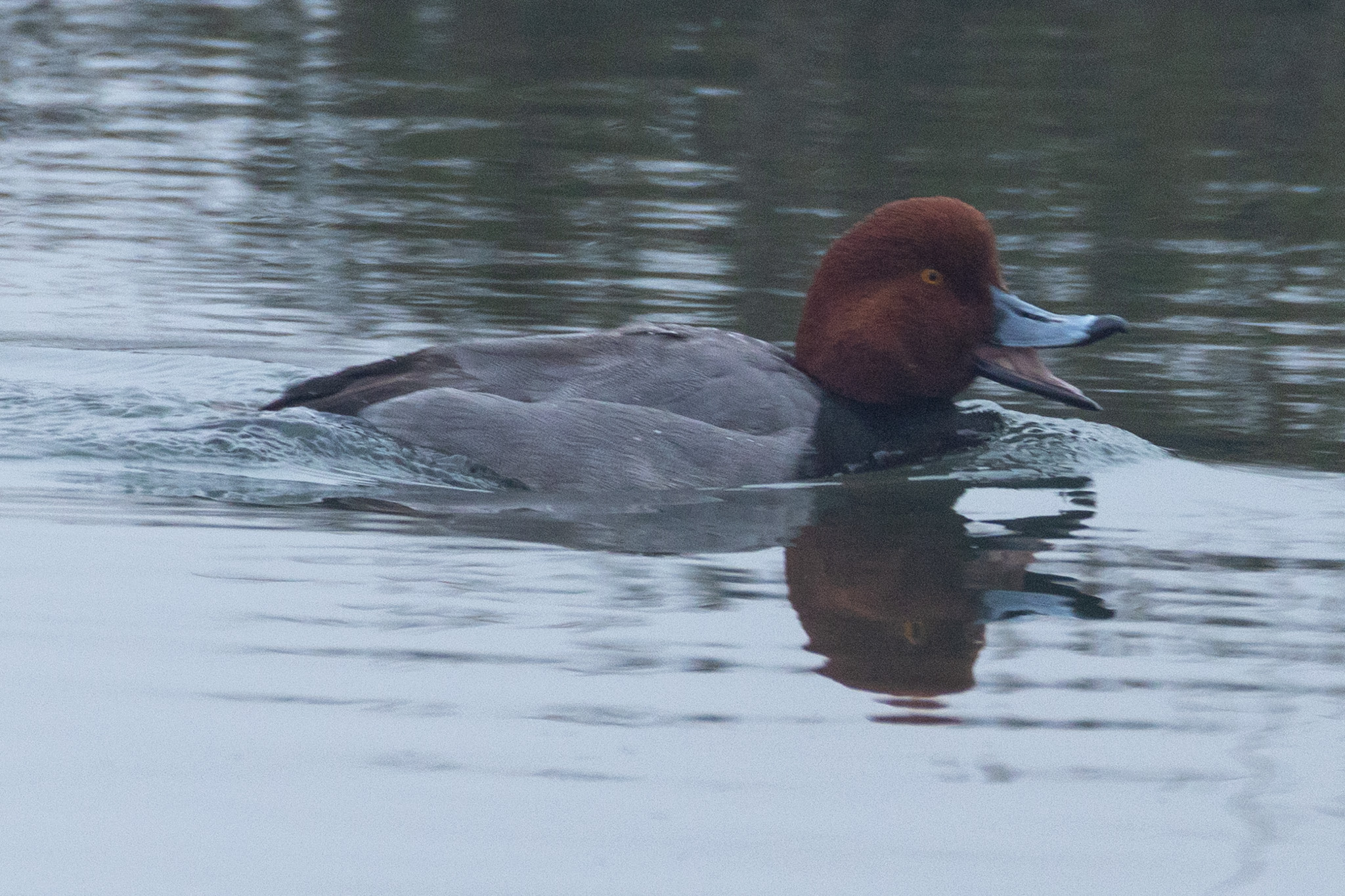
Most of the ducks of the morning and the rest of the day were American Wigeon, Green-winged Teal and Northern Pintail, but we had ten other species. Most of them were in bright fall plumage.
Our last few trips here, all at the highest tides of the year, had been unlucky with no well-seen rails. I had also decided that using the bike path on the northwest side of the bay was dangerous on weekends with all the whizzing bikes, and the high-sided wall for much of its length not suited for shorter birders. So it was the east-side ‘Mountains to the Sea Trail & Bikeway,’ also suitable for cars, one-way. We were birding an intermediate tide, dropping from a high of +4.91 ft. at 4:51am to a low of +1.32 ft. at 11:42am. We hoped to see more ducks and shorebirds than last time, and we certainly did.
After thoroughly checking the lower end of the route, we drove slowly to the foot of San Joachin Hills Rd. and parked. Where this road meets the trailway is a small pond where ducks gather, often including the less common like Blue-winged Teal and Eurasian Wigeon. We then walked a few hundred yards along the roadway checking the low areas for rails, which I have seen here many times. No additional rails, but a nice collection of bushbirds were here, as well as a group of workmen secured by ropes and rockclimbing equipment busily covering the cliff face with canvas before the winter rains really begin.
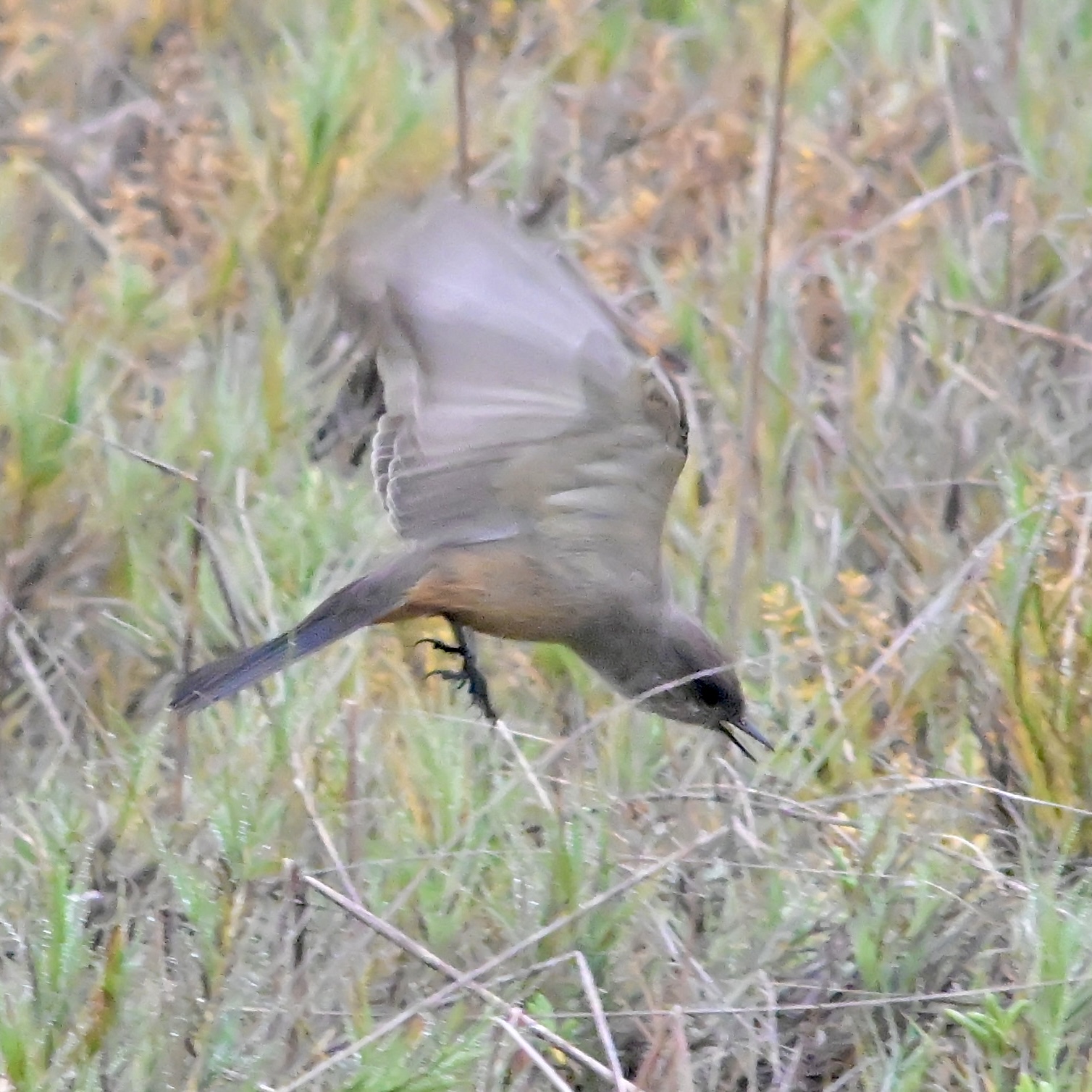
Both Black and Say’s Phoebes were flycatching and gleaning in the grass. Male hummers perched on bare stalks and twigs, glittering in the foglight.
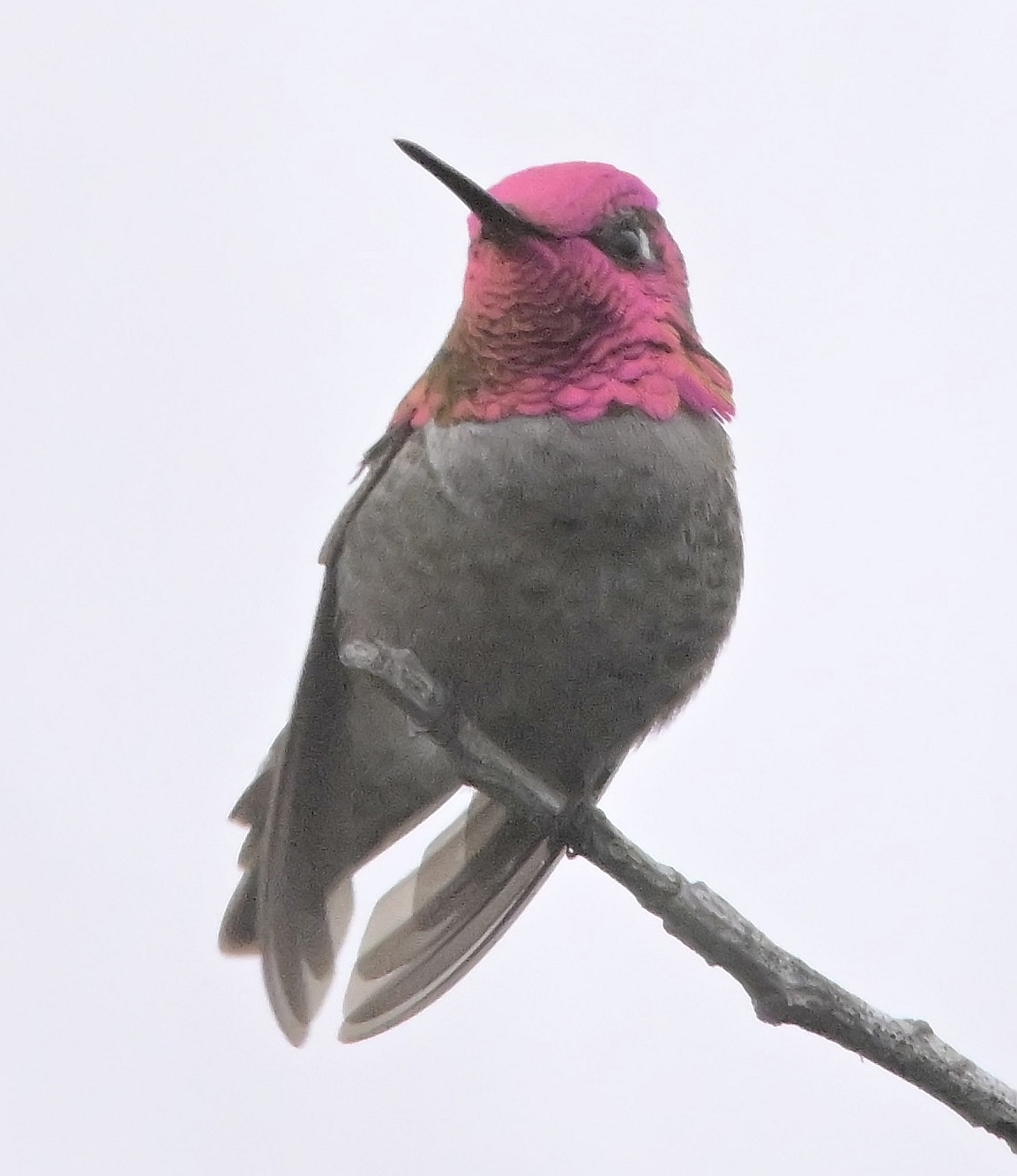
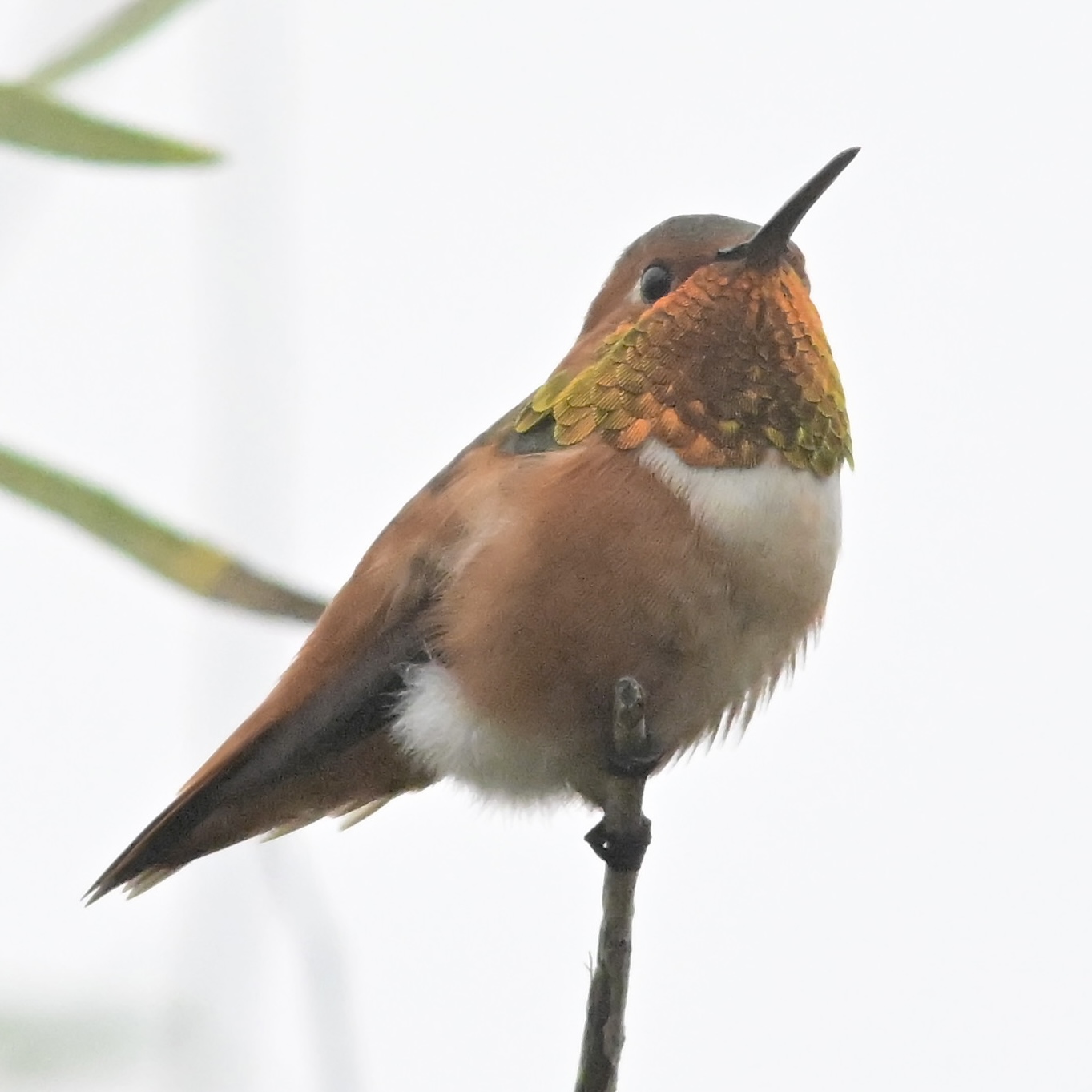
The male Allen’s Hummingbird below displays just about all the structural colors his gorget is capable of producing.
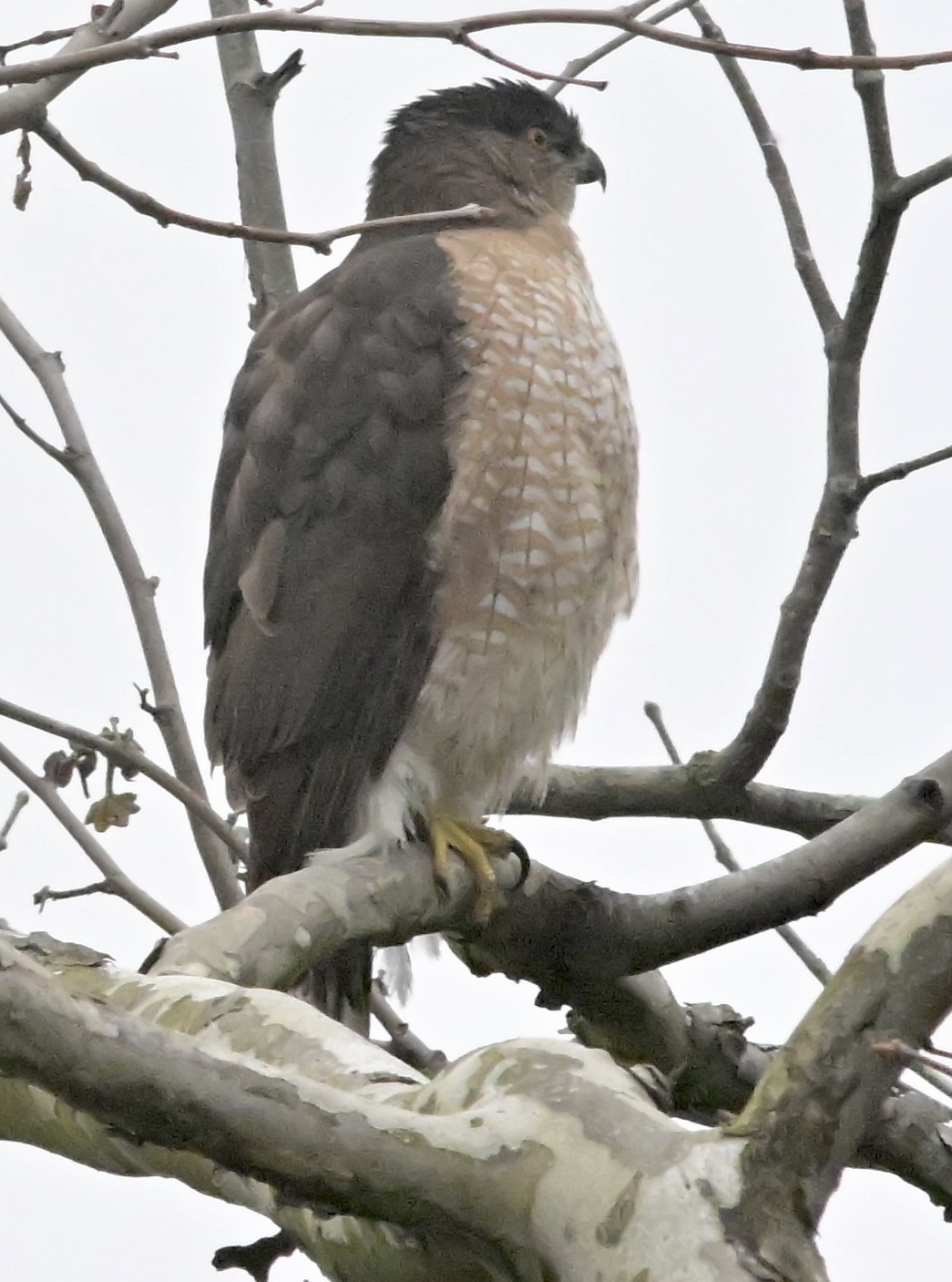
Back in our cars and approaching the mid-route parking lot and toilet stop, we spotted a hawk in a roadside tree.
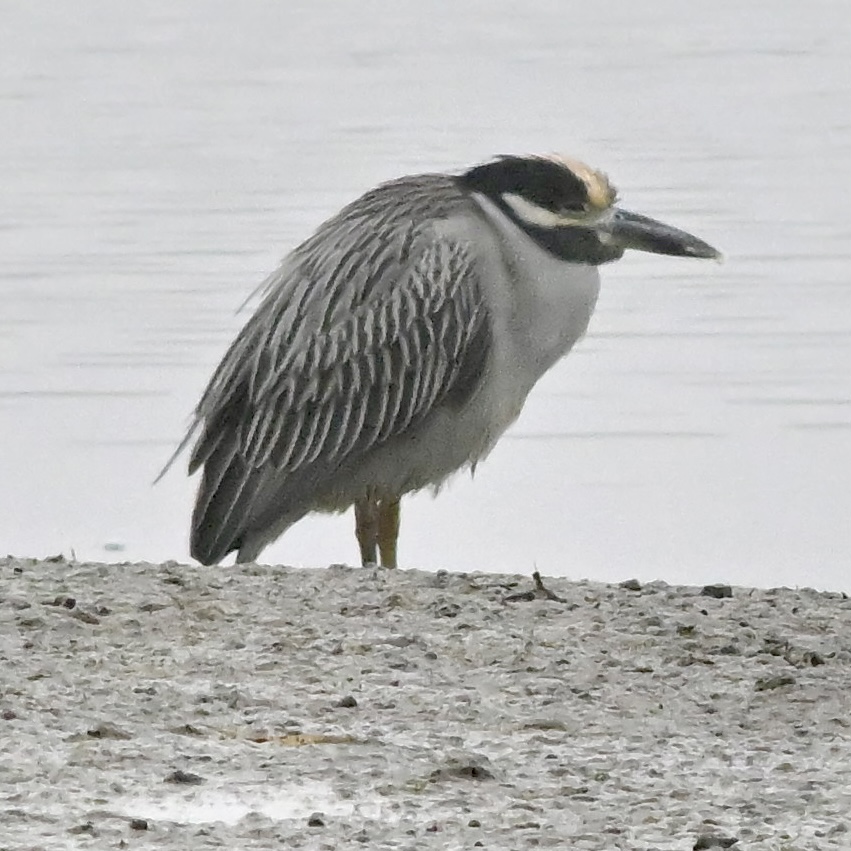
The tide had dropped significantly, and we looked for ‘peeps,’ small sandpipers. The downside of birding at a lower tide is that the water’s edge may be a long way away. As that’s where most of the peeps were, we could I.D. them only in the scope; photography, considering the light and fog, was difficult. Closer in was a Reddish Egret standing on a dead bush in the water, and nearby an adult Yellow-crowned Night Heron on the mudflat’s edge. Perhaps it was the same one we saw last year. They’re still uncommon in most of SoCal, so if you see only one for each of two consecutive years in the same locale, it’s quite likely the same individual bird.
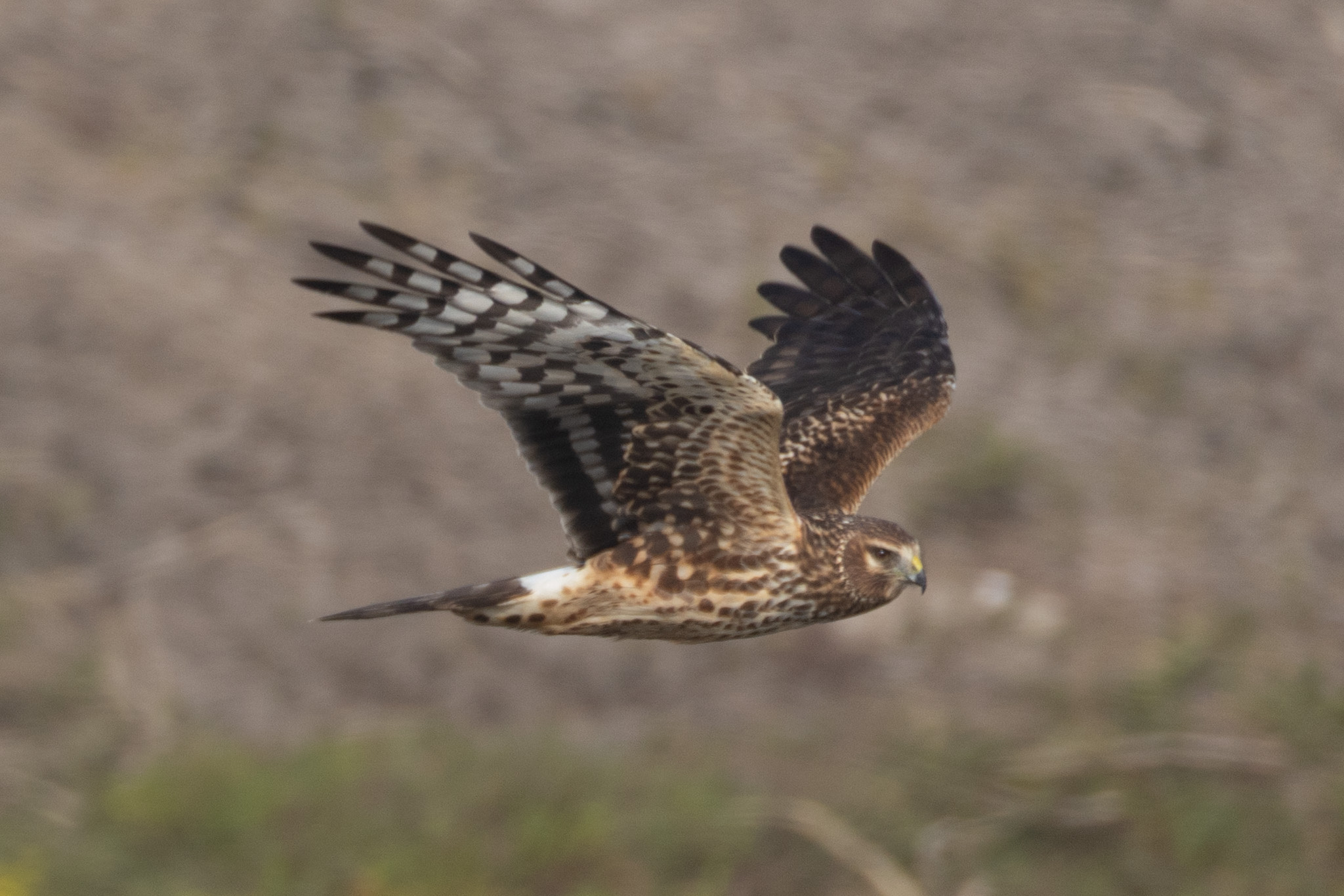
Several times we were passed by a Northern Harrier, most easily recognized by it’s white rump and owl-like face.
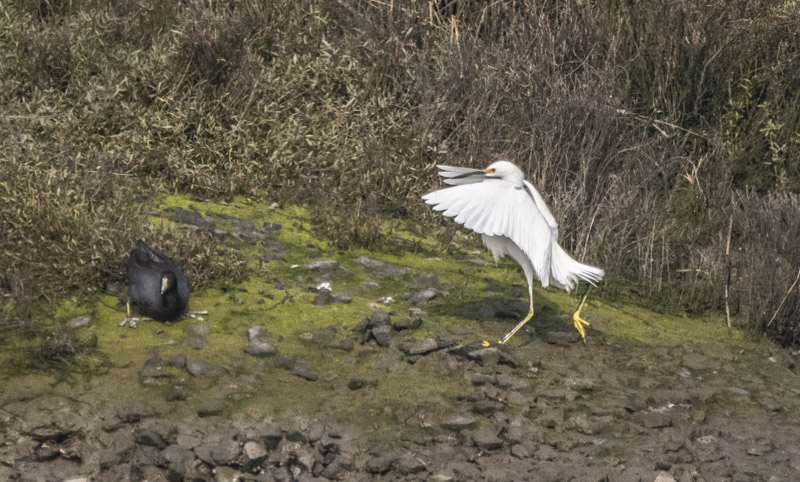
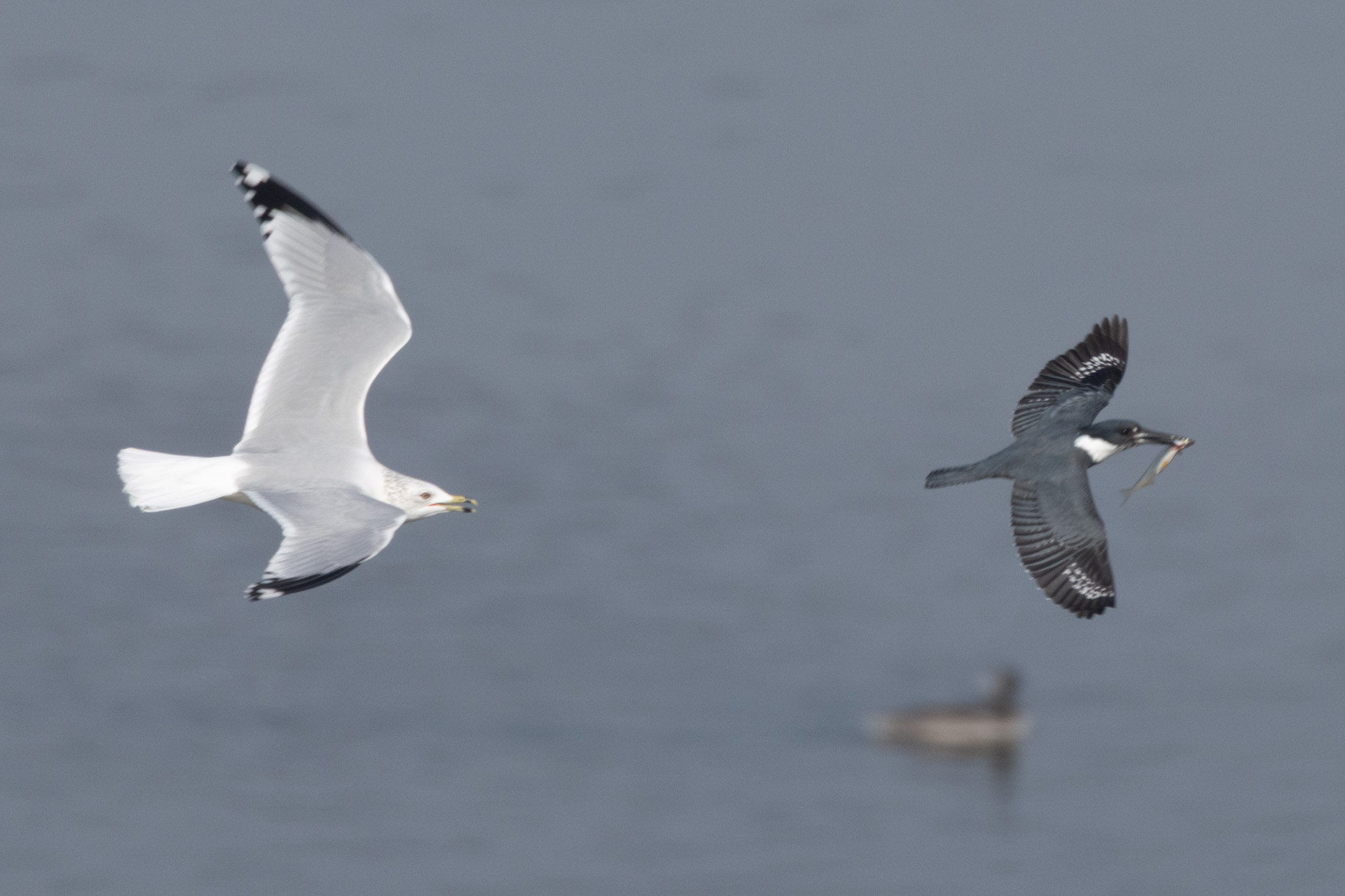
And there’s frequent excitement among the birds themselves.
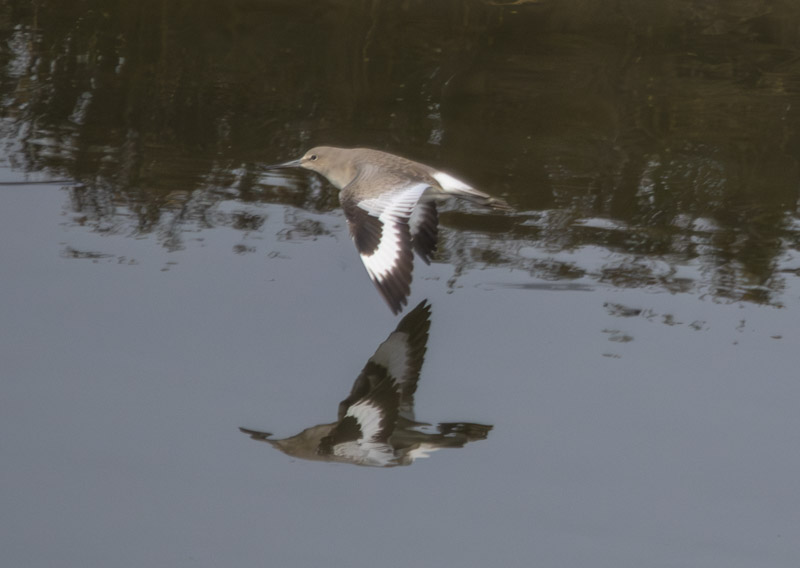
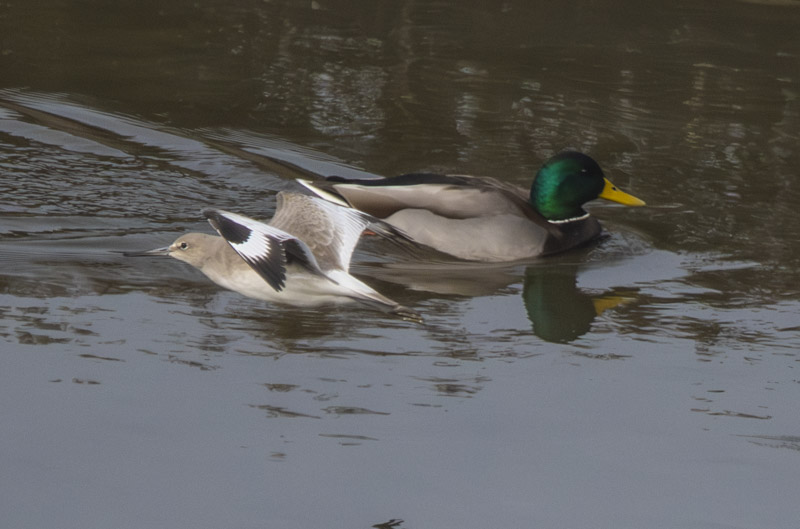
This Willet is not easily distracted by reflections or Mallards.
Towards the upper end of the bay we ran across a pair of battling Willets.
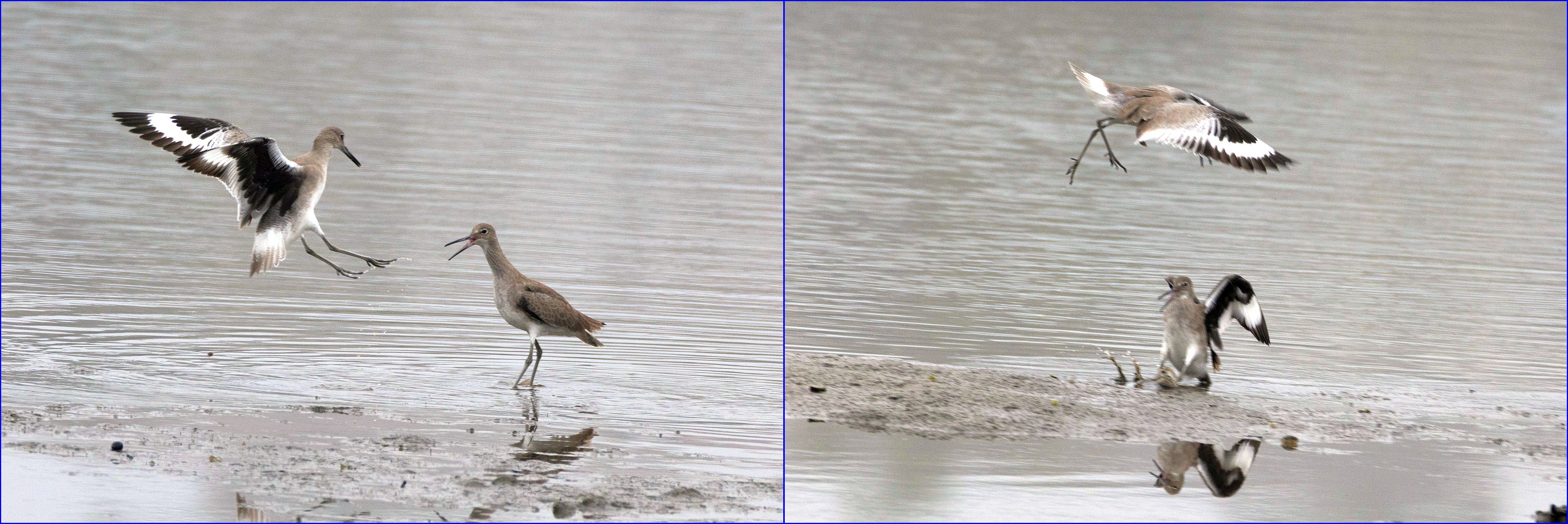
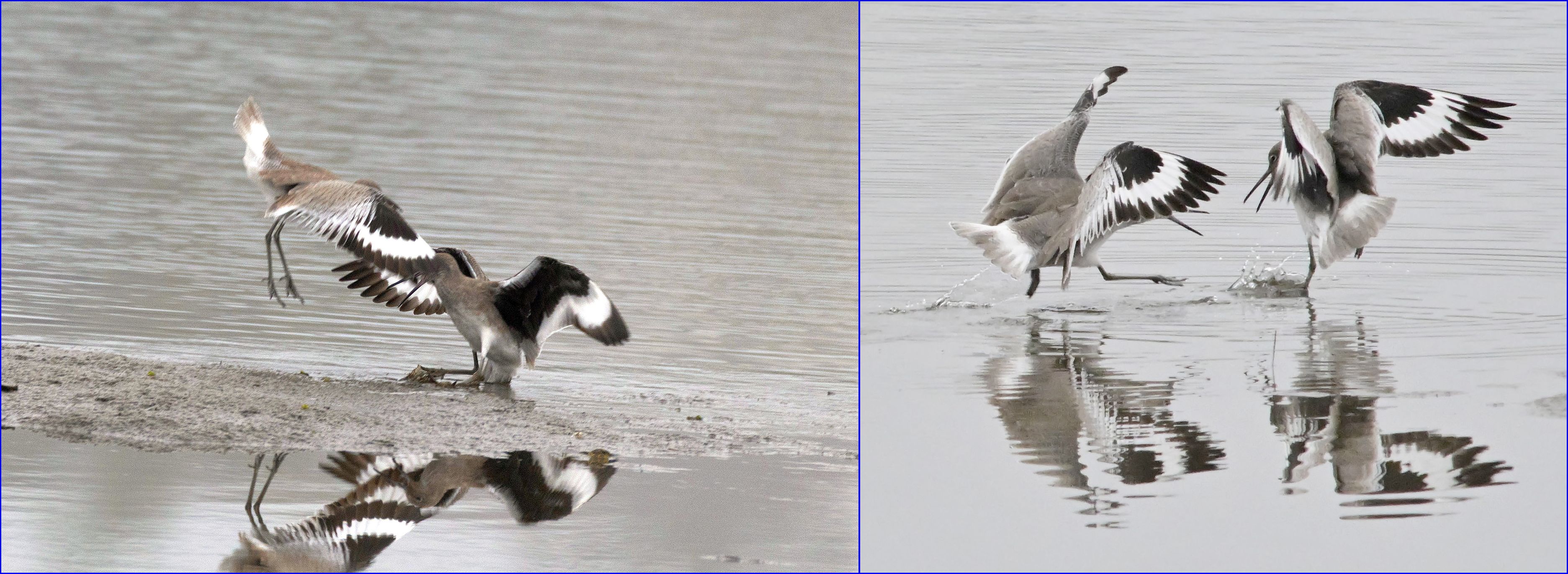
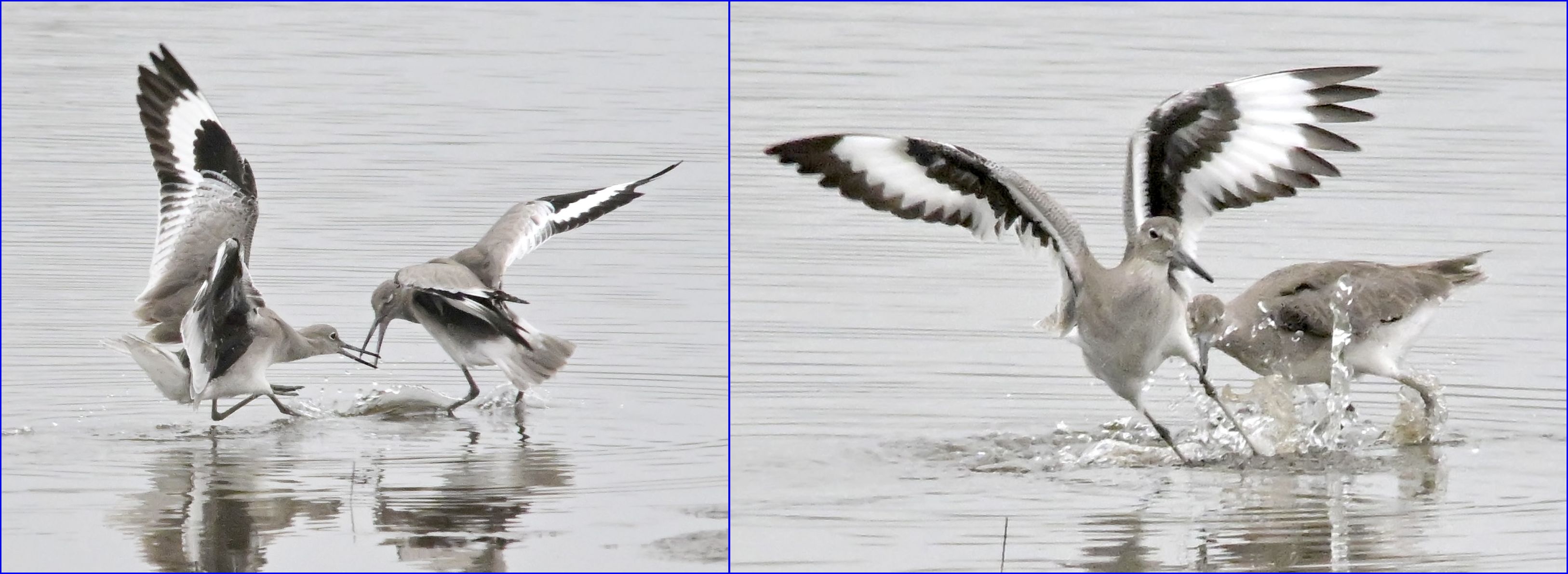
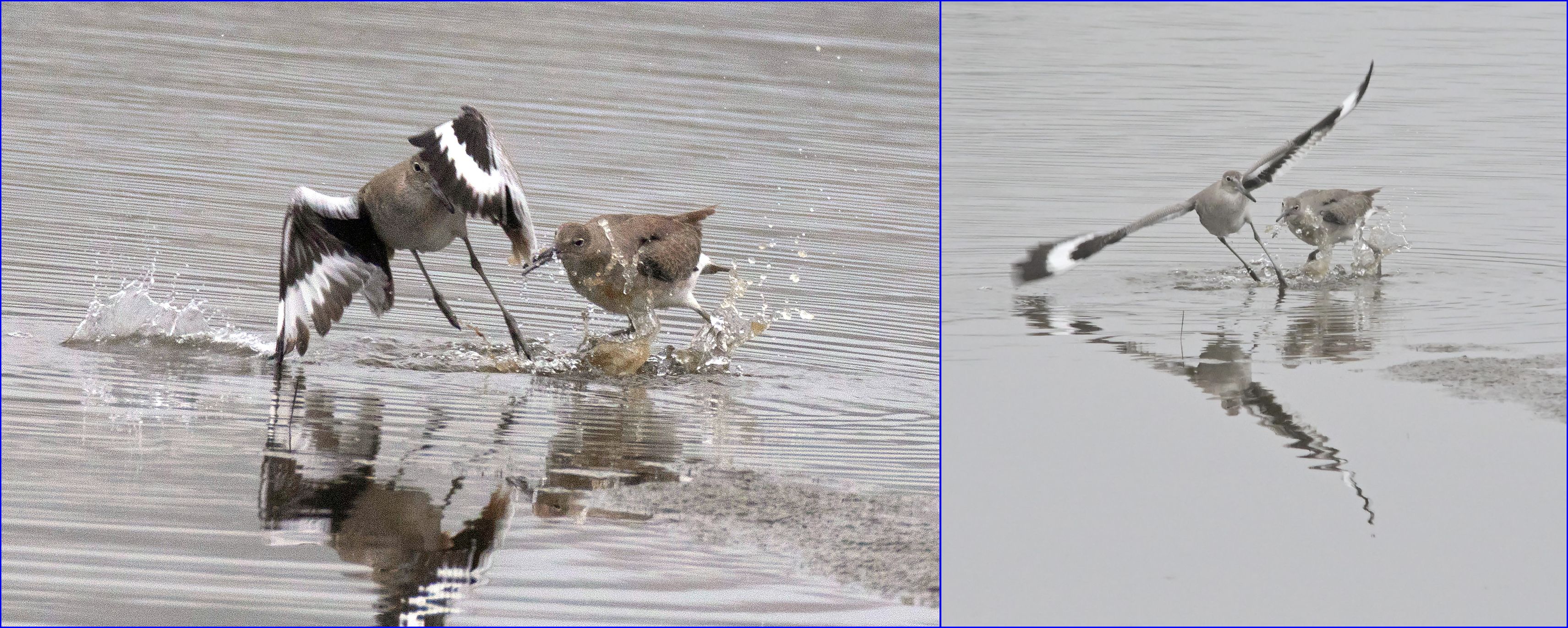
As is common with such fights, it ended when one left and one stayed.
Lunch, as usual, was at the San Joaquin Marsh picnic tables, about two miles up the creek from the Jamboree bridge, where Sea & Sage Audubon has their headquarters and bookstore. Here you can see many of the same birds as at the back bay, plus a few new ones, and nearly all of them much closer and friendlier. First to greet us were the Cedar Waxwings in the sycamores near our lunch table, who kept flying back and forth between the trees. At one point about 200 of them flew in from somewhere and occupied most of the available twigs. These were all high up, but later we saw some almost at eye level.
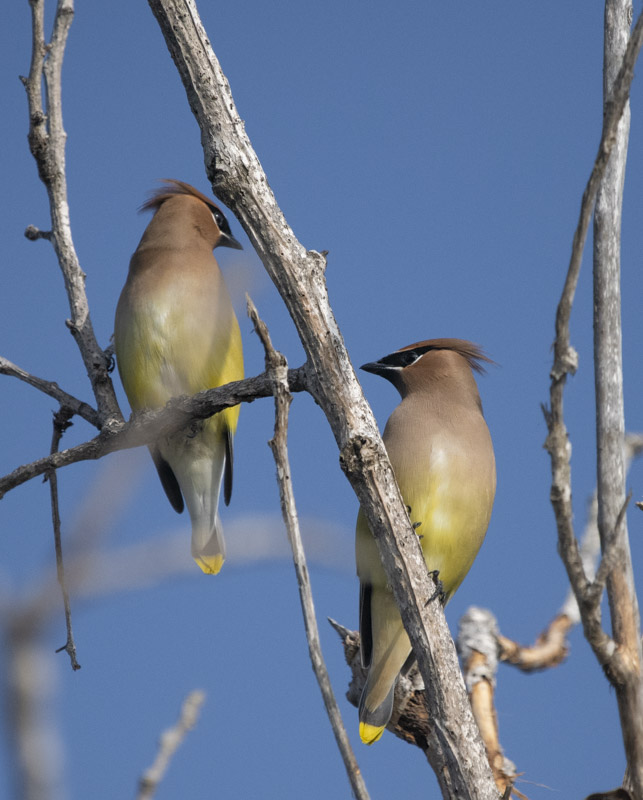
(Ray Juncosa 12-13-25, San Joaquin Marsh)
Their wings have never looked particularly “waxy” to me, and a little research revealed why: they are so named because the “bright red coloring of the bare shafts of the tips of some of the secondary wing feathers which resembles the color of sealing wax.” This is something that younger birders – particularly those used to email and texts which currently require no wax – would not know, but I remember my sister sealing her 40-page correspondences to distant friends with red sealing wax. It came in the form of a long shiny red rectangular candle; light the wick, dribble some melting wax onto the closed envelope flap, press your personal metal seal or signet ring onto it as it cools and there your are…signed, sealed and ready to be safely delivered by official government agents. And yes, the shade of sealing wax red was just like waxwing red. Also: these are “Cedar” Waxwings “for the bird’s fondness for the berries of the evergreen commonly called cedar.” They also love the berries of the parasitic mistletoe plant, which happened to be growing on the sycamore limbs above our heads. As a brief aside: there’s a bit of a mystery about the origin of the name for the Bohemian Waxwing, as their breeding range does not include Bohemia (famous for great beer!, infamous for defenestrating their politicians), now known as Czechia or the Czech Republic, although a few may winter there. [E.A. Choate’s Dictionary of American Bird Names.]
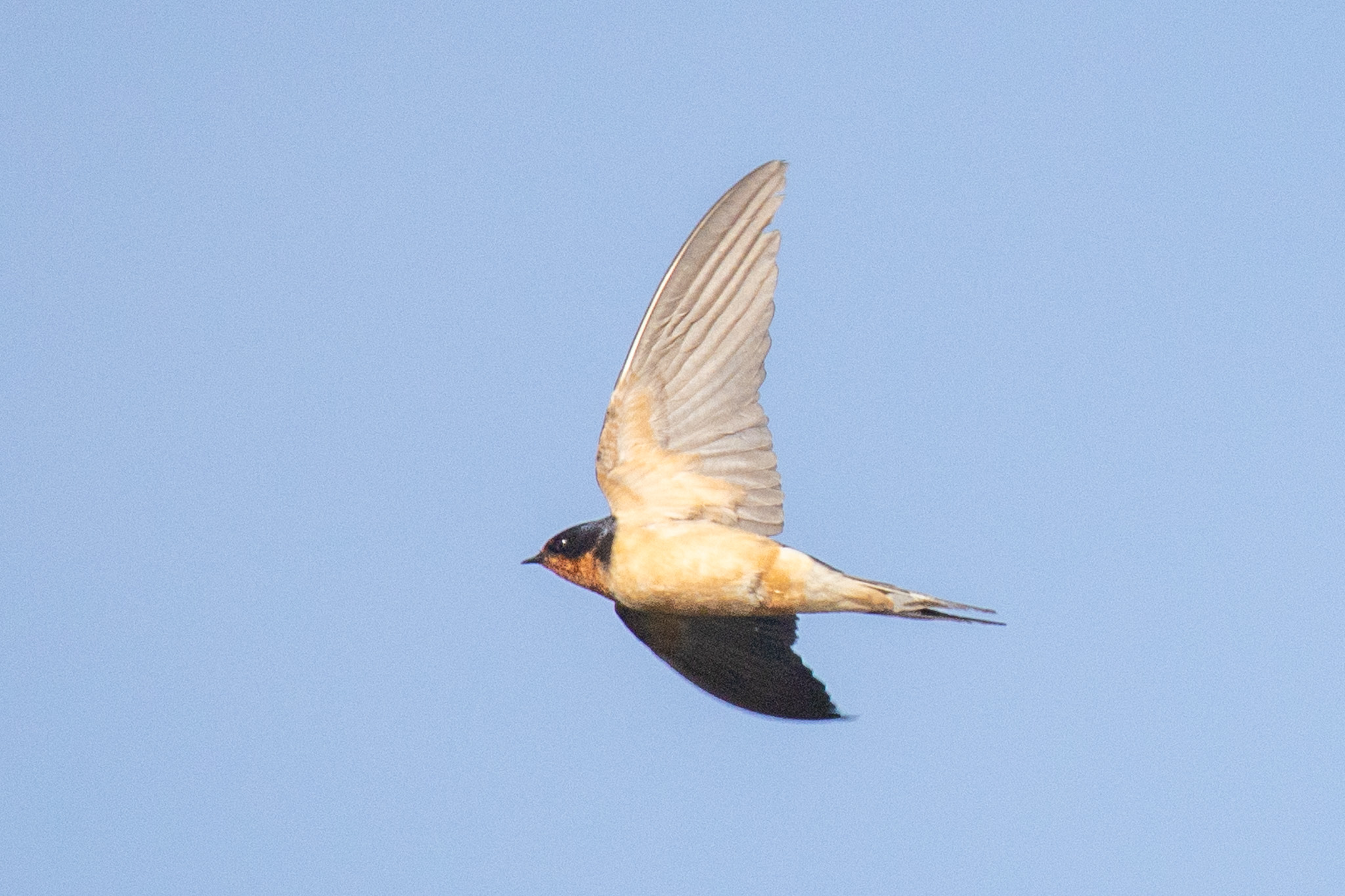
Barn Swallows flew overhead. I suppose they haven’t heard that they must first leave before they can return on California’s Official Swallow Return Day next Spring.
Around some of the ponds there were a scattering of blue nesting boxes; perhaps for bluebirds? I don’t know. On one of them someone had attached this scruffy bird-like object, perhaps to fool the unwary and easily-gulled birder. Then it moved, and I realized it was alive.
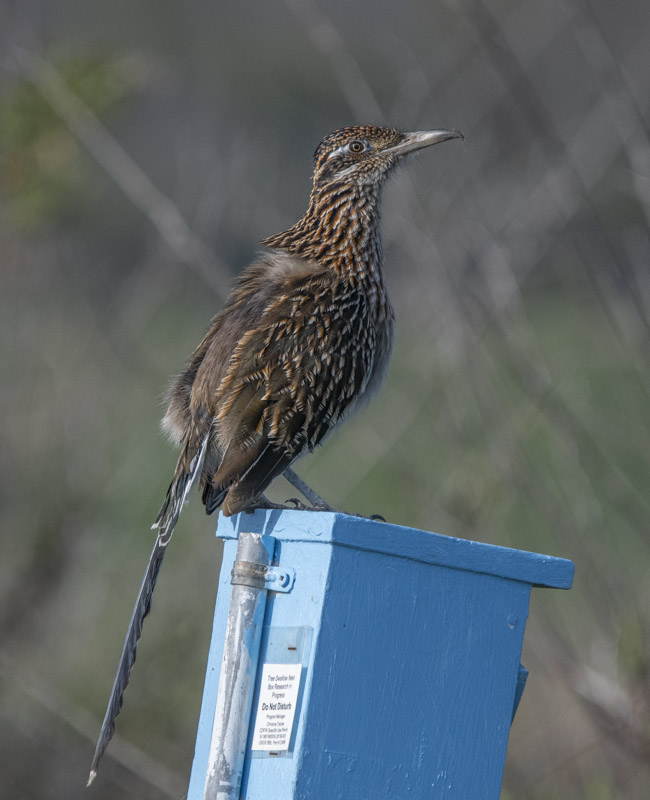
It was certainly used to human presence. We slowly walked by it, within 15-20 feet – the width of the road – and it never twitched a muscle. Closeups were possible.
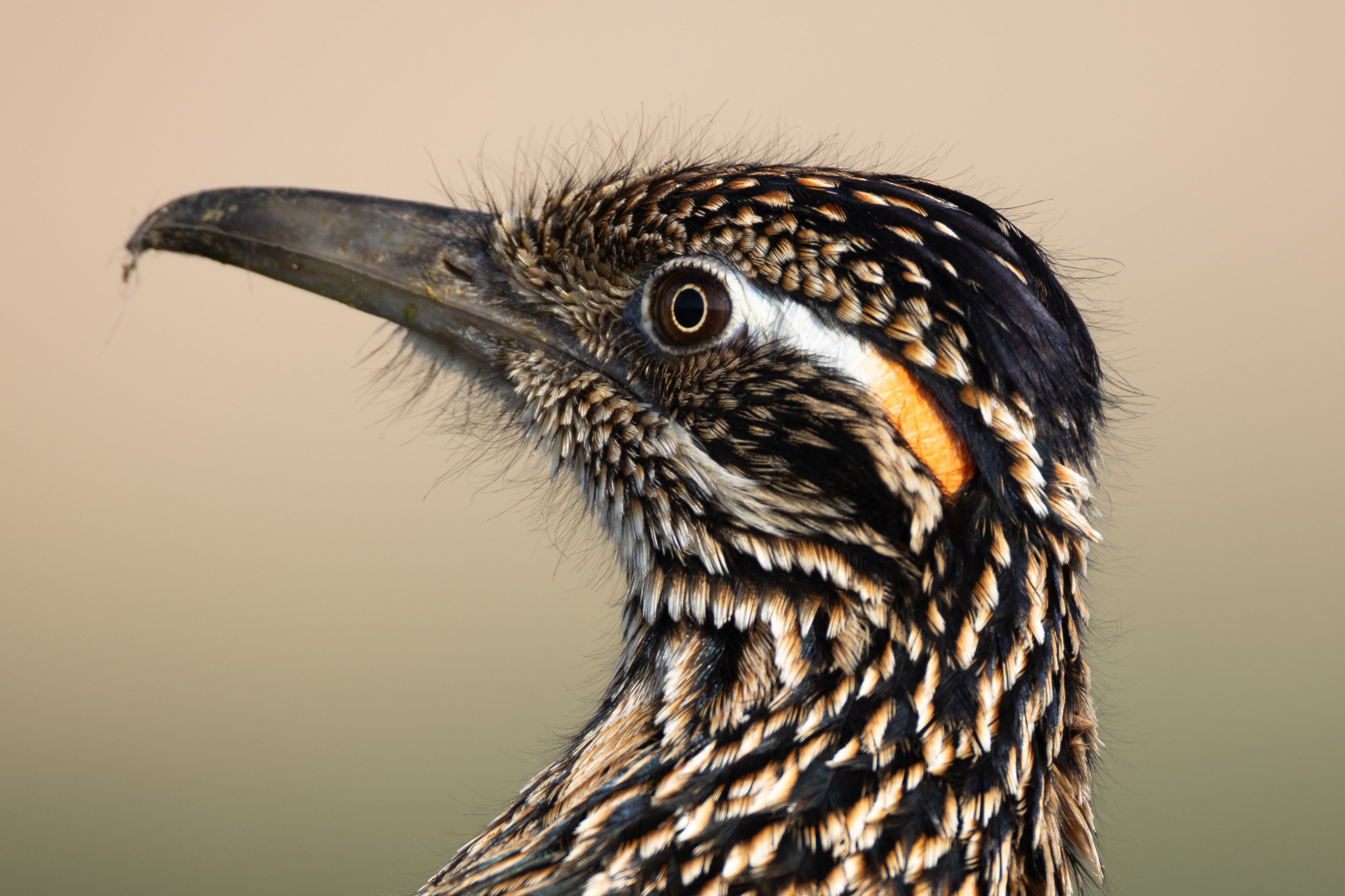
That streak of color behind the eye, which I call it’s “racing stripe,” can have quite a bit of lovely iridescent color during breeding season.
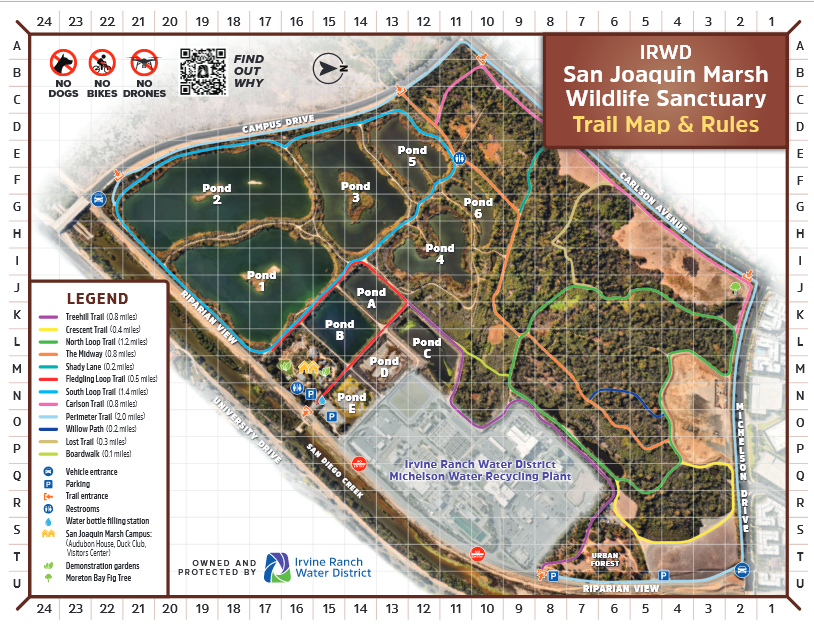
Pond C often has quite a few ducks on it, plus various waders and even an occasional rarity such as Red-throated Pipit.
Down at the east end of pond C we found a small group of Dowitchers, which I concluded were Short-billed; although Long-billed are generally more likely this time of year, Short-billed do winter in SoCal in a few areas such as Upper Newport Bay (and here, apparently). The foreheads seemed a bit steeper, the eyeline more curved, the bill tips slightly droopy, and the barred underside to the tail seemed more light than dark. [My mnemonic for dowitcher undertails: short & light have 5 letters, long & dark have 4 letters.] The dowitchers we saw at the bay seemed long-billed. [Link to downloadable or printable Dowitcher Cheat Sheet.]
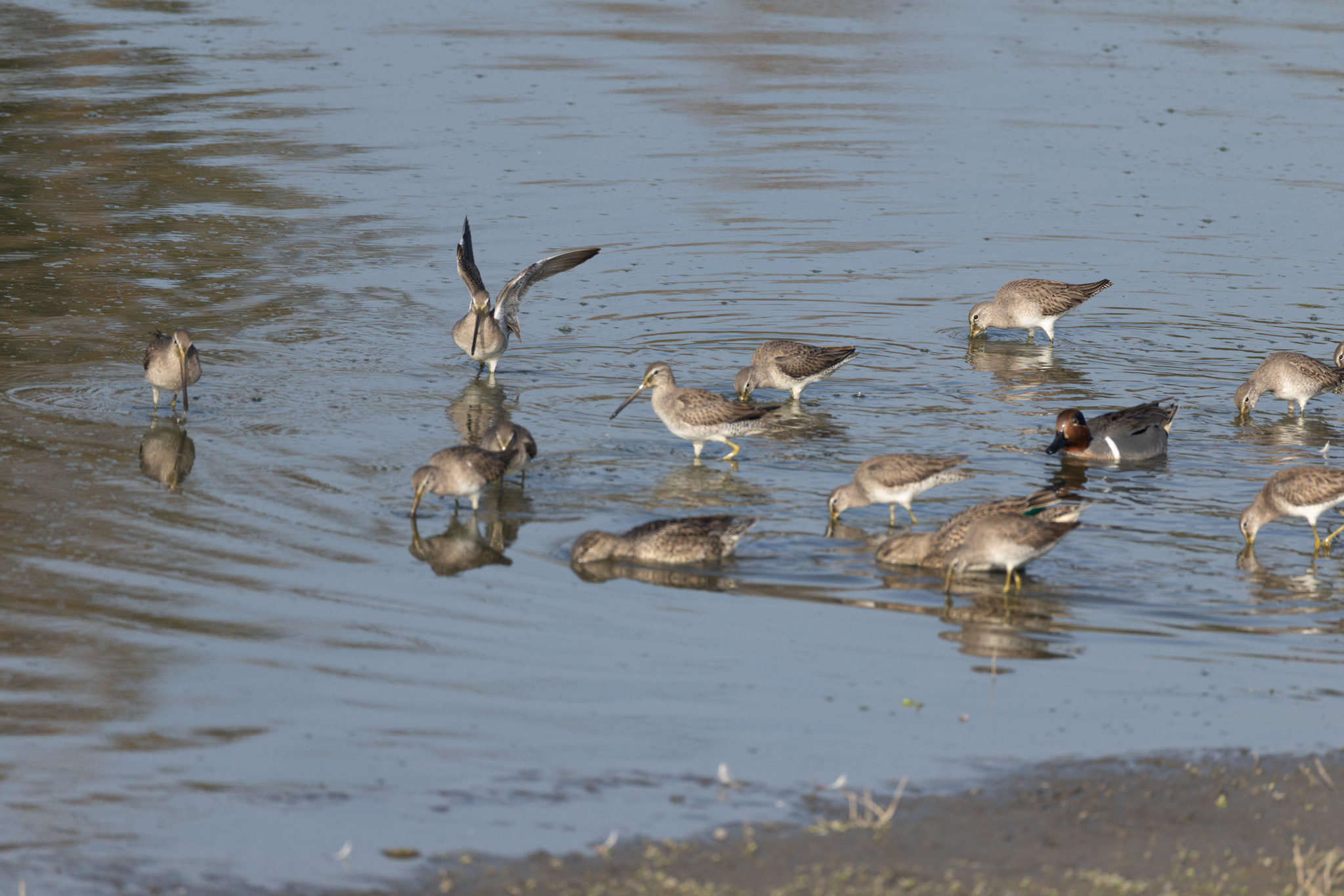
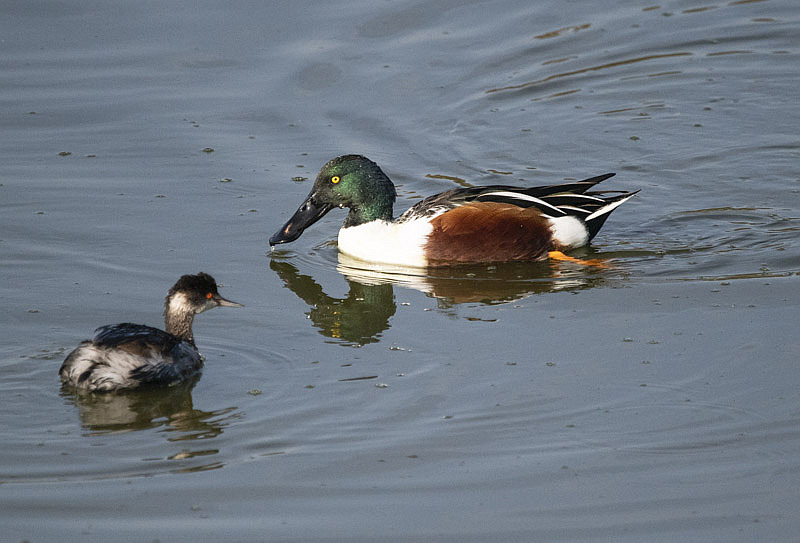
It’s not often that you get males of all three species of teal, Blue-winged, Green-winged and Cinnamon, resting right next to one another. At one point they were identically folded into resting posture (sorry, no photo of that, but close).
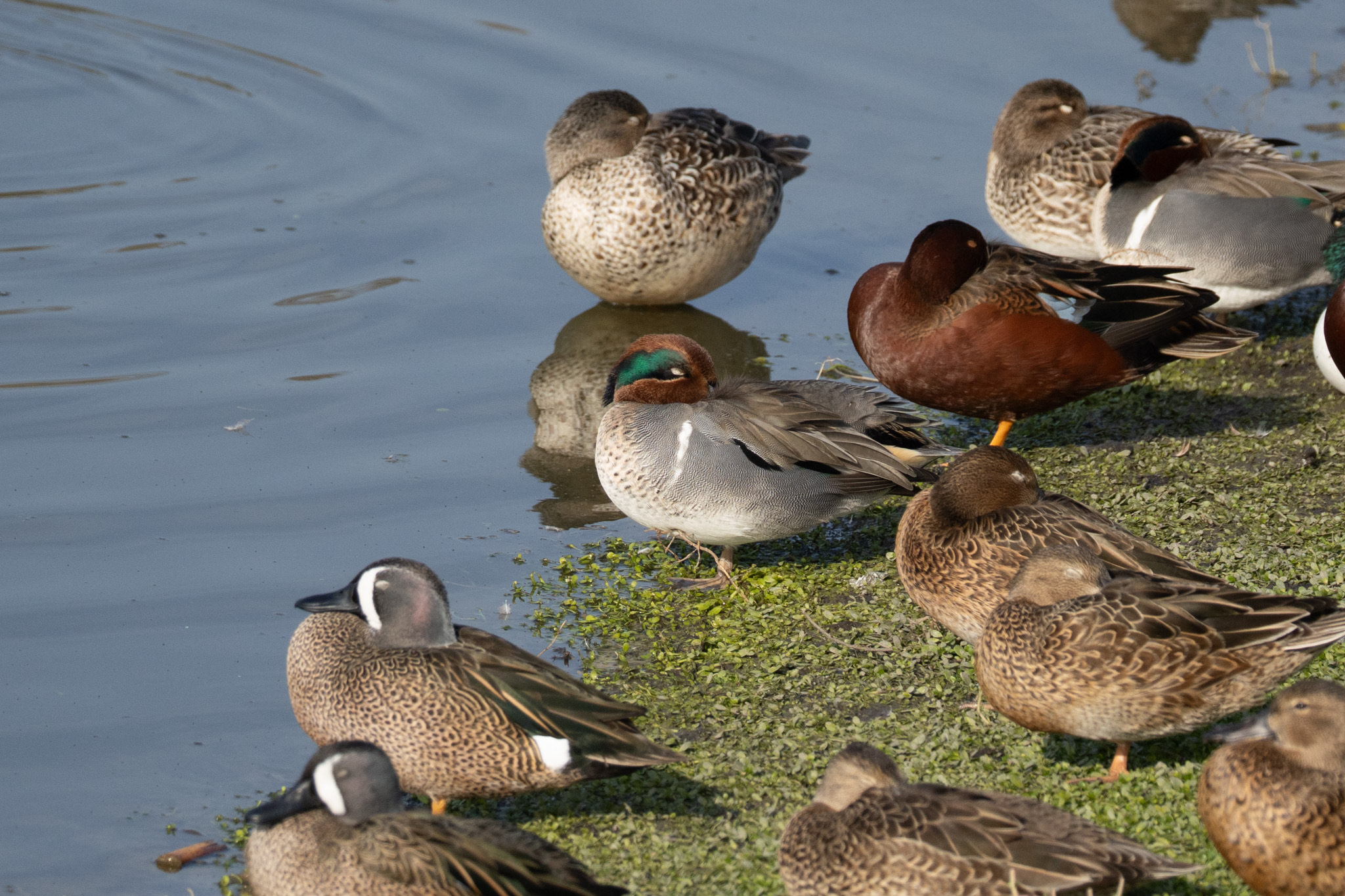
(Armando Martinez 12-13-25 San Joaquin Marsh)
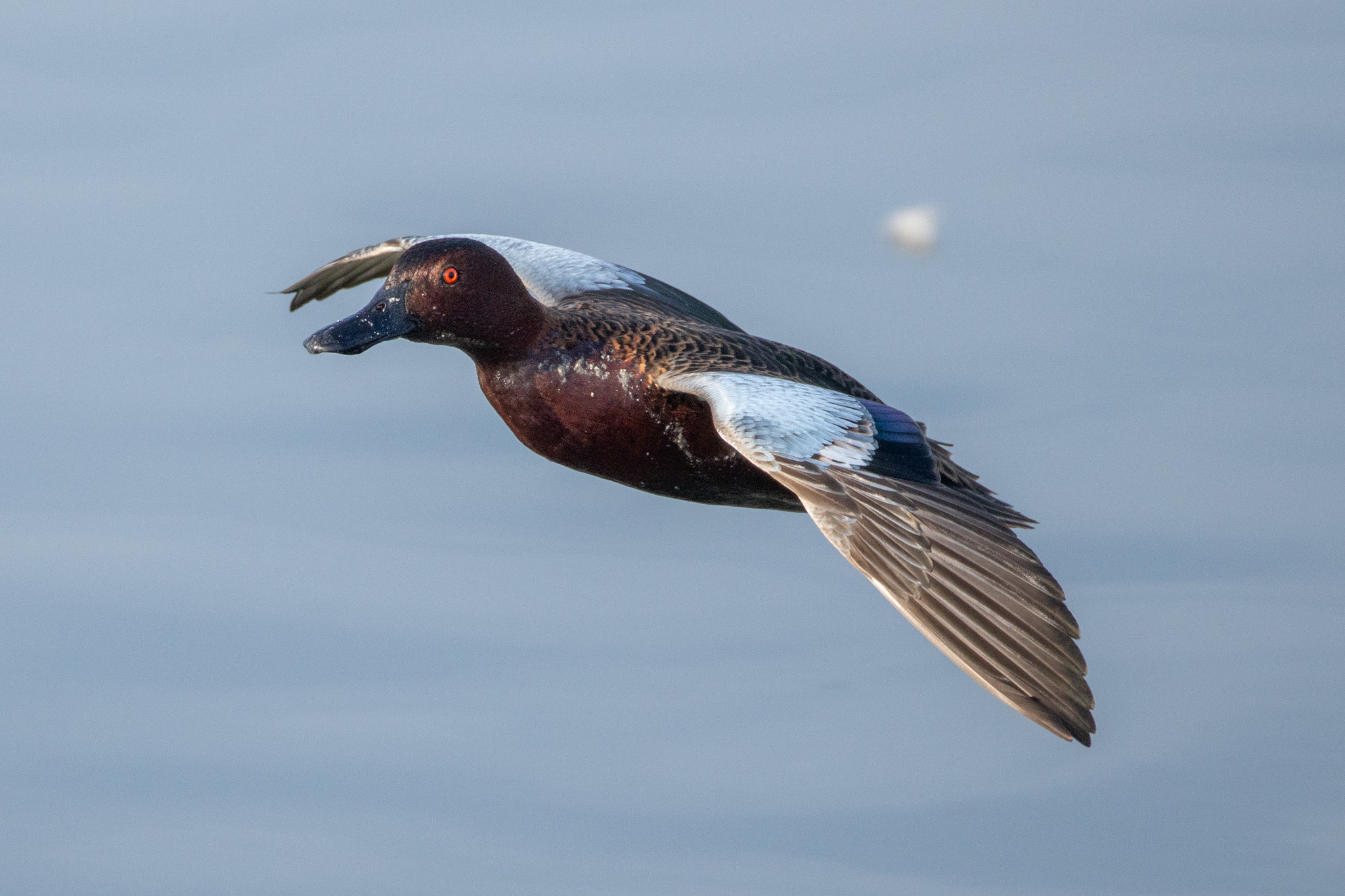
As we noted last year, all three of these teal species – whatever claim their name may make – have iridescent green in their wings. The Cinnamon Teal’s wing baby-blue color (see the top photo of the flying teal) is located in the upper secondary lesser coverts of the forewing. However, the iridescent green is in the speculum, located in the upper secondary hindwing (trailing edge). Here’s a diagram.
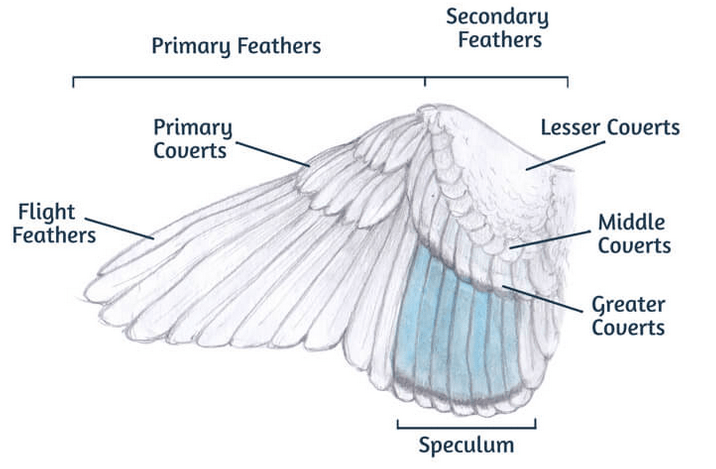
The same thing goes for the Blue-winged Teal. The Northern Shoveler also has this pattern of blue & green. Plus they all have varying amounts of white in the middle and greater coverts, just to keep you on your toes. Knowing something, even a little, about these secondary wing feather patterns can help when you’re trying to tell the females apart, especially female Mallard and Gadwall, and the three teals. Plus they’re lovely to look at.
Almost the last new species we found, just past the resting teal and the wading dowitchers was a solitary Sora, squeezing its way through a narrow pondside bed of reeds.
We managed to find 74 birds, 61 at Back Bay Newport and an additional 13 (out of 38 species) at San Joaquin Marsh.
| Back Bay Newport / San Joaquin Marsh | 2025 12/13 B Bay | 2025 12/13 S. Joa | 2024 12/15 B Bay | 2024 12/15 S Joa. | 2023 12/09 B Bay | 2023 12/09 S Joa. |
| Egyptian Goose | 1 | |||||
| Canada Goose | 50 | X | X | |||
| Blue-winged Teal | 30 | 10 | 4 | 10 | X | |
| Cinnamon Teal | 6 | 50 | 15 | X | ||
| Northern Shoveler | 40 | 50 | X | |||
| Gadwall | 10 | 20 | ||||
| American Wigeon | 500 | 30 | 400 | 70 | X | X |
| Mallard | 2 | 10 | 50 | 20 | X | X |
| Northern Pintail | 200 | 10 | 20 | X | X | |
| Green-winged Teal | 300 | 20 | 30 | 30 | X | X |
| Canvasback | ||||||
| Redhead | 40 | 5 | X | |||
| Greater Scaup | 1 | X | ||||
| Lesser Scaup | 1 | 5 | X | |||
| Scaup sp | 25 | |||||
| Surf Scoter | 5 | X | X | |||
| Bufflehead | 5 | 30 | 20 | X | X | |
| Red-Breasted Merganser | ||||||
| Ruddy Duck | 2 | 20 | 20 | X | ||
| Rock Pigeon | 10 | 10 | X | X | ||
| Mourning Dove | 2 | 2 | X | X | ||
| Greater Roadrunner | 1 | |||||
| White-throated Swift | 20 | |||||
| Anna’s Hummingbird | 2 | 2 | 2 | 2 | ||
| Allen’s Hummingbird | 3 | 4 | 1 | |||
| Ridgway’s Rail | 1 | |||||
| Sora | 1 | |||||
| Common Gallinule | 1 | 1 | ||||
| American Coot | 200 | 10 | 200 | 50 | X | X |
| Black-necked Stilt | 20 | X | ||||
| American Avocet | 6 | |||||
| Black-bellied Plover | 20 | X | X | |||
| Killdeer | 30 | |||||
| Semipalmated Plover | 50 | |||||
| Whimbrel | 2 | 20 | 10 | X | X | |
| Long-billed Curlew | 15 | X | ||||
| Marbled Godwit | 70 | 80 | 30 | X | X | |
| Short-billed Dowitcher | 15 | |||||
| Long-billed Dowitcher | 10 | 6 | X | |||
| Spotted Sandpiper | 1 | |||||
| Willet | 150 | 100 | 50 | X | X | |
| Greater Yellowlegs | 2 | 2 | X | |||
| Dunlin | 4 | X | ||||
| Least Sandpiper | 1000 | 12 | X | |||
| Western Sandpiper | 500 | X | ||||
| Ring-billed Gull | 10 | 2 | 100 | 30 | X | X |
| Western Gull | 20 | 20 | X | X | ||
| California Gull | 20 | 100 | 50 | X | X | |
| Black Skimmer | 20 | 1 | ||||
| Caspian Tern | 10 | |||||
| Forster’s Tern | 10 | 20 | 6 | X | ||
| Pied-billed Grebe | 4 | 2 | 70 | 6 | X | X |
| Eared Grebe | 30 | 2 | X | X | ||
| Western Grebe | 20 | 20 | 10 | 10 | X | X |
| Clark’s Grebe | 4 | 10 | X | |||
| Double-crested Cormorant | 1 | 30 | 20 | X | X | |
| White-faced Ibis | 1 | |||||
| Yellow-crowned N-Heron | 1 | 1 | ||||
| Black-crowned N-Heron | 2 | 3 | ||||
| Reddish Egret | 1 | X | ||||
| Snowy Egret | 30 | 4 | 20 | 10 | X | X |
| Green Heron | 1 | |||||
| Great Egret | 30 | 2 | 6 | 2 | X | X |
| Great Blue Heron | 15 | 4 | 10 | 2 | X | X |
| American White Pelican | 11 | 2 | 20 | X | ||
| Brown Pelican | 6 | X | ||||
| Turkey Vulture | 2 | 2 | 2 | 3 | X | X |
| Osprey | 4 | 2 | X | X | ||
| White-tailed Kite | 1 | 2 | ||||
| Cooper’s Hawk | 1 | 1 | 1 | X | ||
| Northern Harrier | ||||||
| Bald Eagle | X | |||||
| Red-shouldered Hawk | ||||||
| Red-tailed Hawk | X | X | ||||
| Belted Kingfisher | 4 | 2 | 1 | |||
| Nuttall’s Woodpecker | X | |||||
| American Kestrel | 1 | 1 | X | |||
| Peregrine Falcon | 1 | |||||
| Black Phoebe | 4 | 2 | 6 | 3 | X | X |
| Vermilion Flycatcher | 1 | |||||
| Say’s Phoebe | 2 | 2 | 5 | 2 | X | X |
| Cassin’s Kingbird | 1 | X | ||||
| California Scrub-Jay | 2 | X | ||||
| American Crow | 2 | 4 | 4 | X | X | |
| Common Raven | 1 | |||||
| Tree Swallow | X | |||||
| Barn Swallow | 3 | 1 | ||||
| Bushtit | 10 | 2 | 6 | X | ||
| Wrentit | ||||||
| Swinhoe’ White-eye | 3 | |||||
| Ruby-crowned Kinglet | 1 | |||||
| Blue-gray Gnatcatcher | 1 | 1 | 1 | 2 | ||
| California Gnatcatcher | 1 | |||||
| Marsh Wren | 1 | H | X | X | ||
| Bewick’s Wren | 1 | |||||
| European Starling | 2 | |||||
| Northern Mockingbird | 1 | X | X | |||
| Cedar Waxwing | 200 | |||||
| House Finch | 20 | 20 | 6 | 10 | X | X |
| Lesser Goldfinch | X | |||||
| Lark Sparrow | 1 | |||||
| White-crowned Sparrow | 1 | 3 | 15 | X | X | |
| Savannah Sparrow | 4 | |||||
| Song Sparrow | 1 | 3 | 8 | 20 | X | X |
| California Towhee | 1 | |||||
| Western Meadowlark | 1 | |||||
| Red-winged Blackbird | 1 | |||||
| Orange-crowned Warbler | 1 | |||||
| Common Yellowthroat | 3 | 2 | 20 | 6 | X | X |
| Yellow-rumped Warbler | 4 | 1 | 2 | X | X | |
| Total Species – 97 | 61 | 39 | 63 | 50 | 54 | 49 |
| Total Day BB & SJ | 75 | 79 | 65 | |||
| X – Seen | ||||||
| H – Heard only | ||||||
| 1, 15 – Number seen | ||||||
| 50, 1000, etc. – estimates |
Discover more from SANTA MONICA BAY AUDUBON SOCIETY BLOG
Subscribe to get the latest posts sent to your email.



 SANTA MONICA BAY AUDUBON SOCIETY BLOG