Sepulveda Basin Wildlife Reserve in late winter: 14 March 2026
[By Chuck Almdale; Photos by Elyse Jankowski]

Aerial view of Sepulveda Basin looking northwest from above the Santa Monica Mountains. The wildlife area surrounds the lake with the perfectly circular island in the middle, a bit left (west) of the Santa Monica Fwy (#405). This island has become popular with cormorants ducks, egrets and herons. Until quite recently it had a lot of trees over 30′ tall, but they burned in a fire and most were recently removed.
It’s days like this that make one wonder what they’ve done to the weather. At Woodley Park in Sepulveda Basin at 7:30am it was around 57°F, by noon around 78°. Downtown later hit 93°; average for 14 March is 70°. So yeah, it got hotter than usual. Guess who forgot to put his water bottle in his belt-water-bottle-bag.
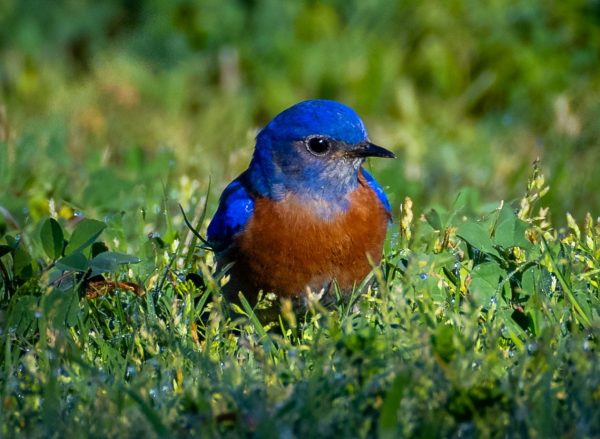
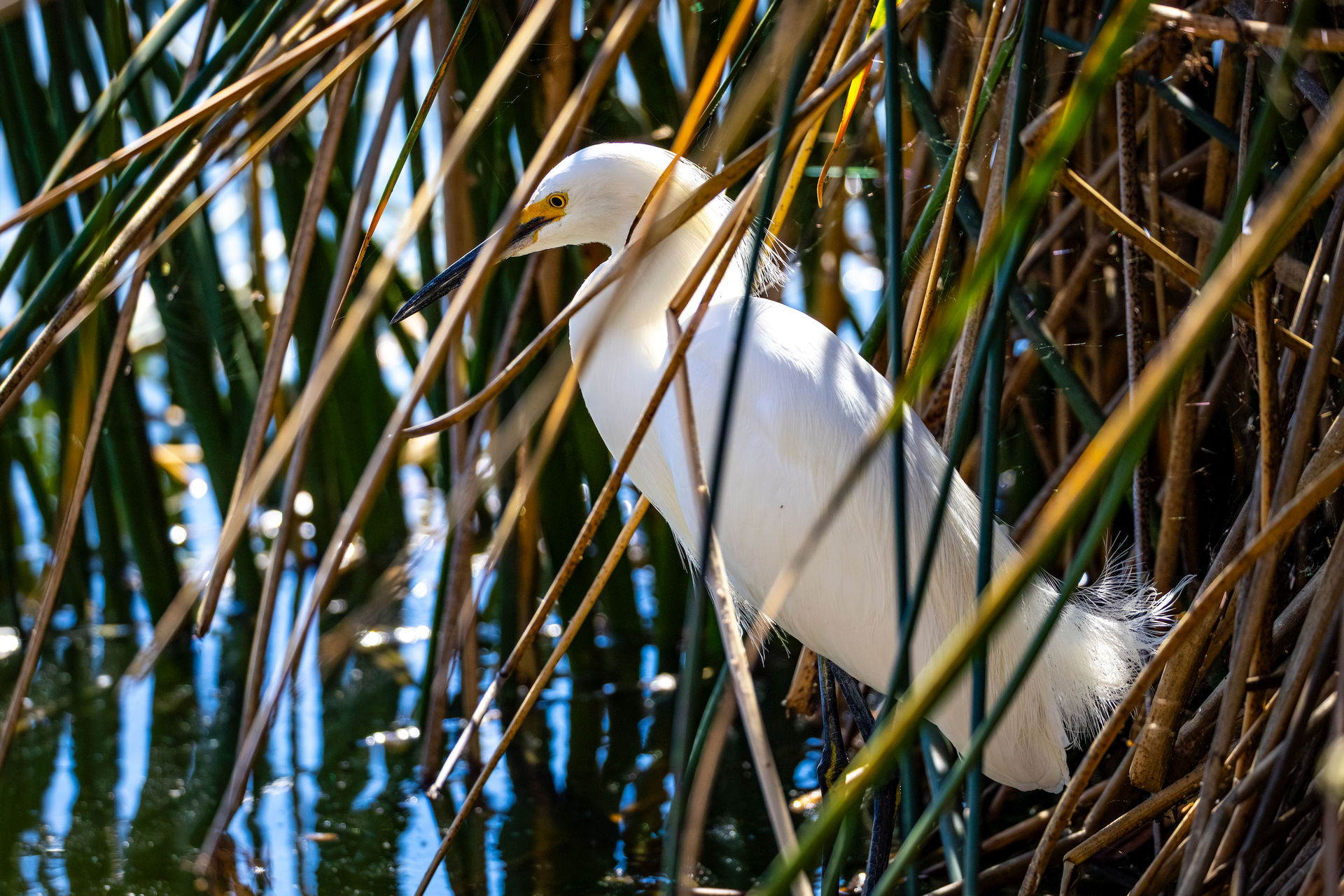
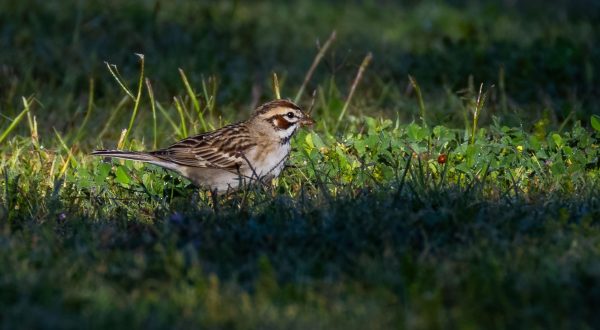
The grass was wet with dew, as usual. I hoped to find a nice bunch of sparrows feeding, but nearly all were White-crowned, who have been here all winter. Several pairs of Western Bluebirds and California Towhees and a single Lark Sparrow did appear on the lawn.
In the trees at the south end of the parking lot median strip of grass and trees we found an interesting pair of birds. First was the bird below. It looked a lot more yellow on belly and breast in person than it does as pictured below, and had me quite stumped. I briefly though Empidonax which didn’t look at all right, but I didn’t come up with anything better.
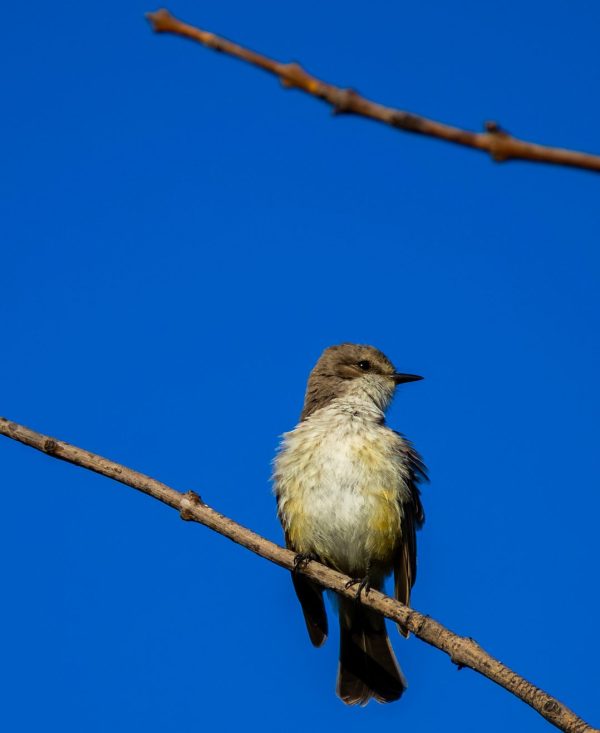
It was, however, hanging out near the tree where I’d seen a male Vermilion Flycatcher about 20 minutes earlier on my brief scouting foray. Soon enough the male appeared and while they weren’t obviously paired up, they didn’t seem adverse to each other’s presence in the same tree. It’s easier to ID the female when you see her next to the male. Same size, same profile, same bill and crown shape. If you look at the belly of the male below, you can see some yellow in the same location as on the female.
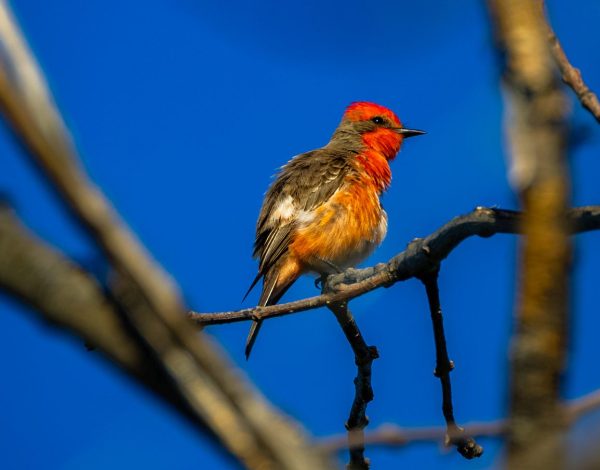
I’ve never before seen a female that had no red-pink-orange-rose at all on its belly (in addition to the basic white, of course), only a splash of yellow. My guess is that it was a female still in immature plumage, which does show yellow with no hint of red on its breast-belly-flanks.
Vermilion flycatchers, over the past forty years, have become a lot more common in SoCal. They used to be very difficult to find outside of Morongo Valley Preserve north of Palm Springs, 150 miles east of here. No longer.
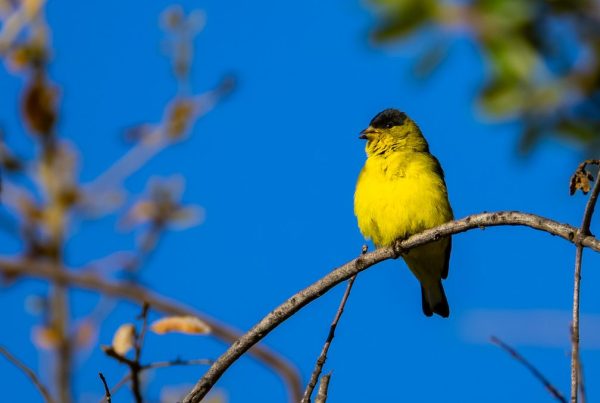
We paused beneath a tree and listened to the collective calls and songs of what sounded like an hallucinating chorus of at least a dozen Lesser Goldfinches, but could see none. They sounded like electric wires buzzing in damp air.
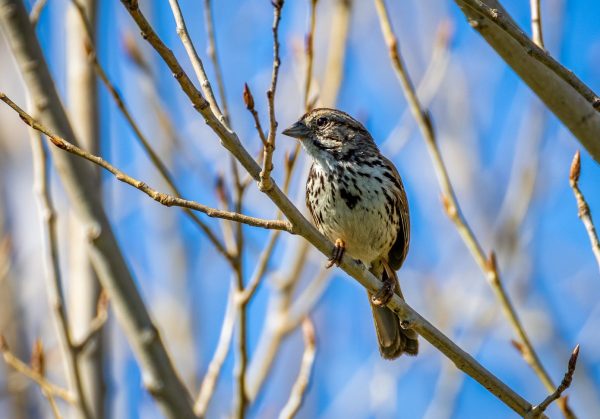
Another busy songster was the Song Sparrow, tootling away from nearly every tree or bush. Once you familiarize yourself with the basic three-section pattern of their songs, they’re easy to recognize.
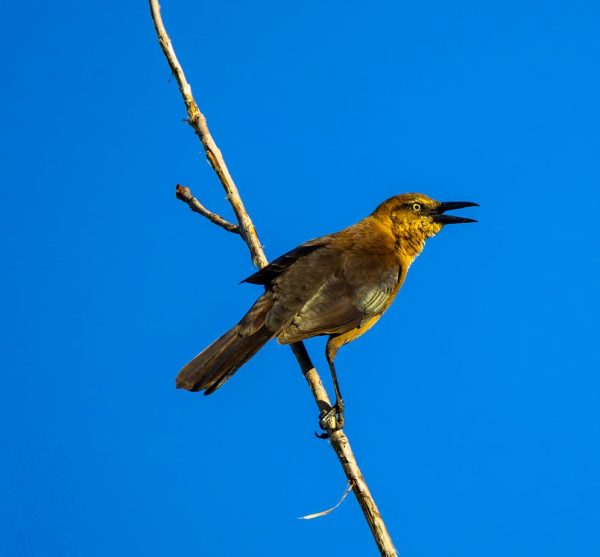
Great-tailed Grackles have definitely become solid residents at the park. We didn’t see them at all in 2015, then there were a pair or two for a few years. Forty years ago they were almost as hard to find in Los Angeles County as the Vermilion Flycatcher. Today they were frequently flying past us overhead, including one group of seven. When they landed it was mostly among foliage, but this female below obligingly perched on a twig. Note the yellow eye. They’re large passerines: the glossy-black male is 3″ longer than the 15″ female and the difference is all in the tail.
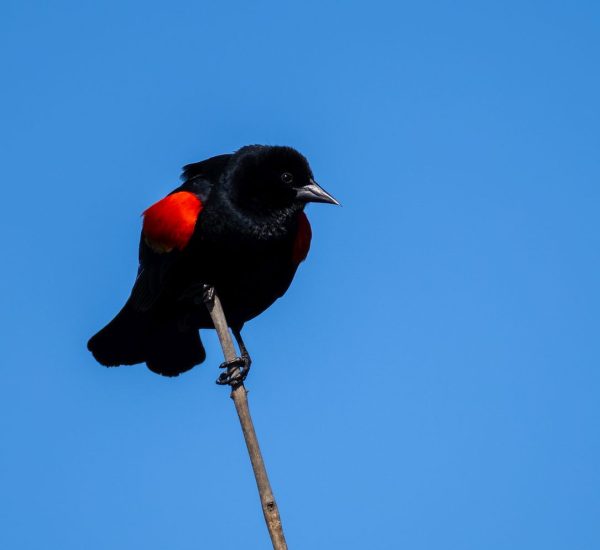
And there were of course male Red-winged Blackbirds perched all around the pond in trees, bushtops and reed-heads. However, not one of use saw any females.
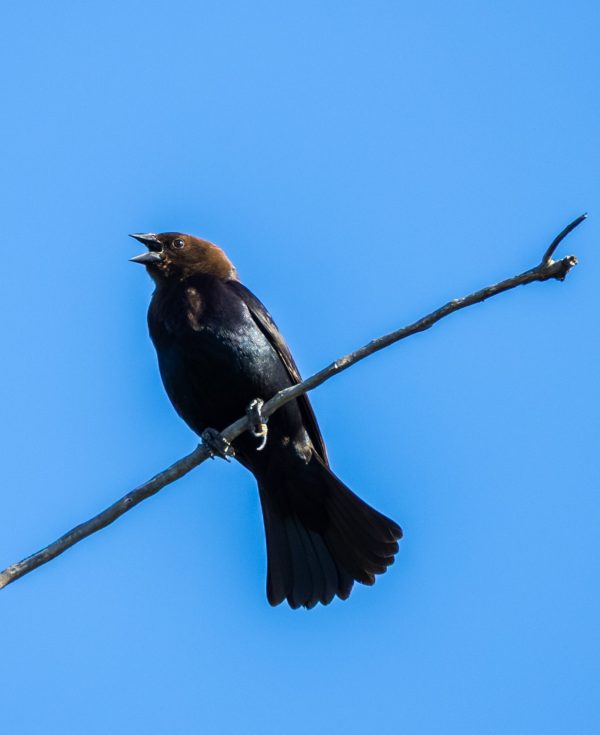
And to finish the Icterid trifecta, here’s a male Brown-headed Cowbird (nee Buffalo-bird) living up to it’s name. [Actually a single twig-top Western Meadowlark towards the sun was a fourth icterid, but no photo could be taken.] The Cowbird’s song is like gurgling water, quite nice and unexpected when you’re lucky enough to hear it clearly.
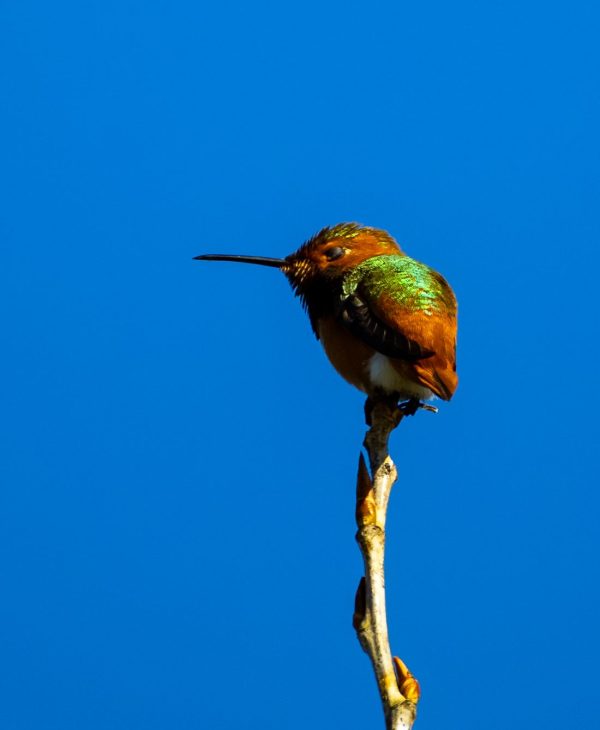
Hummingbirds, Both Anna’s and Rufous, were present. Here the Allen’s iridescent green back is shown, while the scintillating gorget is dark fuzziness.
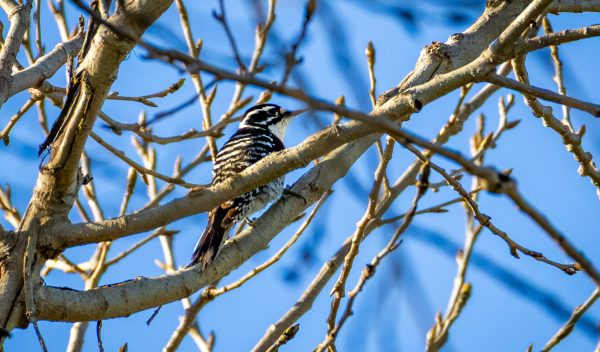
Several pairs of Nuttall’s Woodpecker were seen, in addition to one Downy Woodpecker working the same tree as one of the pair. The pattern of black-and-white of the face, the wide black shoulder on the striped back ID this as a Nuttall’s and not a Ladder-backed (ignoring the fact that no self-respecting Ladder-backed would leave their beloved desert), and the lack of red on the crown ID’s it as a female. They all “spoke not a word but went straight to their work.”
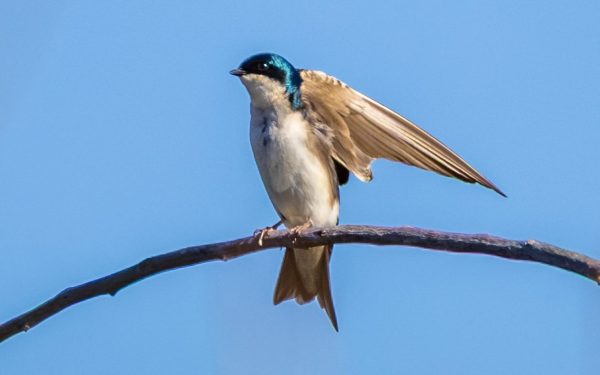
Last year we had five species of swallow; for a long while this year we had none at all until a flock of glossy-dark-blue-backed Tree Swallows flew in and crisscrossed the pond for a while, catching flies. On this perched bird you can easily see the dark feathering surrounding the dark eye. On the similar Violet-green swallow, the white on the throat comes up the cheek and over the eye.
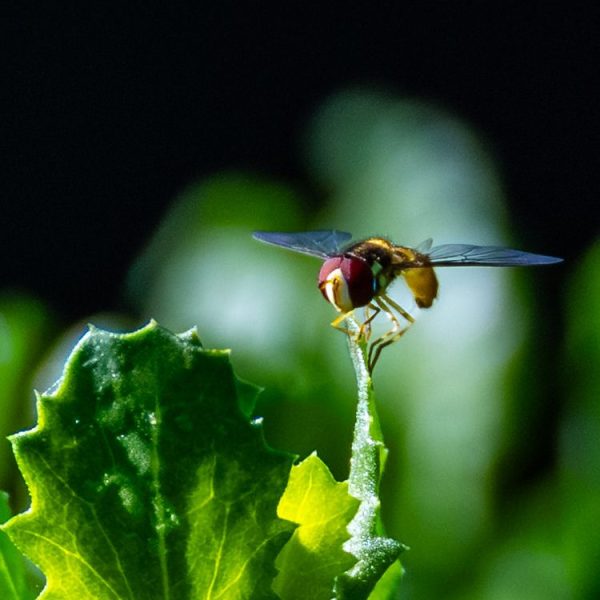
Among the many bird photos photographer Elyse Jankowski sent me was the one below, which I confidently and immediately recognized as a flying insect. And that’s as close as I could narrow it down. Elyse thought it looked like a hoverfly, which I ought to be able to recognize as they are all over the flowers in our front yard, along with the solitary bees, but I can’t. I uploaded the photo to Insect Identifier (one free ID per day) which in 2 seconds claimed Episyrphus balteatus, or Marmalade Hoverfly. Wikipedia said this is “a relatively small hoverfly (9–12 mm) of the Syrphidae family, widespread throughout the Palaearctic region, which covers Europe, North Asia, and North Africa. It is considered the most abundant native hoverfly in Central Europe.” That didn’t sound right for SoCal, but some additional investigation revealed that it’s been introduced locally as a consumer of agricultural and garden pests (Aphids, Caterpillars, Leafhoppers, Planthoppers, Mealy Bugs, Thrips) and they are sold commercially. I don’t know if they come in cans, boxes or plastic bags. Cornell University has a long and interesting page on them. Note the big purple compound eyes. We could use a couple of them in our front yard as aphids keep sucking our milkweed plants dry.
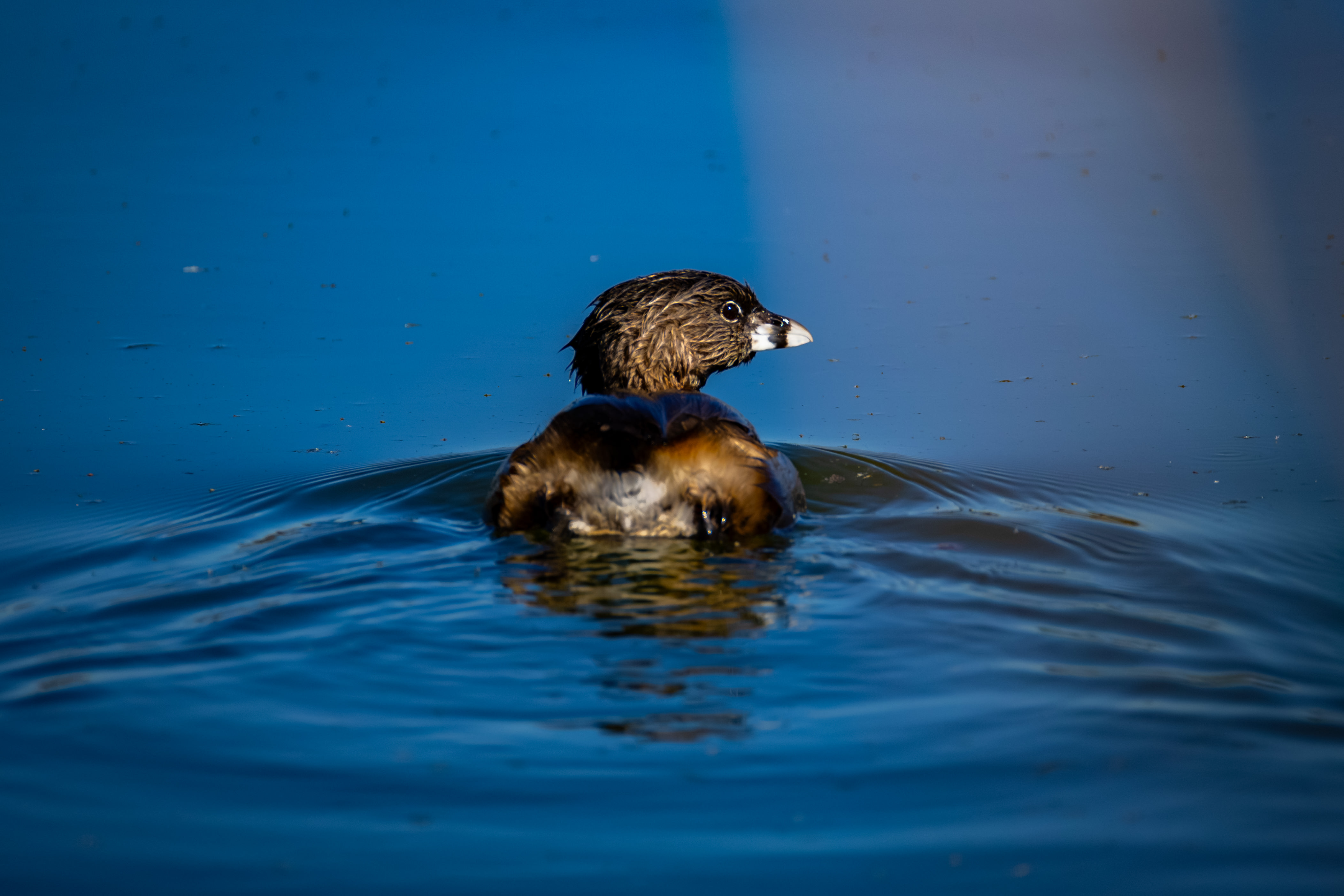
The “pied” of Pied-billed Grebe is one of those words that the British naturalists and bird-namers scattered around when exploring the world outside Britain. “Parti-colored” (consisting of two or more different colors) would also work, but “pied” seems to be applied primarily to two colors, in this case black-and-white, or more accurately dark-and-light. Other such Britishisms are lark, tit, warbler, coot. Works for me.
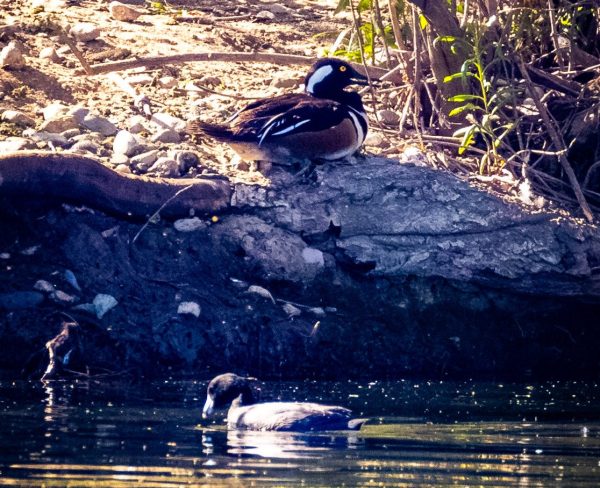
Hooded Merganser, if they are there at all, are usually tucked under the overhanging vegetation on the north side of the peninsula north of the island. I’ve never seen more than two at a time, usually a singleton. This male was relatively in the open on the north edge of the island, easily seen by all except those who wandered onward before we spotted it in the shade.
I love birds, and am well acquainted with the theory of natural selection and the necessity of surviving to reproduce, but am always saddened at seeing a fish go down the gullet. This one reminded me of Dylan Thomas.
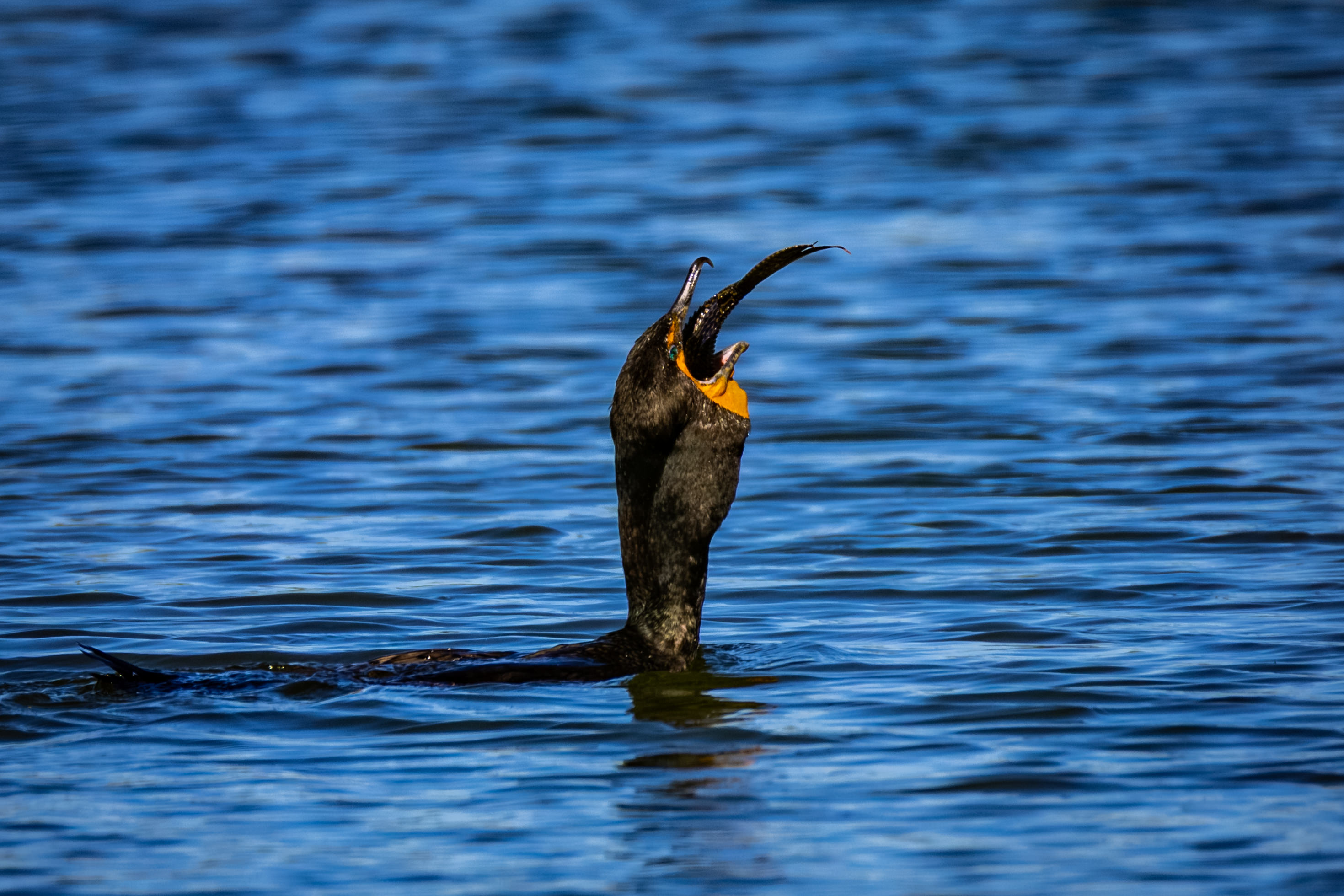
Do not go gentle into that good night.
Rage, rage against the dying of the light.
— 1951 —
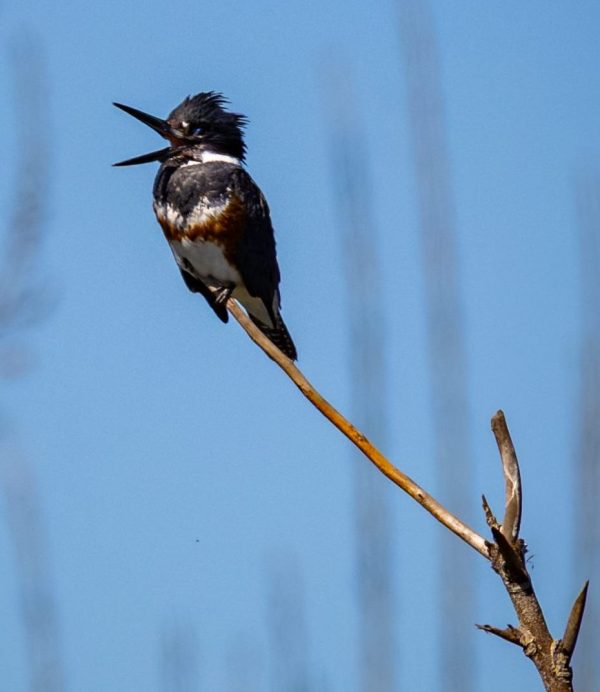
And yet another fish-eater, this time a female who seems to be enjoying herself, or at least has something to say.
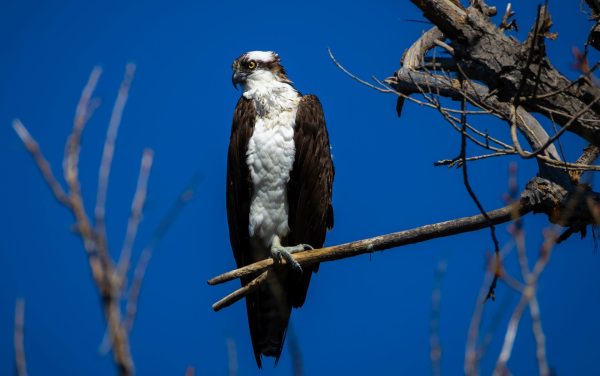
And yet one more fish-eater. Ospreys can lift up to 90% of their own weight in fish out of the water, get it adjusted aerodynamically with its talons so the fish’s head is foremost, and fly off with it to a perch. That’s quite a feat. Bald Eagles can lift 1/3-1/2 of their weight at most.
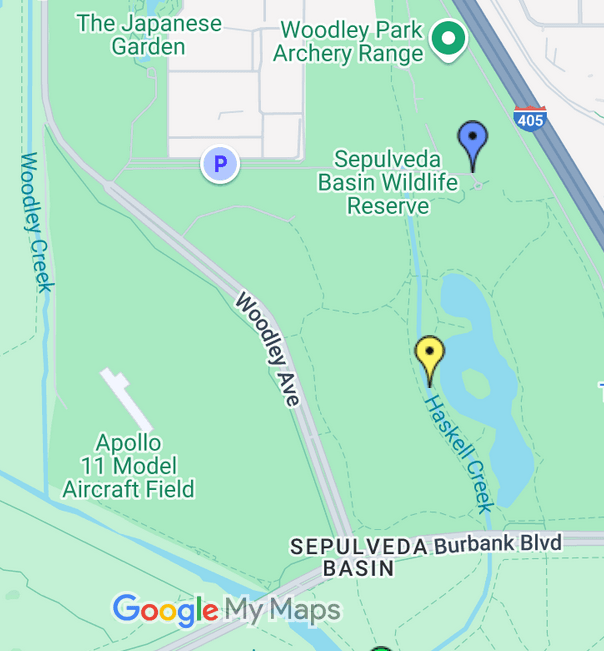
The wildlife area surrounds the pond which is officially and descriptively named “Wildlife Lake.” We walked from the dark blue pointer south of the archery range down the west side of the lake to the south end, and returned by the same path. There’s also path east of the lake and west of the creek. There are view points of the pond along its west side and the creek has lots of trees and brush, although they’re somewhat reduced by recent fires.
On our return trip we ran across a pair of Bushtits collecting nest-building material. They paused their building activities as we were too close for their comfort, but they were apparently stashing it in the branch-crotch of a very slim tree, about five feet from what looked like the beginnings of their typical pendulous nest. Previous nests I have seen were always stashed within foliage and very hard to see. This one was right out in the open, hanging from the side of a dead, leafless, nearly branch-less tree trunk. Perhaps it was a practice nest. At any rate, it was interesting to note that they were piling up their building materials on-site, just like humans do (or at least those of us with enough foresight to not have to run to the hardware store every half-hour).
| Sepulveda Basin Field Trips | |||||||
|---|---|---|---|---|---|---|---|
| English Name | 3/14/26 | 3/15/25 | 3/9/24 | 3/11/23 | 3/10/18 | 2/11/17 | 2/13/16 |
| Canada Goose | 20 | 35 | 30 | E | X | X | X |
| Egyptian Goose | 2 | A | X | X | X | ||
| Muscovy Duck | X | ||||||
| American Wigeon | 91 | ||||||
| Mallard | 25 | 20 | 25 | B | X | X | X |
| Hooded Merganser | 1 | A | X | X | |||
| Pied-billed Grebe | 6 | 12 | 4 | B | X | X | X |
| Feral Pigeon | 13 | 8 | D | X | |||
| Eurasian Collared-Dove | 1 | ||||||
| Mourning Dove | 4 | 15 | 25 | C | X | X | X |
| White-throated Swift | X | ||||||
| Anna’s Hummingbird | 6 | 6 | 8 | A | X | X | X |
| Rufous Hummingbird | X | ||||||
| Allen’s Hummingbird | 3 | 10 | 12 | B | X | X | X |
| American Coot | 8 | 3 | 10 | D | X | X | X |
| Killdeer | X | ||||||
| Gull sp. | 10 | ||||||
| Western Gull | X | ||||||
| California Gull | 1 | ||||||
| Double-crested Cormorant | 15 | 30 | 15 | D | X | X | X |
| Neotropic Cormorant | 1 | 4 | 2 | 1 | |||
| American White Pelican | 1 | 20 | C | X | X | ||
| Snowy Egret | 1 | 2 | 1 | A | X | X | |
| Black-crowned Night-Heron | 1 | 4 | 6 | B | X | X | X |
| Green Heron | 1 | 2 | 3 | A | X | X | X |
| Great Egret | 3 | 1 | 5 | B | X | X | X |
| Great Blue Heron | 2 | 2 | 1 | A | X | X | X |
| White-faced Ibis | 1 | ||||||
| Turkey Vulture | 2 | 10 | 4 | C | X | X | X |
| Osprey | 1 | 1 | 2 | A | X | X | X |
| Cooper’s Hawk | 1 | A | X | X | |||
| Red-shouldered Hawk | 1 | A | |||||
| Red-tailed Hawk | 5 | 3 | 2 | A | X | X | |
| Great Horned Owl | 1 | X | |||||
| Belted Kingfisher | 1 | 1 | 1 | X | X | X | |
| Acorn Woodpecker | H | 3 | A | ||||
| Red-breasted Sapsucker | X | ||||||
| Downy Woodpecker | 1 | 2 | X | X | |||
| Nuttall’s Woodpecker | 4 | 2 | A | X | X | X | |
| Northern Flicker | A | X | X | ||||
| American Kestrel | 2 | 2 | |||||
| Merlin | 1 | ||||||
| Yellow-chevroned Parakeet | H | X | X | ||||
| Ash-throated Flycatcher | X | ||||||
| Cassin’s Kingbird | 4 | A | X | X | |||
| Western Kingbird | 1 | ||||||
| Gray Flycatcher | 2 | ||||||
| Black Phoebe | 3 | 4 | 8 | A | X | X | X |
| Vermilion Flycatcher | 2 | ||||||
| Western Scrub-Jay | 2 | X | X | ||||
| American Crow | 8 | 10 | 4 | X | X | ||
| Common Raven | B | ||||||
| Tree Swallow | 20 | 20 | 15 | D | X | ||
| Violet-green Swallow | 3 | A | X | ||||
| N. Rough-winged Swallow | 5 | C | X | X | |||
| Barn Swallow | 1 | 3 | |||||
| Cliff Swallow | 6 | B | |||||
| Bushtit | 3 | 2 | 8 | C | X | X | |
| Wrentit | 1 | ||||||
| Ruby-crowned Kinglet | 4 | A | X | X | |||
| White-breasted Nuthatch | 1 | 1 | A | ||||
| Blue-gray Gnatcatcher | 1 | X | X | ||||
| Bewick’s Wren | 4 | 2 | X | X | |||
| Northern House Wren | X | ||||||
| California Thrasher | X | ||||||
| Northern Mockingbird | 2 | 1 | 1 | A | X | X | |
| European Starling | 30 | 25 | 8 | C | X | X | |
| Western Bluebird | 8 | 8 | 9 | B | X | X | X |
| Mountain Bluebird | D | ||||||
| Hermit Thrush | X | ||||||
| American Robin | A | ||||||
| American Pipit | 1 | ||||||
| House Finch | 30 | 35 | 20 | D | X | X | X |
| Lesser Goldfinch | 12 | 20 | 3 | D | X | X | X |
| Lawrence’s Goldfinch | 12 | D | |||||
| American Goldfinch | X | ||||||
| Lark Sparrow | 1 | X | X | ||||
| Chipping Sparrow | 10 | 4 | B | X | X | ||
| Dark-eyed Junco | 2 | X | |||||
| White-crowned Sparrow | 15 | 25 | 10 | D | X | X | X |
| Savannah Sparrow | 4 | X | X | ||||
| Song Sparrow | 18 | 10 | 16 | C | X | X | X |
| California Towhee | 8 | 4 | 3 | B | X | X | X |
| Spotted Towhee | 1 | 3 | 3 | X | X | X | |
| Western Meadowlark | 1 | 6 | A | ||||
| Bullock’s Oriole | 1 | ||||||
| Red-winged Blackbird | 15 | 20 | 3 | D | X | X | X |
| Brown-headed Cowbird | 7 | 30 | 10 | ||||
| Great-tailed Grackle | 15 | 2 | 2 | C | X | X | |
| Orange-crowned Warbler | 2 | X | X | ||||
| Common Yellowthroat | H | 6 | 8 | B | X | X | X |
| Yellow-rumped Warbler | 15 | 20 | 80 | D | X | X | X |
| Total Species – 92 + 1 taxa | 46 | 63 | 48 | 56 | 44 | 51 | 51 |
| Abundance code X: present, A: 1-5, B: 6-10, C: 11-20, D: 20-50, E: over 50 | |||||||
| H – Heard only | |||||||
| 1, 15, etc. – Number seen | |||||||
Discover more from SANTA MONICA BAY AUDUBON SOCIETY BLOG
Subscribe to get the latest posts sent to your email.



 SANTA MONICA BAY AUDUBON SOCIETY BLOG