The Chinese are becoming, en masse, both birds and birders
[By Chuck Almdale]
Well…sort of.
I rarely look at the statistics generated by our website. Perhaps a few times a year. But the other day I happened to take a look at what people around the world are looking at on our blogsite (in many years we’ve had readers from over 100 countries), and I was stunned to discover that compared to U.S. readers, we had 55% as many readers in China. This means that if we have 200 U.S. readers for any particular time period, we’d have 110 Chinese readers.
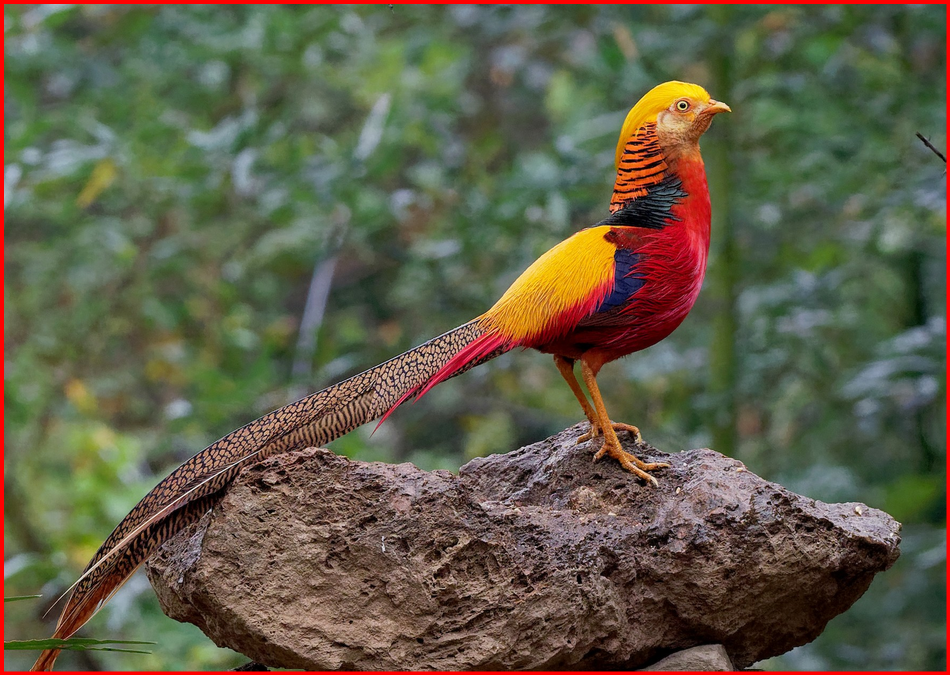
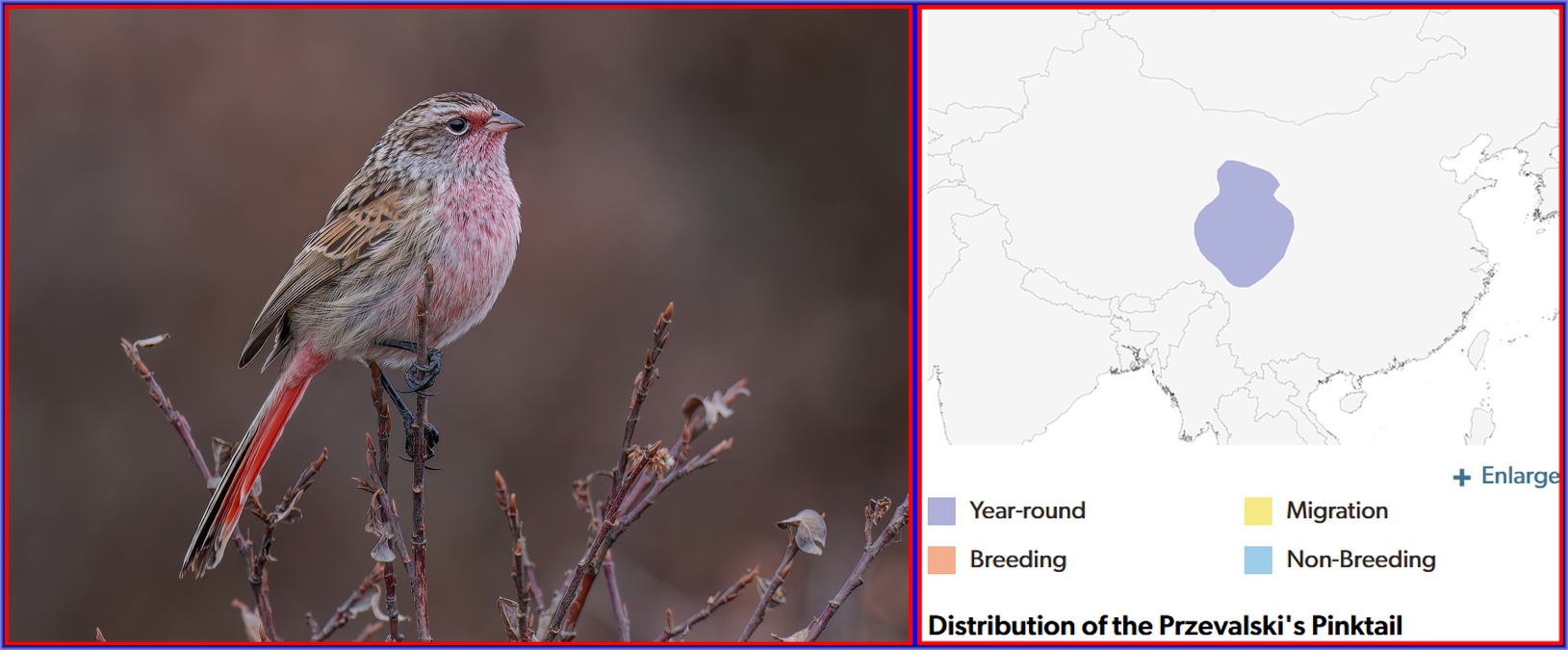
That seemed absurd. Why would the Chinese (in China) be reading the blog of the Santa Monica Bay Audubon Society? I couldn’t remember when – if ever – I last mentioned China. [OK. Here, just now.] I’ve never been in China, let alone birded there, although they do have lots of incredible endemic pheasant species, as well as the endemic monotypic family consisting solely of Przevalski’s Pinktail Urocynchramus pylzowi. I admit to sitting and looking at maps, trying to figure out if I’d ever have a chance to see these species.
Veeeerrry mysterious. methinks. So I went to that font of all knowledge, Google AI, at the suggestion of my wiser half and gave it a very general question. I’ve left in the links [e.g. 1,2,3] supplied in the answers in case anyone wants additional support.
Question: Why are so many people in China reading my blogs about birds?
What I got was utterly new to me.
Google AI response:
Young people in China have embraced a viral social media trend where they pretend to be birds—tucking their bodies into oversized shirts, perching on furniture, flapping their arms, and chirping. This cultural phenomenon is driven by several factors: [1, 2, 3]
- Escapism and Stress Relief: The trend serves as a playful coping mechanism against intense academic pressure, youth unemployment, economic slowdowns, and the demanding “996” work culture (working 9 a.m. to 9 p.m., six days a week). [1, 2]
- Symbolism of Freedom: Imitating birds expresses a deep, lighthearted yearning for freedom and a symbolic escape from the physical and mental confinement of cubicles, desks, and classrooms. [1, 2]
- A Mild Form of Protest: Similar to the “lying flat” (tang ping) or “let it rot” (bai lan) movements, acting like a bird is a way for Gen Z [born 1997-2012] and young adults to voice disillusionment with modern hustle culture without actively dropping out of society. [1, 2]
- Real Birdwatching Growth: Alongside the meme, actual interest in birdwatching and nature-related hobbies has surged dramatically across China. [1, 2]
That seems kind of cool to me. I can picture them in large shirts, perched on the arms and backs of chairs and sofas, hands tucked into their armpits, flapping their elbows, making weird sounds. Perhaps they might even:
“perch upon a bust of Pallas just above the chamber door—perch, and sit, and nothing more.”
That sounds fun and harmless. Better than vaping dirt out in the alley. Google added an additional scenario.
Alternatively, if the traffic to your blog is heavily automated or technical in nature, a sudden spike in visits from China can also be the result of web crawlers, scrapers, or automated bots indexing your site rather than human readers. [1]
Our blog is just about the farthest thing possible from “heavily automated or technical in nature,” but in order to see if there were any “sudden spikes in visits from China” I did a very quick look back in time to see when this started, then [of course] totally misremembered the date where I found a viewership jump, and submitted the follow-up question below.
Question 2: The blog is specifically about birds, birdwatching (aka birding), mostly local to Southern California, and the activities of our Audubon chapter. I cannot recall the last time I mentioned China, if ever. I don’t have access to any detail on what the Chinese are looking at or reading or who they are, just that they’re in China. Their readership is approaching 60% of the total U.S. readership. It seemed to start around September 19, when it jumped from 10% to 25%, and has been climbing since then.
Google AI doesn’t waste a lot of time getting a reply back, unlike some sentient entities I correspond with.
Google AI response:
The dramatic spike in your blog’s traffic from China is almost certainly driven by two intersecting events: a massive, real-world birdwatching boom among Chinese Gen Z and a software script or web scraper pulling your data to serve that community. [1]Because your readership suddenly surged from 10% to 25% around September 19 and continues to climb, you are experiencing a classic case of automated content harvesting rather than hundreds of humans suddenly discovering your local Southern California chapter. [1]
The exact mechanics behind why a local Southern California birding blog is targeted involve several factors:
1. The Chinese Youth “Birding Boom”
Birdwatching has exploded as one of the fastest-growing hobbies for young people in China. [1]
- On Chinese social media apps like Xiaohongshu (RedNote) and Douyin, birding searches and views have skyrocketed, generating over 820 million views. [1]
- Young people are embracing birding as an escape from intense burnout and competitive modern work culture. [1]
- The community treats birding like a real-world, Pokémon-style collecting game—memorizing species, tracking locations, and sharing photography. [1, 2]
2. The Tech Workaround (Why Your Blog?)
Major global birding tools like eBird are restricted or complicated to use in China because they rely heavily on Google Maps, which is blocked by the Great Firewall. [1, 2]
- To fuel this massive new hobby, Chinese developers, nature societies, or creators build localized apps, translation tools, and educational platforms. [1, 2]
- To populate these apps with high-quality content, they write automated scripts (scrapers or bots) that scour English-language birding blogs, Audubon resources, and local wildlife guides. [1]
- These bots automatically copy text, photos, birding tips, and species descriptions to translate them into Mandarin or use them to train local AI models focused on nature.
Why the September 19 Timing Fits
September marks the peak of autumn migration across the Northern Hemisphere. In China, millions of birds travel along the East Asian–Australasian Flyway. This causes an annual seasonal explosion in birdwatching interest. A developer likely launched or updated a scraper script around mid-September to harvest fresh autumn migration content, species profiles, and field-guide style blog entries to feed the soaring demand of local hobbyists. [1, 2]
Well…I had misinformed the large language program about that September 19 date. It was more like three weeks earlier. The correction is farther below. Back to the AI.
What This Means for Your Blog
Because your platform lacks deep server analytics, you only see the raw location data (“China”) of the automated program or server pinging your site.
- Are real humans reading it? A tiny fraction might be using VPNs to browse international birding sites, but 60% of your total U.S. volume means a machine is doing the heavy lifting.
- Is it harmful? Generally, no. It just inflates your traffic metrics. However, if your website suddenly slows down, it means the bot is hitting your pages too rapidly. [1]
If you ever decide to install a free analytics tool like Google Analytics or look at your hosting dashboard, you will likely find that these “readers” all visit your site at the exact same millisecond intervals, look at hundreds of pages in seconds, and have a 100% “bounce rate”—the classic signature of a Chinese tech bot gathering data on Southern California’s finest avian residents. [1]

I like that bit above about “Southern California’s finest avian residents.” That’s the kind of gratuitous compliment or friendly comment that Google AI sticks in when you get it going on a topic, instead of a simple one-off question as was the first question. I went back and checked the dates of the “spike,” found that I was wrong, and then copied down some dates as below.
August: 8/10 – 6%, 8/15 – 8%, 8/20 – 15%, 8/26 – 14%, 8/27 – 22%, 8/28 – 39%, 8/29 – 47%, 8/30 – 44%, 8/31 – 29%
September: 9/1 – 38%, 9/5 – 51%, 9/8-15 ≈20%, 9/16 – 48%, 9/17 – 63%, 9/19 – 86%, 9/20 – 95%, 9/24 – 96%, 9/29 – 90%
October: 10/1 – 50%, 10/3 – 75%, 10/4 – 10/16 60 to 75%, 10/17- 89%
I summarized for the AI the information as follows:
Question 3: I re-checked the changes more closely. On 8/10, Chinese readership was 6% of total US readership. By 8/26 it had slowly climbed to 14%, then on 8/27 jumped to 22%. By 9/5 it had steadily climbed to 51%, then for 11 days dropped to around 20%, on 9/16 it was 48 %, 9/17 63%, 9/19 86%, 9/20 95%, 9/24 96% (the highest it’s been until today), 9/30 it dropped to 50% and has hovered around 75% since then. Does that more exact data change your prior analysis in any significant way?
Google AI response:
The more exact timeline does not change the core conclusion, but it strongly shifts the primary suspect from a simple content scraper to a viral social media algorithm recommendation or an AI tool integration.This dramatic, volatile, and massive traffic—peaking at 95% to 96% of your entire U.S. readership—behaves exactly like a viral social media wave or a highly active automated training loop, rather than a steady background script.
The granular breakdown below highlights how this new data changes the analysis:
1. The Death of the “Standard Web Scraper” Theory
A typical web scraping bot runs on a set schedule (e.g., once a week or once a month) to gather text. If a bot were just copying your articles, your traffic would show sharp 1-day spikes followed by immediate drops back to your baseline. Instead, your traffic climbed steadily, stayed elevated for weeks, experienced a massive drop, and then spiked to unprecedented heights. This volatility means real human eyes or dynamic user-driven platforms are actively pulling your content.
2. The Revised Culprits: What is Actually Happening
Traffic Behavior Likely Cause Context / Explanation 8/10 to 8/26
(Slow climb: 6% → 14%)The Initial Discovery A prominent Chinese birding influencer, nature account, or tech developer discovered your blog. They likely linked to it on a platform like Xiaohongshu (RedNote), praising your local Southern California photography, species breakdowns, or birding tips. 8/27 & 9/5
(Jumps to 22%, then 51%)The Viral Algorithmic Wave The post linking to you went viral on Chinese social media. Algorithms pushed it to thousands of young Chinese birdwatchers. Because Southern California shares many migratory patterns, wintering species, and coastal birds relevant to global birding enthusiast networks, your practical field notes became a hot resource. 9/6 to 9/15
(Drop to ~20%)The Burnout / Mid-Autumn Holiday The initial viral wave died down, which is normal for fast-moving social media loops. 9/16 to 9/24
(The Mega-Spike: 48% → 96%)AI Integration or App Launch This massive explosion likely indicates your site was hardcoded into a newly launched tool. Around mid-September, a developer may have integrated your blog’s RSS feed or URL directly into a popular Mandarin translation portal, a specialized bird-identification app, or a new AI model’s training pipeline that users were actively prompting. Every time a user in China used that app to look up specific bird behaviors, it queried your site in the background. 9/30 to Today
(Settling at ~75%)The New “Normal” Core Audience Your blog has successfully transitioned into an active, permanent resource for a large community or application ecosystem in China. Does This Mean Millions of Chinese Readers are on Your Site?
Not directly on your webpage layout. Because Western websites can load very slowly behind the Great Firewall, it is highly probable that an intermediary app or browser extension is acting as a proxy.
Thousands of Chinese users are likely reading your content inside a third-party app that automatically translates your Southern California birding notes into Mandarin. To your website’s analytics tracker, every single one of those views registers as a hit coming straight from China.
To nail down exactly which platform adopted you, do you have access to a “Referrers” or “Traffic Sources” tab in your blog’s dashboard? Knowing whether the traffic is labeled as “Direct,” “Social,” or tied to a specific domain/search engine will tell us exactly how they are finding you.
I do have access to “Referrers,” but 95% of them are Google.com. Nothing that looks like China.
I suspect that if there really is an “I’m a bird, cheep, cheep” fad going on in China, and that Chinese Gen Z people by the millions are looking at the world’s birding sites, then a lot of other Audubon chapters are being “scraped” to feed their fad. I don’t think this is anything to worry about. They’re just reading our stuff. They’re welcome to it, I say. Birding is fun, and it is impossible to ever know everything you’d like to know about birds, our little feathered singing dinosaurs. It’s life-long learning.
So…Open message to all you Chinese people perched on your furniture or perhaps on the bust of Pallas just above your chamber door (google Edgar Allen Poe’s poem “The Raven“): if you ever make it to the Los Angeles area, feel free to come on one of our field trips. And here’s a link to the other Audubon chapters – all of whom have free field trips – and most of the good birding sites around Los Angeles County.
Good Birding!
Discover more from SANTA MONICA BAY AUDUBON SOCIETY BLOG
Subscribe to get the latest posts sent to your email.