Free email delivery
Please sign up for email delivery in the subscription area to the right.
No salesman will call, at least not from us. Maybe from someone else.

Lesser Goldfinch comin’ right at’cha (Randy Ehler)
Overnight rains ceased by 7 am, the morning was very cool for the San Fernando Valley (50°F), and the sun occasionally peeked through the clouds. The lawns were very damp and I couldn’t see any small flocks of foraging sparrows, so we set off for the ponds. Haskell Creek was littered with trash from the recent storms. I’m not sure where the trash comes from, as the creek doesn’t go much farther north. Possibly from storm sewers fed by street runoff.
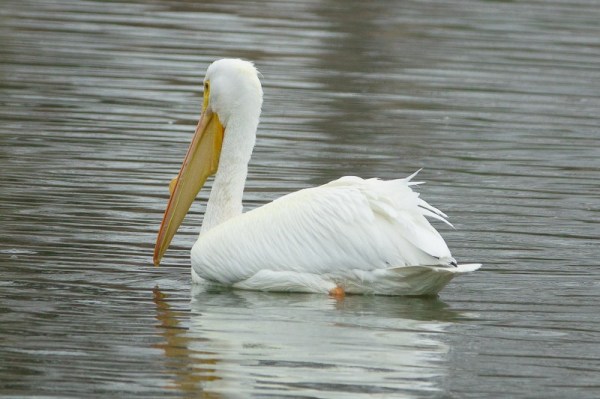
One of many American White Pelicans (Chuck Bragg)
The pond had its usual collection: many Mallards, Double-crested Cormorants, Coots and Pied-billed Grebes, a few White Pelicans swimming about, one Western Grebe. The pelicans’ wings were lifted like parasols or sails above their backs. Many more pelicans and cormorants were resting on the mid-pond island, along with some herons, Canada Geese, and one Egyptian Goose with bloodshot eyes. A gray-brown duck resting near the pelicans caught my eye. Despite being folded up in sleep, I could see a frilly hood sticking out, and at first I thought female Red-breasted Merganser, but the hood wasn’t quite right. I finally decided female Hooded Merganser and we all got scope views of this relatively uncommon duck. Later we bumped into Sepulveda Basin expert birder Kris Ohlenkamp leading another group and they’d seen a pair of them nearby in Haskell Creek.
The reeds surrounding the pond and the island trees were packed with first-year and adult Black-crowned Night-Herons. An Osprey flew above the pond as did many Turkey Vultures. Look alive! (Don’t look dead.)

Green Heron (Grace Murayama)
A Pied-billed Grebe caught a fish. It was black with large frilly pectoral fins, about the size of the bird’s head. The grebe had a bit of trouble swallowing it. Birds discovered tens of millions of years ago that swallowing a fish other than head first was a Very Bad Idea, so they go through various maneuvers designed to rotate/flip/adjust/position the fish into its proper orientation. Fish are not at all interested in making this easy for the bird, and sometimes they get away. The grebe managed to drop the fish into the water at least twice, but the fish couldn’t make good on his escape.

Yellow-chevroned Parakeet – psittacids gone feral! (Joyce Waterman)
Yellow-rumped Warblers were everywhere. Several Bedraggled Wet-Hawks (aka Red-tailed Hawk) sat on limbs, trying to dry out, probably waiting for sufficient sun to warm their feathers. A small flock of Yellow-chevroned Parakeets landed in a distant tree and buried themselves among the yellow-green leaves. Their noisy calls gave them away.
I had decided to skip the trek down to the Los Angeles River. My exploration on Thursday revealed the river to be completely denuded of vegetation by recent rain-induced torrents. Workmen were driving backhoe and frontloader equipment on the riverbed, scraping out the large collection of broken trees and brush clogging up the flood gates of the dam and hauling it away. Only the usual river suspects (birds) were there.

At the south end of the pond I had a brief shock as an owl flew across the water directly towards me. As it passed by the bill appeared to be too long and the wings too long and narrow for an owl. The flash of white on the rump gave it away as a Northern Harrier (female) and my heart dropped back into my chest. Well…they do have a very owlish face.

Allen’s Hummingbird (Chuck Bragg)
We saw lots of hummingbirds, all of which were Anna’s, except for two Allen’s. The Malibu Lagoon area has been overrun – it sometimes seems – by the formerly island-only resident race S.s. sedentarius of the Allen’s Hummingbird, which spread over to the mainland within the past decade or two and now occupies a narrow strip along the coast. But they haven’t moved very far inland, so the resident Anna’s still predominate in the San Fernando Valley.

The elegant Lark Sparrow (Joyce Waterman)
We sauntered – or perhaps ambled – our way back north past the pond, birding as we went. A Cooper’s Hawk was hiding among the the branches of a tree, well concealed, and it took us a while to work out what it was. The long tail, slightly rounded, and the dark gray crown helped identify it. The lawns had mostly dried out and were covered with sparrows, finches and Western Bluebirds. We avoided the puddles and located Chipping and Lark Sparrows, two American Goldfinches among the Lessers and House Finches, a single Cassin’s Kingbird flycatching near the bathrooms, and male Nuttall’s Woodpecker clambering about in a Liquid Amber (so I’m told) tree.

Cassin’s Kingbird (Joyce Waterman)
We had only a little rain, very light and never very long. An altogether beautiful and pleasant morning. This area can get quite birdy in March and April when the migrants are passing through and often hosts stray eastern warblers. SMBAS does only one trip a year at Sepulveda, but the local Audubon chapter, San Fernando Valley Audubon, does two trips a month there: first Sunday 8am and 2nd Saturday 9am for families.

Osprey over the pond (Grace Murayama)
Previous Sepulveda Area trips: Mar. 2018 Feb, 2017 Feb. 2016 Dec. 2015 Nov. 2013
Sepulveda Basin Wildlife Reserve website. The first page has a nice slideshow of changes over time, taken from the same vantage point on the Burbank Blvd. overpass.
Trailmap of the Reserve.
Note: For 2016 & 2017, R = L.A. River; this count is included in the total count for each species.
Thus: Mallard 50 30R = total 50 Mallards includes 30 seen at the L.A. River.
2019 Note: I didn’t do a proper census, and the numbers are my educated guesses supplied for comparative purposes. For example, we really did have only one Cassin’s Kingbird, and there were a lot of Yellow-rumped Warblers. We did not go to the river as recent rains made the trail very muddy and the torrent had eliminated all vegetation on the river edges & “islets.”
| Sepulveda Basin Trip Lists | 11/9/13 | 12/12/15 | 2/13/16 | 2/11/17 | 2/9/19 |
| Canada Goose | 7 | 45 | 13 | 500+ | 300+ |
| Egyptian Goose | 2 | 2 | 3 | ||
| Wood Duck | 2 | ||||
| Gadwall | 2 | 8 | 6R | ||
| American Wigeon | 8 | 60 | 100R | 150R | |
| Mallard | 50 | 50 | 40 10R | 50 30R | 30 |
| Ring-neck Duck | 1 | ||||
| Bufflehead | 4 | ||||
| Hooded Merganser | 2 | 1 | |||
| Pied-billed Grebe | 20 | 18 | 20 | 10 | 15 |
| Eared Grebe | 6 | ||||
| Western Grebe | 1 | 1 | |||
| Double-crested Cormorant | 30 | 35 | 40 | 20 | 70 |
| American White Pelican | 12 | 28 | 5 | 40 | |
| Great Blue Heron | 4 | 3 | 3 | 5 | 4 |
| Great Egret | 4 | 3 | 3 | 34 1R | 30 |
| Snowy Egret | 2 | 2 | 1 | 8 2R | 20 |
| Green Heron | 3 | 5 | 4 | 2 | |
| Black-crowned Night-Heron | 5 | 5 | 7 | 5 | 25 |
| White-faced Ibis | 2 | ||||
| Turkey Vulture | 8 | 12 | 20 | 20 | 20 |
| Osprey | 2 | 1 | 1 | 1 | 1 |
| Northern Harrier | 1 | ||||
| Cooper’s Hawk | 1 | 1 | 3 | 1 | |
| Red-tailed Hawk | 2 | 4 | 5 1R | 4 1R | 4 |
| American Coot | 10 | 35 | 30 10R | 36 4R | 50 |
| Black-necked Stilt | 9R | ||||
| Killdeer | 3 | 2 | |||
| Spotted Sandpiper | 2 | 2 | 1R | ||
| Greater Yellowlegs | 2 | 1R | |||
| Least Sandpiper | 15 | 40 | |||
| Western Gull | 4 | 3 | |||
| California Gull | 10 | 4 | |||
| Rock Pigeon | 15 | 10 | 10 | 60 | |
| Mourning Dove | 8 | 30 | 20 | 30 10R | 40 |
| Great Horned Owl | 2 | ||||
| White-throated Swift | 2 | ||||
| Anna’s Hummingbird | 3 | 2 | 5 | 5 | 15 |
| Allen’s Hummingbird | 10 | 3 | 6 | 8 | 2 |
| Belted Kingfisher | 1 | 2 | 1 | 1 | |
| Red-breasted Sapsucker | 1 | ||||
| Nuttall’s Woodpecker | 2 | 1 | 4 | 1 | |
| Downy Woodpecker | 1 | 1 | |||
| Northern Flicker | 4 | 1 | 1 | 1 | 1 |
| Merlin | 1 | 1 | |||
| Yellow-chevroned Parakeet | 8 | 6 | 20 | 8 | |
| Black Phoebe | 20 | 18 | 6 1R | 7 1R | 15 |
| Say’s Phoebe | 4 | 2 | 2 | ||
| Ash-throated Kingbird | 1 | ||||
| Cassin’s Kingbird | 3 | 3 | 1 | ||
| California Scrub-Jay | 2 | 1 | 2 | 2 | |
| American Crow | 10 | 2 | 8 | ||
| Common Raven | 1 | ||||
| Northern Rough-winged Swallow | 24 | 2 | |||
| Barn Swallow | 6 | ||||
| Bushtit | 8 | 16 | 6 | ||
| White-breasted Nuthatch | 1 | ||||
| Bewick’s Wren | 1 | 4 2R | 3 1r | 1 | |
| Blue-gray Gnatcatcher | 2 | 10 | 1 | 4 | |
| Ruby-crowned Kinglet | 6 | 15 | 3 | 10 2r | 4 |
| Western Bluebird | 3 | 8 | 10 | ||
| Hermit Thrush | 1 | ||||
| American Robin | 1 | ||||
| California Thrasher | 1 | 1 | 5 | ||
| Northern Mockingbird | 5 | 2 | 2 | ||
| European Starling | 30 | 10 | 10 | ||
| American Pipit | 12 | 4 | 1R | ||
| Orange-crowned Warbler | 1 | ||||
| Common Yellowthroat | 6 | 4 | 5 2R | 2H | 4 |
| Yellow-rumped Warbler | 40 | 35 | 20 | 30 | 200 |
| Spotted Towhee | 2 | 2 | 1 | 2 | 2 |
| California Towhee | 8 | 15 | 10 | 6 | 4 |
| Chipping Sparrow | 10 | 8 | 5 | 10 | |
| Lark Sparrow | 5 | 6 | 15 | 4 | |
| Savannah Sparrow | 10 | 2 | 15 | 10 | |
| Song Sparrow | 10 | 5 | 4 | 20 | 12 |
| White-crowned Sparrow | 30 | 50 | 60 | 20 5r | 30 |
| Dark-eyed Junco | 8 | 2 | |||
| Red-winged Blackbird | 4 | 8 | 8 | 4 | |
| Western Meadowlark | 15 | 40 | |||
| Great-tailed Grackle | 2 | 2 | |||
| House Finch | 30 | 15 | 25 | 17 3r | 40 |
| Lesser Goldfinch | 4 | 30 | 4 | 12 | |
| American Goldfinch | 30 | 25 | 5 | 2 | |
| House Sparrow | 6 | ||||
| Total Species – 85 | 62 | 50 | 55 | 54 | 52 |
This Video May Give You Goose Bumps | PBS BrainCraft Video
This video may give you goose bumps – the weird and wonderful science behind them. If you didn’t feel any chills, try the full length clips.
This is an installment of the PBS – BrainCraft series created by Vanessa Hill. If no film or link appears in this email, go to the blog to view it by clicking on the blog title above. If the film stops & starts in an annoying manner, press pause (lower left double bars ||) to let it buffer and get ahead of you. [Chuck Almdale]
How can you spot bad science reporting? Above the Noise helps you get above the noise by following 4 simple letters: G – L- A- D.
ABOVE THE NOISE is a show that cuts through the hype and takes a deeper look at the science behind controversial and trending topics in the news. Hosted by Myles Bess and Shirin Ghaffary.
This series is aimed at teens, but after viewing a few episodes, I’m sure that most adults will benefit from it as well. Let us know what you think.
This is another installment of KQED’s Above the Noise series. If no film or link appears in this email, go to the blog to view it by clicking on the blog title above. If the film stops & starts in an annoying manner, press pause (lower left double bars ||) to let it buffer and get ahead of you. [Chuck Almdale]
Carola’s Parotia: King of the Dance | Cornell / National Geographic
The dance of the Carola’s Parotia is the most complex of all birds-of-paradise. The male has to go through five introductory dance moves before starting the main event, called the “ballerina dance.” All the while, four or five females may be perched above him, examining every detail of his performance before deciding whether to mate. Filmed and photographed by Tim Laman and Ed Scholes.
There are currently seventy-two short films in the entire Birds-of-Paradise Project playlist, ranging from 26 seconds to 8:29. In the upcoming weeks, we will present some of our favorites.
A film from the Cornell Lab of Ornithology. If no film or link appears in this email, go to the blog to view it by clicking on the blog title above. If the film stops & starts in an annoying manner, press pause (lower left double bars ||) to let it buffer and get ahead of you. The lab is a member-supported organization and they welcome your membership and support. [Chuck Almdale]
Watch This Bee Build Her Bee-jeweled Nest | Deep Look Video
Pollinator. Mason. Jeweler. A female blue orchard bee is a multitasking master. She fashions exquisite nests out of mud and pollen that resemble pieces of jewelry. And in the process, she helps us grow nuts and fruits.
This is another installment of the PBS Deep Look series; this installment is adapted from the “It’s OK to be Smart” series. If no film or link appears in this email, go to the blog to view it by clicking on the blog title above. If the film stops & starts in an annoying manner, press pause (lower left double bars ||) to let it buffer and get ahead of you. [Chuck Almdale]



 SANTA MONICA BAY AUDUBON SOCIETY BLOG