Free email delivery
Please sign up for email delivery in the subscription area to the right.
No salesman will call, at least not from us. Maybe from someone else.
SMBAS field class in Bird Identification
SMBAS will offer a short field course in bird identification in the spring of 2017. The course is intended to help new or novice birders improve their birding skills while learning how to identify some of the species commonly found in the Los Angeles basin.
The course will consist of 6 Saturday morning sessions, each of which will be held in a local park or natural area. Sessions will begin in mid-February, 2017.
Enrollment is limited to 8. A donation of $60 per SMBAS member or $90 per non-member will be requested.
For more information, send an e-mail to smbaudubon [AT] gmail.com and put “Bird Class” in the subject line or call 310-617-8904 and leave a message that includes your name and phone number.
Do Mother Hummingbirds Sleep?
Hummingbirds have voracious appetites, eating the human equivalent of an entire refrigerator full of food every day. Even sleeping hummingbirds have huge metabolic demands that must be met to survive the night. They conserve energy by going into nightly torpor, drastically lowering their metabolic rate and body temperature. The hummingbird behavior shown here is torpor, and is no cause for alarm.

Photo: Julie Kennedy
But can nesting females incubate their eggs well using torpor? A group of researchers, including LMU’s Center for Urban Resilience, aim to find out by using remote thermal sensing technology to run a comparative analysis between multiple nests in different micro environments. Hummingbirds provide an optimal species for study of the physiological mechanisms animals use to cope with extreme limitations. And a better understanding of these mechanisms may have broader application in medical technology.
If you wish to help, the project leaders are crowd-sourcing the purchase of equipment needed for the study, with a goal of $4900. [Jane Beseda]
Sharing Venice Beach with Least Terns
 People, crows and Least Terns are learning to be good neighbors at the Least Tern nesting enclosure on Venice Beach, thanks to research led by the LMU Center for Urban Resilience (CURes), and the efforts of local citizen scientists. We all use the beach in close proximity to each other because the enclosure is the only stretch of sand that is not groomed between Santa Monica and San Pedro.
The North American Waterbird Conservation Plan lists Least Terns as a Species of High Concern, so helping to preserve their nesting habitat is an important element in reversing their steep decline. CURes is also studying how to mitigate crow predation of eggs and chicks to boost survival rates at the enclosure.
Full Beaver’s Moon & Supermoon! Update – November 14, 5:52 AM PST
Here’s another update from SMBAS Blog on that large, disc-like, shining object which has frequently and mysteriously appeared in our nighttime sky this year (known to the cognoscenti as the moon).
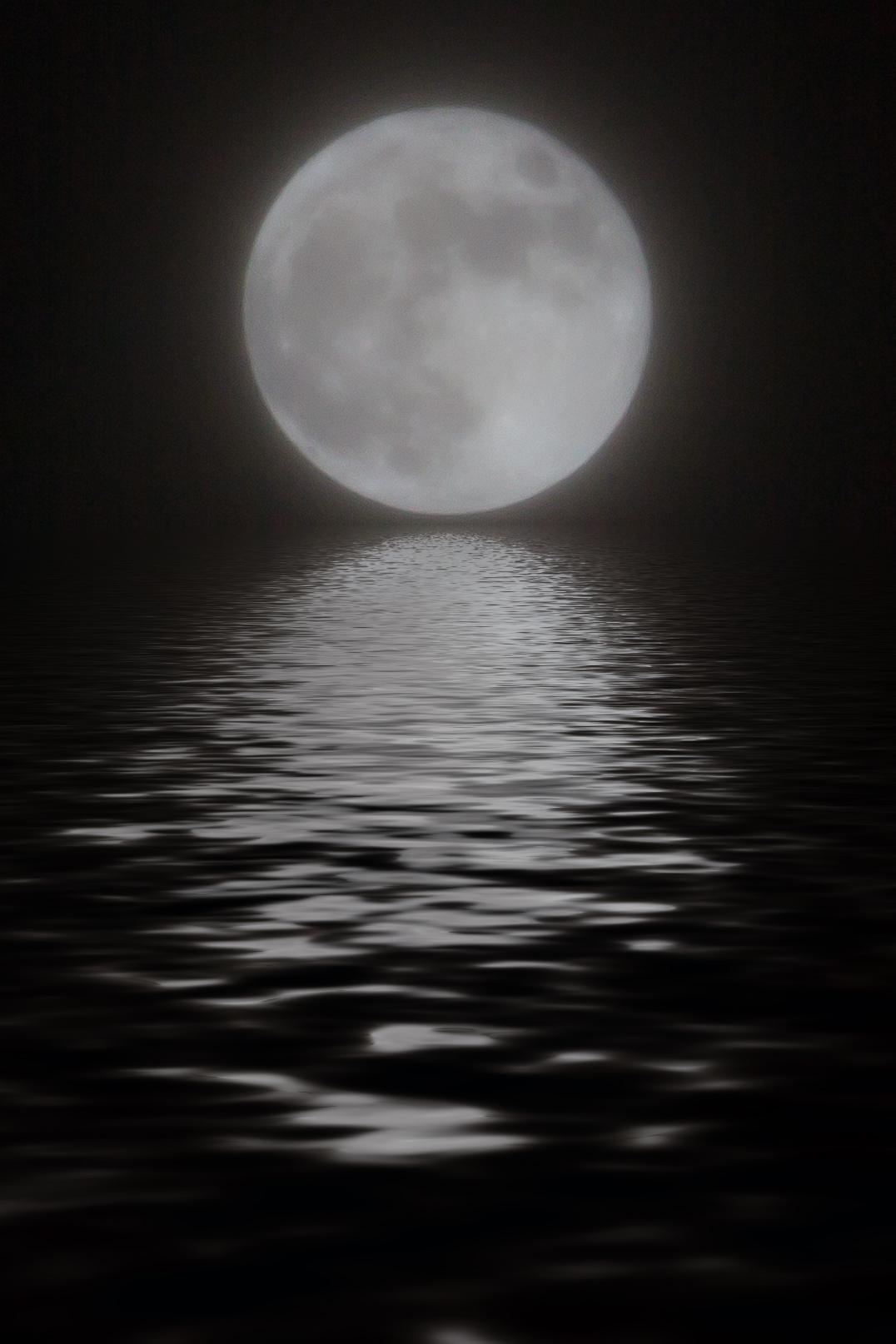
Full Beaver Moon, Nov. 17, 2013
Ed Hewitt: https://www.flickr.com/photos/erhewitt50
Nov. 14, 5:52 a.m. PST — Full Beaver Moon. Now it is time to set beaver traps before the swamps freeze to ensure a supply of warm winter furs. Another interpretation suggests that the name Beaver Full Moon comes from the fact that the beavers are now active in their preparation for winter. This full moon is also called the Frosty Moon.
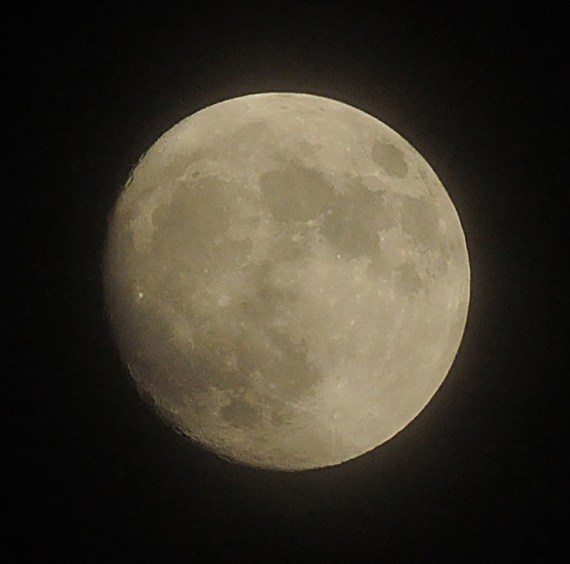
November 12, 2016 moon, approaching full supermoon status (Jim Kenney)
This is a Supermoon (or perigee moon or perigee-syzygy), because the full moon is at perigee (closest point to earth) on the day it rises. It will also be the closest – 221,524 miles – it’s been since January 26, 1948. It will almost certainly be the brightest and largest full moon of your lifetime. Don’t miss it. The night of the 13th or early morning of the 14th are the best viewing times. This supermoon will appear 14% larger and 30% brighter than do full moons at apogee (farthest point from earth).
Effects on the high and low tides will be dramatic, and if there are any coastal storms nearby, batten down the hatches and watch out for flooding. Such extreme tides are called “perigean spring tides” with reference not to the season “spring,” but to the German springen “to spring up” or “arise.”
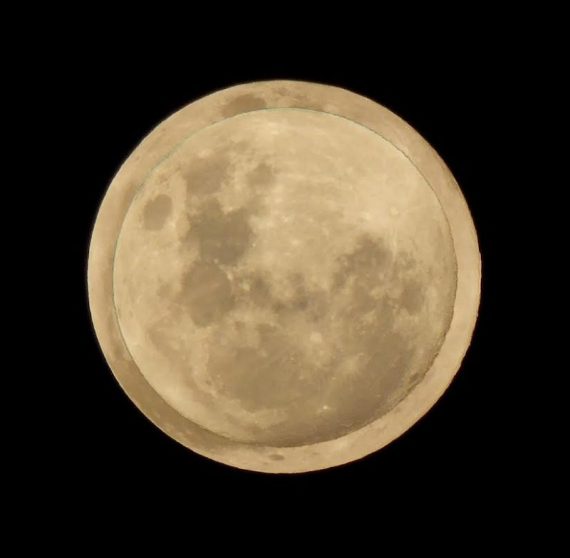
Full moon – largest to smallest (Peter Lowenstein – Earth Sky)
Month Moon Names from other cultures Courtesy of Keith Cooley):
Chinese: White Moon; Celtic: Dark Moon; English Medieval: Snow Moon
Dakotah Sioux: Moon when horns are broken off
The Old Farmer’s Almanac has a page for each full moon, which has tips on times to harvest, fish and set eggs, things which every Los Angeles Westsider worth their salt must know. The best days for setting eggs are the 15th & 16th. Now you know, so you have no excuses.
Note: Pacific Daylight Time started March 13, 2016 at 2 AM (becoming 3 AM) and ended November 6, 2016 at 2 AM (becoming 1 AM). But you knew that.
The next significant full moon will occur on Dec. 13, 4:05 p.m. PST. Keep an eye on this spot for additional late-breaking news on this unprecedented event.
The moon name information comes to you courtesy of: http://www.space.com/31699-full-moon-names-2016-explained.html
written by Joe Rao. Joe Rao serves as an instructor and guest lecturer at New York’s Hayden Planetarium. He writes about astronomy for Natural History magazine, the Farmer’s Almanac and other publications, and he is also an on-camera meteorologist for News 12 Westchester, N.Y.
But that’s waaay too long to type in, and besides, you don’t need to go there because SMBAS has done the work for you!
[Chuck Almdale]
Project Feeder Watch starts Saturday, 12 November
TO ALL:
This popped into my blog editor inbox today, so I’m passing it along to those many folks who feed birds during the winter. [Chuck Almdale]
|



 SANTA MONICA BAY AUDUBON SOCIETY BLOG