Free email delivery
Please sign up for email delivery in the subscription area to the right.
No salesman will call, at least not from us. Maybe from someone else.
Full Wolf Moon Update – January 23, 2016, 5:45 p.m. PST
Here’s another update from SMBAS Blog on that large, disc-like, shining object which has frequently and mysteriously appeared in our nighttime sky this year (known to many as the moon).

Wolf Moon (Paul Lungren – calendar.perfectduluthday.com)
Jan. 23, 5:45 p.m. PST — Full Wolf Moon. Amid the zero cold and deep snows of midwinter, the wolf packs howled hungrily outside Indian villages. January’s full moon was also known as the Old Moon or the Moon after Yule. In some tribes, this was the Full Snow Moon, but most applied that name to next month’s moon. The moon’s monthly perigee – its closest point to Earth – is on the 14th at 6:11 p.m. PST. [Infographic: Moon Phases & Lunar Cycles]
The Old Farmer’s Almanac has a page for each full moon. Here’s some advice on when to set your eggs.
The next significant full moon will occur on February 22, 10:19 a.m. PST. Keep an eye on this spot for additional late-breaking news on this unprecedented event.
This information comes to you courtesy of: http://www.space.com/24262-weird-full-moon-names-2014-explained.html written by Joe Rao. Joe Rao serves as an instructor and guest lecturer at New York’s Hayden Planetarium. He writes about astronomy for Natural History magazine, the Farmer’s Almanac and other publications, and he is also an on-camera meteorologist for News 12 Westchester, N.Y.
But that’s waaay too long to type in, and besides, you don’t need to go there because SMBAS has done the work for you!
[Chuck Almdale]
Antelope Valley Raptor Search, January 16, 2016
As we left LA, it looked as if the weather would be favorable for our Antelope Valley raptor search. Fittingly, the first bird we saw as we approached the Palmdale Blvd. exit from the 14 Fwy was a Red-tailed Hawk which was perched on a light pole along the freeway. During a brief stop in Palmdale, we saw a single Yellow-rumped Warbler that was foraging in some shrubbery, a few Western and California Gulls, some Common Ravens and some typical urban species, including Rock Pigeons, American Crows, European Starlings and House Sparrows.
After our stop, we drove east on Palmdale Blvd. and turned north on 10th St. E, where we stopped to look at some perched Mourning Doves. We saw a flock of House Finches and had scope views of some perched Eurasian Collared-Doves.
When we reached Rancho Sierra Vista (Ave. P), we turned east. It was apparent that the recent rain had not eased the drought. The unirrigated land looked very dry and we saw very few birds other than the occasional Red-tailed Hawk as we drove toward our next stop, the Desert Aire Golf Club. When we reached the Club, we pulled off the road and scanned for birds. The section of the Club that was visible from the shoulder of the road was dry and birds were scarce, both at the Club and on the undeveloped land across the road. The highlights were a pair of Red-tailed Hawks that was perched near a large stick nest and a single Great Egret that flew through.
When we left the Golf Club, we drove north on 40th St. E, stopping briefly to check the area just north of the settling ponds. We stopped again just before the road turns right and becomes Ave. N because we saw several flocks of Horned Larks. One small flock was especially easy to see because it was close to the road at the edge of the sod farm. However, our attention quickly turned from the larks to a Loggerhead Shrike that was perched on a shrub on the other side of the road. As we watched, we realized that it was displaying. It repeatedly lifted and spread its wings as it alternately perched on top of a shrub, then flew to the ground, ran a few feet, paused and ran again before flying up and landing on top of another shrub, all the while flaring its wings and tail. Its plumage was crisp and bright so the behavior was eye-catching. Since we did not see another shrike in the immediate area, we suspected that it was defending a territory, which male Loggerhead Shrikes are known to do outside of the breeding season.
Since the next area we planned to check was the cultivated land along 40th St. E, we went around the perimeter of the airport (north on 50th St. E, west on Columbia Way) and turned north on 40th St. E. The farm fields on the east side of the road have been productive in past years but, to our disappointment, we saw few birds other than 8 Canada Geese that were standing in one of the fields. We continued north and turned right (east) on Ave. L where we stopped near some houses. That stop paid off. We found 4 species of raptors: an immature Cooper’s Hawk that disappeared into some dense shrubbery next to a house, 3 Red-tailed Hawks, 1 male or sub-adult Northern Harrier and a Peregrine that landed on top of a power pole. It stayed there for some time so we were able to see it well in the telescope. There were at least 50 Killdeer in one of the fields. We saw at least 30 Mourning Doves, a Say’s Phoebe, a Northern Mockingbird and approximately 50 House Finches. The highlight was a flock of 15 Mountain Bluebirds, brilliantly illuminated by the morning sun.

Killdeer, Mei Kwan, 1/16/16
We continued east along Ave. L, stopping to scan a field of sheep. There were large numbers of Brewer’s Blackbirds but no Mountain Plovers with the sheep so we drove on. When we reached the intersection with 50th St. E we could see flocks of birds on both sides of the road to the south so we turned right, drove a short way and stopped. In addition to more Killdeer, we saw 2 American Kestrels, numerous Western Meadowlarks and more than 50 Tricolored Blackbirds. The best bird, however, was a Ferruginous Hawk that was perched on the ground in one of the fields. The views through the scope were good enough that we were able to see the long gape that is characteristic of this species.

Ferruginous Hawk, Mei Kwan, 1/16/16
With better views of more Ferruginous Hawks in mind, we turned around and drove north and east. Our objective was Ave. I between 110th St. & 120th St. E where the farms have been reliable sites for wintering Ferruginous Hawks in past years. When we reached that area, we saw that the farms were active and raptors were plentiful, though most of the buteos we saw were Red-tailed Hawks. Fortunately, we saw 4 Ferruginous Hawks. There were sheep in a pasture but the flock was so far from the road that even with the scope, we could not tell if there were any Mountain Plovers with the sheep. As we scanned the fields for small birds, we did not find very many, though the land was under irrigation and appeared to be in good condition. We did see some Killdeer, blackbirds and a few flocks of Horned Larks.
Since it was after noon, we decided to go to Apollo Park to have lunch. During the drive, we saw a Northern Harrier, numerous Common Ravens but no large flocks of small birds. Apollo Park, however, was very birdy. In addition to the usual Park birds such as Canada Geese, Mallards (and assorted Mallard-types), American Coots, Ring-billed & California Gulls, Brewer’s Blackbirds and House Sparrows, there were Greater White-fronted, Snow and Ross’s Geese, Northern Shovelers, Red-breasted Mergansers, Yellow-rumped Warblers and Dark-eyed Juncos. While we were eating, a Turkey Vulture passed overhead, a lone Tree Swallow flew through, a single Red-breasted Nuthatch landed in a tree near the back of the Park and a Great-tailed Grackle perched on a nearby picnic table and appeared to watch us as we ate.

Snow Goose, Mei Kwan, 1/16/16
After lunch, we drove north on 60th St. W. In past years, the area has been productive but the fields were mostly dry and we saw few birds other than a few Red-tailed Hawks and one American Kestrel. At Gaskell Ave. we turned and drove west. Land that had been under cultivation in past years was fallow and we saw some new solar developments. Birds were less abundant than in past years. Although we saw fewer species and fewer individuals of those species, some of our sightings were memorable.
At one point we stopped near a house because we had noticed some Eurasian Collared-Doves on a power line. While we were looking at those birds, we heard a bird singing from a tree in the yard and realized that it was a Loggerhead Shrike. Unfortunately, it was difficult to hear. The wind had increased and the dogs in the yard were barking at us so we left.
There were several Red-tailed Hawks on the power poles and 2 American Kestrels on the wires along Gaskell. We stopped when we saw 2 Ferruginous Hawks. While we were watching them, we noticed a Prairie Falcon soaring in the distance. At the same time, a Northern Harrier flew over the same field, momentarily confusing us as we followed one bird or the other with our binoculars. For a time, the falcon “hung” on the wind, holding itself in one spot without flapping its wings. While we were discussing the raptors, a Savannah Sparrow emerged from the brush and approached us. We stayed quiet and it came so close that we could see the fine details of its plumage.

Red-tailed Hawk, Mei Kwan, 1/16/16
Since we had seen no Merlin and only 1 Prairie Falcon, we decided to go home by crossing the Valley toward Quail Lake instead of returning on the 14 Fwy. In past years, we have seen raptors along that route, either flying over the fields or perched on the power poles. As we drove over the aqueduct, noticed some Bufflehead on the water but the only raptor we saw as we drove was a Northern Harrier that was flying low over the shore at Quail Lake. We decided against stopping at Quail Lake and continued on our way back to LA.
It was a good day, despite the ongoing drought and paucity of birds. We missed some species we had hoped to see but found many target species, including Northern Harrier, Ferruginous Hawk, Prairie Falcon, Mountain Bluebird and Tricolored Blackbirds.
| SMBAS, Antelope Valley | 1/16/2016 | |
| # | location | |
| Greater White-fronted Goose | 5 | Apollo Pk |
| Snow Goose | 2 | Apollo Pk |
| Ross’s Goose | 2 | Apollo Pk |
| Canada Goose | 25 | 40th St N north of Columbia Way; Apollo Pk |
| Mallard | 30 | Apollo Pk |
| Northern Shoveler | 2 | Apollo Pk |
| Bufflehead | 2 | in aqueduct, seen from Rt 138 |
| Red-breasted Merganser | 6 | Apollo Pk |
| Great Blue Heron | 1 | Quail Lake |
| Great Egret | 1 | Desert Aire Golf Club |
| Turkey Vulture | 1 | Apollo Pk |
| Northern Harrier | 5 | scattered sites |
| Cooper’s Hawk | 1 | Ave L x 40th St E |
| Red-tailed Hawk | 40+ | widespread |
| Ferruginous Hawk | 7 | 50the St E south of Ave L; Ave J x E110th; Gaskell Ave |
| American Coot | 30 | Apollo Pk |
| Killdeer | 50 | widespread |
| Ring-billed Gull | 10 | Palmdale; Apollo Pk |
| Western Gull | 10+ | Palmdale |
| California Gull | 25 | Palmdale; Apollo Pk |
| Rock Pigeon [I] | 35 | Palmdale |
| Eurasian Collared-Dove [I] | 10 | Palmdale; scattered sites |
| Mourning Dove | 6 | scattered sites |
| Northern Flicker | 2 | Apollo Pk |
| American Kestrel | 6 | scattered sites |
| Peregrine Falcon | 1 | Ave L x 40th St E |
| Prairie Falcon | 1 | Gaskell Ave |
| Say’s Phoebe | 10 | scattered sites |
| Loggerhead Shrike | 6 | scattered sites |
| American Crow | 4 | Palmdale |
| Common Raven | 100+ | widespread |
| Horned Lark | 100+ | 40th St N x Ave N |
| Tree Swallow | 1 | Apollo Pk |
| Red-breasted Nuthatch | 1 | Apollo Pk |
| Mountain Bluebird | 15 | Ave L x 40th St E |
| Northern Mockingbird | 2 | Palmdale; Ave L x 40th St E |
| European Starling [I] | 30 | Palmdale Blvd; E 40th x Ave P |
| Yellow-rumped Warbler | 20 | Palmdale; Apollo Pk |
| Savannah Sparrow | 8 | scattered sites |
| White-crowned Sparrow | 5 | Ave L x 50th St E |
| Dark-eyed Junco | 6 | Apollo Pk |
| Tricolored Blackbird | 50+ | 50th St E south of Ave L |
| Western Meadowlark | 100 | widespread |
| Brewer’s Blackbird | 200 | widespread |
| Great-tailed Grackle | 1 | Apollo Pk |
| House Finch | 200+ | widespread |
| House Sparrow [I] | 60 | Palmdale; Apollo Pk & scattered sites |
Where Are the Ants Carrying All Those Leaves? – Deep Look Video
Ants don’t eat leaves. They use them to grow white tufts of nutritious fungus to feed their offspring. Their success as farmers has made leafcutter ants into fungus tycoons, complete with their own underground cities and huge half-inch soldiers to patrol them.
This is another installment of the PBS Deep Look series. If no film or link appears in this email, go to the blog to view it by clicking on the blog title above. If the film stops & starts in an annoying manner, press pause (lower left double bars ||) to let it buffer and get ahead of you. [Chuck Almdale]
Newt Sex: Buff Males! Writhing Females! Cannibalism! – Video
Every winter, California newts leave the safety of their forest burrows and travel as far as three miles to mate in the pond where they were born. Their mating ritual is a raucous affair that involves bulked-up males, writhing females and a little cannibalism.
This is another installment of the PBS Deep Look series. If no film or link appears in this email, go to the blog to view it by clicking on the blog title above. If the film stops & starts in an annoying manner, press pause (lower left double bars ||) to let it buffer and get ahead of you. [Chuck Almdale]
Field Trip Report Malibu Lagoon Dec. 27, 2015 & July-Dec 2015 Trip Lists
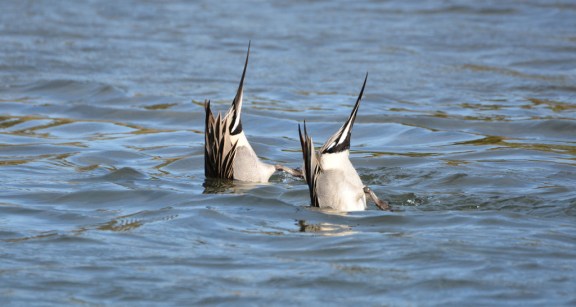
If you can’t ID this species, you need to come on our birdwalk (G. Murayama 12-24-15)
A very crisp morning with temps in the lower forties as we started. The lagoon had recently received a tidal surge and was
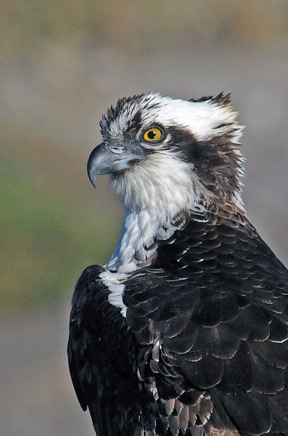
Osprey close-up (Jim Kenney 11-25-15)
slowly draining as we birded. Luckily, temperatures “soared” into the low 60’s as we explored the area.We were unable to cross over the drainage of the lagoon and walked around on the bridge to the Adamson House where we were pleasantly surprised to see two Sora chasing each other in the open right below the observation deck, formerly boat launch area. As is often the case, this is one of our best-attended walks of the year with visitors from as far as Michigan this year, and at least 20 persons, of all sizes and ages, on our 10AM family walk.

Common Murre (Jim Kenney 11-20-15)
This Common Murre was the exceptional bird of the day. Even though a rarity and a treat for those who do not participate in pelagic birding, its presence in the lagoon did not presage a happy future for this normally sea-going bird. No Snowy Plovers spotted, a troubling absence.

The Royal Tern In Winter. Note that eye is not surrounded by dark feathers and slight gonydeal bump on lower bill, unlike the similar Elegant Tern (Bob Gurfield 12-18-15)
Birds new for the season were: Northern Pintail, Brandt’s Cormorant, Red-tailed Hawk, Greater Yellowlegs, Common Murre, Peregrine Falcon, Oak Titmouse. The murre is a new addition to our monthly lagoon bird list, now 233 species long.

A Snowy Plover bad hair day (G. Murayama 12-31-15)
As always, many thanks to our photographers: Grace Murayama, Jim Kenney and Bob Gurfield.
Our next four scheduled field trips: Antelope Valley Raptor Experience, 16 Jan. 8:00am (sign up required); Malibu Lagoon 8:30 & 10am, 24 Jan.; Sepulveda Basin Reserve, 13 Feb. 8:30am; Malibu Lagoon 8:30 & 10am, 28 Feb.

A drowsy Ring-billed Gull (G. Murayama 12-29-15)
Our next program: Malibu Lagoon – Past and Present with Chuck Almdale on Tuesday, 2 February, 7:30 pm, at [note location change] Chris Reed Park, 1133 7th St., NE corner of 7th and Wilshire Blvd. in Santa Monica.
NOTE: Our 10 a.m. Parent’s & Kids Birdwalk meets at the shaded viewing area. Watch for Willie the Weasel. He’ll be watching for you and your big floppy feet.

Great Blue Heron striding purposefully (G. Murayama 12-24-15)
Links: Unusual birds at Malibu Lagoon
9/23/02 Aerial photo of Malibu Lagoon
Prior checklists:
2015: Jan-May
2014: Jan-July, July-Dec 2013: Jan-June, July-Dec
2012: Jan-June, July-Dec 2011: Jan-June, July-Dec
2010: Jan-June, July-Dec 2009: Jan-June, July-Dec

Blue-gray Gnatcatchers are still here, quizzical as ever (G. Murayama 12-31-15)
The 10-year comparison summaries created during the project period, despite numerous complaints, remain available on our Lagoon Project Bird Census Page. Very briefly summarized, the results unexpectedly indicate that avian species diversification and numbers improved slightly during the period Jun’12-June’14.
[Lucien Plauzoles & Chuck Almdale]
| Malibu Census 2015 | 7/26 | 8/23 | 9/27 | 10/24 | 11/22 | 12/27 |
| Temperature | 70-82 | 70-77 | 68-77 | 64-75 | 64-76 | 45-60 |
| Tide Lo/Hi Height | L+2.37 | L+2.80 | H+5.94 | H+5.93 | L+0.24 | H+6.07 |
| Tide Time | 1143 | 0944 | 0918 | 0810 | 1241 | 0945 |
| Brant | 1 | |||||
| Canada Goose | 11 | 7 | ||||
| Mute Swan | 2 | 2 | ||||
| Gadwall | 5 | 8 | 54 | 15 | 4 | 13 |
| American Wigeon | 2 | |||||
| Mallard | 55 | 35 | 34 | 30 | 25 | 2 |
| Northern Shoveler | 6 | 8 | 2 | |||
| Northern Pintail | 2 | |||||
| Green-winged Teal | 4 | 10 | 11 | |||
| Surf Scoter | 1 | 2 | ||||
| Bufflehead | 4 | 1 | ||||
| Hooded Merganser | 2 | |||||
| Red-brstd Merganser | 1 | 1 | 2 | 17 | ||
| Ruddy Duck | 5 | 68 | 110 | 1 | ||
| Red-throated Loon | 1 | |||||
| Pacific Loon | 2 | |||||
| Common Loon | 2 | |||||
| Pied-billed Grebe | 3 | 2 | 3 | 3 | 2 | |
| Horned Grebe | 2 | |||||
| Eared Grebe | 8 | 10 | 10 | 2 | ||
| Western Grebe | 3 | 15 | 4 | |||
| Brandt’s Cormorant | 2 | 1 | 2 | |||
| Dble-crstd Cormorant | 34 | 43 | 36 | 29 | 45 | 15 |
| Pelagic Cormorant | 2 | 1 | 2 | 1 | ||
| Brown Pelican | 17 | 3 | 6 | 42 | 11 | 10 |
| Great Blue Heron | 4 | 8 | 4 | 4 | 3 | 2 |
| Great Egret | 4 | 6 | 3 | 5 | 1 | 2 |
| Snowy Egret | 6 | 22 | 18 | 12 | 8 | 30 |
| Blk-crwnd N-Heron | 2 | 3 | 3 | 3 | 1 | |
| Osprey | 1 | 1 | ||||
| Cooper’s Hawk | 1 | |||||
| Red-tailed Hawk | 1 | |||||
| Sora | 1 | 2 | ||||
| American Coot | 1 | 4 | 75 | 55 | 60 | 10 |
| Blk-bellied Plover | 27 | 75 | 84 | 62 | 33 | 30 |
| Snowy Plover | 16 | 21 | 32 | 28 | ||
| Semipalmated Plover | 1 | 5 | 2 | |||
| Killdeer | 4 | 6 | 10 | 15 | 4 | 14 |
| Spotted Sandpiper | 1 | 3 | 10 | 2 | 5 | |
| Greater Yellowlegs | 1 | |||||
| Willet | 6 | 8 | 15 | 35 | 18 | 13 |
| Whimbrel | 13 | 10 | 4 | 2 | 5 | 1 |
| Marbled Godwit | 8 | 8 | 8 | 11 | ||
| Ruddy Turnstone | 3 | 12 | 15 | 18 | 9 | 2 |
| Black Turnstone | 1 | |||||
| Sanderling | 2 | 23 | 6 | |||
| Least Sandpiper | 8 | 3 | 6 | 4 | ||
| Western Sandpiper | 1 | 14 | 15 | 1 | ||
| Short-billd Dowitcher | 6 | |||||
| Long-billed Dowitcher | 1 | 4 | 2 | |||
| Wilson’s Phalarope | 1 | |||||
| Common Murre | 1 | |||||
| Bonaparte’s Gull | 1 | 1 | 2 | |||
| Heermann’s Gull | 14 | 11 | 25 | 11 | 11 | |
| Ring-billed Gull | 2 | 95 | 60 | |||
| Western Gull | 40 | 40 | 110 | 90 | 140 | 80 |
| California Gull | 2 | 1 | 8 | 4 | 1430 | 620 |
| Glaucous-wingd Gull | 1 | 1 | ||||
| Caspian Tern | 1 | 6 | 1 | |||
| Common Tern | 1 | |||||
| Forster’s Tern | 2 | 3 | ||||
| Royal Tern | 3 | 9 | 15 | 2 | 23 | 11 |
| Elegant Tern | 45 | 12 | 6 | 4 | ||
| Black Skimmer | 1 | |||||
| Rock Pigeon | 4 | 6 | 12 | 10 | 20 | 2 |
| Eur. Collared-Dove | 1 | 1 | ||||
| Mourning Dove | 7 | 7 | 4 | 2 | 1 | |
| Vaux’s Swift | 45 | |||||
| Anna’s Hummingbird | 1 | 3 | 4 | 2 | 2 | 3 |
| Allen’s Hummingbird | 3 | 10 | 5 | 8 | 5 | 2 |
| Belted Kingfisher | 1 | 1 | 1 | |||
| Red-brstd Sapsucker | 1 | |||||
| Nuttall’s Woodpecker | 1 | |||||
| Northern Flicker | 1 | |||||
| American Kestrel | 1 | 1 | ||||
| Merlin | 1 | |||||
| Peregrine Falcon | 1 | |||||
| Nanday Parakeet | 6 | |||||
| Black Phoebe | 4 | 6 | 20 | 10 | 10 | 12 |
| Say’s Phoebe | 4 | 3 | 1 | 2 | ||
| Warbling Vireo | 6 | 1 | ||||
| Western Scrub-Jay | 1 | |||||
| American Crow | 4 | 4 | 20 | 10 | 3 | 1 |
| Rough-wingd Swallow | 3 | 8 | ||||
| Tree Swallow | 10 | 10 | ||||
| Barn Swallow | 12 | 12 | ||||
| Cliff Swallow | 12 | 3 | ||||
| Oak Titmouse | 1 | 1 | ||||
| Bushtit | 2 | 20 | 4 | 28 | 40 | |
| House Wren | 1 | 4 | 1 | 2 | ||
| Marsh Wren | 1 | 2 | 1 | |||
| Bewick’s Wren | 1 | 1 | ||||
| Blue-gray Gnatcatcher | 3 | 4 | 9 | 3 | ||
| Ruby-crowned Kinglet | 4 | 10 | 6 | |||
| Hermit Thrush | 1 | 1 | ||||
| Northern Mockingbird | 4 | 4 | 4 | 6 | 6 | 2 |
| European Starling | 25 | 25 | 35 | 10 | 21 | 10 |
| Ornge-crwnd Warbler | 2 | 4 | 5 | |||
| Nashville Warbler | 3 | |||||
| Common Yellowthroat | 5 | 5 | 8 | 8 | 7 | 1 |
| Yellow Warbler | 1 | 1 | ||||
| Palm Warbler | 1 | |||||
| Yellow-rumpd Warbler | 3 | 35 | 40 | 40 | ||
| Blk-throated G. Warbler | 3 | |||||
| Townsend’s Warbler | 1 | 1 | ||||
| Spotted Towhee | 2 | 2 | ||||
| California Towhee | 4 | 6 | 2 | 3 | 1 | 1 |
| Savannah Sparrow | 2 | 3 | 1 | |||
| Song Sparrow | 5 | 8 | 3 | 3 | 3 | 6 |
| White-crwnd Sparrow | 2 | 25 | 4 | 15 | ||
| Red-winged Blackbird | 40 | 15 | 15 | |||
| Western Meadowlark | 4 | 4 | 5 | 4 | ||
| Great-tailed Grackle | 3 | 5 | 12 | 10 | 4 | 3 |
| Brwn-headed Cowbird | 2 | |||||
| House Finch | 2 | 12 | 25 | 9 | 4 | 3 |
| Lesser Goldfinch | 3 | 3 | ||||
| House Sparrow | 1 | |||||
| Totals by Type | Jul | Aug | Sep | Oct | Nov | Dec |
| Waterfowl | 62 | 46 | 99 | 129 | 169 | 58 |
| Water Birds – Other | 57 | 54 | 126 | 145 | 152 | 48 |
| Herons, Egrets & Ibis | 16 | 39 | 28 | 24 | 13 | 34 |
| Quail & Raptors | 0 | 0 | 1 | 1 | 2 | 4 |
| Shorebirds | 71 | 170 | 215 | 161 | 113 | 83 |
| Gulls & Terns | 105 | 80 | 169 | 114 | 1703 | 775 |
| Doves | 11 | 13 | 17 | 13 | 21 | 2 |
| Other Non-Passerines | 4 | 13 | 55 | 20 | 7 | 6 |
| Passerines | 85 | 149 | 213 | 191 | 164 | 156 |
| Totals Birds | 411 | 564 | 923 | 798 | 2344 | 1166 |
| Total Species | Jul | Aug | Sep | Oct | Nov | Dec |
| Waterfowl | 4 | 4 | 5 | 5 | 10 | 10 |
| Water Birds – Other | 5 | 5 | 5 | 8 | 11 | 9 |
| Herons, Egrets & Ibis | 4 | 4 | 4 | 4 | 4 | 3 |
| Quail & Raptors | 0 | 0 | 1 | 1 | 2 | 4 |
| Shorebirds | 8 | 14 | 13 | 10 | 9 | 10 |
| Gulls & Terns | 6 | 7 | 9 | 7 | 7 | 7 |
| Doves | 2 | 2 | 3 | 3 | 2 | 1 |
| Other Non-Passerines | 2 | 2 | 4 | 7 | 2 | 3 |
| Passerines | 13 | 15 | 26 | 33 | 20 | 21 |
| Totals Species – 117 | 44 | 53 | 70 | 78 | 67 | 68 |



 SANTA MONICA BAY AUDUBON SOCIETY BLOG