Free email delivery
Please sign up for email delivery in the subscription area to the right.
No salesman will call, at least not from us. Maybe from someone else.
April. It’s that time of year again!
For the Mar Vista gardens tour, of course! This is our area’s garden tour that focuses on rational, reasonable, drought-tolerant garden designs. Some of them are created by well-known landscape designers for clients who don’t have time to get down’n’dirty in the front and back yards. Others are home-designed and maintained displays of California native plants. The varied lot size and locations of the houses on display guarantee that there is something for everyone. Last year, this Audubon chapter’s sponsorship made the Walgrove (School’s) Wildlands one the tour’s highlights. Even though schools are not on this year’s tour, make sure you go by Walgrove’s garden and peek through the fence. It’s in full bloom, for the 9th week! Hooray!
Here is your link with the info to participate in this year’s tour on Saturday April 25th: addresses, links, all sorts of info! see: http://marvistagreengardenshowcase.blogspot.com
(Thanks to Grace M for the reminder!)
Vernal Festivals
The vernal equinox, by any name, has been a major cultural event around the world for millennia. Of course, the farther one lives from the equator, the more noticeable are seasonal variations in daylight and warmth, and the more important these events become. Cultures from around the world – including Japan, China, Iran, Russia, Egypt, Scandinavia, Scotland and throughout the Americas – developed their own festivals celebrating the vernal equinox and the onset of springtime.
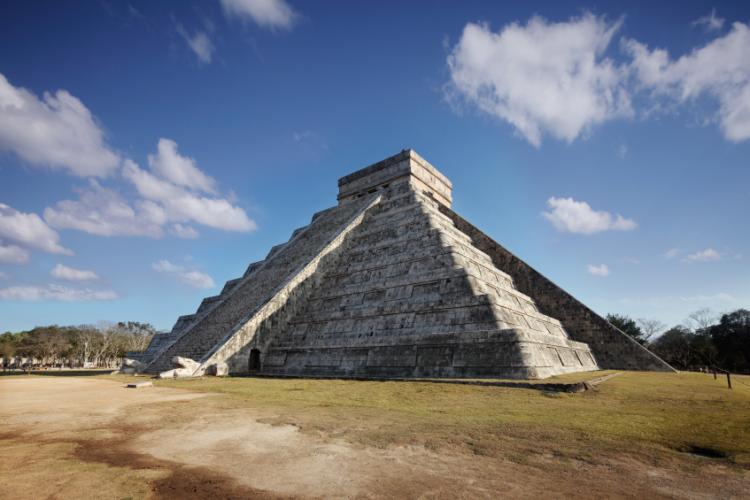
The Snake of Sunlight — Main pyramid at Chichen Itza, Yucatan, Mexico
(CostinT from Timeanddate.com)
Easter is the best known vernal festival in the western world.
Goddess of the Dawn to the Greeks was Eos (Aurora to the Romans), born of Titan parents, sister to sun-god Helios (Roman Sol Invictus) and moon-goddess Selene (Roman Luna), and mother of the four winds. The name originates in the ancient Indo-European language, predecessor to nearly all European, Indian and Persian languages, and was Ostara (later Ostern) to the Germans, and Eastre in Old English and Ester in Middle English, from whence we get both East and Easter. The early Christian church was good at co-opting festivals from other religions and peoples. So, the spring festival of Eos (by whatever local name variation) became Easter, re-configured to memorialize the death and resurrection of Jesus. Spring festivals typically mark the end of the wintery season of death and the rebirth into spring, when plants bloom and animals bear their young. The origin of the Easter Egg
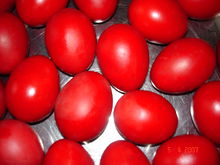
Red Easter Eggs symbolize the blood of Jesus (Wikipedia – Easter Egg)
custom is complex: part obvious fertility symbol, part recognition of the end of Christian Lent (during which eggs were forbidden), part early Mesopotamian Christian symbol for the death of Jesus, and part empty-shell symbol of the empty tomb of Jesus. Easter is scheduled for the first Sunday after the first full moon on or after the vernal equinox, a formula which indirectly led to Western Europe’s replacement of the Julian Calendar with the Gregorian calendar in 1752.
Sunspot Cycles
The sunspot cycle is driven by cyclic fluctuations in both polarity and strength of the solar magnetic field. On average, these magnetic poles reverse polarity – north magnetic pole becomes south magnetic pole and vice versa – every 11.1 years, then does it again, for an average total of 22.2 years. The Sunspot minimum period surrounds this polar flip: for example, current Cycle 24 began 1/4/2008 when at solar 30° north a sunspot appeared with polarity magnetically reversed from existing sunspots, the sign of a polar flip. That year was later ‘voted’ the “blankest year of the space age” – 266 days without a single sunspot, exceeding 1954’s 241 spotless days. However, solar minima in the late 19th-early 20th centuries often had 200-300 spotless days per year. Farther back, during the ‘Maunder Minimum’ (cause of Europe’s ‘Little Ice Age”of 1645-1715), only 30 sunspots appeared during one 30-year period. Sunspot maximums occur roughly midway between minimums. Current Cycle 24, expected to end in 2019, experienced a ‘double peak’ of spot maximum – 67 sunspots in Sep. 2012, then dropping, only to again peak at 82 spots in Apr. 2014.
For comparison, the earth’s magnetic field flips – not just slide around, but flips north to south – over a wildly varying cycle ranging from 10,000 to 25 million years. It takes an estimated 5000 years for the magnetic field to wane, flip, and wax, and – we are told – we may be in such a period right now. So keep an eye on your compass – if the needle point suddenly shifts to ‘south,’ or if your car’s GPS system suddenly becomes unreliable, well…don’t say you weren’t warned. And stay out of that ensuing influx of cosmic rays.
List of all 24 Solar Cycles
Just in case you thought you might escape this without seeing a chart, here’s your chart.
| Sunspots – Last 10 cycles | |||||
| Solar | Start at | Spots at | Years of | Date of | Spots at |
| Cycle No. | Minimum | Minimum | Cycle | Maximum | Maximum |
| 15 | Dec 1913 | 1.5 | 10.0 | Aug 1917 | 105.4 |
| 16 | May 1923 | 5.6 | 10.1 | Apr 1928 | 78.1 |
| 17 | Sep 1933 | 3.5 | 10.4 | Apr 1937 | 119.2 |
| 18 | Jan 1944 | 7.7 | 10.2 | May 1947 | 151.8 |
| 19 | Feb 1954 | 3.4 | 10.5 | Mar 1958 | 201.3 |
| 20 | Oct 1964 | 9.6 | 11.7 | Nov 1968 | 110.6 |
| 21 | May 1976 | 12.2 | 10.3 | Dec 1979 | 164.5 |
| 22 | Mar 1986 | 12.3 | 9.7 | Jul 1989 | 158.5 |
| 23 | Jun 1996 | 8.0 | 11.7 | Mar 2000 | 120.8 |
| 24 | Jan 2008 | 1.7 | Apr 2014 | 81.9 | |
| All 24 Cycles | |||||
| 1755-2014 Mean | 5.8 | 11.1 | 114.1 | ||
Coincidentally, a total eclipse of the sun, visible over the north Atlantic Ocean, occurs this vernal equinox, March 20, lasting 2 minutes 47 seconds, with maximum at 9:46:47 Greenwich Mean Time. It begins east of Labrador, passes over the Faeroe Islands, Svalbard, and ends at the north pole, where it may be visible, despite the fact that technically the sun doesn’t do its single, annual rise there for another hour (see prior comment on atmospheric refraction at sun rise/set.)
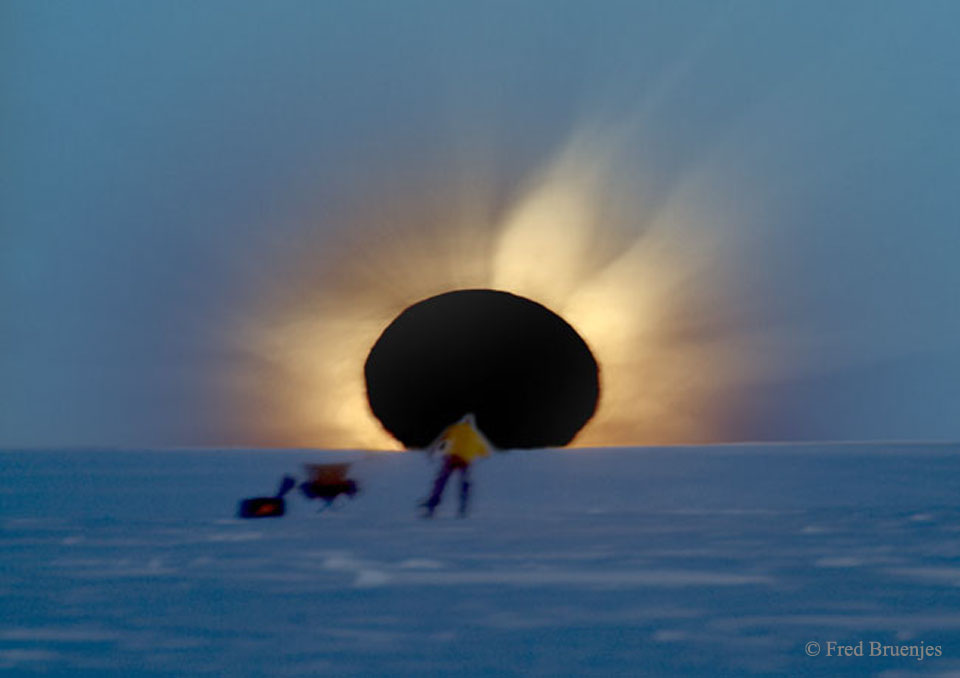
Total Solar Eclipse in Antarctica (Fred Bruenjes 11/23/03)
http://www.moonglow.net/eclipse/2003nov23/index.html
So make sure you run outside at 3:45 PM on March 20 to witness the vernal equinox, despite the fact that, unlike a full moon, there really isn’t much to look at. By the way – the sun doesn’t rise and set. The earth revolves on its axis. But you knew that. [Chuck Almdale]
Link to Part I – Vernal Equinox March 20, 2015, 3:45 PM, PDT
Vernal Equinox March 20, 2015, 3:45 PM, PDT — Part I
This year we report on that other large object in the sky, known as the sun.

Our Sun – 860,000 miles in diameter, 8 light-minutes away
(Alan Friedman ~ 4/22/14, on NASA site)
The first event is the Vernal Equinox, scheduled in Los Angeles for March 20, 2015 at 3:45 PM PDT. On that day, daylight will last 12 hours, 7 minutes and 37 seconds (12:07:37); nighttime is 11:52:13 long. You will note that these periods of day and night are not equal. Day and night were nearly equal on March 16, with 11:59:05 of daylight.
Definition of the term
Vernal: Of or pertaining to Spring [Latin vernal(is)]
Equinox: When the sun crosses the plane of the earth’s equator [from Latin aequinoctium, the time of equal days and nights].
Equinoctial daytime exceeds nighttime for two reasons
First: Sunrise occurs when the leading (upper) edge of the rising sun first becomes visible above the horizon. Sunset is when the trailing (not the lower) edge drops below the horizon. The width of the sun adds about six minutes of daylight.
Second: Refraction of the sun’s rays by the earth’s atmosphere permits us to see the sun both before it has actually risen and after it has actually set, adding several minutes each to sunrise and sunset. In total, day exceeds night on March 20, 2015 by 15 minutes , 14 seconds.
Seasonal Fluctuation
Because the two equinoxes (vernal and autumnal) mark when the sun crosses the plane of the earth’s equator, these are also the only days of the year when the sun rises exactly in the east and sets exactly in the west. The earth’s axis (and equatorial plane) is tilted 23.4° with respect to the plane of the earth’s orbit around the sun. In the northern summer the earth’s

Northern Summer (famous artist – name withheld by request)
north axial pole tilts towards the sun, the sun’s rays have less insulating atmosphere to filter them, and the northern hemisphere warms up. In the northern winter, the north pole tilts

Northern Winter (same famous artist)
away from the sun whose warming rays now must penetrate more atmosphere, and the northern hemisphere cools down. Seasons are opposite south of the equator. The closer you are to the equator, the more equal are day and night, summer and winter, warmth and cold. The temperature extremes of winter and summer are replaced by rainy and dry seasons.

At equinox: right diagram shows view past top of sun towards earth.
Eastern Sunrise, Western Sunset
Throughout the northern winter and spring, the points of sunrise and sunset move farther and farther north. The extremes are the Winter Solstice (around December 21), when the sun rises and sets farthest to the south, and the Summer Solstice (around June 21) when they are farthest to the north. The equinoxes mark the halfway point, when sunrise and sunset are exactly east and west. Well, not exactly. The sun sets at 270° – exactly west – on March 19 at 7:04 PM PDT, rises at 90° – exactly east – on March 20 at 6:27 AM, and sets March 20, 7:05 PM at 271°, slightly north of exactly west.
So make sure you run outside at 3:45 PM on March 20 to witness the vernal equinox, despite the fact that, unlike a full moon, there really isn’t much to look at. By the way – the sun doesn’t rise and set. The earth revolves on its axis. But you knew that. [Chuck Almdale]
Part II to follow: Vernal Equinox Festivals, Sunspot Cycles and an Eclipse
Interesting Links
Space Weather Radio – Meteor echoes & other live sounds from space
TimeandDate.com – March Equinox
TimeandDate.com – Los Angeles sunrise, sunset & day length for March 2015
InfoPlease – A Tale of Two Easters
TimeandDate.com – Day and Night map for March Equinox 2015
Heliophysics – A Universal Science
Los Angeles Equinoxes and solstices from 2010–2020
Field Trip Report Sycamore Cyn 3/14/2015
We feared blistering Santa Ana winds, but lucked out with a pleasant 75 degrees average for a morning walk in a lush re-greened Sycamore Canyon. It was a little early for the full bloom of the plant life, even in an early year, however there were plenty of good views featuring full fields of Mariposa Lily (Calochortus catalinae) and Blue Dicks. (Dichelstemma capitatum) Thanks go to expert Jim Kenney for scouting the canyon for us, even though he was not available on Saturday! There were plenty of other early bloomers such Sticky monkey flower, Foothill lupine, and two species of Phacelia.
On the avian front, some of the regular birds (goldfinches. wrens, orioles) were hiding, but the Nanday Parakeets and Red-tailed Hawks gave us adds to the whoopee list, we had long looks at a nesting pair of Western Bluebirds, and we totaled nearly 40 species.

Birds seen/heard, identified:
California Quail
Brandt’s Cormorant
Brown Pelican
Red-shouldered Hawk
Red-tailed Hawk
Western Gull
Band-tailed Pigeon
Mourning Dove
Eurasian Collared-Dove
White-throated Swift
Allen’s Hummingbird
Costa’s Hummingbird
Acorn Woodpecker
Nuttall’s Woodpecker
Northern Flicker
American Kestrels
Nanday Parakeet
Black Phoebe
Western Kingbird
Cassin’s Kingbird
Common Raven
American Crow
Western Scrub-Jay
Oak Titmouse
House Wren
Blue-gray Gnatcatcher
Western Bluebirds
Northern Mockingbird
California Thrasher
European Starling
Orange-crowned Warbler
Yellow-rumped Warbler
Common Yellowthroat
Spotted Towhee
California Towhee
Song Sparrow
White-crowned Sparrow
House Finch
Maja Block – A Fond Farewell
With a sad heart, we must report the death of one of our earliest members, Maja Block.
The following is a letter from her son Kevin, to all of Maja’s friends and fellow birders.
She will be dearly missed. [Lillian and Mary]
****************************
March 1, 2015
Dear Friends, family and loved ones:
It is with great sadness that I am letting you know of the passing of our amazing mother.
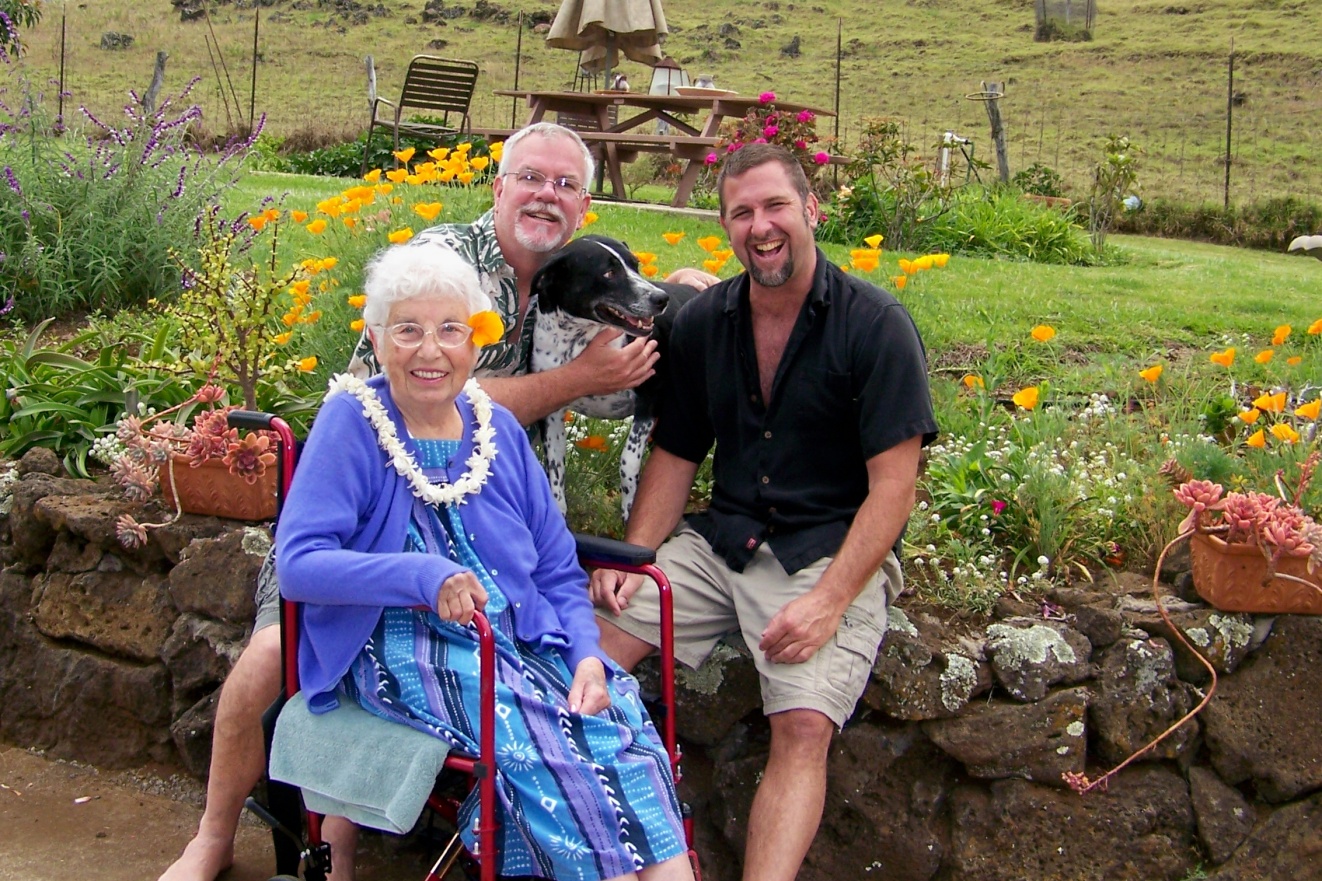
Maya, Mark and Kevin
My mother passed peacefully as the sun was just rising on the horizon on the morning of Wednesday, February 18. My sister and I were with her, throughout the night, holding her hands and she knew she was loved and not alone as she made her transition.
The last few years had been difficult for her as she could no longer do many of the things that she loved to do like hike, watch birds and visit with her many dear friends across the United States and the world. If you are receiving this letter, it is because you knew her and knew what an extraordinary woman she was. Political activist, survivor, naturalist, gardener and cook, singer and dancer, poet and artist, adventurer and intrepid explorer. She was independent, kind, warm and funny. To be her friend was to know that you were loved and cared for in the most thoughtful way. She loved to sing and cook and share her fruit from her garden with her friends. She loved a good laugh and was always up for an adventure. She taught me to have a deep and abiding reverence for this beautiful world.
To be her son was a gift and a privilege, as she was always, always there for me during the hard times and I was lucky enough to be able to return the favor with the help of my partner, Mark Gregg who took such good care of her and whom she considered to be her other son. In 2012 my sister and her husband joined us here on Maui, so my mother had her kids near her, which was a source of comfort to her.
My mother was practical about life and ultimately about death. She did not want to be fussed over so we ask that you remember her in your own special way, as you hike in the mountains, see a hawk spiraling lazily upward, see a particularly beautiful sunrise or have a bracing German beer with some weiswurst.
Memorial Gifts and Memorial:
Those who wish to memorialize her with a gift are asked to send a donation to the Santa Monica Bay Audubon Society in her name:
SMBAS
PO Box 35
Pacific Palisades, CA 90272
My mother had a rich, complicated, deep and fascinating life and it would take volumes to just begin to scratch the surface of her story. The extraordinary journey of her life began in Southern Germany in the town of Heidelberg and then later, in her teenage years, in Munich. She survived the bombings of the war and the famine that followed and has many wonderful stories of hiking in the Alps, teaching kindergarten and the closeness that her sister and her parents shared as they helped each other to survive this difficult time.

Maya
My mother came to the U.S. in 1952 and went to Berkeley and became a nurse, which she always described as a “calling” rather than a profession. She was married to my dad for fifteen years and my sister and I came into the picture in 1964 and 1965. She was a tireless, supportive, caring, and ferociously committed mom. My sister and I are well aware of how lucky we are to have had her as a role model. My mother served honorably as a school nurse and was a dedicated, hard worker. Her work ethic was a source of awe for those of us who tried to keep up with her. Later in her life, her love of nature blossomed. She particularly loved birds and loved traveling the world in search of new species. She went to Africa, all over the United States and spent her 70th birthday in Antarctica where she had a spiritual experience, alone on the deck of the ship with a passing iceberg.
Even though she traveled the world, my mother felt most at home in her comfortable, small house in LA with its beautiful garden and shockingly prodigious persimmons tree. It was there that she was truly in her element, taking care of my dog Alex, working on her tomatoes and roses and baking for her friends. And singing. Always singing.

Maja & Kevin birding
In 2009, my mother had aortic valve replacement surgery and suffered a stroke that paralyzed her on the left side. She never was able to walk again. My partner and my sister and I and our many friends here on Maui gave her a quiet and quality life and she enjoyed being with us and our animals. Despite her sadness about the failing of her body, my mother remained gentle and kind and sweet and gracious. She was also stubborn and opinionated and strong willed, but we loved that about her too. I can confidently say that all the best parts of me come from my mother.
We all have such wonderful memories of my mother and I urge you to reflect on her special way of living in the world. Her life was a hard one but you would never have known it from her graceful and gentle nature. Take a moment to think how you can incorporate her love of nature, her laughter and her joy into your day and know that each of you were special to her – her beloved friends and family.
I once asked my mom what she thought happens when you die and she told me that she imagined herself flying over the frozen mountains of some northern landscape, with icy fields and pine forests below, the snow glistening in the moonlight. She flies now effortlessly, no longer in pain and free at last.

Maja’s famous photo of a leucistic Anna’s Hummingbird
(Kern County Park near Pine Mtn. Club)



 SANTA MONICA BAY AUDUBON SOCIETY BLOG