Free email delivery
Please sign up for email delivery in the subscription area to the right.
No salesman will call, at least not from us. Maybe from someone else.
GUEST POST: THE JOHN MUIR PROJECT
Autumn in California frequently means heat and high winds. so it seems like a good time to talk about fire – Chad Hanson of the John Muir Project at the Earth Island Institute will make you look at fire in a whole different light..
Help Protect Spotted Owls and Other Imperiled Birds from Clearcutting on Public Lands in the Rim Fire
By Chad Hanson, Ph.D.
After the 257,314-acre Rim Fire occurred last year in the Stanislaus National Forest and Yosemite National Park of California’s Sierra Nevada, representatives from the U.S. Forest Service quickly claimed that much of the fire area was a lifeless “moonscape”, using this political rhetoric to justify proposing an enormous post-fire clearcutting project on national forest lands.
However, in the first spring after the smoke cleared, a very different story began unfolding — a story of ecological rejuvenation and richness. Even in the largest high-intensity fire patches, where the fire burned hottest, there are now dozens, hundreds, and in some cases thousands of naturally regenerated conifer seedlings per acre. Oaks are sprouting, shrubs and grasses are growing, and a wild jumble of colorful flowers cover the landscape. Woodpeckers, warblers and many other bird species already inhabit the high-intensity fire patches. Deer are browsing on the post-fire regrowth. This is anything but a lifeless environment. It is a rich, vibrant, growing ecosystem that is full of wildlife.
The Forest Service’s Rim Fire logging project would essentially clearcut over 35,000 acres of ecologically vital “snag forest habitat”—patches of mature conifer forest that experienced high-intensity fire, and are now comprised mainly of standing snags (fire-killed trees), regenerating conifers and oaks, and native shrubs. This tractor logging would not only remove nearly all of the snags — which provide food and shelter for birds such as the Black-backed woodpecker, Hairy woodpecker, White-headed woodpecker, Wrens, Bluebirds, Flickers and many others — but would also crush and kill most of the natural conifer and other regeneration that is occurring in the Rim fire on the Stanislaus National Forest. Moreover, the Rim fire logging project would have a devastating impact on the imperiled California spotted owl.
Monica Bond, a scientist with the Wild Nature Institute, who is the nation’s top expert on the relationship between Spotted owls and wildland fire, analyzed the Forest Service’s own data from 2014 Spotted owl surveys in the Rim fire. Her findings are startling. Bond found that one year after the Rim Fire, and before post-fire logging, a total of 92% of the historical spotted owl territories are occupied in the Rim fire. To put this in perspective, average annual spotted owl occupancy in mature/old unburned forest is 60-76%. The owls do not occupy an individual territory every single year so, within any given year, a portion of the territories that have been occupied one or more times in the past will not be occupied. According to Bond’s analysis, even in the territories that experienced mostly high-intensity fire, the spotted owl pair occupancy rates are essentially the same as in territories with low levels of high-intensity fire.
This result should not be so surprising given that current research shows that while spotted owls select unburned or low/moderate-intensity fire areas for nesting and roosting habitat, they preferentially select unlogged high-intensity fire areas for their foraging habitat. This is because these high-intensity fire areas, which create ecologically-vital “snag forest habitat” (also known as “complex early seral forest”), have an abundance of habitat structures, such as snags, downed logs, native shrub patches, and areas of dense natural conifer regeneration, that provide excellent habitat for the small mammal prey species upon which spotted owls depend. Given this, it is also not surprising that when much or most of the snag forest habitat is removed through post-fire logging, it strongly tends to extirpate the owls, which are declining in population throughout the Sierra Nevada, except where mechanical “thinning” and post-fire logging are not allowed (e.g., Sequoia and Kings Canyon National Park).
To prevent a loss of spotted owl occupancy, scientists have recommended that the Forest Service avoid post-fire logging at least within 1500 meters of nest or roost locations. But in the decision for the Rim fire logging project, issued in late August of 2014, the Forest Service chose to conduct post-fire logging in every single occupied Spotted owl territory in the Rim fire. In some of these territories, most of the area would be clearcut, leaving large barren expanses.
Many people tend to think of forests the same way they think of their homes and other possessions, mistakenly believing that since a fire will destroy a home, it must do the same to the forest. Nothing could be farther from the truth. In fact, the pockets where all of the trees are dead create “snag forest habitat,” which scientists now know (http://www.johnmuirproject.org/pdf/Hanson_Fire_Science_Aug_2013.pdf) is one of the most ecologically rich, rare, and most threatened of all forest habitat types in the Western US. We have much less of this habitat now than we did historically, due to fire suppression and post-fire logging policies. In October of 2013, some 250 scientists (http://www.geosinstitute.org/images/stories/pdfs/Publications/Fire/Scientist_Letter_Postfire_2013.pdf) sent a letter to Congress regarding the Rim fire, urging lawmakers to oppose post-fire logging in the Rim fire area, and to appreciate the high ecological value of this habitat and not weaken or roll-back federal environmental laws. The scientists concluded:
Though it may seem at first glance that a post-fire landscape is a catastrophe ecologically, numerous scientific studies tell us that even in patches where forest fires burned most intensely the resulting post-fire community is one of the most ecologically important and biodiverse habitat types in western conifer forest. Post-fire conditions serve as a refuge for rare and imperiled wildlife that depend upon the unique habitat features created by intense fire. These include an abundance of standing dead trees or “snags” that provide nesting and foraging habitat for woodpeckers and many other wildlife species, as well as patches of native flowering shrubs that replenish soil nitrogen and attract a diverse bounty of beneficial insects that aid in pollination after fire…This post-fire habitat, known as “complex early seral forest,” is quite simply some of the best wildlife habitat in forests and is an essential stage of natural forest processes. Moreover, it is the least protected of all forest habitat types and is often as rare, or rarer, than old-growth forest, due to damaging forest practices encouraged by post-fire logging policies.
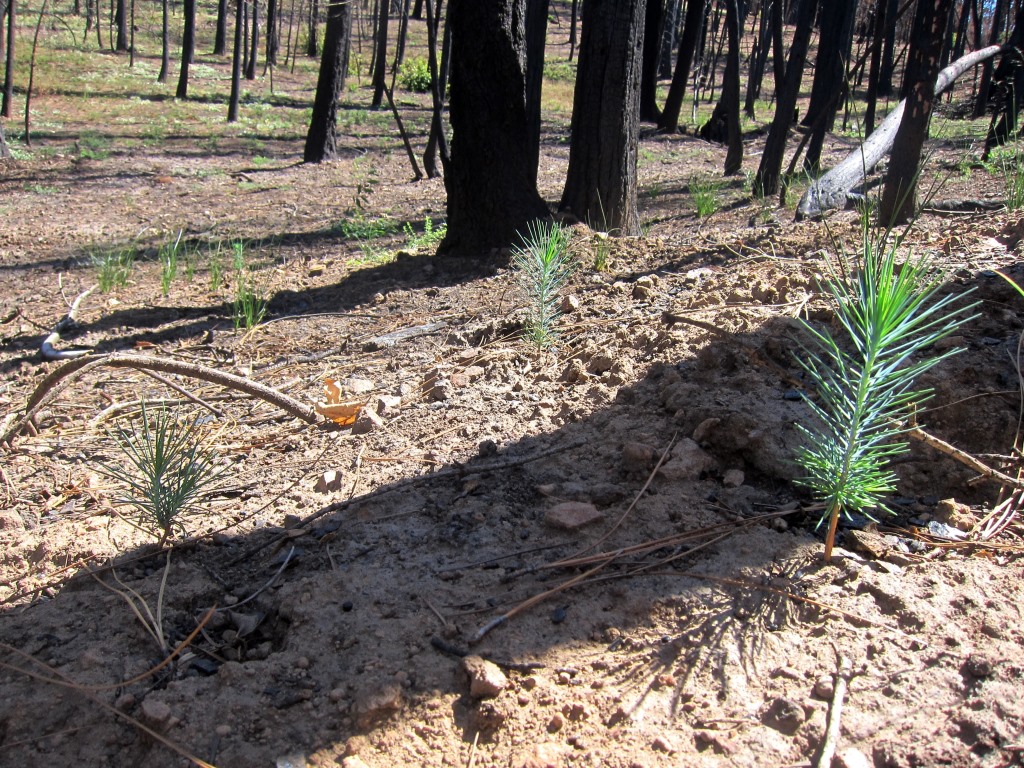
Natural post-fire conifer regeneration hundreds of meters from the nearest live tree, Rim fire; Photo by Chad Hanson, 2014
One of the most striking phenomena currently occurring in the Rim Fire area is the “flushing” of new foliage in conifers that appeared to be dead, but were not. These are trees, especially ponderosa pines, that had zero remaining live needles after the fire. But the buds survived at the ends of branches in the upper portion of the tree crowns. Now thousands and thousands of such trees have produced new green needles through a process called “flushing.” Many if not most of these trees will survive long-term, providing natural seed sources in countless places within large, high-intensity fire patches. In fact, in some areas that were initially mapped as having experienced high-intensity fire, the flushing is revealing that most trees are alive, even though they all appeared dead just weeks earlier. In fact, while the Forest Service reported, based on its preliminary assessment, that 40% of the Rim fire experienced high-intensity fire, the final assessment by the U.S. Geological Survey, conducted in the summer of 2014 (after flushing) found only 19.9% high-intensity fire in the Rim fire area (www.mtbs.gov). Less than two-thirds of the Rim fire occurred in conifer forest (the remainder occurring mostly in grassland, foothill chaparral, and oak woodland) and, because most of the fire within conifer forest was low/moderate-intensity, there is actually relatively little “snag forest habitat” (also known as “complex early seral forest”) in the fire area—and the Forest Service’s Rim fire logging project, which almost exclusively targets this habitat, would remove the majority of it. Nowhere in the Final Environmental Impact Statement did the Forest Service reveal to the public the high number of Spotted owls that would be affected by the planned logging, or mention the amount of logging planned within 1500 meters of occupied owl sites.
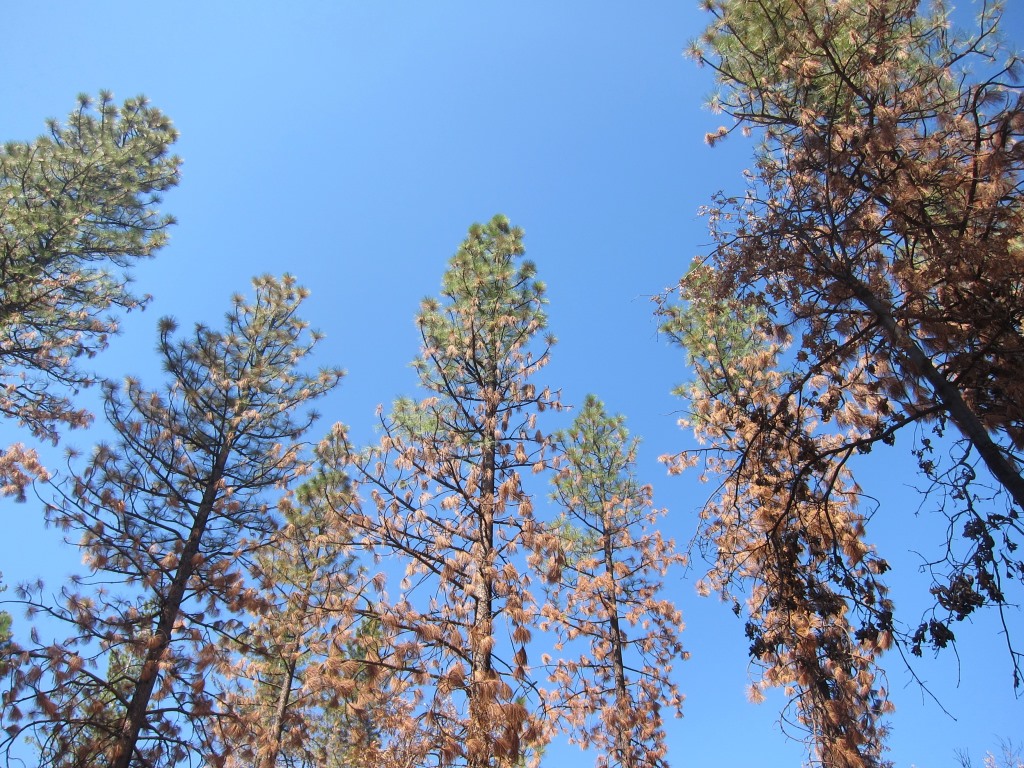
Ponderosa pines that “flushed” after the Rim fire in a high intensity fire-patch. Photos by Chad Hanson, 2014.
The Forest Service’s primary justification given for this enormous clearcutting project on federal public lands in the Rim fire area is that the agency wants to “recover” the “economic value” from the standing fire-killed trees in order to enhance the agency’s own budget. Under a little-known law called the “Salvage Sale Fund”, the Forest Service keeps 100 percent of the revenue from selling public timber to private logging companies, creating a perverse financial incentive. Tellingly, the agency characterizes the snags in the fire area as a “commodity.”
In addition to its post-fire logging plans, the Forest Service wants to conduct a massive program to remove native flowering shrubs and create artificial tree plantations. This is a major ecological threat, because native shrubs attract flying insects that provide food for birds and bats, contributing to the amazing and abundant biological diversity of these snag forest patches. Also, because of fire suppression and post-fire management practices — logging, and killing of shrubs with herbicides—we have far less of this native shrub habitat now than we did historically. Currently, several shrub/ground-nesting bird species associated with high-intensity fire areas are experiencing protracted population declines (http://www.mbr-pwrc.usgs.gov/cgi-bin/atlasa12.pl?S15&2&12) in the Sierra Nevada, including the Orange-crowned warbler, Chipping sparrow, Yellow warbler, Dark-eyed junco, and Wrentit. And yet the Forest Service has refused recommendations from scientists, including its own, to avoid logging during nesting season, when chicks are in the nest but cannot yet fly (logging during this season results in the unnecessary death of countless birds, especially chicks).
There is no need for human intervention to “restore” the Rim Fire area. The fire itself already restored ecologically-vital snag forest habitat to the landscape. If we can set aside decades of misinformed prejudice about wildfire, we will see that ecological restoration is occurring, naturally, right before our eyes. There is a message emanating from this landscape, telling us that fires in our forests — including large, intense fires — are restorative events that create unique, rich habitats. We do not need to be afraid. Rather, we should celebrate the rejuvenating effect of mixed-intensity fire in our forests. We need to learn to appreciate the forest ecosystem for all of its parts — not just live, green trees, but also snags, downed logs, and shrubs resulting from nature’s most important, and essential, ecological force in Western US conifer forests: fire.
WHAT YOU CAN DO:
The Stanislaus National Forest is implementing the Rim fire logging project through multiple individual timber sales, some of which have begun (totaling about 20% of the planned logging so far), but most have not yet been prepared or advertised. Please send an email to Jeanne Higgins (jmhiggins@fs.fed.us), the Supervisor of the Stanislaus National Forest. Urge her to: a) halt further implementation of the Rim fire logging project, and stop preparing and advertising new timber sales in the Rim fire area; and b) protect the snag forest habitat created by the Rim fire, and withdraw current plans to create artificial tree plantations and remove/reduce shrubs.
You can also write letters to the editor to the Union Democrat in Sonora (where the Stanislaus National Forest headquarters is located) at letters@uniondemocrat.com, and also to the Sacramento Bee (http://www.sacbee.com/opinion/letters-to-the-editor/article2571435.html). Letters should be less than 150 words, and writers must include their names, phone numbers, email addresses, and physical addresses (for verification by the newspapers).
Thanks!
Chad Hanson is the director of the John Muir Project of Earth Island Institute. He has a Ph.D. in Ecology from the University of California at Davis, and focuses his research on fire ecology in conifer forests of California and the western US. For more information, watch a video of Dr. Hanson’s recent presentation on the restorative virtues of the Rim Fire, and the ecological value of snag forest habitat (https://vimeo.com/95535429), visit www.johnmuirproject.org, or email: cthanson1@gmail.com.
Full Beaver Moon Update – 6 November, 2014, 2:23 PM PST
Here’s another update from SMBAS Blog on that large, disc-like, shining object which has frequently and mysteriously appeared in our nighttime sky this year (some, in hushed whispers, call it the moon).
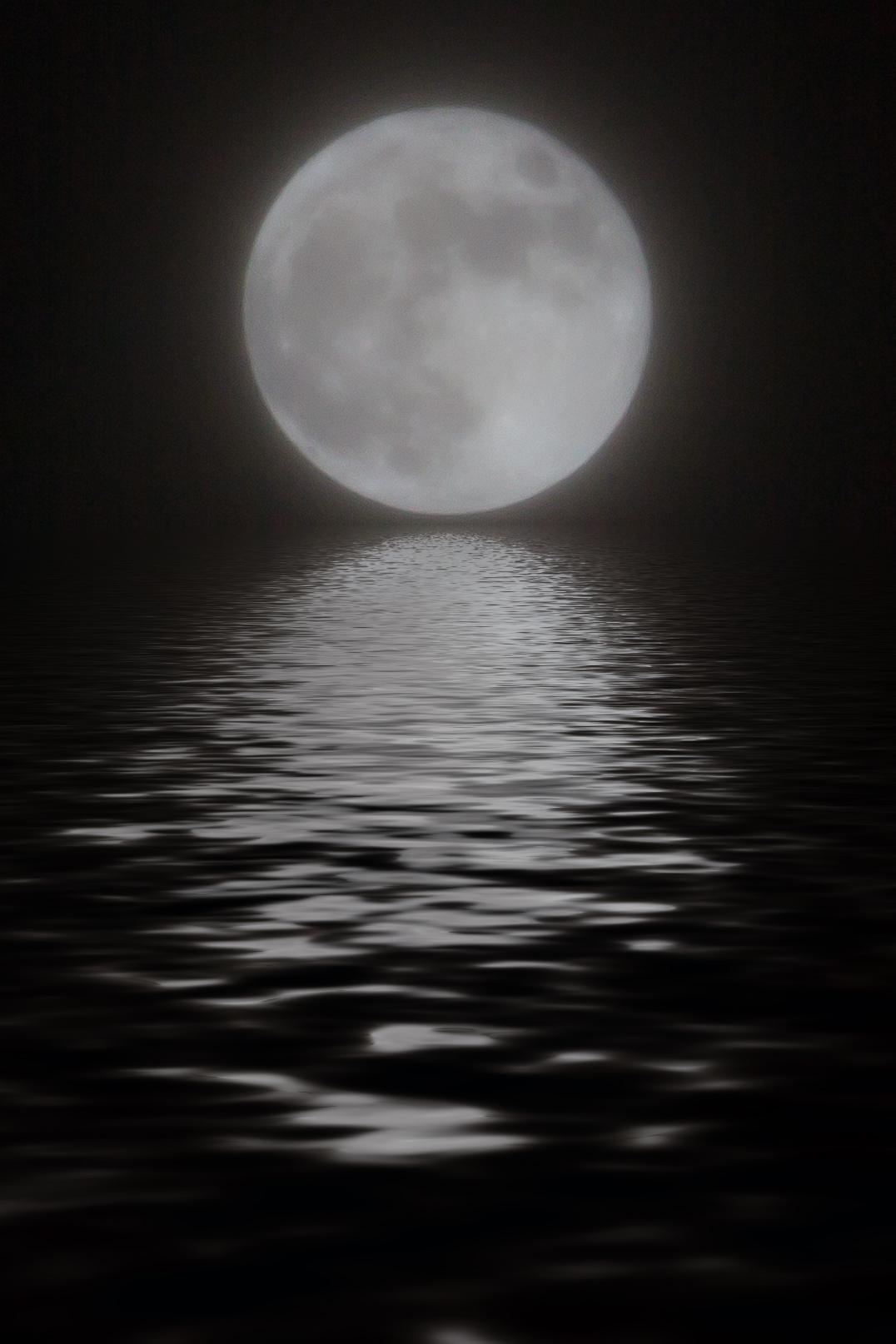
Full Beaver Moon – November 17, 2013
(Ed Hewitt: https://www.flickr.com/photos/erhewitt50 )
Nov. 6, 2:23 p.m. PST — Full Beaver Moon. Now it is time to set beaver traps before the swamps freeze to ensure a supply of warm winter furs. Another interpretation suggests that the name Beaver Full Moon comes from the fact that the beavers are now active in their preparation for winter. This full moon is also called the Frosty Moon.
The Old Farmer’s Almanac has a page for each full moon, which has tips on times to harvest, fish and set eggs, things which every Los Angeles Westsider worth their salt should know.
Note: Pacific Daylight Time started March 9, 2014 at 2 AM (becoming 3 AM) and ended November 2, 2014 at 2 AM (becoming 1 AM).
The next significant full moon will occur on December 6, 4:27 a.m. PST. Keep an eye on this spot for additional late-breaking news on this unprecedented event.
This information comes to you courtesy of: http://www.space.com/24262-weird-full-moon-names-2014-explained.html
written by Joe Rao. Joe Rao serves as an instructor and guest lecturer at New York’s Hayden Planetarium. He writes about astronomy for Natural History magazine, the Farmer’s Almanac and other publications, and he is also an on-camera meteorologist for News 12 Westchester, N.Y.
But that’s waaay too long to type in, and besides, you don’t need to go there because SMBAS has done the work for you!
[Chuck Almdale]
Creature From The Black Lagoon: HALLOWEEN EDITION

MAKE THAT BLACK CREATURE FROM THE LAGOON: THE DEVIL BIRDS- CORMORANTS
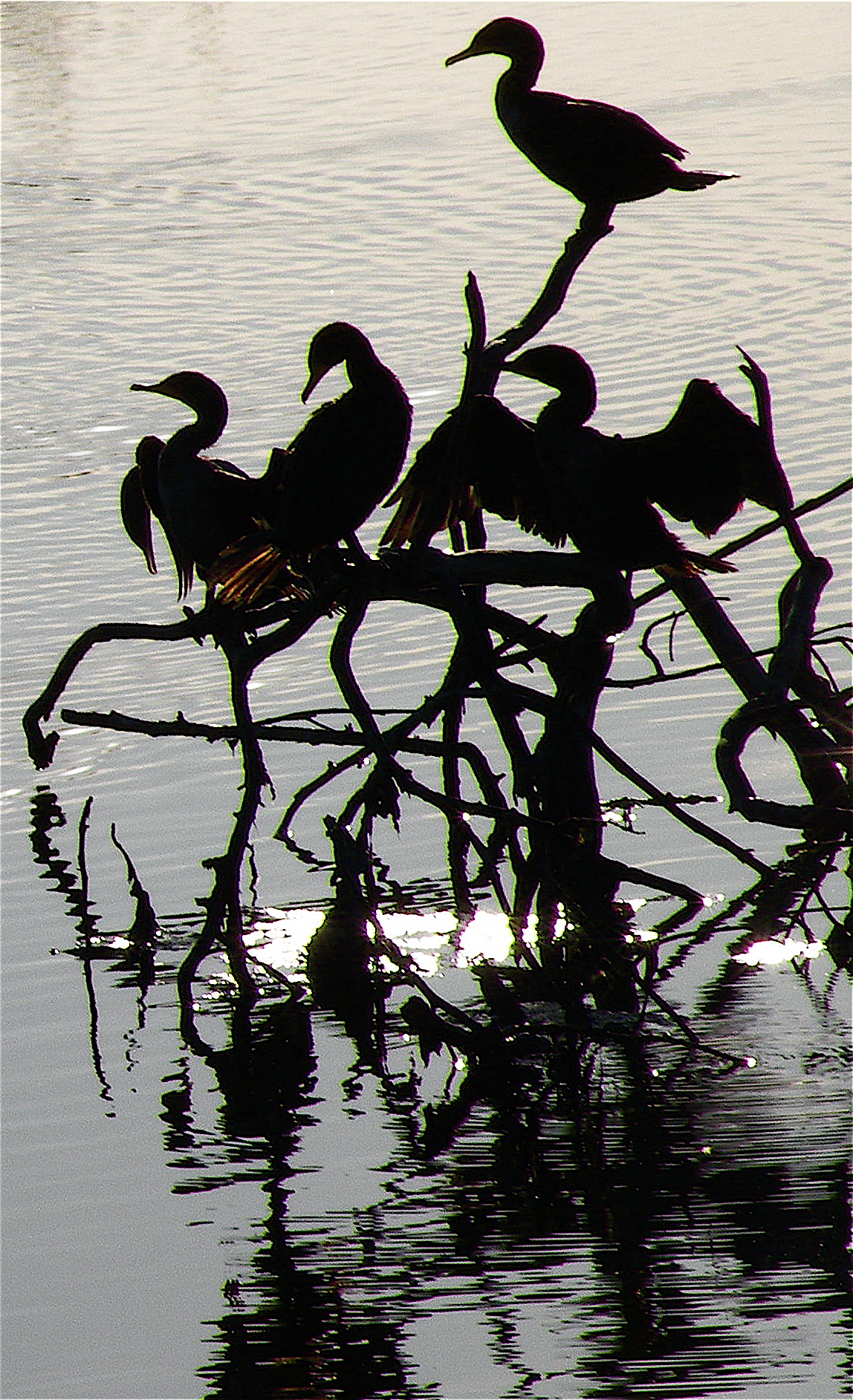
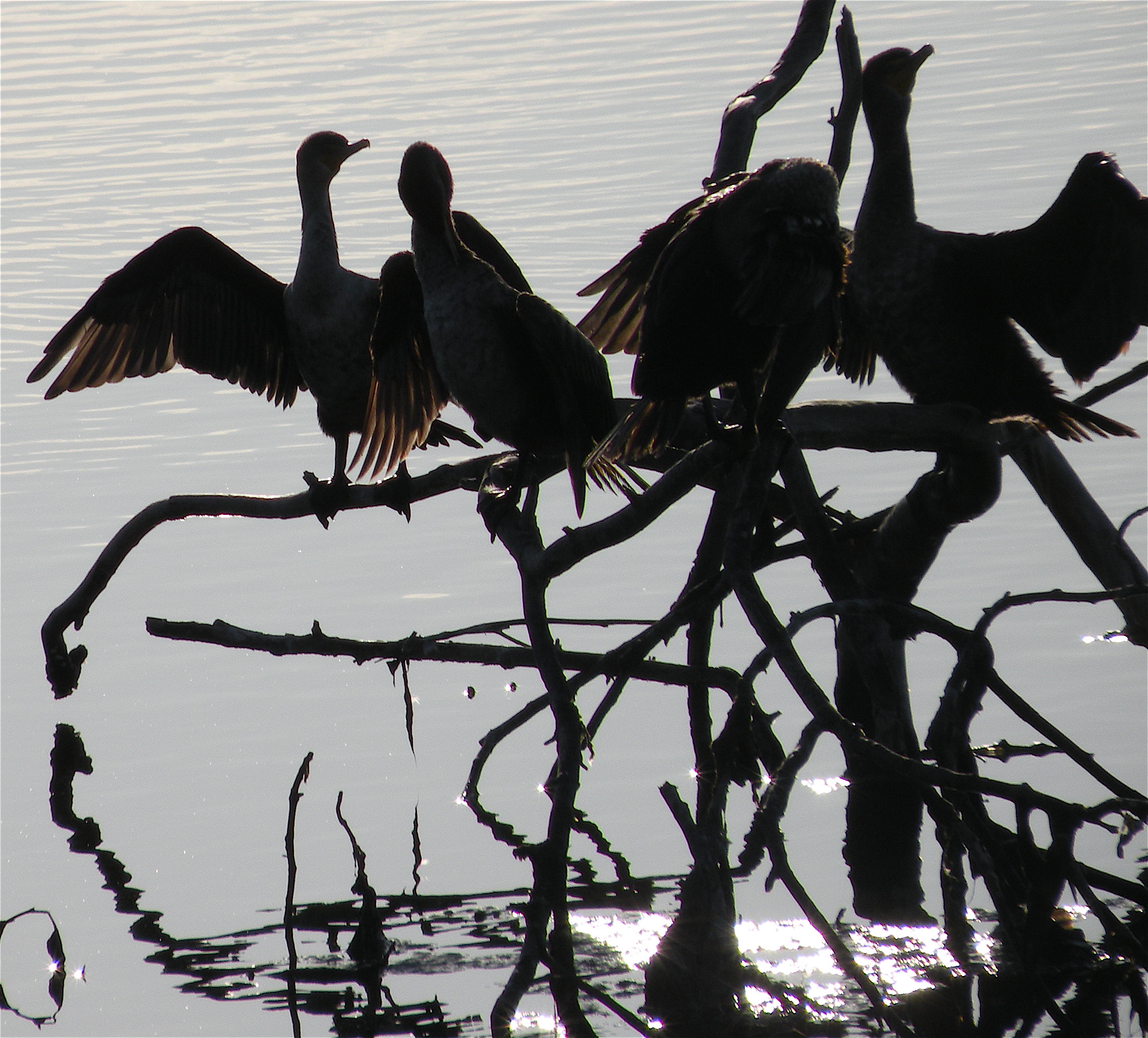
Along with its unlucky dark compatriots, the bat, the raven and the black cat, the cormorant’s deep midnight coloring brings fearful associations to the minds of many. True, those many in the case of cormorants are often coastal commercial fishermen, aquaculturists and sports fishing business owners, but dark coloring is all too often still associated with the uncertain safety of night on subconscious levels, with roots going far back in human history. The Bible and Shakespeare associate cormorants with bad luck, evil or gluttony, and Milton has the devil himself appear as a cormorant.

And it can be hard to deny that the cormorant’s commonly seen pose, with wings stretched out to absorb heat, can echo notes of Dracula with his black cape sweeping, or an angel of death with black wings extended. As Richard J. King, author of The Devil’s Cormorant points out, think about a black bear cub and a polar bear cub – which is cutest? If you answered the polar bear cub it is almost certainly due to its lighter coloring.

So what does this mean for the dark, but for most of us beautiful bird…
Along Santa Monica Bay, there are three types of cormorants, the smallest, the Pelagic, seen only on the ocean or on rocky ocean outcrops, the Brandt’s, seen near the ocean or shoreline, and the largest and most common, the Double Crested, seen along shorelines, but also inland waterways.
 At Malibu Lagoon, Double Crested Cormorants are hard to miss, perched on tree snags in the lagoon waters or along the lagoon shore.


 With thick, hooked beaks and large webbed feet they are ideally designed to dive and catch fish, water snakes, and eels. And herein lies the trouble for those that hate them: They are good at what they do – catching fish. But this is no different to many pelagic and shore birds or other water birds such as egrets, which are often revered for their beauty (and mostly, incidentally, colored white).

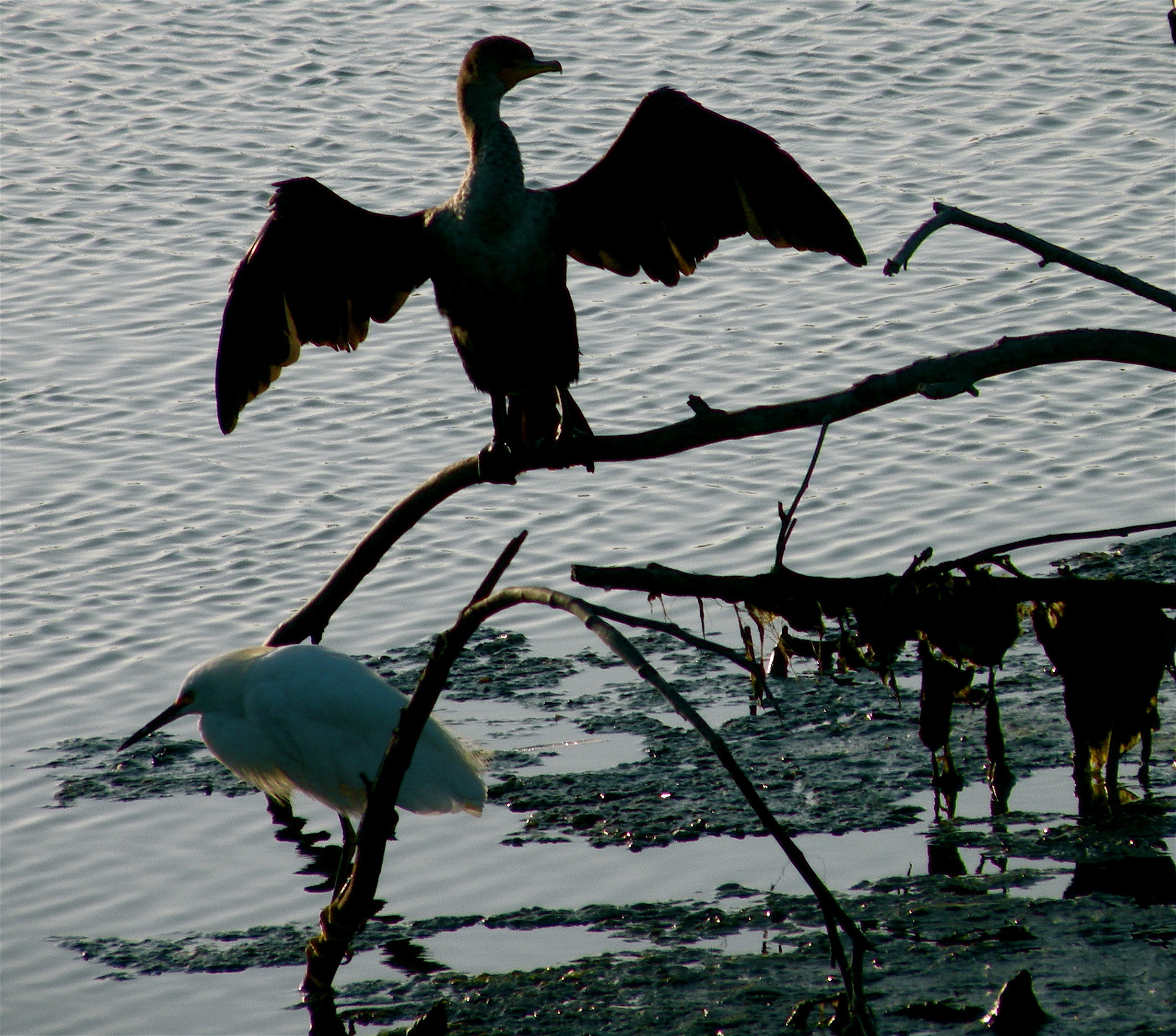 Is it superstitious prejudice or fact based on the part of those who make a livelihood from fishing? Biologists from both sides of the debate can cite studies and facts in support of their arguments.
 Cormorants eat fish opportunistically. They do not target any particular species and will predate the fish that are easiest for them to predate. This can often mean farmed fish. But if we shoot thousands and thousands of cormorants to protect fish stocks as has been done many times on the east coast and is about to be done on the Columbia River, will this end the problem? Unlikely. Other predators will appear to fill the void (and already there are mass shootings of sea lions on the Columbia River for the exact same reason). A better long-term solution is to find ways of making aquaculture safe from predators (since we can’t indefinitely slaughter all ocean predators) and for sports fishermen to look beyond the so-easy-to-see and therefore target, big black cormorants, to overfishing, pollution and changing ocean temperatures as well as other species.
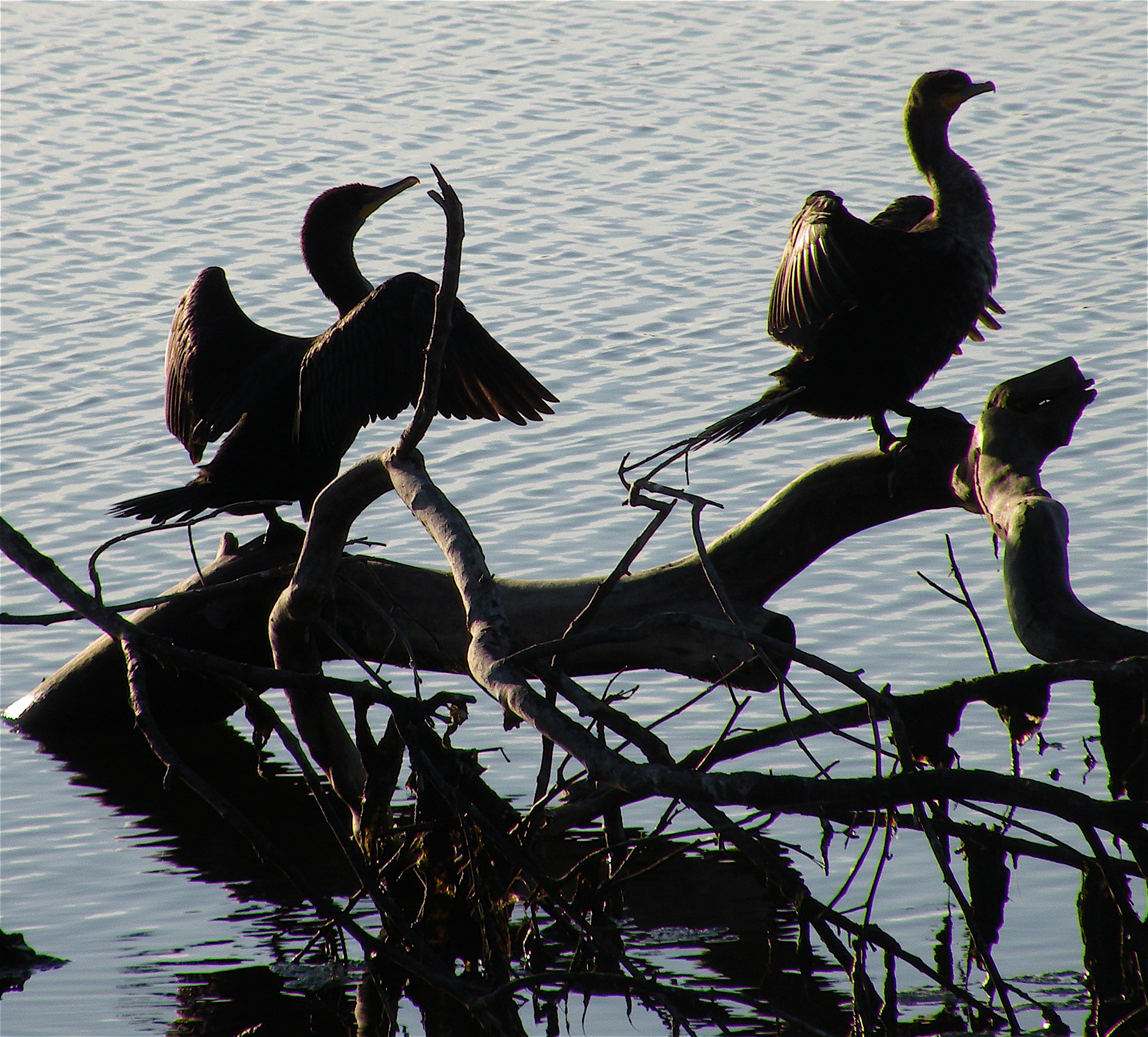

DDT made cormorants a very uncommon sight for decades until it’s effects started to be reversed following changes in the law. In dealing with efficient fishing birds like cormorants, a sustainable, working policy needs to be explored and developed so that people and wildlife can both prosper.
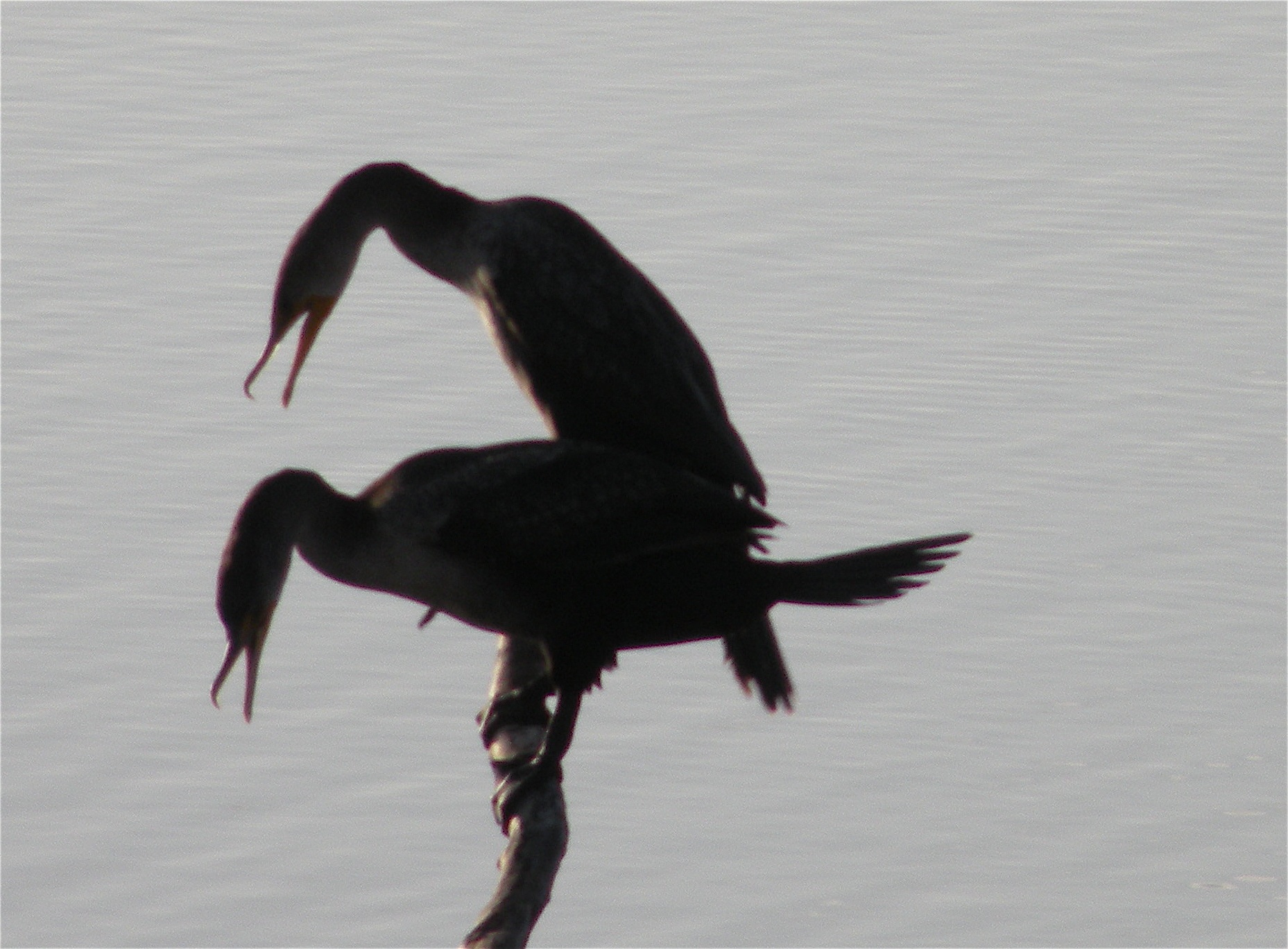

Meanwhile, on Santa Monica Bay, cormorants are once again a common sight. And its size and coloring can bring with it a majesty that leaves no room for superstition or folkloric associations with bad luck and evil.
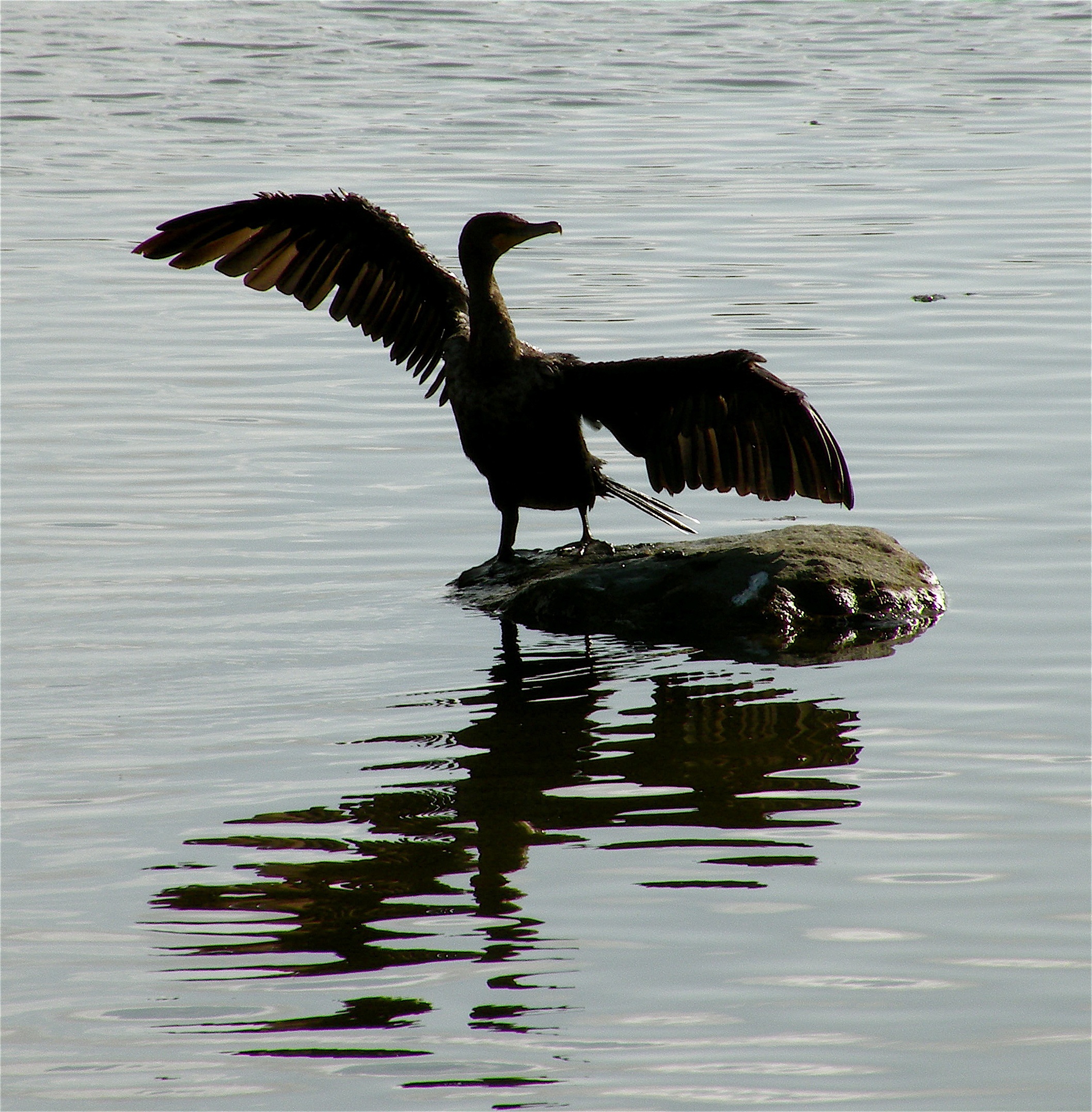


So if you see a cormorant this Halloween — consider yourself very lucky indeed.
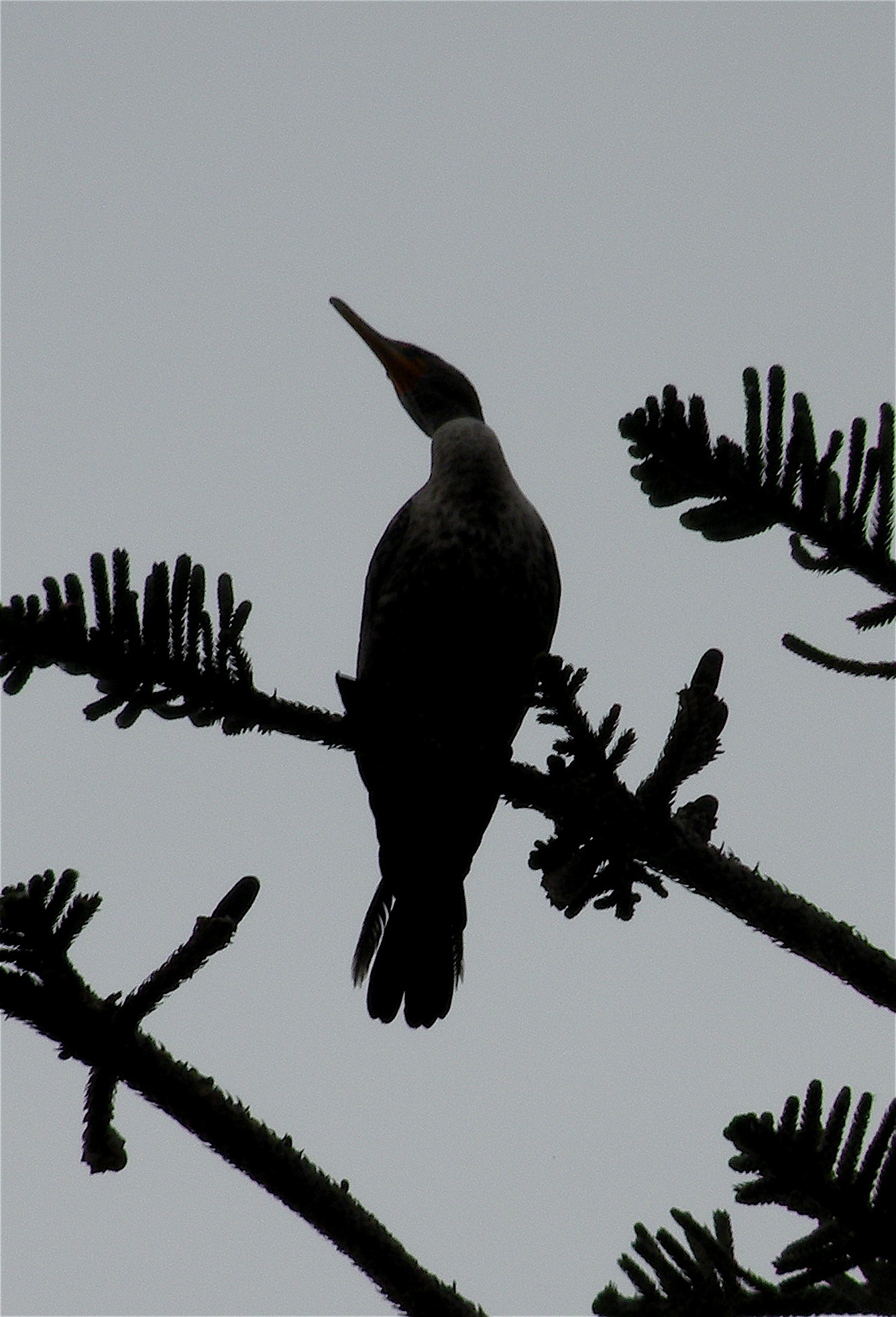
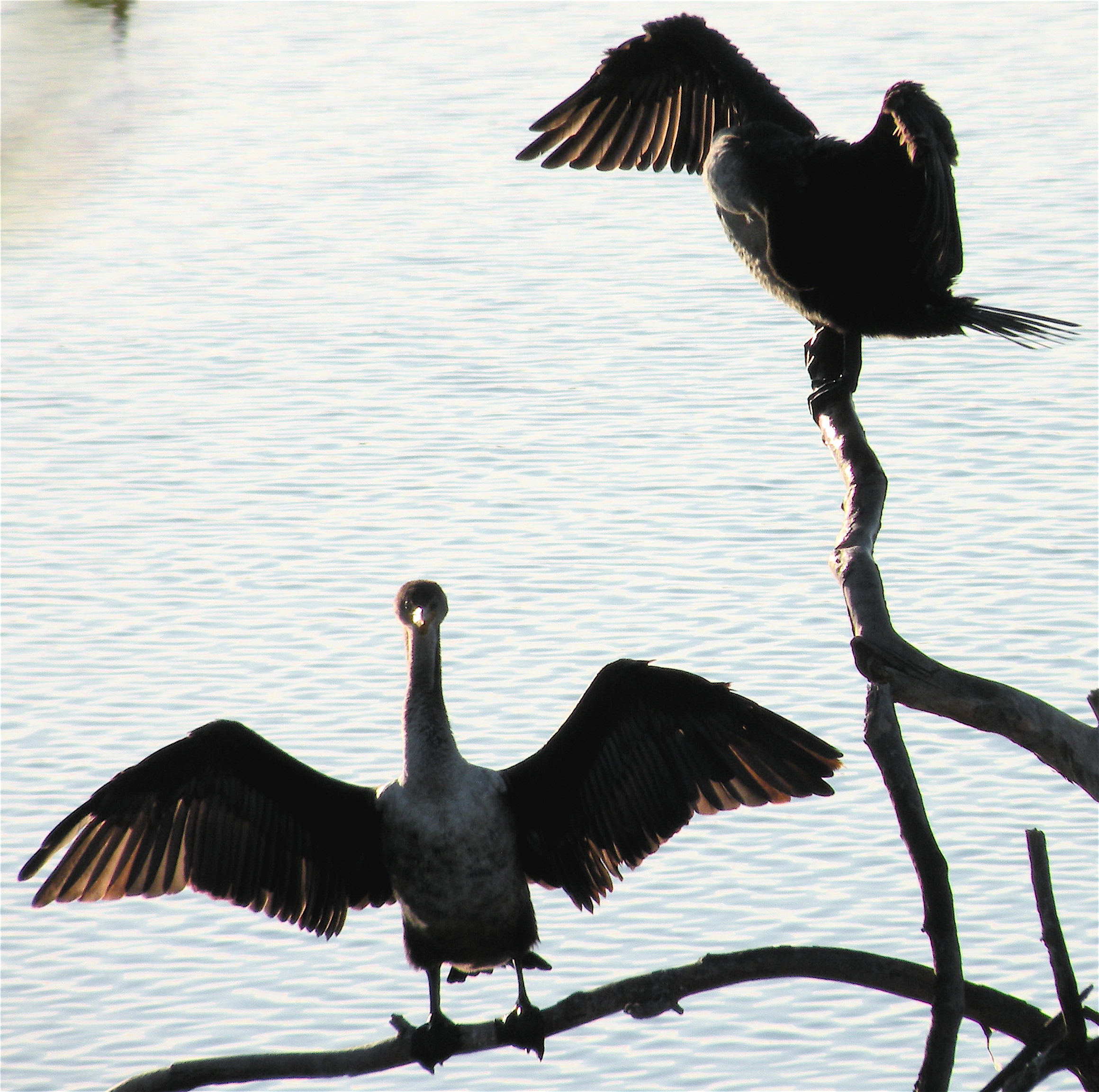
Happy Halloween.
Laurel Hoctor Jones, Education Chair
All photos by me taken 2013-2014
Malibu Lagoon Field Trip: 26 October, 2014
According to some, the name for an assemblage of grebes is a “water dance,” and that is apt to describe the behavior of these birds when they are away in the north at their breeding sites.
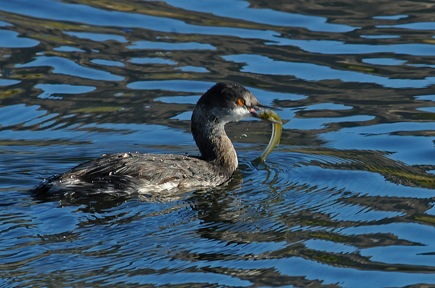
Eared Grebe in Malibu Lagoon west channel with fish
(J. Kenney 10/19/13)
Here, however, we should find another name. We have not seen as many Eared and Horned Grebes at Malibu Lagoon in recent memory as we did on this partly-cloudy October morning. Maybe they will stay and treat us with their breeding plumage in February?
Another passing migrant surprised us: a pair of Nashville Warblers, seen by Chris Lord in the picnic corner of the walkway to the beach. We were also surprised by the maintenance by State Parks. It seems that the tall-growing Mulefat is not in favor, and it was taken out in a number of places around the lagoon.
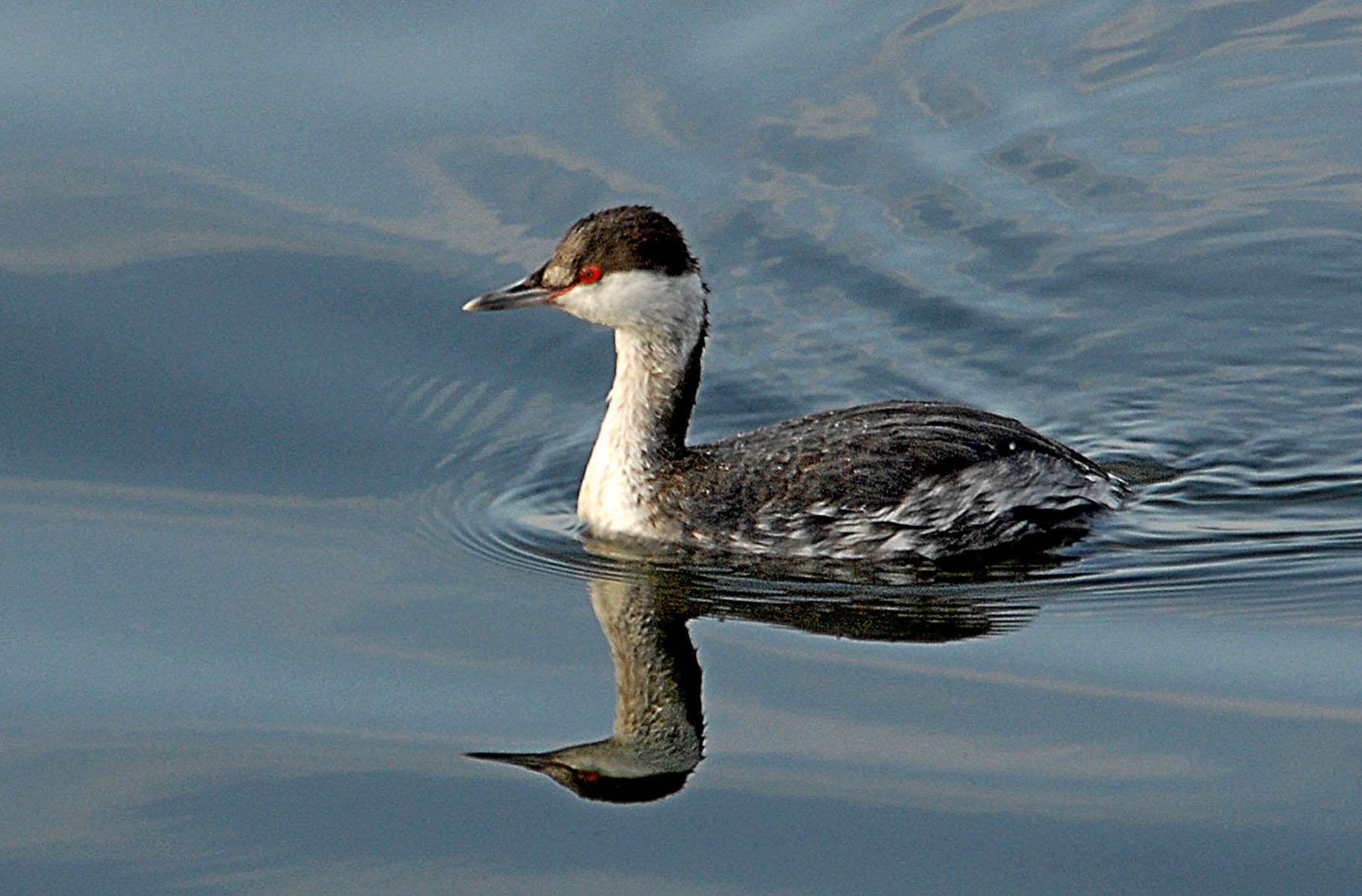
Horned Grebe (J. Kenney 2/19/07, Malibu Lagoon)
Here is the list of the species we found, including a short trip to the Adamson House across the Lagoon via the bridge. To explain, State Parks had posted a “beach closed” warning because of sand erosion, and the surf was washing over parts of the berm. We went to the Adamson House in order to see and count the Snowy Plovers from the east end of the sand berm. [Lucien Plauzoles]
Mallard 3
Ruddy Duck 2
Pied-billed Grebe 3
Horned Grebe 2
Eared Grebe 18
Western Grebe 6
Double-crested Cormorant 26
Pelagic Cormorant 1
Brown Pelican 26
Great Blue Heron 2
Great Egret 4
Snowy Egret 20
Osprey 1
Cooper’s Hawk 1
Sharp-shinned Hawk 1
American Kestrel 1
American Coot 20
Black-bellied Plover 40
Snowy Plover 34
Killdeer 1
Spotted Sandpiper 4
Willet 6
Whimbrel 1
Marbled Godwit 5
Ruddy Turnstone 4
Sanderling 32
Bonaparte’s Gull 2
Heermann’s Gull 5
Western Gull 40
Forster’s Tern 2
Elegant Tern 17
Rock Pigeon 6
Allen’s Hummingbird 3
Black Phoebe 2
Say’s Phoebe 2
American Crow 7
Ruby-crowned Kinglet 1
Northern Mockingbird 2
European Starling 60
Yellow-rumped Warbler 40
Nashville Warbler 2
Common Yellowthroat 4
California Towhee 1
Song Sparrow 2
White-crowned Sparrow 15
Western Meadowlark 6
Great-tailed Grackle 3
Lesser Goldfinch 3
Total Species: 48
Terns and Meadowlarks at Malibu Lagoon
Common Terns (Sterna hirundo) are not especially common anywhere on the U.S. west coast.
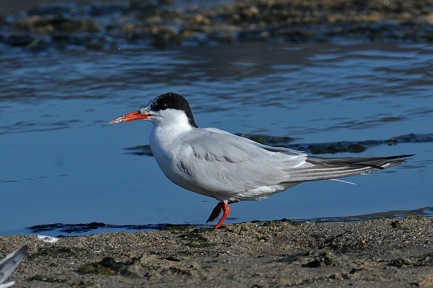
Adult Common Tern in alternate (non-breeding) plumage (Jim Kenney 9/11/14)
World population is at least 250,000 pairs and possibly as high as 500,000 pairs, of which about 35,000 pairs nest in North America, primarily in central-eastern Canada, but also along the Atlantic Coast from South Carolina to Labrador. The Canadian population migrates mainly along the Atlantic coast, which is why California sees so few. Most Common Terns winter along the coastlines of South America, Africa, India, Southeast Asia and Australia.
Occasionally we do find them at Malibu Lagoon, usually not for long, as they are on their way to or from Mexico and South America. Since 1979, our monthly walks at the lagoon have found a total of fourty-nine birds on twelve visits, as follows (month: visits/birds): July: 1/1, Aug: 1/2, Sept: 4/13, Oct: 1/10, Nov: 1/1, Dec: 1/1, Jan: 1/5, Apr: 1/15, May: 1/1. They may appear in nearly any month (nine out of twelve) but September is the most likely.
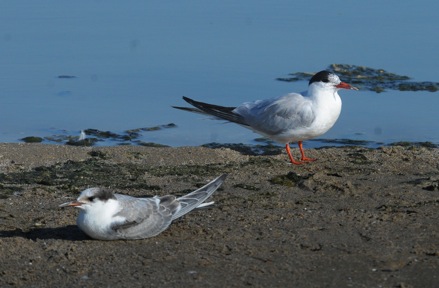
Common Terns – juvenile on left, adult on right (Jim Kenney 9/11/14)
They closely resemble the far more common Forster’s Tern. The most noticeable difference in winter is the back of the head. On the Common Tern, the black extends from eye-to-eye around the back of the head. On the Forster’s the black is restricted to a patch around each eye, with a paler shade of connecting gray across the back of the head. Juvenile and first summer Commons have a dark carpel bar (see wing of left bird above) which Forster’s lacks. There are also subtle differences in bill color, leg length and black in the outer primaries, best left to those able to view both species.
Western Meadowlarks are another visitor to the lagoon. Although they prefer prairies, grasslands, and meadows, as one might expect from their name, the sandy islands and shores are sufficiently similar habitat to hold their attention and presence.
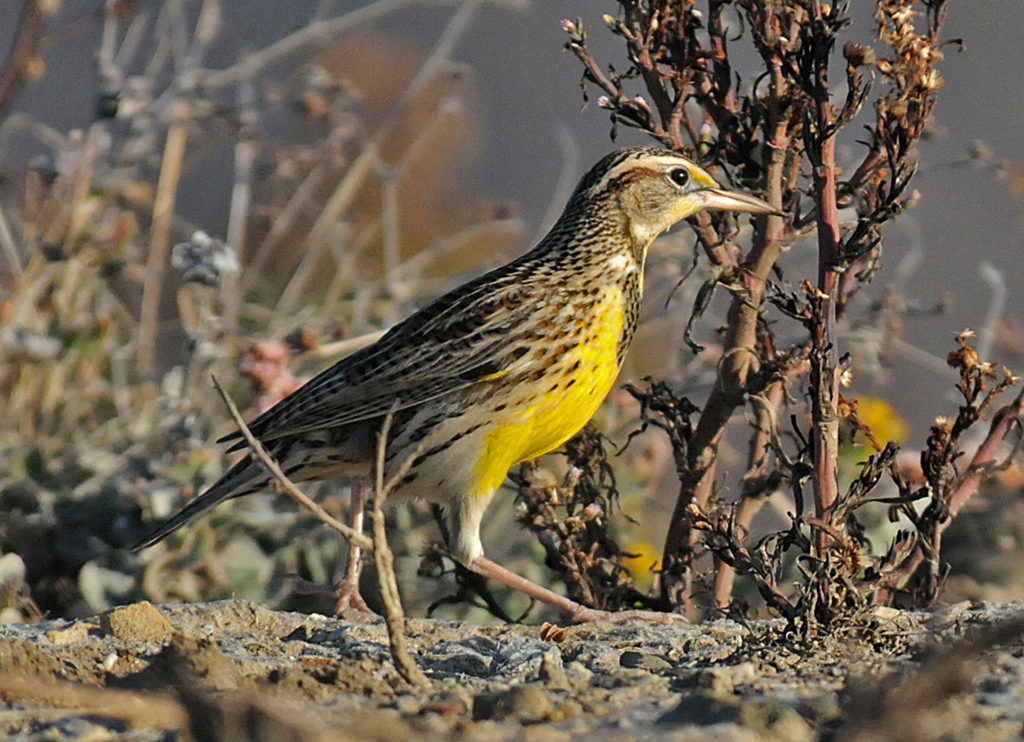
Western Meadowlark (Jim Kenney 10/19/14)
Western Meadowlarks can be found from the Pacific Ocean to east Texas and Michigan, and their breeding range overlaps with the Eastern Meadowlark from central Arizona to Wisconsin. The best way to tell their plumages apart is by the amount of yellow on the cheek (more on the Eastern) and the thickness of the black chest-“vee” (thinner on the Western). Their songs are different, both are very musical and lively, a delight to hear. I have read that when the two species meet, the differences in song and courting responses prevents the completion of courtship.
We regularly find Western Meadowlarks at the lagoon in fall and winter as follows; twenty-four visits with sixty-five birds (month: visits/birds): Sep: 6/24, Oct: 8/23, Nov: 4/7, Dec: 3/4, Feb: 2/4, Mar: 1/3. The best place to look for them is in the large flat area nearest the highway between the parking lot and the lagoon; if they aren’t there, they may be on any of the sandy islands. Unfortunately, they rarely sing at the lagoon.
The blame, or credit, for the English names we use for birds can be placed primarily on British ornithologists and birders of earlier centuries, who tended to name birds based on how closely they resembled native birds of Britain. Lark species in England, members of the nearly worldwide family Alaudidae, all have white outer tail feathers, easily visible in flight to birders who carried shotguns rather than binoculars. Thus, around the world, if you hear of a bird species with “lark” somewhere in their name, they will have white outer tail feathers: Lark Bunting, Lark Sparrow, Magpie-lark.
In what may be an odd example of convergent evolution, the plumage of the Yellow-throated Longclaw of sub-Saharan Africa is almost identical to that of our meadowlarks. It inhabits grasslands, frequently walks on the ground, and sings from a raised perch, as do our meadowlarks. Yet it is quite unrelated, belonging to the Motacillidae (Pipits & Wagtails), while our meadowlarks are members of Icteridae (New World Orioles and Blackbirds).
Many thanks to Jim Kenney for documenting these two species. [Chuck Almdale]



 SANTA MONICA BAY AUDUBON SOCIETY BLOG