Free email delivery
Please sign up for email delivery in the subscription area to the right.
No salesman will call, at least not from us. Maybe from someone else.
CROW VS. TERN PART I

TERNS BATLE CROWS: PHOTO RECAP PART I
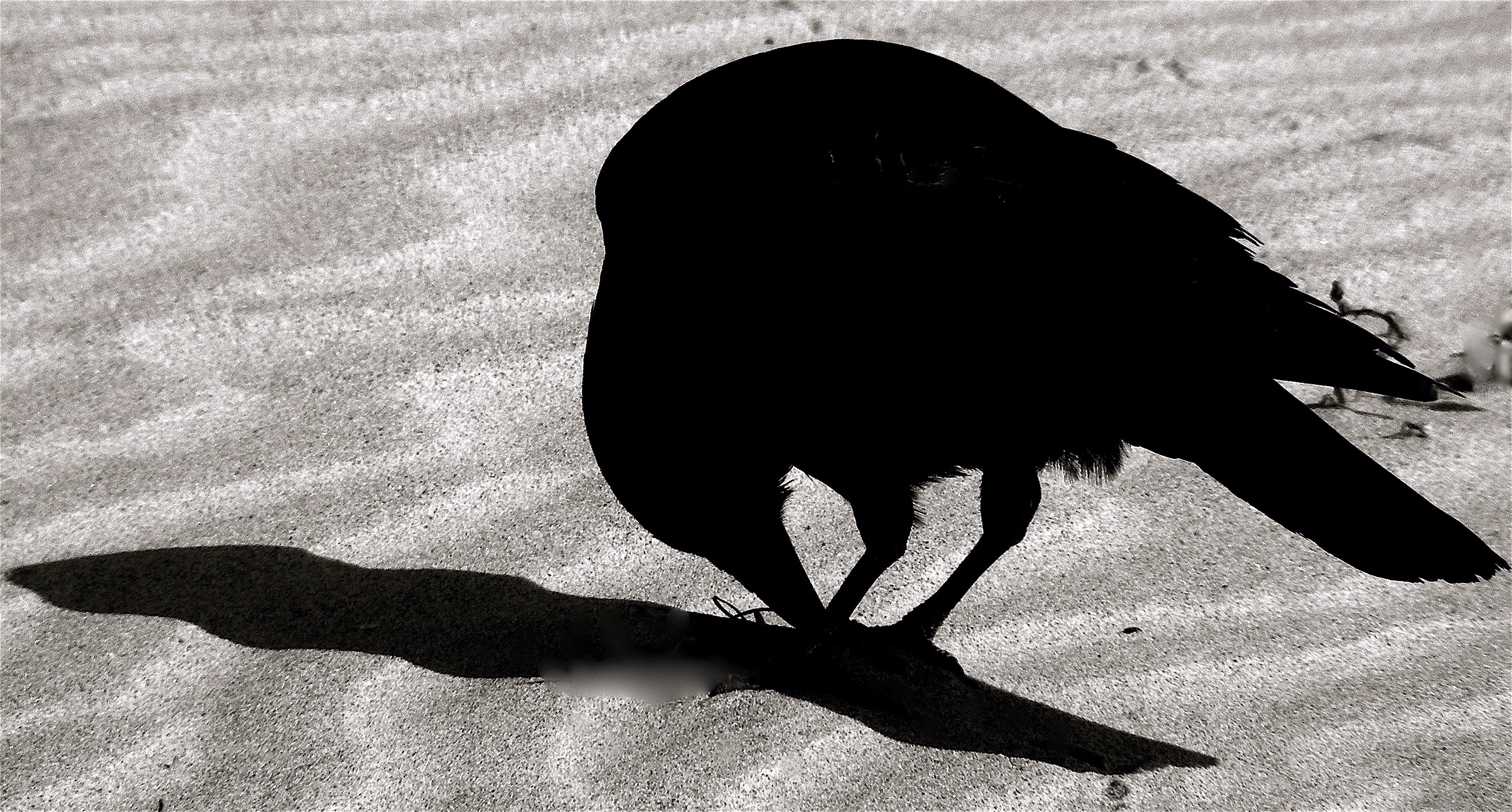
On Venice Beach near the Marina del Rey breakwater stands a chain-link fence enclosure. It’s empty and silent these early fall days, but a few weeks ago marked the end of a five month drama that unfolds each year between local, year-round resident crows, and seasonal least terns.
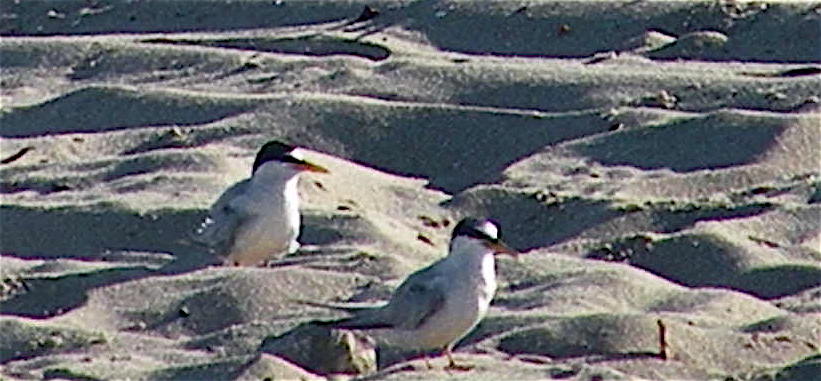
Local biologists and volunteers from around Los Angeles (including Santa Monica Bay Audubon) joined forces this breeding season to try a new way to mitigate predation by crows of least tern eggs and chicks, whose numbers have fallen or been non-existent in recent years.
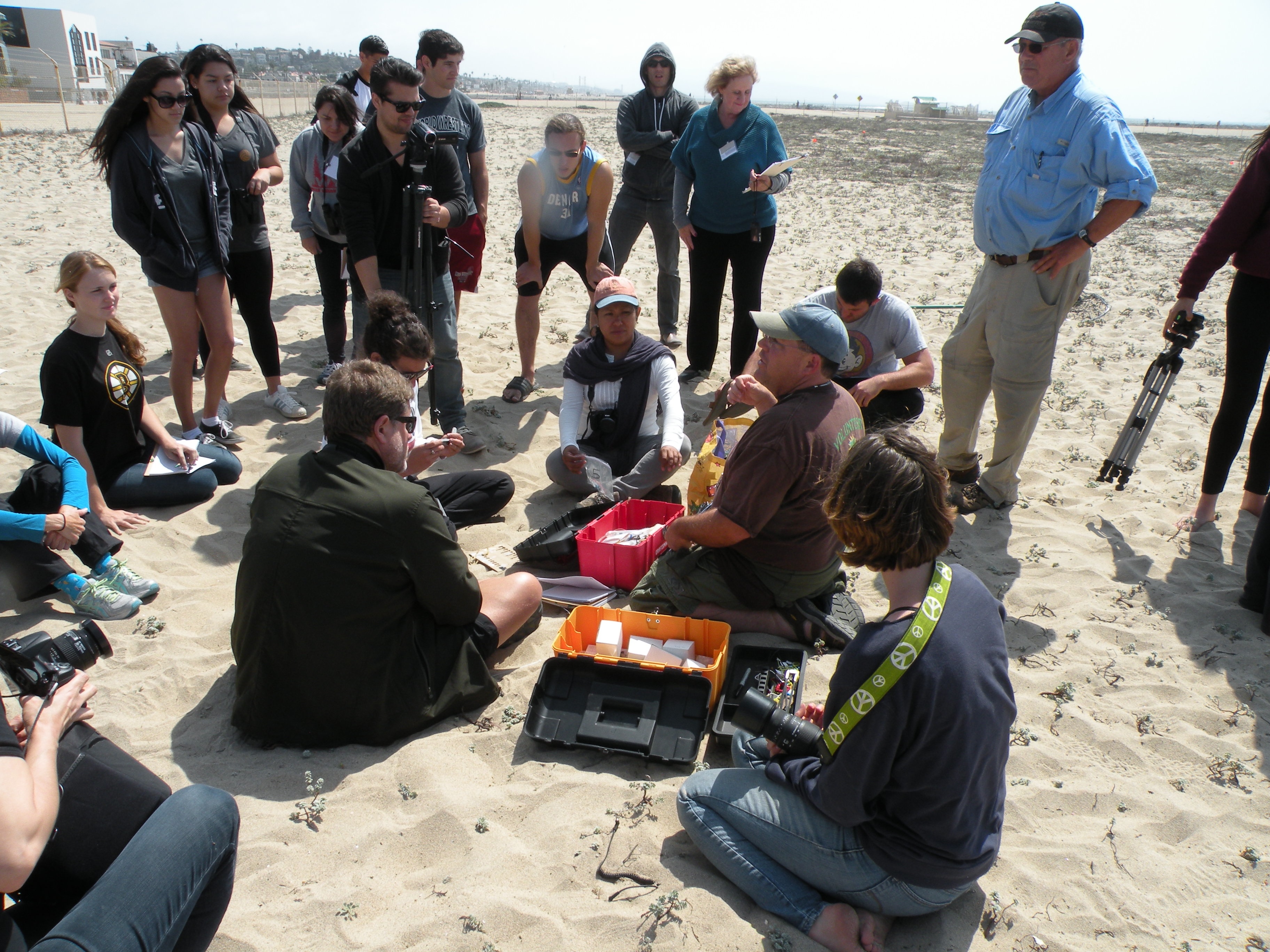
First up – the crow’s story – It all starts with banding the local crows–but first they have to be caught. Crows are highly intelligent and have complex social structures which enable them to outwit most enemies, but who can resist free peanuts…

The nuts are placed in an enclosure that’s easy to fly into but impossible to fly out. From there, the crows are removed to be banded and radio tagged by Loyola Marymount University biologists and Lead Least Tern biologist, Tom Ryan.

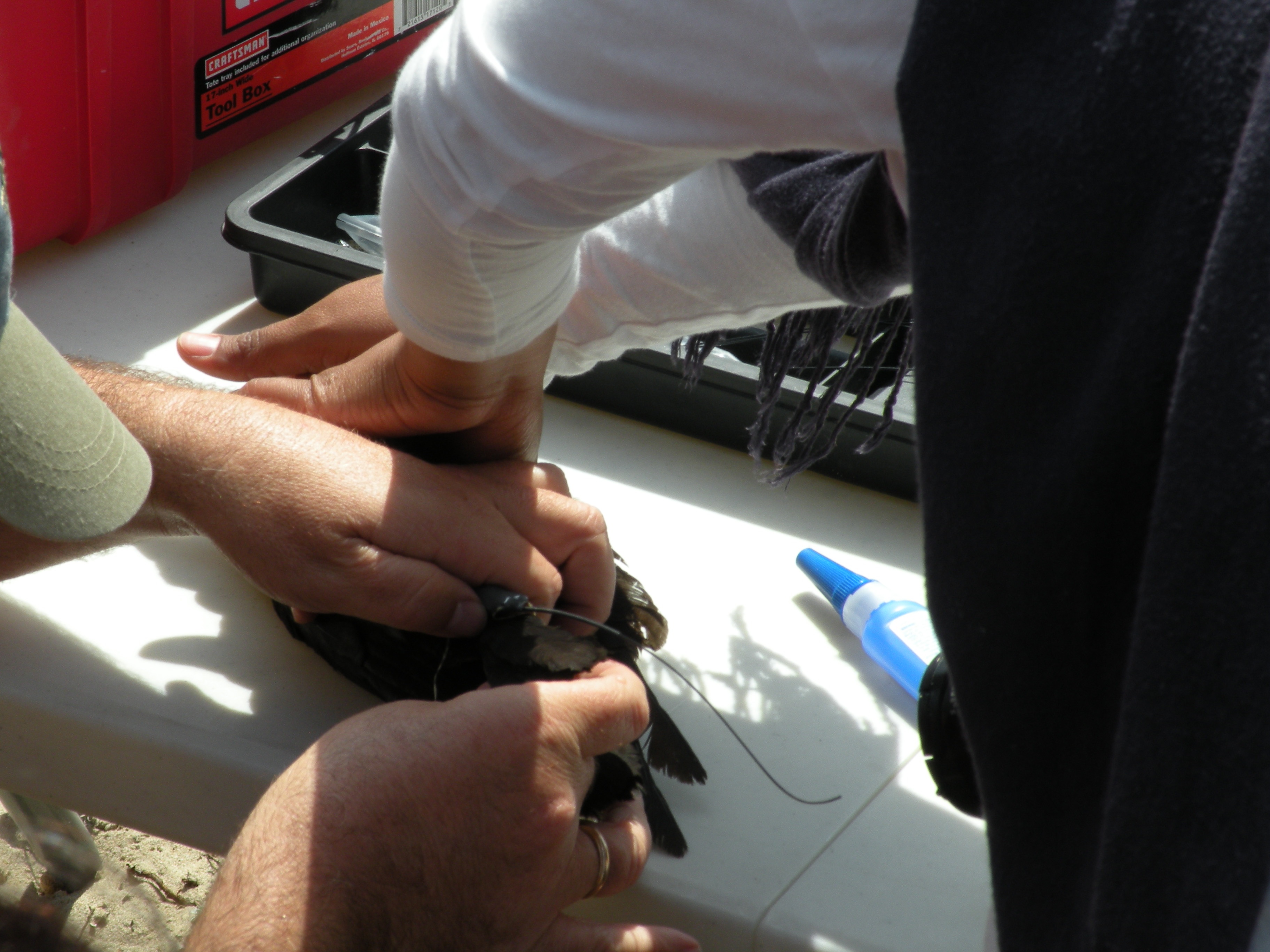
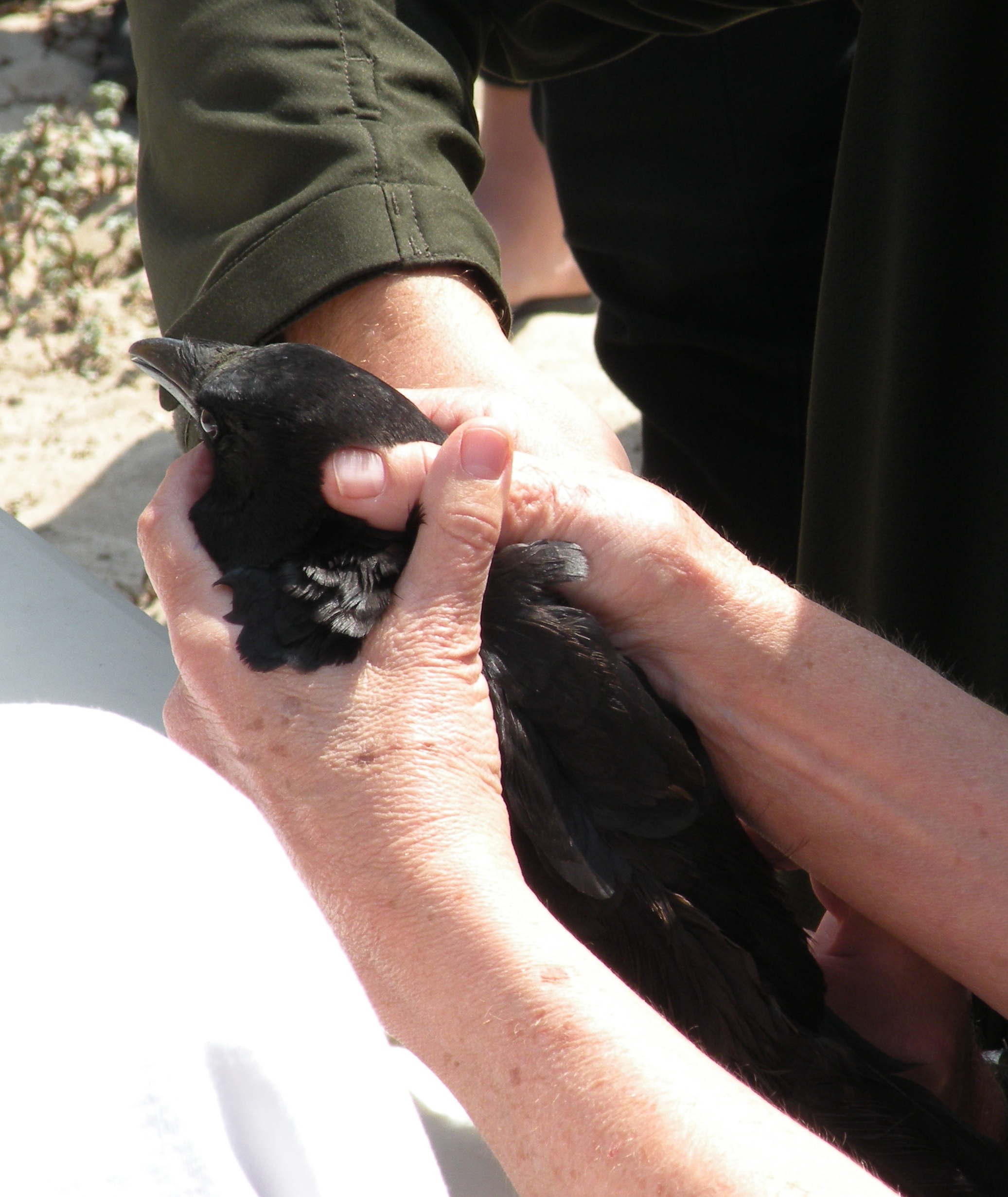
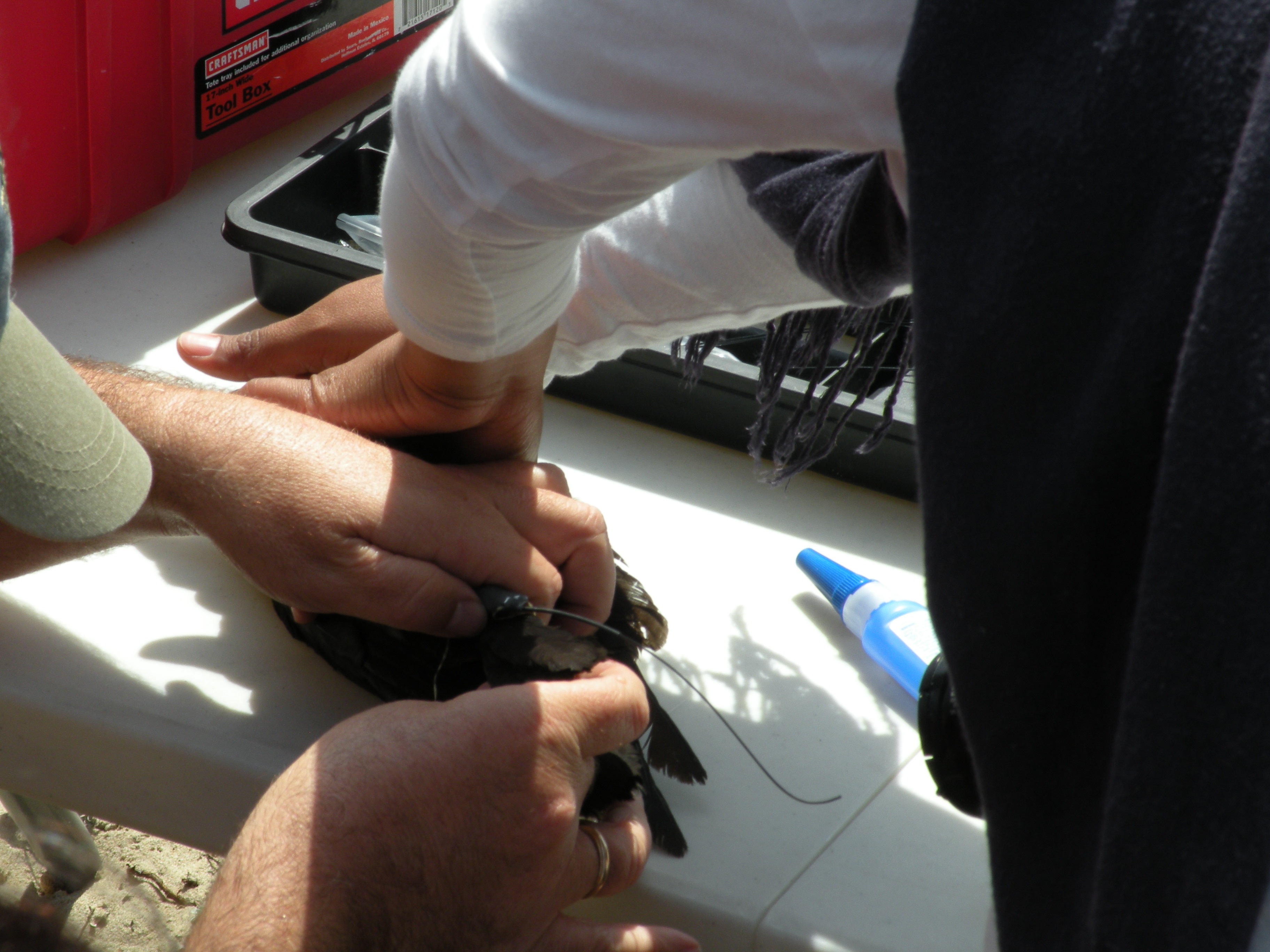
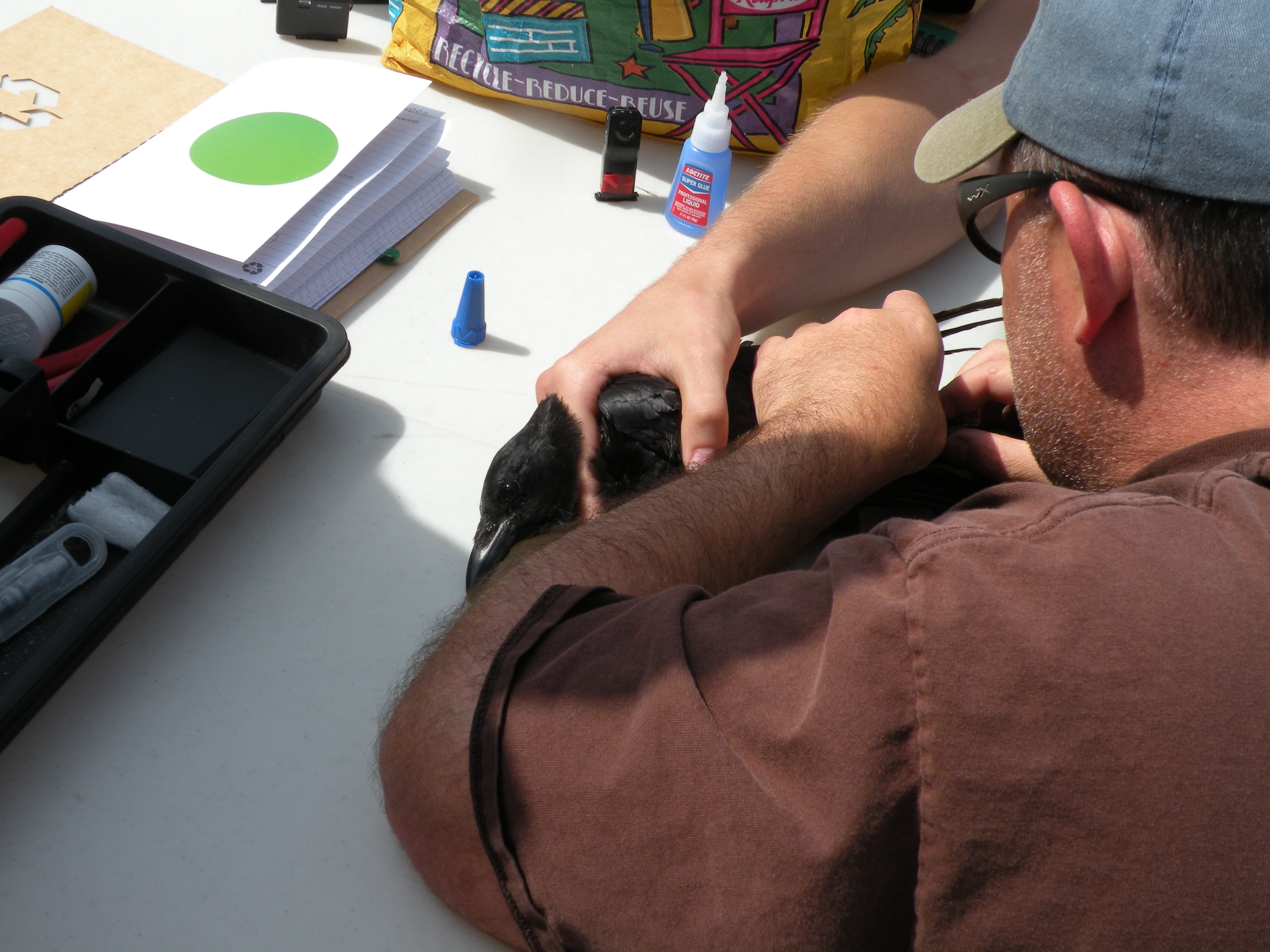

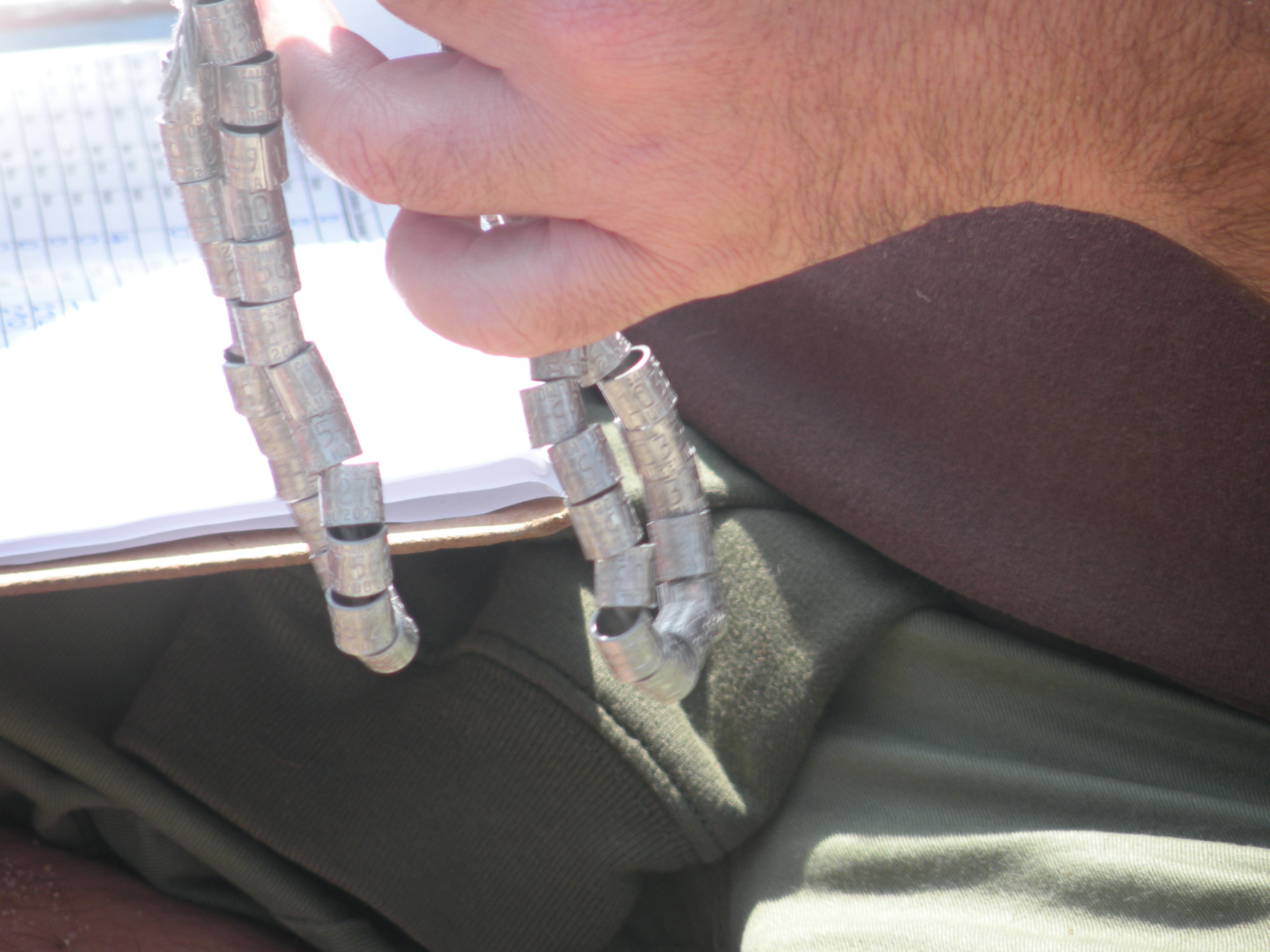
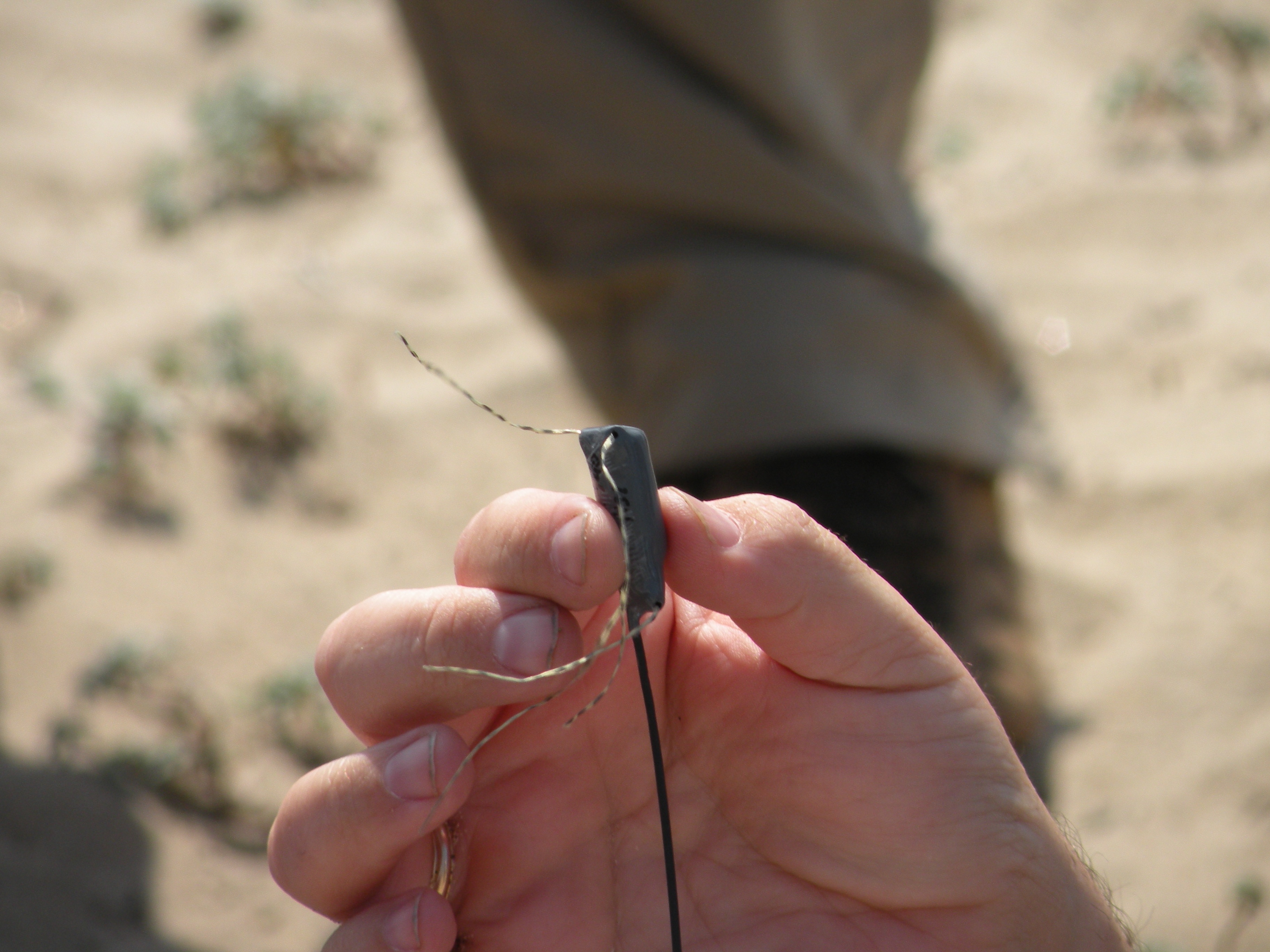
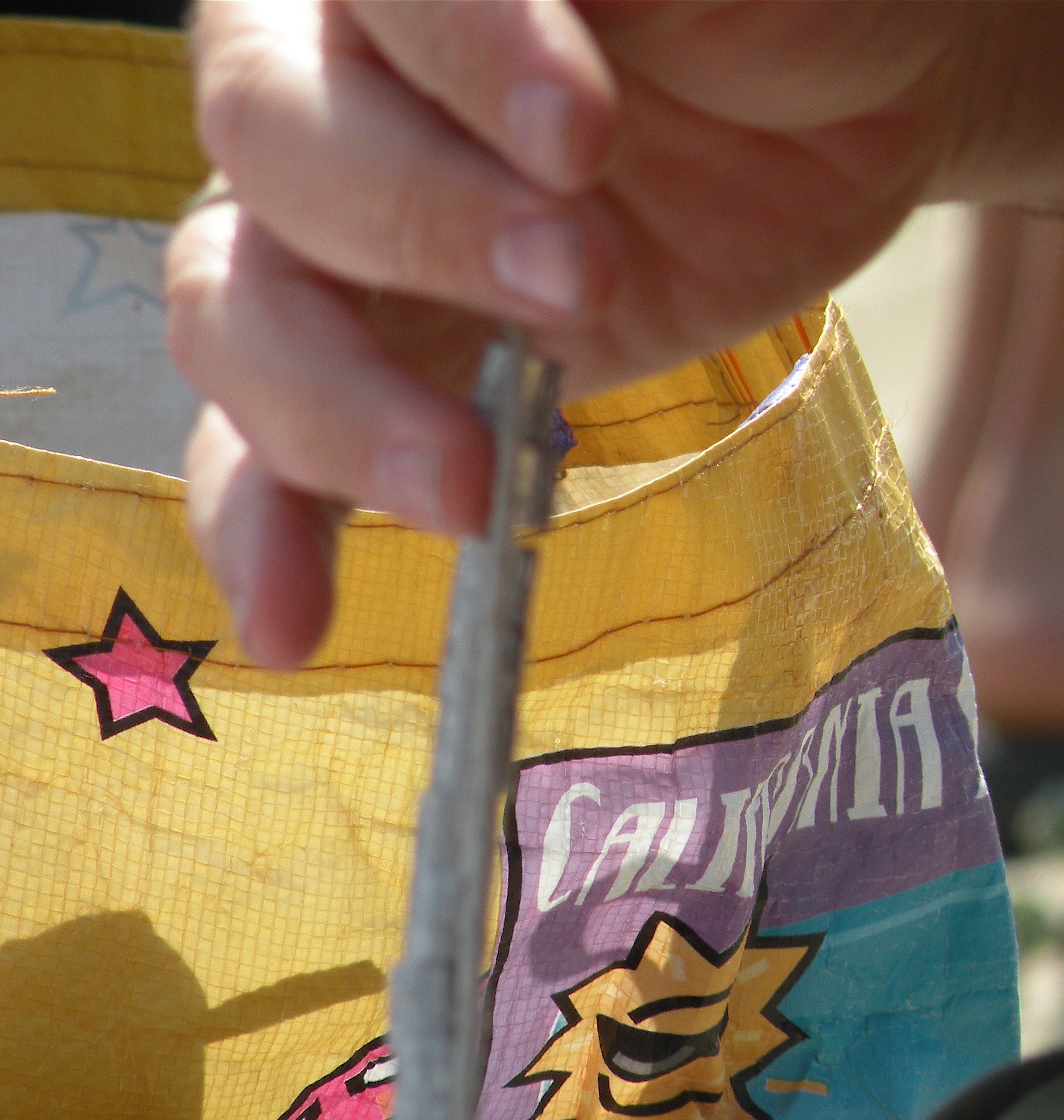
For the first time, artificial tern eggs equipped with a mild shocking device were placed throughout the colony to serve as an aversion technique to discourage crows from predating tern eggs.

Did it work?
Did the least terns have their first successul breeding season in many years or did the teamwork and intelligence of the crows win out again and end the breeding season with no chicks born? Find out soon in the tern’s story –
CROWS VS. TERNS PHOTO-RECAP PART II
Laurel Hoctor Jones, Education Chair
(All photos taken by me at the Venice Beach Least Tern Colony between April and September 2014)
SUMMER OF HERON LOVE PART II
For Part I of the Heron Rookery Photo-Recap, click here:
https://smbasblog.wordpress.com/2014/09/12/a-summer-of-heron-love-draws-to-a-close/
Photo-Recap Part II
The young Snowy Egrets, Great Egrets and Black Crowned Night Heron chicks grow rapidly and practice wing flapping from the nest-


Before trying it out over a cement landing-

Nests hold up to five chicks, so interaction is frequent-


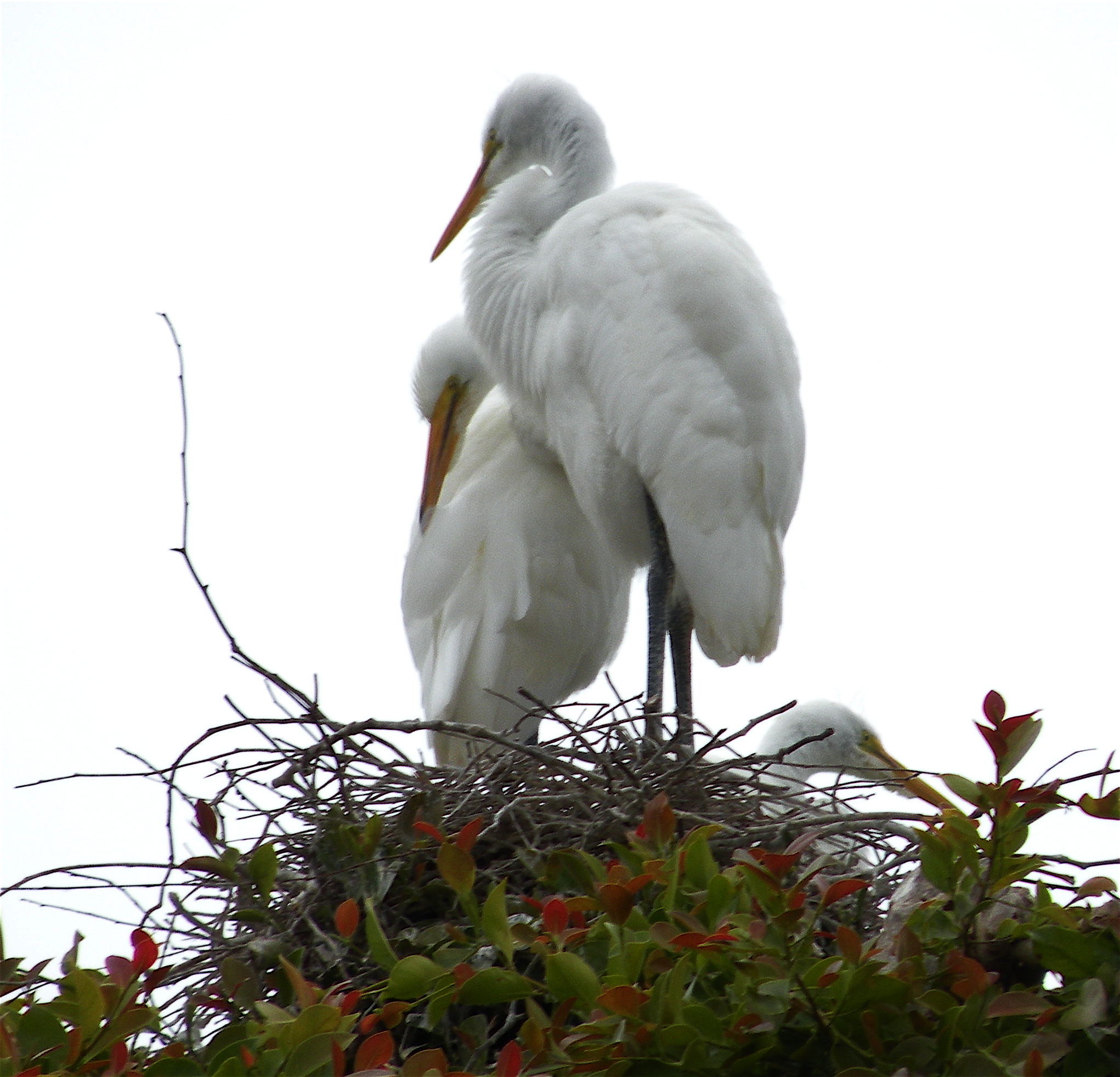
The chicks begin to develop adult plumage, but still retain downy feathers as they develop–

As they grow bigger and more confident with their wings–

They will fly across Pacific Coast Highway to Malibu Lagoon to forage for fish-

Other species of young birds at the lagoon also learn what to eat (and what not to)-
Eventually, most chicks will fly off to other feeding grounds since Malibu Lagoon will not support all the extra mouths. One favorite spot is the Marina del Rey channel-

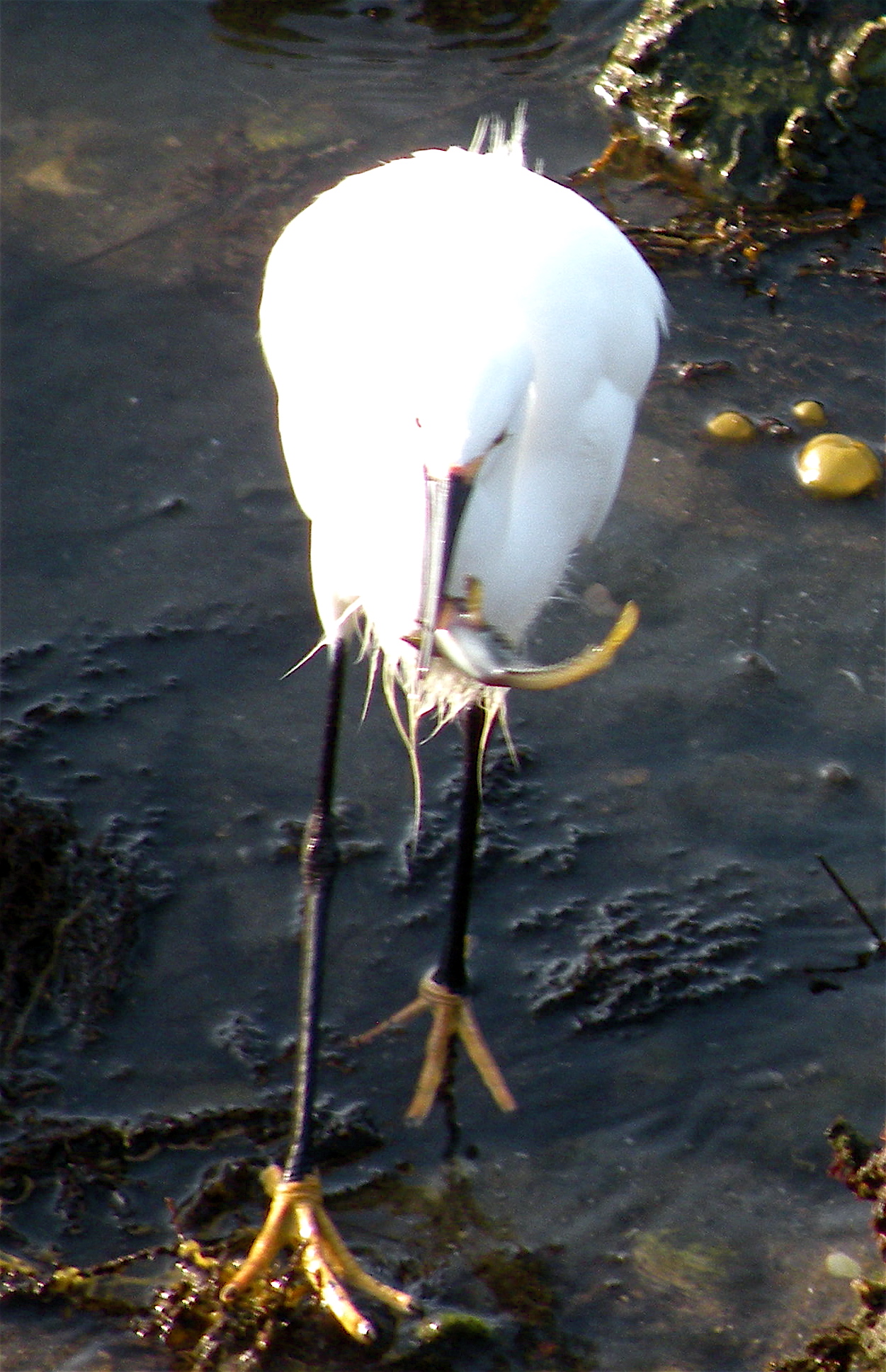
And as the chicks learn to hold their own in the world, the rookery season completes it’s nesting cycle. In April, it will all begin again at the Malibu Country Mart Heron and Cormorant Rookery. Most of the trees are adjacent to the Starbucks parking lot, so next spring, grab a latte and look up…


I took all of the photos between April 2014 and September 2014 at the Malibu Rookery (except for location as noted at Marina del Rey).
Laurel Hoctor Jones, Education Chair Read more…
A Summer of Heron Love Draws to a Close

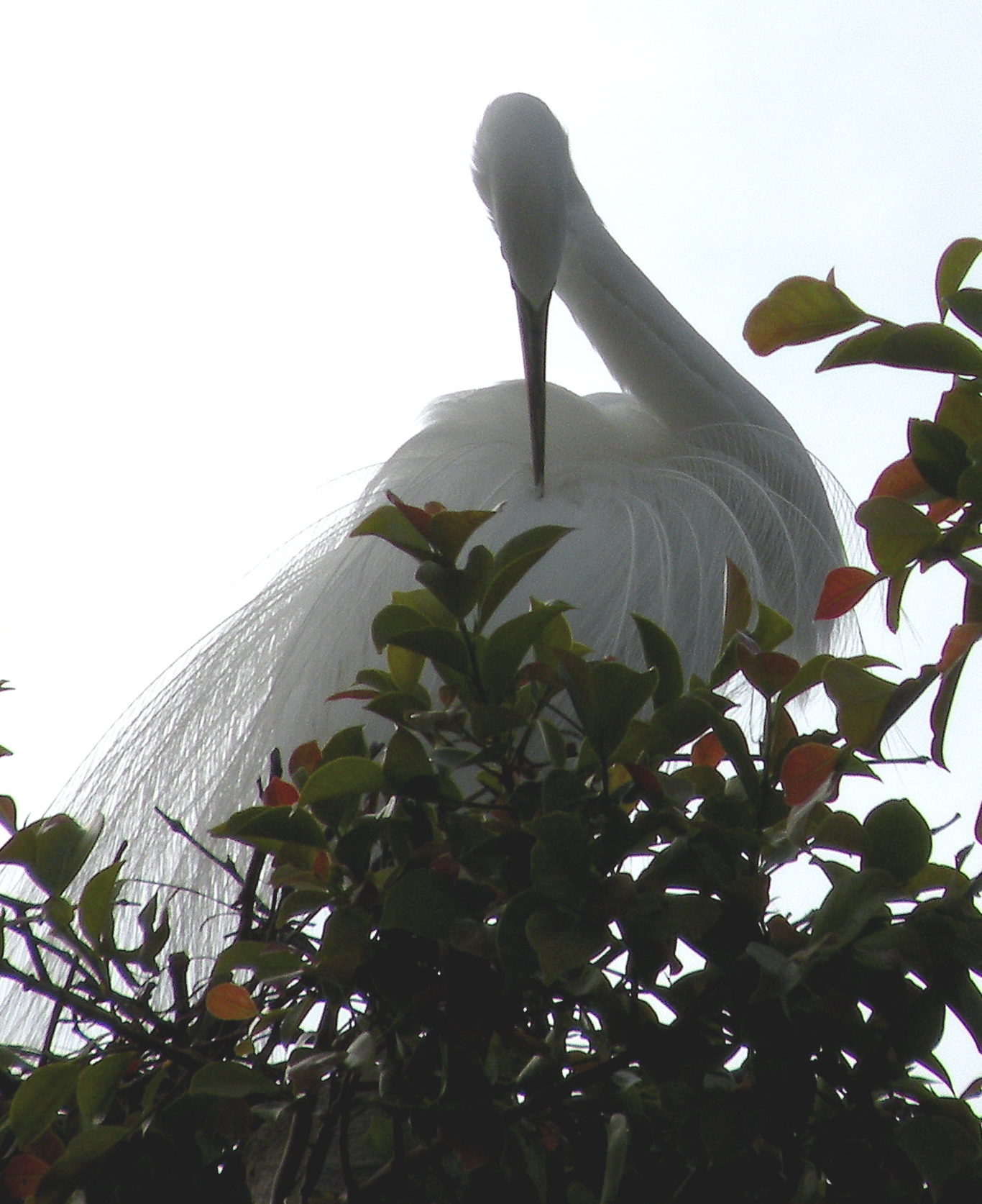 PHOTO RECAP – Part One
GRAB YOUR LATTE AND LOOK UP: The next time you pull into the parking lot of Starbuck’s across PCH from Malibu State Beach between April and September, cast your eyes to the adjacent trees. You are looking at a Heron and Cormorant Rookery that has been in this exact spot for at least 50 years. Herons here include Great Egrets, Snowy Egrets, Black Crowned Night Herons and Great Blue Herons.


Beginning around April, males arrive at the rookery to claim or build huge nests in the tree tops and flaunt the magnificent breeding plumage that once saw them to the brink of extinction for use in hats, (and incidentally led to the creation of the Audubon Society to protect them.)
The females arrive soon after, and courtship begins (and she does most of the work finishing the nest). Once mates are chosen, pair bonding follows.

Mating occurs in the nest.

And approximately three to four weeks later…

Across PCH at Malibu Lagoon, Heron parents forage food for their chicks, as Killdeer and other fledglings begin to appear.

Black Crown Night Heron chicks nest in trees next to the Egrets. The chicks are seriously noisy as they try out their wings.
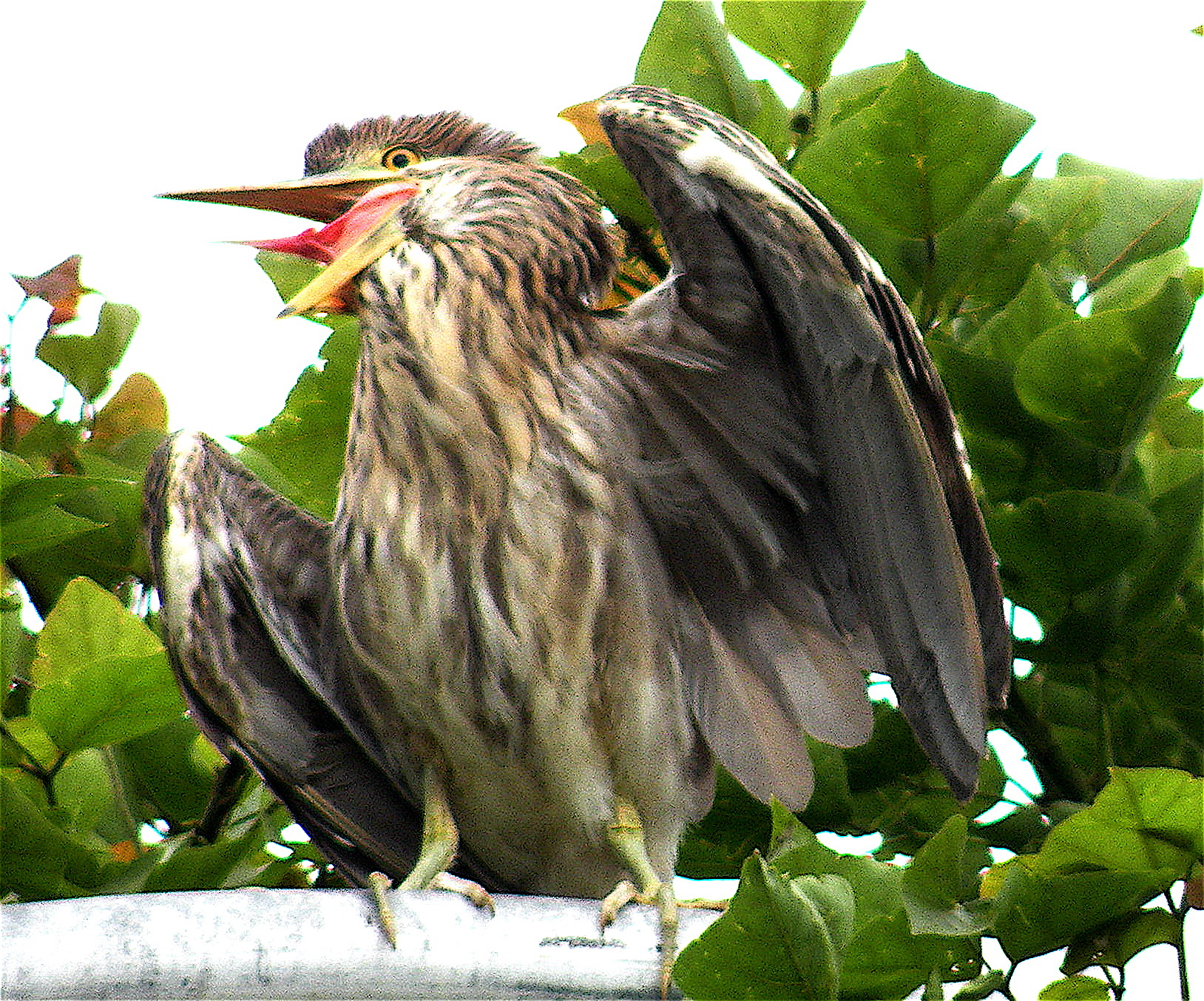
In the Photo Recap Part II the chicks learn to fly, forage and fly off into the world.
Laurel Hoctor Jones
Education Chair
Lower Los Angeles River Trip Report: 6 September, 2014

Fiery Skippers female & male, warming their exoskeletons
(J. Waterman 9/6/14)
7:30am was not too early to begin our fifth annual walk along the banks of the lower Los Angeles River. We began at Willow St, about 3 miles north of Long Beach Harbor, ending about 6 miles farther north at Alondra Blvd. We usually visit 4 sites, but this year we skipped DeForest Park as our leader, Dick Barth, had visited the park earlier and found no warblers or other passerines at all in the trees. It was slightly overcast and about 70° when we started, clearing up and topping out about 88° when we finished at 12:15.
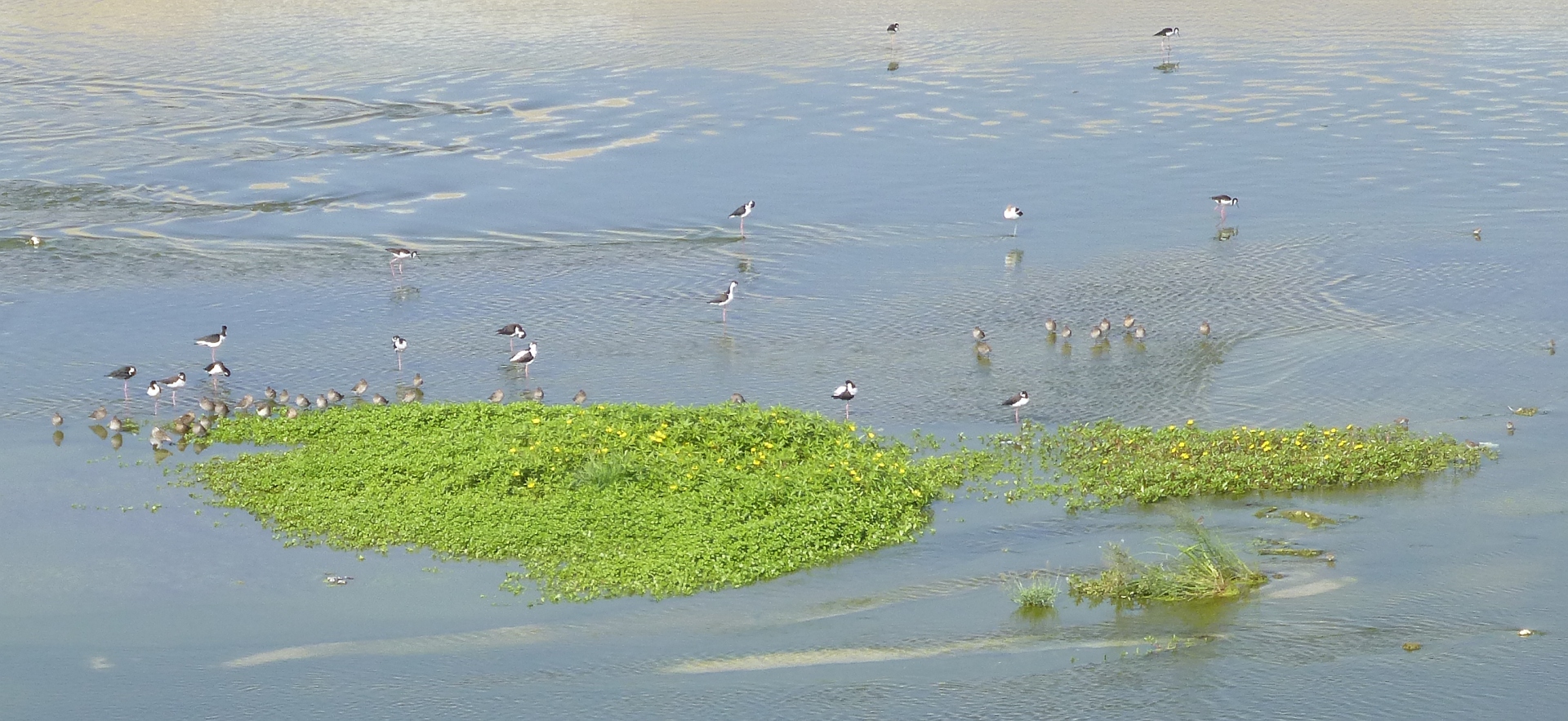
Birds & vegetation at Willow St. (C. Almdale 9/6/14)
The most vegetation in this section of river channel is at Willow St., with sand and mud islands, floating rafts of water plants, wading egrets, ducks, and large flocks of shorebirds, gulls, the occasional tern, plus a few raptors and plenty of Barn Swallows and Rock Pigeons. The Orange Bishop can usually be found in the tall riverbed island grass in this area.

Male Orange Bishop at Willow St (J. Waterman 9/6/14)
Just as we had finished checking out some Greater Yellowlegs, a pair of less-common Lesser Yellowlegs flew in, providing an opportunity to compare the two. Most of the difference noted was the size and shape of the bill: shorter and straighter in the Lesser. What we momentarily thought might be a Virginia Rail turned out to be a juvenile Common Gallinule (recently split from its Eurasian congener and renamed from Common Moorhen).

Avocets & Dowitchers in flight (J. Waterman 9/6/14)
Among the numerous Long-billed Dowitchers we found a few Short-billed. At 34th St., our second stop, we found a few juvenile Short-billed in very fresh plumage, allowing us to check out the orange “tiger stripes” in their tertials. We hunted through the numerous mixed flocks of Least and Western Sandpipers for rarities, finally finding a single Pectoral Sandpiper, skulking in the brush and grass on a small island. For at least 20 minutes we entertained ourselves with persistent comments such as: “it’s head is poking out between those two stilts”; “which stilts?”; “the two on that little island”; “now the grass is moving to the left of the left stilt, watch that spot”; “now it’s under the rear end of the right stilt” and so on. Finally the bird walked out into the open water and we all got great looks.

Pectoral Sandpiper at Willow St. (J. Waterman 9/6/14)
Gulls – mostly Western – continued to gather here, but we had to leave before the Laughing Gull, a local resident throughout the summer, arrived. We went north to 34th St. where we didn’t see anything new except a few juvenile Short-billed Dowitchers in very fresh plumage, allowing us to check out the orange “tiger stripes” in their tertials. We then went on to Alondra Blvd., next to the Home Depot. House Sparrows have found a fine foraging spot here, gleaning orts and pieces of bread from the ground around the groups of workers waiting for daily work.
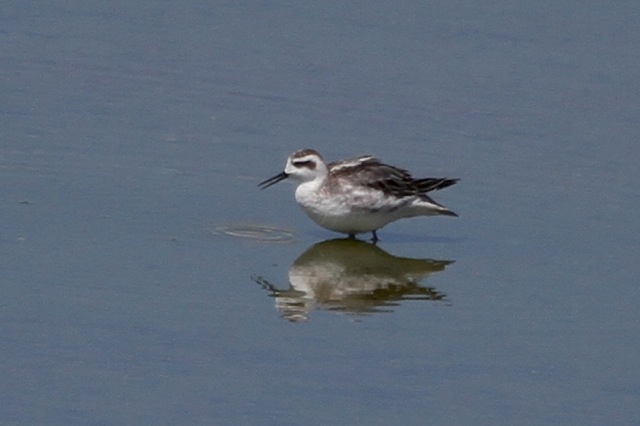
Red-Necked Phalarope at Alondra Blvd. (J. Waterman 9/6/14)
Another large gull flock was here, as well as many Least and Western Sandpipers flocks, through which spun a single Red-necked Phalarope. It didn’t so much spin – as they typically do in deeper water to create a vortex which lifts food to where they can snag it – as twisted in ankle-deep water. This looked a bit odd.
A very special thanks to Richard Barth who frequently birds this area. His knowledge and enthusiastic explanations of difficult plumages are invaluable, especially during migration season! I’m sure his upcoming program at Los Angeles Audubon this Wednesday, September 10, will be great. [Chuck Almdale]
Prior Reports: August 2013, September 2012, September 2011, October 2010
| Lower L.A. River 9/6/14 | Willow | 34th | Alondra | Total | |
| Species | Street | Street | Blvd. | Birds | |
| Gadwall | 2 | 2 | |||
| Mallard | 110 | 16 | 15 | 141 | |
| Cinnamon Teal | 5 | 9 | 14 | ||
| Northern Shoveler | 8 | 8 | |||
| Bufflehead | 1 | 1 | |||
| Pied-billed Grebe | 1 | 1 | |||
| Double-crested Cormorant | 6 | 6 | |||
| Great Blue Heron | 2 | 2 | |||
| Great Egret | 2 | 2 | |||
| Snowy Egret | 5 | 5 | |||
| Green Heron | 1 | 1 | |||
| Black-crowned Night-Heron | 2 | 2 | |||
| Turkey Vulture | 3 | 1 | 4 | ||
| Osprey | 1 | 1 | |||
| Common Gallinule | 1 | 1 | |||
| American Coot | 25 | 25 | |||
| Semipalmated Plover | 2 | 2 | |||
| Killdeer | 65 | 1 | 66 | ||
| Black-necked Stilt | 425 | 120 | 545 | ||
| American Avocet | 160 | 12 | 172 | ||
| Spotted Sandpiper | 14 | 14 | |||
| Greater Yellowlegs | 4 | 4 | |||
| Willet | 1 | 1 | |||
| Lesser Yellowlegs | 2 | 2 | |||
| Western Sandpiper | 100 | 125 | 225 | ||
| Least Sandpiper | 490 | 340 | 830 | ||
| Pectoral Sandpiper | 1 | 1 | |||
| Short-billed Dowitcher | 30 | 10 | 40 | ||
| Long-billed Dowitcher | 200 | 70 | 270 | ||
| Red-necked Phalarope | 1 | 1 | |||
| Ring-billed Gull | 20 | 5 | 25 | ||
| Western Gull | 100 | 280 | 380 | ||
| California Gull | 50 | 50 | |||
| Caspian Tern | 2 | 2 | |||
| Rock Pigeon | 130 | 110 | 240 | ||
| Eurasian Collared-Dove | 3 | 3 | |||
| White-throated Swift | 6 | 6 | |||
| Allen’s Hummingbird | 2 | 2 | |||
| American Kestrel | 2 | 2 | |||
| Yellow-chevroned Parakeet | 7 | 7 | |||
| Black Phoebe | 2 | 2 | |||
| American Crow | 6 | 6 | |||
| Barn Swallow | 45 | 15 | 12 | 72 | |
| European Starling | 40 | 40 | |||
| Savannah Sparrow | 1 | 1 | |||
| Red-winged Blackbird | 20 | 20 | |||
| Yellow-headed Blackbird | 1 | 1 | |||
| Great-tailed Grackle | 3 | 3 | |||
| House Finch | 12 | 12 | |||
| House Sparrow | 12 | 12 | |||
| Orange Bishop | 1 | 1 | |||
| Total Species & Birds – 51 | 48 | 9 | 10 | 3276 |
Full Harvest Moon Update: 8 September 8, 2014, 6:38 P.M. PDT
Here’s another update from SMBAS Blog on that large, disc-like, shining object which has frequently and mysteriously appeared in our nighttime sky this year (known to many as the moon).
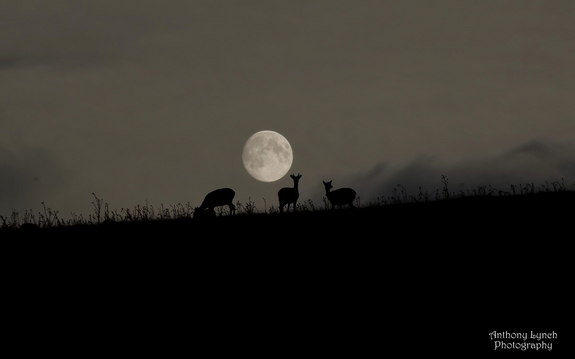
Irish harvest moon & deer (Anthony Lynch 9/19/13 from Space.com)
Sept. 8, 6:38 p.m. PDT — Full Harvest Moon. Traditionally, this designation goes to the full moon that occurs closest to the Autumnal (Fall) Equinox. This year’s version comes unusually early. At the peak of the harvest, farmers can work into the night by the light of this moon. Usually the moon rises an average of 50 minutes later each night, but for the few nights around the Harvest Moon, the moon seems to rise at nearly the same time each night: just 25 to 30 minutes later across the U.S., and only 10 to 20 minutes later for much of Canada and Europe. Corn, pumpkins, squash, beans and wild rice — the chief Indian staples — are now ready for gathering.
Interesting & useful factoids on moon averages:
Apparent width of the moon (full or otherwise): 1 /2 degree.
Time one full moon to next full moon: 29.5 days
Angle moon moves in 24 hours: 12.2 degrees
Time for moon to move it’s own width (1/2 degree): 59 minutes
Thus, on average, the moon takes just under an hour to move it’s own width. When trying to estimate the size of something, compare it to the moon, a known quantity.
MoonPhases.info – A handy site for a googolplex of moon facts.
The next significant full moon will occur on October 8, 3:51 a.m. PDT. Keep an eye on this spot for additional late-breaking news on this unprecedented event.
This information comes to you courtesy of: http://www.space.com/24262-weird-full-moon-names-2014-explained.html
written by Joe Rao. Joe Rao serves as an instructor and guest lecturer at New York’s Hayden Planetarium. He writes about astronomy for Natural History magazine, the Farmer’s Almanac and other publications, and he is also an on-camera meteorologist for News 12 Westchester, N.Y.
But that’s waaay too long to type in, and besides, you don’t need to go there because SMBAS has done the work for you!
[Chuck Almdale]



 SANTA MONICA BAY AUDUBON SOCIETY BLOG