Free email delivery
Please sign up for email delivery in the subscription area to the right.
No salesman will call, at least not from us. Maybe from someone else.
Help Monitor Least Terns at Venice Beach!
Los Angeles Audubon is looking for dedicated volunteers to help monitor the endangered California Least Tern at Venice Beach.

Least Tern chick
In Los Angeles County, this species returns to only two breeding colonies, one at Venice Beach and one at the Port of Los Angeles. Los Angeles Audubon works with project biologists and the California Department of Fish & Wildlife studying the tern colony in Venice by coordinating a community-based science monitoring program during the nesting season. Volunteers receive training and then help monitor the colony for one hour each week from mid-April to mid-August. This is a great opportunity for families looking for a way to learn about nature together, for students looking to gain some field experience in environmental science, or anyone who’d like to know more about urban wildlife.
If this sounds like something you’re interested in, then we’d love to meet you at one of the following training sessions:
April 27 (Saturday) – 8am to 9am
May 6th (Monday) – 630pm to 730pm
May 9th (Wednesday) – 630pm to 730pm
Training Location: The training sessions will take place at the Least Tern Colony enclosure on Venice Beach. The enclosure is located at the very southern end of Venice Beach near the Ballona Channel. There is metered parking along the channel where Pacific Ave turns into Via Marina, and there’s a public pay lot at the intersection of Via Marina and Captain’s Row. There’s technically free parking along Pacific Ave, but the spots get taken up fast.
Binoculars are essential to monitoring, so please bring them with you if you own them. If one of these dates doesn’t work for you but you’re still interested in helping, please let us know and we’ll see if we can arrange an alternative training session.
For questions and to register for a training session, please contact the Volunteer Coordinator at 323-481-4037 or tern@laaudubon.org.
We’ve been really lucky with
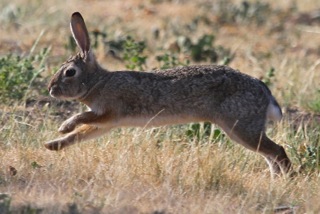
Rabbit (J. Waterman 4/6/13)
the weather for this hike; I can’t recall it ever being less than great. Twenty-two of us roamed around the Paramount movie ranch for about 20 minutes, during which time much of the morning fog burned off. Plenty of birds were singing and rabbits hopping; especially notable were White-breasted Nuthatches, House Finches, Western Bluebirds, Acorn Woodpeckers, House Wrens and a flock of five Nanday (aka Black-hooded) Parakeets. We shed a few garments back at the cars, then set off towards the Reagan Ranch portion of Malibu Creek State Park, which lies kitty-corner across Mulholland & Cornell Rds. from Paramount Ranch.
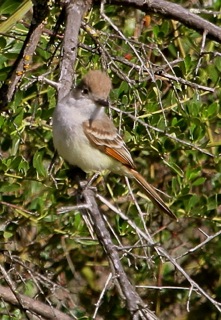
Ash-throated Flycatcher (J. Waterman 4/6/13)
Many of the flowers were not yet or just barely in bloom – probably the result of a dry winter with only 6.4” of rain since Oct 1st, 54% of normal. So the Lupine were barely in bloom, but the Buckwheat, Dudleaya, Horehound, Milkweed, Soap Plant, White and Black Sages, Golden Current, Penstemon, Milk Thistle, and Wooly Blue Curls – all of which we saw – were not in bloom.
On the other hand, the Ceanothus, Elderberry, Bedstraw, Fiddleneck, and many others were beautiful. As usual, it was hard to make progress hiking with so much to look at. The total plant list was 66 species (see below).
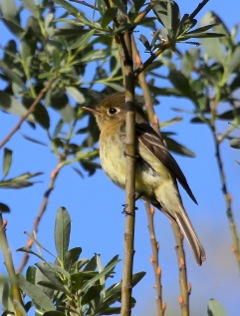
Pacific Slope Flycatcher (J. Waterman 4/6/13)
Our bird trip list came up to a respectable 59 species, of which only five species – California Quail, Bewick’s Wren, Wrentit, Phainopepla and Black-headed Grosbeak were heard and not seen. As in prior years, every tree seemed to hold a singing House Wren. House Finches were abundant, particularly around the Reagan Ranch buildings. We rediscovered for the umpteenth time that when you hear an unfamiliar bird song in the Santa Monica Mountains, it’ll be either an Oak Titmouse or a Bewick’s Wren; the former’s song is rich in tone while the latter’s song is usually a bit more buzzy.

Cooper’s Hawk (J. Waterman 4/6/13)
We spotted a Sharp-shinned Hawk soaring over the Reagan Ranch meadow, just before we got to the top of Cage Creek Trail. Or I should say, some of us did. I called out the bird, and some others said, “No, it’s a Cooper’s Hawk!” It turned out that the possible was the actual – we had both. It gave us a good opportunity to compare the tail shapes and head postures – the best field marks when flying – of these two similar species.
By noontime we found ourselves by Malibu Creek, the day had warmed, the birds weren’t so vocal anymore, and large crowds of humans now abounded. Our last trip flower is usually Chia, which we find only on a roadside hill near the Malibu Creek parking lot – but there were so few this year that we had a hard time finding them, and some missed them altogether.
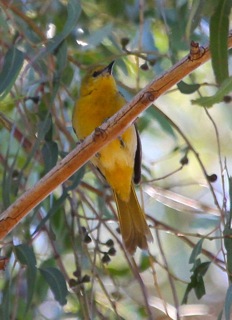
Hooded Oriole female (J. Waterman 4/6/13)
We couldn’t get all 22 people into the two shuttle cars we’d left, so we had to make two trips to get everyone back to Paramount, where most of us had lunch at the picnic tables under the large “ghost gum” eucalypts, while a sizable wedding party gathered under the large oak in the western town, drinking wine and getting dusty.
As always, the hike was led by Peggy Burhenn, Calif. State Parks docent specializing in native plants and wildflowers. We went back toour original one-way-with-car-shuttle route, as last year’s hike back up Cage Creek Trail nearly did many of us in. I’ve also been advised to mention that there are actually “several” small up and down slopes.
The lists below give a five-year comparison of this hike. There are significant differences from year-to-year, both in what we find and what is in bloom.
[Chuck Almdale]
| PLANT TRIP LISTS – PARAMOUNT TO MALIBU CREEK | |||||
| X – Seen NB – Not in Bloom * – Introduced Species | |||||
| 4/6 | 4/15 | 4/9 | 4/10 | 3/29 | |
| WHITE | 2013 | 2012 | 2011 | 2010 | 2009 |
| Ashy-leafed Buckwheat | X | NB | X | ||
| Big Pod Ceanothus | X | NB | X | X | |
| California Buckwheat | NB | X | X | NB | |
| California Everlasting | X | X | |||
| Cliff Aster | X | X | |||
| Coyote Brush | X | X | NB | NB | NB |
| Dodder | X | X | X | ||
| Dudleaya | NB | X | |||
| Elderberry | X | X | NB | X | X |
| Horehound* | NB | X | X | X | X |
| Lace Pod (green) | X | X | X | ||
| Lanceleaf Dudleaya | NB | ||||
| Linanthus | X | ||||
| Miner’s Lettuce | X | X | X | X | |
| Morning Glory | X | X | |||
| Mulefat | X | X | X | X | |
| Narrow-leafed Bedstraw | X | X | |||
| Narrow-leafed Milkweed | NB | ||||
| Onion – not specified | X | ||||
| Poison Hemlock | NB | NB | X | ||
| Poison Oak | X | X | |||
| Popcorn Flower | X | X | X | X | |
| Soap Plant | NB | X | X | ||
| White Nightshade | X | X | |||
| White Sage | NB | X | X | X | X |
| Wild Cucumber | X | X | X | X | X |
| Yucca | X | X | NB | X | X |
| YELLOW | |||||
| Burr Clover* | X | ||||
| Canyon Sunflower | X | ||||
| Collarless California Poppy | X | ||||
| Common Fiddleneck | X | X | X | X | X |
| Common Goldfields | X | ||||
| Deerweed | X | X | |||
| Golden Currant | NB | X | X | X | X |
| Golden Yarrow | X | X | X | ||
| Johnny Jump-up | X | X | X | X | X |
| Lomatium | X | ||||
| Microseris | X | ||||
| Mountain Dandelion | X | X | X | ||
| Mustard* | X | X | X | X | X |
| Pineapple Weed* | X | X | X | X | X |
| Stringose Lotus | X | X | |||
| Western Wallflower | X | X | X | ||
| ORANGE | |||||
| Bush/sticky Monkeyflower | X | X | X | NB | |
| California Poppy | X | X | X | ||
| Scarlet Pimpernel* | X | X | |||
| RED | |||||
| Chalk Live-forever | X | ||||
| Crimson Pitcher (Hummingbird) Sage | X | X | X | X | NB |
| Heart-leaved Penstemon | NB | ||||
| Indian Paintbrush | X | NB | X | ||
| PINK | |||||
| Bush Mallow | X | ||||
| Chinese Houses | X | X | X | X | X |
| Milk Thistle* | NB | X | X | NB | NB |
| Prickly Phlox | X | X | |||
| Purple Clarkia | X | ||||
| Purple Owl’s Clover | X | X | X | ||
| Purple Sage | X | X | X | X | X |
| Red-stem Filaree* | X | X | X | X | X |
| Spring Vetch* | X | X | X | X | |
| Tom Cat Clover | X | X | |||
| Wild Radish* | X | X | X | X | |
| Wild Sweet Pea | X | X | X | ||
| Wooly Aster | X | ||||
| PURPLE / BLUE | |||||
| Baby Blue Eyes | X | X | |||
| Bajada Lupine | X | ||||
| Black Sage | NB | X | X | X | |
| Blue Dicks | X | X | X | X | X |
| Blue Larkspur | X | X | |||
| Bush Lupine | X | X | X | X | X |
| California Peony | X | ||||
| Caterpillar Phacelia | X | X | X | X | X |
| Chia | X | X | X | X | |
| Common Vervain | X | X | |||
| Danny’s Skullcap | X | X | |||
| Dove Lupine | X | X | X | ||
| Fern-leaf Phacelia | X | X | X | ||
| Fiesta Flower | X | X | X | X | X |
| Green Bark Ceanothus | X | X | N | X | X |
| Henbit* | X | ||||
| Italian Thistle* | X | ||||
| Parry’s Phacelia | X | X | X | X | |
| Purple Nightshade | X | X | X | X | X |
| Sticky Phacelia | X | ||||
| Winter Vetch* | X | X | |||
| Wooly Blue Curls | NB | ||||
| BROWN | |||||
| Curly Dock | X | X | |||
| English Plantain* | NB | X | |||
| TREES, SHRUBS, OR | |||||
| NOT IN BLOOM | |||||
| Arroyo Willow | X | X | X | X | X |
| California Bay Laurel | X | X | X | ||
| California Bickelbush | X | ||||
| California Sagebrush | X | X | X | X | |
| Chamise | X | X | X | ||
| Coast Live Oak | X | X | X | X | X |
| Coffee Berry | X | X | |||
| Hog Fennel | X | X | |||
| Laurel Sumac | X | X | X | X | X |
| Mistletoe | X | X | X | X | |
| Mugwort | X | X | X | X | X |
| Poison Oak | X | X | X | ||
| Scrub Oak | X | X | |||
| Squaw Bush | X | X | |||
| Stinging Nettle | X | ||||
| Sugarbush | X | X | X | X | |
| Toyon | X | X | X | X | X |
| Valley Oak | X | X | X | X | |
| Western Sycamore | X | X | X | X | X |
| Whitethorn | X | ||||
| Wild Rose | X | X | X | X | |
| Total Plants – 108 | 66 | 73 | 60 | 70 | 56 |
z
| Paramount – Malibu Creek S.P. | 2013 | 2012 | 2011 | 2010 | 2009 |
| Bird Name | 4/6 | 4/15 | 4/9 | 4/10 | 3/29 |
| Canada Goose | 2 | 4 | 2 | ||
| Gadwall | X | ||||
| American Wigeon | X | ||||
| Mallard | 6 | 8 | 7 | 10 | X |
| Ring-necked Duck | 6 | ||||
| Bufflehead | X | ||||
| Ruddy Duck | X | ||||
| California Quail | 3H | 20 | 6 | 4H | |
| Pied-billed Grebe | X | ||||
| Great Blue Heron | 3 | 1 | 2 | ||
| Turkey Vulture | 4 | 3 | 4 | 2 | X |
| Northern Harrier | 1 | ||||
| Sharp-shinned Hawk | 1 | 1 | 1 | ||
| Cooper’s Hawk | 2 | 1 | 1 | X | |
| Red-shouldered Hawk | 3 | 1 | 6 | 2 | X |
| Red-tailed Hawk | 2 | 3 | 3 | 5 | X |
| American Coot | 9 | 4 | 4 | X | |
| Spotted Sandpiper | 1 | ||||
| California Gull | 20 | ||||
| Band-tailed Pigeon | 3 | 3 | 9 | ||
| Mourning Dove | 1 | 4 | 8 | 12 | |
| Barn Owl | 1 | ||||
| Vaux’s Swift | 20 | ||||
| White-throated Swift | 4 | 2 | 4 | 12 | X |
| Black-chinned Hummingbird | 1 | 1 | 1 | ||
| Anna’s Hummingbird | 5 | 1 | 2 | 4 | X |
| Allen’s Hummingbird | 2 | 1 | 1 | X | |
| Belted Kingfisher | 1 | X | |||
| Acorn Woodpecker | 12 | 9 | 8 | 11 | X |
| Nuttall’s Woodpecker | 4 | 5 | 2 | 2H | X |
| Downy Woodpecker | X | ||||
| Northern Flicker | 2 | 3 | 2 | X | |
| American Kestrel | X | ||||
| Black-hooded Parakeet | 5+4H | 3 | 1 | ||
| Hammond’s Flycatcher | 1 | ||||
| Pacific-slope Flycatcher | 1 | 1 | 2 | X | |
| Black Phoebe | 4 | 4 | 8 | 8 | X |
| Say’s Phoebe | 3 | 1 | 3 | 1 | |
| Ash-throated Flycatcher | 3+2H | ||||
| Cassin’s Kingbird | 9 | 3 | 4 | 2 | X |
| Western Kingbird | 1 | 4 | 3 | X | |
| Hutton’s Vireo | 1 | ||||
| Warbling Vireo | 2 | X | |||
| Western Scrub-Jay | 6+4H | 10+20H | 12 | 14 | X |
| American Crow | 12 | 15 | 20 | 6 | X |
| Common Raven | 9 | 2 | 4 | 5 | X |
| Tree Swallow | 10 | 6 | 4 | ||
| Violet-green Swallow | 20 | 20 | 12 | ||
| Northern Rough-winged Swallow | 15 | 25 | 35 | 24 | X |
| Cliff Swallow | 1 | 3 | 1 | 20 | X |
| Barn Swallow | 2 | X | |||
| Oak Titmouse | 4+15H | 2+20H | 9 | 4 | X |
| Bushtit | 5 | 8 | 8 | 4 | X |
| White-breasted Nuthatch | 3 | 2 | 2 | 2 | X |
| Canyon Wren | 1 | 1H | H | ||
| House Wren | 4+30H | 4+40H | 25 | 32 | X |
| Bewick’s Wren | 2H | 4 | 12 | 2 | X |
| Blue-gray Gnatcatcher | 3H | 1 | |||
| Ruby-crowned Kinglet | 1 | 2 | 2 | X | |
| Wrentit | 14H | 20H | 7H | H | X |
| Western Bluebird | 10 | 10 | 13 | 10 | X |
| Hermit Thrush | 1 | X | |||
| American Robin | 1 | ||||
| Northern Mockingbird | 6+3H | 2 | X | ||
| California Thrasher | 1+3H | 4H | H | ||
| European Starling | 10 | 1 | 6 | 12 | X |
| Phainopepla | 1H | ||||
| Orange-crowned Warbler | 1+2H | 1H | 5 | 6 | X |
| Common Yellowthroat | 2 | 1H | 6 | 2 | X |
| Yellow Warbler | 1+6H | H | |||
| Yellow-rumped Warbler | 4+2H | 6 | 6 | 10 | X |
| Black-throated Gray Warbler | X | ||||
| Townsend’s Warbler | X | ||||
| Spotted Towhee | 4+6H | 5+5H | 8 | 5 | X |
| California Towhee | 4+4H | 10 | 20 | 6 | X |
| Savannah Sparrow | 1 | ||||
| Song Sparrow | 5+4H | 7+6H | 13 | 7 | X |
| Lincoln’s Sparrow | X | ||||
| White-crowned Sparrow | 10 | 1 | X | ||
| Golden-crowned Sparrow | 2 | ||||
| Dark-eyed Junco | 7 | 10 | X | ||
| Black-headed Grosbeak | 4H | 8 | 3 | 4 | |
| Red-winged Blackbird | 5 | 12 | 20 | X | |
| Western Meadowlark | 5 | X | |||
| Brown-headed Cowbird | 2 | 1 | |||
| Hooded Oriole | 4 | 4 | 6 | ||
| Bullock’s Oriole | 5+3H | 6 | 3 | 6 | |
| Purple Finch | H | ||||
| House Finch | 20+30H | 90 | 60 | 20 | X |
| Lesser Goldfinch | 6+6H | 8 | 12 | 16 | X |
| American Goldfinch | 30 | ||||
| House Sparrow | X | ||||
| Total – 92 species | 59 | 62 | 52 | 60 | 58 |
Birders Take Their Lumps With Their Splits
In the past 30 years, about 1300 new avian species have been added to the world’s birdlist. Some were entirely new to science. Collectors in the Amazon basin keep turning up new antbirds, tapaculos and tyrant flycatchers, for example, but new species keep trickling in from all the world’s under-explored areas. However, the majority of new bird species are the result of “splitting” – raising already known and described subspecies up to full species status. This comes about from additional research: sometimes field studies, sometimes DNA analysis, sometimes both.
“Lumping” occurs when new research shows -or appears to show – that one or more birds with full species status are more properly considered as subspecies of a variable species. Several decades ago the Red-shafted, Yellow-shafted and Gilded Flickers of North America were “lumped” into the single Northern Flicker (Colaptes auratus) when found freely interbreeding in areas where their ranges overlapped. A few years later, the Gilded Flicker (Colaptes chrysoides) was “re-split” from the Northern Flicker, based on even newer research. Decades earlier, the Spotted and Eastern Towhees had each been “good” species; again, research found them interbreeding and they were lumped into the Rufous-sided Towhee (Pipilo erythrophthalmus), only to be re-split in 1995 back into Spotted (P. maculatus) and Eastern Towhees (Pipilo erythrophthalmus).
And so the pendulum swings: splitting to lumping to splitting, with a preponderance of the latter over the past half-century. But it now swings back to lumping, and with a vengeance utterly unexpected.
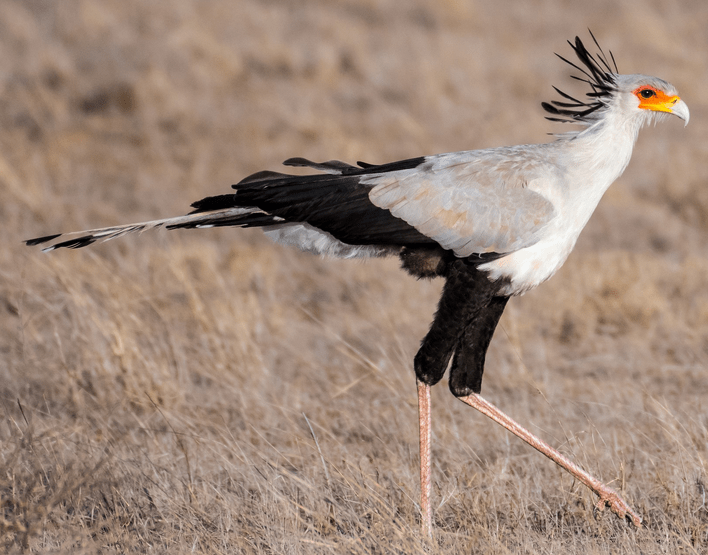
Recently, researchers in molecular genetics at the Carl von Linné Conservatory of Biological Systematics at Uppsala University in Sweden have admitted to an enormous, decades-long error. “We found a glitch in analysis program we used many decades,” says conservatory head Dr. Thorbald Thorbaldson. “Simple, but bringing a catastrophe. Several people resigned. One man became reindeer herder with the Lapps.”
Simply put, a decimal place was off by three orders of magnitude. DNA samples with a reported variance of – say – 2.7%, were actually only 0.0027% at variance. Dr. Thorbaldson: “Samples we thought quite different, indicating great evolutionary separation, are – well – not so different after all! Mildly speaking. With birds, it turns out there are far fewer “good species” and far more subspecies than we thought.”
How few? Sit down and hold your breath. Keep holding. Now read on.
“Careful reanalysis, ” reports Dr. Thorbaldson, “indicates there are probably 10 species of birds, with approximately 24,000 subspecies. Give or take a few, of course.”
Ten species? TEN? It makes you want to hang up your binoculars, take off your Tilley and anorak, climb back into bed and pull the blanket up over your head for a long, long while.

Obviously, the name of the ten species needed simplification, resulting in a certain uniformity. They are, alphabetically, with English translations of the scientific name in parentheses:
Hoopoe – Upupa omnimodia (universal hoopoe)
Sapayoa – Sapayoa incertaesedis (uncertain origin sapayoa)
Secretary-bird – Venator terrafirma (solid-ground hunter)
The Budgie – Primosittacus familiaris (social first-parrot)
The Chicken – Gallus assus (roasted chicken)
The Cuckoo – Cuculus horacustodis (time-keeper cuckoo)
The Duck – Anas mundus (world duck)
The Peep – Charadrius tibicinus (piper waterbird)
The Railbird – Erepus palus (marsh creeper)
The Songbird – Passerina cantata (sparrow-like singer)
Many of the water birds – penguins, cormorants, tubenoses, and auks for example – were discovered to not be birds at all, but fish. Similarly, the swifts and hummingbirds are actually insects, most closely related to damselflies. The Secretary-bird (pictured above), which as anyone can see looks like a feathered dinosaur, turned out to be ancestral to all the hawks, falcons, owls, nightjars and such. The Hoopoe holds a similar position for many egret and stork-like birds. Finally, that long-term ornithological bugaboo, the Sapayoa (a small manakin-like bird endemic from southern Panama to northwest Ecuador) is still of indecipherable lineage. “We’re pretty sure it is a bird…at least some of us are,” explains Dr. Thorbaldson, “but, as always, it seems completely unrelated to anything else. We don’t know what it is, and frankly we’re (expletive deleted) tired of looking at it.”
For a quick look at how the birds used to be organized, take a look at this chart, courtesy of the University of Sheffield. If you find Crows, Jays or Ravens on the chart, please let me know, because I couldn’t.
If you found this article plausible, you may be interested in other installments in our Early Spring Monograph Series (ESMS):
2012: Canyonland Roadrunner Captured on Film
2011: New Hummingbird Species Discovered in Los Angeles County!
2010: The Western Roof-Owl: Bird of Mystery
and not to be overlooked,
2026: Save the endangered Pacific Northwest Tree Octopus from Extinction
[Chuck Almdale, on behalf of Society 401]
Malibu Lagoon Field Trip Report: 24 March, 2013
We finally got to see the new lagoon layout without the fences and equipment. There’s a lot more water surface, especially when the lagoon outlet is closed and the level is higher than the “peninsula,” as it was today. Tens of thousands of little flags of several colors were everywhere; if the color means anything, I don’t know what it is. The ground looks quite barren until you look closely, when you’ll see a tiny plant next to nearly all the flags. The flags mark these plants, so that when weeds inevitably pop up, they’ll be flagless, and doomed to removal. Doomed!
Starting at the viewing area closest to the PCH bridge (henceforth the north platform), we checked out the ducks which, except for the Mallards, Gadwalls and Ruddy Ducks, have mostly left for the north. Swallows are returning: we saw a dozen Rough-winged over the channel, with a single male Barn Swallow sweeping the beach. We spent a long time looking at a Merlin in a sycamore at the edge of the golf course, trying to see if it actually had a head or not, with but one very fuzzy photo to show for it.
Tide was quite high; waves crashing over the offshore rocks, with Surf Scoters, Pacific, Red-throated and Common Loons, Horned and Eared Grebes, all moving into breeding plumage, threading their way through the long line of surfers busily thrashing the waves.
A large mixed flock of Willets, Whimbrels and Marbled Godwits, flying in from the southeast, dropped in near the end of our walk, joining the few Brown Pelicans and Double-crested Cormorants resting on the sand islands. Many of the cormorants have developed their white “eyebrows” – the two crests that give them their name, lending them an Andy Rooney appearance. The Snowy Plover winter colony was out foraging in two separate groups: 16 – including PV:YB – in the high tide wrack, and 17 at lagoon-edge a hundred yards away. Among the few gulls we found a Herring Gull and a Glaucous-wing Gull, both in adult alternate plumage. Glaucous-winged in SoCal are usually first-year birds; finding one in adult breeding plumage is very uncommon, at least for me. I’m guessing it’s the 2nd one I’ve ever seen at the lagoon.
The lagoon outlet was closed, so we went to Adamson House, where we found most of the passerines: Oak Titmouse, Bewick’s Wren, Yellow-rumped Warblers, Song Sparrows, and California Towhees were poking around the trees and brush, while 4 Nanday Parakeets sat in the top of the big sycamore tree.
It’s now become pointless to separately census birds in the channel area as, after they awake, they freely move back and forth the rest of the day. I have the impression that the ducks spend the night in the channel on one or more of the new islands, then spread out as the day warms.
Merlins typically show up briefly in fall and spring, so I guess this was our spring bird. The Elegant Terns have been absent since October, but you never know when Nanday Parakeets will appear. They fly often and far from their nesting areas in the nearby canyons, foraging for food. Cassin’s Kingbird was last seen in Feb.’12, and both swallow species left last August. Brewer’s Blackbirds are irregular – they’re nearly always over at the shopping center food courts, snatching fries, burger bits and whatnot, but they don’t often make it to the lagoon, at least on Sunday mornings.
Our next three field trips: Paramount Ranch to Malibu Creek Flowers & Bird Hike, 6 April, 8am; Walker Ranch in Placerita Canyon, 13 April 8:30am; Butterbredt Spring Campout 27-28 April, 8am; Malibu Lagoon, 28 April, 8:30am.
Our next program: Tuesday, 5 Apr., 7:30 pm. Birds and Large Dangerous Mammals of Tanzania, with Chuck Bragg. Meeting place is at Christine Reed Park at Wilshire & Lincoln Blvds. in Santa Monica. The usual reminders will be emailed from the blog.
NOTE: Our 10 a.m. Parent’s & Kids Birdwalk resumes on 28 April, 2013. The parking lot is back to normal.
Links: Unusual birds at Malibu Lagoon
Aerial photo of Malibu Lagoon from 9/23/02.
Prior checklists: July-Dec’11, Jan-June’11, July-Dec ’10, Jan-June ’10, Jul-Dec ‘09, and Jan-June ‘09.
Comments on Bird Lists Below
Total Birds: March total birds of 673 are 30% below average; low numbers are mainly in the Western Grebes, Double-crested Cormorants, Brown Pelicans and California Gulls, with the shortfall in those 4 species totaling over 370 birds.
Species Diversity: March 2013 with 61 species was 9% above 56.2 6-year average, a minor variance.
Summary of species diversity from the 6-year average so far: June -10%, July +10%, Aug. -6%, Sep. -20%, Oct. +5%, Nov +2%, Dec -4%, Jan +2%, Feb -8%, +9%. Still, the only constant is change.
10-year comparison summaries are available on our Malibu Lagoon Bird Census Summaries Page.
[Chuck Almdale]
|
2008 |
2009 |
2010 |
2011 |
2012 |
2013 |
||
| Malibu Census 2012 |
23-Mar |
22-Mar |
28-Mar |
27-Mar |
25-Mar |
24-Mar |
|
| Temperature | 65-75 | 50-60 | 70-80 | 54-61 | 60-75 | ||
| Tide Lo/Hi Height | H +4.2 | H +4.8 | H +5.48 | L +0.05 | H +3.64 | H +4.90 | Ave. |
| Tide Time | 1059 | 0728 | 0840 | 1216 | 1146 | 0806 | Birds |
| Brant | 1 | 0.2 | |||||
| Canada Goose | 3 | 0.5 | |||||
| Gadwall | 26 | 18 | 16 | 32 | 18 | 13 | 20.5 |
| American Wigeon | 4 | 4 | 14 | 3 | 4.2 | ||
| Mallard | 10 | 16 | 12 | 30 | 24 | 28 | 20.0 |
| Cinnamon Teal | 6 | 4 | 1.7 | ||||
| Northern Shoveler | 13 | 2 | 8 | 18 | 2 | 7.2 | |
| Northern Pintail | 1 | 5 | 1.0 | ||||
| Green-winged Teal | 8 | 4 | 1 | 10 | 11 | 5.7 | |
| Lesser Scaup | 1 | 0.2 | |||||
| Surf Scoter | 10 | 18 | 8 | 5 | 6.8 | ||
| Red-brstd Merganser | 10 | 3 | 1 | 4 | 2 | 12 | 5.3 |
| Ruddy Duck | 8 | 11 | 15 | 20 | 55 | 18.2 | |
| Red-throated Loon | 2 | 2 | 0.7 | ||||
| Pacific Loon | 5 | 15 | 3 | 3.8 | |||
| Common Loon | 1 | 1 | 0.3 | ||||
| Pied-billed Grebe | 1 | 1 | 4 | 1.0 | |||
| Horned Grebe | 2 | 1 | 0.5 | ||||
| Eared Grebe | 1 | 0.2 | |||||
| Western Grebe | 220 | 12 | 27 | 20 | 1 | 46.7 | |
| Brandt’s Cormorant | 2 | 2 | 1 | 1 | 1 | 1.2 | |
| Dble-crstd Cormorant | 33 | 36 | 42 | 90 | 30 | 15 | 41.0 |
| Pelagic Cormorant | 1 | 1 | 0.3 | ||||
| Brown Pelican | 320 | 170 | 184 | 89 | 40 | 35 | 139.7 |
| Great Blue Heron | 1 | 1 | 2 | 1 | 1 | 1.0 | |
| Great Egret | 1 | 2 | 1 | 1 | 1 | 1.0 | |
| Snowy Egret | 3 | 10 | 7 | 5 | 12 | 5 | 7.0 |
| Green Heron | 1 | 0.2 | |||||
| Blk-crwnd N-Heron | 1 | 0.2 | |||||
| Turkey Vulture | 2 | 3 | 2 | 1.2 | |||
| Osprey | 1 | 1 | 0.3 | ||||
| Cooper’s Hawk | 1 | 1 | 0.3 | ||||
| Red-shouldered Hawk | 1 | 1 | 0.3 | ||||
| Red-tailed Hawk | 2 | 2 | 2 | 2 | 1 | 1.5 | |
| Merlin | 1 | 0.2 | |||||
| Peregrine Falcon | 1 | 0.2 | |||||
| Virginia Rail | 1 | 0.2 | |||||
| Sora | 1 | 1 | 1 | 4 | 1.2 | ||
| American Coot | 53 | 85 | 92 | 153 | 20 | 170 | 95.5 |
| Blk-bellied Plover | 45 | 24 | 25 | 7 | 16.8 | ||
| Snowy Plover | 25 | 36 | 25 | 42 | 14 | 33 | 29.2 |
| Killdeer | 4 | 3 | 1 | 2 | 2 | 2.0 | |
| Black Oystercatcher | 1 | 2 | 0.5 | ||||
| American Avocet | 2 | 7 | 1.5 | ||||
| Spotted Sandpiper | 1 | 1 | 1 | 1 | 1 | 1 | 1.0 |
| Greater Yellowlegs | 1 | 1 | 0.3 | ||||
| Willet | 13 | 4 | 4 | 3 | 3 | 16 | 7.2 |
| Whimbrel | 27 | 3 | 1 | 18 | 28 | 12.8 | |
| Marbled Godwit | 13 | 12 | 2 | 12 | 6.5 | ||
| Ruddy Turnstone | 7 | 12 | 2 | 3.5 | |||
| Sanderling | 64 | 6 | 11.7 | ||||
| Western Sandpiper | 15 | 2 | 2.8 | ||||
| Least Sandpiper | 2 | 14 | 20 | 20 | 9.3 | ||
| Boneparte’s Gull | 2 | 4 | 1.0 | ||||
| Heermann’s Gull | 3 | 4 | 4 | 1.8 | |||
| Ring-billed Gull | 43 | 25 | 2 | 50 | 8 | 25 | 25.5 |
| Western Gull | 68 | 70 | 48 | 100 | 30 | 35 | 58.5 |
| California Gull | 29 | 180 | 27 | 1100 | 12 | 30 | 229.7 |
| Herring Gull | 1 | 1 | 0.3 | ||||
| Glaucous-wingd Gull | 1 | 11 | 1 | 1 | 2.3 | ||
| Caspian Tern | 5 | 1 | 2 | 5 | 3 | 2.7 | |
| Forster’s Tern | 2 | 1 | 0.5 | ||||
| Royal Tern | 3 | 0.5 | |||||
| Elegant Tern | 22 | 47 | 4 | 2 | 12.5 | ||
| Black Skimmer | 3 | 0.5 | |||||
| Rock Pigeon | 4 | 4 | 4 | 2 | 25 | 6.5 | |
| Mourning Dove | 2 | 2 | 2 | 1.0 | |||
| Blk-hooded Parakeet | 4 | 0.7 | |||||
| Anna’s Hummingbird | 1 | 2 | 3 | 2 | 1 | 1.5 | |
| Rufous Hummingbird | 1 | 0.2 | |||||
| Allen’s Hummingbird | 5 | 2 | 3 | 4 | 5 | 3.2 | |
| Belted Kingfisher | 1 | 1 | 1 | 1 | 0.7 | ||
| Black Phoebe | 6 | 6 | 6 | 12 | 5 | 5.8 | |
| Say’s Phoebe | 1 | 1 | 0.3 | ||||
| Cassin’s Kingbird | 1 | 0.2 | |||||
| Western Kingbird | 2 | 2 | 16 | 3.3 | |||
| Western Scrub-Jay | 1 | 1 | 0.3 | ||||
| American Crow | 6 | 6 | 4 | 6 | 3 | 8 | 5.5 |
| Rough-wingd Swallow | 6 | 30 | 3 | 2 | 6 | 12 | 9.8 |
| Barn Swallow | 1 | 1 | 0.3 | ||||
| Oak Titmouse | 1 | 0.2 | |||||
| Bushtit | 2 | 4 | 4 | 4 | 5 | 3.2 | |
| Bewick’s Wren | 1 | 1 | 1 | 0.5 | |||
| House Wren | 1 | 0.2 | |||||
| Northern Mockingbird | 2 | 2 | 2 | 1 | 2 | 1.5 | |
| European Starling | 3 | 20 | 8 | 16 | 7.8 | ||
| Ornge-crwnd Warbler | 7 | 1.2 | |||||
| Yellow-rumpd Warbler | 2 | 5 | 8 | 1 | 2.7 | ||
| Common Yellowthroat | 2 | 2 | 1 | 3 | 1 | 1.5 | |
| Spotted Towhee | 1 | 0.2 | |||||
| California Towhee | 1 | 2 | 1 | 2 | 1.0 | ||
| Savannah Sparrow | 5 | 0.8 | |||||
| Song Sparrow | 6 | 6 | 8 | 12 | 13 | 8 | 8.8 |
| White-crwnd Sparrow | 2 | 3 | 5 | 1.7 | |||
| Red-winged Blackbird | 2 | 6 | 2 | 1.7 | |||
| Brewer’s Blackbird | 1 | 0.2 | |||||
| Great-tailed Grackle | 6 | 7 | 2.2 | ||||
| Brwn-headed Cowbird | 2 | 3 | 0.8 | ||||
| House Finch | 4 | 4 | 6 | 20 | 19 | 2 | 9.2 |
| Lesser Goldfinch | 3 | 4 | 4 | 1.8 | |||
| Totals by Type | 23-Mar | 22-Mar | 28-Mar | 27-Mar | 25-Mar | 24-Mar | Ave. |
| Waterfowl | 89 | 74 | 70 | 99 | 101 | 115 | 91 |
| Water Birds-Other | 631 | 307 | 354 | 376 | 91 | 234 | 332 |
| Herons, Egrets | 5 | 11 | 12 | 7 | 14 | 7 | 9 |
| Raptors | 7 | 3 | 2 | 6 | 0 | 6 | 4 |
| Shorebirds | 203 | 113 | 87 | 71 | 65 | 92 | 105 |
| Gulls & Terns | 152 | 313 | 133 | 1270 | 53 | 94 | 336 |
| Doves | 6 | 4 | 6 | 4 | 0 | 25 | 8 |
| Other Non-Pass. | 7 | 5 | 6 | 8 | 0 | 11 | 6 |
| Passerines | 47 | 91 | 53 | 94 | 62 | 89 | 73 |
| Totals Birds | 1147 | 921 | 723 | 1935 | 386 | 673 | 964 |
| 2008 | 2009 | 2010 | 2011 | 2012 | 2013 | ||
| Total Species | 23-Mar | 22-Mar | 28-Mar | 27-Mar | 25-Mar | 24-Mar | Ave. |
| Waterfowl | 10 | 11 | 7 | 6 | 8 | 6 | 8.0 |
| Water Birds-Other | 7 | 7 | 8 | 11 | 4 | 11 | 8.0 |
| Herons, Egrets | 3 | 2 | 4 | 3 | 3 | 3 | 3.0 |
| Raptors | 5 | 2 | 1 | 3 | 0 | 5 | 2.7 |
| Shorebirds | 12 | 12 | 9 | 7 | 7 | 6 | 8.8 |
| Gulls & Terns | 8 | 7 | 8 | 9 | 4 | 6 | 7.0 |
| Doves | 2 | 1 | 2 | 2 | 0 | 1 | 1.3 |
| Other Non-Pass. | 3 | 3 | 2 | 4 | 0 | 4 | 2.7 |
| Passerines | 13 | 15 | 14 | 18 | 9 | 19 | 14.7 |
| Totals Species | 63 | 60 | 55 | 63 | 35 | 61 | 56.2 |
Bobcat Trapping & Malibu Lagoon Update
Here Kitty, Kitty…
(Bobcat Trapping Endangers Desert Life)
It’s not widely known among desert wildlife lovers that they themselves may sometimes be one of the biggest threats to the wildlife they love. That’s certainly true in the case of the desert folks who love to post photos of the bobcats coming to visit their homes or drink from the birdbath in their yard. More…
The above article, written by “Steve” was published on 12/7/12 by The Sun Runner – The Magazine of the Real California Desert online magazine.
It was sent to us by Mary Prismon, SMBAS conservation co-chair.
*******************************
Malibu Lagoon Project Winding Down
The construction fences are down, the paths are open, the birds are busy and excited, most of the plants are in, but the parking lot may still be a bit small, and a shade structure is unfinished.
Some recent news: Native Seeds Spread at Malibu Lagoon.
By Jessica E. Davis, from Malibu Patch. 3/13/13
The official ribbon-cutting opening of the lagoon will be on Friday, 5/3. SMBAS will be there with telescopes to point out the birds to everyone. Join us. Time to be announced.
[Chuck Almdale]



 SANTA MONICA BAY AUDUBON SOCIETY BLOG