Free email delivery
Please sign up for email delivery in the subscription area to the right.
No salesman will call, at least not from us. Maybe from someone else.
Picathartes – Sexual equality for 44 million years | BBC Discover
[Posted by Chuck Almdale, submitted by Lillian Johnson]
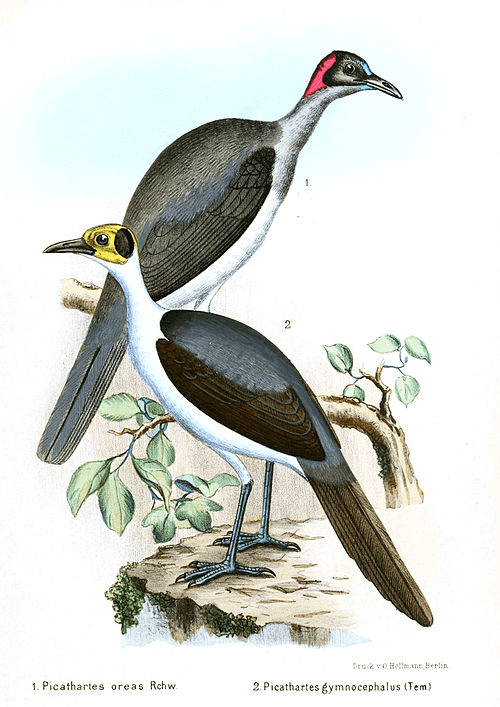
The Picathartes family of birds has only two member species, both very elegantly plumaged, and is among the top three families of birds I dearly wanted to see and probably never will.
Forget gender wars! These bizarre birds have had equality sorted for some 44 million years – watch them in action
These ground-loving birds mate for life and work together to protect their young. The strange-looking Picathartes have lived in the Congo for 44 million years. Bald-headed birds that mate for life and breed in the rainy season, they build their nests out of mud on the underside of overhanging rocks on a cliff or cave roof to stay dry. This has also earned them the alternative name of rockfowls. The ground-loving birds have intriguing ways of working together and both male and female build their nest, incubate their eggs and feed their young.
Read in BBC Wildlife Magazine: https://apple.news/AUSu0J0nYRMClw_qBE7BfHw
Evolutionary History and Biogeography of Passerines, with Diego Blanco: Zoom Evening Meeting reminder, Tuesday, 3 March, 7:30 p.m.
You are all invited to the next ZOOM meeting
of Santa Monica Bay Audubon Society
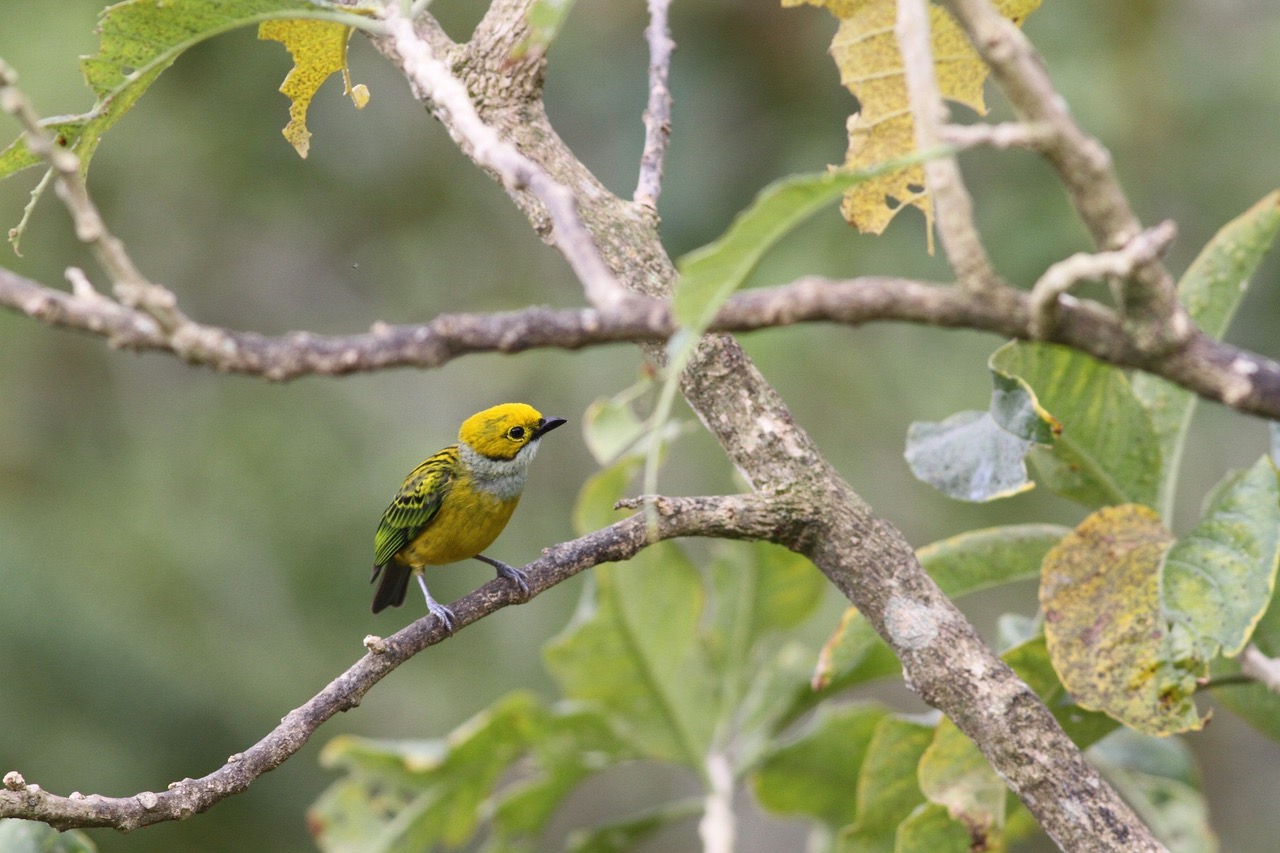
Evolutionary History and Biogeography of Passerines, with Diego Blanco.
Zoom Evening Meeting, Tuesday, 3 March, 7:30 p.m.
Zoom waiting room opens 7:15 p.m.
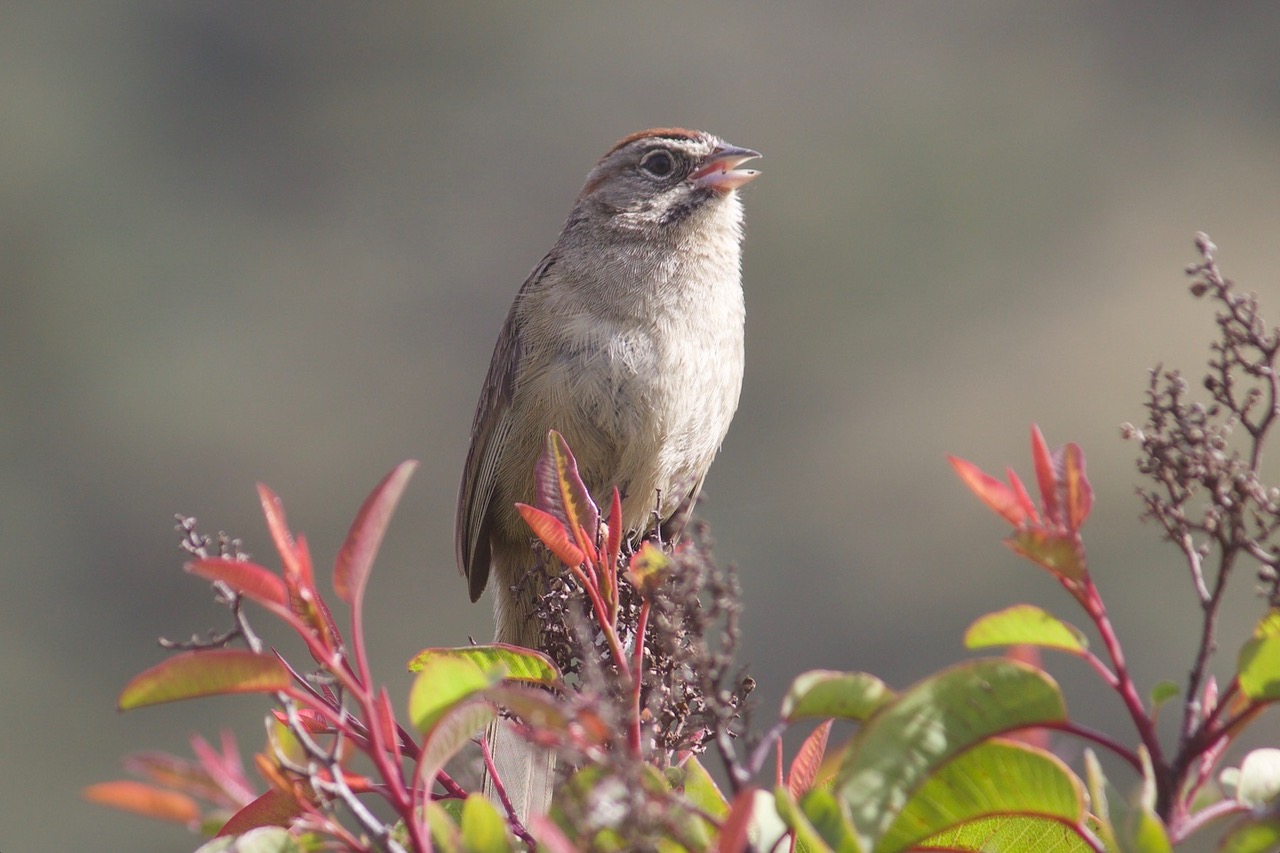
Diego Blanco of the Moore Laboratory of Ornithology will present an Evolutionary History and Biogeography of Passerines. Topics will include song bird behavior, evolution, and conservation. Diego will describe the avian family tree and explain how songbirds have spread across the globe and how they’ve changed over time.
|
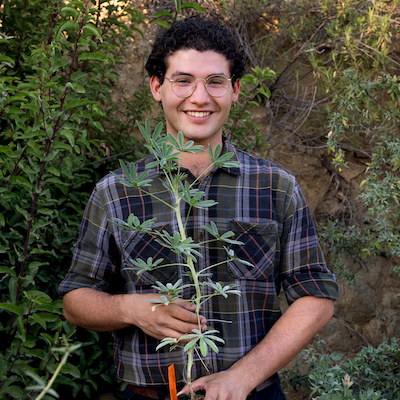
Before Diego Blanco became an Outreach and Research Assistant at the Moore Lab of Zoology at Occidental College, he was a Los Angeles area birder and naturalist. He enjoys hiking, camping, and documenting biodiversity through photography and illustration. Diego graduated from Cornell University in 2022 and has worked as an administrative assistant at the Theodore Payne Foundation for Wild Flowers and Native Plants where he taught field sketching and bird identification classes. He spent the summer 2024 season as a point count technician with the Klamath Bird Observatory conducting surveys on bird populations and plant communities in Whiskeytown National Recreation Area and Lassen Volcanic National Park in Northern California.
(If the button above doesn’t work for you, see detailed zoom invitation below.)
Meeting ID: 825 7750 0786
Passcode: 993523
One tap mobile
+16694449171,,82577500786#,,,,*993523# US
+16699009128,,82577500786#,,,,*993523# US (San Jose)
Joining Instructions
https://us02web.zoom.us/meetings/82577500786/invitations?signature=g0Cp2iapmwGEhBXYp3jcmkGKZN5-7oZ5-7D2N4WEoAU
Sunny day at Madrona Marsh: 14 Feb. 2026
[Text by Jean Garrett, photos by Ann Flower & Elyse Jankowski, posted by Chuck Almdale]
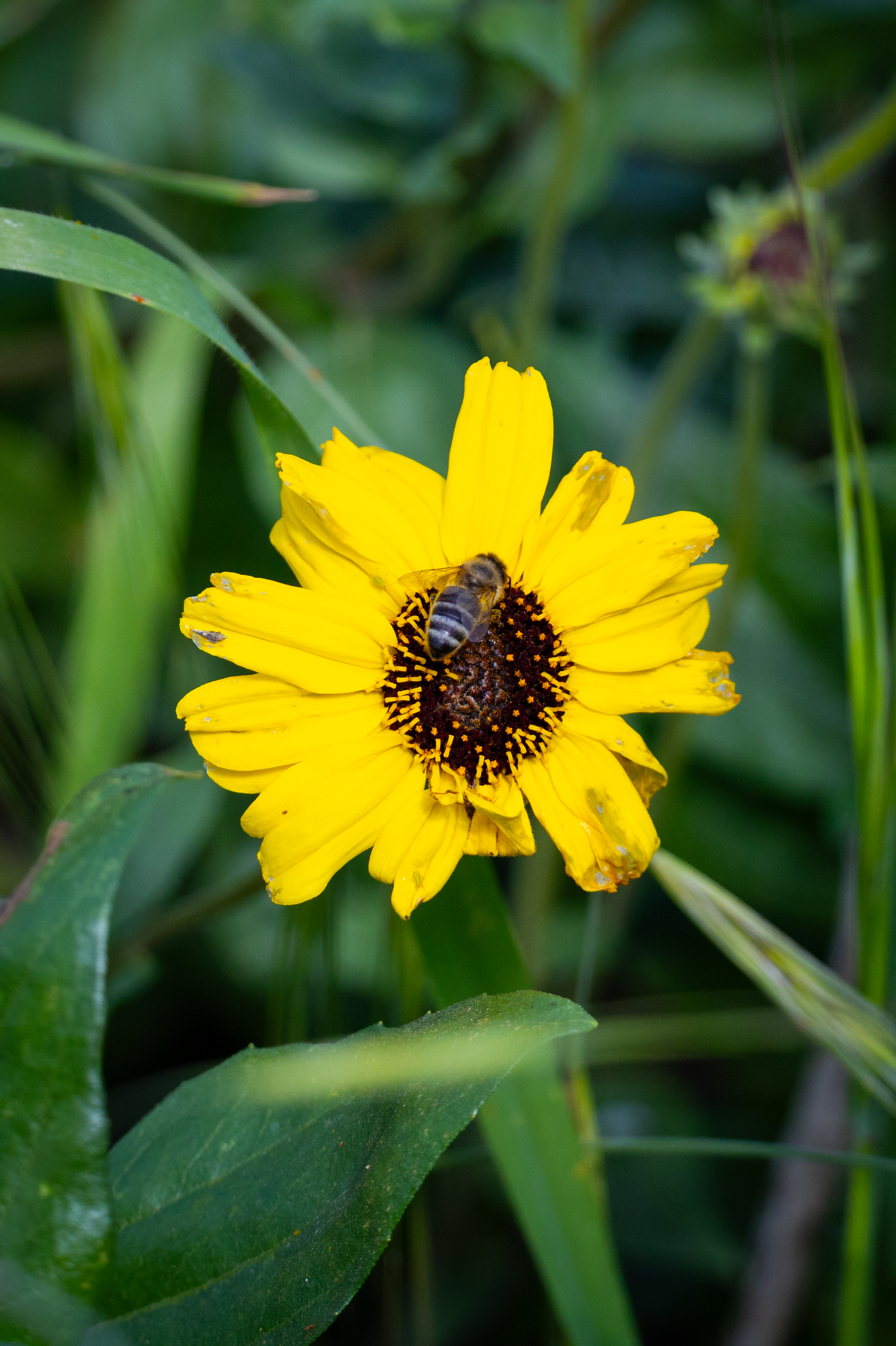
(Elyse Jankowski 2-14-26)
The trail at the entrance was enchanting with flowering Bush Sunflowers, and then orange and yellow poppies blossoming in the open areas. Of course, where there are sunflowers there are Lesser Goldfinches busy chattering.
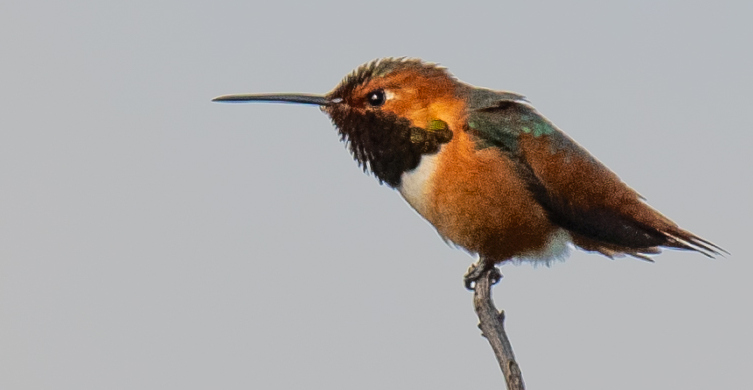
(Ann Flower 2-14-26)
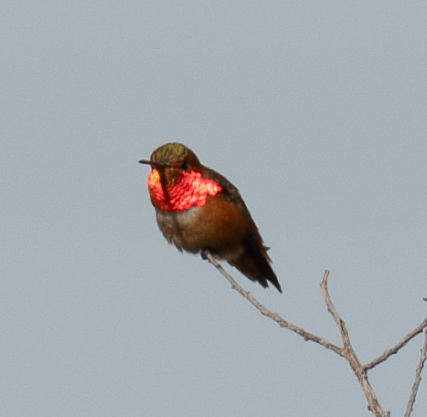
An Allen’s Hummingbird was out sunning himself on this wonderful spring day with Red-winged Blackbirds heard and seen in the background.
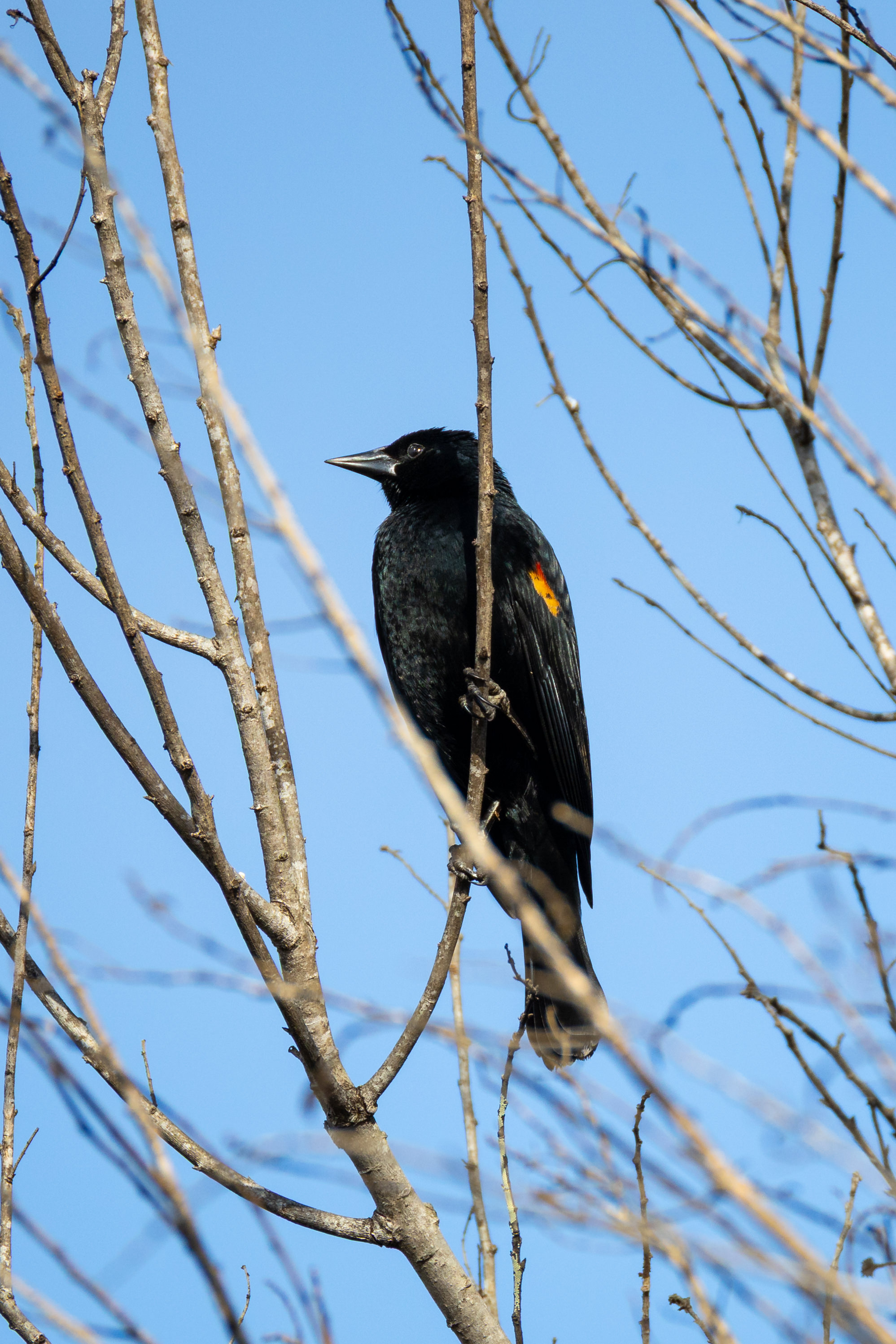
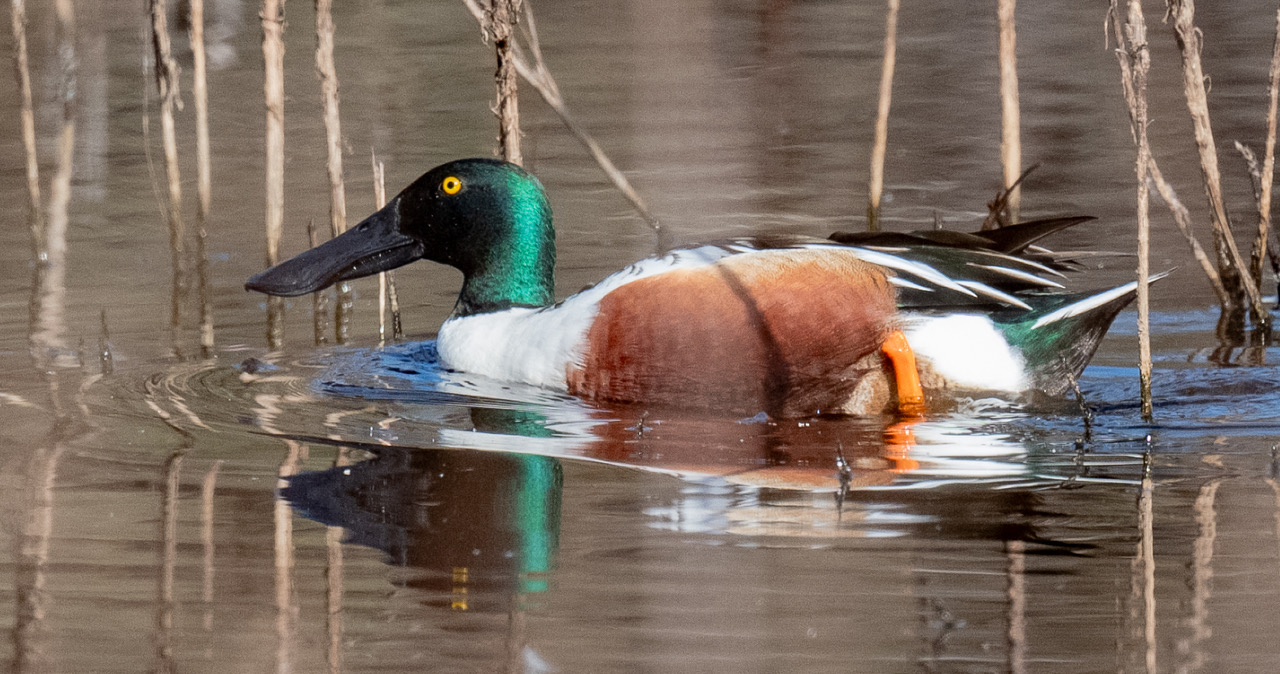
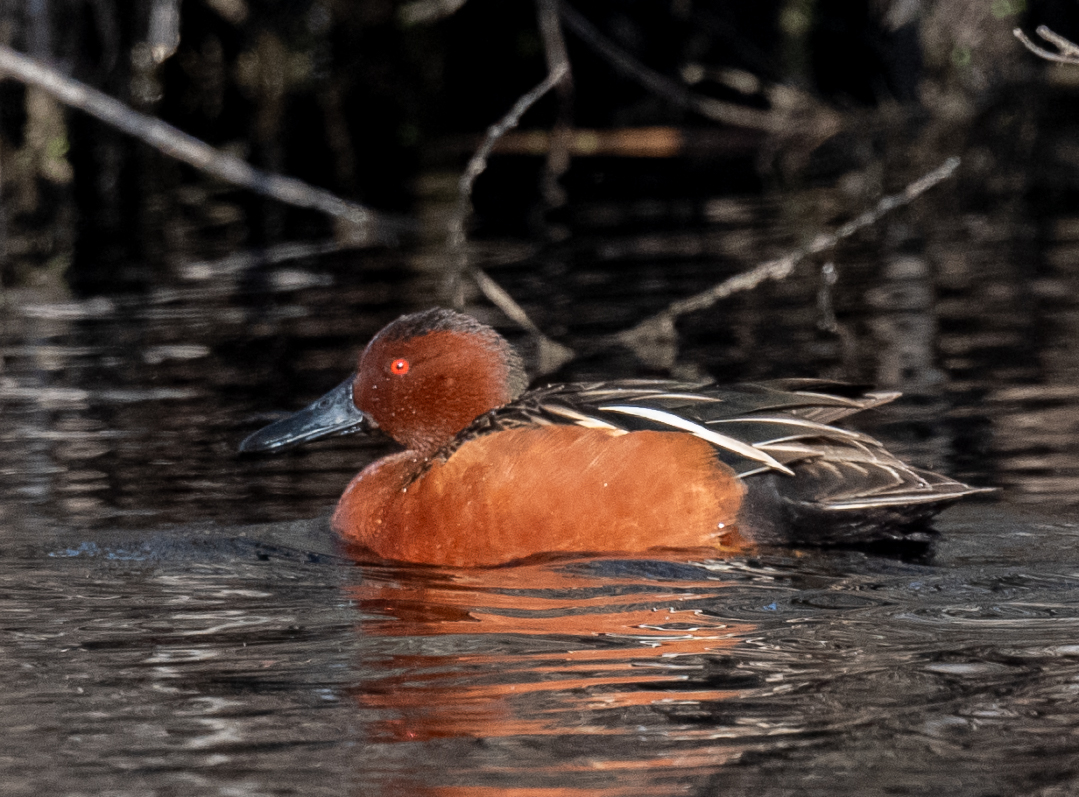
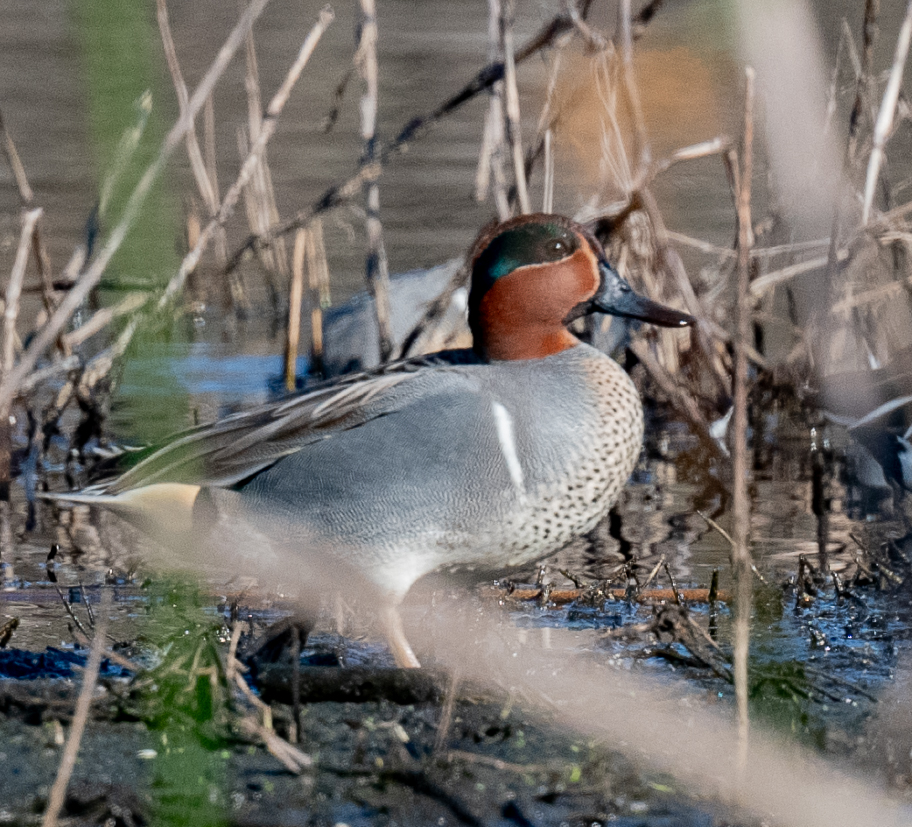
The previous rains had made the whole marsh area wet with the creeks fairly full creating a heaven for ducks. Going along the right side of the marsh, there were several Northern Shovelers, American Wigeons, Cinnamon Teals, and a Green-winged Teal swimming in the pond.
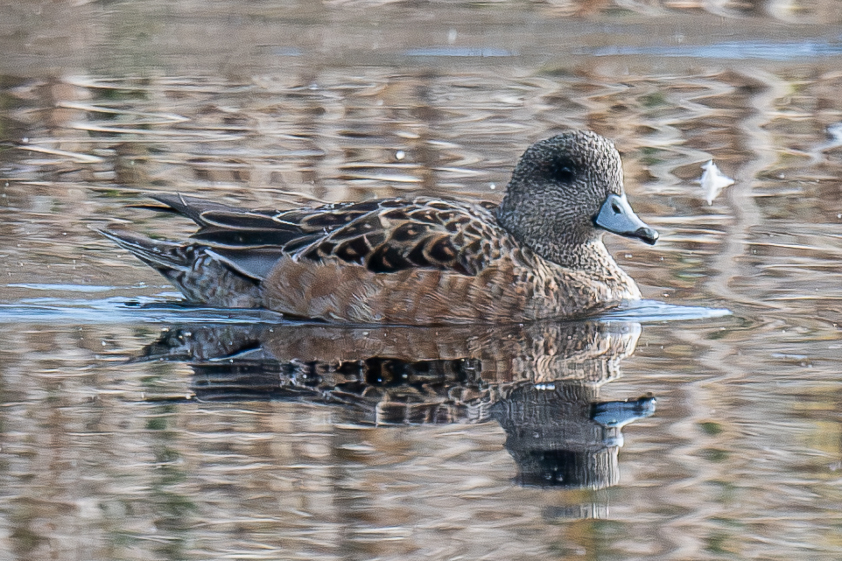
American Wigeons have a lovely pale blue in the secondary wing feathers, not often visible.
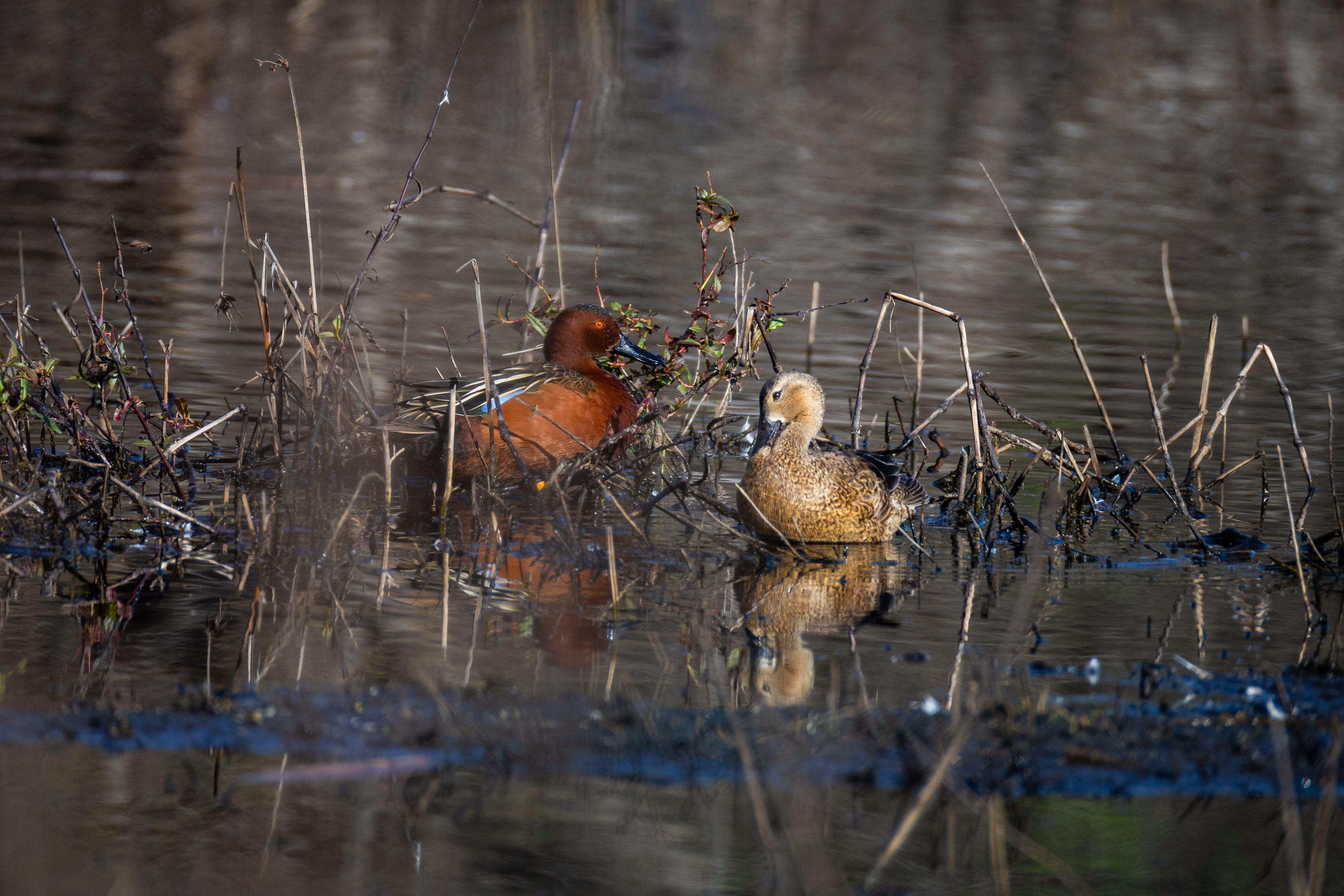
(Elyse Jankowski 2-14-26)
Cinnamon Teal have the longest bill of the three Teals, but it’s still much shorter than the Shoverler’s.
It was there that 4 shorebirds landed near the water but it was dark, the sight was fleeting, and after several walks climbing through the brush we never saw them again. Although w reported a “sp. Shorebirds,” the best guess was one of the dowitchers. By walking in and out of the ponds we could see several Canada Geese and a few Mallards and one Coot.
White-crowned sparrows were singing in the bushes but not seen until later. But we not only heard the House Wren, we found it. When it comes to wrens it seems if you hear it then you never see it or if you see it the bird will not sing.
(Elyse Jancowski 2-14-26)
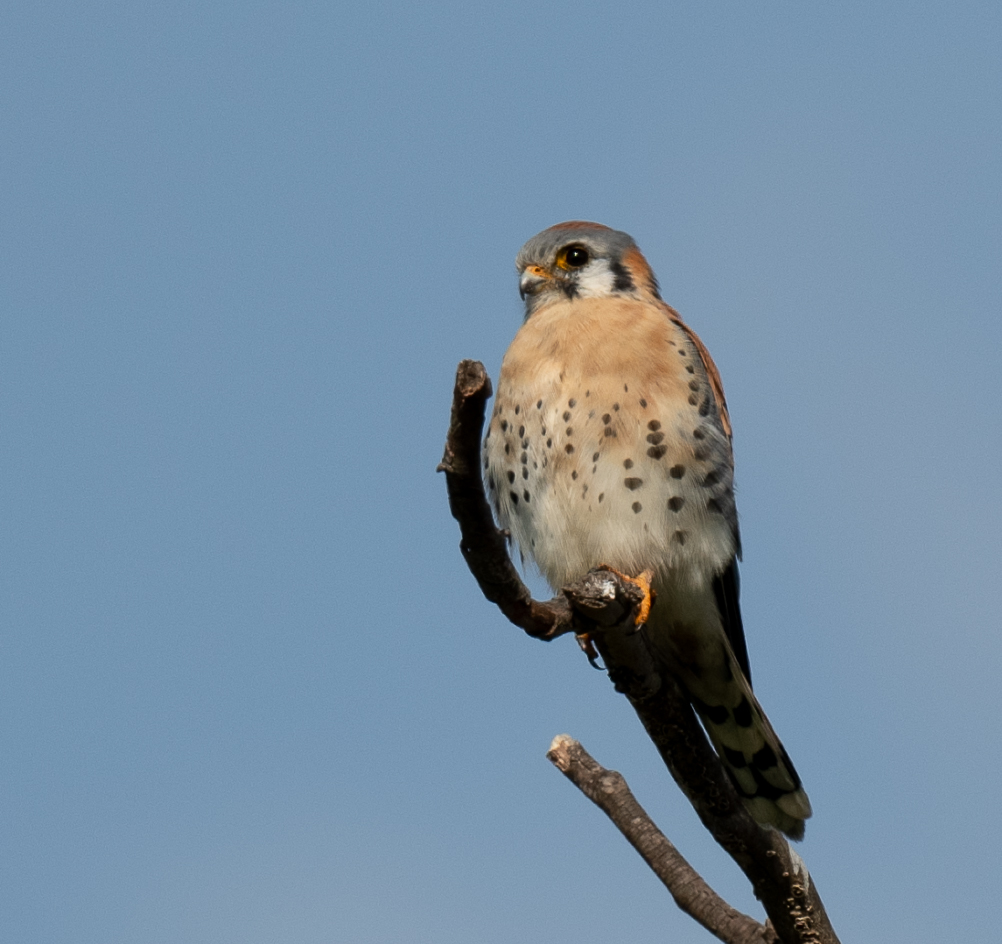
Out in the open field, several American Kestrels were posing but not well enough (from the back-lighting) to tell if male or female. One Kestrel with the usual red chest and high up in a tree, looked big enough to be a Cooper’s Hawk but a photograph confirmed it a Kestrel.
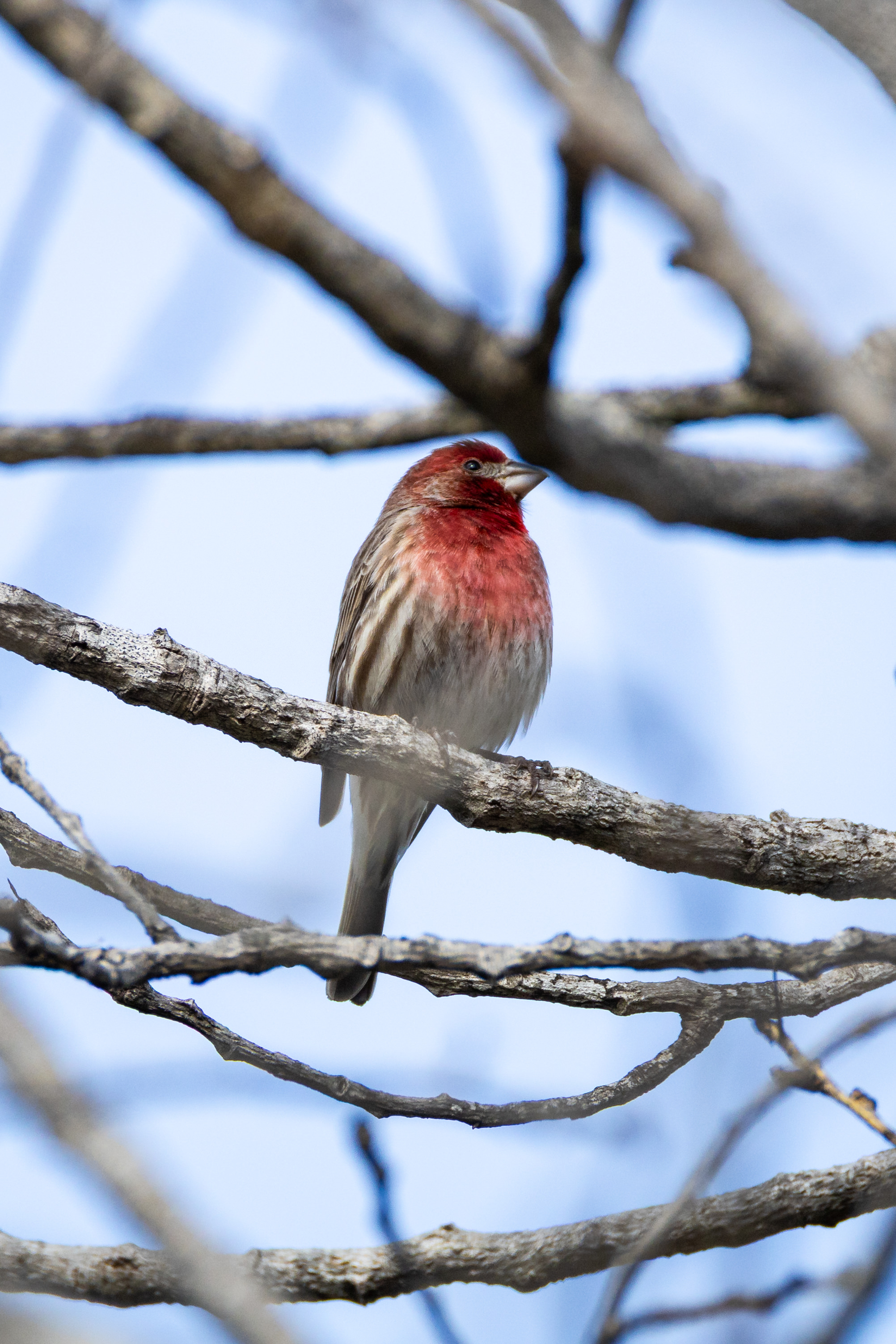
The Hawks were out hunting giving us a Red-shouldered, Cooper’s, and Red-tailed Hawks. On a branch, there was a good look at a Purple Finch with the buffier background on the chest making the streaks look softer than the streaks on a House Finch.
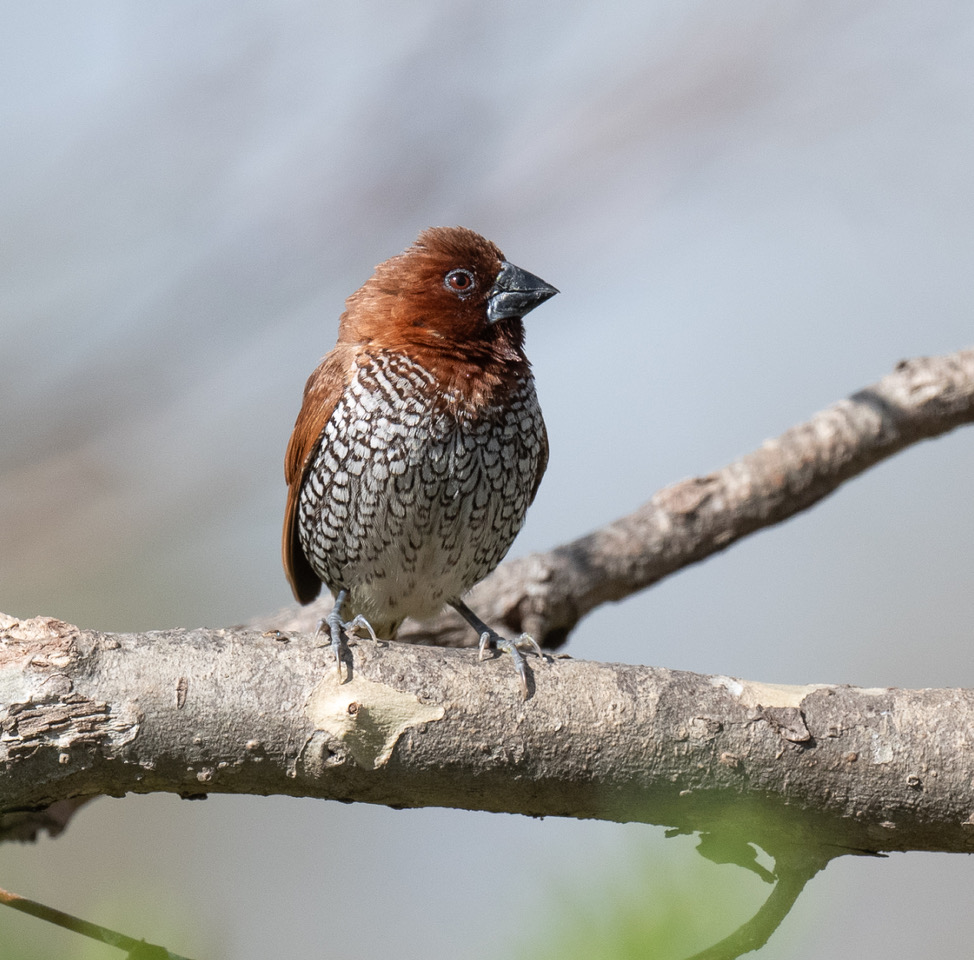
At the end of the trip, we went over to the bird feeder near the building and could see Scaly-breasted Munias up close and the spectacular native garden.
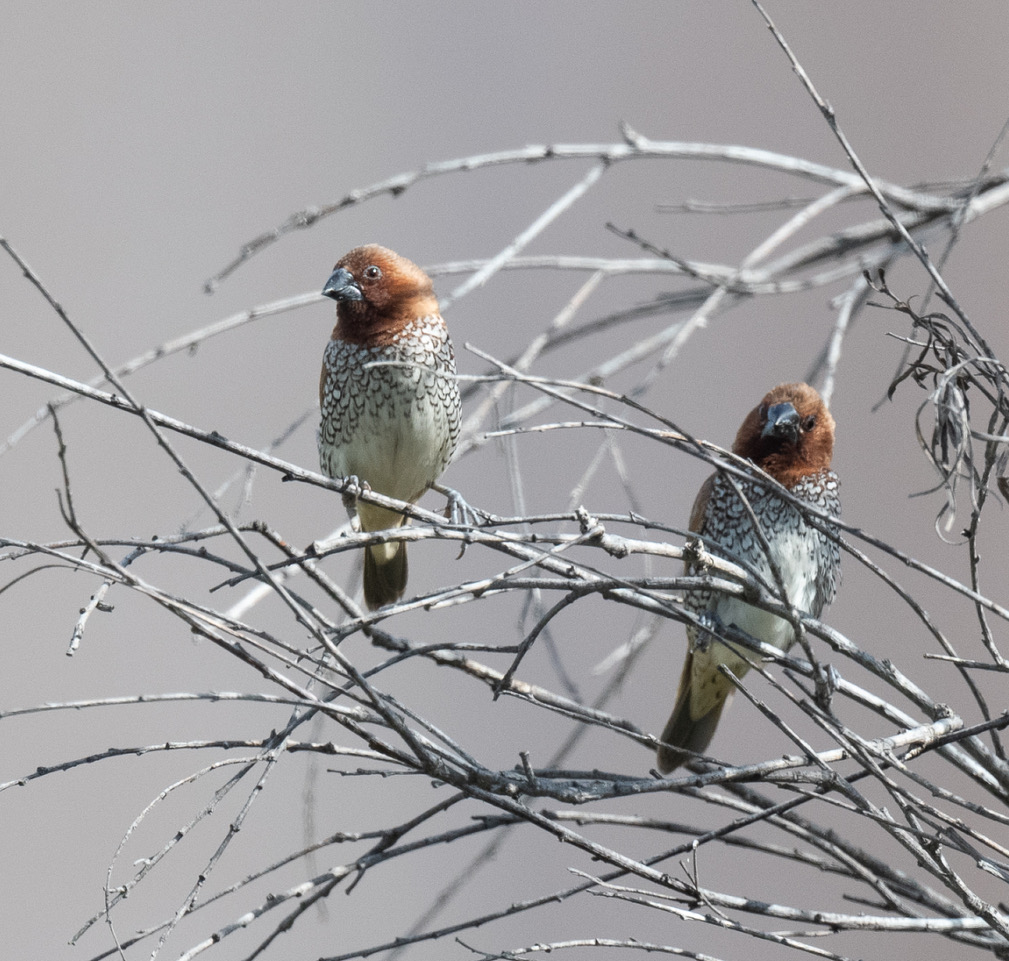
Munias are native to south Asia and have long been popular cage birds due to their attractive songs and plumage. They also frequently escape their cages and are now resident near metropolitan areas all around the world.
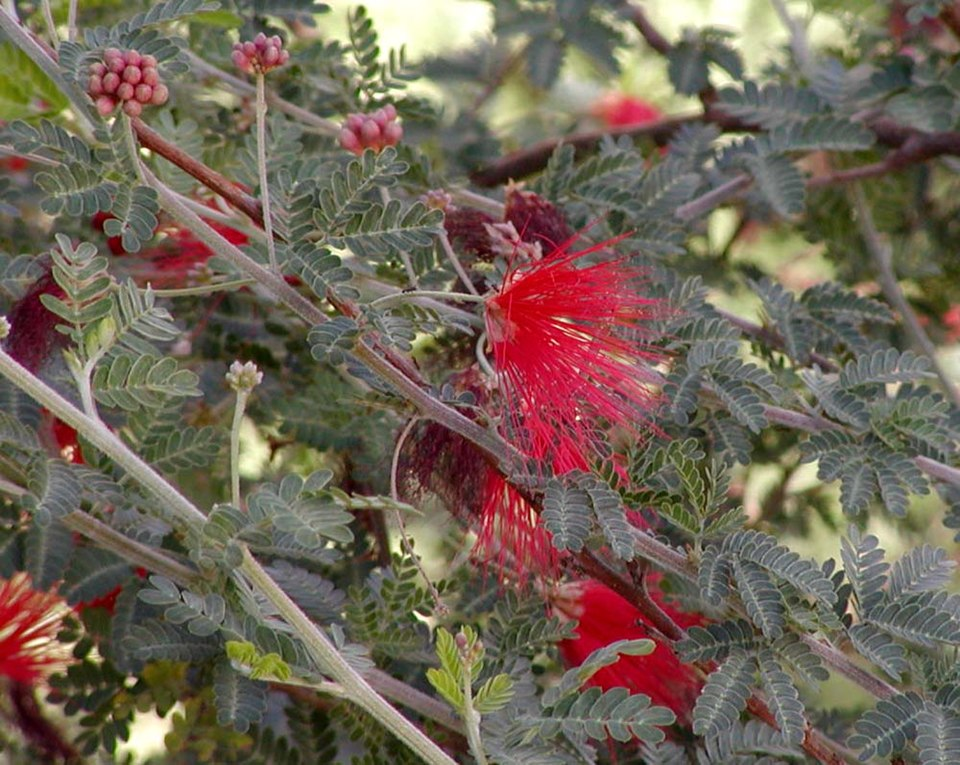
It’s the only place where I have seen a beautifully grown Fairy Duster (Calliandra californica) and as someone pointed out, the sandy soil may have been the secret. All in all, the trip turned out to be a beautiful Spring day before the next three heavy rain storms arrive.
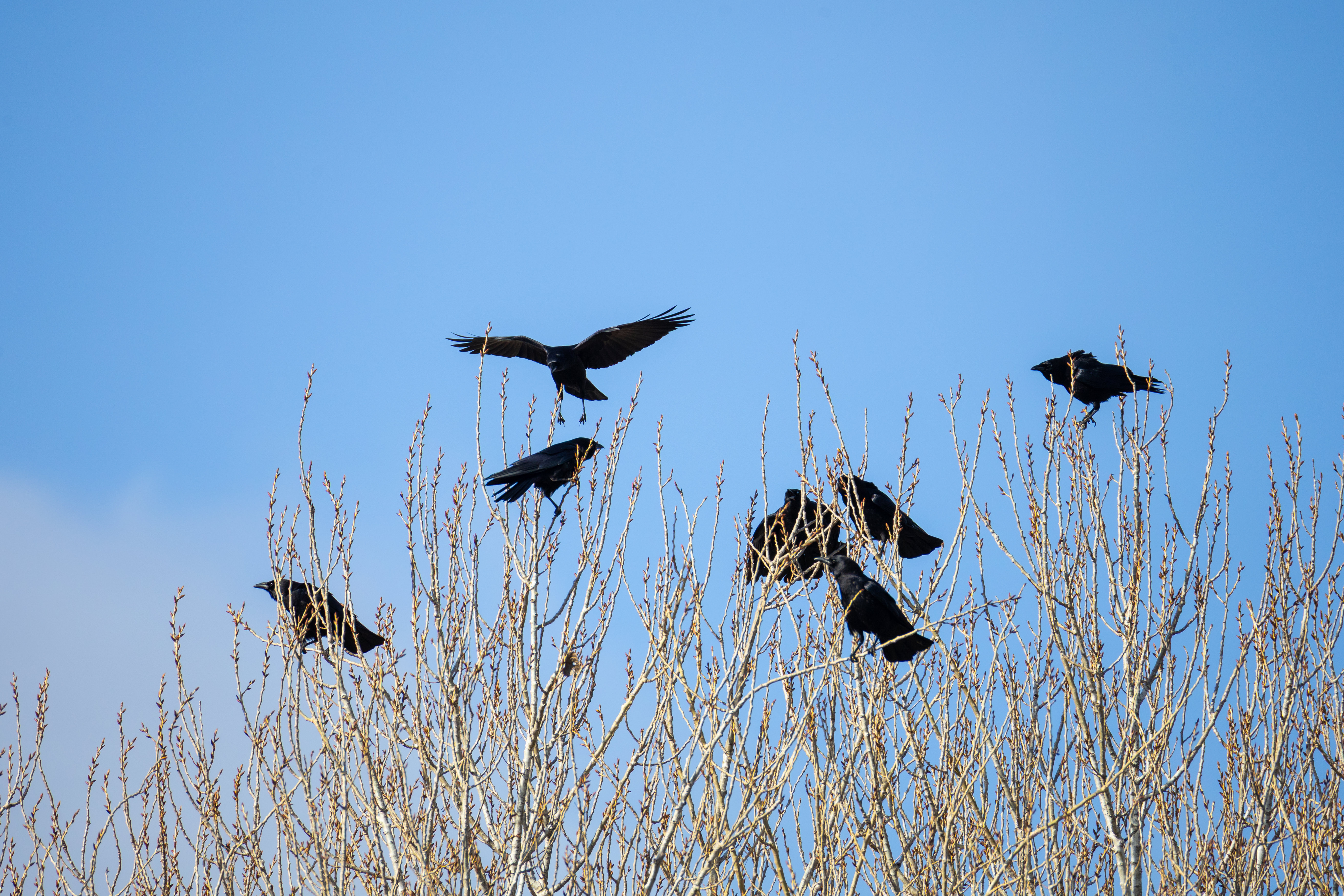
Is it an accident that “crow” and “crowd” are similarly spelled?
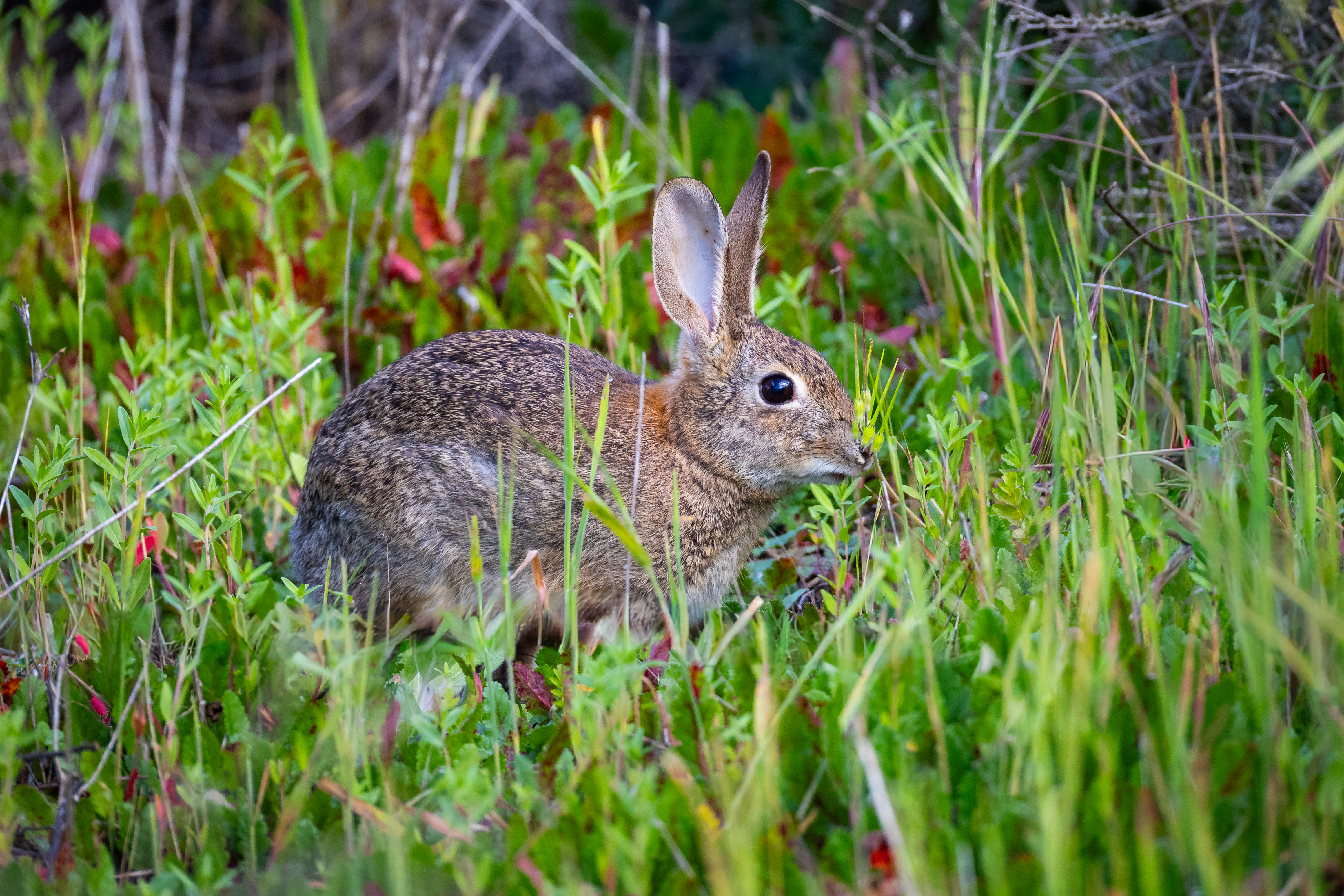
And, just to prove that birders don’t only look at birds and flowers, but admire our furry mammals as well…
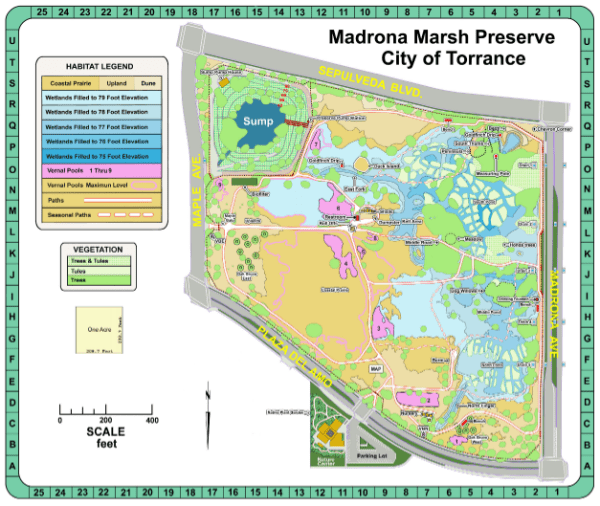
In the upside down map below, north is at the bottom, so no…you haven’t lost your mind.
As always, many thanks to our photographers: Ann Flower & Elyse Jankowski
| Madrona Marsh Trip List | 2/14/26 | 2/8/25 | 2/10/24 | 2/11/23 | 12/10/16 |
| Canada Goose | 8 | 32 | 8 | X | |
| Cinnamon Teal | 8 | X | |||
| Northern Shoveler | 13 | 40 | X | ||
| Gadwall | 2 | X | |||
| American Wigeon | 7 | 35 | 2 | X | 6 |
| Mallard | 4 | 15 | 50 | X | 6 |
| Green-winged Teal | 2 | 5 | X | ||
| Ring-necked Duck | 1 | ||||
| Hooded Merganser | 2 | X | |||
| Rock Pigeon | 6 | 8 | X | 8 | |
| Eurasian Collared-Dove | 1 | X | |||
| Mourning Dove | 2 | 6 | 12 | X | 50 |
| White-throated Swift | 12 | ||||
| Anna’s Hummingbird | 2 | 2 | 3 | X | 3 |
| Allen’s Hummingbird | 3 | 3 | 4 | X | 9 |
| American Coot | 3 | 2 | X | 5 | |
| Killdeer | 1 | X | |||
| Greater Yellowlegs | X | ||||
| Sandpiper sp. | 4 | ||||
| Ring-billed Gull | 2 | ||||
| Western Gull | 4 | ||||
| California Gull | X | 2 | |||
| Gull sp. | 2 | ||||
| Great Egret | 1 | ||||
| Green Heron | X | ||||
| Black-crowned Night-Heron | X | ||||
| Sharp-shinned Hawk | 1 | ||||
| Cooper’s Hawk | 2 | ||||
| Red-shouldered Hawk | 2 | 1 | 1 | ||
| Red-tailed Hawk | 1 | 1 | 2 | X | 2 |
| Downy Woodpecker | 1 | 1 | |||
| Northern Flicker (Red-shaft) | 2 | 1 | 10 | X | 2 |
| No. Flicker (prob. Red x Yellow) | (1) | ||||
| American Kestrel | 3 | 1 | 1 | X | 3 |
| Merlin | 1 | ||||
| Ash-throated Flycatcher | 1 | ||||
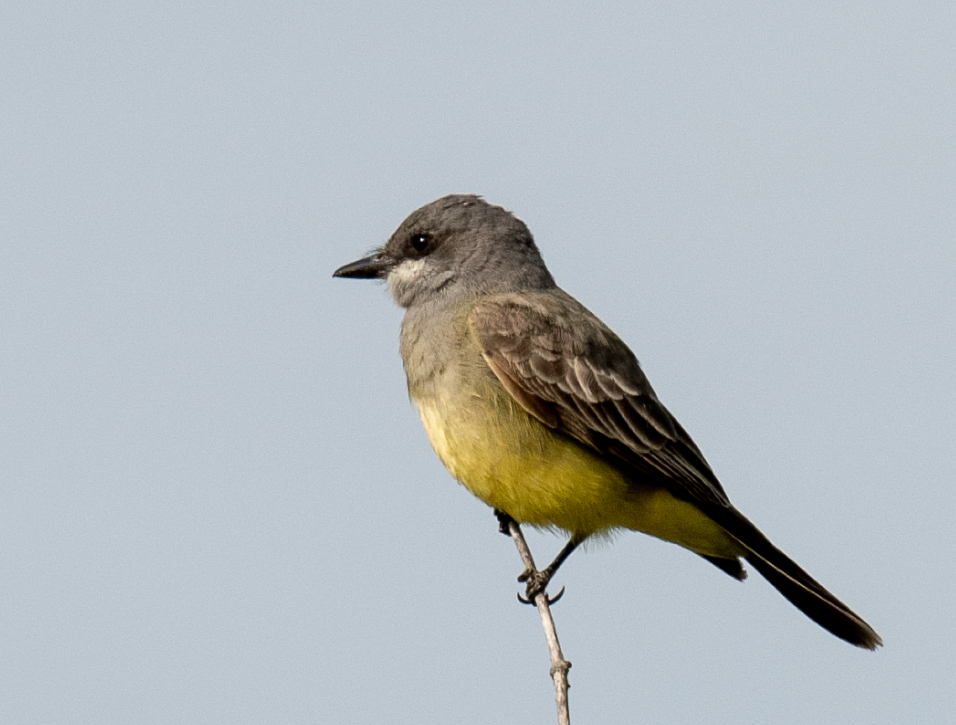
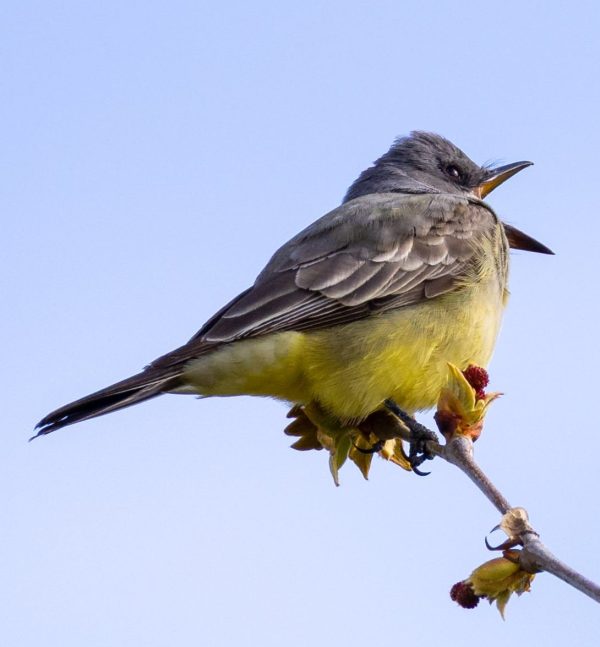
| Cassin’s Kingbird | 4 | 4 | 2 | X | 6 |
| Black Phoebe | 2 | 3 | 5 | X | 6 |
| Say’s Phoebe | 1 | 2 | 1 | X | 1 |
| California Scrub-Jay | 1 | ||||
| American Crow | 28 | 6 | 12 | X | 4 |
| Common Raven | 2 | 2 | 2 | X | 2 |
| No. Rough-winged Swallow | 1 | 2 | |||
| Bushtit | 1 | 8 | 18 | X | 50 |
| Swinhoe’s White-eye | 1 | ||||
| Ruby-crowned Kinglet | 8 | 12 | |||
| Cedar Waxwing | X | 20 | |||
| Blue-gray Gnatcatcher | 1 | 6 | 8 | X | 13 |
| House Wren | 1 | 1 Heard | |||
| Northern Mockingbird | 1 | ||||
| European Starling | 3 | 30 | 5 | X | 8 |
| Western Bluebird | 3 | ||||
| Hermit Thrush | 1 Heard | ||||
| Scaly-breasted Munia | 8 | 20 | 20 | 45 | |
| Pin-tailed Whydah | 18 | ||||
| House Finch | 3 | 20 | 5 | X | 20 |
| Purple Finch | 2 | ||||
| Lesser Goldfinch | 15 | 50 | X | 3 | |
| American Goldfinch | 60 | 8 | X | 45 | |
| Lark Sparrow | 2 | ||||
| Chipping Sparrow | 4 | 6 | |||
| Brewer’s Sparrow | 2 | ||||
| Fox Sparrow | 1 | ||||
| White-crowned Sparrow | 13 | 30 | 15 | X | 60 |
| Golden-crowned Sparrow | 2 | X | 2 | ||
| Savannah Sparrow | 4 | X | 4 | ||
| Song Sparrow | 2 | 8 | X | 2 | |
| Lincoln’s Sparrow | 1 | 1 | X | 3 | |
| California Towhee | 2 | 4 | 1 | X | 2 |
| Western Meadowlark | 1 | X | 10 | ||
| Red-winged Blackbird | 8 | 40 | 31 | X | 2 |
| Brewer’s Blackbird | 5 | ||||
| Great-tailed Grackle | 3 | 1 | X | ||
| Black-and-White Warbler | 1 | 1 | |||
| Orange-crowned Warbler | 2 | X | 6 | ||
| Common Yellowthroat | 1 | 3 | |||
| Yellow-rumped Warbler | 2 | 8 | 40 | X | 10 |
| Black-throated Gray Warbler | 1 | X | 1 | ||
| Townsend’s Warbler | 1 | ||||
| House Sparrow | 2 | 6 | 1 | ||
| Total Species – 77 (forms-80) | 38 (45) | 43 (44) | 41 (42) | 46 | 51 |
Upcoming San Diego Bird Festival: Feb. 25 – Mar. 1, 2026
[Posted by Chuck Almdale]
Birding festivals were very popular for many years. Then Covid-19 hit and the idea of getting together in large groups to talk about your hobby or vocation kind of went out the window, and they just…stopped. Our blog site still has a page devoted to California bird festivals which I diligently maintained for over a decade. I haven’t updated it since 2019, and the page still shows “26-Mar 1 Wed – Sun 2020: 24th Annual San Diego Bay Bird Festival.” But for Covid-19 this coming festival would probably read “30th Annual…” If I had learned of it earlier, I would have posted this earlier.
I encourage every birder in the area to go to this festival if you have the time free. If you have only one or two days free, you can probably sign up for a bird walk on those days. If you’ve never been to a bird festival, they are lots of fun with artwork and books and ‘stuff’ to buy, lectures to attend, dinners, bird walks led by local experts. It’s a tremendous bang for your birding buck. Meet other birders, see new birds, learn a lot.
Read more about it at San Diego Bird Festival, where you can also view their programs and register.
Or just Signup!
Or see their entire program!
Here’s an announcement I swiped off an email from Pasadena Audubon Society website.
San Diego Bird Festival Invites Nature Lovers to Marina Village:
“Where Passion Takes Flight”
SAN DIEGO, CA. The San Diego Bird Alliance is proud to announce the return of the San Diego Bird Festival, scheduled from February 25 to March 1, 2026, at the Marina Village Conference Center in Mission Bay. This premier five-day celebration centered around the theme “Where Passion Takes Flight” invites birders of all backgrounds, abilities, and experience levels to explore the region’s unique biodiversity.
The 2026 festival features an expanded lineup of world-class keynote speakers across iconic San Diego venues. Highlights include Jason Hall at Festival HQ, Makeda Dread Cheatom and Marilú Lopez-Fretts at the WorldBeat Cultural Center, Dexter Patterson at the San Diego Natural History Museum, and birding legend Kenn Kaufman at the Hyatt Regency.
“Our keynote series anchors each day, offering fresh perspectives on birds, culture, creativity, and conservation,” says the festival team. Beyond presentations, the festival offers high-demand “Signature Programs” such as Pelagic Birding trips, Birding the Border excursions, and the 100 or More Challenge.
New “Awe-Factor” programs debuting in 2026 include:
- A Walk with the Raptors: An exclusive outing with Sky Falconry featuring close-up encounters with birds of prey.
- Birding Beyond Binoculars: A nature journaling masterclass focused on mindful observation.
- 1st Annual Bird Film Festival: Featuring the debut of the documentary Hawkwatch.
- Walk, Roll, and Stroll: An accessible outing designed for mobility, sensory, and cognitive needs.
The festival also fosters a vibrant social community with daily gatherings at the Uncommon Saloon, featuring local craft beer and bird trivia. Families are encouraged to join the Free Community Days at Marina Village or attend the Bird-day Cake celebration on Sunday, March 1, to close the event.
Visit www.sandiegobirdfestival.org for more information. Early registration is highly recommended for limited-capacity trips and keynotes.
Birding Adventures Videos | YouTube
Some years ago we used to watch “Birding Adventures with James Currie” which appeared for ten or so seasons on NBC Sports and on Discovery TV. We saw only two or three seasons before it disappeared. It was kind of goofy, but fun and birdy. It did give the feel for places only an avid birder would want – perhaps slaver and pant – to go. The photography was not so magnificent that one continually wondered just how did they get that shot??!! Anyone who’s gone birding and gotten less-than-desired glimpses of a bird (and if this hasn’t happened to you you’re either not a birder, blessed, extremely lucky, or really pushy and despised by your fellow birders) will empathize with the film crew. All-in-all, it was a fun show, well worth the watching.
A few weeks or months back a blog reader shared their appreciation for something I’d posted which gave them the feel of being out birding. They’d missed that as their health was no longer as good as it used to be and they couldn’t get out of the house. Since then I’ve been keeping my eyes open, but found little. Then I remembered that TV show, and managed to track some episodes down on the web. I hope they fill the bill! (pun intended).
You can read about James Currie here.
This link below goes to A Wild Connection, which describes itself as:
… a collaboration between National Geographic wildlife TV host/producer James Currie and renowned cinematographer Josh Liberman. The show offers a unique perspective on the links between people and wildlife. From the snowy valleys of Yellowstone National Park to the humid jungles of South America and the tropical reefs of the world’s oceans, we bring you closer than ever before. Get ready… to get connected!
It claims to have 225 videos. Most seem about 22 minutes long.
This link goes directly to 109 birding videos. I don’t know if they include the original TV birding shows. No, I didn’t review all of them. Feel free to submit reviews to me.
Here’s one on the Green Jays, et.al. of the Texas Rio Grande Valley borderlands. Click it and go birding-by-proxy. Start a “seen on TV” bird list, but don’t send it in to eBird unless you want to get lots of skeptical comments from the eBird reviewers.



 SANTA MONICA BAY AUDUBON SOCIETY BLOG