Free email delivery
Please sign up for email delivery in the subscription area to the right.
No salesman will call, at least not from us. Maybe from someone else.
Semipalmated Sandpiper at Malibu Lagoon
[Posted by Chuck Almdale, photo by Chris Tosdevin]
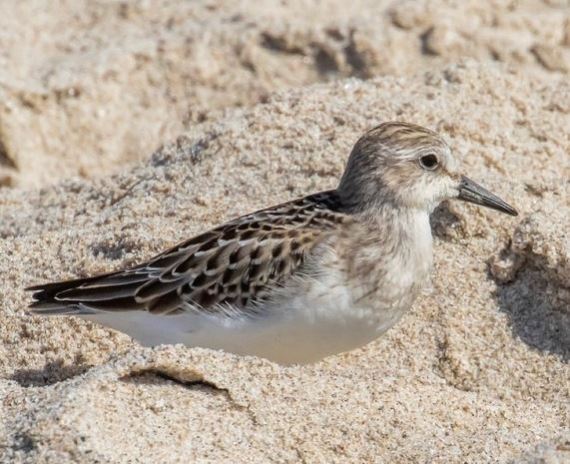
Semipalmated Sandpiper (Chris Tosdevin, 8-15-22)
Semipalmated Sandpipers show up every year in SoCal, but not in many locations or in big numbers. A half-dozen of them would be a big number. I’ve never recorded one at the lagoon. This one has been hanging out with Western Sandpipers. Chris calls it a “continuing bird” so it might stick around for a while, unless it becomes a discontinued bird.
Distinguishing them from Western Sandpipers can be difficult if you’re not familiar with them. The bill is shorter, straighter and more tubular than Western, and stouter than Least Sandpiper. They have less rufous colors on back and crown than Western, a thicker, whiter supercilium, and the juvenile has darker ear coverts. They both have black bills, black legs and are both “semipalmated,” meaning they have short webs between their 1st & 2nd toes (counting from the inside). Don’t spend a lot of time trying to see this particular field mark. Best thing is to check your field guide.
The eastern Semipalmated were discovered and named before the Western were discovered. When they determined that some of those “Semis” were a different species, they couldn’t change the original name for the first species (Semipalmated) – a custom people followed for centuries – and they had to call the 2nd species something, so “Western Sandpiper” was chosen. It’s certainly more of a western than an eastern bird, although many spend the winter along the gulf coast and well up the east coast to about Delaware.
Semipalmated Sandpipers, on the other hand, although they breed all across the North American arctic to the northwest Alaskan coast, migrate south by passing east of the Rockies and only a few odd birds wander off course into California.
We will, of course, look for this bird on our next lagoon field trip, along with that Yellow-crowned Night-Heron that keeps coming and going at inconvenient times.
Cormorant Identification | David Bell & L.A. Birders
[Posted by Chuck Almdale]
During the Covid pandemic Los Angeles Birders popped up as a non-Audubon group for local birders. They have a lot of Zoom programs under their belt, many dealing with the grindingly-difficult niceties of bird identification. The most recent of these was about our four North American cormorants, presented by David Bell, and was very good. Loads and loads of useful photos. I see Double-crested, Brandt’s and Pelagic Cormorants nearly every time I go to Malibu Lagoon, and David presented information new and useful to me. So I recommend it to one and all.
L.A. Birders YouTube page link
How Bird Collecting Evolved into Bird Watching | Smithsonian
[Posted by Chuck Almdale]
How Bird Collecting Evolved into Bird Watching
The Smithsonian Magazine | Tim Birkhead | 8 Aug 2022 | 5 min read
In the early 1900s, newfound empathy for avian creatures helped wildlife observation displace dispassionate killing.
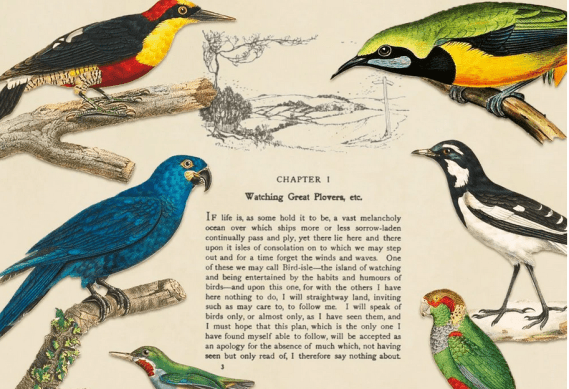
From the article:
As the interest in watching birds rather than shooting them increased, a view espoused by ornithologist Max Nicholson came to dominate the field. Nicholson believed that bird-watching should be “useful,” and he wanted bird-watchers to direct their energies toward an even greater understanding of birds’ behaviors, especially in terms of their numbers—and so started the practice of monitoring bird populations.
In the 1800s and early 1900s, only the wealthy could afford a serious interest in birds. Even in the 1950s, bird-watching continued to be dominated by those “that held sway in most departments of cultural life” in Britain—that is, mainly upper-class white males, as Mark Cocker writes in Birders: Tales of a Tribe. But by the 1970s and ’80s, as interest in birds continued to expand, most birders “came from the same broad social background—the working and middle classes.”
Worldwide, tens of millions of people have an interest in birds. Because there’s no precise definition of what a birder is, there’s no precise figure. It is telling, however, that the Royal Society for the Protection of Birds in the United Kingdom has more members than all U.K. political parties combined.
An Introduction to Digiscoping | MassAudubon
[Posted by Chuck Almdale]
This is short so I just copied the whole thing. Link to original.
As nearly everyone has a visiphone in their pocket these days, give it a shot.
An Introduction to Digiscoping
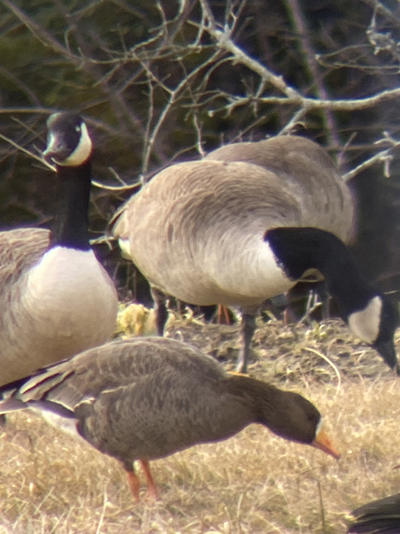
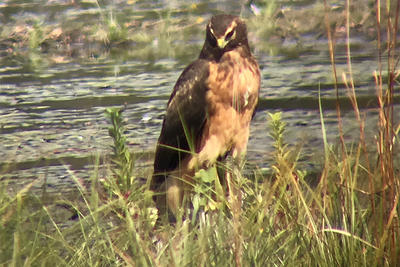
Digiscoping is a great and popular way to capture a fleeting nature moment without a fancy camera or a lens the size of your arm! It’s a technique widely used by birders to capture a rare bird before it flies away.
3 Tips to Help You Catch that Bird
With a little practice, you can achieve some awesome photos—all you need is a smartphone camera and binoculars (or a spotting scope).
Find the Moon
With your camera function turned on, use the screen of your smart phone to find the eyepiece of the optic. From further away you will see a bright spot in the eyepiece which will look almost like the moon. When you find this “moon,” slowly move your phone closer to the optic until the image becomes clear and fills your screen.
Zoom Out
Be sure to have your phone’s camera zoomed-out all the way to 1x zoom. If you’re using a spotting scope, keep the spotting scope on the lowest power before focusing and then attempting to digiscope. Once the image is stable and clear, you can zoom-in with your phone’s camera. Zooming in with the spotting scope can also give you better magnification, but it’s much more difficult to steady.
Keep Still
The most difficult part about digiscoping is keeping your hands and the optics as still as possible. If using binoculars, find a tree or something to steady yourself upon. A spotting scope is perfect for this because it is already on a tripod. You can also make digiscoping a lot easy with a mounted attachment that holds your phone to the optic. This reduces the need to hold your phone, which makes digiscoping a lot easier!
Practice, Practice, Practice
Give digiscoping a try. Then try it again, and again, and again. Getting it right takes a lot of practice—particularly with binoculars—but it can be a lot of fun to see your improvement!
Once you get the hang of it, you can document those great nature moments that happen in just the blink of an eye. Plus, digiscoping can be extra helpful when you don’t know what a plant or animal is and would like to ask someone for help.
Mosquitoes in L.A. County | LAist
[Posted by Chuck Almdale]
As mosquitoes are flying insects, and many birds (not enough!) catch and eat flying insects, I figure it’s valid to post this here. Plus hot news on fun viruses like West Nile, Dengue, Zika, Yellow fever and Chikungunya which your 2nd-favorite flying friends are bringing with them, to you. Keep an eye on your ankles. Encourage flycatchers to live near your house. Black Phoebes love to nest under your eaves or on your porch light.

(Coutesy of Don Loarie / Creative commons via Flickr)
More Mojitos, Less Mosquitoes: How To Rid Your Home Of The Pesky Biters
LAist | Caitlin Hernández | 12 Aug 12 2022 | 5 min read
From the article:
In Southern California, mosquitoes have it made. Our continuous warmer temperatures have practically created a year-round mosquito season, which gives them more of an opportunity to grow, lay eggs, and spread diseases like West Nile virus. But as we hit the peak of summer weather, mosquito activity is rising.




 SANTA MONICA BAY AUDUBON SOCIETY BLOG