Free email delivery
Please sign up for email delivery in the subscription area to the right.
No salesman will call, at least not from us. Maybe from someone else.
Western U.S. monarch butterfly population is doing better than expected | SMBAS’s Connie Day on NPR’s ‘All Things Considered’
[Posted by Chuck Almdale]
Long-time Santa Monica Bay Audubon Society member Connie Day is interviewed as part of a report about the recent unexpected uptick in Western Monarch Butterfly populations. Then the group goes butterfly censusing in and around Woodlawn Cemetery, on Pico Blvd. in Santa Monica.
Western U.S. monarch butterfly population is doing better than expected
National Public Radio | 24 Nov 2021 | 3 min listen

Extreme Birds | Stocking stuffer book for birders
[By Ellen Vahan, posted by Chuck Almdale]
If you are looking for light reading, this book might not be for you (bad joke, this book weighs in at 4.2 pounds), but if you want weird and wonderful facts and gorgeous pictures, enjoy this!
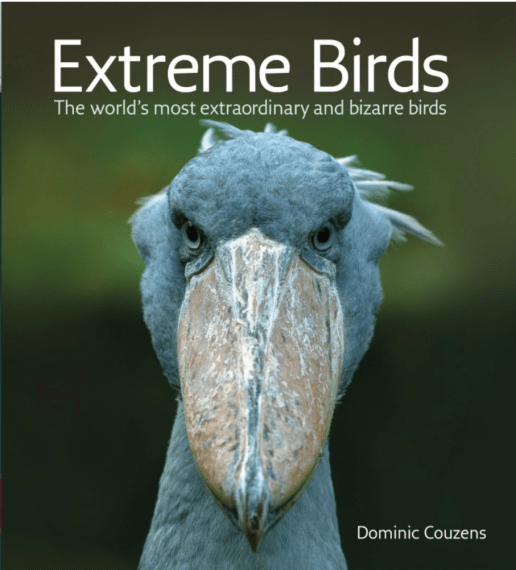
The sub-title is “The World’s Most Extraordinary and Bizarre Birds” and each set of pages features a great picture, a name, location, an attribute and a few paragraphs describing the attribute. Such as…
- Widest wingspan: Wandering Albatross – Southern Oceans and it uses “dynamic soaring”
- Biggest Belly: Hoatzin – Northern South America and attribute is “vastly expanded foregut”
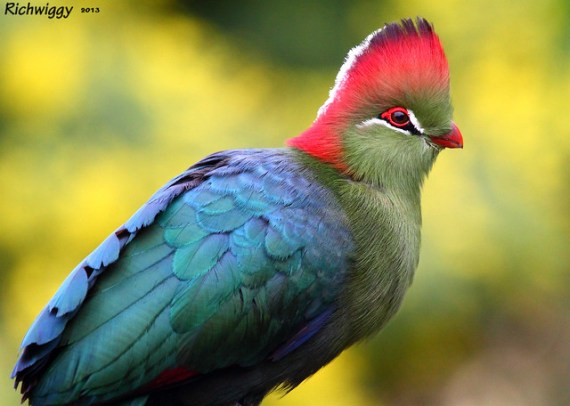
- Classiest colors: Fischer’s Turaco – coastal East Africa, astoundingly rare pigments in its plumage
- Best Karaoke: Purple Sandpiper – tundra of Eurasia and North America, pretending to be a rodent
- Best flock coordination: European Starling – much of the Northern Hemisphere. Aerial maneuvers of enormous flocks
- Longest penis: Lake Duck – Southern South America, largest penis for the size of the bird and you have to read about this!
- Bravest chick: Common Murre – circumpolar northern waters, jumping off a cliff!
- Best drummer: Palm Cockatoo – northern Australia and New Guinea, using a stick as a musical instrument
- …and many more.
This is a fascinating book – just right for those staying at home and dreaming about what they could see.
Extreme Birds. The World’s Most Extraordinary and Bizarre Birds
Dominic Couzens | A Firefly Book | New York. 1984 | 284 pages | 150 birds
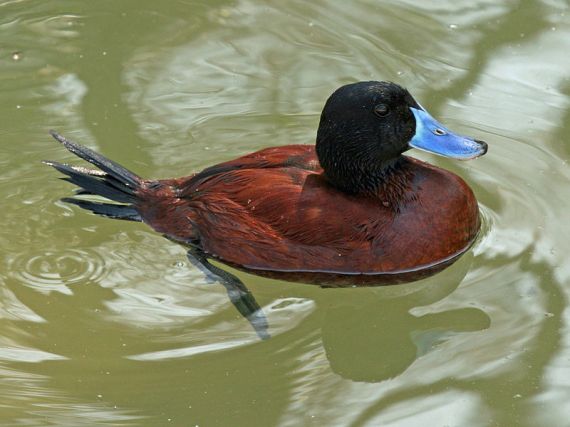
close relative of our Ruddy Duck (Wikipedia)
From the publisher’s blurb:
Extreme Birds is a photographic showcase of 150 birds at the extremes of nature. It reveals nature’s ingenuity and sometimes its sense of humor. The species in this book were chosen for their extraordinary characteristics and for behaviors far beyond the typical. They are the biggest, the fastest, the meanest, the smartest. They build the most intricate nests, they have the most peculiar mating rituals, they dive the deepest and they fly the highest. These are the overachievers of the avian world.
Amazon: Hard $52.92, Paper $23.48
Target: Paper $23.49
Barnes & Noble: Paper $24.95
Abe Books: Used copies from $21.74
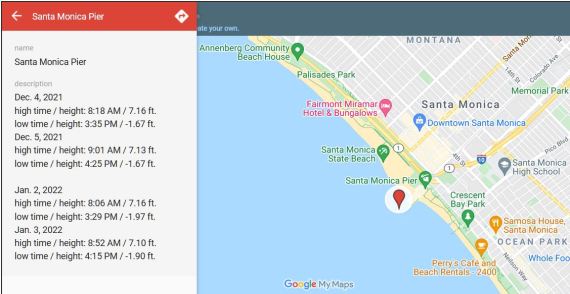
King tides Dec. 4-5 & Jan. 2-3
[Posted by Chuck Almdale]
California King Tide project wants your photos.

Not much dry beach during the 11-16-20 king tide. (Larry Loeher)

This Malibu Colony house looks like it’s falling into the sea during king tide, but I think the camera was a little tilted. It’s not that bad off. Normally the bottoms of the leftmost support pilings are not submerged. (Grace Murayama 11-16-20)
The highest high tides of the winter are on their way
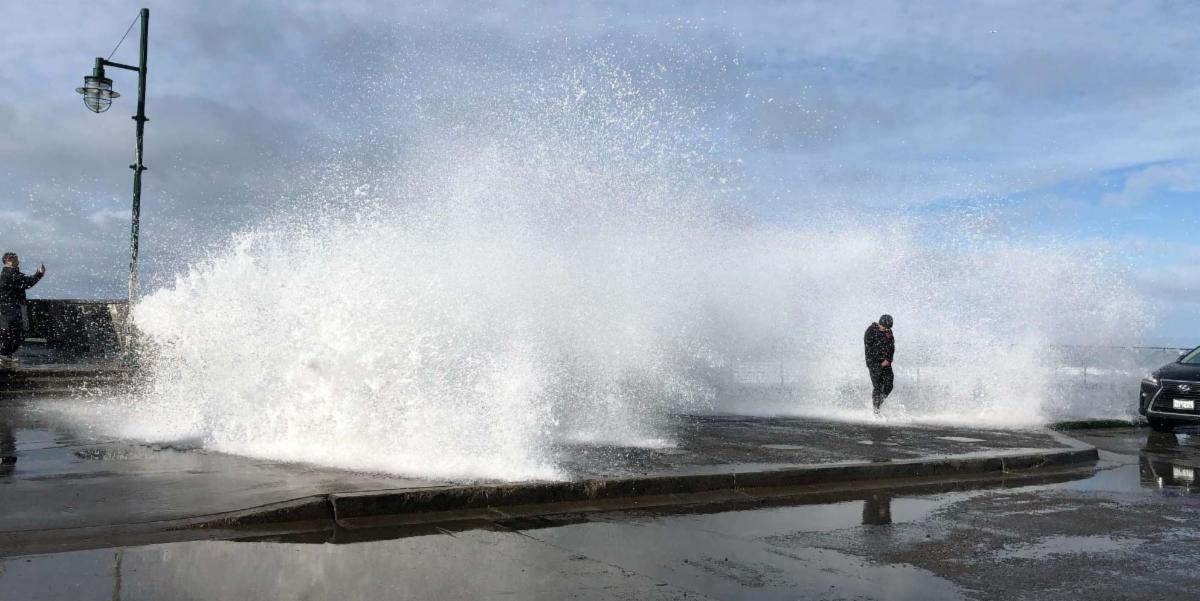
Look out for King Tides!
Dec. 4-5, 2021; Jan 2-3, 2022 Plus, for locations North of Ventura, Jan. 1, 2022
The California King Tides Project is calling on you to photograph our highest high tides of the year. Documenting these tides helps us preview the impacts of sea level rise and understand how our shoreline is affected by high water today.
If you’re able to safely take photos at the coast or Delta during King Tides you will be contributing to an important community science effort.
Find your local King Tide times and learn how to upload your photos on our website or with a free app. You can check out a selection of photos from each coastal county and access a map of all the King Tides photos from the last few years. Educators and parents can find ways to incorporate King Tides into student learning, including with an elementary-level science journal downloadable in English or Spanish. Middle and high school students may want to use King Tides images and concepts as they enter the Climate Video Challenge.
We can’t wait to see your photos! In the meantime, please join us on social media for #KingTides:
What causes sea level rise, and what do King Tides have to do with it?
The sea level rise we’re experiencing now and will experience in the future is caused by burning fossil fuels like coal, oil, and natural gas. Carbon dioxide in our atmosphere acts like a blanket, trapping in heat that would otherwise escape. When we burn fossil fuels, we’re adding more carbon dioxide, “thickening the blanket” and warming the planet and ocean. Sea level is rising because land-based glaciers and ice sheets are melting into the ocean and also because water expands in volume when it warms. The amount of sea level rise we will ultimately experience will depend on how quickly we stop burning fossil fuels.
King Tides themselves are not caused by sea level rise, but allow us to experience what higher sea level will be like. King Tides are the highest high tides of the year, about a foot or two higher than average tides, which corresponds to the one to two foot rise in sea level expected during the next few decades. When you observe the King Tides, imagine seeing these tides (and the flooded streets, beaches, and wetlands) every day. Understanding what a King Tide looks like today will help us plan for sea level rise in the future.
Sharing your photos and talking about what you’ve noticed helps others understand that they’re part of a community that cares about climate change.
Why are there different dates for northern and southern California?
Southern California will experience King Tides in November and December. There is an additional January King Tide in northern California, north of Point Conception/Vandenberg AFB, due to a combination of astronomical influences such as the relative tilt of the Earth’s rotation with respect to the Sun and seasonal influences on water level such as temperature and wind that differ in southern California as compared to northern California over the course of the year.
Thank you for your help! We look forward to seeing your photos! california.kingtides.net
California Coastal Commission
455 Market Street, Suite 228, San Francisco, CA 94105
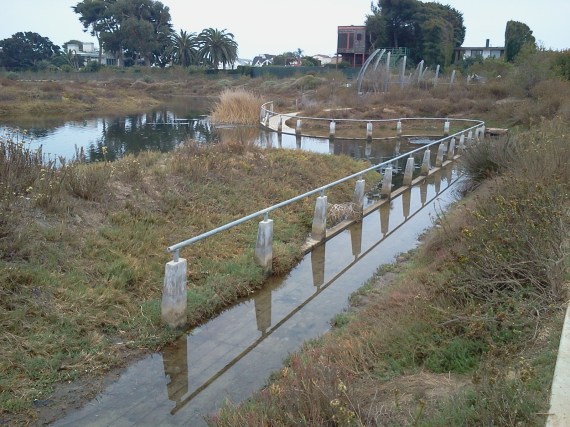
An inundated tidal clock sidewalk measured 6′ 9.6″ lagoon water
level a week after the king tide. (L. Johnson 11-23-20)
Devaux Bank, S.C. | 20,000 Whimbrels
[Posted by Chuck Almdale]

On the South Carolina coast, at the mouth of the North Edisto River, lies tiny 250 acre Devaux Bank, a V-shaped wedge of sand with the open end facing west. During the spring, for about a month, it is the nightly roosting spot for approximately half of the eastern North American population of Whimbrels. There are also thousands of breeding Brown Pelicans, Black Skimmers, American Oystercatchers, Royal Terns, Sandwich Terns, Laughing Gulls, herons and egrets.
A Miracle of Abundance as 20,000 Whimbrel Take Refuge on a Tiny Island
All About Birds | Scott Weidensaul \ Andy Johnson, photos | 13 Oct 2021
Whimbrels. pelicans, and more take to the sky at Deveaux Bank, South Carolina.

Make sure you watch the 9:26 video.
Extraordinary portraits of insects in flight | Ant Lab
[Posted by Chuck Almdale, suggested by Adrian Douglas]
Beauty from our four-winged friends. Five minutes and worth every second.

From Ant Lab:
A viewer sent me a copy of “Borne on the wind: The extraordinary world of insects in flight” which, in 1975, published photos of insects in mid-air flight. So, I filmed a bunch of insect flight sequences in a style inspired by the insect portraits in that book! All of these sequences were filmed at 6,000 frames per second. Most play back at 30fps, but some are edited to play back faster. Multiple captures are edited together so that more than one insect appears on-screen at the same time.



 SANTA MONICA BAY AUDUBON SOCIETY BLOG