Free email delivery
Please sign up for email delivery in the subscription area to the right.
No salesman will call, at least not from us. Maybe from someone else.
Science & bird books stocking stuffers
[by Chuck Almdale]
A collection of science titles: some I’ve read, some I’d like to read, some I keep as references, some I wish I had on hand. Each site has loads of other titles you might like. The links below go to publishers, reviews, booksellers or collections of links to books. As with all book purchases always, I encourage everyone to support locally owned book stores if that is humanly possible.
NOTE: Formatting & layout of this posting is an experiment. If it’s a totally incomprehensible mess in your email, telephone, etc, click the title to read it on the blog, where it should appear as intended.
Organizations included in order
- American Birding Association
- Mountain Press
- Science News Magazine Book Reviews
- Discover Magazine Book Reviews
- University of Chicago Press
- Princeton University Press
- Buteo Books
- Prometheus Books
- A final assortment
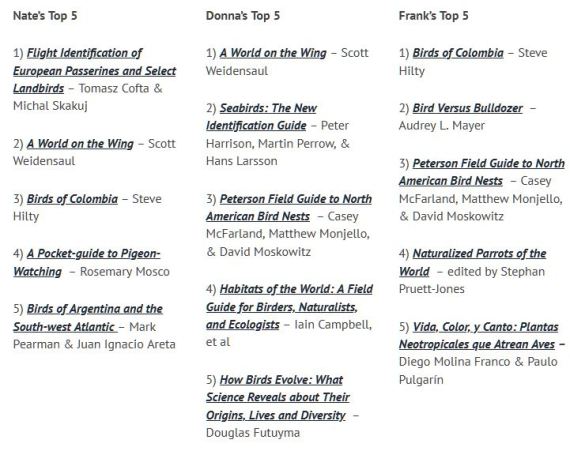
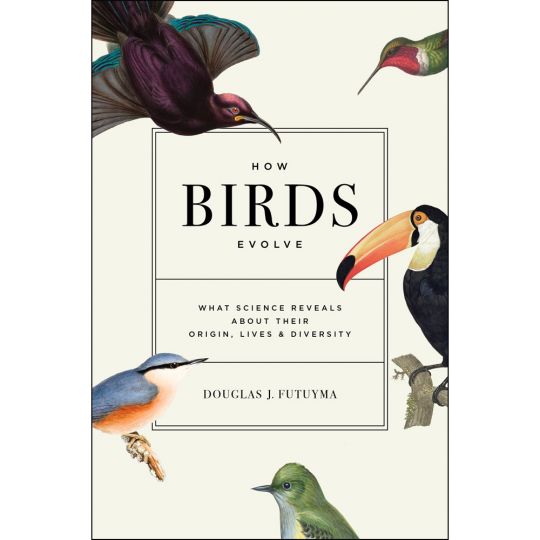
The first group are the top picks from the American Birding Association’s American Birding Podcast’s Birding Book Club’s Best Bird Books of 2021 (whew! – how’s that for nesting?) by three book reviewers & editors. Here is the link to the page, where each title is a link to the book, usually on the Buteo Books website. You’ll note some duplication. How Birds Evolve looks especially interesting to me, but then I already have some of the others.
Traveling by car? See America’s geology through informed eyes.
Three Roadside Geology titles from Mountain-Press.com. They have books for 31 additional states.

The Roadside Geology points of interest are listed by highway and mileage. Very easy to use.
Hundreds of other books.
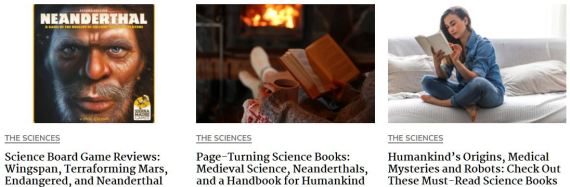
Science News Magazine reviews a lot of books.
Link to their list of reviews, such as:
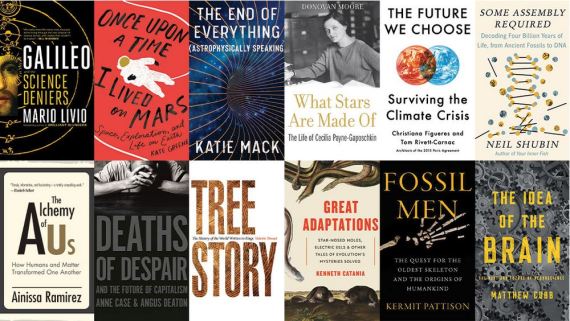
Discover Magazine also reviews a lot of science books. A link.
Books from university presses are high quality books which might cost a little more.
From University of Chicago Press Science Section
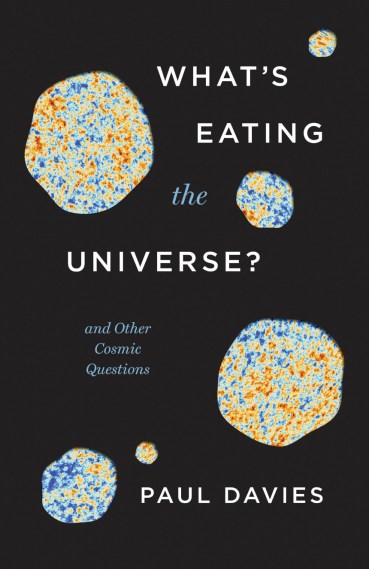
What’s Eating the Universe
Combining the latest scientific advances with storytelling skills unmatched in the cosmos, award-winning astrophysicist and popular writer Paul Davies leads us on a tour of some of the greatest mysteries of our universe—from supermassive blackholes to aliens (possibly) in our backyards. A celebration as much of what we know as what we have yet to learn, Davies’s quest leads us up to the greatest outstanding conundrum of all: Why does the universe even exist in the first place? And how did a system of mindless, purposeless particles manage to bring forth conscious, thinking beings?
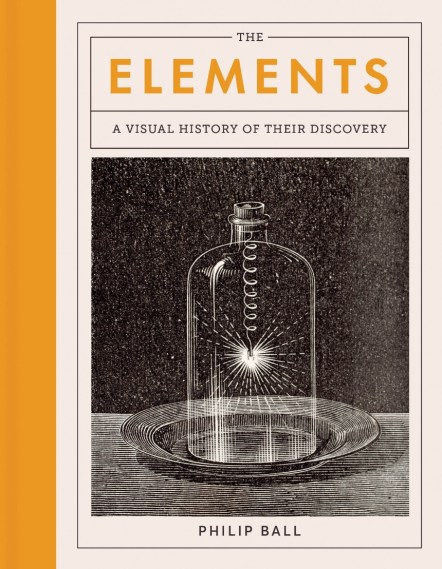
The Elements
From water, air, and fire to tennessine and oganesson, celebrated science writer Philip Ball leads us through the full sweep of the field of chemistry in this exquisitely illustrated history of the elements.
By piecing together the history of the periodic table, Ball explores not only how we have come to understand what everything is made of, but also how chemistry developed into a modern science. Ball groups the elements into chronological eras of discovery, covering seven millennia from the first known to the last named.
Three from Royal Observatory Greenwich, distributed by University of Chicago Press
Stars – Dr. Greg Brown
Planets – Dr. Emily Drabek-Maunder
Black Holes – Dr. Ed Bloomer
From Princeton University Press
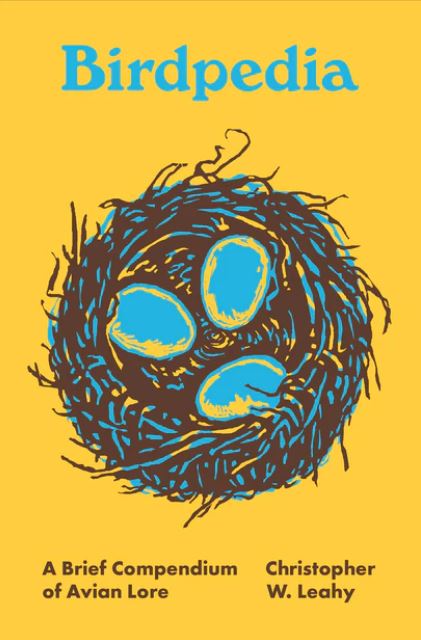
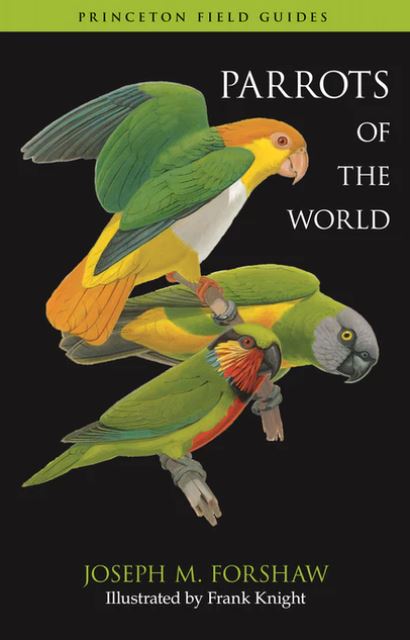
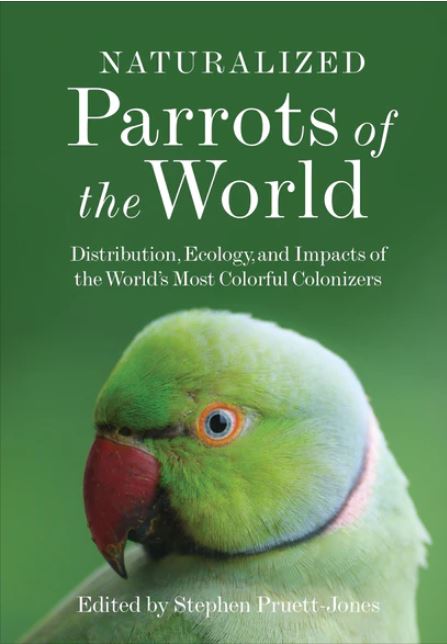
Three of a great many books from Princeton University Press.
Birdpedia – Christopher Leahy (who should need no introduction)
Parrots of the World – Joseph Forshaw
Naturalized Parrots of the World – Stephen Pruett Jones
Links to many dozens of other bird books
Links to many dozens of science books
Such as:
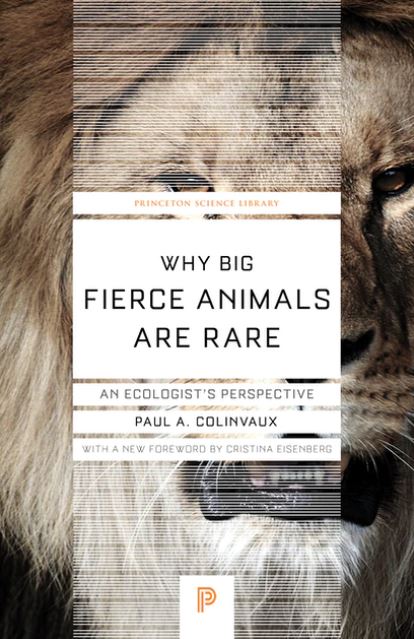

Why Big Fierce Animals are Rare – Paul A. Colinvaux
The Extravagant Universe – Robert P. Kirshner
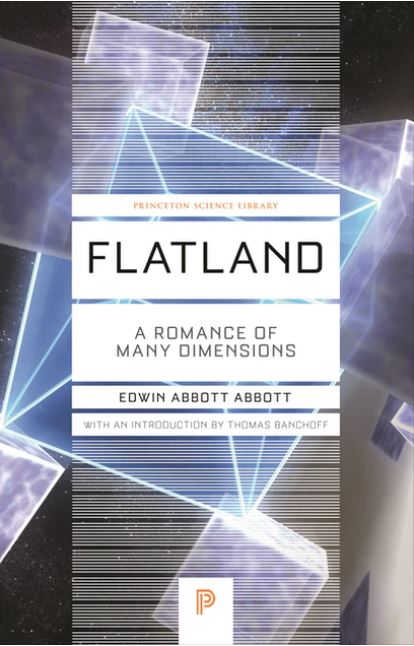
Flatland: A romance of many dimensions – Edwin A. Abbott
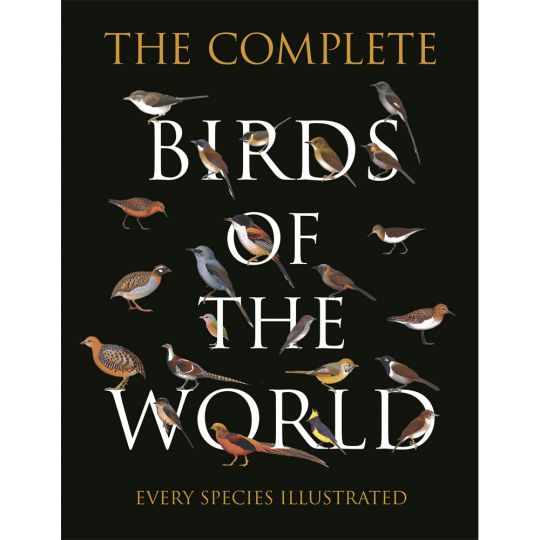
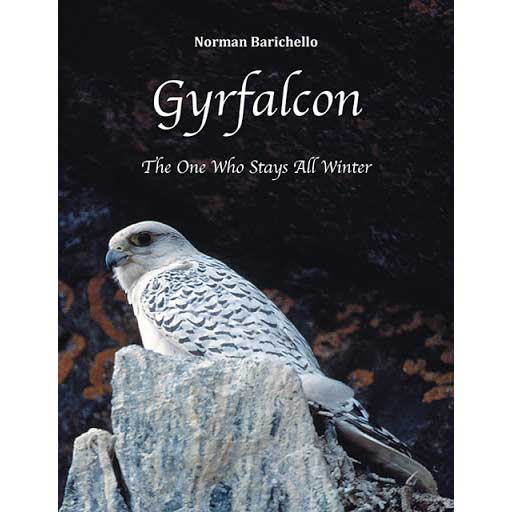
Buteo Books has long specialized in books for birders. They have hundreds and hundreds of titles.
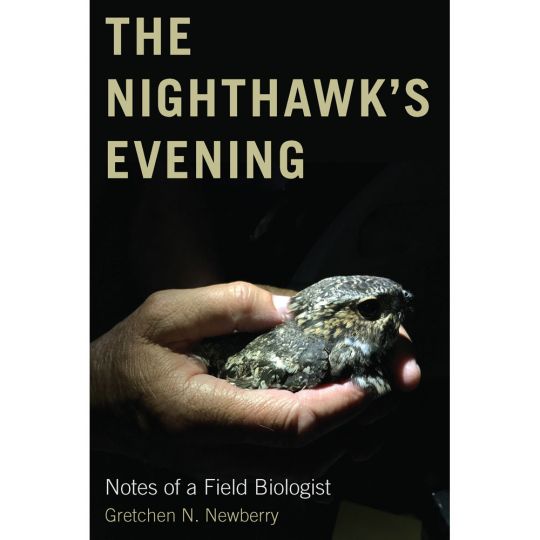
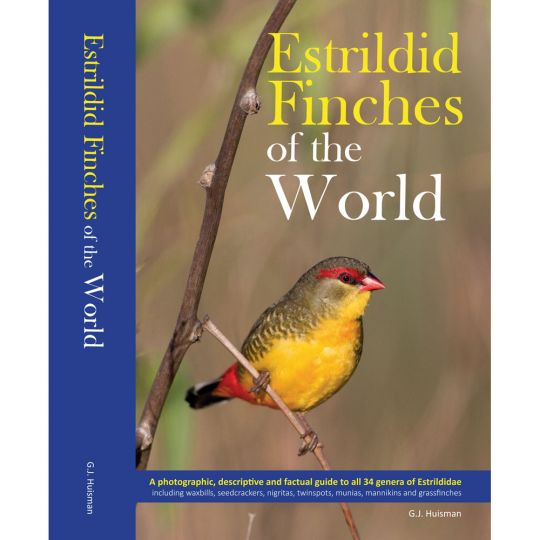
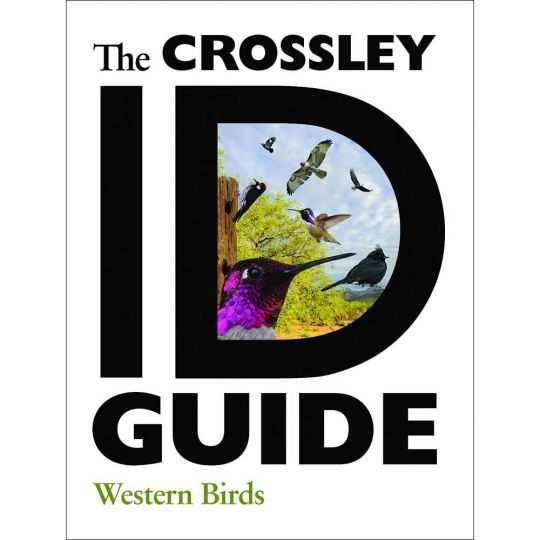
Plus optics, gear and other stuff:
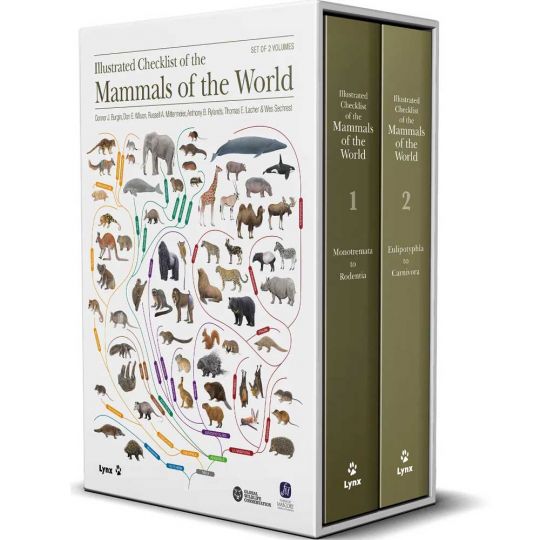
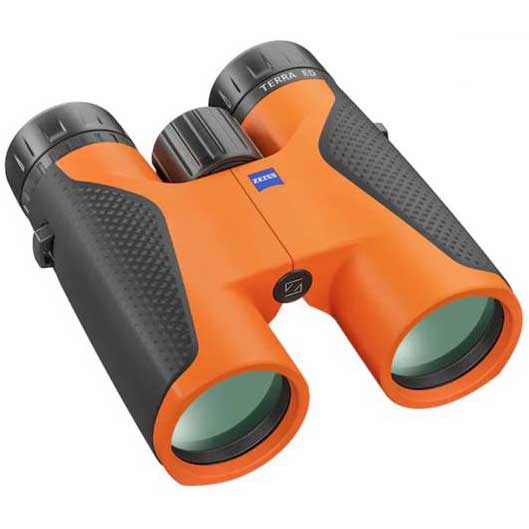
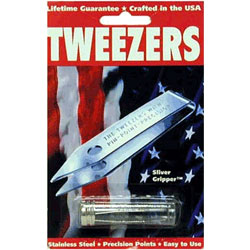
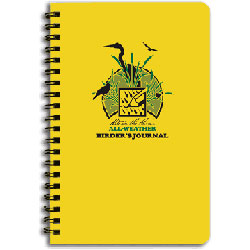
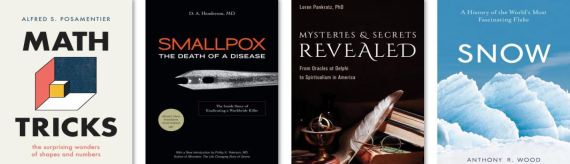
Prometheus Books has a wide variety books on interesting subjects
If one of your parents is a fungi, you need this book to know where you came from.
Otherwise, it’s just plain interesting.
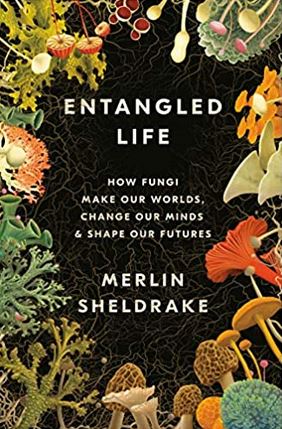
A mind-bending journey into the hidden universe of fungi, “one of those rare books that can truly change the way you see the world around you” (Helen Macdonald, author of H Is for Hawk).
NAMED ONE OF THE BEST BOOKS OF THE YEAR BY
Time • BBC Science Focus • The Daily Mail • Geographical • The Times • The Telegraph • New Statesman • London Evening Standard • Science Friday
Entangled Life.
When we think of fungi, we likely think of mushrooms. But mushrooms are only fruiting bodies, analogous to apples on a tree. Most fungi live out of sight, yet make up a massively diverse kingdom of organisms that supports and sustains nearly all living systems. Fungi provide a key to understanding the planet on which we live, and the ways we think, feel, and behave. Sheldrake’s vivid exploration takes us from yeast to psychedelics, to the fungi that range for miles underground and are the largest organisms on the planet, to those that link plants together in complex networks known as the “Wood Wide Web,” to those that infiltrate and manipulate insect bodies with devastating precision. Fungi throw our concepts of individuality and even intelligence into question. They are metabolic masters, earth makers, and key players in most of life’s processes. They can change our minds, heal our bodies, and even help us remediate environmental disaster. By examining fungi on their own terms, Sheldrake reveals how these extraordinary organisms—and our relationships with them—are changing our understanding of how life works.
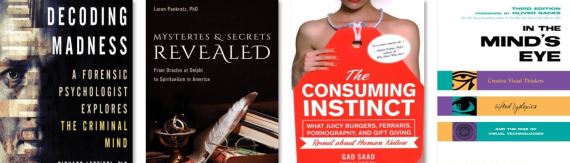
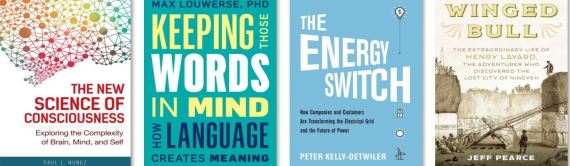
Interested in human consciousness and the human brain, how they got the way they are and what can and does go wrong? Here’s ten very interesting books.
A Very Short Tour of the Mind.
Short, ingenious, four to five page essays on his specialty. Is our brain the largest? No; larger animals have larger brains. Is it the largest in relation to body size? No; mice and small birds do better. Corballis turns up measurements that place the human brain at No. 1 but admits that the most impressive fact is that we are the only species investigating the problem. The usual myths fall by the wayside. No one knows who first claimed that we use only 10 percent of our brain, but no imaging study detects areas that remain silent as if waiting to perform.
Descartes’ Error.
Since Descartes famously proclaimed, “I think, therefore I am,” science has often overlooked emotions as the source of a person’s true being. Even modern neuroscience has tended, until recently, to concentrate on the cognitive aspects of brain function, disregarding emotions. This attitude began to change with the publication of Descartes’ Error in 1995. Antonio Damasio—”one of the world’s leading neurologists” (The New York Times)—challenged traditional ideas about the connection between emotions and rationality. In this wondrously engaging book, Damasio takes the reader on a journey of scientific discovery through a series of case studies, demonstrating what many of us have long suspected: emotions are not a luxury, they are essential to rational thinking and to normal social behavior.
The Accidental Homo Sapiens
What happens now that human population has outpaced biological natural selection? Two leading scientists reveal how we became who we are—and what we might become.
When we think of evolution, the image that likely comes to mind is the iconic, straight-forward image of a primate morphing into a human being. Yet random events have played huge roles in determining the evolutionary histories of everything from lobsters to humans. However, random genetic novelties are most likely to “stick” in small populations. It is mathematically unlikely to happen in large ones.
The Ape that Understood the Universe: How the Mind and Culture Evolve brings together and nuances key elements of the knowledge humans hold (so far) regarding their own nature, drawing from cornerstone findings in the fields of biology, evolutionary psychology, and cultural evolutionary theory. It’s a neatly crafted introduction that responds to “What are humans most likely all about?”, a question that may at some point inhabit the mind of an alien scientist whose task may be to figure out what this particular type of ape is made of.
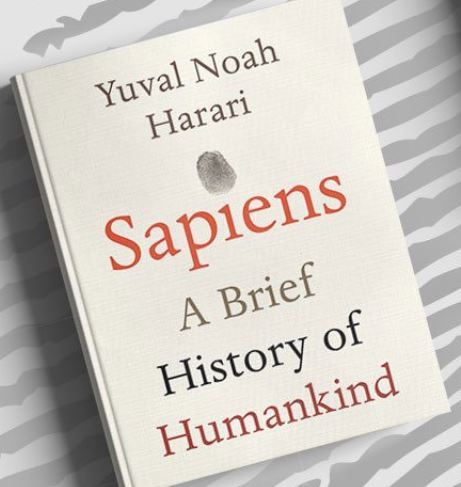
Sapiens: A brief history of humankind.
Homo sapiens rules the world because it is the only animal that can believe in things that exist purely in its own imagination, such as gods, states, money and human rights.
Starting from this provocative idea, Sapiens goes on to retell the history of our species from a completely fresh perspective. It explains that money is the most pluralistic system of mutual trust ever devised; that capitalism is the most successful religion ever invented; that the treatment of animals in modern agriculture is probably the worst crime in history; and that even though we are far more powerful than our ancient ancestors, we aren’t much happier.
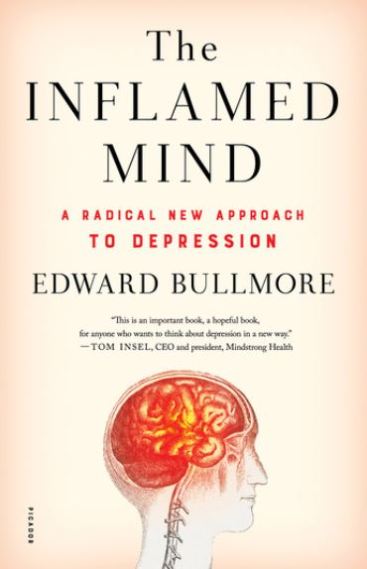
The Inflamed Mind
Professor Edward Bullmore reveals the breakthrough new science on the link between depression and inflammation of the body and brain. He explains how and why we now know that mental disorders can have their root cause in the immune system, and outlines a future revolution in which treatments could be specifically targeted to break the vicious cycle of stress, inflammation and depression. The Inflamed Mind goes far beyond the clinic and the lab, representing a whole new way of looking at how mind, brain and body all work together in a sometimes misguided effort to help us survive in a hostile world. It offers insights into the story of Western medicine, how we have got it wrong as well as right in the past, and how we could start getting to grips with depression and other mental disorders much more effectively in the future.
The Worm at the Core is the product of twenty-five years of in-depth research. Drawing from innovative experiments conducted around the globe, the authors show conclusively that the fear of death and the desire to transcend it inspire us to buy expensive cars, crave fame, put our health at risk, and disguise our animal nature. The fear of death can also prompt judges to dole out harsher punishments, make children react negatively to people different from themselves, and inflame intolerance and violence. Emerging from their research is a unique and compelling approach to these deeply existential issues: Terror Management Theory, which proposes that human culture infuses our lives with order, stability, significance, and purpose, and these anchors enable us to function moment to moment without becoming overwhelmed by the knowledge of our ultimate fate.

The Spiritual Doorway in the Brain
The world’s leading neurologist on out-of-body and near-death experiences shows that spirituality is as much a part of our basic biological makeup as our sex drive or survival instinct. If Buddha had been in an MRI machine and not under the Bodhi tree when he attained enlightenment, what would we have seen on the monitor? Dr. Kevin Nelson offers an answer to that question that is beyond what any scientist has previously encountered on the borderlands of consciousness. In his cutting-edge research, Nelson has discovered that spiritual experiences take place in one of the most primitive areas of the brain. In this eloquent, inspired, and reverent book, he relates the moving stories of patients and research subjects, brain scan analysis, evolutionary biology, and beautiful examples of transcendence from literature to reveal the machinery in our heads that enables us to perceive miracles-whether you are an atheist, Buddhist, or the most devout Catholic. The patients and people Nelson discuss have had an extremely diverse set of spiritual experiences, from arguing with the devil sitting at the foot of their hospital bed to seeing the universe synchronize around the bouncing of the ball in a pinball machine.
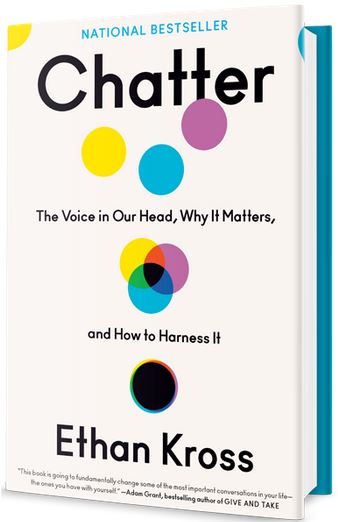
Chatter: The Voice in Our Head, Why It Matters, and How to Harness It
Tell a stranger that you talk to yourself, and you’re likely to get written off as eccentric. But the truth is that we all have a voice in our head. When we talk to ourselves, we often hope to tap into our inner coach but find our inner critic instead. When we’re facing a tough task, our inner coach can buoy us up: Focus—you can do this. But, just as often, our inner critic sinks us entirely: I’m going to fail. They’ll all laugh at me. What’s the use?
Interweaving groundbreaking behavioral and brain research from his own lab with real-world case studies—from a pitcher who forgets how to pitch, to a Harvard undergrad negotiating her double life as a spy—Kross explains how these conversations shape our lives, work, and relationships. He warns that giving in to negative and disorienting self-talk—what he calls “chatter”—can tank our health, sink our moods, strain our social connections, and cause us to fold under pressure.
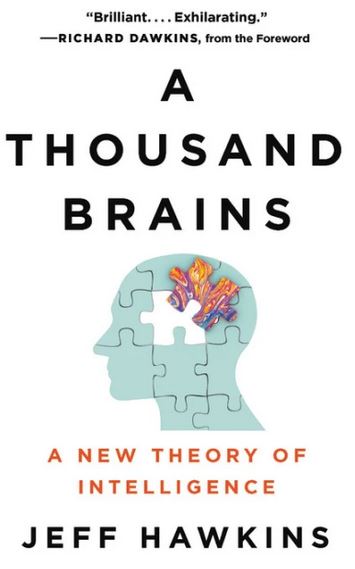
A Thousand Brains
A bestselling author, neuroscientist, and computer engineer unveils a theory of intelligence that will revolutionize our understanding of the brain and the future of AI. For all of neuroscience’s advances, we’ve made little progress on its biggest question: How do simple cells in the brain create intelligence? Jeff Hawkins and his team discovered that the brain uses maplike structures to build a model of the world-not just one model, but hundreds of thousands of models of everything we know. This discovery allows Hawkins to answer important questions about how we perceive the world, why we have a sense of self, and the origin of high-level thought. A Thousand Brains heralds a revolution in the understanding of intelligence. It is a big-think book, in every sense of the word.
Western U.S. monarch butterfly population is doing better than expected | SMBAS’s Connie Day on NPR’s ‘All Things Considered’
[Posted by Chuck Almdale]
Long-time Santa Monica Bay Audubon Society member Connie Day is interviewed as part of a report about the recent unexpected uptick in Western Monarch Butterfly populations. Then the group goes butterfly censusing in and around Woodlawn Cemetery, on Pico Blvd. in Santa Monica.
Western U.S. monarch butterfly population is doing better than expected
National Public Radio | 24 Nov 2021 | 3 min listen

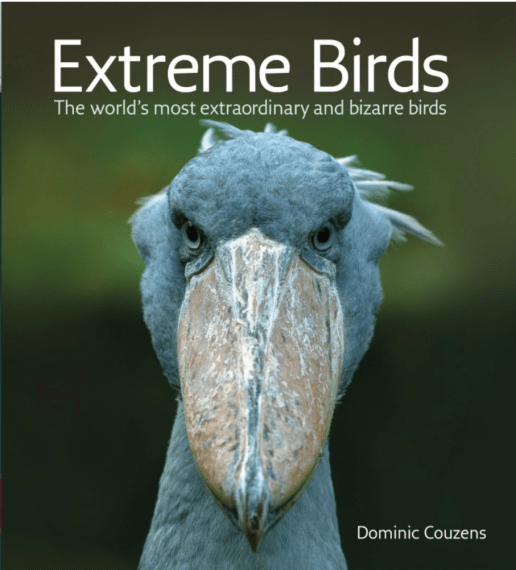
Extreme Birds | Stocking stuffer book for birders
[By Ellen Vahan, posted by Chuck Almdale]
If you are looking for light reading, this book might not be for you (bad joke, this book weighs in at 4.2 pounds), but if you want weird and wonderful facts and gorgeous pictures, enjoy this!
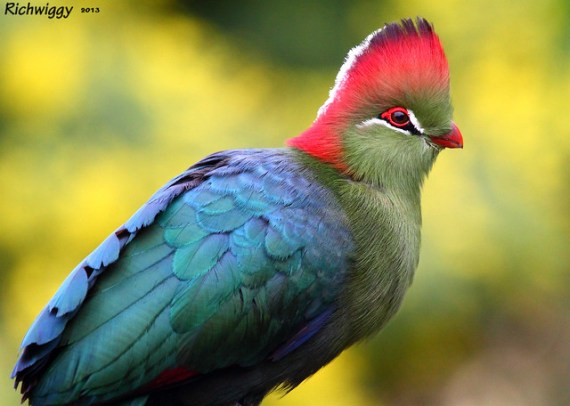
The sub-title is “The World’s Most Extraordinary and Bizarre Birds” and each set of pages features a great picture, a name, location, an attribute and a few paragraphs describing the attribute. Such as…
- Widest wingspan: Wandering Albatross – Southern Oceans and it uses “dynamic soaring”
- Biggest Belly: Hoatzin – Northern South America and attribute is “vastly expanded foregut”
- Classiest colors: Fischer’s Turaco – coastal East Africa, astoundingly rare pigments in its plumage
- Best Karaoke: Purple Sandpiper – tundra of Eurasia and North America, pretending to be a rodent
- Best flock coordination: European Starling – much of the Northern Hemisphere. Aerial maneuvers of enormous flocks
- Longest penis: Lake Duck – Southern South America, largest penis for the size of the bird and you have to read about this!
- Bravest chick: Common Murre – circumpolar northern waters, jumping off a cliff!
- Best drummer: Palm Cockatoo – northern Australia and New Guinea, using a stick as a musical instrument
- …and many more.
This is a fascinating book – just right for those staying at home and dreaming about what they could see.
Extreme Birds. The World’s Most Extraordinary and Bizarre Birds
Dominic Couzens | A Firefly Book | New York. 1984 | 284 pages | 150 birds
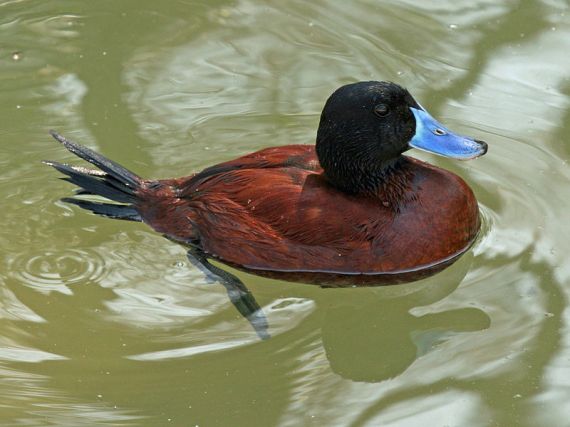
close relative of our Ruddy Duck (Wikipedia)
From the publisher’s blurb:
Extreme Birds is a photographic showcase of 150 birds at the extremes of nature. It reveals nature’s ingenuity and sometimes its sense of humor. The species in this book were chosen for their extraordinary characteristics and for behaviors far beyond the typical. They are the biggest, the fastest, the meanest, the smartest. They build the most intricate nests, they have the most peculiar mating rituals, they dive the deepest and they fly the highest. These are the overachievers of the avian world.
Amazon: Hard $52.92, Paper $23.48
Target: Paper $23.49
Barnes & Noble: Paper $24.95
Abe Books: Used copies from $21.74
King tides Dec. 4-5 & Jan. 2-3
[Posted by Chuck Almdale]
California King Tide project wants your photos.

Not much dry beach during the 11-16-20 king tide. (Larry Loeher)

This Malibu Colony house looks like it’s falling into the sea during king tide, but I think the camera was a little tilted. It’s not that bad off. Normally the bottoms of the leftmost support pilings are not submerged. (Grace Murayama 11-16-20)
The highest high tides of the winter are on their way
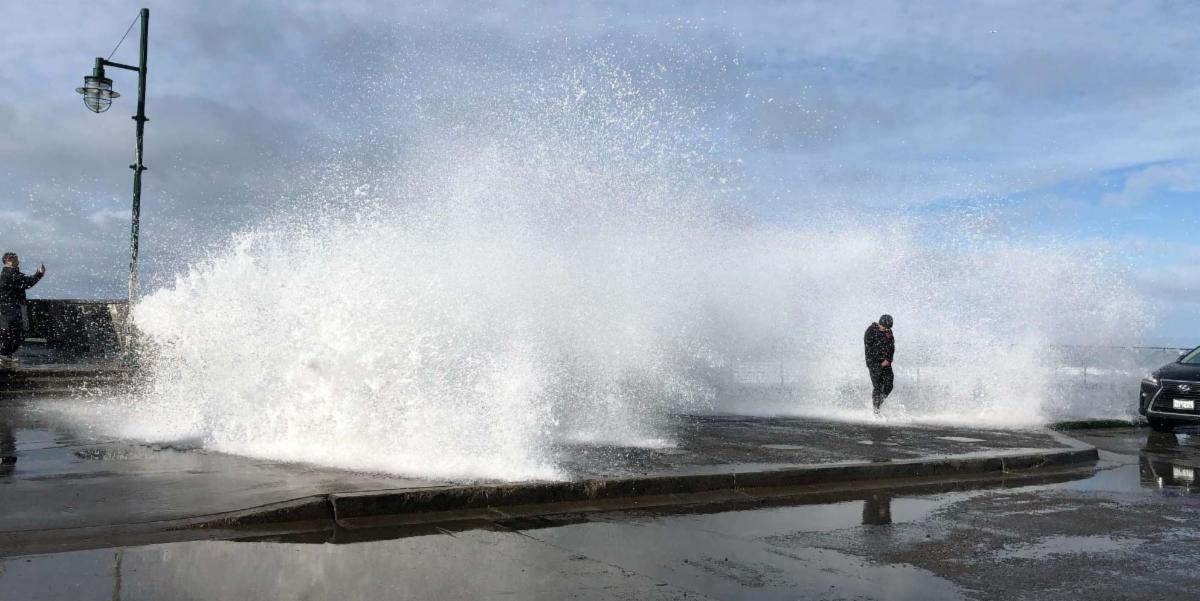
Look out for King Tides!
Dec. 4-5, 2021; Jan 2-3, 2022 Plus, for locations North of Ventura, Jan. 1, 2022
The California King Tides Project is calling on you to photograph our highest high tides of the year. Documenting these tides helps us preview the impacts of sea level rise and understand how our shoreline is affected by high water today.
If you’re able to safely take photos at the coast or Delta during King Tides you will be contributing to an important community science effort.
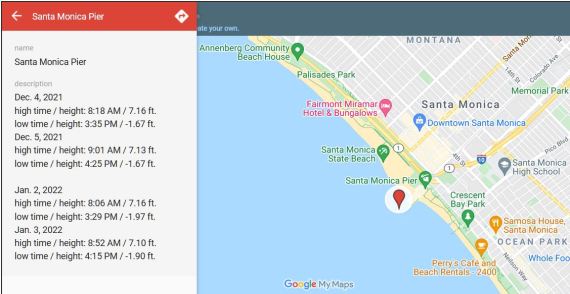
Find your local King Tide times and learn how to upload your photos on our website or with a free app. You can check out a selection of photos from each coastal county and access a map of all the King Tides photos from the last few years. Educators and parents can find ways to incorporate King Tides into student learning, including with an elementary-level science journal downloadable in English or Spanish. Middle and high school students may want to use King Tides images and concepts as they enter the Climate Video Challenge.
We can’t wait to see your photos! In the meantime, please join us on social media for #KingTides:
What causes sea level rise, and what do King Tides have to do with it?
The sea level rise we’re experiencing now and will experience in the future is caused by burning fossil fuels like coal, oil, and natural gas. Carbon dioxide in our atmosphere acts like a blanket, trapping in heat that would otherwise escape. When we burn fossil fuels, we’re adding more carbon dioxide, “thickening the blanket” and warming the planet and ocean. Sea level is rising because land-based glaciers and ice sheets are melting into the ocean and also because water expands in volume when it warms. The amount of sea level rise we will ultimately experience will depend on how quickly we stop burning fossil fuels.
King Tides themselves are not caused by sea level rise, but allow us to experience what higher sea level will be like. King Tides are the highest high tides of the year, about a foot or two higher than average tides, which corresponds to the one to two foot rise in sea level expected during the next few decades. When you observe the King Tides, imagine seeing these tides (and the flooded streets, beaches, and wetlands) every day. Understanding what a King Tide looks like today will help us plan for sea level rise in the future.
Sharing your photos and talking about what you’ve noticed helps others understand that they’re part of a community that cares about climate change.
Why are there different dates for northern and southern California?
Southern California will experience King Tides in November and December. There is an additional January King Tide in northern California, north of Point Conception/Vandenberg AFB, due to a combination of astronomical influences such as the relative tilt of the Earth’s rotation with respect to the Sun and seasonal influences on water level such as temperature and wind that differ in southern California as compared to northern California over the course of the year.
Thank you for your help! We look forward to seeing your photos! california.kingtides.net
California Coastal Commission
455 Market Street, Suite 228, San Francisco, CA 94105
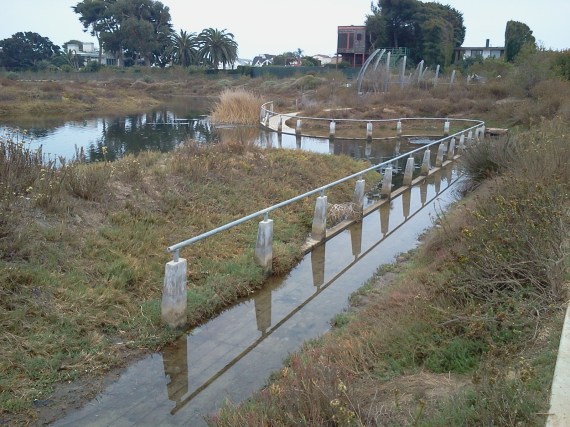
An inundated tidal clock sidewalk measured 6′ 9.6″ lagoon water
level a week after the king tide. (L. Johnson 11-23-20)
Devaux Bank, S.C. | 20,000 Whimbrels
[Posted by Chuck Almdale]

On the South Carolina coast, at the mouth of the North Edisto River, lies tiny 250 acre Devaux Bank, a V-shaped wedge of sand with the open end facing west. During the spring, for about a month, it is the nightly roosting spot for approximately half of the eastern North American population of Whimbrels. There are also thousands of breeding Brown Pelicans, Black Skimmers, American Oystercatchers, Royal Terns, Sandwich Terns, Laughing Gulls, herons and egrets.
A Miracle of Abundance as 20,000 Whimbrel Take Refuge on a Tiny Island
All About Birds | Scott Weidensaul \ Andy Johnson, photos | 13 Oct 2021
Whimbrels. pelicans, and more take to the sky at Deveaux Bank, South Carolina.

Make sure you watch the 9:26 video.



 SANTA MONICA BAY AUDUBON SOCIETY BLOG