Free email delivery
Please sign up for email delivery in the subscription area to the right.
No salesman will call, at least not from us. Maybe from someone else.
Visualizing Climate Change | Analog Atlas website
[Posted by Chuck Almdale]
Our climate is changing. It’s been widely noted for years that 97% of climate scientist agree that climate change is happening.
Of these, 97% agree, explicitly or implicitly, that global warming is happening and is human-caused. It is “extremely likely” that this warming arises from “human activities, especially emissions of ” in the atmosphere. Natural change alone would have had a slight cooling effect rather than a warming effect
Wikipedia
Recent years has brought an increased level of certainty:
….A 2019 study found scientific consensus to be at 100%, and a 2021 study found that consensus exceeded 99%.
Wikipedia
So the level of certainty among climate scientists fluctuates between 97% and 100%. That seems pretty high, for scientists, who generally agree to disagree on almost anything, and publish their disagreements, but some cable and web news sites can always find someone who disagrees about climate change. Just don’t ask about their competence or expertise.
Here’s an interesting report from the U.W. Global Change Research Program.
Executive Summary – Highlights of the Findings of the U.S. Global Change Research Program Climate Science Special Report. Something to read over breakfast.
Global annually averaged surface air temperature has increased by about 1.8°F (1.0°C) over the last 115 years (1901–2016). This period is now the warmest in the history of modern civilization. The last few years have also seen record-breaking, climate-related weather extremes, and the last three years have been the warmest years on record for the globe. These trends are expected to continue over climate timescales.
Analog Atlas
A group of scientists at the University of Montana felt that we-the-people didn’t seem able to grasp just what’s happening.
I liken the challenge to describing a song to someone who has never heard it: “It is in the key of C and has 4/4 timing.” The description is factually accurate but fails to inform because it lacks context, emotion and the framing that a listener brings.
We can put climate change in context with a simple question: ‘Where can I find the climate of my future, today?’ For residents of Los Angeles, it’s the southern tip of the Baja California Peninsula.
Solomon Dobrowski: Quoted in Los Angeles Times Op-Ed 24 Oct 2021
I suggest you take a look at their creation: Analog Atlas
It’s extremely user-friendly. It will give you two locales comparable to your current locale; one if the average temperature goes up 2°C, the other for 4°C.
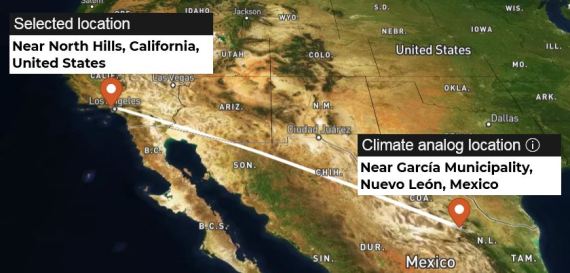
We selected the 2°C temperature rise and put in our northern San Fernando Valley locale. This map popped up. The distance is 1194 miles (1951 km) to the southeast.
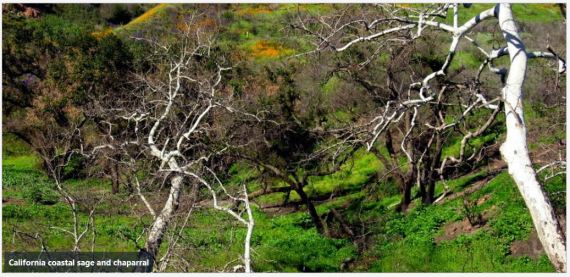
Analog Atlas gave us this photo and described our current locale as: “…currently classified as a California coastal sage and chaparral ecoregion.” It’s not our backyard, but looks familiar.
Your future climate match (or analog) is García Municipality, Nuevo León, Mexico. Toggle between the photos to see how projected changes could alter the landscape to look more like García Municipality, Nuevo León, Mexico.
Under your selected future climate scenario [2°C increase], this could change to Chihuahuan desert.
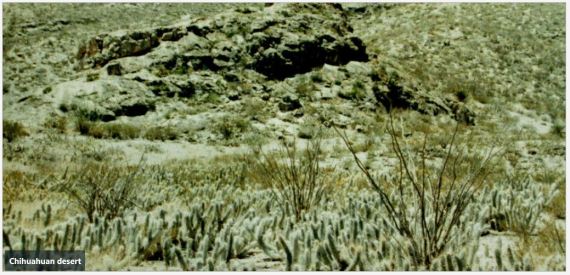
Well, that looks…dry. And hot. I recognize ocotillo in there.
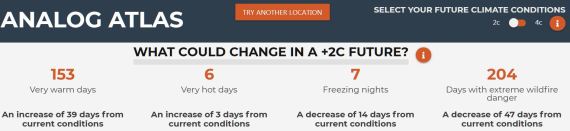
“Very warm days” = 86°F (30°C). “Very hot days” = 104°F (40°C).
Onward to the 4°C increase. The distance is now 595 miles (958 km) to the southeast,

Under your selected future climate scenario [4°C increase], this could change to Sonoran desert.
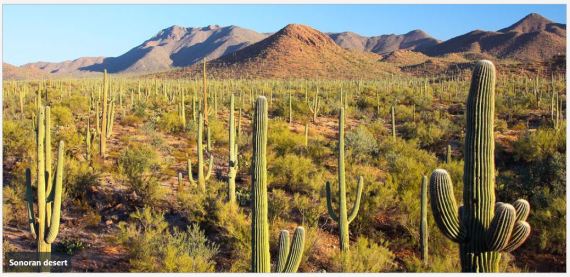
Good ol’ saguaro cacti. Elf Owls! Harris’ Hawk! I think that’s a Gilded Flicker nest hole in the closest saguaro cactus on the right.
Your future climate match (or analog) is Guaymas, Sonora, Mexico. Toggle between the photos to see how projected changes could alter the landscape to look more like Guaymas, Sonora, Mexico.
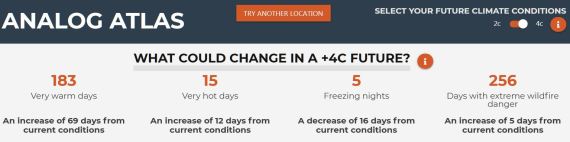
And there we have it. We can pick our desert and cacti of choice. Thanks a lot, everyone.
The most expensive bird in the world | YouTube Video
[Posted by Chuck Almdale, submitted by Alert Reader Lina Gallucci]
This bird topped the “11 most expensive birds” list I posted yesterday, so at least this particular expensive bird is for real.
A two-year-old Belgian racing pigeon called New Kim is about to set a world record of over $1.5 million at auction, the price even more exceptional because the bird is female, the online auction house said.
It seems that the Belgians and the Dutch are the most fanatical pigeon racers in the world, and will pay enormous amounts for a good ol’ Rock Pigeon. Why? Who can plumb the mysteries of the human heart. But it’s worth noting that it was the Dutch who—in the early 1630’s—were willing to pay 100,000 florins (or Dutch guilders) for forty tulip bulbs.
What’s a 1630’s florin worth, you ask? Very difficult to calculate the value in today’s dollars or euros. Here’s the cost of a few other items (Wikipedia) of that era:
- A “tun” (930 kg or 2,050 lb) of butter – about 100 florins
- A skilled laborer – 150–350 florins a year
- “Eight fat swine” – 240 florins.
As they say, do the math.
Here’s a quickie history lesson on Rock Pigeons which I wrote a few years back, always worth a re-visit.
What About That Dove? – Sunday Morning Bible Bird Study I
Finally, here’s the next chapter in the Belgian racing pigeon saga, from your number one source of Belgian racing pigeon news, the South China Post.
11 Most Expensive Birds in the World | Luxury Columnist
[Posted by Chuck Almdale]
This come from Ron Orenstein via the BirdChat email service. Ron’s succinct and entirely apropos comment was:
“Can you say irresponsible? Or illegal?”
I was very surprised (aghast, dismayed) to see some of the birds on this short list. It doesn’t seem as if these are the 11 most expensive. Perhaps this is just something intended to annoy – clickbait nonsense. But still it’s probably something we all should be aware of. A trigger warning on this one.
Eleven most expensive birds in the world
LuxuryColumnist.com | 2021 | 2 minute read
Native Plant Landscaping & urban wildlife | Noriko Smallwood study presentation on Zoom
[Posted by Chuck Almdale]
Doing this study during the middle of the Covid-19 pandemic was not easy for Noriko Smallwood, but determination and energy got her through. I know this first hand, as our yard was one of her many study sites. Occasionally we’d peek out our window and spot her skulking around, counting birds and insects, especially our enormous numbers of harmless hover flies and delightful small native bees.

The Influence of native plant landscaping on urban wildlife in Southern California residential yards
Noriko Smallwood and Dr. Eric Wood | LASMMCNPS website | 12 Oct 2021
Noriko begins her program about 7 minutes in, and Q&A follows at the end.
From her introduction to the Zoom presentation on the website of the Los Angeles/Santa Monica Mountains chapter of the California Native Plant Society:
For my master’s research, I quantified the importance of native yards to wildlife throughout L.A. by comparing birds and insects in 22 native and 22 paired non-native yards. Additionally, I investigated the drivers behind these patterns and identified particular plants that were used by birds in greater proportion than their availability, indicating preference. In this presentation, I will share the results of my study and will provide recommendations for wildlife-friendly landscaping.

Website of the Los Angeles/Santa Monica Mountains chapter of the California Native Plant Society
Now clean, oiled birds released | LA Times
[Posted by Chuck Almdale]
Following up on last week’s blog about oiled Western Snowy Plovers, Los Angeles Times reporter Robin Estrin describes more of the process and the final release back into the wild of an Eared Grebe and a Ruddy Duck.
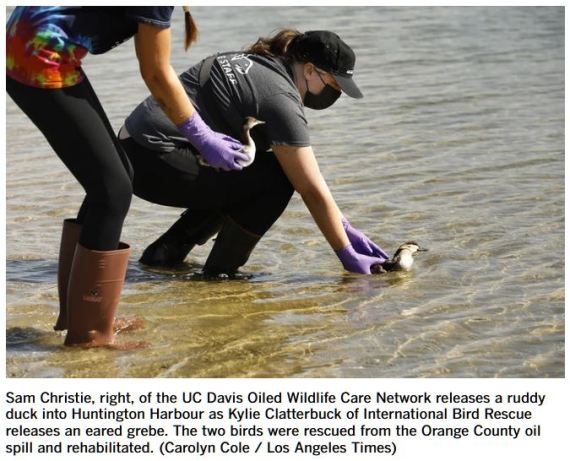
Cleansed of oil, birds harmed by Orange County spill take flight in Huntington Beach
Los Angeles Times | Robin Estrin | 14 Oct 2021 | 5 minute read
Excerpted from the article:
On Oct. 3, the first winged victim of the Orange County oil spill washed ashore in Newport Beach. Its white and light-brown feathers were caked with black crude. Cold, oily water had seeped through its down and onto its skin.
Ten days later, Sam Christie, a wildlife care specialist from the UC Davis Oiled Wildlife Care Network, lifted the bird — a ruddy duck — from a soft, blue box and placed it at the edge of Huntington Harbour. Healthy and cleaned of oil, it did as ducks do; it glided across the surface of the water, paddling its feet and bobbing its head. More…
Both Eared Grebes and Ruddy Ducks are regular wintering birds at Malibu Lagoon and elsewhere along the coast, freely associating with each other as they dive for fish in the deeper sections of the lagoon, especially near the Pacific Coast Highway bridge.
We have recorded Eared Grebes in every month except June, but 82% of the sighting are in Oct – Feb, when they are in their basic (plain) non-breeding plumage. The brightly colored adults in alternate plumage are mostly black and bronze, with bright golden bronze “ear” plumes, absent in winter. Unfortunately, they are mostly gone from the lagoon before this plumage appears, as are the Ruddy Ducks.
Ruddy Ducks are recorded in all months. However 98.2% of sightings are Nov-Apr, and 1.8% are May – Oct. We have no photos of either species in their brighter, breeding alternate plumage. In breeding the colorful males have bright blue bills. Both sexes have short, almost upright tails, and for this have long been known to hunters as “Stifftails.”

(Ray Juncosa 12/28/14)



 SANTA MONICA BAY AUDUBON SOCIETY BLOG