Free email delivery
Please sign up for email delivery in the subscription area to the right.
No salesman will call, at least not from us. Maybe from someone else.
California Native Plant Society meeting & news | Monday. Act Now.
[Posted by Chuck Almdale, submitted by Grace Murayama]
The South Coast Chapter of the California Native Plant Society has a meeting & program tomorrow, Monday 13 Sep 2021.
PROGRAM: PLANT FOR BIRDS: USING NATIVE CALIFORNIA PLANTS TO CREATE HABITAT AT HOME
Speaker: Scot Pipkin
For many of us, gardens are more than places to grow food or pretty flowers. If we want to create rich, diverse, and resilient habitats in our yards and communities, we have to start with the appropriate native plants. They provide an opportunity to attract a variety of local wildlife and cultivate healthy natural systems. One of the best indicators of a successful habitat garden is the bird life it attracts. In this talk, we will look at the important role native plants play in providing our local birds with the food, shelter, and nesting materials necessary for survival. We will also examine how the use of native plants and fundamental design principles can contribute to a sense of sanctuary and well-being for the people in our garden spaces. Taking a deep dive into the major food groups birds need (fruits, seeds, insects, and nectar), Scot will talk about native California species that are readily available and will be sure to enhance the habitat quality of your garden.
MEETING LOCATION
This meeting is via Zoom
Join Zoom Meeting by following this link:
https://cnps-org.zoom.us/j/92487485027?pwd=dnZtaUNrSktPbVQxRW5wTWVFSHNJQT09
Or use the meeting ID and password below at https://zoom.us/
Meeting ID: 924 8748 5027
Passcode: 955573
One tap mobile
+16699009128,,92487485027#,,,,*955573# US (San Jose)
+13462487799,,92487485027#,,,,*955573# US (Houston)
One tap mobile +16699009128,,92487485027# US (San Jose)
The meeting starts at 7:30, but gathering at 7:20 or so is recommended.
Link to sccnps: https://sccnps.org/
Giant plant sale of ordinary-sized plants!
They are having a plant sale Sept 14-26. Order online and schedule your pickup day & time. Read the details, including a frighteningly long list of available plants, on the SCCNPS website.
Go to: https://sccnps.org/
A Birder’s Eye View | Art at the Getty
[Posted by Chuck Almdale]
Cindy Hardin is one of SMBAS’s long-term members. She’s very active in nature education for schoolchildren and has managed the Environmental Education Program at Ballona for over a decade. She writes for various blogs, such as “What if we had a field trip and nobody could attend?,” a problem all active birders now worry about. Her 2013 article on The Tongva, co-written with Jane Beseda, is perennially one of the top five postings on our SMBAS blog and seems to be the schoolchildren’s Google go-to article on our local First Americans.
Recently she was interviewed by Erin Migdol for the Getty Museum blog.
A Birdwatcher’s Eye View
Seeing the feathered members of our collection through an expert’s eyes
The Getty Museum | Erin Migdol | 9 Sep 2021 | 4 min read

From the article:
As artistic styles and attitudes towards nature have evolved, so have works of art that depict birds—from medieval manuscripts featuring imaginary winged creatures to photographs that take a scientist’s eye to a variety of avian species.
But how would a birdwatcher—someone who observes birds in the wild and is intimately familiar with their true personalities and habitats—react to artists’ representations of birds?
Can Birds Help us Avoid Natural Disasters? | Hakai Magazine
[Posted by Chuck Almdale, submitted for your delectation by Ellen Vahan]
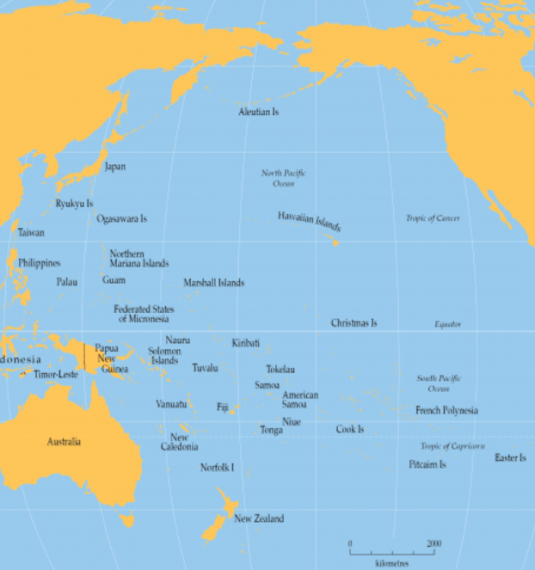
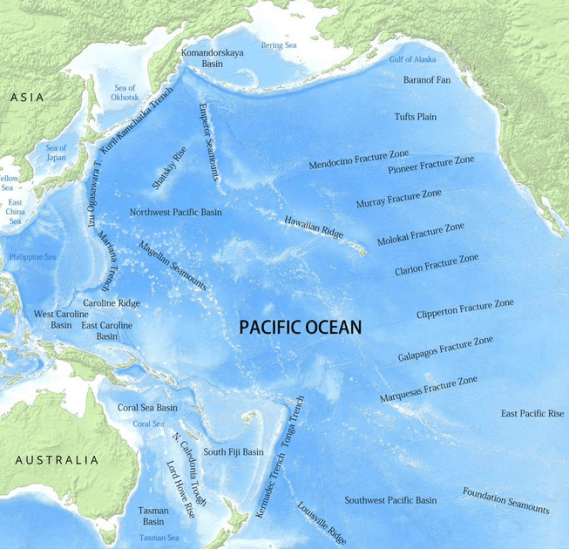
Researchers think birds can hear hurricanes and tsunamis—a sense they’re hoping to tap into to develop a bird-based early warning system.
Can Birds Help us Avoid Natural Disasters?
Hakai Magazine | Jason Gregg | 1 Sep 2021 | also in Smithsonian Magazine | 4 minute read
From the article:
The Kivi Kuaka project is focusing on birds’ ability to hear infrasound, the low-frequency sound inaudible to humans that the researchers believe is the most likely signal birds would use to sense storms and tsunamis. Infrasound has myriad sources, from lightning strikes and jet engines to the songlike vocalizations of rhinoceroses. Even the Earth itself generates a continuous infrasonic hum. Though rarely measured, it is known that tsunamis generate infrasound, too, and that these sound waves travel faster than the tsunami wave, offering a potential window to detect a tsunami before it hits.
There is some evidence that birds dodge storms by listening to infrasound. In a 2014 study, scientists tracking golden-winged warblers in the central and southeastern United States recorded what’s known as an evacuation migration when the birds flew up to 1,500 kilometers to evade an outbreak of tornadoes that killed 35 people and caused more than US $1-billion in damage. The birds fled at least 24 hours before any foul weather hit, leaving the scientists to deduce they had heard the storm system from more than 400 kilometers away.
Pandemonium among the mallards | Barton Pond, University of Chicago
[Posted by Chuck Almdale]
Jerry Coyne posts regular updates on the resident and breeding ducks at Barton Pond on the UofC campus. I’m posting this one as it has lots of photos, several short videos about “zooming” and “grooming” and an amusing and informative narrative style.
If you want to know more about these ducks, there’s a boodle of reports on his Why Evolution is True in the category of Ducks.
Link to Sunday Ducks.
New avian taxi service
[Posted by Chuck Almdale, submitted by Faron Isom]
Uber, Lyft, step aside and make way for the new.
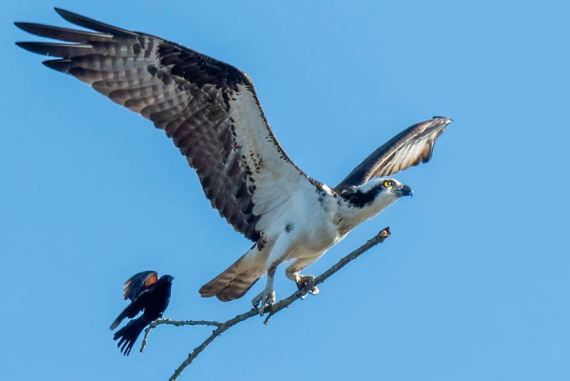
Source: PetaPixel
The above photo was found on the PetaPixel website of Michael Zhang who supplies an amusing commentary.
While you’re on Zhang’s page, check out the photo series of an Osprey carrying a shark swallowing a fish.



 SANTA MONICA BAY AUDUBON SOCIETY BLOG