Field Trip Report: Solstice Canyon, 7 May, 2011
The lovely riparian environment of Solstice Canyon greeted us with the Canyon Sunflower, California Towhees, Spotted Towhees, Wrentits, and this time, several Orange-crowned Warblers. Each one of these species offered their own variety of the trill. It either became confusing or the repetition helped people learn to distinguish the songs.
With the Canyon Sunflower (yellow center) on the moist side and the Bush Sunflower (brown center) on the dry side of the trail we could easily separate the two species.
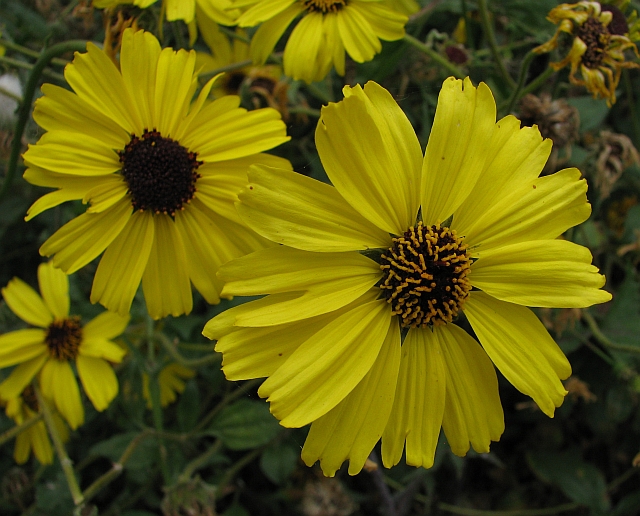
Bush Sunflower (C.Almdale 5/11)
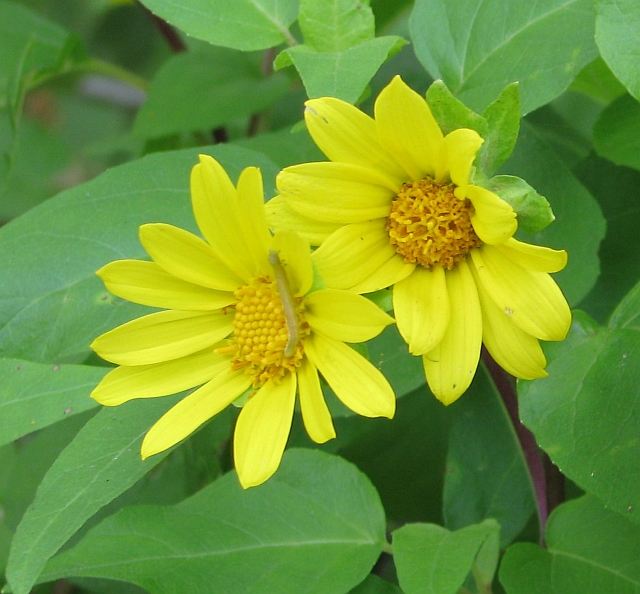
Canyon Sunflower - abundant this year (C.Almdale 5/11)
Margaret Huffman reminded us that there are only 3 rivers in the Santa Monica Mountains that have water during the Summer, and Solstice is one of them (Cold Creek & Malibu Creek are the others). Near the river we saw and heard a lot of Lesser Goldfinches and Pacific-slope Flycatchers. I didn’t realize that the California Bay trees need to be near the water which is why we see so many of them at Solstice.
When we made the big right turn to go up to the house, the Sycamore tree at the corner was still being used as a granary by the Acorn Woodpeckers.

Female Nuttall's Woodpecker at nest-hole (J.Kenney 5/11)
A little further up the trail we found the nests of an Acorn family and a Nuttall’s Woodpecker family. The last fire occurred in 2007 and it looks like the trees that died are just right for woodpeckers. Perhaps we can look forward to more nests. Along the slope towards the house, we could see Purple Sage, Black Sage and one White Sage and we managed to see Red-tailed Hawks & a Northern Flicker. The racket from the Black-hooded Parakeets was deafening but we were rewarded with the sighting of two Mitred Parakeets among the group.
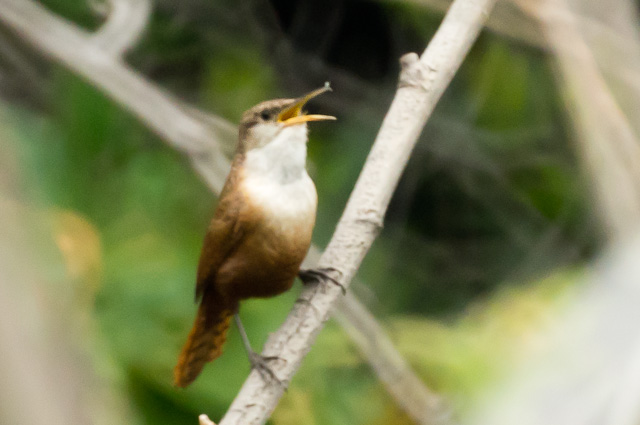
Canyon Wren singing downstream of burned house (C.Bragg 5/11)
**** **** A Canyon Wren responded to our tape and perched in the branches of a dead tree for quite a while. We got the 4 most likely Hummingbirds: Anna’s, Allen’s, Costa’s, & Black-chinned. Common Yellowthroats, Black Phoebes, Bushtits, Dark-eyed Juncos, Song Sparrows, Bewick’s Wrens, Western Scrub Jays, Black-headed Grosbeaks all made their appearances. The House Wrens serenaded us all the way up the slope. At the top where the house is we saw the Hooded Orioles among the palms and heard another Canyon Wren. The surprises were: Brown Pelican (a lot of them are being seen this year along our coast), California Thrasher (which I wish we could count on more often), White-breasted Nuthatch, Red-shouldered Hawk, and Phainopepla. On our way back, we could hear the Purple Finch but it took a long time to spot it in the granary Sycamore. We did see some Crows, Ravens, a Starling, an unknown empidonax flycatcher, and a Brown-headed Cowbird.
The butterflies must have felt it was not warm enough because we hardly saw any today but the flowers were great. The yellow Bush Monkey-Flowers were growing in large patches and we got a first in this canyon: the Fringed Indian Pink. [Jean Garrett]
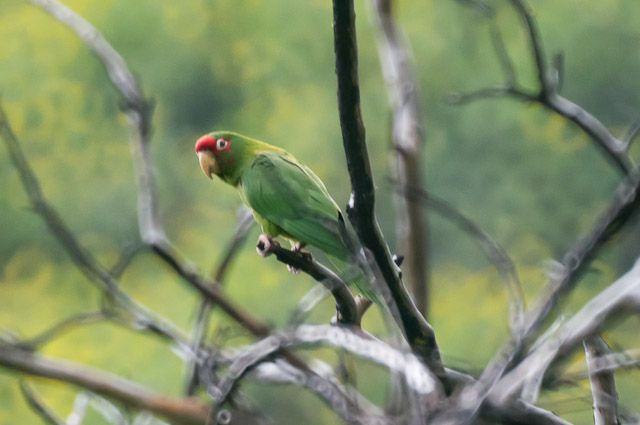
Mitered Parakeet (C.Bragg 5/11)
Parakeets: We were about 5 minutes walk below the burned house when a pair of Black-hooded Parakeets flew by, loudly squawking. I squawked back at them and – surprisingly – they lit in a nearby dead bush. We squawked some more and two more flew in and landed. These parakeets (all parakeets have long pointed tails) had red faces so they were something different. One had a bit of red on the forehead (see photo); on the other the red spread from the crown to behind the eye and below the bill. They both had prominent white eyerings, large pale bills, irregularly scattered red flecks on their head, neck and shoulders, but no visible red at bend of wing, tail or “leggings”. The more red-faced bird looked like Red-masked Parakeet, while the pictured bird looked more like Mitered. Both species are in the general Malibu-Pt. Dumé area (as is Red-Crowned Parrot) although I had not seen either here before. Further research at home – confirmed by Kimball Garrett – convinced me they were both Mitered Parakeets, which are variable in the amount of red they show, the result of both age (less red on younger birds) and individual variation. If either were Red-masked, we should have seen red at the bend of the wing. [Chuck Almdale]
Trip report & checklist from May, 2010.
Triplist follows photo gallery below.
[Jean Garrett & Chuck Almdale]
On the website, click on a photo below to enlarge it & reveal additional notes.
-
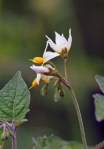
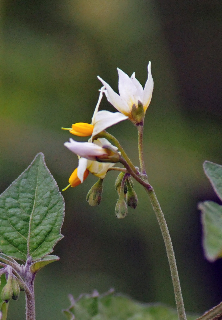
- White (Douglas’s) Nightshade (J.Kenney 5/11)
-
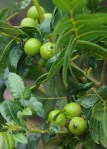
- Nuts of the California Wallnut tree (J.Kenney 5/11)
-
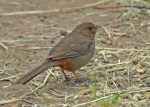
- California Towhee, probably gathering nesting material (J.Kenney 5/11)
-
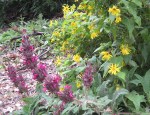
- Hummingbird Sage & Canyon Sunflower (J.Garrett 5/11)
-
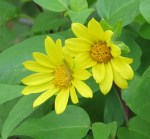
- Canyon Sunflower – abundant this year (C.Almdale 5/11)
-
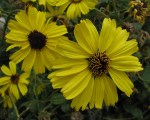
- Bush Sunflower (C.Almdale 5/11)
-
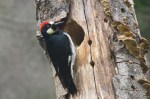
- Acorn Woodpecker at the nest-hole. Solstice Canyon (C.Bragg 5/11)
-
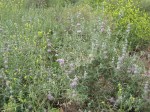
- Purple Sage (J.Garrett 5/11)
-

- Purple Sage (J.Kenney 5/11)
-
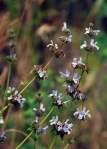
- Black Sage (J.Kenney 5/11)
-
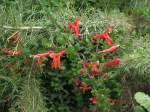
- Heart-leaved Penstemon (C.Almdale 5/11)
-
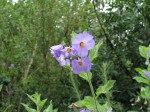
- Purple Nightshade (C.Almdale 5/11)
-
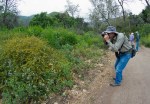
- Stealthy Chuck Almdale sneaks up on unwary Deerweed bush (C.Bragg 5/11)
-
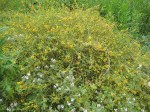
- Deerweed & Caterpillar Phacelia (foreground) (J.Garrett 5/11)
-
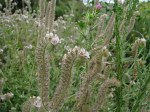
- Caterpillar Phacelia (C.Almdale 5/11)
-
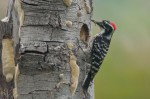
- Male Nuttall’s Woodpecker (C.Bragg 5/11)
-
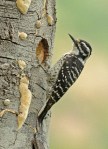
- Female Nuttall’s Woodpecker at nest-hole (J.Kenney 5/11)
-
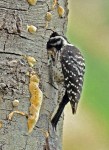
- Stop hiding! I know you’re in there! (J.Kenney 5/11)
-
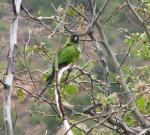
- Black-hooded Parakeet (C.Almdale 5/11)
-
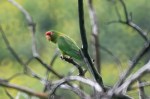
- Mitered Parakeet (C.Bragg 5/11)
-
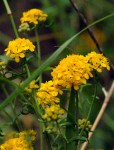
- Golden Yarrow (J.Kenney 5/11)
-
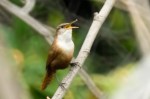
- Canyon Wren singing downstream of burned house (C.Bragg 5/11)
-
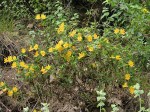
- Sticky Monkey-Flower (C.Almdale 5/11)
-

- Water-loving Ferns (J.Garrett 5/11)
| TRIP LIST – SOLSTICE CANYON 5/07/11 | ||
| PLANTS | BIRDS |
Nos. |
| WHITE | Brown Pelican |
1 |
| California Blackberry | California Quail |
** |
| Lupine | Red-shouldered Hawk |
2 |
| Morning Glory | Red-tailed Hawk |
4 |
| White (Douglas’s) Nightshade | Mourning Dove |
4 |
| White Sage | Black-hooded Parakeet |
14 |
| YELLOW | Mitered Parakeet |
2 |
| Bush Monkey-Flower | White-collared Swift |
3 |
| Bush Sunflower | Anna’s Hummingbird |
12 |
| Canyon Sunflower | Costa’s Hummingbird |
1 |
| Deer Weed | Allen’s Hummingbird |
3 |
| Golden Yarrow | Acorn Woodpecker |
10 |
| Mustard* | Nuttall’s Woodpecker |
6 |
| Pineapple Weed* | Northern Flicker |
3 |
| RED | Pacific-slope Flycatcher |
8 |
| Fringed Indian Pink | Emipdonax ssp |
1 |
| Heart-leaved Penstemon | Black Phoebe |
6 |
| PINK | Western Scrub-Jay |
6 |
| Bush Mallow | American Crow |
12 |
| Wild Rose | Common Raven |
6 |
| PURPLE / BLUE | Oak Titmouse |
1 |
| Black Sage | Bushtit |
12 |
| Bull Thistle | White-breasted Nuthatch |
2 |
| Bush Lupine | Canyon Wren |
2 |
| Caterpillar Phacelia | Bewick’s Wren |
12 |
| Common Vervain (Verbena) | House Wren |
20 |
| Hummingbird Sage | Wrentit |
20 |
| Milk Thistle* | California Thrasher |
1 |
| Purple Nightshade | European Starling |
1 |
| Purple Sage | Phainopepla |
1 |
| Star Thistle | Orange-crowned Warbler |
8 |
| TREES, SHRUBS, ON | Common Yellowthroat |
6 |
| NOT IN BLOOM | Spotted Towhee |
10 |
| California Bay | California Towhee |
12 |
| California Walnut | Song Sparrow |
20 |
| California Sagebrush | Dark-eyed Junco |
6 |
| Coast Live Oak | Black-headed Grosbeak |
6 |
| Coyote Bush | Lazuli Bunting |
2 |
| Laural Sumac | Brown-headed Cowbird |
1 |
| Mistletoe | Hooded Oriole |
2 |
| Poison Oak | Purple Finch |
2 |
| Spurge (Wood?) | House Finch |
30 |
| Yucca – Whipplei | Lesser Goldfinch |
15 |
| Total Plants — 36 | Total Bird Species |
43 |
|
* – Introduced species |
** – Heard only |
|
Discover more from SANTA MONICA BAY AUDUBON SOCIETY BLOG
Subscribe to get the latest posts sent to your email.



 SANTA MONICA BAY AUDUBON SOCIETY BLOG