Lesser Black-backed Gull at Malibu Lagoon
[Posted by Chuck Almdale]
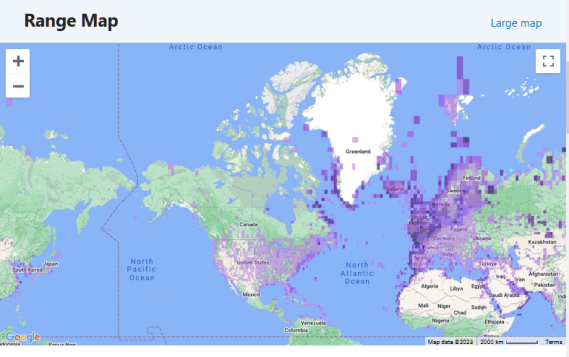
Link to eBird page: https://ebird.org/species/lbbgul
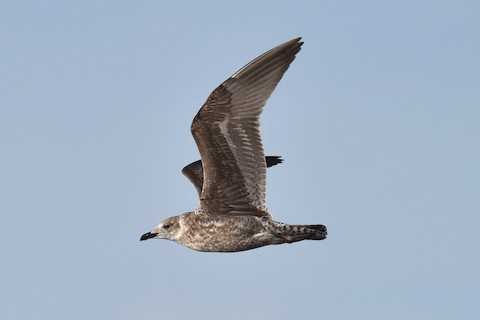
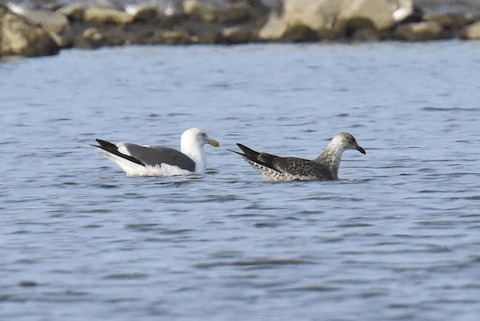
We don’t get a lot of Lesser Black-backed Gulls in SoCal let alone at Malibu Lagoon. It’s been there at least Dec. 17-20, 2023 and might stick around longer. It’s primarily a European & West Asian bird, so it appears more often on the U.S. east coast than the west coast. 21″ long, 1st-cycle bird (first winter).
There’s also a Laughing Gull at Cabrillo Beach.
I got the following from eBird.
Photos:
William Tyler 12/20/23
https://ebird.org/checklist/S156770710
Typical first cycle. Contrasting white head. All dark bill (parallel-sided). Long wings. (Kind help from Andy Birch).
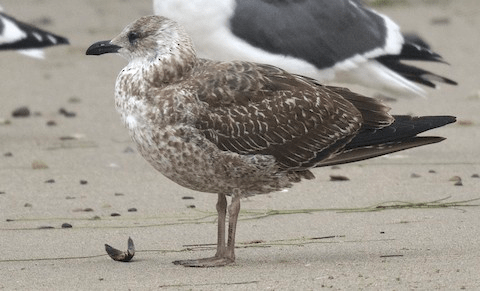
Naresh Satyan 12/17/23 Total of 8 photos on link below
https://ebird.org/checklist/S156568717?_gl=1*bj3cph*_ga*MTYwNzM3MDkwLjE3MDMxOTM3MTE.*_ga_QR4NVXZ8BM*MTcwMzE5MzcxMS4xLjAuMTcwMzE5MzcxMS42MC4wLjA.
First cycle. Fairly typical bird with white head with smudging around the eye, replaced scapulars dark gray with darker centers, juvenile coverts and tertials dark chocolate brown with thin white edges, elongated primaries dark black, upper and undertail coverts white based with thin brown markings, dark tail, narrow parallel-sided all-dark bill.
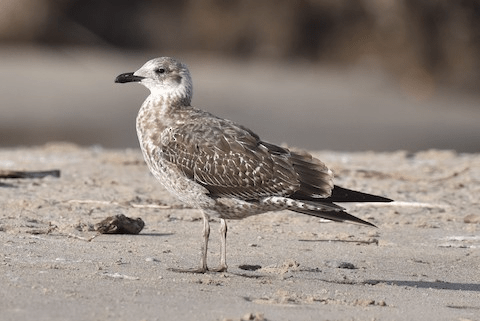
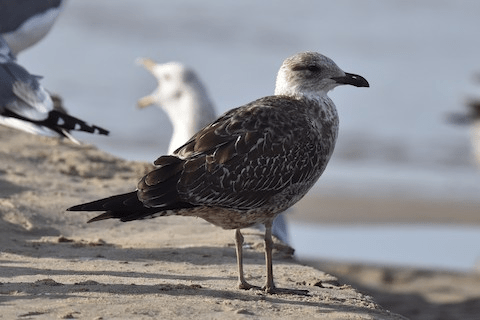
Link to eBird page: https://ebird.org/species/lbbgul
Slender, long-winged gull [21″], same size as California Gull, slightly smaller than Herring or Western Gulls [25″]. Adults show dark gray back and yellow legs; in winter note fairly heavy streaking on head and neck. Takes four or five years to reach adult plumage; immatures can be difficult to distinguish from other gulls, especially Herring. On first- or second-year birds, look for contrastingly whitish head with dark smudge around the eye, long wings, dark bill, whitish rump and tail base, and evenly dark wings in flight. Can be found around any body of water but prefers beaches and flats. Often with flocks of other large gulls. Common in Eurasia, wintering to Africa and Southeast Asia. Population in North America has increased dramatically in the last couple decades; now regular (even fairly common!) on the Atlantic coast, rarer inland and farther west.
Discover more from SANTA MONICA BAY AUDUBON SOCIETY BLOG
Subscribe to get the latest posts sent to your email.



 SANTA MONICA BAY AUDUBON SOCIETY BLOG