Bear Divide Banding Station Trip Report: April 18, 2026
[By Chuck Almdale; photos by Armando Martinez, Trish Oster & Chris Tosdevin]
North of the San Fernando Valley in the mountains above Olive View and San Fernando, a small group of very experienced bird banders are doing their work. Anyone can go and watch them. They do this at Bear Divide near the Fire Station just off Little Tujunga Canyon Rd., Tuesday through Saturday, from dawn to 10 am, from late March through early May.
Birders can also stand on the ridge road and try to identify birds as they fly by. Some zoom past, others land in the treetops and bushes, perhaps to rest a moment, then launch themselves down the the northern slope. There are also several roads and paths that you can walk or set off on a long hike.
Although we all arrived at different times, we all managed to watch the banders do their work. They had mist nets set up at two nearby locations. The banding station consisted of a couple of vehicles at the end of the large parking area and blocked off from the spectators by several tables, leaving the banding area within. From a “clothesline” hung several white cloth bags, each containing one bird. One by one the birds were weighed, removed from their bag, measured, banded on one leg, and brought over to the spectators for closeup viewing and photos.
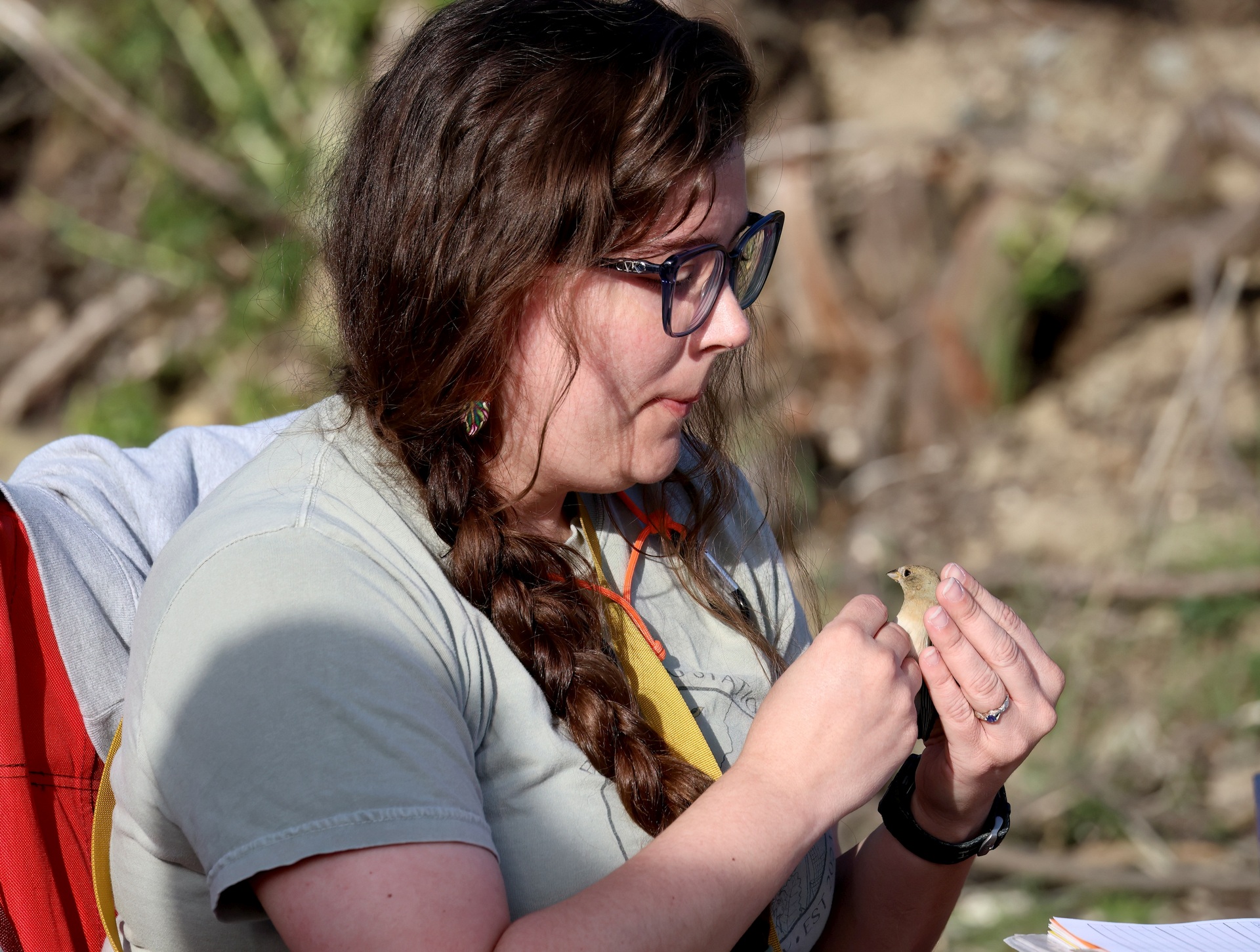
(Trish Oster 4-18-26)
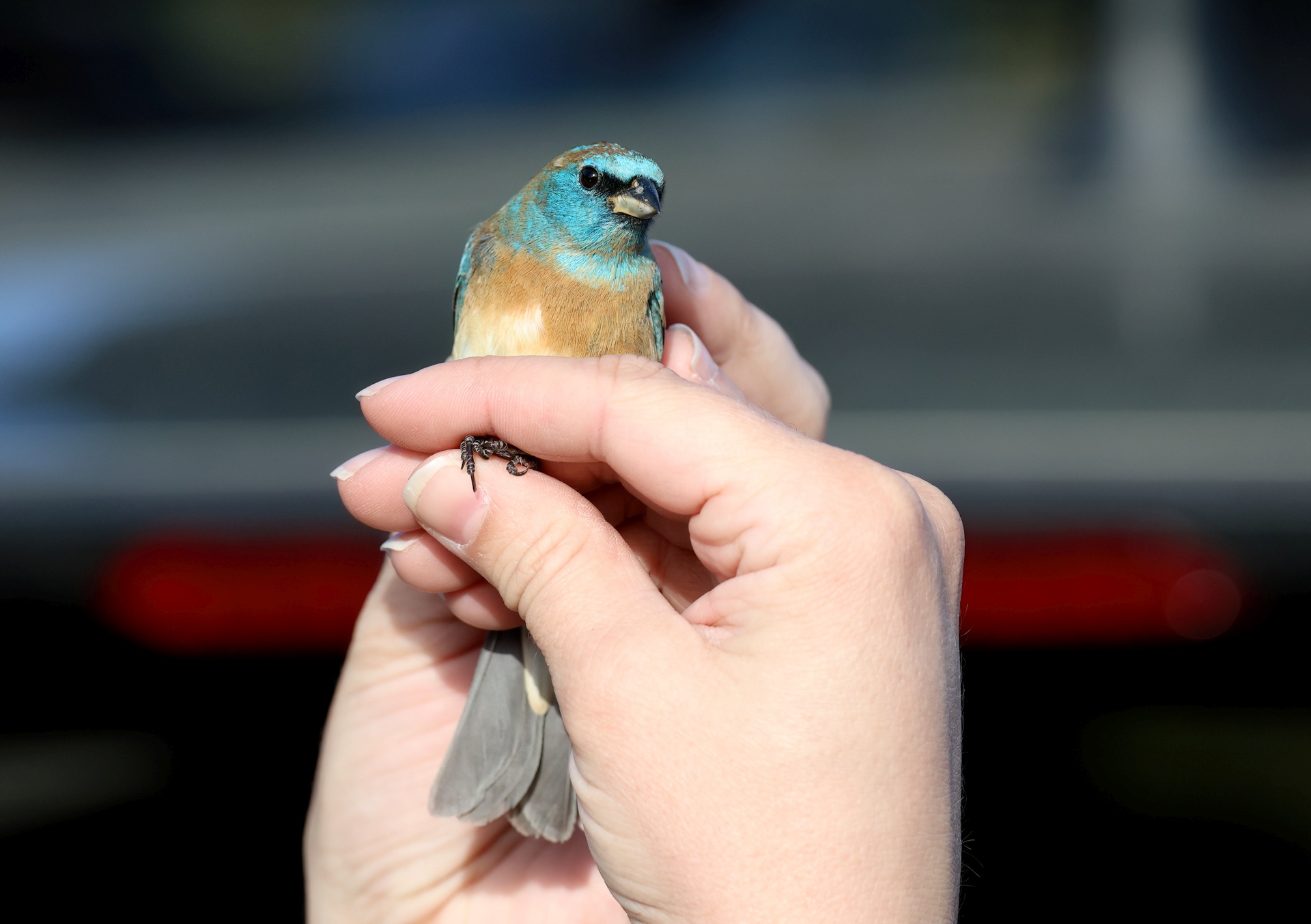
(Trish Oster 4-18-26)
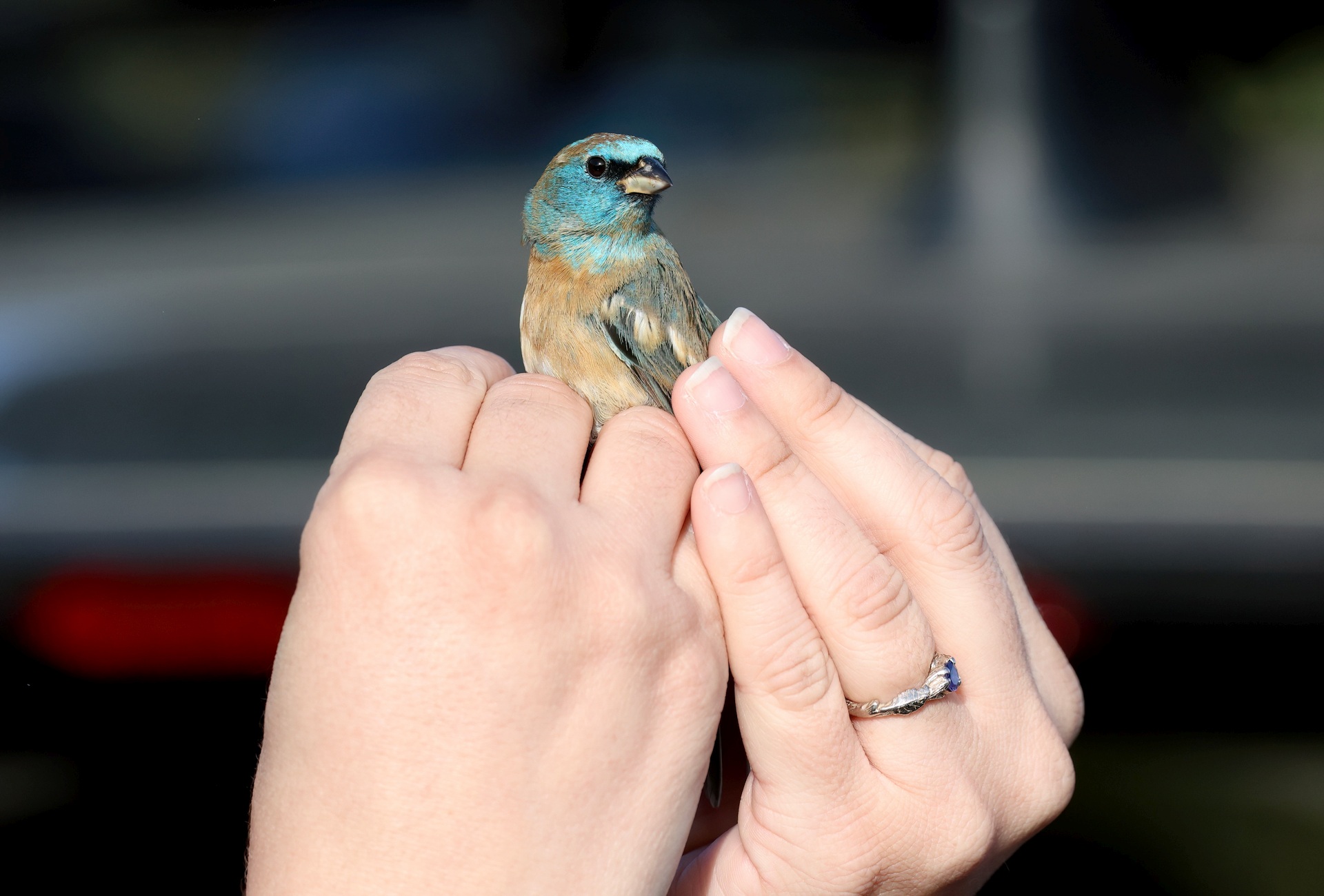
(Trish Oster 4-18-26)
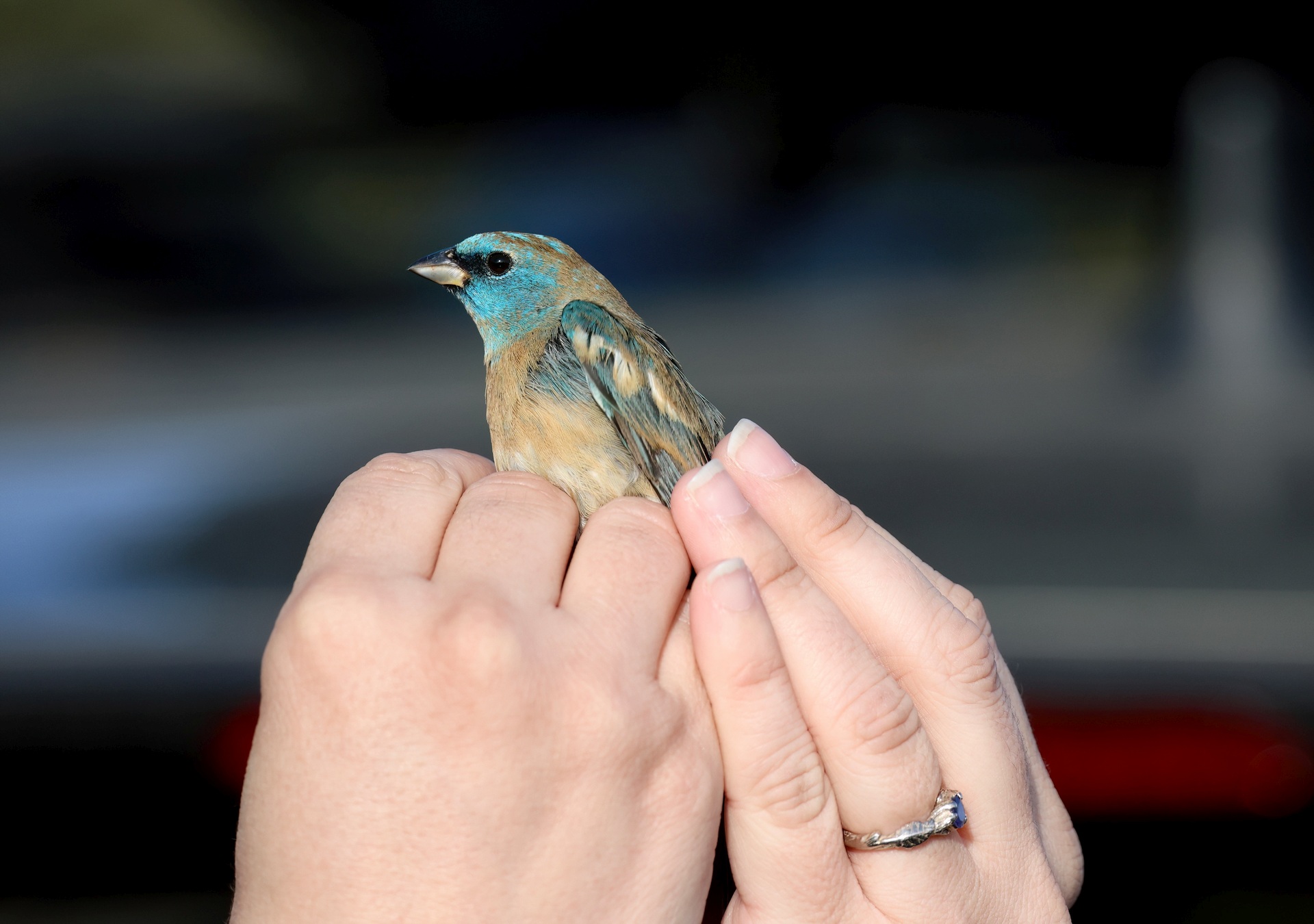
(Trish Oster 4-18-26)
Then the bird would be released to continue its journey north.
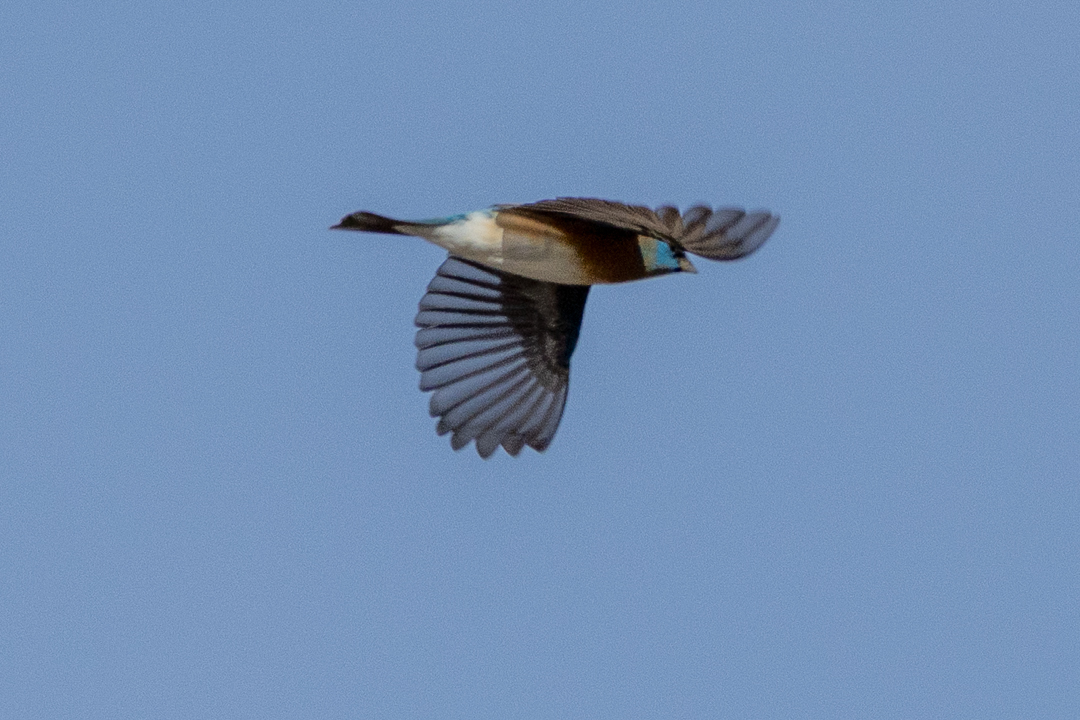
(Armando Martinez 4-18-26)
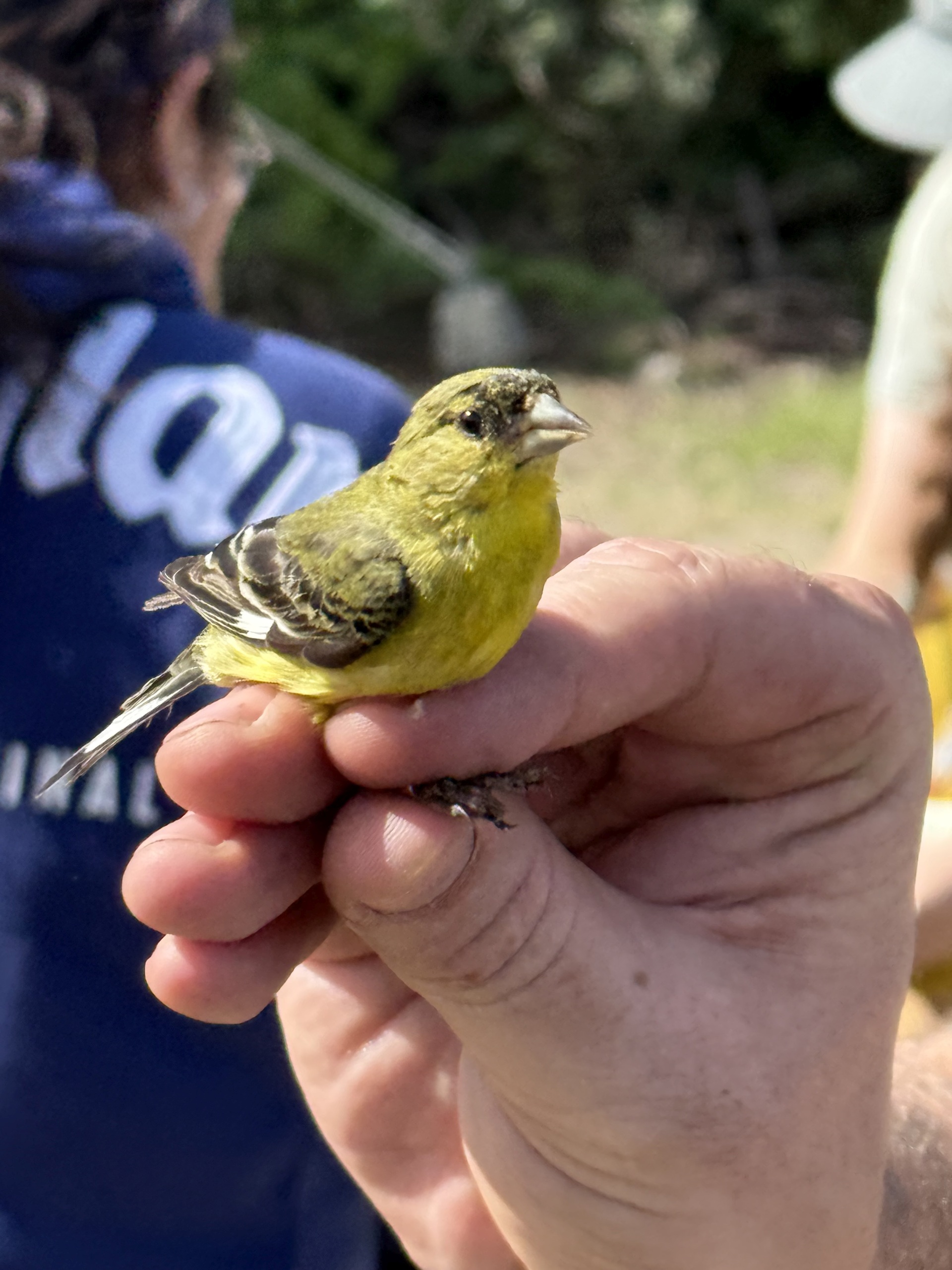
Larger birds such as woodpeckers and thrushes can fly into a mist net and wind up getting banded, but most of the birds are the smaller passerines. As the banding season progresses, the mix of captures changes. Today it was mostly Lazuli Buntings, Lesser Goldfinches and several warblers.
The last bird we saw banded was a Rufous Hummingbird, a female with a completely green back and a bit of rufous on the flanks and tail. We got to see close up the famous notched tail feather which differentiates the Rufous from the very similar Allen’s. It’s the R2 feathers, second from the center on the 10-feather tail.
Among the warblers were the Nashville Warbler. Notable among their field marks are the gray head, yellow breast and belly, a non-gray throat – either yellow or pale – and a complete white eye ring.
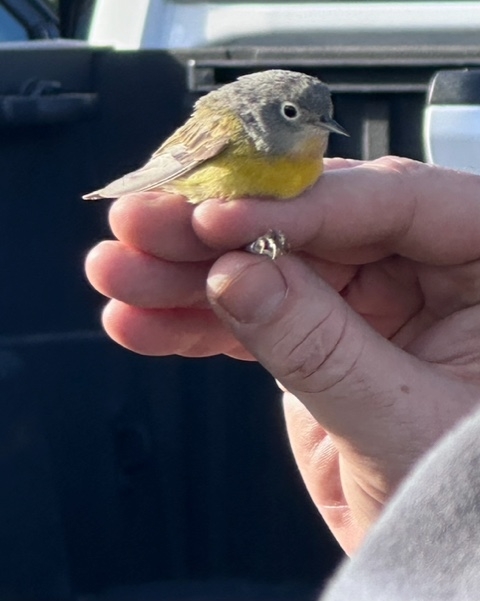
(Trish Oster 4-18-26)
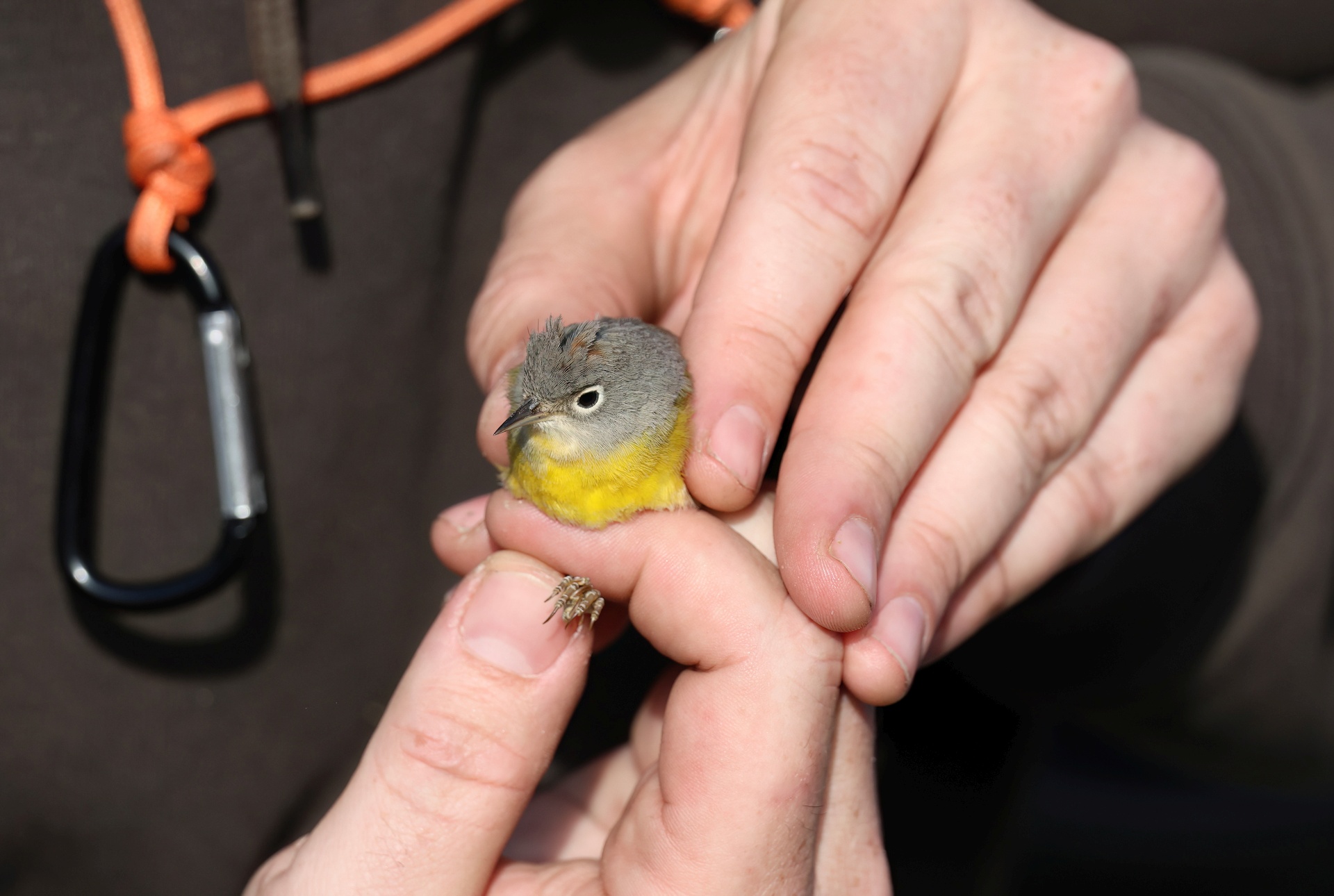
(Trish Oster 4-18-26)
They also have a rufous crown patch, rarely seen unless they’re displaying in aggression or in courting, or when the bander gently blows on their crown.
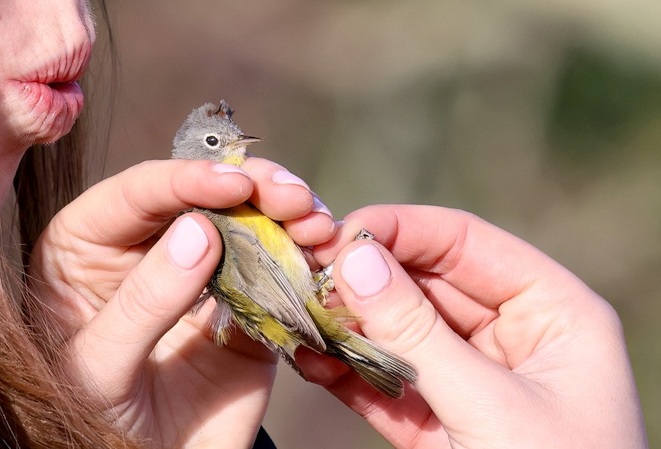
Bear Divide Banding Station (Trish Oster 4-18-26)
After we saw the crown, the bird was released and off it went, heading north.
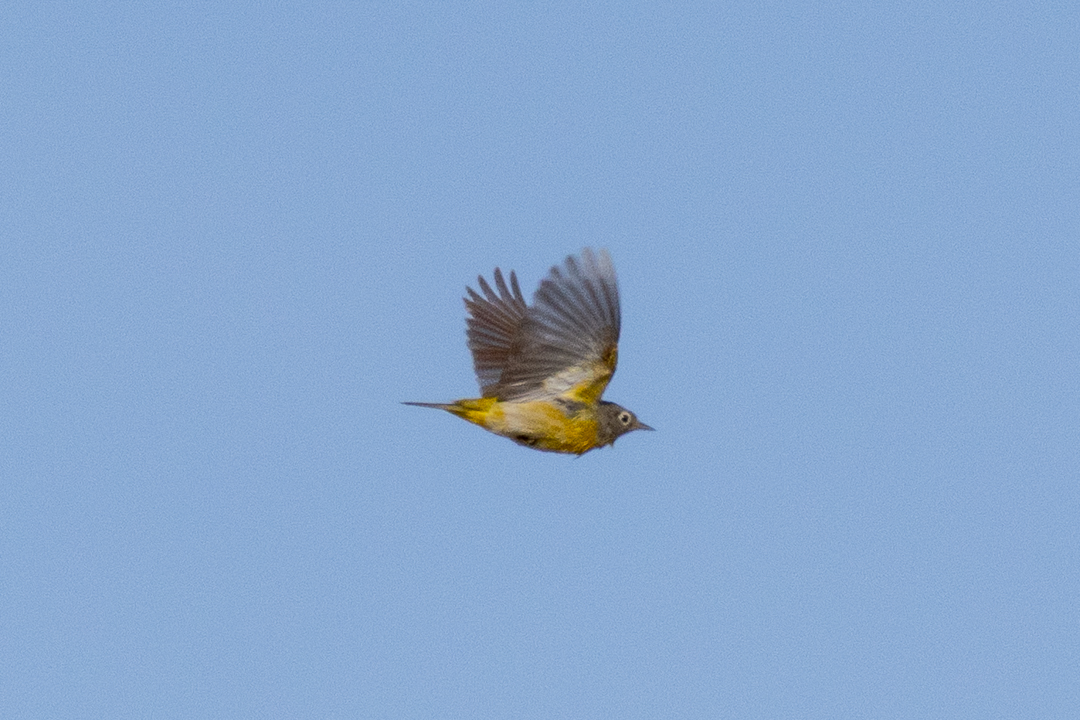
(Armando Martinez 4-18-26)
There were also MacGillivray’s Warbler, the least commonly-seen (by me) of the ten regularly-visiting warbler species in Southern California. They also have a yellow breast and belly, but the head is a darker gray than the Nashville, the throat is also gray, and the eye ring is broken front and rear. They’re a whopping 3/4th-inch larger than the 4.5″ Nashville.
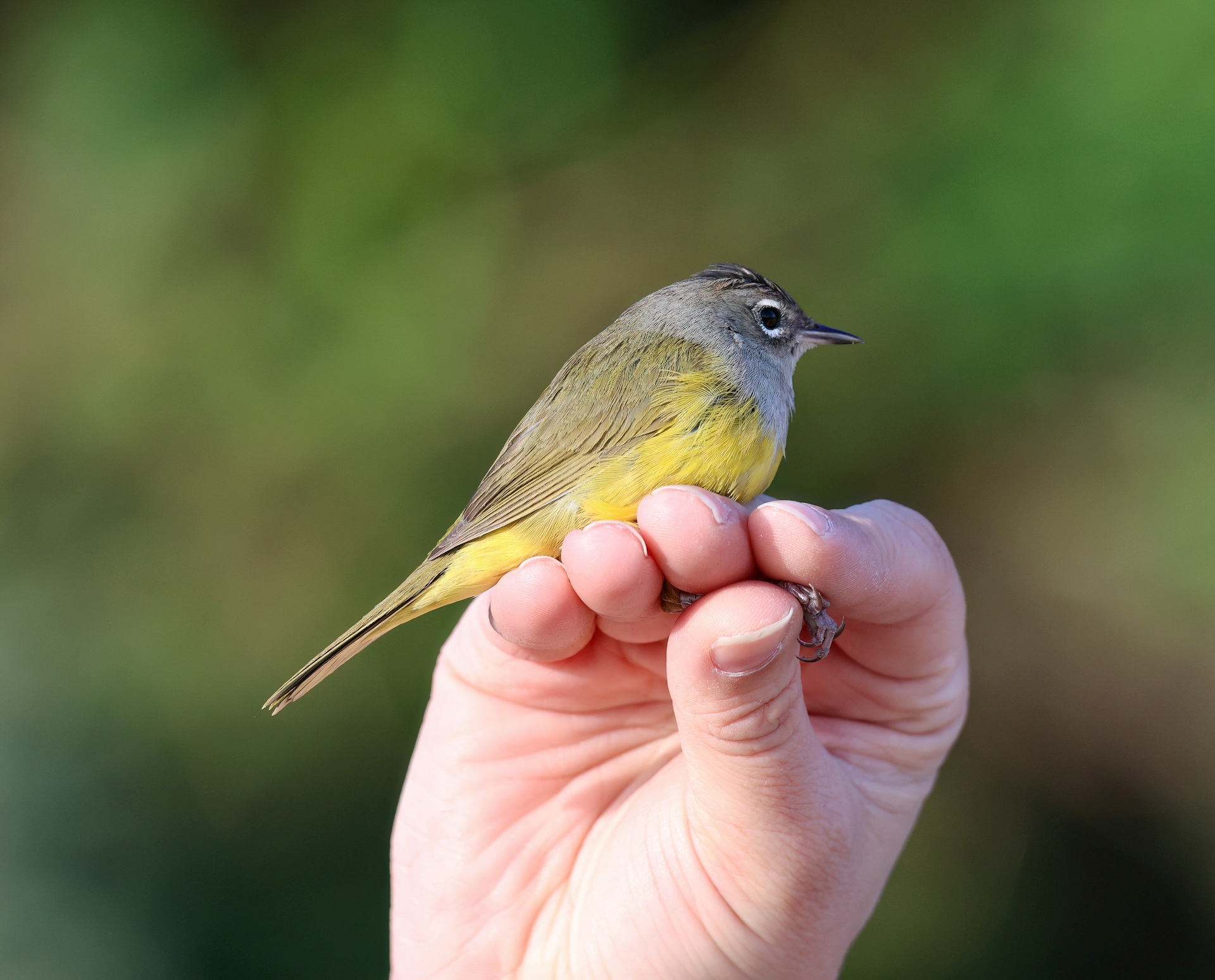
(Trish Oster 4-18-26)
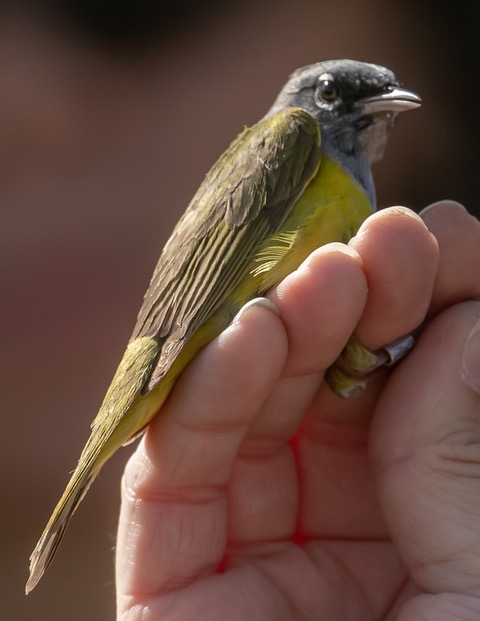
After we watched the banding for a while, a class of students arrived to witness the procedure, and we moved aside to let them move to the front, although we returned later after the students left. Most of us wandered over to the ridge road to watch the birds arrive and leave. Identifying passerines in flight is not the easiest task. Most went unidentified and uncounted (by our group). Fortunately some landed, such as flycatchers, orioles and Black-headed Grosbeaks, and the resident birds were continually busy.
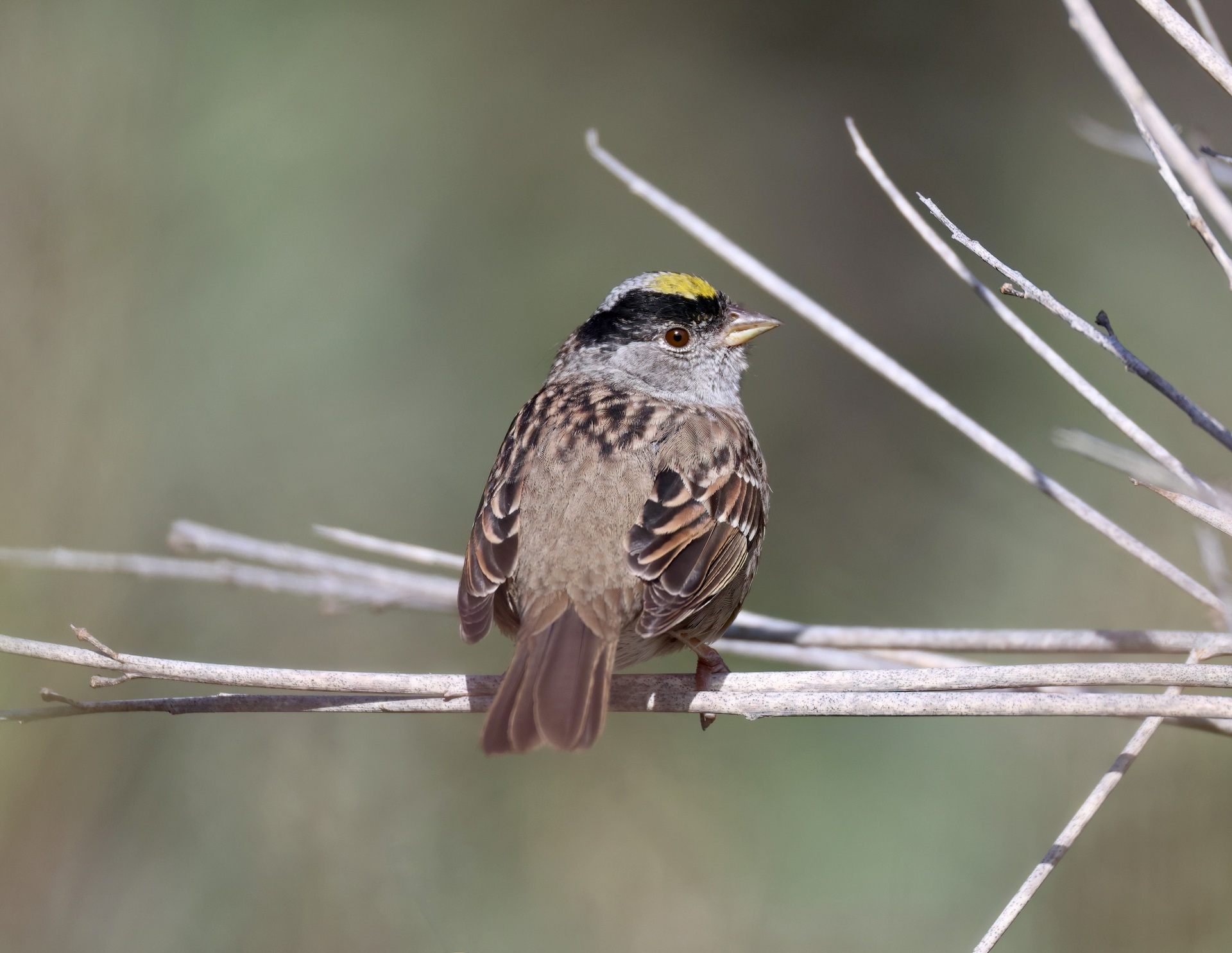
(Trish Oster 4-18-26)
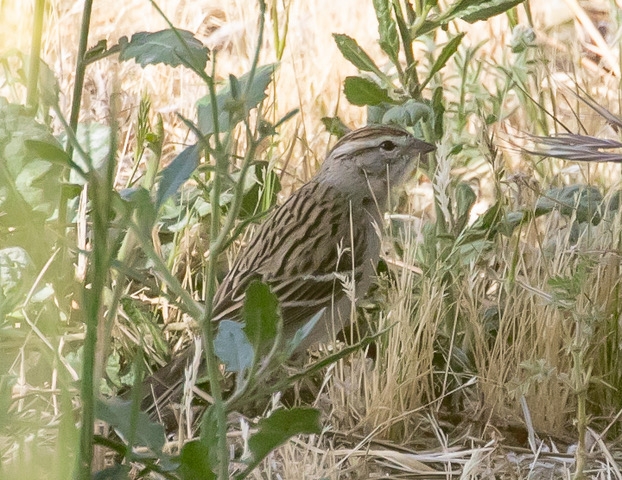
Some of us drove up the “truck road” from the banding station to a pull-out spot about 1/2 mile from the banding site. Here we saw and heard various birds: a nesting Red-tailed Hawk, many Acorn Woodpeckers, Ravens and a Red-tailed Hawk overhead, several singing Canyon Wrens, House Finches and Lesser Goldfinches, and one hard-to-find Black-Chinned Sparrow that landed briefly in a tree. The sparrow was too briefly seen to photograph, but one of the Canyon Wrens approached us, singing all the while.
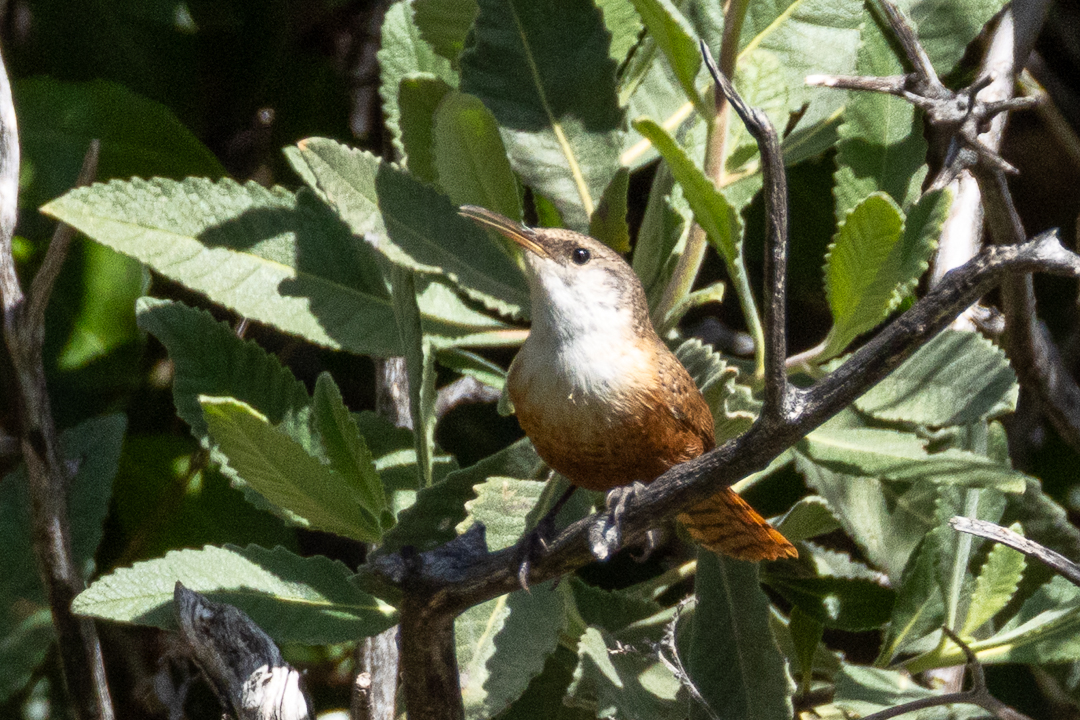
(Armando Martinez 4-18-26)
As we had scattered into various frequently-moving groups, many of the birds reported were seen by only one or a few people. I did my best in putting together the list below from reports I received at the time, and later from eBird trip lists. A total of 56 identified species is pretty good, I think, for this chaparral location. Below this trip list is the list amassed for April by those doing a regular point count, which shows 49 species.
Angeles NF–Bear Divide, Los Angeles, California, US
Apr 18, 2026 7:45 AM – 11:00 AM
Protocol: Traveling, 0.5 mile(s)
56 species (+1 other taxa) 209 total birds
Checklist Comments: Field Trip of Santa Monica Bay Audubon Society. Visit to the banding station. Mostly standing on hill edge watching migrating birds fly past. Many local resident birds present. Also drove .5 mile to small woods patch about 500 ft. higher. List includes birds seen by: Chuck Almdale (if not otherwise noted), Jean Garrett, Armando Martinez, Trish Oster, Lu Plauzoles, Chris Tosdevin & Kathleen Waldron.
| Angeles NF–Bear Divide, Los Angeles, California, US | ||
| Mountain Quail | 2 | Heard only, .5 miles from BDBS |
| California Quail | 1 | Fire Station helicopter pad |
| Band-tailed Pigeon | 10 | Fly-bys |
| Eurasian Collared-Dove | 2 | Reported by: Lu Plauzoles |
| Mourning Dove | 4 | Fly-bys |
| Black-chinned Hummingbird | 2 | Reported by: Armando Martinez |
| Anna’s Hummingbird | 5 | |
| Rufous Hummingbird | 1 | In hand, banded |
| Allen’s Hummingbird | 5 | |
| Rufous/Allen’s Hummingbird | 4 | |
| Turkey Vulture | 4 | |
| Sharp-shinned Hawk | 1 | Fly-by |
| Red-tailed Hawk | 2 | One flew to nest, settled down gently & slowly as if onto eggs or chicks |
| Acorn Woodpecker | 8 | Granary tree, many holes .5 miles from BDBS |
| Northern Flicker | 3 | Heard calling; 2 by Lu Plauzoles |
| American Kestrel | 1 | Reported by: Kathleen Waldron |
| Olive-sided Flycatcher | 1 | Reported by: Jean Garret |
| Western Wood-Pewee | 1 | Reported by: Jean Garrett |
| Hammond’s Flycatcher | 2 | Reported by: Armando Martinez |
| Western Flycatcher | 3 | |
| Ash-throated Flycatcher | 1 | Reported by: Armando Martinez, Jean Garrett |
| Western Kingbird | 2 | |
| Western Warbling Vireo | 2 | Reported by: Armando Martinez |
| California Scrub-Jay | 18 | |
| Common Raven | 9 | |
| Tree Swallow | 2 | |
| No. Rough-winged Swallow | 3 | |
| Wrentit | 8 | All heard singing |
| White-breasted Nuthatch | 1 | Reported by: Armando Martinez |
| Blue-gray Gnatcatcher | 1 | Reported by: Armando Martinez |
| Canyon Wren | 3 | 1 seen, 2 more heard |
| Northern House Wren | 4 | 1 seen, 3 more heard |
| Bewick’s Wren | 2 | 1 seen, 1 more heard |
| Western Bluebird | 5 | 3 flyby, 2 more Reported by: Armando Martinez |
| Hermit Thrush | 1 | |
| Phainopepla | 3 | |
| House Finch | 16 | |
| Lesser Goldfinch | 4 | 2 fly-by, 2 singing |
| Chipping Sparrow | 3 | Passing by, landed in bush |
| Black-chinned Sparrow | 1 | Flying, landed in tree, not breeding male. |
| .5 mi. from BDBS, previously reported this area. | ||
| Dark-eyed Junco | 2 | Passing by, landed in bush |
| California Towhee | 3 | |
| Spotted Towhee | 2 | Reported by: Lu Plauzoles |
| Hooded Oriole | 2 | 1 reported by: Kathleen Waldron |
| Bullock’s Oriole | 2 | Reported by: Kathleen Waldron |
| Orange-crowned Warbler | 2 | 1 in hand by banders |
| Nashville Warbler | 2 | In bander’s hands |
| MacGillivray’s Warbler | 4 | Some in bander’s hands |
| Northern Yellow Warbler | 1 | Reported by: Armando Martinez |
| Yellow-rumped Warbler | 3 | 1 landed in tree, 2 rpt by: Armando Martinez |
| Black-throated Gray Warbler | 3 | |
| Townsend’s Warbler | 1 | Reported by: Armando Martinez |
| Hermit Warbler | 2 | Reported by: Armando Martinez |
| Wilson’s Warbler | 1 | Heard only |
| Western Tanager | 2 | Passing by, landed in trees |
| Black-headed Grosbeak | 2 | Passing by, landed in tree |
| Lazuli Bunting | 24 | Fly-bys. 9 reported by: Armando Martinez |
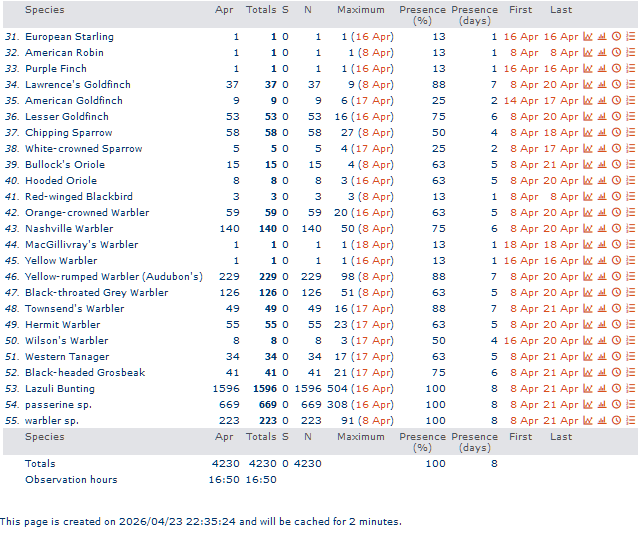
A group of birders, perhaps associated with the banders, is maintaining a point count at Bear Divide (link to list). Their count began on 15 March 2024 with a total of seven species. Below is the count so far for April 2026 for northbound birds, which includes 8 dates, beginning on the 8th and ending on the 21st, showing 4,230 birds in 49 species and 6 groups (e.g. passerine sp., warbler sp.).
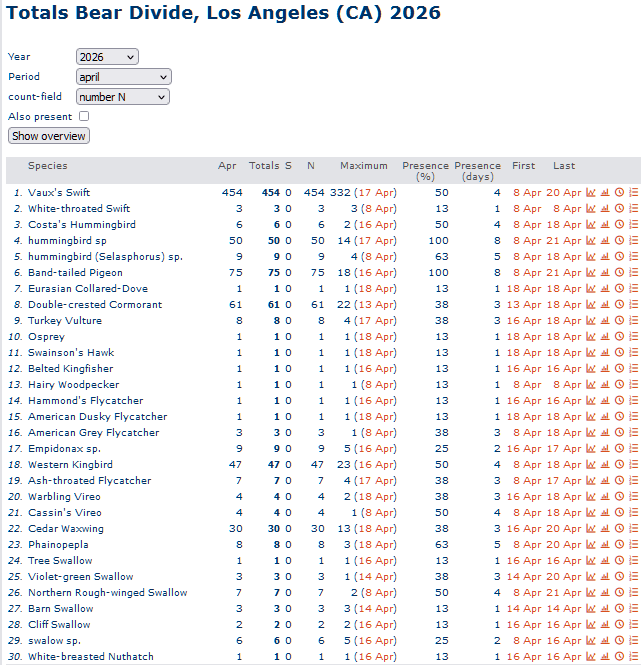
On the Banding Station website is a lot of interesting and useful information, including the following:
Photography Etiquette
Photography is generally allowed if it does not interfere with normal banding processes and as banding volume permits. We will provide as many up-close photo opportunities as possible while birds are safely held in the appropriate holds as time and safety allows. To minimize handling time, please be ready for photos when approached by a bander. The Bear Divide Banding Station follows the North American Banding Council’s Photographic Guidelines. Below is a summary.
- Do not photograph or post publicly on social media or otherwise photos that depict birds in inappropriate holds or appear to be showing signs of stress including, but not limited to, closed eyes, gaping or open bills, fluffed or rumpled plumage, or flapping wings as it is important to us to avoid any instances of misrepresentation or misinterpretation of banding efforts. If you are unsure if your photo is appropriate to share, please check with the Bander-in-Charge.
- Refrain from taking images of birds in mist nets, during net extraction, or during processing, unless permission is obtained from the Bander-in-Charge
- Only take photographs or videos when approached by a trained bander with birds in the appropriate photographer’s grip intended for public display and engagement
- Avoid ALL flash photography
- We reserve the right to ask for the removal or deletion of inappropriate photos that do not meet our station’s or the NABC’s photographic standards.
Discover more from SANTA MONICA BAY AUDUBON SOCIETY BLOG
Subscribe to get the latest posts sent to your email.



 SANTA MONICA BAY AUDUBON SOCIETY BLOG