Free email delivery
Please sign up for email delivery in the subscription area to the right.
No salesman will call, at least not from us. Maybe from someone else.
Theodore Payne Poppy Hour, March 18 | Noriko Smallwood
[Posted by Chuck Almdale]
A message from our friends at Theodore Payne.

MARCH POPPY HOUR

| Poppy Hour: A Conversation with Noriko Smallwood Thursday, March 18, 5:30 PM -7:00 PM Free event via Zoom or YouTube Los Angeles is known worldwide as a sprawling city with palm tree lined streets and stunning sunsets. While those things are true, we are also home to an incredible variety of wildlife. Urban sprawl is changing the natural landscape, but is there hope? Noriko Smallwood has some answers for us. There will be a Q&A session. About Noriko Noriko is currently a Master’s student in Dr. Eric Wood’s lab at Cal State Los Angeles where she is studying the influence of native plants on wildlife in southern California residential yards. In particular, her research focuses on the interactions between birds and native plants, and the drivers behind those patterns. Though her research is ongoing, she has found that native yards host significantly more birds and bird species than traditional, lawned yards. Noriko is passionate about conserving the environment and enjoys learning how native landscaping can improve habitat for wildlife in urban environments. Website: The Wood Lab: www.ericmwood.org/noriko-smallwood Instagram: @noriko_in_nature Poppy Hour is our California native plant internet mashup. Part interviews, part garden tour, part happy hour, we explore the amazing diversity of people and ideas that connect to Southern California plants and landscapes. Join us! All previous episodes are archived on our YouTube channel. Thank you to an anonymous donor for making Poppy Hour Season 2 possible. Poppy Days Spring Sale March 25-27, 8:30 AM- 4:30 PM Create an at-home superbloom! We’ll have a great selection of colorful annuals and other beautiful spring wildflowers. Members receive a 15% discount and nonmembers receive a 10% discount on all plants, seeds, bulbs, and TPF gear. Click here to sign up for a Poppy Day Spring Sale shopping slot. |

Theodore Payne: Annual Garden Tours
[Posted by Chuck Almdale]
Springtime swiftly approaches. Some of our local birds seem to think it’s already here (I’m looking at you, mockingbirds). Perhaps it’s time to spruce up your native plant garden or plant a new bush or two to replace those beaten into submission by our recent hail storms. What? You don’t have any native plants? As Native Plant Representative to the SMBAS board Margaret Huffman always (yes, always) said:
Native plants attract native insects which attract native birds.

| 18th Annual Theodore Payne Native Plant Garden Tour Join us for an interactive at-home experience of California native plant gardens and landscapes through the seasons. Expanding from spring to an entire year of transformation, TPF’s 18th Annual Garden Tour will take you on an adventure through a select group of gardens with HD video and 360-degree views. Together, we’ll become immersed in the urban ecosystem and the native plant community which makes it thrive. Join us for stunning garden footage, landscape designer and homeowner interviews, expert panel discussions, live music, photo contests, native plant beer tasting, and a keynote address from Doug Tallamy, author of Bringing Nature Home. The 18th annual Theodore Payne Native Plant Garden Tour takes place from Friday, April 16th through Sunday, April 18th. The event will take place over Zoom. Friday, April 16, 6-9pm Panel Discussion — A Vision for Los Angeles Landscapes. Happy Hour — featuring a live tasting of Local Source (native plant beer created by Eagle Rock Brewery in collaboration with Theodore Payne Foundation) and live music from Daniel Riera. Saturday, April 17, 10am-2pm Live narrated Garden footage (spring and winter), featuring private and public gardens. Roundtable — Designing for the environment. Sunday, April 18, 10am-2pm Roundtable — Plant care through the seasons. Live narrated Garden footage (spring and winter), featuring private and public gardens. Keynote Address — Doug Tallamy, author of Bringing Nature Home. Tickets are available at https://www.nativeplantgardentour.org/ along with detailed information about the tour, and associated offerings. Images available on request. GET TICKETS  Be a part of the tour! We want to see your visions of nature in California. From March 1st – April 9th, share your favorite photos of California native plants and enter to win our 2021 Spring Photo Contest. PRIZES: A $100 gift certificate will be awarded to the winner of each of the following categories: SPRING VIBES: Photo that evokes the season of spring HABITAT: Photo that captures the interactions between plants, people, winged or legged creatures PLANTS IN POTS: Photo of a thriving container garden HOW TO ENTER: To submit a photo, use hashtags #NativePlantGardenTour and #TPFSpring21 on Instagram or Facebook or email photos to gardentour@theodorepayne.org with subject: Garden Tour Photo Contest. DEADLINE: The contest is open from March 1st through April 9th. The deadline for submissions is Friday, April 9th at 11:59 pm PST. Winning photographs will be announced and featured LIVE during the 2021 Native Plant Garden Tour. Good Luck! THANKS TO OUR GENEROUS SPONSORS  |
Bird Love: The Family Life of Birds | Book suggestion
[Posted by Chuck Almdale]
BIRD LOVE: THE FAMILY LIFE OF BIRDS
Wenfei Tong | Princeton University Press | 2020

The following text is excerpted from an article in Natural History Magazine June 2020 (from the American Museum of Natural History in New York City), The Family Life of Birds: Why some individuals of species make more faithful partners. Written by the book’s author Wenfei Tong and itself excerpted from the book. This is another book I have not yet read, but looks really good. So many books, so little time!
Natural History Magazine
More than 90 percent of birds appear to be monogamous, in that males and females form pair-bonds and raise chicks together….Males and females don’t always want the same thing out of a reproductive relationship, and mating systems are the outcomes of a battle of the sexes to leave the most descendants, played out in individual lifetimes and over generations of evolution. Mating systems are defined by the number of partners each sex has – monogamy for one female and one male, polyandry for one female mating with multiple males, polygyny for the reverse, and polygynandry for reciprocal promiscuity.[M]ajor groups of birds tend to be more monogamous if their chicks require more care. A young eagle or albatross cannot survive without the care of two parents, who are part of a stable, long-term relationship. In contrast, ducklings are so independent they can feed themselves from the moment of hatching, and we see little parental investment by most male ducks. Closely related birds from the same genus have different mating systems largely because of what they eat and where they live. For instance, forest-dwelling weaverbirds are generally insectivorous, and remain in monogamous pairs that guard territories all year round. It takes two adults to catch enough insects to feed a hungry brood.
Author Wenfei Tong is a research associate in the Department of Organismic and Evolutionary Biology at Harvard University and a faculty member of the University of Alaska, Anchorage. She runs nature tours from her hometown of Missoula, Montana.
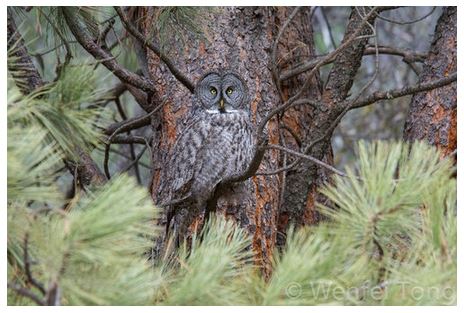
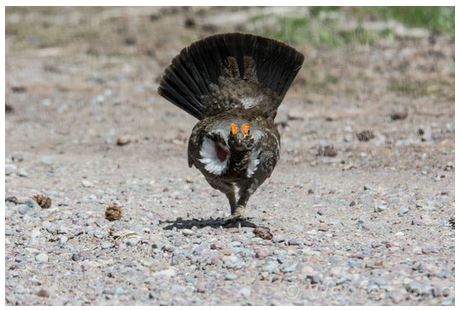
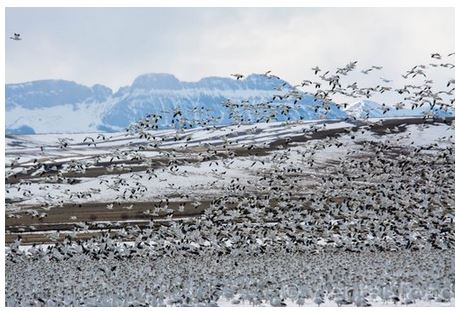
All photos in this blog are from her Big Sky Safaris website.
NHBS.com readers gives Bird Love a 5-star rating
More than 90 percent of birds appear to be monogamous, but beneath the surface there is a huge variety of mating systems in play, from temporary monogamy and extra-pair mating to multiple partners for either sex, with some species switching between these as their circumstances change.
Discover the amazing array of courtship techniques employed by birds around the world:
Male bowerbirds construct extravagant galleries to attract females
Ospreys bring gifts of food in exchange for sex
Male skylarks perform simultaneous aerial and vocal acrobatics to impress females
The practice of lekking, where males in a species such as grouse gather to display to females, who then complete reproduction solo, from nesting to raising chicks
Wenfei Tong is interviewed by Mark Bekoff in Psychology Today
I recently read a fascinating, comprehensive, and beautifully illustrated book about numerous aspects bird behavior called Bird Love: The Family Life of Birds, and I’m pleased to post this interview with its author, Wenfei Tong. A summary of the book can be seen here. Wenfei is a biologist with a passion for understanding and conserving the natural world. She went to Princeton and Oxford as an undergraduate, and has a Ph.D. in evolutionary biology from Harvard, where she is currently a research associate.I wanted to know more about Wenfei and her outstanding book and I’m pleased she could take the time to answer a few questions….
Review from Good Reads
A video conversation with author Wenfei Tong. 48 minutes
The Glitter in the Green | Book Suggestion
[Posted by Chuck Almdale]
The Glitter in the Green: In Search of Hummingbirds
By Jon Dunn | Basic Books | $30 | 352 pgs | ISBN 978-1-5416-1819-0 | Released 4-20-21

The following comments are from Natural History Magazine, March 2021 (from the American Museum of Natural History in New York City). I haven’t read it yet, but it looks like a good book about this wonderful family of birds.
In a garden on Isla Robinson Crusoe — a shred of volcanic land thirty-three degrees south of the equator and several hundred miles west of the coast of Chile — wildlife writer Jon Dunn stood transfixed. The object of his attention: a tiny hummingbird that few readers of this effusive travel memoir will ever behold in the flesh, “my first Juan Fernández Firecrown [Sephanoides fernandensis], ablaze with fiery colour. He seemed to glow from within, like a hot ember, a rich, burning umber…He stared evenly back at me, his head slightly cocked…For a fleeting instant his forehead caught the sunlight and went supernova, an intense dazzle of searing orange.”
There are plenty of backstories to add grace notes, sometimes in a minor key, to Dunn’s hymns of praise. At a public market in Mexico City, Dunn finds a stall offering husks of dried hummingbirds as love charms. “They are good for love,” the vendor tells him, “but also for your health if you are ill. You can eat their hearts in a soup.” Attempting to visit Bolivia’s Madidi National Park, Dunn winds up in the midst of a post-election uprising, and after a scary encounter with armed men at a rural roadblock, leaves the country amidst tear gas and gunshots, “even though I had not set eyes on a single hummingbird.”
Author’s Bio from Bloomsbury Publishing
Author Jon Dunn is is a natural history writer, photographer and tour leader based in Shetland, who travels worldwide searching for memorable wildlife encounters. A childhood exploring the water meadows and abandoned orchards of the Somerset Levels, and the droves and ancient woods of Dorset’s Blackmore Vale spurred a lifelong passion for all things natural history based. His Shetland home features otters on his doorstep, and summer evenings watching porpoises from the kitchen window. Once stalked by a Mountain Lion in Mexico’s Sierra Madre Occidental, he generally prefers experiencing wildlife on his own terms and not as part of the food chain.
Publisher’s description from Basic Books
An acclaimed natural history writer follows the trail of the remarkable hummingbird all over the world.
Hummingbirds are a glittering, sparkling collective of over three hundred wildly variable species. For centuries, they have been revered by indigenous Americans, coveted by European collectors, and admired worldwide for their unsurpassed metallic plumage and immense character. Yet they exist on a knife-edge, fighting for survival in boreal woodlands, dripping cloud forests, and subpolar islands. They are, perhaps, the ultimate embodiment of evolution’s power to carve a niche for a delicate creature in even the harshest of places.
Traveling the full length of the hummingbirds’ range, from the cusp of the Arctic Circle to near-Antarctic islands, acclaimed nature writer Jon Dunn encounters birders, scientists, and storytellers in his quest to find these beguiling creatures, immersing us in the world of one of Earth’s most charismatic bird families.
There is a short video of the author on this site.
Praise from Others
“Jon Dunn’s book is an adventure-filled, continent-spanning travelogue. It is also meticulously researched. By carefully peeling back layers of history to find shimmering hummingbirds hidden within, Dunn has created essential reading to understand human obsession—past and present—with these remarkable creatures.” — Jonathan C. Slaght, author of Owls of the Eastern Ice: A Quest to Find and Save the World’s Largest Owl
*****
“Glittering gems of the Americas and nowhere else on Earth, hummingbirds lure Jon Dunn from Alaska to Chile in this whizzing travelogue of hummer natural history. In an adventure replete with pop culture and literary references, Dunn treks deserts and jungles, investigates a slaughter of hummingbirds for love potions, unmasks the real James Bond, and in Colombia sees an otherworldly hummer, ‘like some enameled god fallen to earth.’ The book is that exquisite.” — Dan Flores, author of the New York Times bestseller Coyote America: A Natural and Supernatural History
*****
“More than just an observant birdwatcher, Jon Dunn is a talented traveler and writer, capturing just the right details of people and place to make his hummingbird odyssey come alive. The Glitter in the Green is a vivid exploration of a dazzling subject.” — Thor Hanson, author of Buzz: The Nature and Necessity of Bees
*****
“This is more than a bird book, but still, it is. It combines one person’s adventure with arguably the most spectacular group of birds in the world: hummingbirds! The immensely talented writer Jon Dunn follows these highly diverse jewels from Alaska, down the Americas to Tierra del Fuego, and weaves an environmental and cultural dialogue around these hummers and the human-dominated world they live in.” — Joel Cracraft, Curator in Charge, Ornithology, American Museum of Natural History
*****
“Natural history writer Dunn takes readers on a wondrous globe-trotting pilgrimage to seek out hummingbirds as their populations are threatened… Dunn’s vivid prose, balanced with just the right amount of detail, will captivate birders and non-birders alike.” — Publishers Weekly
Breeding Shorebird Atlas | Gyorgy Szimuly
[Posted by Chuck Almdale]
If you like shorebirds, you may find this project interesting. As Gyorgy points out below, it’s as useful to know where particular species are not found, or not breeding, as knowing where they do breed and are found. One of the important discoveries of the January 2001 Western Snowy Plover Winter Window Census of the U.S. Pacific Coast was that Snowy Plovers spend the winter at very localized roosting locations and the birds are rarely seen away from these roosts. As the years went by, we also learned that the same roosting locations persist from year to year. Without learning where the birds weren’t, we wouldn’t have been able to confirm this phenomenon.
Hi All,
The Shorebird Conservation Society has recently announced the launch of the Breeding Shorebird Atlas program aiming to map the abundance, distribution and threats of the shorebirds of the world. The registration for the program is now open and we encourage everyone to book a preferred spot. We not only need data where shorebirds breed but knowing where they don’t breed is equally important. During the 5-6 years of field work volunteers survey 1×1 km UTM squares.
Please find more details about the program here: https://www.shorebirdconservation.org/shorebird-atlas
To find out more about the community please visit: https://www.shorebirdconservation.org/
Membership fee doesn’t exist at the moment. To join us, please fill out the form at https://www.shorebirdconservation.org/membership>
Best wishes, Szimi
Gyorgy Szimuly
Shorebird Conservation Society
gyorgy.szimuly@MAC.COM
https://www.shorebirdconservation.org
https://www.facebook.com/ShorebirdConservationSociety
https://www.facebook.com/EurasianShorebirdSurvey
https://twitter.com/shorebird_soc



 SANTA MONICA BAY AUDUBON SOCIETY BLOG