Free email delivery
Please sign up for email delivery in the subscription area to the right.
No salesman will call, at least not from us. Maybe from someone else.
Zoom Recording: Bats! Genomics, gene-flow, connectivity and the Yuma Myotis, with Joseph Curti, PhD.
The recording of this program from 4 November 2025
is now available online.

Bats! Genomics, gene-flow, connectivity and the Yuma Myotis, with Joseph Curti, PhD.
It may take 30 seconds to boot up. If you want to turn the closed captioning off, click the ‘CC’ button at lower right.
Many people associate the month before and after Halloween with spooky symbols like witches, ghouls, and of course BATS! But how much do you really know about these furry winged creatures? Join UCLA Postdoctoral Researcher and bat scientist Joseph Curti for an hour-long lecture on the remarkable and misunderstood group of mammals known as bats. In this talk, Joseph will discuss bat diversity in Southern California as well as basic features of bat ecology and natural history. He will also share some of the findings from his research on bat genomics aimed at applying whole genome sequencing to understand genomic health and inbreeding in Yuma Myotis bats (Myotis yumanensis), how connected the Yuma Myotis populations are across their range, and barriers to the movement across California.
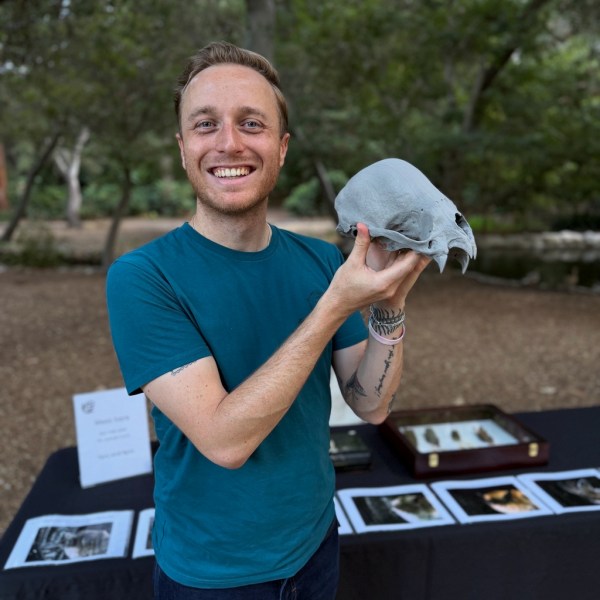
Joseph Curti, Ph.D. is a postdoctoral research fellow at the UCLA La Kretz Center for California Conservation Science. Joey’s current research focuses on the impacts of anthropogenic stressors on bat community composition in urban areas across California. Joey received his Ph.D. in 2024 from the UCLA Ecology and Evolutionary Biology department, where he worked with statewide resource managers on a variety of conservation genomics projects. These included a project aimed at evaluating the impact of roadways in Los Angeles to California quail (Callipepla californica) gene flow and rangewide landscape genomics of the Yuma Myotis bat (Myotis yumanensis). Joey has been working with bats since 2015 and has worked on a variety of projects including radio tracking Big Brown Bats (Eptesicus fuscus) in the California Central Valley, mist netting and acoustic surveys of bats on the California Channel Islands, and acoustic surveys of bats for the Santa Monica Mountains National Recreation Area. Outside of his academic research, Joey regularly leads acoustic bat walks and classes on bat ecology and natural history for groups across Los Angeles, including Theodore Payne Foundation, the LA Natural History Museum, the Ojai Valley Land Conservancy, the Resource Conservation District of the Santa Monica Mountains, and the San Fernando Valley Audubon Society. For more information and to stay up-to-date on his most recent publications and research, please visit his website at www.josephcurti.com.
Link to all SMBAS Zoom Recordings

when ‘seen’ through the ears of a bat?
2025 Top 100 Audubon Photos | Trish Oster’s Hungry Young Grebe
[Posted by Chuck Almdale]
Link to 2025 National Audubon Society winners.
The best 100 of somewhere in the high thousands of entries.
Hallmarks: Clear, sharp, well-framed, interesting, unusual views, unusual behaviors, unusual angles.

Pied-billed Grebe toying with a crayfish. No. 93 in the 2025 NAS photo contest.
(Trish Oster, Legacy Park, Malibu 14 Apr 2024). Birds always swallow fish
head first, but when the beast come front-loaded with weaponry,
that might not be the best tactic.
Among the 100 top photos in the NAS contest, for at least the third year in a row, is #93 by Trish Oster, local birder & bird photographer who occasionally joins us on our Malibu Lagoon bird walks. Trish sent me a copy of the photo. I’ve birded with Trish and I’ve never seen her without her camera, even when eating lunch, and I suspect she had the camera permanently grafted onto her arm, or perhaps it was only the quick-release attachment, which is one reason why she gets so many great photos.
The NAS website has the following photo information:
Contest: United States and Canada
Image Location: Legacy Park, Malibu, California, United States
Camera: Canon EOS R6 with a Canon RF 100-500mm f/4.5-7.1 L IS USM lens; 1/3200 second at f/7.1; ISO 8000
Behind the Shot: A juvenile grebe was foraging in our little local pond. As I was observing the bird, it dove down and came up with a very large non-native red swamp crayfish. At first, I thought it had bitten off more than it could chew. Since I hand-hold my camera, I set a higher shutter speed of 1/3200 sec to compensate for the movement and lowered my exposure to -0.3 EV to make the grebe and the crayfish stand out. After much effort, the grebe miraculously swallowed the crayfish whole. It not only got a well-deserved meal—it was also cleaning our waterways, one invasive crustacean at a time.
Some additional NAS photography links:
2025 Contest Winners: Top 15 Photos & 2 Videos
2025 Contest Honorable Mentions: The next 15
How to become a better bird photographers: Advice from the winners
Malibu Creek State Park
1925 Las Virgenes Rd, Calabasas
Saturday, 8 November 2025 at 8am
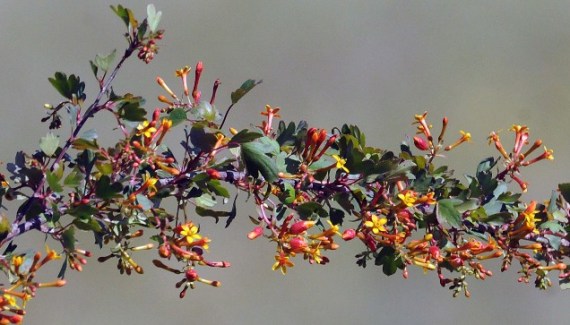
This is always a lovely walk past grassy fields and groves of Live Oak. We should see resident species such as Red-tailed and Red-shouldered Hawk, Band-tailed Pigeon, Acorn Woodpecker, Oak Titmouse and Western Bluebird.

We’ll look for raptors, hummers and swifts, flycatchers, swallows, wrens, warblers, finches, sparrows and late migrants. (Did I omit anything?) Phainopepla and Merlin are possible. Red-tailed Hawks, Red-shouldered Hawks and American Kestrel all nest here and generally stay all year. Nanday Parakeets as well. Swifts may still be overhead. Wrens, Thrashers, Vireos. Are the White-tailed Kites there again? The sapsuckers? Have the Lewis’ Woodpeckers returned? Come and find out. Deer, Coyote and Bobcat are resident though seeing a Bobcat is a rare treat.
Links to prior trips: Jun 2025, May 2024, Nov 2012, Nov 2011, Nov. 2010
Family guide: 1-3 miles walking on pavement and dirt trails. Morning temperatures start cool.
[Directions] From the Ventura Fwy (101): exit at Las Virgenes Rd. Go south on Las Virgenes Rd. for about 3 miles. Continue past the traffic light at the intersection with Mulholland Hwy. The Park entrance is on the right just south of the traffic light.
Coast Route: From PCH, take Malibu Canyon Road inland. The main entrance of the park is on the left about 1.5 miles past the traffic light at Piuma Rd. (Don’t turn at the entrance to Tapia Park which is just after Piuma Rd.)
If you don’t have a CA State Park pass, the day-use fee is $12 per vehicle, $11 for seniors, or $3/hour. Go straight after you pass the kiosk. We’ll meet in the second (lower) parking lot near the bathroom block. Look for the sign that says “Main Trailhead Parking”. Either way, allow 45 minutes travel time from Santa Monica.

Meet at 8:00 a.m. in the Main Trailhead parking lot. Watch for roadside birds on your way into the park.
For additional information, call Jean; reservations not needed: 213-522-0062

Bats! Genomics, gene-flow, connectivity and the Yuma Myotis, with Joseph Curti, PhD. Zoom Evening Meeting: Tuesday, 4 November, 7:30pm
You are all invited to the next ZOOM meeting
of Santa Monica Bay Audubon Society
Using Genomics to Understand Patterns of Landscape-level Connectivity and Gene Flow in Yuma Myotis Bats (Myotis yumanensis), with Joseph Curti, PhD
Zoom Evening Meeting, Tuesday, 4 November, 7:30 p.m.
Zoom waiting room opens 7:15 p.m.
On November 4, 2025 at 7:15-7:30 pm,
join the Zoom presentation by Clicking Here
[Then give it about 30 seconds for “Zoom Workplace to show up.]
Many people associate the month before and after Halloween with spooky symbols like witches, ghouls, and of course BATS! But how much do you really know about these furry winged creatures? Join UCLA Postdoctoral Researcher and bat scientist Joseph Curti for an hour-long lecture on the remarkable and misunderstood group of mammals known as bats. In this talk, Joseph will discuss bat diversity in Southern California as well as basic features of bat ecology and natural history. He will also share some of the findings from his research on bat genomics aimed at applying whole genome sequencing to understand genomic health and inbreeding in Yuma Myotis bats (Myotis yumanensis), how connected the Yuma Myotis populations are across their range, and barriers to the movement across California.

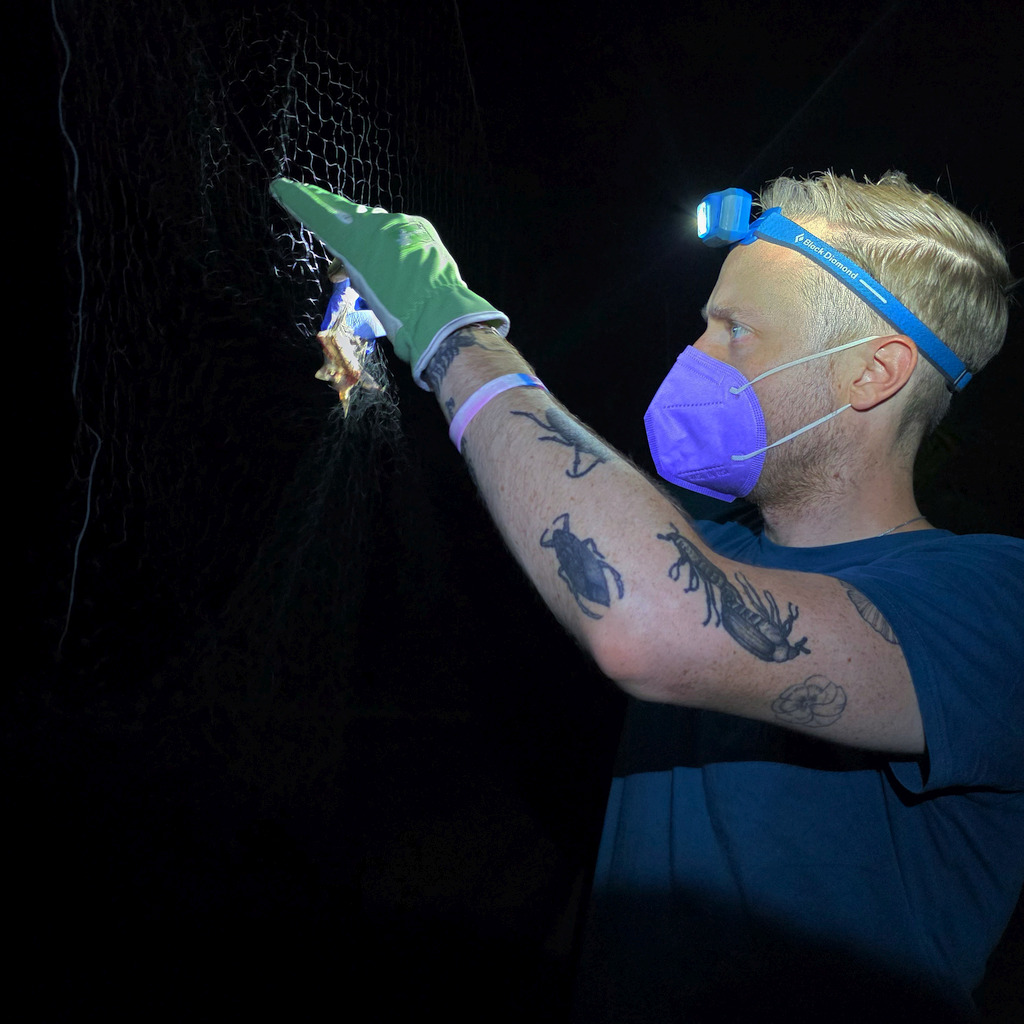
Joseph Curti, Ph.D. is a postdoctoral research fellow at the UCLA La Kretz Center for California Conservation Science. Joey’s current research focuses on the impacts of anthropogenic stressors on bat community composition in urban areas across California. Joey received his Ph.D. in 2024 from the UCLA Ecology and Evolutionary Biology department, where he worked with statewide resource managers on a variety of conservation genomics projects. These included a project aimed at evaluating the impact of roadways in Los Angeles to California quail (Callipepla californica) gene flow and rangewide landscape genomics of the Yuma Myotis bat (Myotis yumanensis). Joey has been working with bats since 2015 and has worked on a variety of projects including radio tracking Big Brown Bats (Eptesicus fuscus) in the California Central Valley, mist netting and acoustic surveys of bats on the California Channel Islands, and acoustic surveys of bats for the Santa Monica Mountains National Recreation Area. Outside of his academic research, Joey regularly leads acoustic bat walks and classes on bat ecology and natural history for groups across Los Angeles, including Theodore Payne Foundation, the LA Natural History Museum, the Ojai Valley Land Conservancy, the Resource Conservation District of the Santa Monica Mountains, and the San Fernando Valley Audubon Society. For more information and to stay up-to-date on his most recent publications and research, please visit his website at www.josephcurti.com.
(If the button above doesn’t work for you, see detailed zoom invitation below.)
when ‘seen’ through the ears of a bat?
Meeting ID: 861 3582 7023
Passcode: 154797
One tap mobile
+16699009128,,86135827023#,,,,*154797# US (San Jose)
+16694449171,,86135827023#,,,,*154797# US
Joining Instructions
https://us02web.zoom.us/meetings/86135827023/invitations?signature=mjRE2AX-rKmri2epNLx0H1ruaHAzpVujgE4QrrWuSYI
[Posted by Chuck Almdale]
Before they shrunk: 6 huge prehistoric ancestors of animals you know today | BBC Discover Wildlife
[Posted by Chuck Almdale]

Link to article: https://www.discoverwildlife.com/prehistoric-life/rehistoric-ancestors-todays-animals
Long before evolution downsized them, these giant prehistoric ancestors roamed the Earth, giving rise to the animals we know today. From giant apes that may have crossed paths with our early ancestors, to sloths the size of small trucks, these prehistoric heavyweights reveal just how much evolution can reshape life over time. Some vanished completely, leaving only fossils and legends behind. Others live on in smaller, humbler descendants – grazing in meadows, prowling savannahs or lazing in tropical treetops. Here are 6 of the most extraordinary giants that once roamed the Earth – and the modern animals that trace their lineage back to them.



 SANTA MONICA BAY AUDUBON SOCIETY BLOG