Free email delivery
Please sign up for email delivery in the subscription area to the right.
No salesman will call, at least not from us. Maybe from someone else.
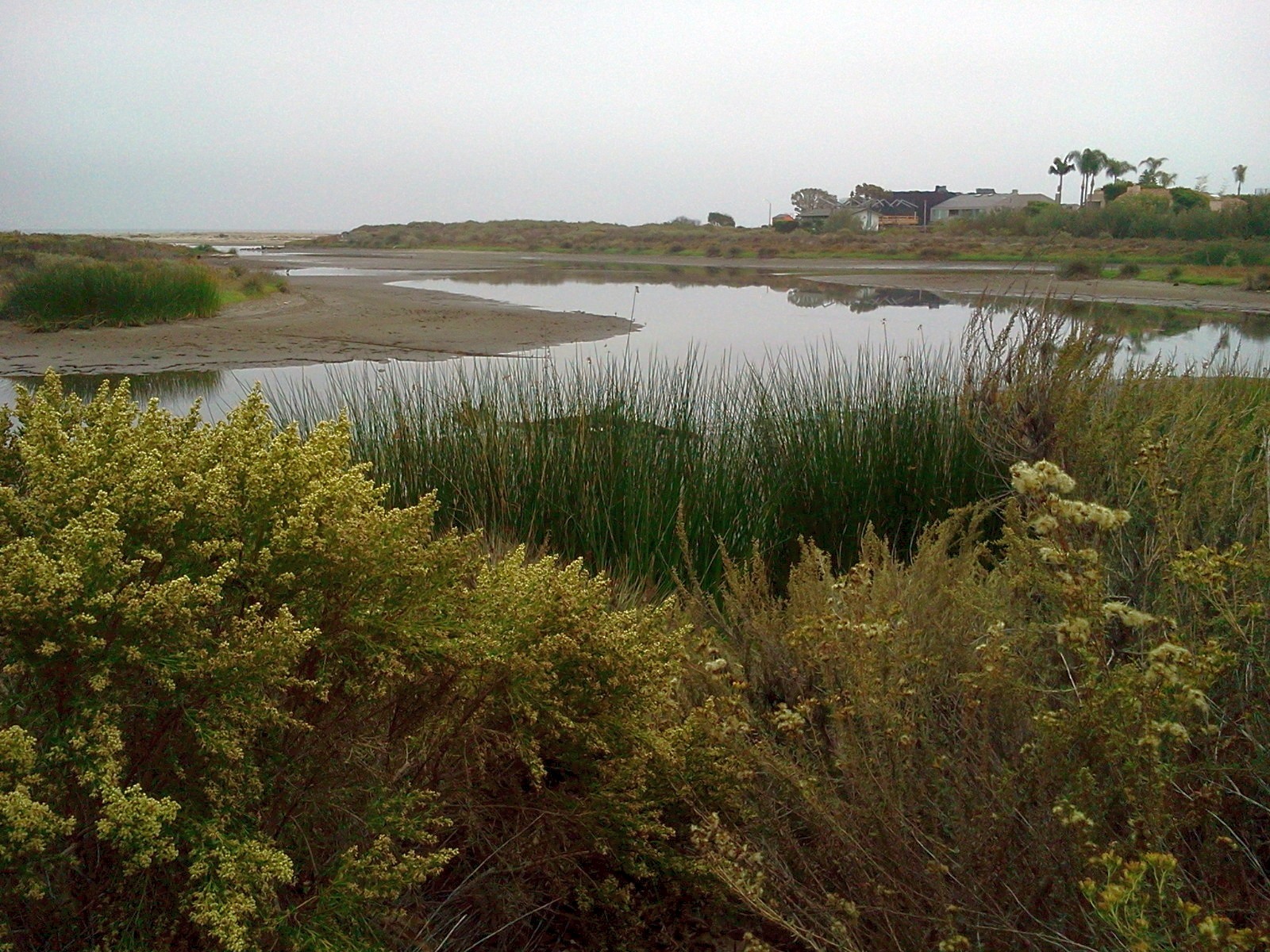
Morning fog and a breached beach, Malibu Lagoon, 26 Oct. 2025
[By Chuck Almdale; photos by Lillian Johnson, Armando Martinez, Emily Roth & Chris Tosdevin]

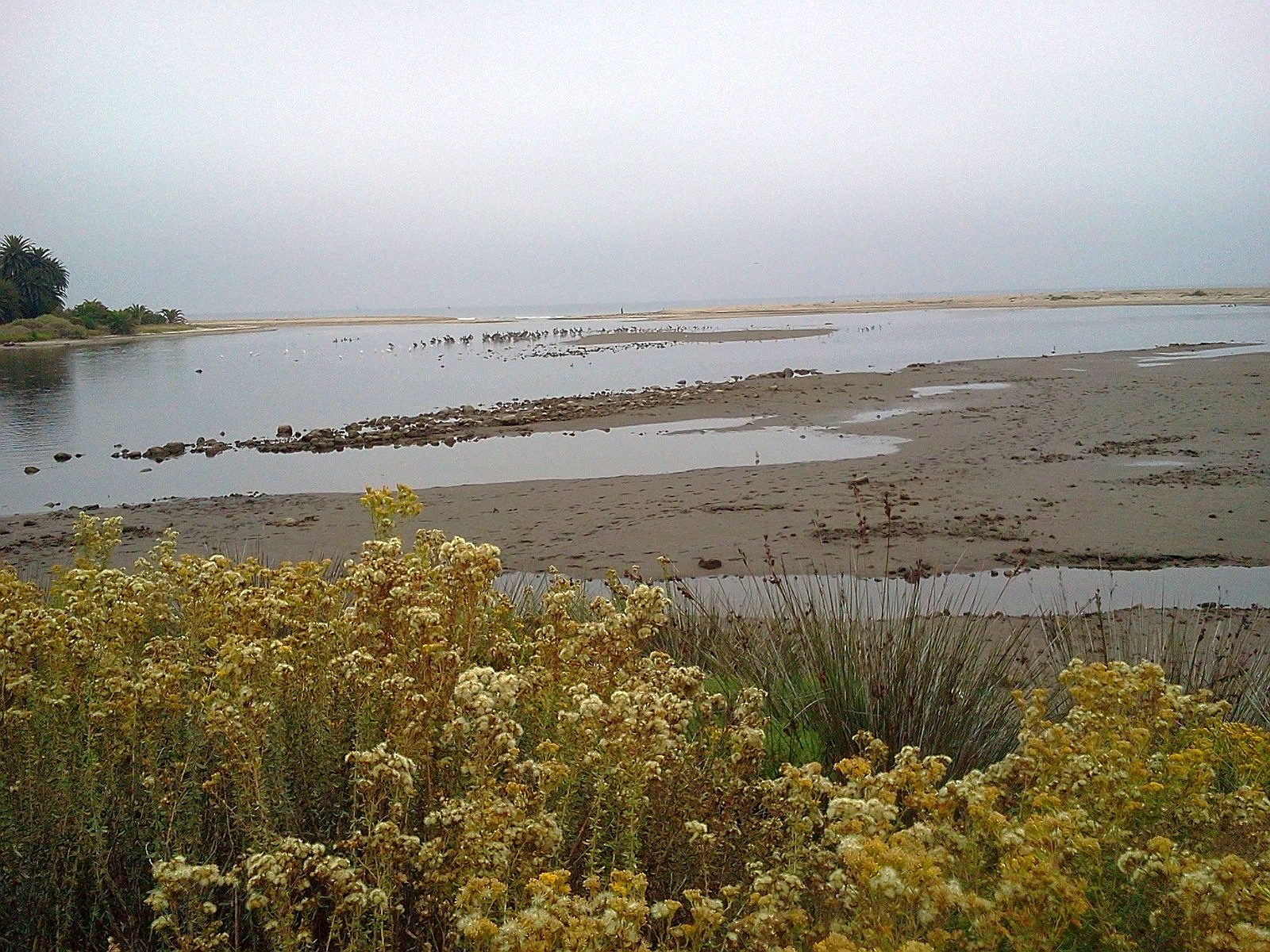
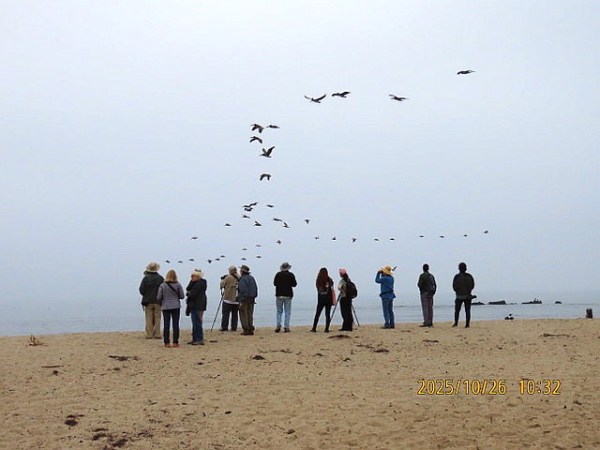
Weather was even cloudier and cooler than predicted and never got above 65°F, and although the fog dissipated somewhat, it remained overcast all morning. There were zero surfer’s cars parked on PCH, and the wind was nil. Despite that, large, unruffled well-formed waves rolled in with some frequency, and the two surfers aboard had them all to themselves. The atmospheric river that hit us on Oct. 15th – torrential downpours were predicted; 2.2″ at our house qualifies as torrential in these parts – broke through the beach and the lagoon was largely empty, although slowly filling as the tide rose towards it’s 11:25am 5.02′ high.
(Lillian Johnson 10-26-25)

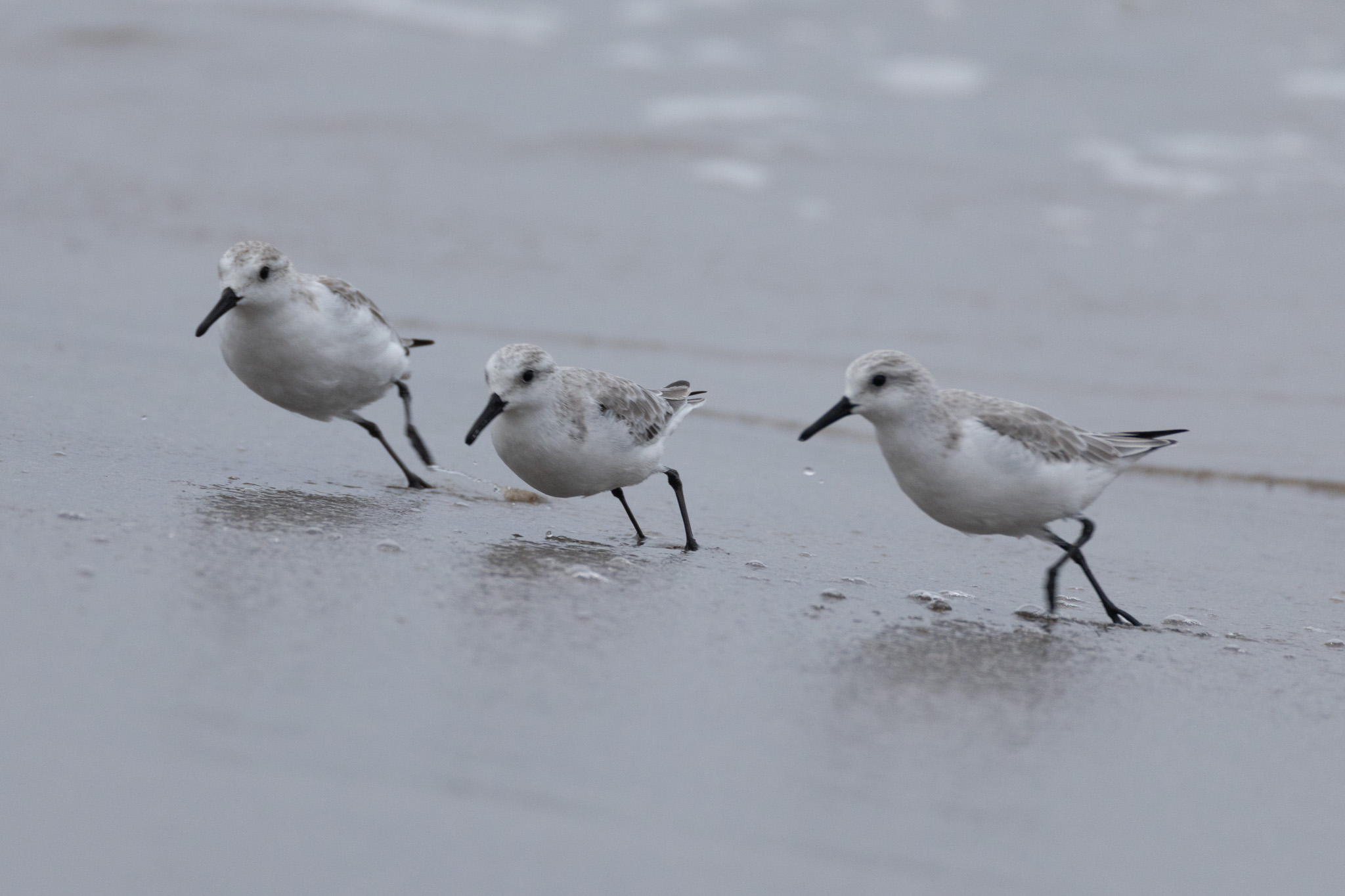
To forestall any questions, no, the photographer didn’t know for certain why they’re leaning. I suspect the retreating wave water was pulling on their feet, as the same thing used to happen to me while body surfing. But maybe they just saw something attractive or frightening…

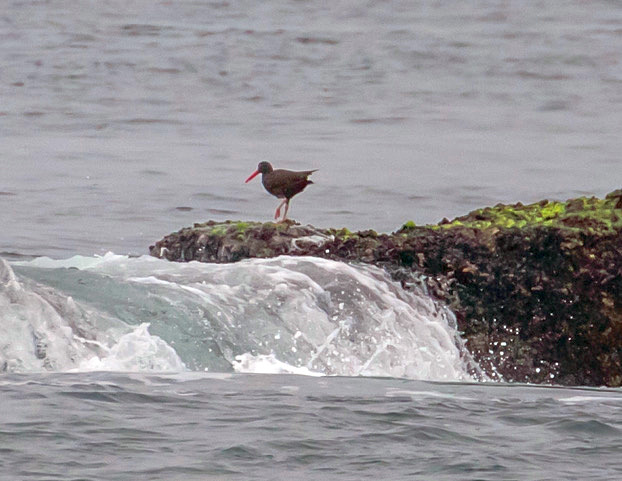
Black Oystercatchers are uncommon at the lagoon, and appear at lower tides when waves aren’t crashing over the offshore rocks or – even better – when the inshore rocky beds are fully exposed, giving them plenty to sort through.

Seven of the last nine Belted Kingfishers at the lagoon were females (with cinnamon belly bands). I don’t know if that signifies anything.
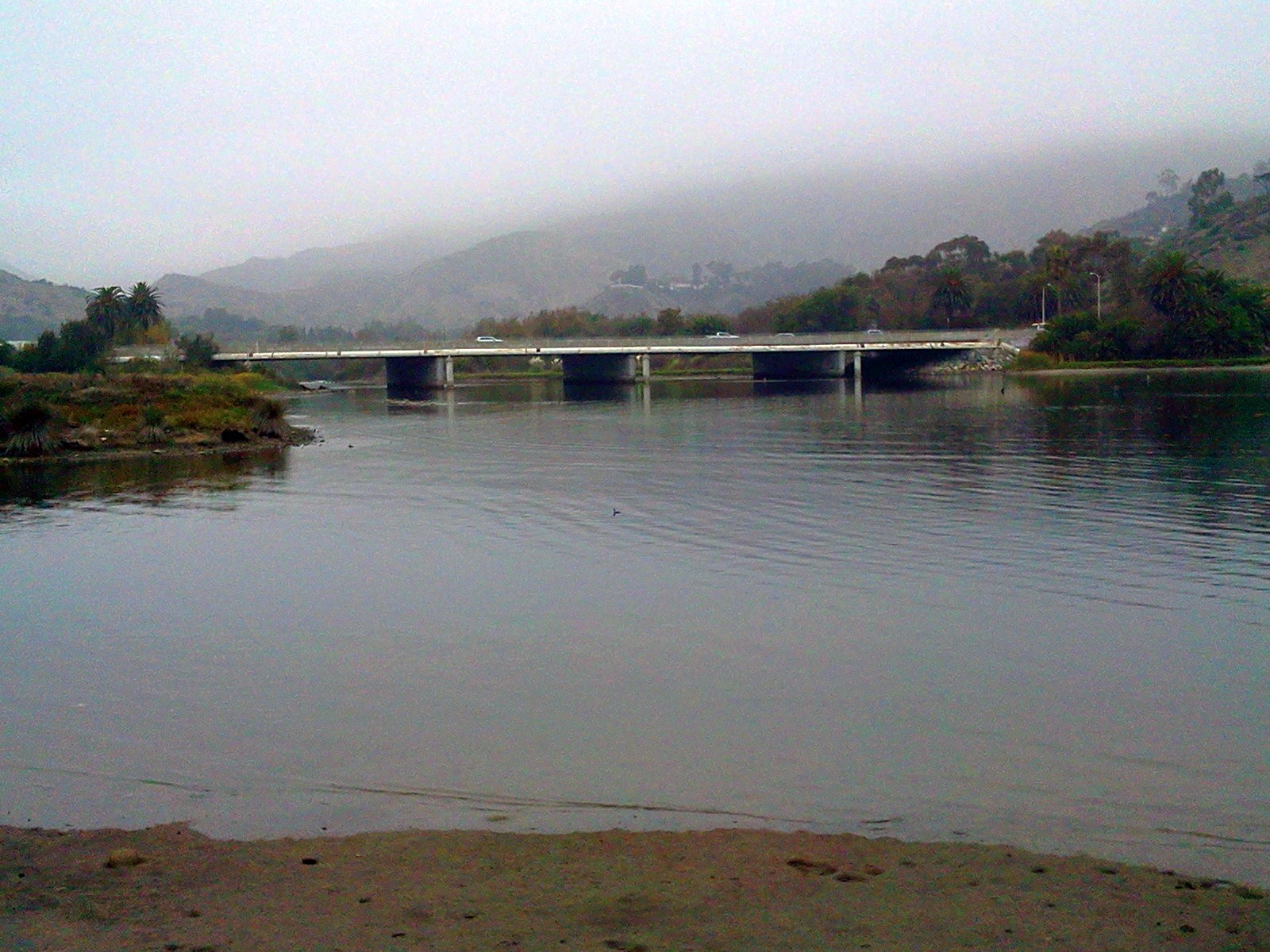
You can just barely make out the Pepperdine bell tower in the distance in the picture below, a vertical white line above the tree at the left end of the south channel. Small ripples are from the incoming tidal flow.

(Lillian Johnson 10-26-25)
This is how the heron reached the snag in the top photo.

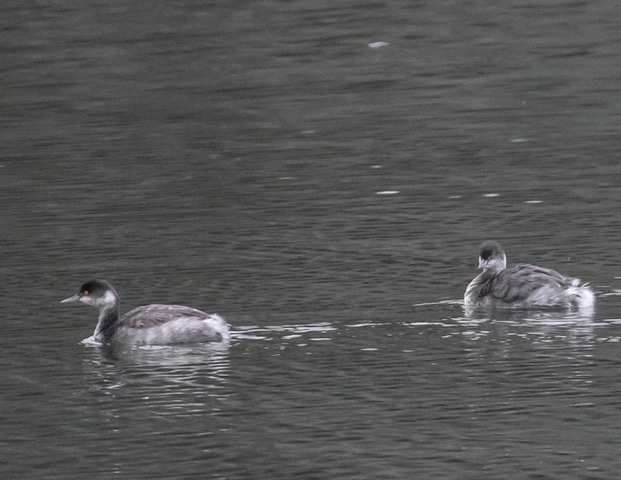
Eared Grebes in their winter drabs showed up in force. They’ve visited the lagoon 118 times since 1979 (probably more when we’re not there), most often in October, but there are only 12 times there have been more that today’s total of six birds. They closely resemble the Horned Grebe, but have less white on the chin and front of the throat, and their rear end tends to be blunt, whereas the Horned rear end drops gradually to the water. Both can sink straight down into the water when they want to, by expelling air from their bodies, I suppose.

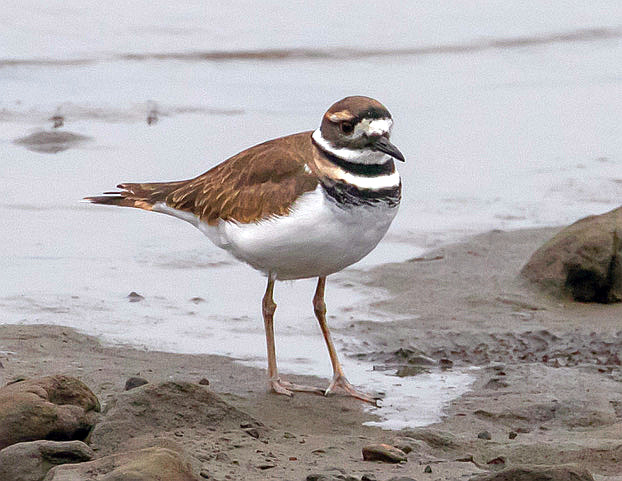
Killdeer have nested at the lagoon for more decades than anyone knows and they’re always around, even when we don’t see them. (And how can either of these statements be proven?)
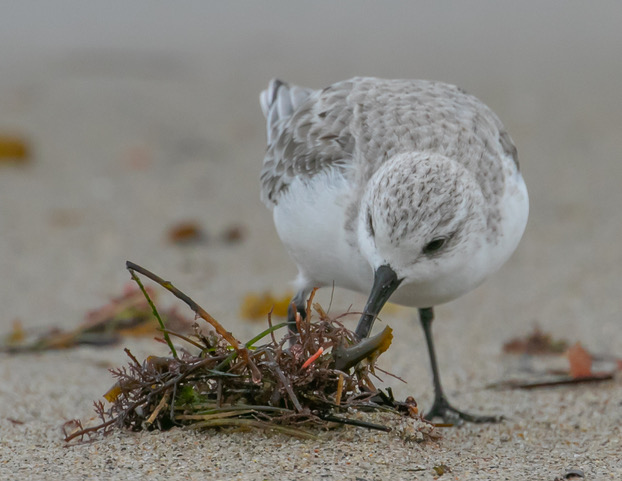
I swear I know this guy (the Whimbrel below) from somewhere.


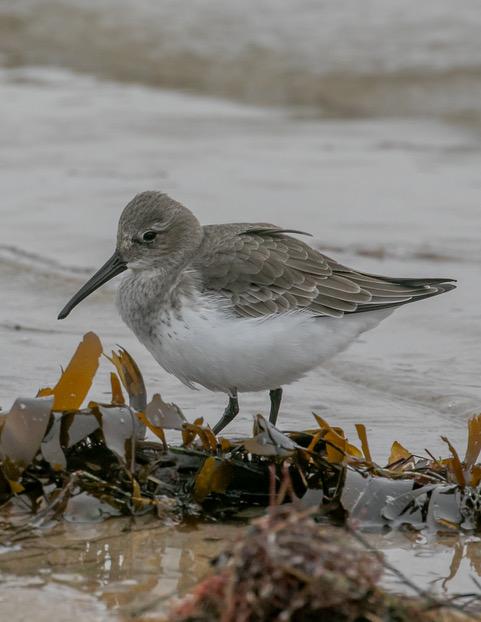
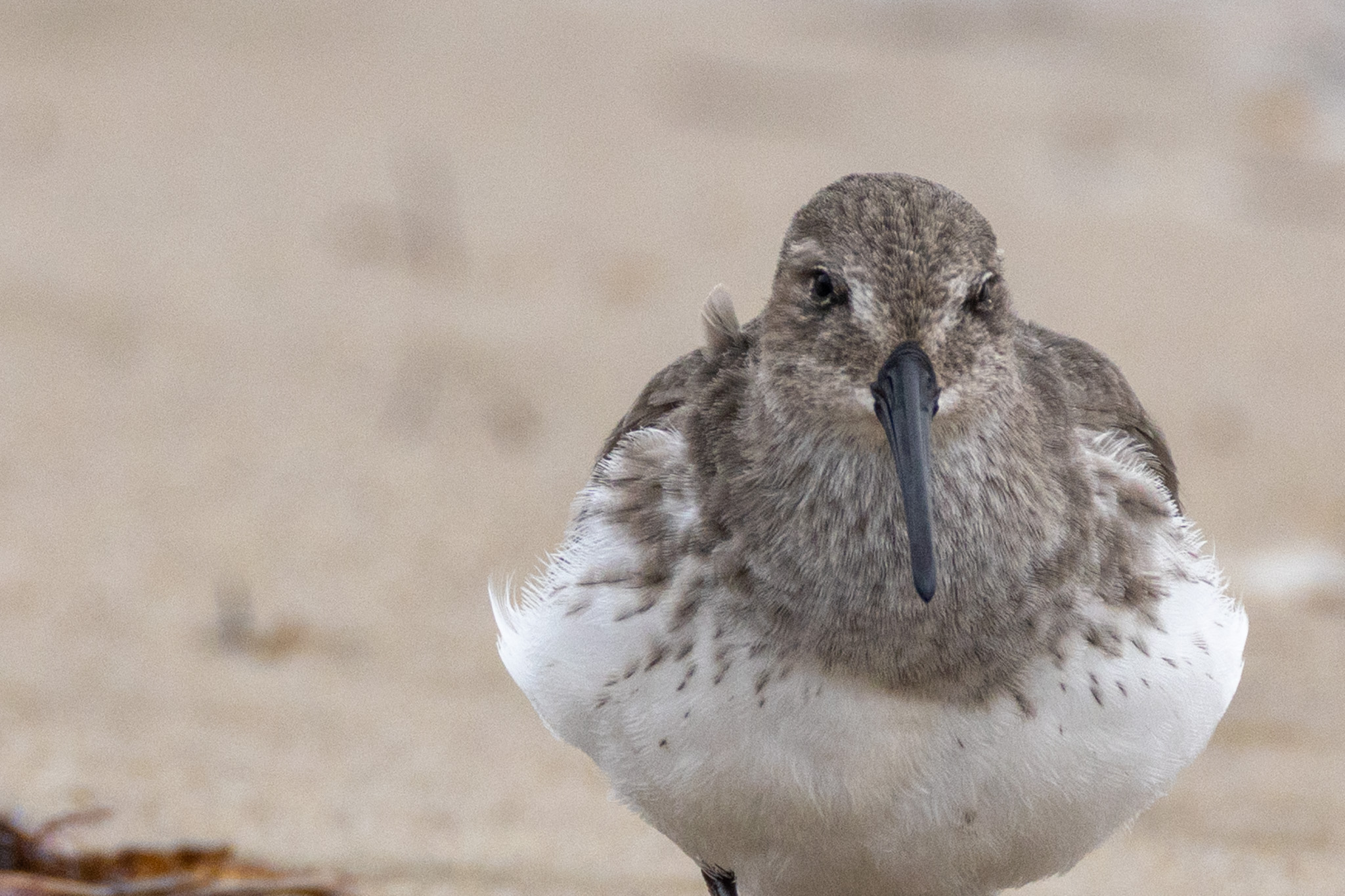
The Dunlin below may well be one of the two we saw last month, still loitering on the beach. Of course, they are quite hard to tell apart. The one below has erected its crown feathers slightly, giving it a slightly bumpy head.
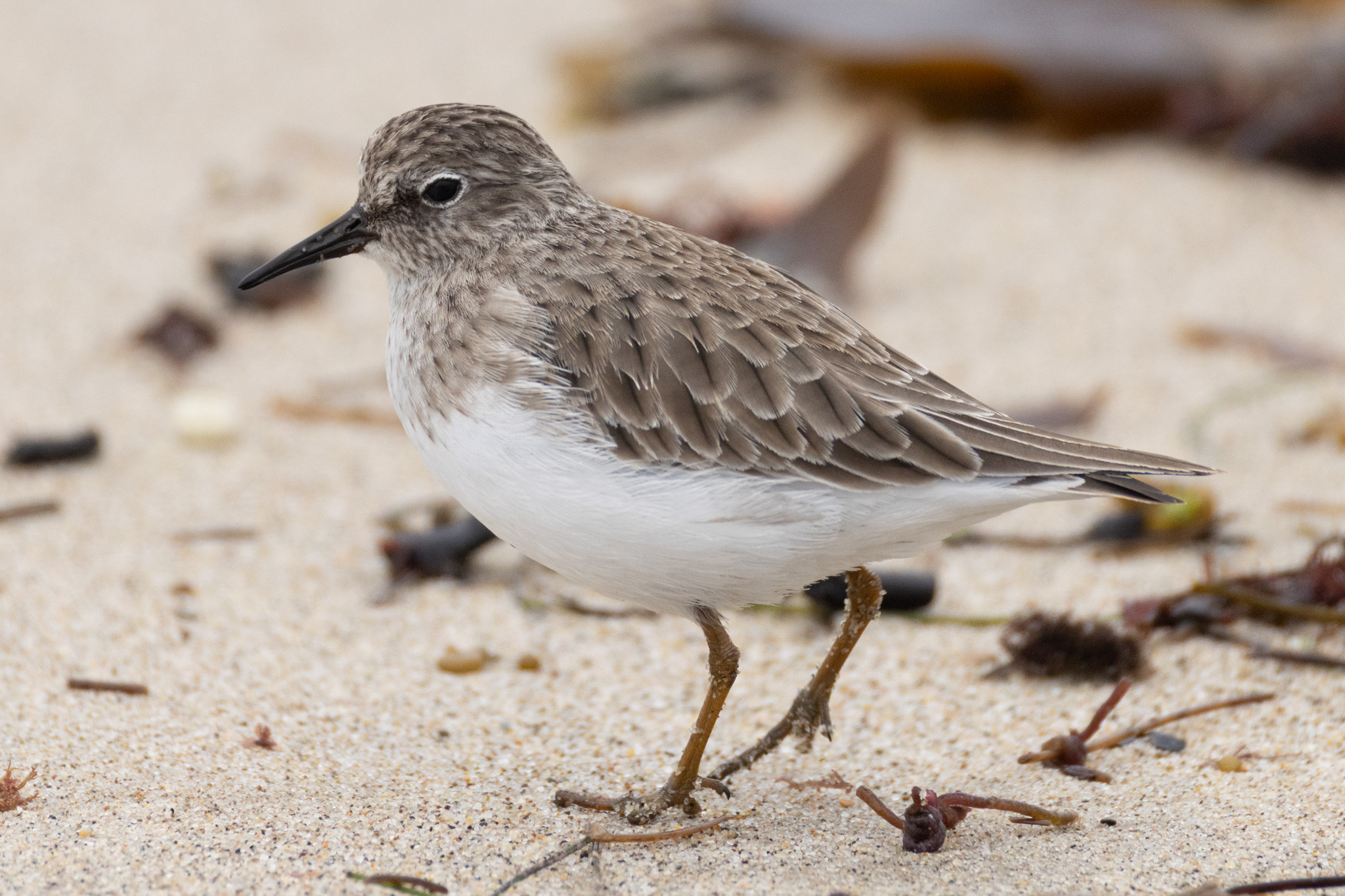
Least Sandpipers, like this winter-gray adult below, are the most minute of the world’s sandpipers. Hence the name, Calidris minutilla.
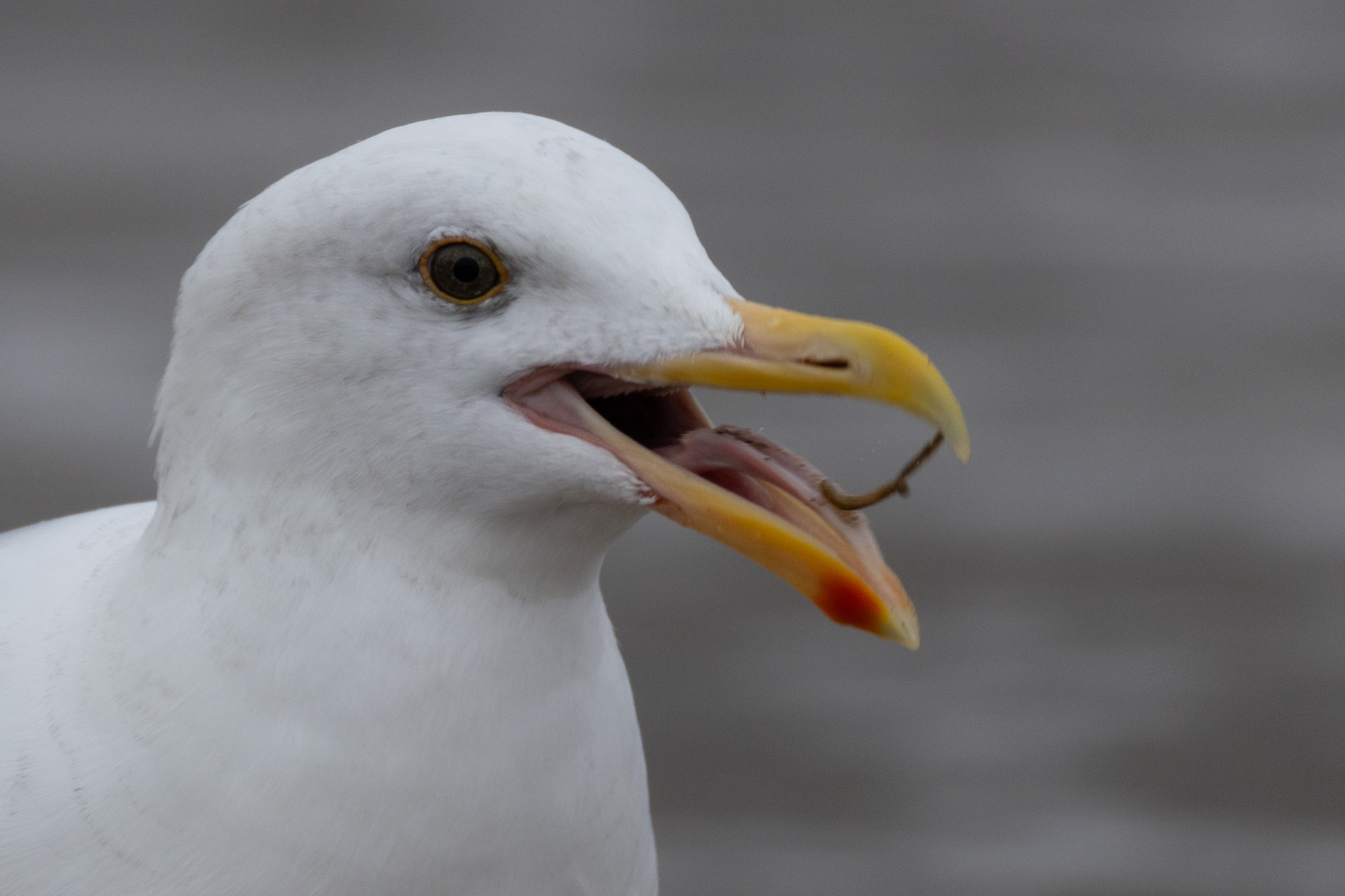
Adult Heermann’s Gulls can lose nearly all the white plumage from their heads and necks in the winter.

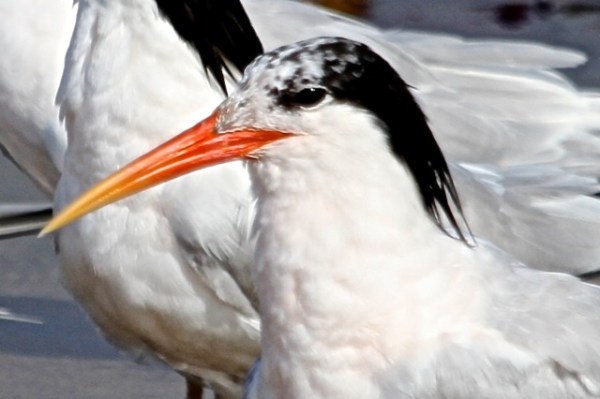
A perennial problem in identification is telling the Royal & Elegant Terns apart. With 3″ in total length difference, you’d think overall size would help, but it rarely does. When they’re crouched on the sand, or even when standing with necks retracted, it’s amazing how similar in size they appear. The best field marks are the eye and the bill.
For most of the year and except when breeding, the Royal’s dark head feathers look like this bird below; almost reaching the dark eye, and often with more separation. The bill is thicker than is the Elegant’s, with the upper mandible curving down to the tip, and the lower mandible’ bottom edge almost straight, sometimes very slightly curved downward at the tip, and a noticeable “bump” (gonys, gonydeal expansion or gonydeal angle) on the lower mandible a little closer to the bill tip than to the base. The bump is nowhere near as large as on many of the gulls (see the Western and Heermann’s Gulls above), but it’s there.

The black feathering on the Elegant (see below) always remains in contact with the dark eye, or “the eye is in the dark” we sometimes say. The bill is more slender, more curved and seems longer than the Royal’s bill, which may be an illusion as the Royal is a larger bird. However, the Elegant’s bill is longer relative to it’s total length than is the Royal’s. The upper mandible curves downward to the tip, and the lower mandible also curves downward along it’s lower edge, unlike the Royal’s bill which seems mostly straight. Any gonys it might have is undetectable in the field. Bill color doesn’t help (as it will with the Caspian Tern) as the bills of both birds can vary from almost-yellow to almost-red. The Elegant’s bill below shows almost the entire gamut of color possible for these birds.
Below, the more avid lister-counters of the group compare lists. Chris Tosdevin takes charge when it’s discovered to their collective horror that Chuck Almdale’s checklist has grebes between ducks and pigeons, rather than between terns and loons, as eBurd has it (this week, anyway), which threw everyone into a tizzy. “Collect him, collect him!” cried the crowd. Malibu pier in the background.


Malibu Lagoon on eBird as of 10-28-25: 8898 lists, 2856 eBirders, 321 species
Most recent new species seen: Nelson’s Sparrow, 11/29/24 by Femi Faminu (SMBAS member). When the newest species added to the list was seen on a date prior to the most recently seen new species, there is no way I can find to easily determine what that bird is. Another minor nit to pick about eBird.
Birds new for the season: Western Grebe, Black Oystercatcher, Marbled Godwit, Common Raven, Northern Mockingbird, Western Bluebird, Black-throated Gray Warbler. “New for the season” means it has been three or more months since last recorded on our trips.
Many, many thanks to photographers Lillian Johnson, Armando Martinez, Emily Roth & Chris Tosdevin.
Upcoming SMBAS scheduled field trips; no reservations or Covid card necessary unless specifically mentioned:
- Malibu Creek State Park Sat, Nov. 8, 8:00 Leader: Jean Garrett
- Malibu Lagoon, Sun. Nov. 23, 8:30 (adults) & 10 am (parents & kids)
- Back Bay Newport, Sat. Dec. 13, 8am. Reservations
- Malibu Lagoon, Sun. Dec. 28, 8:30 (adults) & 10 am (parents & kids)
- These and any other trips we announce for the foreseeable future will depend upon expected status of the Covid/flu/etc. pandemic, not to mention landslides, at trip time. Any trip announced may be canceled shortly before trip date if it seems necessary. By now any other comments should be superfluous.
- Link to Programs & Field Trip schedule.
The next SMBAS Zoom program: November 4, 7:30pm; Bats! Using Genomics to Understand Patterns of Landscape-level Connectivity and Gene Flow in Yuma Myotis Bats (Myotis yumanensis), with Joseph Curti, PhD.
The SMBAS 10 a.m. Parent’s & Kids Birdwalk has again resumed. Reservations not necessary for families, but for groups (scouts, etc.), call Jean (213-522-0062).
Links: Unusual birds at Malibu Lagoon
9/23/02 Aerial photo of Malibu Lagoon
More recent aerial photo
Prior checklists:
2025: Jan-June
2023: Jan-June, July-Dec 2024: Jan-June, July-Dec
2021: Jan-July, July-Dec 2022: Jan-June, July-Dec
2020: Jan-July, July-Dec 2019: Jan-June, July-Dec
2018: Jan-June, July-Dec 2017: Jan-June, July-Dec
2016: Jan-June, July-Dec 2015: Jan-May, July-Dec
2014: Jan-July, July-Dec 2013: Jan-June, July-Dec
2012: Jan-June, July-Dec 2011: Jan-June, July-Dec
2010: Jan-June, July-Dec 2009: Jan-June, July-Dec
The 10-year comparison summaries created during the Lagoon Reconfiguration Project period, remain available—despite numerous complaints—on our Lagoon Project Bird Census Page. Very briefly summarized, the results unexpectedly indicate that avian species diversification and numbers improved slightly during the restoration period June’12-June’14.
Many thanks to Marie Barnidge-McIntyre, Femi Faminu, Lillian Johnson, Chris Lord, Armando Martinez, Chris & Ruth Tosdevin and others for contributions made to this month’s census counts.
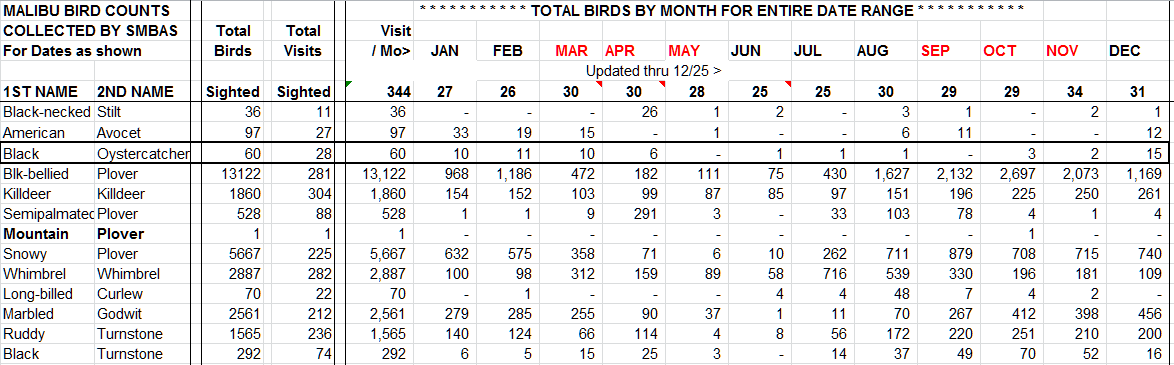
The species list below was re-sequenced as of 12/31/24 to agree with the California Bird Records Committee Official California Checklist, mostly. If part of the right side of the chart below is hidden, there’s a slider button inconveniently located at the bottom end of the list. The numbers 1-9 left of the species names are keyed to the nine categories of birds at the bottom. Updated lagoon bird check lists can be downloaded here.
[Chuck Almdale]
| Malibu Census 2025 | 5/25 | 6/22 | 7/27 | 8/24 | 9/28 | 10/26 | |
| Temperature | 63-68 | 66-73 | 64-70 | 68-75 | 65-69 | 58-65 | |
| Tide Lo/Hi Height | H+3.78 | H+3.31 | L-0.46 | H+4.74 | H+4.54 | H+5.02 | |
| Tide Time | 0909 | 0824 | 0605 | 1102 | 1244 | 1125 | |
| 1 | Brant (Black) | 1 | |||||
| 1 | Canada Goose | 1 | 5 | 1 | |||
| 1 | Gadwall | 24 | 25 | 20 | 19 | 6 | |
| 1 | Mallard | 26 | 20 | 40 | 14 | 7 | 26 |
| 1 | Ring-necked Duck | 1 | |||||
| 1 | Surf Scoter | 10 | 2 | ||||
| 1 | Red-breasted Merganser | 1 | |||||
| 1 | Ruddy Duck | 4 | 3 | 19 | 1 | ||
| 2 | Pied-billed Grebe | 4 | 4 | 3 | 4 | 6 | 2 |
| 2 | Eared Grebe | 1 | 6 | ||||
| 2 | Western Grebe | 4 | 2 | 30 | |||
| 7 | Feral Pigeon | 6 | 5 | 5 | 4 | 6 | |
| 7 | Mourning Dove | 2 | 1 | 2 | 2 | 3 | 1 |
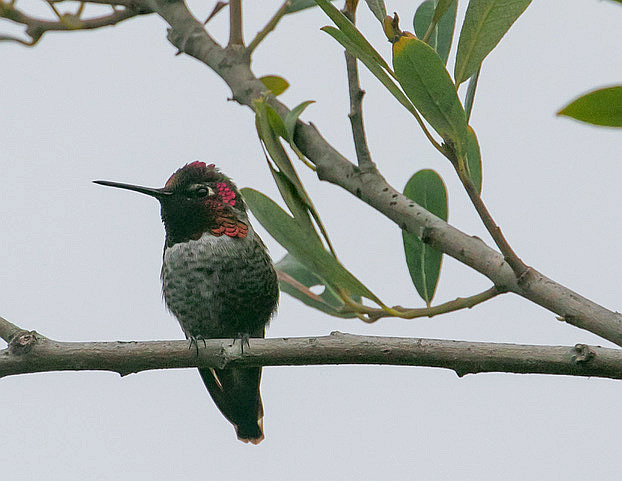
| 8 | Anna’s Hummingbird | 1 | 1 | 1 | 1 | 2 | |
| 8 | Allen’s Hummingbird | 2 | 2 | 4 | 4 | 4 | 5 |
| 2 | Sora | 1 | |||||
| 2 | American Coot | 4 | 1 | 6 | 4 | 31 | 4 |
| 5 | Black Oystercatcher | 1 | |||||
| 5 | Black-bellied Plover | 21 | 49 | 55 | 88 | ||
| 5 | Killdeer | 2 | 5 | 4 | 9 | 1 | 8 |
| 5 | Semipalmated Plover | 4 | 1 | ||||
| 5 | Snowy Plover | 13 | 17 | 35 | 40 | ||
| 5 | Whimbrel | 1 | 12 | 3 | 14 | ||
| 5 | Marbled Godwit | 21 | |||||
| 5 | Ruddy Turnstone | 3 | 1 | 3 | 6 | ||
| 5 | Sanderling | 1 | 13 | ||||
| 5 | Dunlin | 2 | 1 | ||||
| 5 | Least Sandpiper | 10 | 4 | 6 | 12 | ||
| 5 | Western Sandpiper | 4 | 14 | 1 | |||
| 5 | Willet | 1 | 10 | 14 | |||
| 5 | Wilson’s Phalarope | 1 | |||||
| 6 | Sabine’s Gull | 1 | |||||
| 6 | Heermann’s Gull | 13 | 36 | 10 | 38 | 2 | |
| 6 | Ring-billed Gull | 3 | 5 | 2 | 4 | 1 | 7 |
| 6 | Western Gull | 70 | 79 | 52 | 115 | 61 | 35 |
| 6 | California Gull | 82 | 5 | 1 | 4 | 10 | 116 |
| 6 | Caspian Tern | 6 | 4 | 4 | 2 | ||
| 6 | Forster’s Tern | 1 | |||||
| 6 | Royal Tern | 21 | 135 | 12 | 2 | ||
| 6 | Elegant Tern | 70 | 4 | 2 | |||
| 2 | Brandt’s Cormorant | 1 | 1 | 5 | |||
| 2 | Pelagic Cormorant | 1 | 2 | 1 | 3 | ||
| 2 | Double-crested Cormorant | 7 | 18 | 98 | 74 | 49 | 28 |
| 2 | Brown Pelican | 157 | 138 | 118 | 32 | 45 | 138 |
| 3 | Snowy Egret | 2 | 1 | 10 | 10 | 5 | 34 |
| 4 | Yellow-crowned Night-Heron | 1 | |||||
| 3 | Black-crowned Night-Heron | 4 | 1 | 1 | 2 | 1 | |
| 3 | Green Heron | 1 | 2 | 1 | 2 | ||
| 3 | Great Egret | 1 | 3 | 4 | 2 | 3 | 4 |
| 3 | Great Blue Heron | 1 | 9 | 5 | 5 | 4 | 6 |
| 3 | White-faced Ibis | 1 | |||||
| 4 | Osprey | 1 | 1 | 1 | 1 | ||
| 4 | Cooper’s Hawk | 1 | |||||
| 4 | Red-shouldered Hawk | 1 | 1 | 1 | 2 | ||
| 4 | Red-tailed Hawk | 1 | 1 | 1 | 1 | ||
| 8 | Belted Kingfisher | 1 | 1 | 1 | |||
| 8 | Nuttall’s Woodpecker | 1 | 1 | ||||
| 4 | Peregrine Falcon | 1 | |||||
| 8 | Nanday Parakeet | 2 | 20 | 9 | |||
| 9 | Cassin’s Kingbird | 1 | |||||
| 9 | Black Phoebe | 2 | 2 | 2 | 2 | 4 | 2 |
| 9 | California Scrub-Jay | 1 | 1 | 1 | 2 | ||
| 9 | American Crow | 6 | 6 | 9 | 8 | 6 | 10 |
| 9 | Common Raven | 1 | 1 | ||||
| 9 | Oak Titmouse | 2 | 2 | ||||
| 9 | Tree Swallow | 1 | |||||
| 9 | No. Rough-winged Swallow | 7 | 1 | 5 | 2 | ||
| 9 | Barn Swallow | 18 | 22 | 20 | 40 | 4 | |
| 9 | Cliff Swallow | 24 | 24 | 12 | |||
| 9 | Bushtit | 3 | 12 | 20 | 20 | 9 | 35 |
| 9 | Wrentit | 2 | 2 | 2 | 1 | 2 | 2 |
| 9 | Swinhoe’s White-eye | 1 | 1 | ||||
| 9 | Bewick’s Wren | 2 | |||||
| 9 | Northern House Wren | 1 | 2 | ||||
| 9 | Marsh Wren | 1 | 1 | ||||
| 9 | Northern Mockingbird | 1 | 1 | ||||
| 9 | European Starling | 10 | 6 | 25 | 35 | 2 | 6 |
| 9 | Western Bluebird | 2 | |||||
| 9 | House Finch | 5 | 4 | 5 | 12 | 3 | 2 |
| 9 | Lesser Goldfinch | 2 | 2 | ||||
| 9 | Dark-eyed Junco | 2 | 1 | 6 | 2 | ||
| 9 | White-crowned Sparrow | 2 | 10 | ||||
| 9 | Savannah Sparrow | 1 | |||||
| 9 | Song Sparrow | 6 | 5 | 3 | 6 | 5 | 4 |
| 9 | California Towhee | 2 | 1 | 1 | 2 | 1 | |
| 9 | Spotted Towhee | 2 | |||||
| 9 | Hooded Oriole | 1 | 1 | 2 | |||
| 9 | Great-tailed Grackle | 6 | 8 | 1 | 23 | 6 | |
| 9 | Orange-crowned Warbler | 2 | 1 | 1 | 2 | 1 | |
| 9 | Common Yellowthroat | 5 | 1 | 4 | 7 | 6 | |
| 9 | Yellow-rumped Warbler | 2 | 25 | ||||
| 9 | Black-throated Gray Warbler | 1 | |||||
| Totals Birds by Type | May | Jun | Jul | Aug | Sep | Oct | |
| 1 | Waterfowl | 55 | 54 | 81 | 33 | 25 | 28 |
| 2 | Water Birds – Other | 176 | 163 | 227 | 117 | 134 | 216 |
| 3 | Herons, Egrets & Ibis | 4 | 17 | 21 | 22 | 15 | 47 |
| 4 | Quail & Raptors | 3 | 1 | 2 | 2 | 5 | 2 |
| 5 | Shorebirds | 2 | 6 | 61 | 93 | 130 | 219 |
| 6 | Gulls & Terns | 161 | 106 | 116 | 341 | 127 | 164 |
| 7 | Doves | 8 | 6 | 7 | 6 | 9 | 1 |
| 8 | Other Non-Passerines | 5 | 3 | 6 | 6 | 26 | 17 |
| 9 | Passerines | 103 | 103 | 110 | 141 | 82 | 122 |
| Totals Birds | 517 | 459 | 631 | 761 | 553 | 816 | |
| Total Species by Group | May | Jun | Jul | Aug | Sep | Oct | |
| 1 | Waterfowl | 4 | 5 | 5 | 2 | 5 | 2 |
| 2 | Water Birds – Other | 5 | 5 | 6 | 6 | 7 | 8 |
| 3 | Herons, Egrets & Ibis | 3 | 4 | 5 | 7 | 5 | 5 |
| 4 | Quail & Raptors | 3 | 1 | 2 | 2 | 4 | 2 |
| 5 | Shorebirds | 1 | 2 | 9 | 7 | 10 | 12 |
| 6 | Gulls & Terns | 4 | 5 | 6 | 8 | 7 | 6 |
| 7 | Doves | 2 | 2 | 2 | 2 | 2 | 1 |
| 8 | Other Non-Passerines | 3 | 2 | 3 | 3 | 4 | 4 |
| 9 | Passerines | 21 | 16 | 16 | 16 | 20 | 21 |
| Totals Species – 92 | 46 | 42 | 54 | 53 | 64 | 61 |
Malibu Creek State Park Field Trip, 8 AM Saturday, 8 November 2025
Malibu Creek State Park
1925 Las Virgenes Rd, Calabasas
Saturday, 14 June 2025 at 8am
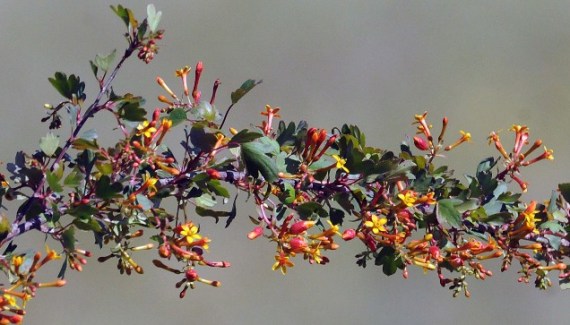
This is always a lovely walk past grassy fields and groves of Live Oak. We should see resident species such as Red-tailed and Red-shouldered Hawk, Band-tailed Pigeon, Acorn Woodpecker, Oak Titmouse and Western Bluebird.

We’ll look for raptors, hummers and swifts, flycatchers, swallows, wrens, warblers, finches, sparrows and late migrants. (Did I omit anything?) Phainopepla and Merlin are possible. Red-tailed Hawks, Red-shouldered Hawks and American Kestrel all nest here and generally stay all year. Nanday Parakeets as well. Swifts may still be overhead. Wrens, Thrashers, Vireos. Are the White-tailed Kites there again? The sapsuckers? Have the Lewis’ Woodpeckers returned? Come and find out. Deer, Coyote and Bobcat are resident though seeing a Bobcat is a rare treat.
Links to prior trips: Jun 2025, May 2024, Nov 2012, Nov 2011, Nov. 2010
Family guide: 1-3 miles walking on pavement and dirt trails. Morning temperatures start cool.
[Directions] From the Ventura Fwy (101): exit at Las Virgenes Rd. Go south on Las Virgenes Rd. for about 3 miles. Continue past the traffic light at the intersection with Mulholland Hwy. The Park entrance is on the right just south of the traffic light.
Coast Route: From PCH, take Malibu Canyon Road inland. The main entrance of the park is on the left about 1.5 miles past the traffic light at Piuma Rd. (Don’t turn at the entrance to Tapia Park which is just after Piuma Rd.)
If you don’t have a CA State Park pass, the day-use fee is $12 per vehicle, $11 for seniors, or $3/hour. Go straight after you pass the kiosk. We’ll meet in the second (lower) parking lot near the bathroom block. Look for the sign that says “Main Trailhead Parking”. Either way, allow 45 minutes travel time from Santa Monica.

Meet at 8:00 a.m. in the Main Trailhead parking lot. Watch for roadside birds on your way into the park.
For additional information, call Jean; reservations not needed: 213-522-0062

Sri Lanka | Femi Faminu’s Famous Bird Tours
[Posted by Chuck Almdale]
Femi Faminu, who frequently birds with (and without) us at Malibu Lagoon and elsewhere, recently returned from a birding trip to the lovely isle of Sri Lanka, floating like a jewel in the Laccadive Sea at the southern tip of India, to which it’s now almost connected by a causeway, (unlike in the Mahabarata which I’m sure you’ve all read as it’s among the great classics of the world).
She saw 132 species of birds and a lot of other animals. I think her favorite encounter may have been with the Ceylon Logsuckers, a horde of which apparently tried to suck her skin off, but failed. [They’ve been reported to be able to debark a cinnabar tree in under a minute.] Then there were the poxy-looking mumpy langurs, a picky elephant, a leopard and foxes that fly (yes!). And much more.
Among her 132 species of birds were the Little, Medium and Great Egrets (collect the whole set!); Red-faced Malkoha, Lesser Adjutant; Besra, Brown Boobook, Indian Roller, Lesser Yellownape, Orange Minivet, Sri Lanka Drongo, Common Iora, Jungle Prinia, and…Paddyfield Pipit. Guess what the Paddyfield Pipit used to be called?
And – for the food aficionados – her breakfast spread appears to feature two hedgehogs among the large selection of delectables presented. And – another quiz – why does everyone seems to wear their green socks outside the legs of their trousers? Bizarre local custom?
Enjoyable and colorful as always.
If you go here https://www.youtube.com/@femif9792 you can see her many other films.
Just to refresh your memory, Rainforest Ecolodge is the big red dot. Kandy is where the Buddha’s tooth resides.

I suspect the Ceylon Logsuckers hang out at the “fish therapy” pool.

An aerial view:

Malibu Lagoon bird walks: 8:30 & 10am Sunday, 26 October, 2025

(Chris Tosdevin 10-27-24)
[Chuck Almdale]
Pacific Coast Highway: It’s much harder to confirm a road is open than closed. As far as I can tell, all lanes on all routes into Malibu are open, but speed limits between Santa Monica and Malibu are 25 MPH in certain places and the police ARE issuing speeding tickets in an attention-getting manner.
If you learn differently about closures, let me know.
So… SMBAS lagoon trips (8:30am general and 10am parents & kids) are happening.
As the summer sunbathers leave, lagoon and beach fill with migrants and wintering birds arriving from the north. It may be sunny, it may be cool, it probably won’t rain. Whether you’re experienced or new to our coastal birds, this would be a great day to introduce yourself to them.
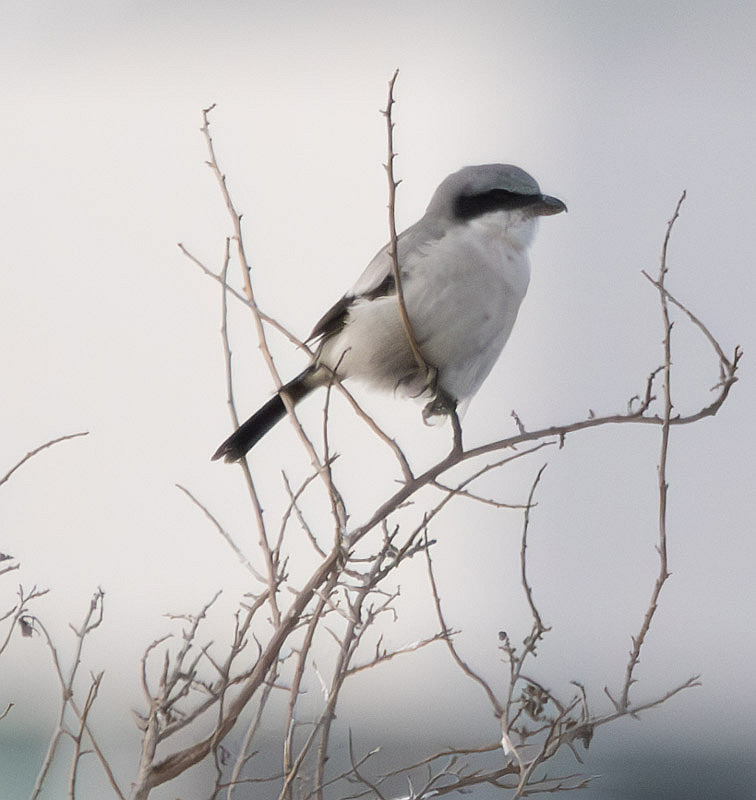
Some of the great birds we’ve had in October are:
Snow Goose; Blue-winged Teal, Bufflehead; Common Loon; Horned, Eared & Western Grebes; Brandt’s & Pelagic Cormorants; Osprey; Cooper’s Hawk; Merlin; Peregrine Falcon; Sora; Snowy Plover; Black Oystercatcher; Ruddy & Black Turnstones; Pectoral Sandpiper, Spotted Sandpiper; Dunlin; Mew Gull; Common, Forster’s, Royal & Elegant Terns; Green & Great Blue Herons; Northern Flicker; Merlin; Nanday Parakeet; Tropical, Cassin’s & Western Kingbirds; Oak Titmouse; Tree & Violet-Green Swallows; Bewick’s, House & Marsh Wrens; American Pipit; Chipping & Golden-crowned Sparrows; Western Meadowlark; Nashville, Yellow, Black-throated Gray, Townsend’s and Wilson’s Warblers; to name a paltry few….
Weather prediction as of 23 October:
Cloudy, mild. Temp: 54-70°, Wind: NNE 5>7 mph, Clouds: 90%>20%, rain: 0%
Tide: Slowly rising all morning: High: 5.02 ft. @ 11:25am Sun.; Low: +2.90 ft. @ 4:24am Sun morn.
A peculiar tidal event Sunday morning: High:+3.00 ft.@1:59am, Low:+2.90 ft.@4:24am, only 145 minutes apart.
Sep 28 trip report link
Adult Walk 8:30 a.m., 4th Sunday of every month. Beginner and experienced, 2-3 hours. Species range from 35 in June to 60-75 during migrations and winter. We move slowly and check everything as we move along. When lagoon outlet is closed we may continue east around the lagoon to Adamson House. We put out special effort to make our monthly Malibu Lagoon walks attractive to first-time and beginning birdwatchers. So please, if you are at all worried about coming on a trip and embarrassing yourself because of all the experts, we remember our first trips too. Someone showed us the birds; now it’s our turn. Bring your birding questions.
Children and Parents Walk, 10:00 a.m., 4th Sunday of every month: One hour session, meeting at the metal-shaded viewing area between parking lot and channel. We start at 10:00 for a shorter walk and to allow time for families to get it together on a sleepy Sunday morning. Our leaders are experienced with kids so please bring them to the beach! We have an ample supply of binoculars that children can use without striking terror into their parents. We want to see families enjoying nature. (If you have a Scout Troop or other group of more than seven people, you must call Jean (213-522-0062) to make sure we have enough binoculars, docents and sand.)
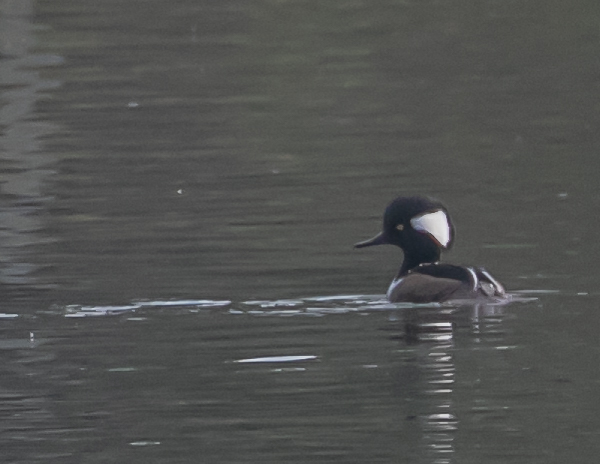
(Chris Tosdevin 10-27-24)
[Written & posted by Chuck Almdale]
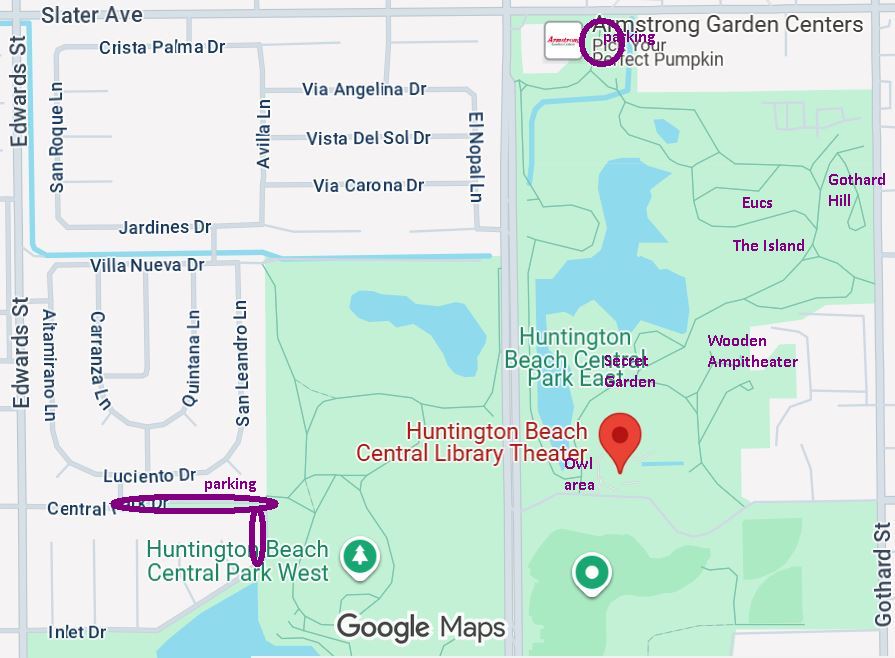
A few special birds at Huntington Beach Central Park, 11 Oct. 2025
[Written by Liz Galton; Photos by Armando Martinez and Emily Roth; comments & editing by Chuck Almdale]

I am always happy when a number of people sign up for the Huntington Beach Central Park birding trip: eleven including me (the leader). It was a perfect day, good light, and not too hot. Maybe it’s the fabulous restaurant at the end!

Several other groups and individuals were already there, to see some previously sighted unusual birds, most of them in the process of migrating. This included vireos such as Cassin’s, Philadelphia and Yellow-green; warblers such as American Redstart, Blackburnian, Black-and-white, Magnolia and Tennessee; the perennial park visitor Rose-breasted Grosbeak; a rare Dickcissel (a species of cardinal), plus an Arctic Warbler, extremely rare in the lower 48 states. Groups of birders were gathered in certain locations, which caused us to go and join them and share the sightings. (“It was here an hour ago!” or “Oh, you just missed it by 30 seconds!” or “It’s right there, in the green tree.”) There had been reports of Tropical Kingbird, Cassin’s Vireo and others, almost none of which we saw, but not for lack of looking. In fact, at one point, we doubled back over territory we’d already covered, because someone running by said there had been a Blackburnian Warbler, but…no luck. But we did see quite a variety of good birds.
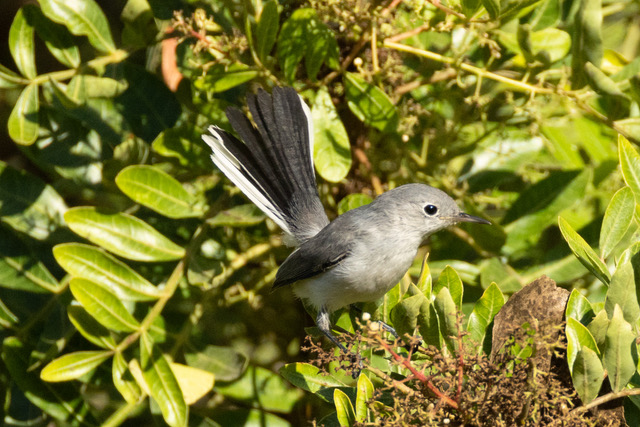
The central lake of the park has become even more covered with algae, duck weed or some other dense covering, which limited the number of waterbirds. Rumor had it that some action might be taken to remove it.

What clear water was left, had some (few) Great and Snowy Egrets, Mallards and Coots, one White-faced Ibis, a Great Blue Heron and a lovely female Belted Kingfisher, who obligingly perched for photos.
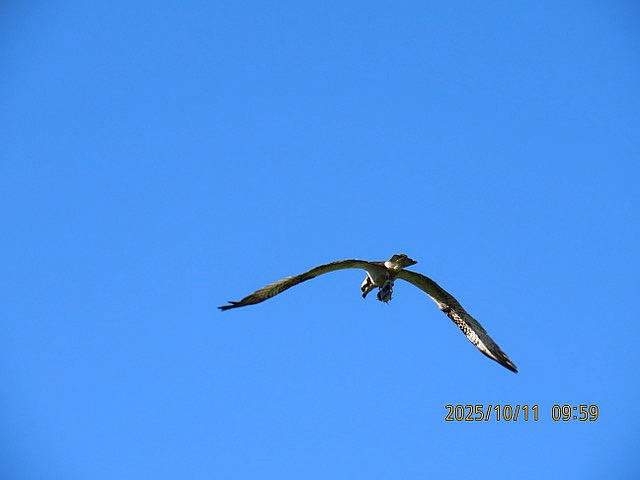
One Spotted Sandpiper was “spotted.” Also an Osprey dived and captured a good size fish, which was transported in suitably aerodynamic fashion, head first (so the wind wouldn’t get caught in the scales and slow the Osprey’s flight). When birds swallow fish whole, they do it the same way for the same reason — head first, so the scales and gill edges don’t get caught in their throat.
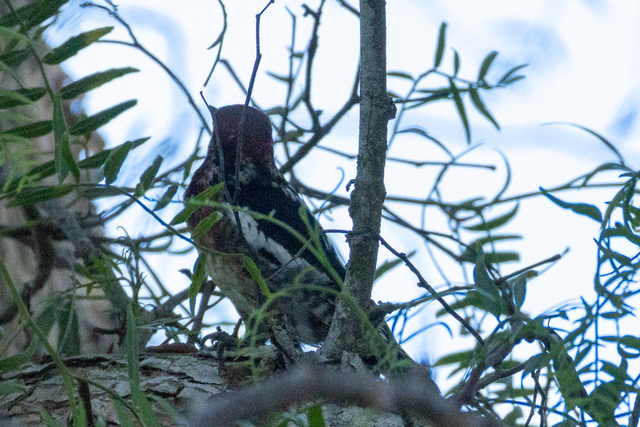
We had a good selection of land-based birds. Of the woodpeckers, we saw Downy and Nuttall’s Woodpeckers, a Red-breasted Sapsucker and a Northern Flicker. Warblers were well represented by Townsend’s, Orange-crowned, the especially Yellow-rumped, and a solitary Magnolia Warbler, seen only by Jean. We had a Black-headed Grosbeak slurping from a small protected patch of water. When initially mis-identified as a Red-breasted Grosbeak, much excitement developed, only to dwindle upon proper identification.
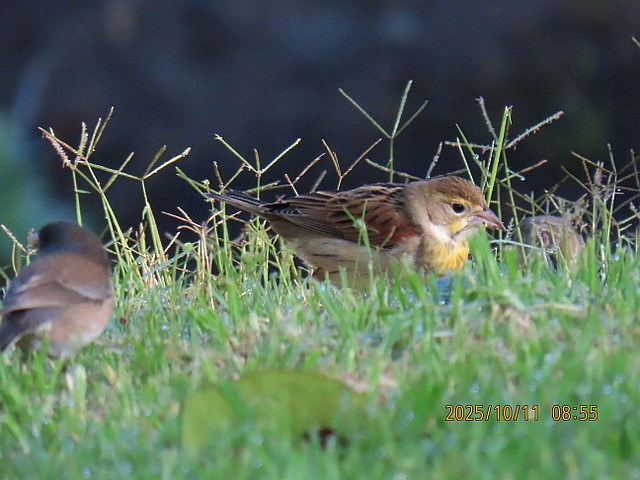
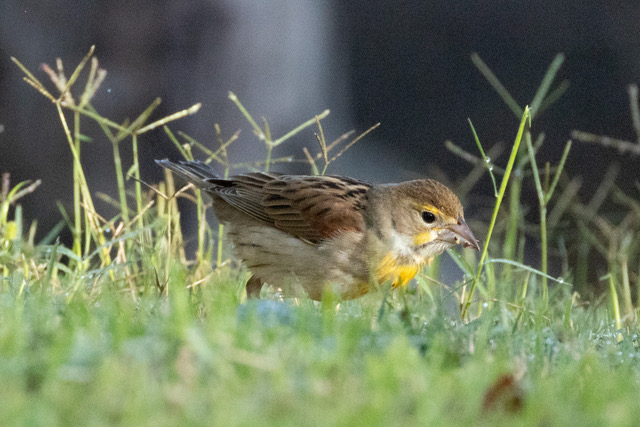
The rarest bird by far that we saw was the Dickcissel, in fact it was my first ever. The reddish-brown and yellow on it were very notable.

Dickcissel’s breed in the grasslands of the Great Plains, and rarely get west of the Rockies. Chuck Almdale reports that he has seen them before in California, all of…once.

A Hermit Thrush was near the lake-edge. At one small pond was a pair of Egyptian Geese, leading their small flock of goslings.


This very plain Western Bluebird in the shade baffled those who saw it, and even those later studying this photo. As Sherlock Holmes often said, “Eliminate the impossible, and whatever is left is the truth.” A printed field guide is very handy when you need to skim through 400 illustrations of passerines.
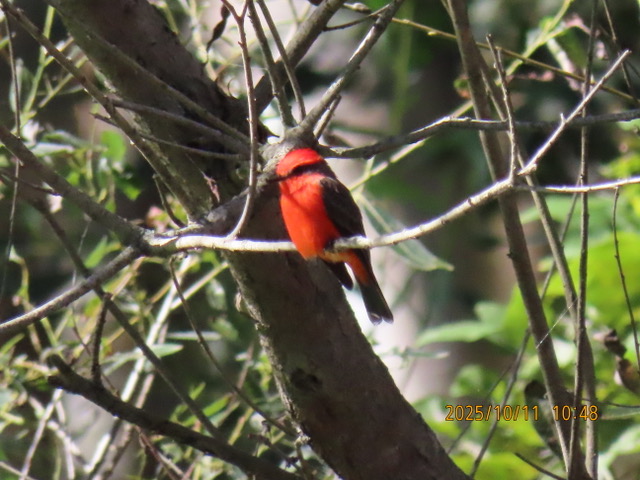
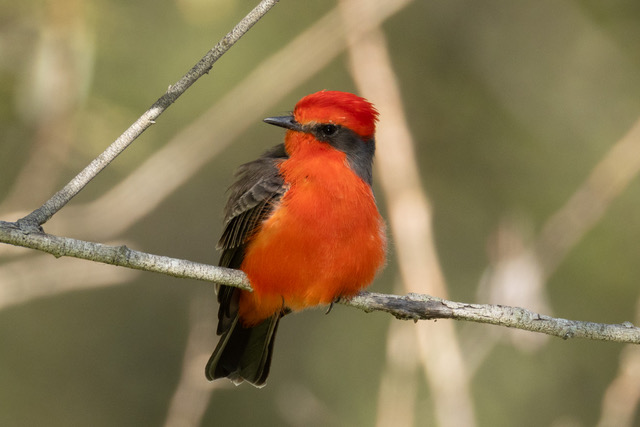
A spectacular bird was the Vermilion Flycatcher, who attracted a good audience.

Exotic birds were well represented by the Whydah (of African origin), present in numbers on a tree, including a spectacular male with his 8 inch tail, and all with their red beaks.

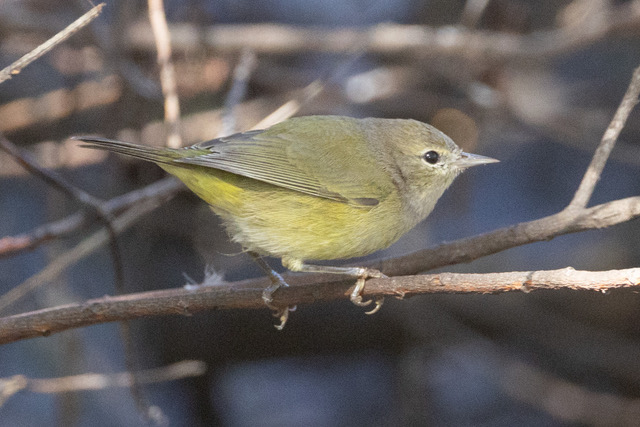
Here’s another look at an Orange-crowned Warbler, living up to its name. What? You can’t see the orange crown? Change the name!
The other exotics were the Scaly Breasted Munia, well established in the park, and the Swinhoe’s White-eyes of which we saw at least a dozen.
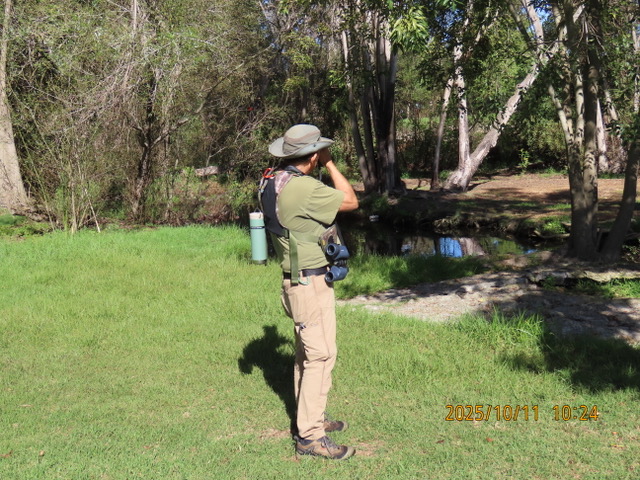
Sadly, eager searching turned up no library-owl, from which we deduce that he has probably moved away. We heard reports that his favorite tree was cut down, but as we’d seen them in at least a half-dozen different trees over the years, we don’t know which one was his “favorite.”
We didn’t photo any Townsend’s Warblers this year, so this one from last year will have to stand in for the many we saw.
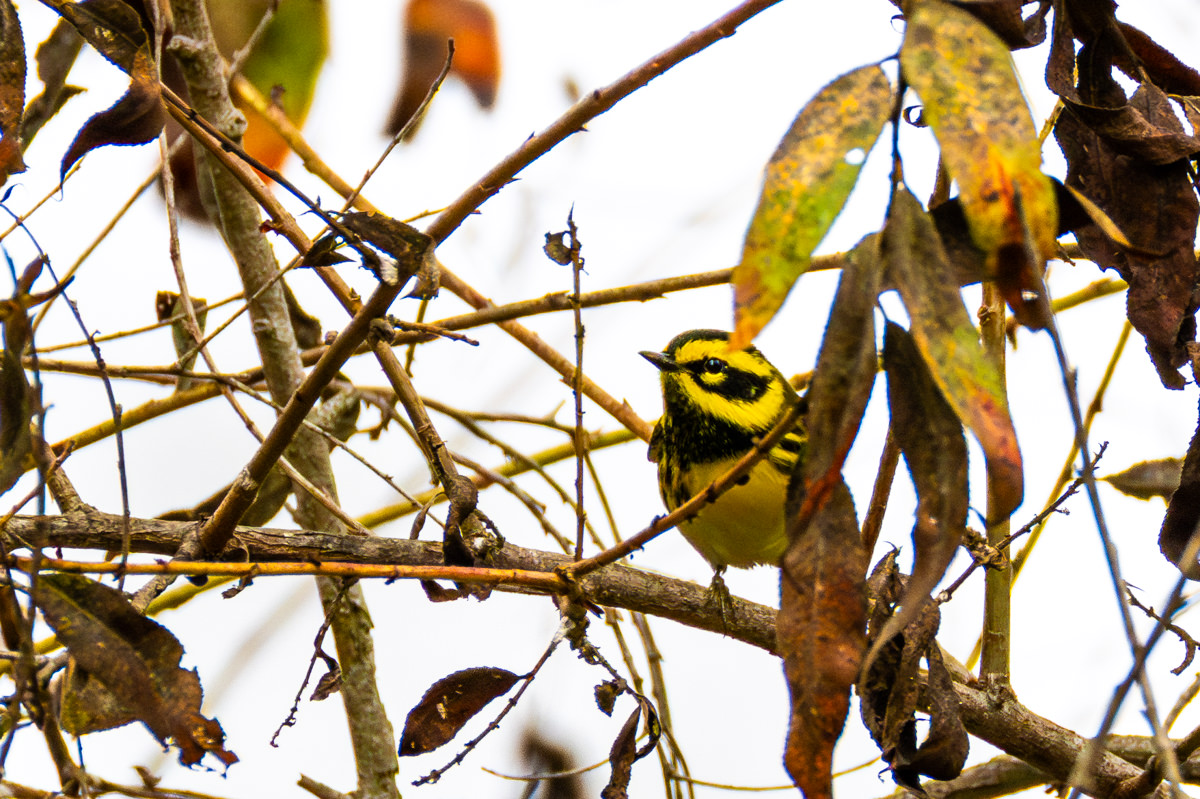
(Elyse Jankowski 10-12-24)
Huntington Beach Central Park on eBird as of 10-21-25: 10837 lists, 2049 eBirders, 304 species.
Most recent species added: Yellow-green Vireo, 20 Sep 2025, reported by Jill Dale.
Key: X – present; Bold – recent exotics; sub 1– heard; sub 2 – species intergrade; sub 3 – Eastern U.S. species.
| Huntington Beach Central Park | |||||||||
| Year | 2025 | 2024 | 2023 | 2022 | 2019 | 2018 | |||
| Date | 10/11 | 10/12 | 10/14 | 10/15 | 10/12 | 10/13 | |||
| 1 | Canada Goose | 35 | 40 | ||||||
| 1 | Egyptian Goose | 8 | 2 | 4 | X | X | |||
| 1 | Cinnamon Teal | 1 | 1 | ||||||
| 1 | Gadwall | X | |||||||
| 1 | Eurasian Wigeon | X | |||||||
| 1 | American Wigeon | 25 | 16 | 1 | 5 | X | |||
| 1 | Mallard | 35 | 40 | 16 | 37 | X | |||
| 1 | Green-winged Teal | 2 | |||||||
| 2 | Pied-billed Grebe | 2 | 4 | ||||||
| 7 | Feral Pigeon | 6 | 1 | ||||||
| 7 | Mourning Dove | 2 | 2 | 5 | X | ||||
| 8 | Anna’s Hummingbird | 2 | 1 | 2 | X | X | |||
| 8 | Allen’s Hummingbird | 4 | 3 | 2 | 7 | X | X | ||
| 2 | Virginia Rail | 1 | |||||||
| 2 | American Coot | 50 | 50 | 11 | 30 | X | X | ||
| 5 | Long-billed Dowitcher | 18 | |||||||
| 5 | Spotted Sandpiper | 1 | 2 | 2 | |||||
| 5 | Greater Yellowlegs | 1 | |||||||
| 6 | Western Gull | 1 | |||||||
| 6 | California Gull | 1 | |||||||
| 6 | Gull (species) | 1 | |||||||
| 2 | Double-crested Cormorant | 1 | 1 | X | |||||
| 3 | Great Blue Heron | 2 | 4 | 2 | 1 | X | |||
| 3 | Great Egret | 1 | 2 | 1 | 2 | X | X | ||
| 3 | Snowy Egret | 5 | 12 | 1 | 3 | X | X | ||
| 3 | Green Heron | 4 | 1 | 1 | X | ||||
| 3 | Black-crowned Night-Heron | 3 | 1 | 3 | X | X | |||
| 3 | White-faced Ibis | 1 | 30 | 4 | 1 | X | X | ||
| 4 | Turkey Vulture | 1 | 1 | 1 | |||||
| 4 | Osprey | 1 | 1 | 2 | 1 | ||||
| 4 | Cooper’s Hawk | 1 | 1 | 2 | X | ||||
| 4 | Red-shouldered Hawk | 1 | 1 | 1 | 3 | X | X | ||
| 4 | Red-tailed Hawk | 1 | 1 | 1 | |||||
| 8 | Belted Kingfisher | 1 | 1 | 1 | 1 | X | |||
| 8 | Red-breasted Sapsucker | 1 | |||||||
| 8 | Downy Woodpecker | 2 | 2 | 1 | 2 | X | X | ||
| 8 | Nuttall’s Woodpecker | 2 | 3 | 2 | X | ||||
| 8 | Northern Flicker | 1 | 1 | 1 | 2 | X | X | ||
| 4 | American Kestrel | 1 | 1 | 1 | X | X | |||
| 4 | Peregrine Falcon | 2 | 1 | ||||||
| 9 | Cassin’s Kingbird | 1 | 4 | 1 | |||||
| 9 | Western Wood-Pewee | X | |||||||
| 9 | Western Flycatcher | X | |||||||
| 9 | Black Phoebe | 12 | 15 | 5 | 8 | X | X | ||
| 9 | Say’s Phoebe | 1 | 2 | ||||||
| 9 | Vermilion Flycatcher | 2 | 3 | ||||||
| 9 | Hutton’s Vireo | 1 | |||||||
| 9 | Warbling Vireo | 1 | 1 | ||||||
| 9 | California Scrub-Jay | 1 | |||||||
| 9 | American Crow | 8 | 6 | 1 | 10 | X | X | ||
| 9 | Common Raven | X | |||||||
| 9 | Bushtit | 20 | 12 | 30 | X | X | |||
| 9 | Swinhoe’s White-eye | 12 | 7 | 4 | 10 | X | |||
| 9 | Ruby-crowned Kinglet | 1 | 2 | 1 | |||||
| 9 | Blue-gray Gnatcatcher | 3 | 2 | 1 | 1 | X | X | ||
| 9 | House Wren | 1 | 4 | 2 | 2 | X | X | ||
| 9 | Western Bluebird | 4 | 4 | 10 | 25 | ||||
| 9 | Hermit Thrush | 1 | 2 | X | |||||
| 9 | American Robin | 2 | X | ||||||
| 9 | Bronze Mannikin | X | |||||||
| 9 | Scaly-breasted Munia | 1 | 5 | X | X | ||||
| 9 | Pin-tailed Whydah | 10 | 5 | X | |||||
| 9 | House Finch | 3 | 10 | 6 | 12 | X | X | ||
| 9 | Lesser Goldfinch | 5 | 4 | 2 | 4 | X | X | ||
| 9 | American Goldfinch | 12 | 2 | X | |||||
| 9 | Dark-eyed Junco | 15 | 1 | ||||||
| 9 | White-crowned Sparrow | 6 | 3 | X | X | ||||
| 9 | Song Sparrow | 4 | 8 | 2 | 1 | X | X | ||
| 9 | California Towhee | X | X | ||||||
| 9 | Hooded Oriole | X | |||||||
| 9 | Red-winged Blackbird | 2 | |||||||
| 9 | Brewer’s Blackbird | X | |||||||
| 9 | Great-tailed Grackle | 3 | |||||||
| 9 | Black-and-white Warbler | 1 | 1 | ||||||
| 9 | Orange-crowned Warbler | 6 | 4 | 1 | 4 | X | X | ||
| 9 | Nashville Warbler | X | |||||||
| 9 | MacGillivray’s Warbler | 1 | |||||||
| 9 | Common Yellowthroat | 4 | 12 | 1 | 7 | X | X | ||
| 9 | Magnolia Warbler3 | 1 | |||||||
| 9 | Yellow Warbler | 3 | 1 | X | |||||
| 9 | Yellow-rumped Warbler | 35 | 14 | 16 | 14 | X | X | ||
| 9 | Black-throated Gray Warbler | 1 | X | ||||||
| 9 | Townsend’s Warbler | 15 | 4 | 4 | 1 | X | X | ||
| 9 | Wilson’s Warbler | X | |||||||
| 9 | Western Tanager | X | |||||||
| 9 | Black-headed Grosbeak | 1 | |||||||
| 9 | Dickcissel3 | 1 | |||||||
| Totals by Type | 2025 | 2024 | 2023 | 2022 | 2019 | 2018 | |||
| 1 | Waterfowl | 103 | 101 | 21 | 43 | ||||
| 2 | Water Birds – Other | 52 | 55 | 12 | 31 | ||||
| 3 | Herons, Egrets & Ibis | 9 | 55 | 10 | 11 | ||||
| 4 | Quail & Raptors | 8 | 7 | 5 | 7 | ||||
| 5 | Shorebirds | 1 | 2 | 3 | 18 | ||||
| 6 | Gulls & Terns | 1 | 1 | 0 | 0 | ||||
| 7 | Doves | 13 | 2 | 5 | 1 | ||||
| 8 | Other Non-Passerines | 14 | 11 | 9 | 12 | ||||
| 9 | Passerines | 188 | 130 | 98 | 77 | ||||
| Totals Birds | 389 | 364 | 163 | 200 | 42 | 41 | |||
| Total Species | 2025 | 2024 | 2023 | 2022 | 2019 | 2018 | |||
| 1 | Waterfowl | 4 | 6 | 3 | 3 | 3 | 3 | ||
| 2 | Water Birds – Other | 2 | 3 | 2 | 2 | 1 | 2 | ||
| 3 | Herons, Egrets & Ibis | 4 | 6 | 6 | 6 | 4 | 6 | ||
| 4 | Quail & Raptors | 7 | 7 | 4 | 4 | 2 | 3 | ||
| 5 | Shorebirds | 1 | 1 | 2 | 1 | 0 | 0 | ||
| 6 | Gulls & Terns | 1 | 1 | 0 | 1 | 0 | 0 | ||
| 7 | Doves | 2 | 1 | 1 | 1 | 1 | 0 | ||
| 8 | Other Non-Passerines | 7 | 6 | 6 | 4 | 5 | 5 | ||
| 9 | Passerines | 29 | 24 | 24 | 13 | 26 | 22 | ||
| Totals Species – 85 | 57 | 55 | 48 | 35 | 42 | 41 | |||



 SANTA MONICA BAY AUDUBON SOCIETY BLOG