Free email delivery
Please sign up for email delivery in the subscription area to the right.
No salesman will call, at least not from us. Maybe from someone else.
Malibu Lagoon bird walks: 8:30 & 10am Sunday, 24 August, 2025

[Chuck Almdale]
Pacific Coast Highway, as of this writing, is apparently still open between Santa Monica and Malibu. However, 7/28-late Sept, Topanga Cyn. Rd. to Las Flores, due to fires, storms, utility repairs and a plethora of diminutive theropodians:
Northbound: 1 lane weekdays 7am-3pm, weekends: 5am-5pm
Southbound: 1 lane weekdays 9am-5pm, weekends: apparently open
But you can confirm this for yourself here.
So… SMBAS lagoon trips (8:30am general and 10am parents & kids) are happening.
The migrating shorebirds are picking up in numbers and diversity, as are gulls and terns. Many may still have their bright breeding plumages. Snowy Plovers have returned from breeding. You never know what might blow, float or wander in.

Left: Chris Tosdevin, Right: Ray Juncosa 8-25-24
Some of the great birds we’ve had in August are:
Green-winged Teal, Brandt’s & Pelagic Cormorant, Snowy Egret, White-faced Ibis, Osprey, White-tailed Kite, Red-tailed Hawk, Semipalmated Plover, Spotted Sandpiper, Ruddy & Black Turnstones, Sanderling, Western & Least Sandpipers, Pectoral Sandpiper, Short-billed Dowitcher, Least, Forster’s, Royal & Elegant Tern, Black Skimmer, White-throated Swift, Belted Kingfisher, Merlin, Western Wood-Pewee, Ash-throated Flycatcher, Western Kingbird, Oak Titmouse, House Wren, Orange-crowned, Warbler & Wilson’s Warbler, Common Yellowthroat, Savannah, Song & Lincoln’s Sparrow, Western Tanager, Red-winged Blackbird, Bullock’s Oriole.
Weather prediction as of 19 August:
Cloudy, warm. Temp: 67-73°, Wind: NW 3>8 mph, Clouds: 90%>15%, rain: 5%
Tide: Very low & rising: Low: -0.20 ft. @ 4:52am; High: +4.74 ft. @ 11:02pm
July 27 trip report link
Adult Walk 8:30 a.m., 4th Sunday of every month. Beginner and experienced, 2-3 hours. Species range from 35 in June to 60-75 during migrations and winter. We move slowly and check everything as we move along. When lagoon outlet is closed we may continue east around the lagoon to Adamson House. We put out special effort to make our monthly Malibu Lagoon walks attractive to first-time and beginning birdwatchers. So please, if you are at all worried about coming on a trip and embarrassing yourself because of all the experts, we remember our first trips too. Someone showed us the birds; now it’s our turn. Bring your birding questions.
Children and Parents Walk, 10:00 a.m., 4th Sunday of every month: One hour session, meeting at the metal-shaded viewing area between parking lot and channel. We start at 10:00 for a shorter walk and to allow time for families to get it together on a sleepy Sunday morning. Our leaders are experienced with kids so please bring them to the beach! We have an ample supply of binoculars that children can use without striking terror into their parents. We want to see families enjoying nature. (If you have a Scout Troop or other group of more than seven people, you must call Jean (213-522-0062) to make sure we have enough binoculars, docents and sand.)

[Written & posted by Chuck Almdale]
Birds take their lumps and splits
[Posted by Chuck Almdale]
Well, it’s that time of year when all good things come to an end and a new beginning…..begins. I’m talking about the annual bird checklist updates of August, of course. [What else could I have possibly meant?]
Not everyone does this at the same time, needless to say. Some people and websites lag by years, if not decades. I pity whomever it is that keeps Wikipedia up-to-date. But, this year at least, the American Birding Association (ABA, not that other ABA that purports to deal with legal matters) has done their work, and you, even non-members of either ABA, can read all about it in their Checklist Redux 2025, by Michael L.P. Retter and published today.
Changes include:
Splits
- Warbling Vireo, Vireo gilvus – now two species
- White Tern, Gygis alba – now three species
- Nutting’s Flycatcher, Myiarchus nuttingi – now two species
- Willow Ptarmigan, Lagopus lagopus – now two species
- Eurasian Collared-Dove, Streptopelia decaocto – now two species
- Bank Swallow, Riparia riparia – now two species
The rest of the changes are either higher level splits or lumps in genera or families, or affect only non-ABA area birds. But here’s a few examples for those of you who may have birded elsewhere in the world:
Streptopelia doves genus split
Basileuterus warblers genus split
Apus swifts genus split
Eurasian Hoopoe split off the Madagascar Hoopoe (finally!!)
Garrulax Laughingthrush genus split
Cyanecula (Bluethroats, et.al.) genus disappeared
Four crane-like families in Gruiformes have been reordered, same thing for gull subfamilies in Laridae, families in Pelicaniformes, many species of doves in Columbidae, and Jacamars and Puffbirds swapped places within Piciformes.
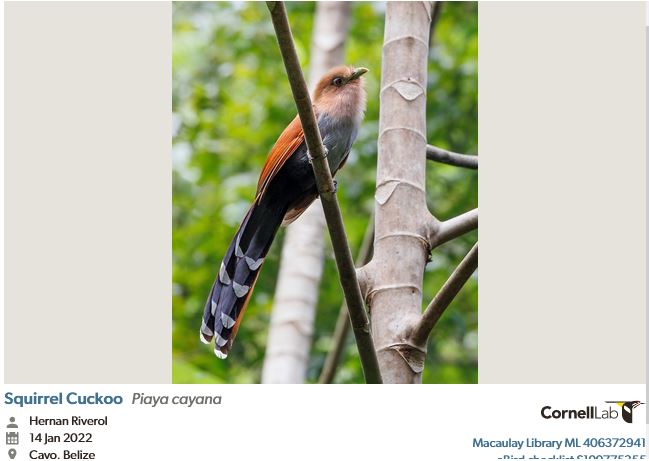
Plus: more splits in Squirrel-Cuckoos, Trogons, Xenops, tropical Flycatchers, a Catbird switch, and, and…
“Among the West Indian endemic “tanagers”, Nesospingidae (Puerto Rican Tanager) and Spindalidae (spindalises) are subsumed into Phaenicophilidae (Hispaniolan Tanagers).”
Bummer. I think I lost a family or two on this last one.
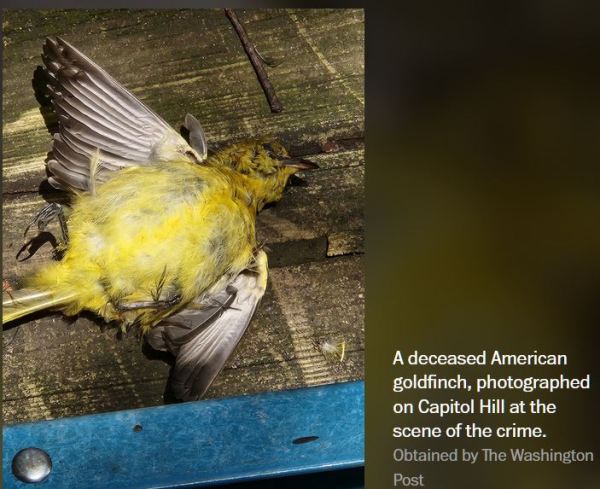
[Posted by Chuck Almdale, submitted by Ted Winterer]
The link is one of those Apple News links that usually don’t work on non-Apple devices, but for some reason, it worked for me. Good luck.
https://apple.news/AhJgT_NC_SkmiMBTC4DL_lg
If that doesn’t work, try this directly to the Washpost site.
https://www.washingtonpost.com/dc-md-va/interactive/2025/capitol-hill-bird-murder-mystery-falcon/
Western Snowy Plovers and Salt Pond Restoration | RWC Pulse

[Posted by Chuck Almdale, suggested by Lucien Plauzoles]
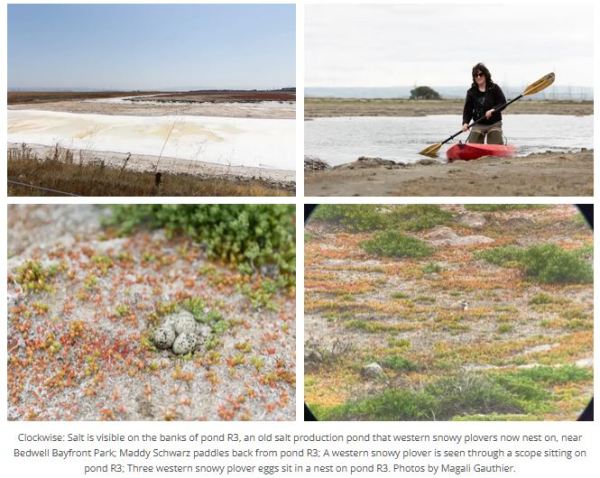
This article, containing an embedded 9-minute video, was spotted by our Santa Monica Beach Western Snowy Plover roosting area maven, warden and censuser (there’s a mouthful), Lu Plauzoles. It details what’s going on up in San Francisco Bay with the rehabilitation of the former salt ponds and their large population – most recently 321 birds – of breeding Western Snowy Plovers. In 2023, the total world (aka our west coast) population of these birds was only 2,336, up from 2,014 in 2016, 1,817 in 2005, and under 1,000 in the 1980s; that makes this current SF Bay population 14% of total WSPs. Not a heck of a lot when compared to the number of people or chickens in California.
Of the total project area, which at around 15,000 acres is slightly larger than the size of Manhattan, anywhere from 50%-90% of ponds will be reverted back to wetlands. Those remaining will be kept dry for the plovers or rehabilitated into deep and shallow ponds for waterfowl.
As the Bay Area’s salt pond restoration project moves forward, a tiny threatened shorebird remains under the watchful eye of biologists [Link to article]
The pivotal project restoring salt ponds to wetlands will also reduce habitat for the western snowy plover as its population is rising. Inside the balancing act to keep plovers on the Peninsula.
by Magali Gauthier July 24, 2025 7:45 pm
Busy time on the salt flats.
RWC stands for Redwood City, in case you were wondering.
AviList Webinar | One list to rule them all
[Posted by Chuck Almdale]
If you use eBird or read Birds of the World, keep a lifelist, county list, trip list or any kind of bird check list, OR utilize avian phylogeny in any way OR are just interested in how birds evolved to be the 11,000+ species in 252 families of toothless, feathered, singing dinosaurs they now are, then you might want to watch this 90-minute webinar about the development of the soon-to-arrive although not-100%-complete checklist with which you and all the rest of the birders and ornithologists in the world will be dealing.
YouTube Descriptive Blurb
Birds of the World is the world’s leading scholarly ornithological platform featuring bird life histories and data resources for every bird in the world. This global ornithological resource drives scientific research, education and biodiversity conservation around the world.
Chapters:
00:00 Introduction
03:00 Pam Rasmussen (background and history)
16:00 Marshall Iliff (how AviList emerged)
36:00 Paul Donald (a Birdlife and conservation perspective)
45:00 Pam Rasmussen (species concepts)
58:00 Marshall Iliff (phase 2 Avilist, alignment with eBird/birders’ taxonomy)
1:09:00 Questions
Description:
Join us for a deep discussion about AviList, a unified global avian checklist that provides the most current and authoritative taxonomy of birds. AviList was released in June 2025 by experts in taxonomy, nomenclature, and bioinformatics, including researchers from the Cornell Lab of Ornithology, American Ornithological Society, BirdLife International, International Ornithologists’ Union, and Avibase (Birds Canada), among others.
The new checklist recognizes 11,131 species of birds in the world, classified within 252 families. This effort was the culmination of thousands of hours of effort over four years to harmonize the global checklist of birds with the aim of providing a single list of species names that will make it easier to compile and share information on bird species to improve conservation and scientific outcomes. This massive collaborative effort resulted in a single current consensus taxonomy for the birds of the world, along with key information on taxonomy and nomenclature.
What were the goals of AviList? How will it affect scientific progress in ornithology? What problems does it solve? And what are some interesting species concepts the team had to resolve to reach this new consensus? And finally, how will AviList impact and improve birding tools and resources such as eBird and Birds of the World?
PANELISTS INCLUDE:
Members of the AviList Executive Committee will join us:
Paul Donald (BirdLife International)
Pamela Rasmussen (The Cornell Lab, Birds of the World)
Marshall Iliff (The Cornell Lab, eBird).
For more information: AviList Core Team. 2025. AviList: The Global Avian Checklist, v2025:
https://doi.org/10.2173/avilist.v2025



 SANTA MONICA BAY AUDUBON SOCIETY BLOG