Free email delivery
Please sign up for email delivery in the subscription area to the right.
No salesman will call, at least not from us. Maybe from someone else.
The Dark Ages Are Coming Back
 ICYMI: In Case You Missed It -From the New York Times
Boulder, Colo. — IMAGINE a future in which humanity’s accumulated wisdom about Earth — our vast experience with weather trends, fish spawning and migration patterns, plant pollination and much more — turns increasingly obsolete. As each decade passes, knowledge of Earth’s past becomes progressively less effective as a guide to the future. Civilization enters a dark age in its practical understanding of our planet.
To comprehend how this could occur, picture yourself in our grandchildren’s time, a century hence. Significant global warming has occurred, as scientists predicted. Nature’s longstanding, repeatable patterns — relied on for millenniums by humanity to plan everything from infrastructure to agriculture — are no longer so reliable. Cycles that have been largely unwavering during modern human history are disrupted by substantial changes in temperature and precipitation.
As Earth’s warming stabilizes, new patterns begin to appear. At first, they are confusing and hard to identify. Scientists note similarities to Earth’s emergence from the last ice age. These new patterns need many years — sometimes decades or more — to reveal themselves fully, even when monitored with our sophisticated observing systems. Until then, farmers will struggle to reliably predict new seasonal patterns and regularly plant the wrong crops. Early signs of major drought will go unrecognized, so costly irrigation will be built in the wrong places. Disruptive societal impacts will be widespread.
Such a dark age is a growing possibility. In a recent report, the National Academies of Sciences, Engineering and Medicine concluded that human-caused global warming was already altering patterns of some extreme weather events. But the report did not address the broader implication — that disrupting nature’s patterns could extend well beyond extreme weather, with far more pervasive impacts.
Our foundation of Earth knowledge, largely derived from historically observed patterns, has been central to society’s progress. Early cultures kept track of nature’s ebb and flow, passing improved knowledge about hunting and agriculture to each new generation. Science has accelerated this learning process through advanced observation methods and pattern discovery techniques. These allow us to anticipate the future with a consistency unimaginable to our ancestors.
But as Earth warms, our historical understanding will turn obsolete faster than we can replace it with new knowledge. Some patterns will change significantly; others will be largely unaffected, though it will be difficult to say what will change, by how much, and when.
The list of possible disruptions is long and alarming. We could see changes to the prevalence of crop and human pests, like locust plagues set off by drought conditions; forest fire frequency; the dynamics of the predator-prey food chain; the identification and productivity of reliably arable land, and the predictability of agriculture output.
Historians of the next century will grasp the importance of this decline in our ability to predict the future. They may mark the coming decades of this century as the period during which humanity, despite rapid technological and scientific advances, achieved “peak knowledge” about the planet it occupies. They will note that many decades may pass before society again attains the same level.
One exception to this pattern-based knowledge is the weather, whose underlying physics governs how the atmosphere moves and adjusts. Because we understand the physics, we can replicate the atmosphere with computer models. Monitoring by weather stations and satellites provides the starting point for the models, which compute a forecast for how the weather will evolve. Today, forecast accuracy based on such models is generally good out to a week, sometimes even two.
But farmers need to think a season or more ahead. So do infrastructure planners as they design new energy and water systems. It may be feasible to develop the science and make the observations necessary to forecast weather a month or even a season in advance. We are also coming to understand enough of the physics to make useful global and regional climate projections a decade or more ahead.
The intermediate time period is our big challenge. Without substantial scientific breakthroughs, we will remain reliant on pattern-based methods for time periods between a month and a decade. The problem is, as the planet warms, these patterns will become increasingly difficult to discern. This will present a troubling issue for regions of the world subject to El Niño, monsoon cycles and other long-term weather variability. Predicting extreme weather may become even more trying than it is today.
The oceans, which play a major role in global weather patterns, will also see substantial changes as global temperatures rise. Ocean currents and circulation patterns evolve on time scales of decades and longer, and fisheries change in response. We lack reliable, physics-based models to tell us how this occurs. Our best knowledge is built on what we have seen in the past, like how fish populations respond to El Niño’s cycle. Climate change will further undermine our already limited ability to make these predictions. Anticipating ocean resources from one year to the next will become harder.
Civilization’s understanding of Earth has expanded enormously in recent decades, making humanity safer and more prosperous. As the patterns that we have come to expect are disrupted by warming temperatures, we will face huge challenges feeding a growing population and prospering within our planet’s finite resources. New developments in science offer our best hope for keeping up, but this is by no means guaranteed.
Our grandchildren could grow up knowing less about the planet than we do today. This is not a legacy we want to leave them. Yet we are on the verge of ensuring this happens.
The Boid From Brazil (not the species you think)
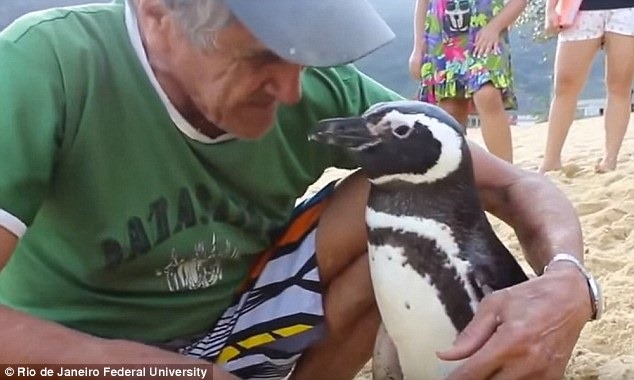
Click Here to read about a rescued Magellanic Penguin who swims from the bottom of South America to Rio de Janeiro to spend 8 months of the year with his rescuer, Joao Pereira de Souza. (Hat tip to my sister Nancy for this)
Low, low water in Malibu Lagoon Mar. 27, 2016
If you notice more mud than usual in the pictures, you’re seeing right. Low tide of +0.6 ft. was at 6:22am (high was +3.43 ft. at 12:28pm), the lagoon outlet is open, and nearly all the water ran out. If the outlet was any further east, it would carry away Adamson House. As it is, you have to climb over the rip-rap rocks supporting the house’s fence in order to get to the beach by the Malibu pier.

Killdeer, a little less cryptic
(R. Ehler 3/27/16)
Today was Easter and birders were fewer, but there were a few newbies including one woman recently relocated from Botswana, which is somewhere southeast of Pittsburgh PA. There she saw mostly “bush birds,” she said – weird things like Go-Away Birds and Mousebirds – so she was glad to see our water- and sea-birds. In fact, she was first to find the Killdeer resting right in front of us and occasionally calling and which took me forever to spot, it blended in so well with the mud and rocks.
Nanday Parakeets are becoming almost a regular at the lagoon. (See photo in slideshow.) They seem to like the sycamores. Some gulls – all Western – were having a great time at the picnic spread someone had left for them, perhaps purposefully, perhaps not. Several were working on a roast beef sandwich from Ralph’s when our group got to the picnic area at the

Picnic time with Western Gull (R. Juncosa 3/27/16)
SW corner of the lagoon, but they soon moved on to the chips in an effort to balance the protein with carbohydrates. Earlier birders said that they’d seen only White-crowned Sparrows at the spread. A few lucky people later spotted the Western Bluebird in this area. That’s a very uncommon bird at the lagoon – not enough flies to hawk, perhaps – and the only other sighting on our walks was on Oct. 22, 2000.
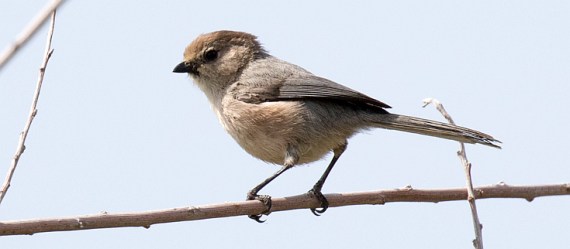
Bushtit – small, fast and tough to photograph (R. Ehler 3/27/16)
Various bush birds showed up in the vegetated swale along the back of the colony: Bushtit, Hermit Thrush, American Robin, Common Yellowthroat, California Towhee, Song and White-crowned Sparrows, House Finch and Lesser Goldfinch. On the other side of the path, ducks have dwindled to six species, the usual suspects including Brants reported by an early birder.

Brant at ocean’s edge (G. Murayama 3/23/16)
At the viewpoint south of “Boot-toe Island,” Chris “the Brit” – who is excellent at spotting and IDing oddities – alerted me to a distant odd sandpiper back among the exposed rocks near the northern viewpoint. A brief frontal-only view of a very spotted and stout breast made me think “Surfbird,” and Chris agreed, although one (me, for example) would never expect this rocky-seashore-loving bird within the lagoon. Unfortunately it soon disappeared, and some people thought we were not altogether sane. Hoping against hope, I took the group down to the ocean’s edge, where we soon spotted the bird where it belonged, poking around out on the offshore rocks near a small group of cormorants. While not as uncommon at the lagoon as the aforementioned bluebird, to date we’ve seen only 18 Surfbirds on 8 occasions, the first one in Dec. 1979, most recently four on 3-22-15, with a high of five on 4-22-07.

3 Brandt’s Cormorants and a closer Double-crested (R. Ehler 3/27/16)
The cormorants turned out to be three Brandt’s and one Double-crested. The Brandt’s were beginning to develop breeding plumage, consisting of a blue chin withing the surrounding beige throat-pouch, and faint white “whisker” plumes on the cheeks. (Look very closely at the 2nd-from-right bird for the blue. The right bird had the whiskers.)

Common Loon, still in winter plumage, chugging along (R. Ehler 3/27/16)
Out past the rocks and too far to photograph were a couple of Pacific Loons in breeding plumage – you could barely make out the black throats through the telescope. A few Surf Scoters and a Western Grebe were close by. Closer in – just inside the surf line, in fact – was a far easier bird to spot, the rarely photographed Common Loon. (Rarely photo’d because they’re usually too far away.) The thick (for a loon) bill, the bumpy head and “something funny” going on at the base of the neck ID’s this as a winter plumage Common Loon. His head was mostly submerged. They have a transparent 3rd eyelid, through which they can see quite well underwater.
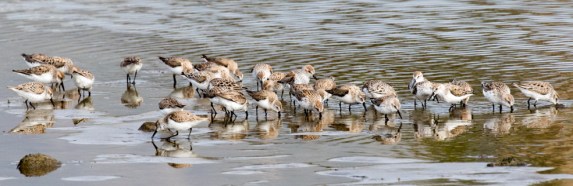
Western Sandpipers on their way back north (R. Ehler 3/27/16)
There were only three Snowy Plovers on the beach, but in the lagoon shallows we found a small contingent of Western Sandpipers, in various stages of molting into their basic (breeding) plumage. Gulls were relatively few – only two Heermann’s Gulls remained; presumably the rest are down in the Sea of Cortez on Isla Rasa. But tern numbers are growing again, and we had the usual job of sorting out which were which, with the Royal-Elegant similarity providing the greatest challenge.
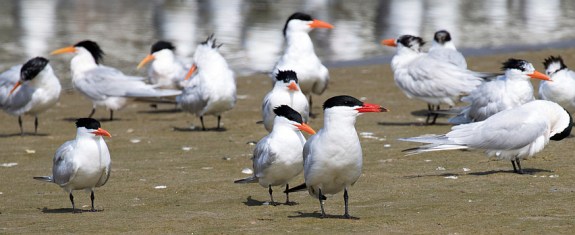
Royal Terns, a few Elegants and a single Caspian. Which is which? (R. Ehler 3/27/16)

Close-up of Caspian Tern surrounded by Royals (R. Juncosa 3/27/16)
Caspian Tern, the largest at 21″, has a blood-red bill with a dark tip, and may have white streaks but never has a white forehead. Royal Tern is 20″ long, has a pale yellow-to-deep orange bill, curved with a very small bump (gonys) on the lower mandible, and in non-breeding plumage has a white forehead with a dark eye separated slightly from the black bushy crest. At 17″ the Elegant Tern is the smallest of the three, has the thinnest and (seemingly) longest bill with no gonys at all, and in non-breeding plumage the eye is included in the dark face. All three have black legs and dark in their wingtips, and in breeding plumage, all three have black crests. There, wasn’t that easy? Now hie thee onward unto the beach and identify some for yourself.

Ringed Royal Tern (G. Murayama 3/23/16)

Ringed Royal Tern closeup – “38” is part of a longer number (G. Murayama 3/23/16)
A few days earlier, Snowy Plover tracker Grace Murayama was at Malibu and spotted this ringed Royal Tern on film. A flipped closeup of the feet shows it to be #38.
Birds new for the season were: Red-shouldered Hawk, Surfbird, Caspian & Elegant Terns, Cassian’s Kingbird, Western Scrub-Jay, Common Raven, Rough-winged, Cliff & Barn Swallows, Western Bluebird, American Robin, Hooded Oriole and Lesser Goldfinch.

Formerly frequently seen hauling President Reagan back and forth to Santa Barbara (G. Murayama 3/24/16)
As always, many thanks to our photographers: Randy Ehler, Ray Juncosa, and Grace Murayama.
Our next four scheduled field trips: Buds n’ Birds walk Paramount Ranch to Malibu Creek State Park, 2 Apr. 8:30am; Malibu Lagoon 8:30 & 10am, 24 Apr.; Walker Ranch, 14 May, 8:30am; Malibu Lagoon 8:30 & 10am, 22 May.
Our next program: Birds of Central Chile with Lance Benner on Tuesday, 5 April, 7:30 pm, at [note location change] Chris Reed Park, 1133 7th St., NE corner of 7th and Wilshire Blvd. in Santa Monica.

Song Sparrow in action
(R. Ehler 3/27/16)
NOTE: Our 10 a.m. Parent’s & Kids Birdwalk meets at the shaded viewing area. Watch for Willie the Weasel. He’ll be watching for you and your big floppy feet.
Links: Unusual birds at Malibu Lagoon
9/23/02 Aerial photo of Malibu Lagoon
Prior checklists:
2015: Jan-May, July-Dec
2014: Jan-July, July-Dec
2013: Jan-June, July-Dec
2012: Jan-June, July-Dec
2011: Jan-June, July-Dec
2010: Jan-June, July-Dec
2009: Jan-June, July-Dec
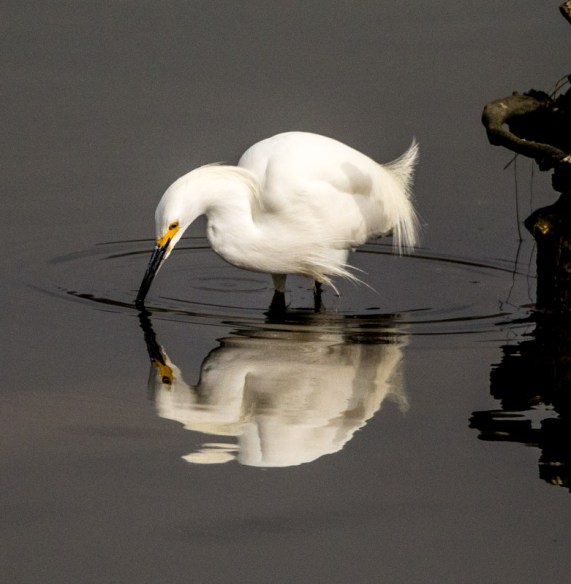
Snowy Egret (R. Juncosa 3/27/16)
The 10-year comparison summaries created during the project period, despite numerous complaints, remain available on our Lagoon Project Bird Census Page. Very briefly summarized, the results unexpectedly indicate that avian species diversification and numbers improved slightly during the period Jun’12-June’14. [Chuck Almdale]
| Malibu Census 2015-16 | 10/25 | 11/22 | 12/27 | 1/24 | 2/28 | 3/27 |
| Temperature | 64-75 | 64-80 | 48-61 | 48-64 | 57-70 | 55-65 |
| Tide Lo/Hi Height | H +6.12 | L+0.24 | H+6.07 | H+5.90 | L+1.38 | H+3.43 |
| Tide Time | 0809 | 1241 | 0945 | 0855 | 0654 | 1228 |
| Brant | 3 | 2 | ||||
| Canada Goose | 11 | 7 | ||||
| Gadwall | 15 | 4 | 13 | 3 | 20 | 14 |
| American Wigeon | 2 | 10 | 16 | 10 | ||
| Mallard | 30 | 25 | 2 | 15 | 22 | 16 |
| Northern Shoveler | 6 | 8 | 2 | 16 | 12 | 14 |
| Northern Pintail | 2 | 4 | ||||
| Green-winged Teal | 10 | 11 | 8 | 8 | ||
| Lesser Scaup | 5 | |||||
| Surf Scoter | 1 | 2 | 17 | 16 | ||
| Bufflehead | 4 | 1 | 2 | 2 | ||
| Hooded Merganser | 2 | |||||
| Red-brstd Merganser | 2 | 17 | 3 | 3 | 2 | |
| Ruddy Duck | 68 | 110 | 1 | 10 | ||
| Red-throated Loon | 1 | 2 | ||||
| Pacific Loon | 2 | 1 | 2 | |||
| Common Loon | 2 | 1 | 1 | |||
| Pied-billed Grebe | 3 | 3 | 2 | 3 | 8 | 3 |
| Horned Grebe | 2 | 1 | 1 | |||
| Eared Grebe | 10 | 10 | 2 | 2 | 5 | 2 |
| Western Grebe | 3 | 15 | 4 | 1 | 1 | |
| Blk-vented Shearwater | 1 | |||||
| Brandt’s Cormorant | 2 | 1 | 4 | |||
| Dble-crstd Cormorant | 29 | 45 | 15 | 24 | 19 | 6 |
| Pelagic Cormorant | 1 | 2 | 1 | 2 | ||
| Brown Pelican | 42 | 11 | 10 | 30 | 43 | 28 |
| Great Blue Heron | 4 | 3 | 2 | 3 | 4 | 3 |
| Great Egret | 5 | 1 | 2 | 2 | 1 | 5 |
| Snowy Egret | 12 | 8 | 30 | 21 | 7 | 7 |
| Blk-crwnd N-Heron | 3 | 1 | ||||
| Osprey | 1 | 1 | 1 | 3 | ||
| Cooper’s Hawk | 1 | 1 | ||||
| Red-shouldered Hawk | 1 | |||||
| Red-tailed Hawk | 1 | |||||
| Sora | 1 | 2 | ||||
| American Coot | 55 | 60 | 10 | 40 | 65 | 53 |
| Blk-bellied Plover | 62 | 33 | 30 | 12 | 32 | 8 |
| Snowy Plover | 28 | 12 | 4 | 3 | ||
| Killdeer | 15 | 4 | 14 | 2 | 4 | 3 |
| Spotted Sandpiper | 10 | 2 | 5 | 1 | 1 | |
| Greater Yellowlegs | 1 | |||||
| Willet | 35 | 18 | 13 | 8 | 8 | 12 |
| Whimbrel | 2 | 5 | 1 | 3 | 4 | 21 |
| Marbled Godwit | 8 | 8 | 11 | 13 | 22 | 15 |
| Ruddy Turnstone | 18 | 9 | 2 | 5 | 1 | |
| Surfbird | 1 | |||||
| Sanderling | 6 | |||||
| Least Sandpiper | 6 | 4 | 13 | |||
| Western Sandpiper | 1 | 4 | 35 | |||
| Long-billed Dowitcher | 4 | 2 | 2 | |||
| Common Murre | 1 | |||||
| Bonaparte’s Gull | 1 | 2 | 1 | |||
| Heermann’s Gull | 11 | 11 | 4 | 1 | 2 | |
| Mew Gull | 1 | |||||
| Ring-billed Gull | 2 | 95 | 60 | 30 | 90 | 15 |
| Western Gull | 90 | 140 | 80 | 13 | 160 | 45 |
| California Gull | 4 | 1430 | 620 | 400 | 650 | 130 |
| Thayer’s Gull | 1 | |||||
| Glaucous-wingd Gull | 1 | 1 | 4 | 1 | ||
| Caspian Tern | 3 | |||||
| Forster’s Tern | 3 | |||||
| Royal Tern | 2 | 23 | 11 | 25 | 31 | 18 |
| Elegant Tern | 4 | 5 | ||||
| Rock Pigeon | 10 | 20 | 2 | 2 | 6 | 6 |
| Eur. Collared-Dove | 1 | |||||
| Mourning Dove | 2 | 1 | 2 | 2 | 2 | |
| Anna’s Hummingbird | 2 | 2 | 3 | 1 | 2 | 1 |
| Allen’s Hummingbird | 8 | 5 | 2 | 3 | 3 | 4 |
| Belted Kingfisher | 1 | 1 | ||||
| Red-brstd Sapsucker | 1 | |||||
| Nuttall’s Woodpecker | 1 | |||||
| Northern Flicker | 1 | |||||
| American Kestrel | 1 | 1 | ||||
| Merlin | 1 | 1 | ||||
| Peregrine Falcon | 1 | |||||
| Nanday Parakeet | 6 | 8 | 2 | |||
| Black Phoebe | 10 | 10 | 12 | 3 | 8 | 6 |
| Say’s Phoebe | 3 | 1 | 2 | 1 | 1 | |
| Cassin’s Kingbird | 1 | |||||
| Warbling Vireo | 1 | |||||
| Western Scrub-Jay | 1 | 1 | ||||
| American Crow | 10 | 3 | 1 | 6 | 23 | 6 |
| Common Raven | 1 | |||||
| Rough-wingd Swallow | 10 | |||||
| Cliff Swallow | 1 | |||||
| Barn Swallow | 6 | |||||
| Oak Titmouse | 1 | 1 | ||||
| Bushtit | 4 | 28 | 40 | 4 | 5 | |
| House Wren | 1 | 2 | 1 | 1 | ||
| Marsh Wren | 2 | 1 | ||||
| Bewick’s Wren | 1 | 1 | 1 | |||
| Blue-gray Gnatcatcher | 4 | 9 | 3 | |||
| Ruby-crowned Kinglet | 4 | 10 | 6 | 1 | ||
| Western Bluebird | 1 | |||||
| Hermit Thrush | 1 | 1 | 3 | 1 | ||
| American Robin | 2 | |||||
| Northern Mockingbird | 6 | 6 | 2 | 1 | 3 | 4 |
| European Starling | 10 | 21 | 10 | 110 | 90 | 1 |
| Orange-crwnd Warbler | 4 | 5 | ||||
| Common Yellowthroat | 8 | 7 | 1 | 1 | 5 | 5 |
| Yellow Warbler | 1 | |||||
| Palm Warbler | 1 | |||||
| Yellow-rumpd Warbler | 35 | 40 | 40 | 9 | ||
| Blk-throted G. Warbler | 3 | |||||
| Townsend’s Warbler | 1 | 1 | ||||
| Spotted Towhee | 2 | 2 | 1 | |||
| California Towhee | 3 | 1 | 1 | 2 | 5 | |
| Savannah Sparrow | 3 | 1 | ||||
| Song Sparrow | 3 | 3 | 6 | 3 | 3 | 12 |
| Lincoln’s Sparrow | 1 | |||||
| White-crwnd Sparrow | 25 | 4 | 15 | 20 | 5 | 5 |
| Red-winged Blackbird | 15 | |||||
| Western Meadowlark | 4 | 5 | 4 | |||
| Great-tailed Grackle | 10 | 4 | 3 | 2 | 1 | 9 |
| Brwn-headed Cowbird | 2 | |||||
| Hooded Oriole | 1 | |||||
| House Finch | 9 | 4 | 3 | 1 | 6 | 21 |
| Lesser Goldfinch | 3 | 1 | ||||
| House Sparrow | 1 | |||||
| Totals by Type | Oct | Nov | Dec | Jan | Feb | Mar |
| Waterfowl | 129 | 169 | 58 | 61 | 118 | 74 |
| Water Birds – Other | 145 | 152 | 48 | 104 | 146 | 100 |
| Herons, Egrets & Ibis | 24 | 13 | 34 | 26 | 12 | 15 |
| Quail & Raptors | 1 | 2 | 4 | 2 | 4 | 2 |
| Shorebirds | 161 | 113 | 83 | 50 | 86 | 113 |
| Gulls & Terns | 114 | 1703 | 775 | 472 | 939 | 219 |
| Doves | 13 | 21 | 2 | 4 | 8 | 8 |
| Other Non-Passerines | 20 | 7 | 6 | 4 | 13 | 7 |
| Passerines | 191 | 164 | 156 | 150 | 168 | 105 |
| Totals Birds | 798 | 2344 | 1166 | 873 | 1494 | 643 |
| Total Species | Oct | Nov | Dec | Jan | Feb | Mar |
| Waterfowl | 5 | 10 | 10 | 8 | 11 | 7 |
| Water Birds – Other | 8 | 11 | 9 | 9 | 10 | 9 |
| Herons, Egrets & Ibis | 4 | 4 | 3 | 3 | 3 | 3 |
| Quail & Raptors | 1 | 2 | 4 | 2 | 2 | 2 |
| Shorebirds | 10 | 9 | 10 | 6 | 10 | 11 |
| Gulls & Terns | 7 | 7 | 7 | 5 | 9 | 8 |
| Doves | 3 | 2 | 1 | 2 | 2 | 2 |
| Other Non-Passerines | 7 | 2 | 3 | 2 | 3 | 3 |
| Passerines | 33 | 20 | 21 | 12 | 19 | 22 |
| Totals Species – 119 | 78 | 67 | 68 | 49 | 69 | 67 |
Sycamore Canyon Field Trip Report March 19, 2016
After postponement from the previous week, we were treated to a thick layer of coastal clouds all morning as we hiked to the Serrano Trail rockfall, nearly two miles up Sycamore Canyon. The rain of the previous week had certainly kept the canyon green and encouraged early blooms from a number of species. Vetch, Monkey Flower, red and blue Bush Lupine , Phacelia, Morning Glory, Jimson Weed were all in bloom. There were a couple of slopes covered with Parry’s Phacelia and Blue Dicks that merited a photo or two. The White Pincushion was an added, after-fire treat. Since the cloud cover persisted into the early afternoon, relatively few smaller passerines were observed browsing in the the budding Sycamores or sprouting Coast Live Oaks. We did, however witness at least one Canyon Wren at the rockslide along the Serrano Trail, our turn-around.
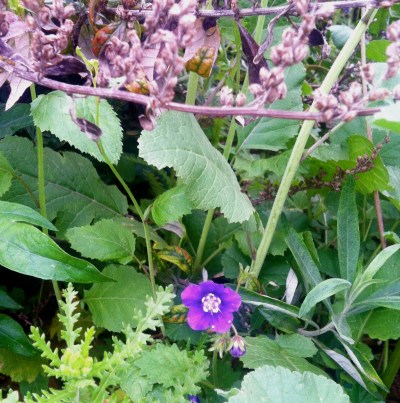
Parry’s Phacelia
Surf Scoter 7
Red-throated Loon 1
Eared Grebe 1
Red-tailed Hawk 5
Western Gull 6
Mourning Dove 2
Anna’s Hummingbird 3
Acorn Woodpecker 1
Nuttall’s Woodpecker 4
Northern Flicker 1
American Kestrel 3
Nanday Parakeet 13
Black Phoebe 1
Western Scrub-Jay 8
American Crow 11
Common Raven 2
Oak Titmouse 2
Bushtit 6
Canyon Wren 2
Wrentit 4
Western Bluebird 5
Northern Mockingbird 2
European Starling 1
Orange-crowned Warbler 3
Common Yellowthroat 2
Yellow-rumped Warbler 16
Dark-eyed Junco 1
White-crowned Sparrow 5
Golden-crowned Sparrow 2
California Towhee 5
Bullock’s Oriole 1
House Finch 18
American Goldfinch 2
33 species
View this checklist online at http://ebird.org/ebird/view/checklist?subID=S28435621
This report was generated automatically by eBird v3 (http://ebird.org)
[Lucien Plauzoles]
Act Now! – Threat to Sepulveda Basin Wildlife Reserve

Park resident Great Horned Owl doesn’t like noisy neighbors (R. Ehler 2-13-16)
The Sepulveda Basin Wildlife Reserve, a favorite birdwatching location in the heart of the San Fernando Valley, is under threat. Please read what the San Fernando Valley Audubon website says about the proposal to hold a three day mega concert in Woodley Park this coming October at www.sfvaudubon.org . Then sign the petition against it. It will help if you explain why you care in the comments area of the sign-on page. Your sign-on is most effective before this Thursday, March 24.
Or, go directly to the petition to sign on.
I’ve already signed the petition, and I urge all readers to do so as soon as possible.
Read about our February 2016 field trip to Woodley Park.
[Chuck Almdale]
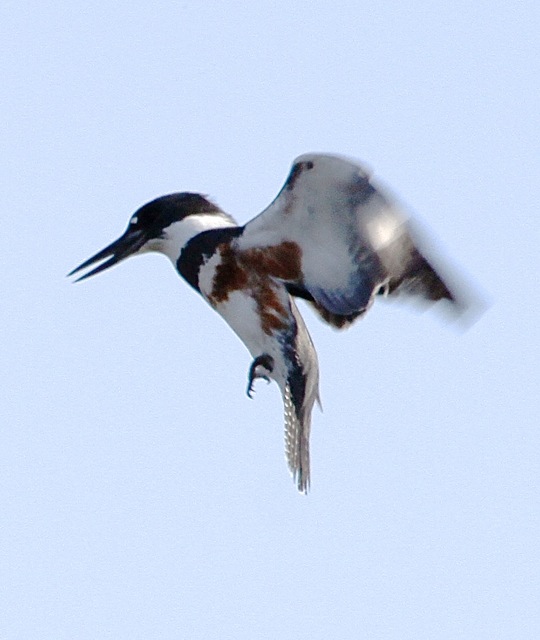
Belted Kingfisher, park resident
(J. Waterman 2-13-16)



 SANTA MONICA BAY AUDUBON SOCIETY BLOG