Free email delivery
Please sign up for email delivery in the subscription area to the right.
No salesman will call, at least not from us. Maybe from someone else.
A Cotillion* of Elegant Terns: Malibu Lagoon Apr. 24, 2016
The creaking calls of the large flock of Elegant Terns nearly drowned out the sounds of traffic from Pacific Coast Highway, and a few of the thirty birders present wondered if such numbers were unusual. Well, yes – and no. Forty years ago they were uncommon north of San Diego and, once or twice a year, you might see a few birds at the lagoon.

Elegant Terns in flight, Pepperdine University in distance (R. Ehler 4/24/16)
On 10-21-79, I found three Elegants on my very first Malibu Lagoon census. Twenty-two years later, on 3-25-01, they finally hit double digits with 10 whole birds. Only two years later, on 4-27-03, they hit triple digits at 250 birds. Then 700 birds on 4-26-09, and a whopping 3,100 birds on 4-26-15. To date, we’ve seen 12,423 terns of all species at the lagoon, of which 79% (9,795) have been Elegant. And 67% (6,585) of those were in April. Today’s count of 1,800 Elegant Terns is unusual, but considering the progression over time, not unexpected.

One of three islands covered with Elegant Terns – a thirteen photo panorama
(C. Bragg 4/24/16)
Elegant Terns have long nested primarily on Isla Rasa in Mexico’s Sea of Cortez, but in May 1959, 31 pairs were found nesting in the salt works area of southern San Diego Bay. They began nesting at Bolsa Chica in Orange County in 1987, and in Los Angeles Harbor in 1988. Post-breeding, in late summer and fall, they migrate up the coast as far as northern California, with irregular appearances as far north as southwest Washington. All these migrants spend the winter in Mexico, but, as made apparent by their appearances at the lagoon, they do a lot of springtime moving around before settling down to breed. Since 1979, our lagoon records show the following winter totals: Nov. 16 birds, Dec. 0, Jan. 1, Feb. 1, Mar. 391. The single bird(s) recorded Jan & Feb 2010 could have been a misidentified Royal Tern, a wintering species which was present on both dates.
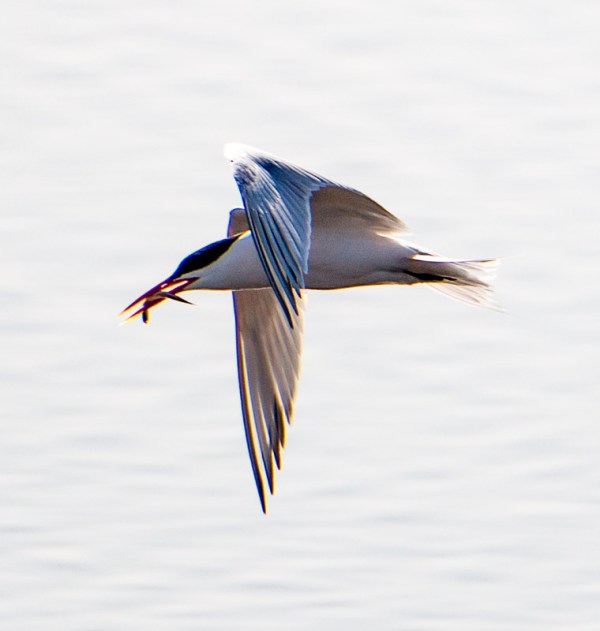
Lucky tern, unlucky fish (R. Juncosa 4/24/16)
We don’t get a lot of Black-necked Stilts at the lagoon: 29 total birds in 7 sightings, including today’s 19 birds. Ray Juncosa captured them with some very interesting effects of lighting. Stilts, along with Avocets, are in their own family, Recurvirostridae (Latin – bent backwards bill). Our stilt ranges from the U.S. to the West Indies, Peru & Brazil, plus Hawaii, where it used to be considered a separate species, the Hawaiian Stilt. The five other Stilt species and ranges are: Black-winged – Eurasia & Africa; Pied – Indonesia to New Zealand; the critically endangered Black – South Island of New Zealand; White-backed – so. South America; Banded – Australia.

Black-necked Stilts, a study (R. Juncosa 4/24/16)
The “semipalmated” foot is partially webbed between the toes. The Semipalmated Plover is a regular Spring & Fall migrant visitor at the lagoon, but no one ever actually sees the webbing. Of the “stints” or “peeps” in the Calidris genus, two are also semipalmated – the Western (Calidris mauri) (Greek – “a gray speckled sandpiper” + mauri [Ernesto Mauri, Italian naturalist]) and the aptly named Semipalmated Sandpiper (C. pusilla) ( Latin – very small).
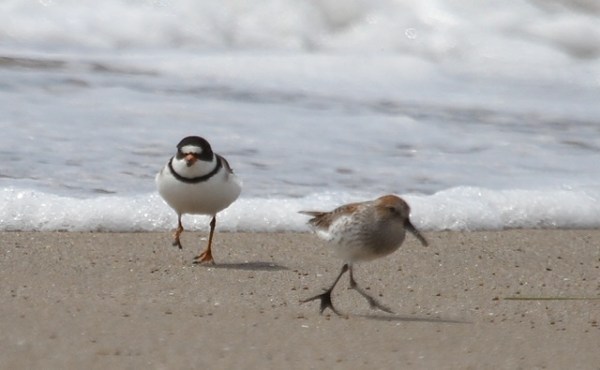
Somehow the semipalmated foot moved from the Semipalmated Plover (left) to the Western Sandpiper (J. Waterman 4/24/16)
I could find nothing in book or on web about differences in webbing between the Western and Semipalmated Sandpipers (SeSa), so I checked with Kimball Garrett of the L.A. Co. Museum of Natural History. He replied, in short, “No difference.” “Then why,” you (dear reader) may inquire, “is one called semipalmated and the other isn’t?” The answer, I believe, is (as with “unusual” Elegant Tern presence) time-dependent. The SeSa was first described in 1766 by Linnaeus himself, based on a specimen from Santo Domingo, which he named Tringa (changed much later to Calidris) pusilla. The Western was described a century later in 1857, from a specimen from South Carolina. [Many Westerns winter on the SE U.S. coast.] The name Semipalmated was already taken, so Western it became.
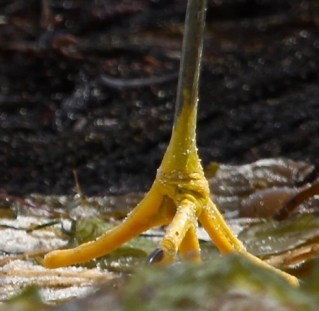
If you don’t know what this is, come birding with us. No, it’s not a plover or sandpiper foot.
(J. Waterman 4/24/16)
So what about the rarely seen webbed feet of the Semipalmated Plover (Charadrius semipalmatus)? I’ll spare you the gruesome details and say simply that it has visible – but short – webbing between all three toes. The very similar Ringed Plover (C. hiaticula) of Eurasia & Africa has visible webbing between middle and outer toe, and nearly invisible webbing between middle and inner toe. 10,000 Birds gives a great description, but the pictures of feet aren’t so hot. [Beware (!!) of Google Images – I’ve seen many misidentifications there.]
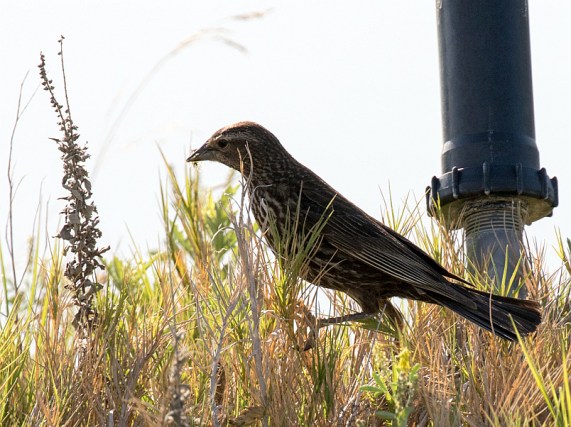
Many people mistake the female Red-winged Blackbird for a sparrow
(R. Ehler 4/24/16)
We didn’t have any Snowy Plovers; probably all have left for their various breeding grounds farther north. Grace Murayama snapped this nice photo of an adult Snowy on 4/13.

The last Snowy Plover of Springtime (G. Murayama 4/13/16)
Bonaparte’s Gull is another species whose lagoon presence has changed significantly over the years. We used to get them in large numbers: 3-15-80 1,600 birds, 11-29-80 530, 12-12-82 1,095. Our last triple-digit count was 632 birds on 1-8-83, shortly after the first lagoon reconfiguration in late 1982. Since then, out of 180 census days, their numbers have reached double-digits only 6 times out of 62 sightings. I don’t know if their overall population has plummeted, or they just didn’t like the new (in 1983) lagoon and stopped coming.
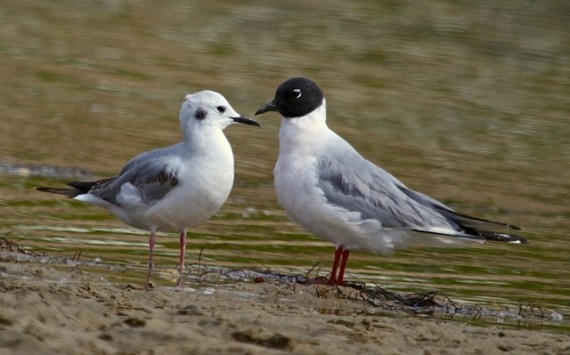
Bonaparte’s Gull – basic & alternate plumages (J. Waterman 4/24/16)
Birds new for the season were: Black-necked Stilt, Semipalmated Plover, Common Murre (by Malibu Pier), Belted Kingfisher, Violet-green Swallow, Black-headed Grosbeak, Red-winged Blackbird, Western Meadowlark, Brewer’s Blackbird, and Brown-headed Cowbird.
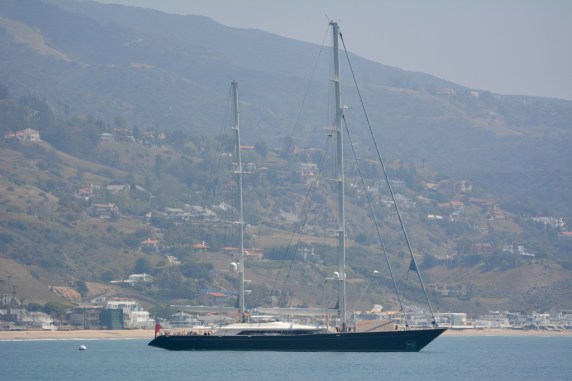
The foremast is about 170 ft high on this giganto-yacht moored off Malibu Pier
(G. Murayama 4/13/16)
As always, many thanks to our photographers: Chuck Bragg, Randy Ehler, Ray Juncosa, Grace Murayama and Joyce Waterman.
*Cotillion of Elegant Terns is the official collective noun for this species.
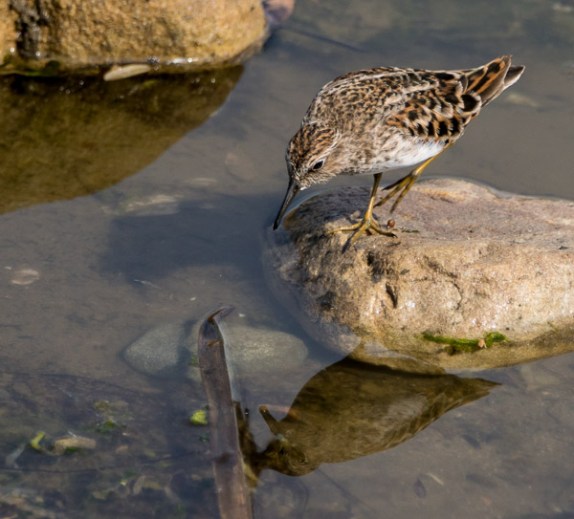
Least Sandpiper, like Narcissus, admires his own reflection (C. Bragg 4/24/16)
Our next four scheduled field trips: To be announced, 14 May; Malibu Lagoon 8:30 & 10am, 22 May; Mt. Piños, 11-12 June 8am; Malibu Lagoon 8:30 & 10am, 26 Jun.

American Robins infrequent the lagoon
(R. Ehler 4/24/16)
Our next program: Grunion, Tuesday, 3 May, 7:30 pm, at [note location change] Chris Reed Park, 1133 7th St., NE corner of 7th and Wilshire Blvd. in Santa Monica.
NOTE: Our 10 a.m. Parent’s & Kids Birdwalk meets at the shaded viewing area. Watch for Willie the Weasel. He’ll be watching for you and your big floppy feet.
Links: Unusual birds at Malibu Lagoon
9/23/02 Aerial photo of Malibu Lagoon
Prior checklists:
2015: Jan-May, July-Dec 2014: Jan-July, July-Dec
2013: Jan-June, July-Dec 2012: Jan-June, July-Dec
2011: Jan-June, July-Dec 2010: Jan-June, July-Dec
2009: Jan-June, July-Dec
The 10-year comparison summaries created during the project period, despite numerous complaints, remain available on our Lagoon Project Bird Census Page. Very briefly summarized, the results unexpectedly indicate that avian species diversification and numbers improved slightly during the period Jun’12-June’14. [Chuck Almdale]
| Malibu Census 2016 | 11/22 | 12/27 | 1/24 | 2/28 | 3/27 | 4/24 |
| Temperature | 64-80 | 48-61 | 48-64 | 57-70 | 55-65 | 60-67 |
| Tide Lo/Hi Height | L+0.24 | H+6.07 | H+5.90 | L+1.38 | H+3.43 | H+3.63 |
| Tide Time | 1241 | 0945 | 0855 | 0654 | 1228 | 1143 |
| Brant | 3 | 2 | ||||
| Canada Goose | 11 | 7 | ||||
| Gadwall | 4 | 13 | 3 | 20 | 14 | 4 |
| American Wigeon | 2 | 10 | 16 | 10 | ||
| Mallard | 25 | 2 | 15 | 22 | 16 | 18 |
| Northern Shoveler | 8 | 2 | 16 | 12 | 14 | |
| Northern Pintail | 2 | 4 | ||||
| Green-winged Teal | 11 | 8 | 8 | |||
| Lesser Scaup | 5 | |||||
| Surf Scoter | 1 | 2 | 17 | 16 | ||
| Bufflehead | 4 | 1 | 2 | 2 | ||
| Hooded Merganser | 2 | |||||
| Red-brstd Merganser | 2 | 17 | 3 | 3 | 2 | |
| Ruddy Duck | 110 | 1 | 10 | |||
| Red-throated Loon | 1 | 2 | ||||
| Pacific Loon | 2 | 1 | 2 | |||
| Common Loon | 2 | 1 | 1 | |||
| Pied-billed Grebe | 3 | 2 | 3 | 8 | 3 | |
| Horned Grebe | 1 | 1 | ||||
| Eared Grebe | 10 | 2 | 2 | 5 | 2 | |
| Western Grebe | 15 | 4 | 1 | 1 | ||
| Blk-vented Shearwater | 1 | |||||
| Brandt’s Cormorant | 2 | 1 | 4 | 2 | ||
| Dble-crstd Cormorant | 45 | 15 | 24 | 19 | 6 | 23 |
| Pelagic Cormorant | 2 | 1 | 2 | |||
| Brown Pelican | 11 | 10 | 30 | 43 | 28 | 77 |
| Great Blue Heron | 3 | 2 | 3 | 4 | 3 | |
| Great Egret | 1 | 2 | 2 | 1 | 5 | 2 |
| Snowy Egret | 8 | 30 | 21 | 7 | 7 | 4 |
| Blk-crwnd N-Heron | 1 | |||||
| Osprey | 1 | 1 | 1 | 3 | 1 | |
| Cooper’s Hawk | 1 | 1 | ||||
| Red-shouldered Hawk | 1 | |||||
| Red-tailed Hawk | 1 | |||||
| Sora | 1 | 2 | ||||
| American Coot | 60 | 10 | 40 | 65 | 53 | 4 |
| Black-necked Stilt | 19 | |||||
| Blk-bellied Plover | 33 | 30 | 12 | 32 | 8 | 20 |
| Snowy Plover | 28 | 12 | 4 | 3 | ||
| Semipalmated Plover | 8 | |||||
| Killdeer | 4 | 14 | 2 | 4 | 3 | 2 |
| Spotted Sandpiper | 2 | 5 | 1 | 1 | 1 | |
| Greater Yellowlegs | 1 | |||||
| Willet | 18 | 13 | 8 | 8 | 12 | 10 |
| Whimbrel | 5 | 1 | 3 | 4 | 21 | 2 |
| Marbled Godwit | 8 | 11 | 13 | 22 | 15 | 6 |
| Ruddy Turnstone | 9 | 2 | 5 | 1 | ||
| Surfbird | 1 | |||||
| Sanderling | 6 | |||||
| Least Sandpiper | 4 | 13 | 7 | |||
| Western Sandpiper | 4 | 35 | 1 | |||
| Long-billed Dowitcher | 2 | 2 | ||||
| Common Murre | 1 | 3 | ||||
| Bonaparte’s Gull | 2 | 1 | 3 | |||
| Heermann’s Gull | 11 | 4 | 1 | 2 | ||
| Mew Gull | 1 | |||||
| Ring-billed Gull | 95 | 60 | 30 | 90 | 15 | 1 |
| Western Gull | 140 | 80 | 13 | 160 | 45 | 60 |
| California Gull | 1430 | 620 | 400 | 650 | 130 | 15 |
| Thayer’s Gull | 1 | |||||
| Glaucous-wingd Gull | 1 | 1 | 4 | 1 | ||
| Caspian Tern | 3 | 19 | ||||
| Forster’s Tern | 3 | |||||
| Royal Tern | 23 | 11 | 25 | 31 | 18 | 2 |
| Elegant Tern | 5 | 1800 | ||||
| Rock Pigeon | 20 | 2 | 2 | 6 | 6 | 6 |
| Mourning Dove | 1 | 2 | 2 | 2 | 1 | |
| Anna’s Hummingbird | 2 | 3 | 1 | 2 | 1 | |
| Allen’s Hummingbird | 5 | 2 | 3 | 3 | 4 | 4 |
| Belted Kingfisher | 1 | 1 | ||||
| American Kestrel | 1 | 1 | ||||
| Merlin | 1 | |||||
| Peregrine Falcon | 1 | |||||
| Nanday Parakeet | 8 | 2 | ||||
| Black Phoebe | 10 | 12 | 3 | 8 | 6 | 4 |
| Say’s Phoebe | 1 | 2 | 1 | 1 | ||
| Cassin’s Kingbird | 1 | |||||
| Western Scrub-Jay | 1 | |||||
| American Crow | 3 | 1 | 6 | 23 | 6 | 4 |
| Common Raven | 1 | 1 | ||||
| Violet-green Swallow | 1 | |||||
| Rough-wingd Swallow | 10 | 10 | ||||
| Cliff Swallow | 1 | 6 | ||||
| Barn Swallow | 6 | 4 | ||||
| Oak Titmouse | 1 | 1 | ||||
| Bushtit | 28 | 40 | 4 | 5 | 4 | |
| House Wren | 2 | 1 | 1 | |||
| Marsh Wren | 1 | |||||
| Bewick’s Wren | 1 | 1 | ||||
| Blue-gray Gnatcatcher | 9 | 3 | ||||
| Ruby-crowned Kinglet | 10 | 6 | 1 | |||
| Western Bluebird | 1 | |||||
| Hermit Thrush | 1 | 3 | 1 | |||
| American Robin | 2 | 1 | ||||
| Northern Mockingbird | 6 | 2 | 1 | 3 | 4 | 6 |
| European Starling | 21 | 10 | 110 | 90 | 1 | 2 |
| Ornge-crwnd Warbler | 5 | |||||
| Common Yellowthroat | 7 | 1 | 1 | 5 | 5 | |
| Yellow-rumpd Warbler | 40 | 40 | 9 | |||
| Townsend’s Warbler | 1 | |||||
| Spotted Towhee | 2 | 1 | ||||
| California Towhee | 1 | 1 | 2 | 5 | 3 | |
| Savannah Sparrow | 1 | |||||
| Song Sparrow | 3 | 6 | 3 | 3 | 12 | 14 |
| Lincoln’s Sparrow | 1 | |||||
| White-crwnd Sparrow | 4 | 15 | 20 | 5 | 5 | |
| Black-headed Grosbeak | 1 | |||||
| Red-winged Blackbird | 5 | |||||
| Western Meadowlark | 5 | 4 | 2 | |||
| Brewer’s Blackbird | 6 | |||||
| Great-tailed Grackle | 4 | 3 | 2 | 1 | 9 | 3 |
| Brwn-headed Cowbird | 2 | |||||
| Hooded Oriole | 1 | |||||
| House Finch | 4 | 3 | 1 | 6 | 21 | 16 |
| Lesser Goldfinch | 1 | |||||
| Totals by Type | Nov | Dec | Jan | Feb | Mar | Apr |
| Waterfowl | 169 | 58 | 61 | 118 | 74 | 22 |
| Water Birds – Other | 152 | 48 | 104 | 146 | 100 | 106 |
| Herons, Egrets & Ibis | 13 | 34 | 26 | 12 | 15 | 6 |
| Quail & Raptors | 2 | 4 | 2 | 4 | 2 | 1 |
| Shorebirds | 113 | 83 | 50 | 86 | 113 | 76 |
| Gulls & Terns | 1703 | 775 | 472 | 939 | 219 | 1903 |
| Doves | 21 | 2 | 4 | 8 | 8 | 7 |
| Other Non-Passerines | 7 | 6 | 4 | 13 | 7 | 5 |
| Passerines | 164 | 156 | 150 | 168 | 105 | 95 |
| Totals Birds | 2344 | 1166 | 873 | 1494 | 643 | 2221 |
| Total Species | Nov | Dec | Jan | Feb | Mar | Apr |
| Waterfowl | 10 | 10 | 8 | 11 | 7 | 2 |
| Water Birds – Other | 11 | 9 | 9 | 10 | 9 | 4 |
| Herons, Egrets & Ibis | 4 | 3 | 3 | 3 | 3 | 2 |
| Quail & Raptors | 2 | 4 | 2 | 2 | 2 | 1 |
| Shorebirds | 9 | 10 | 6 | 10 | 11 | 10 |
| Gulls & Terns | 7 | 7 | 5 | 9 | 8 | 8 |
| Doves | 2 | 1 | 2 | 2 | 2 | 2 |
| Other Non-Passerines | 2 | 3 | 2 | 3 | 3 | 2 |
| Passerines | 20 | 21 | 12 | 19 | 22 | 20 |
| Totals Species | 67 | 68 | 49 | 69 | 67 | 51 |
Another perfect day in paradise. This is tough, dirty, thankless, grinding work, sauntering through fields of flowers and grass waving in the breeze, snapping pictures, sniffing blossoms, spotting and identifying birds, chatting with friends and new companions, but, whatever the personal cost, someone has to do it, and you can thank your lucky stars you weren’t volunteered for this duty. Even worse, temperatures started at the frigid 58°F before soaring to a scorching 70°F, it didn’t rain and there were no bothersome insects.

Doug suffers for his art (J. Waterman 4-2-16)
We wandered, as usual, around the western town movie set of Paramount Ranch (free parking!), then set off up the remnant of the devil’s racecourse (3 deaths in 18 months of operation). The lupines were a bit scarce, but the still-to-be-identified feral Onion (see slideshow) was doing fine.

Field of grass, Goldfields and Owl’s Clover (J. Waterman 4-2-16)
There were large spreads of Owl’s Clover and Goldfields in the grassy fields at the intersection of Cornell and Mulholland, where we cross kitty-corner to the Reagan Ranch portion of Malibu Creek State Park. Anna’s Hummingbirds, Acorn Woodpeckers, Black and Say’s Phoebes, Bushtits, Yellow-rumped Warblers in various stages of

California Towhee mid-skulk (J. Waterman 4-2-16)
plumage molt, California and Spotted Towhees, Song Sparrows, House Finches and Lesser Goldfinches kept us company. Several American Kestrels were hawking the larger insects from treetop perches, and small flocks of Mourning Dove and Nanday Parakeet flew overhead. Even after several years of seeing and hearing this last species ever more frequently, my ear still initially identifies their calls as those of woodpeckers, or small children yelling in the distance. Eventually some portion of my brain protests loudly enough, and I realize it’s those parakeets.
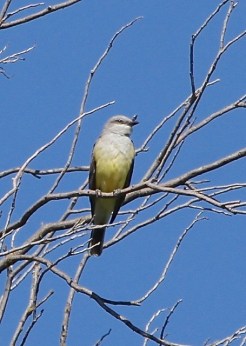
Western Kingbird
(J. Waterman 4-2-16)
We avoid the tall grass surrounding the Reagan Ranch driveway – deer tick country – but spot Bullock’s Orioles, Cassin’s and Western Kingbirds, and Ash-throated Flycatchers in the sycamores, while Ravens and Red-tailed Hawks stick closer to Mulholland Drive, searching for flattened fauna.
As we reach the Yearling Trail beginning at the back of the ranch house area, and back on the ground, we find more and more flowers: Elderberry, Horehound, Wild Cucumber, sunflowers, fiddlenecks, Johnny-Jump-Up, Blue Dick, and the always aromatic Sages – White, Purple and Black. Miner’s Lettuce was in the shady damp area near the matates (First American acorn-grinding holes in rock). All along the trail, plenty of bees worked the flowers.
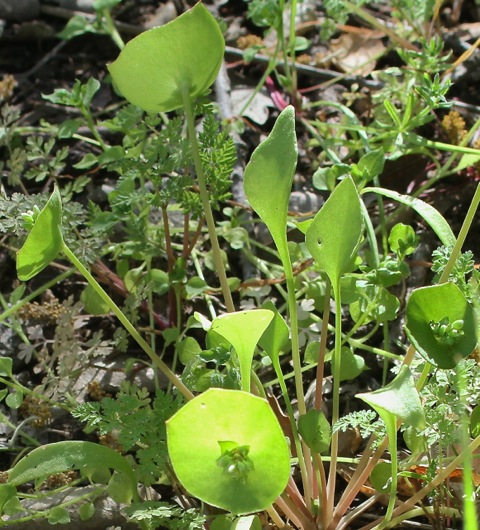
Miner’s Lettuce – delicious! (J. Waterman 4-2-16)

Peggy points out an epistemological error to Chuck
(J. Waterman 4-2-16)
For once we managed to avoid the mystery detour not-a-trail down the rocky escarpment, and found the true Cage Creek Trail. Sage and nightshade love this area, as do various phacelias, Fiesta Flower, Golden Current, Green-bark Ceanothus, Toyon, and everyone’s favorite plant to I.D., Poison Oak. As usual, we discussed this plant’s effects on human skin. It’s an allergy, people! Most people have this allergy, but some fortunate ones (myself included) do not.

Fiesta Flower (D. Waterman 4-2-16)
Near the bottom of Cage Creek Trail lies the eponymous cage, now almost unrecognizable, a relic of the time when humans were mute and uncivilized, easily captured and domesticated by the apes who ruled the world. [The film Planet of the Apes documents in depth this era.] And then we were on Crag’s Road, the main route to the M.A.S.H. film site and common destination for the hikers, bikers, runners and outdoor classes who frequent this area.
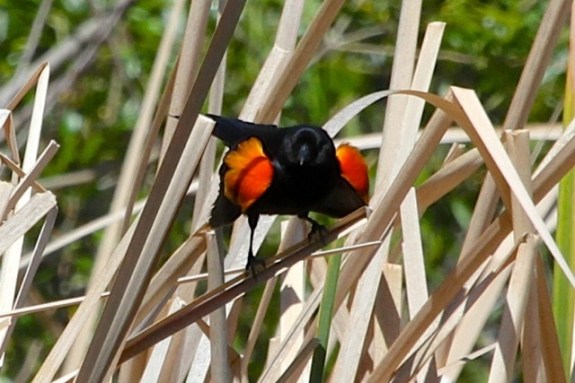
Male Red-winged Blackbird at Century Lake displays his epaulets (J. Waterman 4-2-16)
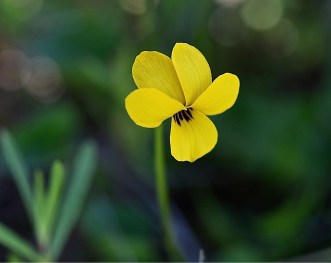
Johnny Jump-up (D. Waterman 4-2-16)
A short stop at Century Lake, from which swallows sip on the wing and Red-winged Blackbirds live among the Cattails, then up and over the hump and down towards Malibu Creek, which flows out of the dam which created the lake. Water in the creek was so low that only a few Mallards could survive among the stones. From here we usually dead-head – hot and thirsty – through the line of Live Oaks which border the road to the parking area, stopping for the occasional flower and the hillside chia patch. No chia pets here – all the chia is thoroughly wild and one may approach them only with caution.
We successfully car-shuttled back to Paramount Ranch via Mulholland Drive, got out our lunches and talked until it was time to go our various ways.
![Alligator Lizard [prob. Southern] (J. Waterman 4-2-16)](https://smbasblog.com/wp-content/uploads/2016/04/lizard_j-waterman_4-2-16_img_5882.jpg?w=600&h=430)
Hungry camouflaged alligators prowl the forest! [Lizards, that is] (J. Waterman 4-2-16)
Links to previous trips: April 2014, April 2013, April 2012, April 2011, April 2010, March 2009

California Poppy
(D. Waterman 4-2-16)
As always, the hike was led by Peggy Burhenn, Calif. State Parks docent specializing in native plants and wildflowers. I’ve also been advised – rather insistently – to mention that there are actually “several” small up and down slopes along our route.

Unknown blue flower (D. Waterman 4-2-16)
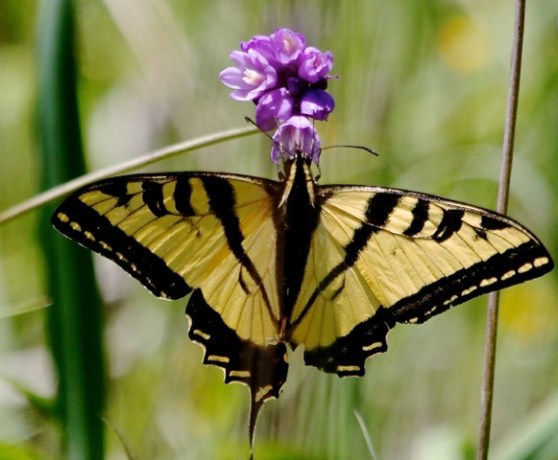
Western Swallow half-a-tail on Blue Dick (J. Waterman 4-2-16)
Many thanks to our photographers: Lillian Johnson, Doug Waterman and Joyce Waterman.
The lists below give a seven-year comparison of what we’ve seen on this hike. There are significant differences from year-to-year, both in what we find and what is in bloom.
[Chuck Almdale]
| PLANT TRIP LISTS – PARAMOUNT TO MALIBU CREEK | |||||||
| X – Seen NB – Not in Bloom * – Introduced Species | |||||||
| 2016 | 2014 | 2013 | 2012 | 2011 | 2010 | 2009 | |
| WHITE | 4/2 | 4/12 | 4/6 | 4/15 | 4/9 | 4/10 | 3/29 |
| Ashy-leafed Buckwheat | X | NB | X | ||||
| Big Pod Ceanothus | X | X | X | NB | X | X | |
| California Buckwheat | NB | NB | X | X | NB | ||
| California Everlasting | X | X | |||||
| Catalina Maraposa Lily | X | ||||||
| Cliff Aster | X | X | X | ||||
| Coyote Brush | NB | X | X | X | NB | NB | NB |
| Dodder | X | NB | X | X | X | ||
| Dudleaya | NB | NB | X | ||||
| Elderberry | X | X | X | X | NB | X | X |
| Horehound* | NB | NB | NB | X | X | X | X |
| Lace Pod (green) | X | X | X | X | |||
| Lanceleaf Dudleaya | NB | ||||||
| Linanthus | X | ||||||
| Miner’s Lettuce | X | X | X | X | X | ||
| Morning Glory | X | X | X | X | |||
| Mulefat | X | NB | X | X | X | X | |
| Narrow-leafed Bedstraw | X | X | X | ||||
| Narrow-leafed Milkweed | NB | ||||||
| Onion – not specified | X | X | X | ||||
| Poison Hemlock | NB | NB | NB | X | |||
| Poison Oak | X | X | X | ||||
| Popcorn Flower | X | X | X | X | X | X | |
| Soap Plant | NB | NB | NB | X | X | ||
| Western Ragweed* | X | ||||||
| White Nightshade | X | X | |||||
| White Sage | NB | NB | NB | X | X | X | X |
| Wild Cucumber | X | X | X | X | X | X | X |
| Yucca | NB | NB | X | X | NB | X | X |
| YELLOW | |||||||
| Burr Clover* | X | ||||||
| Canyon Sunflower | NB | X | |||||
| Collarless California Poppy | X | ||||||
| Common Fiddleneck | X | X | X | X | X | X | X |
| Common Goldfields | X | X | |||||
| Deerweed | X | X | |||||
| Golden Currant | X | X | NB | X | X | X | X |
| Golden Yarrow | X | X | X | ||||
| Johnny Jump-up | X | X | X | X | X | X | |
| Lomatium | X | X | |||||
| Microseris | X | ||||||
| Mountain Dandelion | X | X | X | ||||
| Mustard* | X | X | X | X | X | X | X |
| Oriental Mustard | X | ||||||
| Pacific Sanicle | NB | ||||||
| Pineapple Weed* | X | X | X | X | X | X | X |
| Prickly Pear Cactus | NB | ||||||
| Small-Flowered Lotus | X | ||||||
| Stringose Lotus | X | X | X | ||||
| Western Wallflower | X | X | X | ||||
| ORANGE | |||||||
| Bush/sticky Monkeyflower | X | X | X | X | X | NB | |
| California Poppy | X | X | X | X | X | ||
| Scarlet Pimpernel* | X | X | |||||
| RED | |||||||
| Chalk Live-forever | X | ||||||
| Crimson Pitcher (Hummingbird) Sage | NB | NB | X | X | X | X | NB |
| Heart-leaved Penstemon | NB | NB | |||||
| Indian Paintbrush | X | NB | X | ||||
| PINK | |||||||
| Bush Mallow | X | ||||||
| Chinese Houses | X | X | X | X | X | ||
| Milk Thistle* | X | NB | X | X | NB | NB | |
| Prickly Phlox | X | X | |||||
| Purple Clarkia | X | ||||||
| Purple Owl’s Clover | X | X | X | X | |||
| Purple Sage | NB | NB | X | X | X | X | X |
| Red-stem Filaree* | X | X | X | X | X | X | X |
| Spring Vetch* | X | X | X | X | X | X | |
| Purple vetch | X | ||||||
| Tom Cat Clover | X | X | |||||
| Wild Radish* | X | X | X | X | X | X | |
| Wild Sweet Pea | X | X | X | ||||
| Wooly Aster | X | ||||||
| PURPLE / BLUE | |||||||
| Baby Blue Eyes | X | X | |||||
| Bajada Lupine | X | X | |||||
| Black Sage | NB | NB | X | X | X | ||
| Blue Dicks | X | X | X | X | X | X | X |
| Blue Larkspur | X | X | |||||
| Bull Thistle | X | ||||||
| Bush Lupine | X | X | X | X | X | X | |
| California Peony | X | ||||||
| Caterpillar Phacelia | X | X | X | X | X | X | |
| Chia | X | X | X | X | X | X | |
| Common Vervain | X | X | X | X | |||
| Danny’s Skullcap | X | X | |||||
| Dove Lupine | X | X | X | X | |||
| Fern-leaf Phacelia | X | X | X | X | X | ||
| Fiesta Flower | X | X | X | X | X | X | |
| Green Bark Ceanothus | X | NB | X | X | N | X | X |
| Henbit* | X | ||||||
| Italian Thistle* | X | ||||||
| Parry’s Phacelia | X | X | X | X | X | ||
| Purple Nightshade | X | X | X | X | X | X | X |
| Sticky Phacelia | X | X | |||||
| Tansy Leaf Phacelia | X | ||||||
| Winter Vetch* | X | X | X | ||||
| Wooly Blue Curls | NB | ||||||
| BROWN | |||||||
| Curly Dock | X | X | X | ||||
| English Plantain* | NB | NB | X | ||||
| TREES, SHRUBS, OR | |||||||
| NOT IN BLOOM | |||||||
| Arroyo Willow | X | X | X | X | X | X | X |
| California Bay Laurel | NB | X | X | X | |||
| California Bickelbush | X | ||||||
| California Sagebrush | NB | X | X | X | X | X | |
| Chamise | X | X | X | X | X | ||
| Coast Live Oak | X | X | X | X | X | X | X |
| Coffee Berry | X | X | X | ||||
| Gum Plant | X | ||||||
| Hog Fennel | X | X | X | ||||
| Laurel Sumac | X | X | X | X | X | X | X |
| Mistletoe | X | X | X | X | X | X | |
| Mugwort | X | X | X | X | X | X | X |
| Poison Oak | X | X | X | X | X | ||
| Scrub Oak | X | X | X | X | |||
| Squaw Bush | X | X | X | ||||
| Stinging Nettle | X | ||||||
| Sugarbush | X | X | X | X | X | X | |
| Toyon | X | X | X | X | X | X | |
| Valley Oak | X | X | X | X | X | ||
| Western Sycamore | X | X | X | X | X | X | X |
| Whitethorn | X | ||||||
| Wild Rose | X | X | X | X | X | X | |
| Total Plants – 118 | 75 | 52 | 66 | 73 | 60 | 70 | 56
|

Sugar Bush blossom head (D. Waterman 4-2-16)
| Paramount – Malibu Creek SP | 2016 | 2014 | 2013 | 2012 | 2011 | 2010 | 2009 |
| Bird Name | 4/2 | 4/12 | 4/6 | 4/15 | 4/9 | 4/10 | 3/29 |
| Canada Goose | 6 | 3 | 2 | 4 | 2 | ||
| Gadwall | 3 | X | |||||
| American Wigeon | X | ||||||
| Mallard | 8 | 3 | 6 | 8 | 7 | 10 | X |
| Ring-necked Duck | 6 | ||||||
| Bufflehead | X | ||||||
| Ruddy Duck | X | ||||||
| California Quail | 3H | 3H | 20 | 6 | 4H | ||
| Pied-billed Grebe | 1 | X | |||||
| Great Blue Heron | 1 | 3 | 1 | 2 | |||
| Turkey Vulture | 8 | 4 | 4 | 3 | 4 | 2 | X |
| Northern Harrier | 1 | ||||||
| Sharp-shinned Hawk | 1 | 1 | 1 | ||||
| Cooper’s Hawk | 2 | 1 | 1 | X | |||
| Red-shouldered Hawk | 1+2H | 3 | 1 | 6 | 2 | X | |
| Red-tailed Hawk | 3 | 3 | 2 | 3 | 3 | 5 | X |
| American Coot | 2 | 2 | 9 | 4 | 4 | X | |
| Spotted Sandpiper | 1 | ||||||
| California Gull | 20 | ||||||
| Band-tailed Pigeon | 3 | 3 | 3 | 9 | |||
| Mourning Dove | 20 | 6 | 1 | 4 | 8 | 12 | |
| Barn Owl | 1 | ||||||
| Vaux’s Swift | 20 | ||||||
| White-throated Swift | 4 | 4 | 2 | 4 | 12 | X | |
| Black-chinned Hummingbird | 1 | 1 | 1 | 1 | |||
| Anna’s Hummingbird | 7 | 1 | 5 | 1 | 2 | 4 | X |
| Rufous Hummingbird | 1 | ||||||
| Allen’s Hummingbird | 2 | 1 | 1 | X | |||
| Belted Kingfisher | 1 | 1 | X | ||||
| Acorn Woodpecker | 18 | 14 | 12 | 9 | 8 | 11 | X |
| Nuttall’s Woodpecker | 6 | 2+3H | 4 | 5 | 2 | 2H | X |
| Downy Woodpecker | 2+1H | X | |||||
| Northern Flicker | 2 | 3 | 2 | X | |||
| American Kestrel | 2 | X | |||||
| Black-hooded Parakeet | 8 | 7 | 5+4H | 3 | 1 | ||
| Hammond’s Flycatcher | 1 | ||||||
| Pacific-slope Flycatcher | 2 | 3 | 1 | 1 | 2 | X | |
| Black Phoebe | 5 | 3 | 4 | 4 | 8 | 8 | X |
| Say’s Phoebe | 3 | 1 | 3 | 1 | |||
| Ash-throated Flycatcher | 6 | 6+3H | 3+2H | ||||
| Cassin’s Kingbird | 8 | 1 | 9 | 3 | 4 | 2 | X |
| Western Kingbird | 1 | 1 | 1 | 4 | 3 | X | |
| Hutton’s Vireo | 1H | 1 | |||||
| Warbling Vireo | 2 | X | |||||
| Western Scrub-Jay | 15 | 17 | 6+4H | 10+20H | 12 | 14 | X |
| American Crow | 20 | 19 | 12 | 15 | 20 | 6 | X |
| Common Raven | 5 | 8 | 9 | 2 | 4 | 5 | X |
| Tree Swallow | 10 | 6 | 4 | ||||
| Violet-green Swallow | 4 | 20 | 20 | 12 | |||
| Northern Rough-winged Swallow | 12 | 15 | 25 | 35 | 24 | X | |
| Cliff Swallow | 3 | 1 | 3 | 1 | 20 | X | |
| Barn Swallow | 1 | 2 | X | ||||
| Oak Titmouse | 3 | 4 | 4+15H | 2+20H | 9 | 4 | X |
| Bushtit | 6 | 10 | 5 | 8 | 8 | 4 | X |
| White-breasted Nuthatch | 1 | 3 | 2 | 2 | 2 | X | |
| Canyon Wren | 1 | 1H | H | ||||
| House Wren | 1+15H | 4+18H | 4+30H | 4+40H | 25 | 32 | X |
| Bewick’s Wren | 2H | 4 | 12 | 2 | X | ||
| Blue-gray Gnatcatcher | 1 | 3H | 1 | ||||
| Ruby-crowned Kinglet | 1 | 1 | 2 | 2 | X | ||
| Wrentit | 3 | 1+5H | 14H | 20H | 7H | H | X |
| Western Bluebird | 9 | 3 | 10 | 10 | 13 | 10 | X |
| Hermit Thrush | 1 | X | |||||
| American Robin | 4 | 2 | 1 | ||||
| Northern Mockingbird | 2 | 6 | 6+3H | 2 | X | ||
| California Thrasher | 1 | 1+3H | 4H | H | |||
| European Starling | 8 | 11 | 10 | 1 | 6 | 12 | X |
| Phainopepla | 1H | ||||||
| Orange-crowned Warbler | 3+5H | 1+2H | 1H | 5 | 6 | X | |
| Common Yellowthroat | 1H | 1+4H | 2 | 1H | 6 | 2 | X |
| Yellow Warbler | 1 | 1+6H | H | ||||
| Yellow-rumped Warbler | 4 | 1 | 4+2H | 6 | 6 | 10 | X |
| Black-throated Gray Warbler | 1 | X | |||||
| Townsend’s Warbler | X | ||||||
| Spotted Towhee | 3+6H | 3 | 4+6H | 5+5H | 8 | 5 | X |
| California Towhee | 7 | 9 | 4+4H | 10 | 20 | 6 | X |
| Savannah Sparrow | 1 | ||||||
| Song Sparrow | 4 | 3+5H | 5+4H | 7+6H | 13 | 7 | X |
| Lincoln’s Sparrow | X | ||||||
| White-crowned Sparrow | 10 | 1 | X | ||||
| Golden-crowned Sparrow | 4 | 2 | |||||
| Dark-eyed Junco | 7 | 10 | X | ||||
| Black-headed Grosbeak | 1+1H | 10 | 4H | 8 | 3 | 4 | |
| Red-winged Blackbird | 8 | 5 | 12 | 20 | X | ||
| Western Meadowlark | 5 | X | |||||
| Brown-headed Cowbird | 2 | 1 | |||||
| Hooded Oriole | 4 | 4 | 6 | ||||
| Bullock’s Oriole | 2 | 5 | 5+3H | 6 | 3 | 6 | |
| Purple Finch | 6H | H | |||||
| House Finch | 30+20H | 16+26H | 20+30H | 90 | 60 | 20 | X |
| Lesser Goldfinch | 9 | 6+6H | 6+6H | 8 | 12 | 16 | X |
| American Goldfinch | 30 | ||||||
| House Sparrow | X | ||||||
| Total – 93 species | 47 | 50 | 59 | 62 | 52 | 60 | 58 |
No giant festival this year in Woodley Park!
No giant festival this year.

Dawn at the Sepulveda Wildlife Reserve (Joe Doherty)
[A message from our compatriot, San Fernando Valley Audubon]
Good news. Sepulveda Wildlife Reserve gets a reprieve. Plans for Angelfest have been scrapped for October 2016. The marketing company that hoped to bring 65,000 people a day to the area surrounding the Sepulveda Wildlife Reserve has announced plans to try again next year, but of course none of the environmental concerns will be any different then. We will not resist future mega-festivals that are located in appropriate venues — but we will continue to vigorously defend the Sepulveda Reserve and the verdant ecosystem that nurtures it.
While the decision to cancel Angelfest 2016 was no doubt based on a number of considerations, there’s little doubt that the public outcry — that would be you — was an important one. If you signed & shared the petition, if you wrote or called your elected representatives, if you submitted comments to the Army Corps, if you urged your friends and neighbors to join the fight, we are enormously grateful to you. Please stay in touch with San Fernando Valley Audubon Society through our website (new one coming!) and Facebook. We’ll need you again.
We are dedicated to a better future — and more funding — for L.A.’s natural spaces. The San Fernando Valley Audubon Society will work with the community and L.A. Recreation & Parks Department to find solutions that work for everyone – including the wildlife that can’t speak for itself.
So, yes, there is still much to do. But for today, let’s rejoice. And what better way to celebrate than a bird walk at the Sepulveda Wildlife Reserve? Join SFVAS every 1st Sunday.
Thank you all for your cards, letters, calls, texts, emails, tweets, postings and whatnot against this ill-considered event.
Full Pink Moon Update – April 21, 2016, 10:23 p.m. PDT
Here’s another update from SMBAS Blog on that large, disc-like, shining object which has frequently and mysteriously appeared in our nighttime sky this year (known to many as the moon).
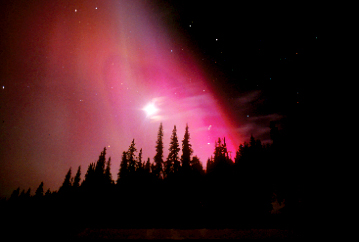
Full Pink Moon (etc.cmu.edu)
April 21, 10:23 p.m. PDT — Full Pink Moon. The grass pink or wild ground phlox is one of the earliest widespread flowers of spring. Other names were the Full Sprouting Grass Moon, the Egg Moon, and —among coastal tribes —the Full Fish Moon, when the shad come upstream to spawn.
The moon’s arrives at it’s 2016 perigee — its closest point to Earth — on April 7, 10:37 a.m., when only 357,163 km away. The monthly apogee – farthest distance – of 406,350 km, is on April 21, 9:06 a.m., 13 hours before the full moon, and is almost the largest apogee for the year. So this will be a relatively small full moon.
Have a nice moon photo? Send it to us at: misclists [AT] verizon [DOT] net, along with name to credit and time/location of photo. [Infographic: Moon Phases & Lunar Cycles]
The Old Farmer’s Almanac has a page for each full moon. Set your eggs on the 1st, 19th, 20th, 28-30th. Plant aboveground on 12th & 13th, belowground on 4th, 5th & 23rd. Now you know, so you have no excuse.
The next significant full moon will occur on May 21, 2:14 p.m. PDT. Keep an eye on this spot for additional late-breaking news on this unprecedented event.
This information comes to you courtesy of: http://www.space.com/24262-weird-full-moon-names-2014-explained.html written by Joe Rao. Joe Rao serves as an instructor and guest lecturer at New York’s Hayden Planetarium. He writes about astronomy for Natural History magazine, the Farmer’s Almanac and other publications, and he is also an on-camera meteorologist for News 12 Westchester, N.Y.
But that’s waaay too long to type in, and besides, you don’t need to go there because SMBAS has done the work for you!
[Chuck Almdale]
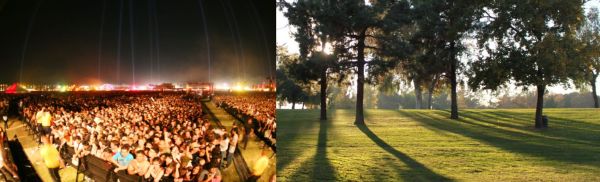
Woodley Park – Not the right place for a Coachella-style mega-fest
Angelfest fight continues – please help.
The San Fernando Valley Audubon Society is working hard to prevent a giant music festival (called Angelfest) from damaging Woodley Park and the adjacent Sepulveda Wildlife Reserve. Thank you for signing our petition. (If you haven’t, please do.) We could really use your help to continue the fight:
Contact elected officials. (See talking points below)
- Call Congressman Brad Sherman (818) 501-9200. His district includes the Sepulveda Basin. Sherman has a keen interest in the issue and is tallying calls. We need the most!
- Email the Mayor’s office mayor.garcetti@lacity.org.
- Call City Councilmember Nury Martinez (818) 778-4999. Her district includes the Basin.
- Your specific Congressional rep and LA City Council rep are next priorities.
- Everyone who answers these phones is very receptive. You can just say you are against Angelfest, use our talking points, or state your own opinions. It’s really quick and painless.
- Encourage friends, family, neighbors etc. to call, too.

Park resident Great Horned Owl doesn’t like noisy neighbors (R. Ehler 2-13-16)
Attend the Public Meeting
- The intent of this meeting it to convince the Army that Angelfest is wrong for Woodley Park.
- Tentatively scheduled for May 10, 6:00 pm. SAVE THE DATE.
- Tentative location Balboa Sports Complex near Balboa & Burbank, Encino.
- Once we have specifics we will post and email. This meeting is being arranged by the Army Corps.
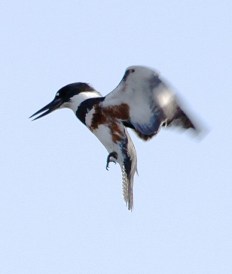
Belted Kingfisher, park resident
(J. Waterman 2-13-16)
Background
As proposed, the Angelfest event would crowd 65,000 people per day into Woodley Park for 3 days, with five stages blaring until 11 pm. Three of the five stages are within 150 feet of the Reserve. The proposed dates are October 7-9, during Fall bird migration. You can learn more about the proposed event and our objections at www.sfvaudubon.org. For background info we recommend this in-depth story from KCET.
Key talking points – or use your own!
- Angelfest is grossly over-sized for Woodley Park and adjacent Wildlife Reserve.
- The promoters want the Army Corps to suspend many sensible and long-standing rules regarding large crowds in the park.
- The crowds, noise, lights and pyrotechnics are damaging to the park and its wildlife.
- Access and enjoyment of the park will be impeded during the event’s 26-day setup and take-down period.
- Approval by the Army would set a precedent that risks turning a peaceful verdant park into a fairgrounds.
- The festival was planned in secrecy. Six months from media exposure to event as opposed to 38 months for the Arroyo Seco festival coming to Pasadena.
Thanks for your support! Keep sharing the petition!
The San Fernando Valley Audubon Society sfvaudubon@gmail.com
#StopAngefest
[The above was distributed by San Fernando Valley Audubon Society.]
Read about our February 2016 field trip to Woodley Park.
[Chuck Almdale]
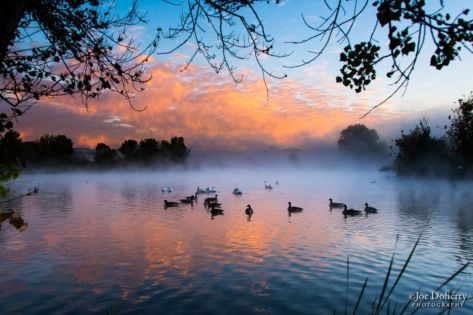
Dawn at the Sepulveda Wildlife Reserve (Joe Doherty)



 SANTA MONICA BAY AUDUBON SOCIETY BLOG