Free email delivery
Please sign up for email delivery in the subscription area to the right.
No salesman will call, at least not from us. Maybe from someone else.
CROW VS. TERN PART II
For Part One: https://smbasblog.wordpress.com/author/laurelajones/
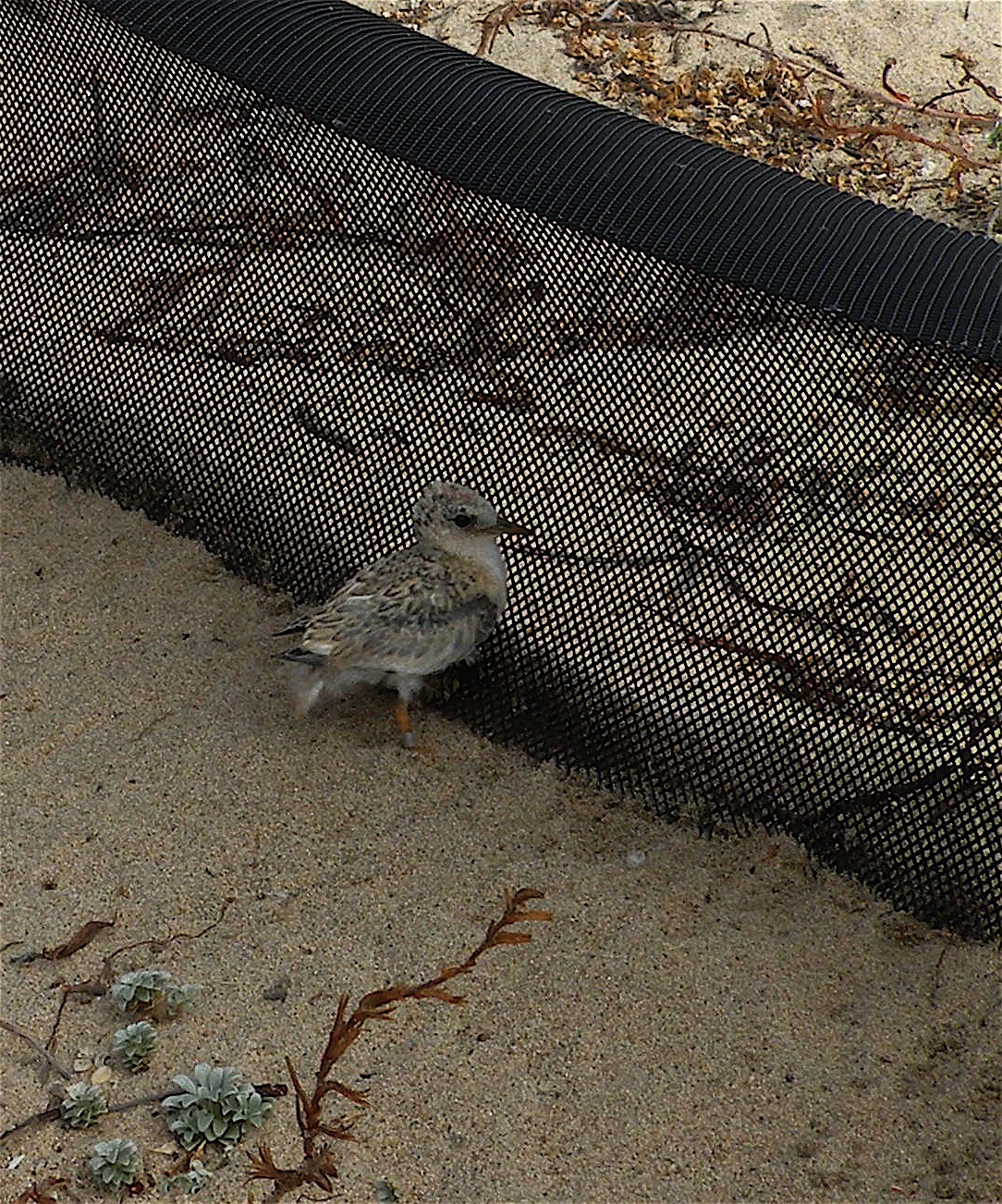
Last time the focus was on the crows. Now we’ll take a look at the terns. The Venice Tern Colony (at the Marina Del Rey breakwater) has been challenged by dwindeling food sources such as sardines that have disappeared from local shores or are so far out to sea that tern parents must leave their chicks unattended for hours while they hunt.
This year, false tern eggs were planted at the site that gave crows a mild shock as an aversion tactic.
Last year, no chicks survived. This year-
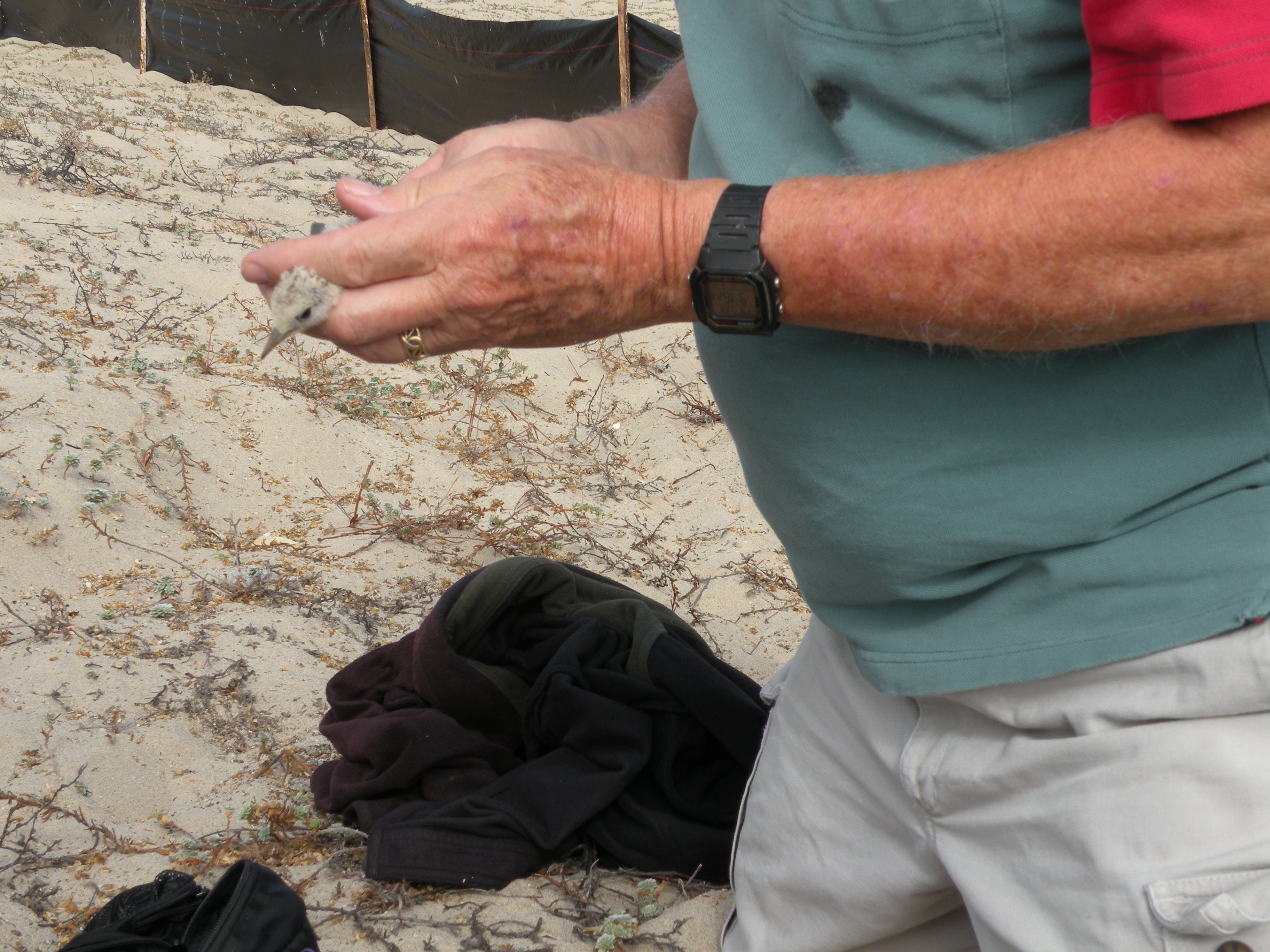
-after getting off to a slow start, the chicks that hatched were banded, weighed and measured. But first – the chicks had to be caught by hand-
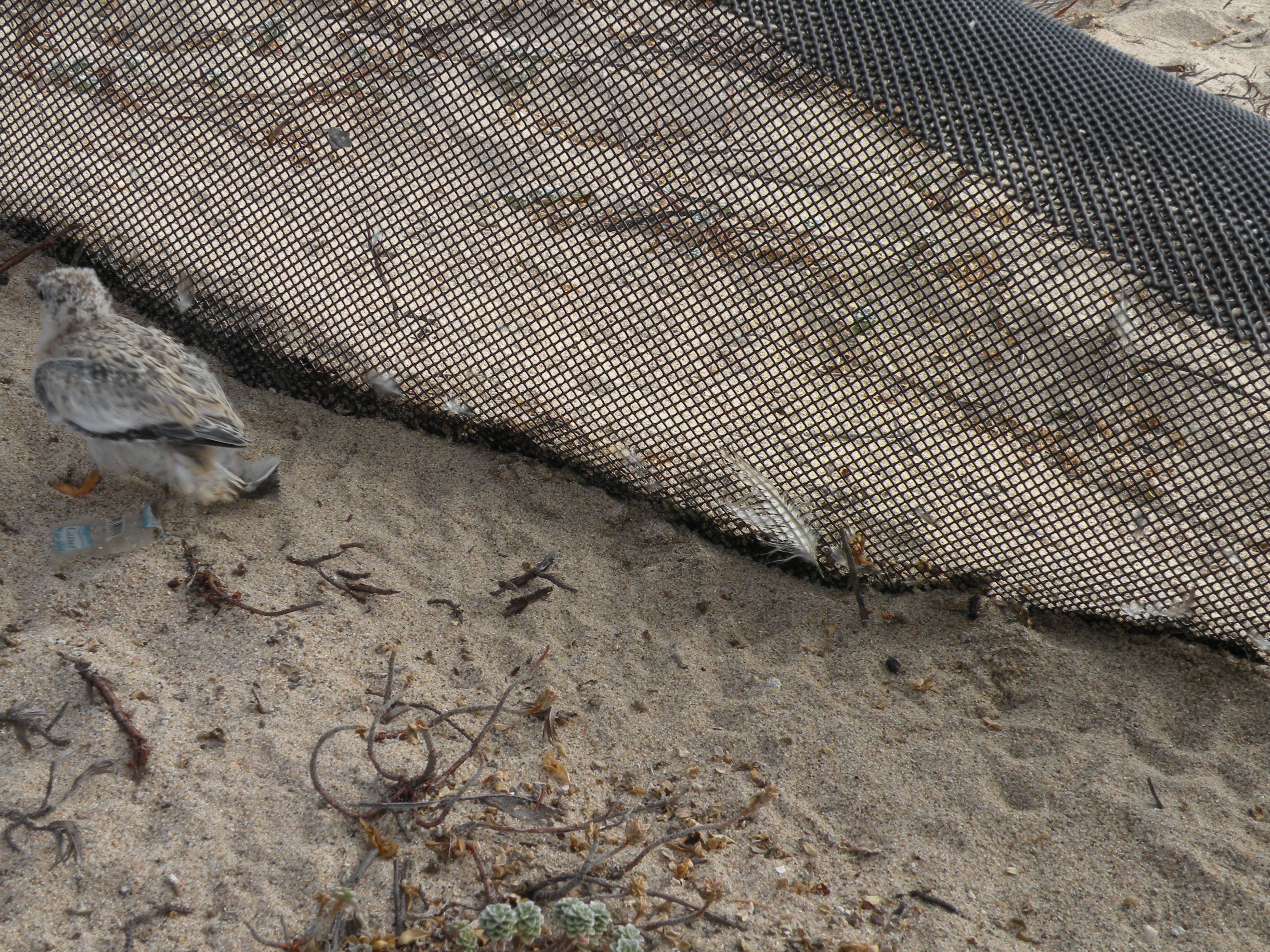
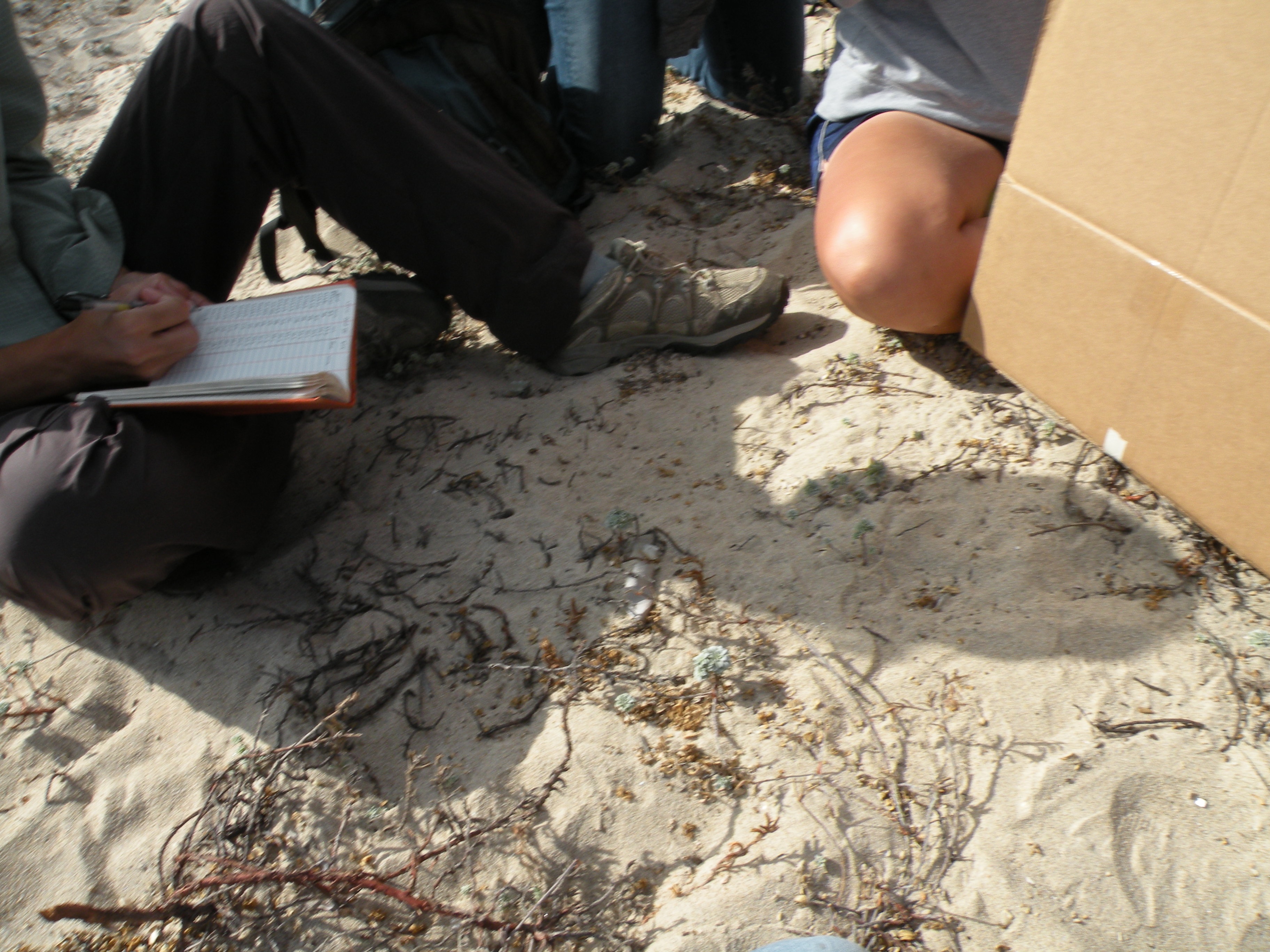
A fleeing tern fledgling can move pretty quickly, and it sometimes takes several tries to get the little guys. They sit in a net bag or a box waiting for their turn–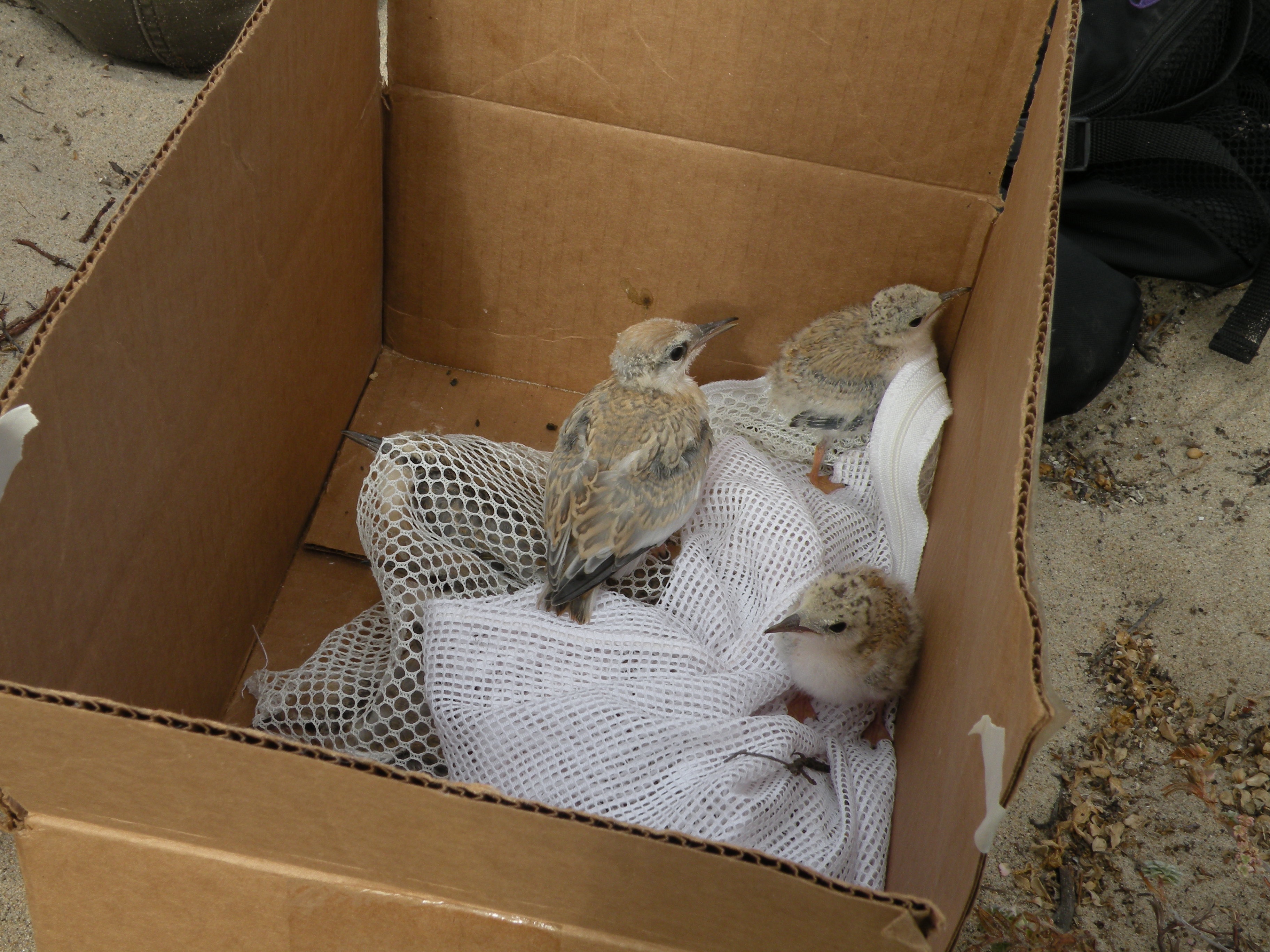
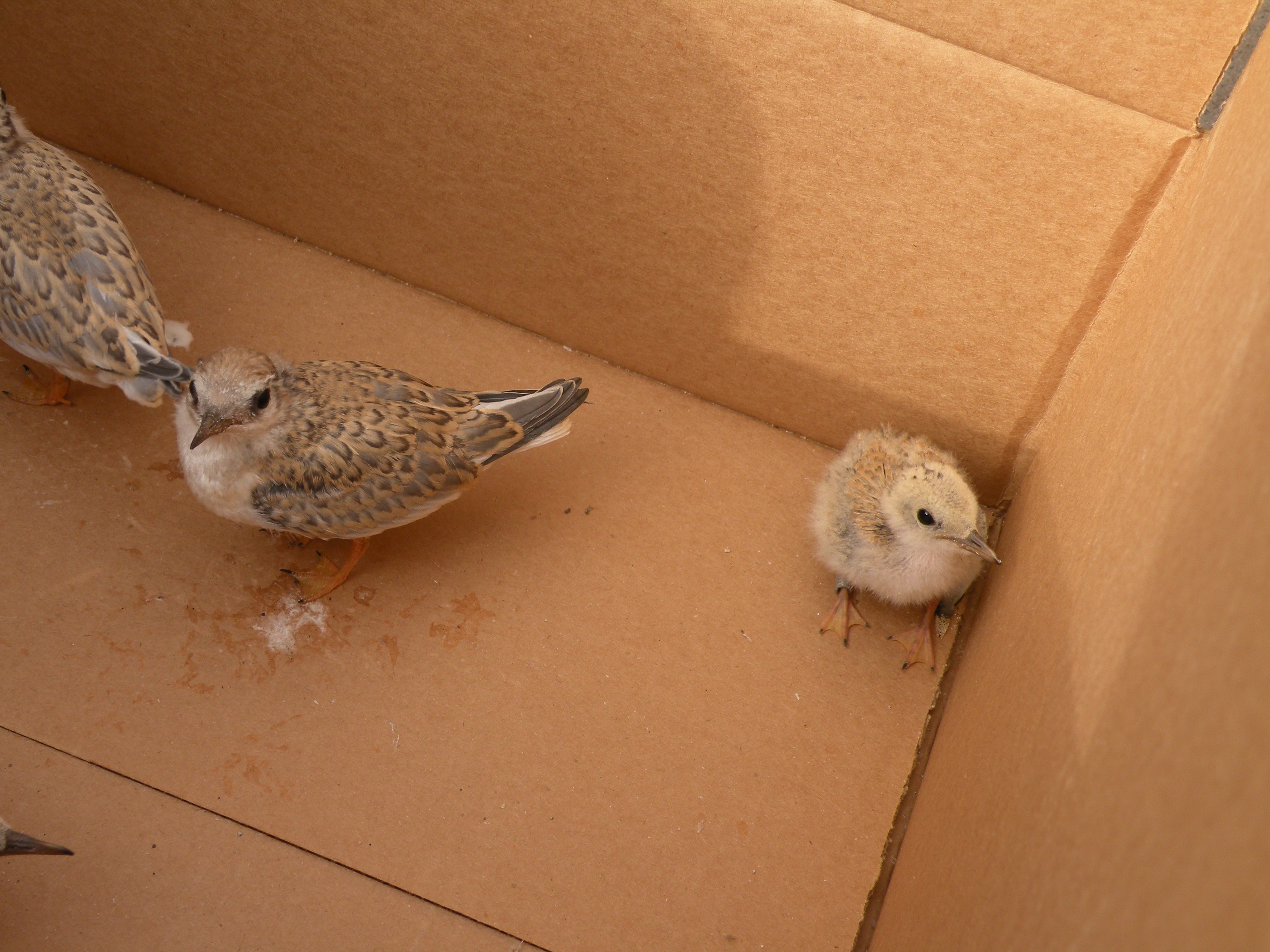
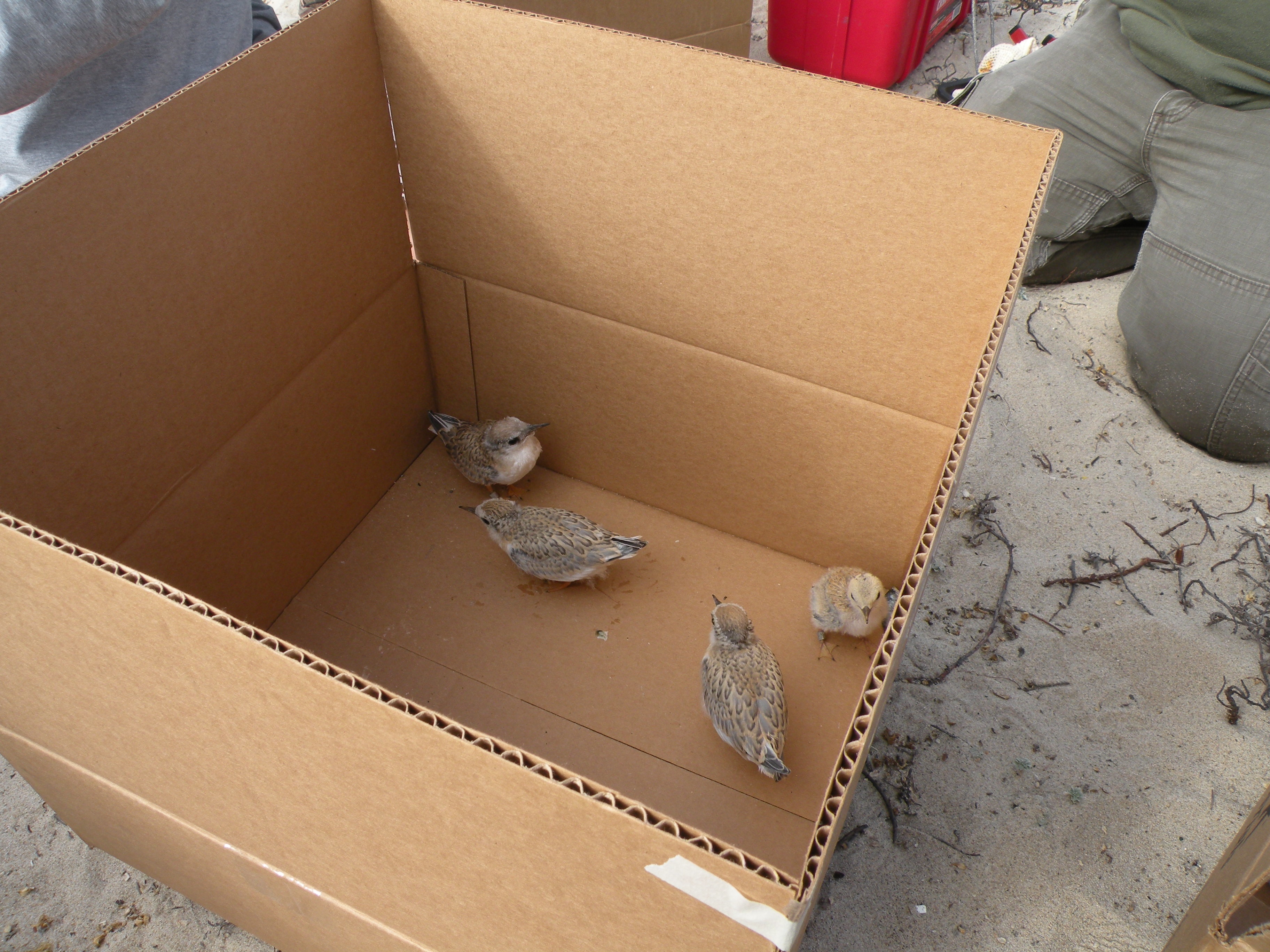
Next the tern chicks are carefully hand held, in waiting for photographing and banding–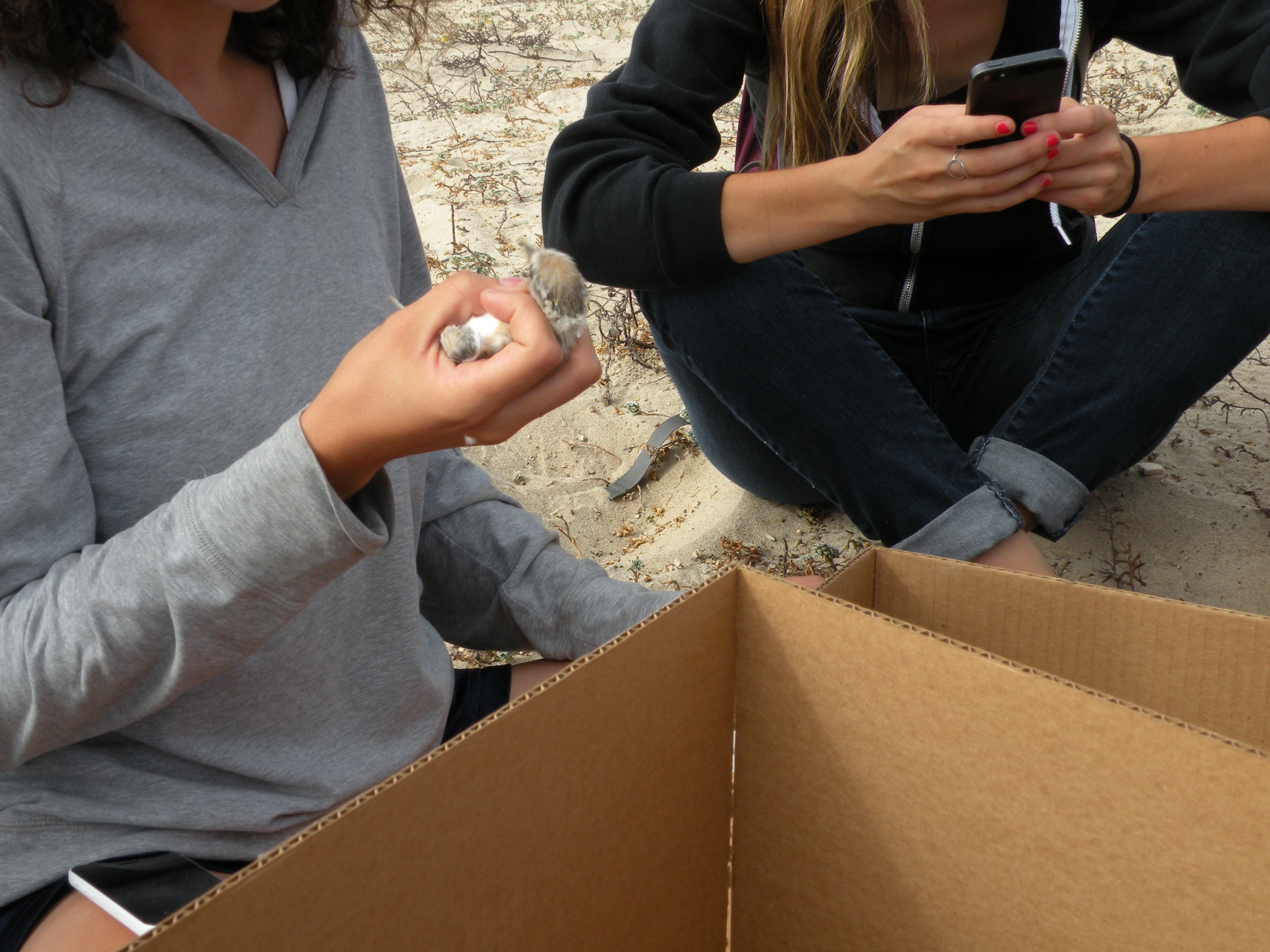
The bands are placed on the leg, and the band numbers and colors are recorded–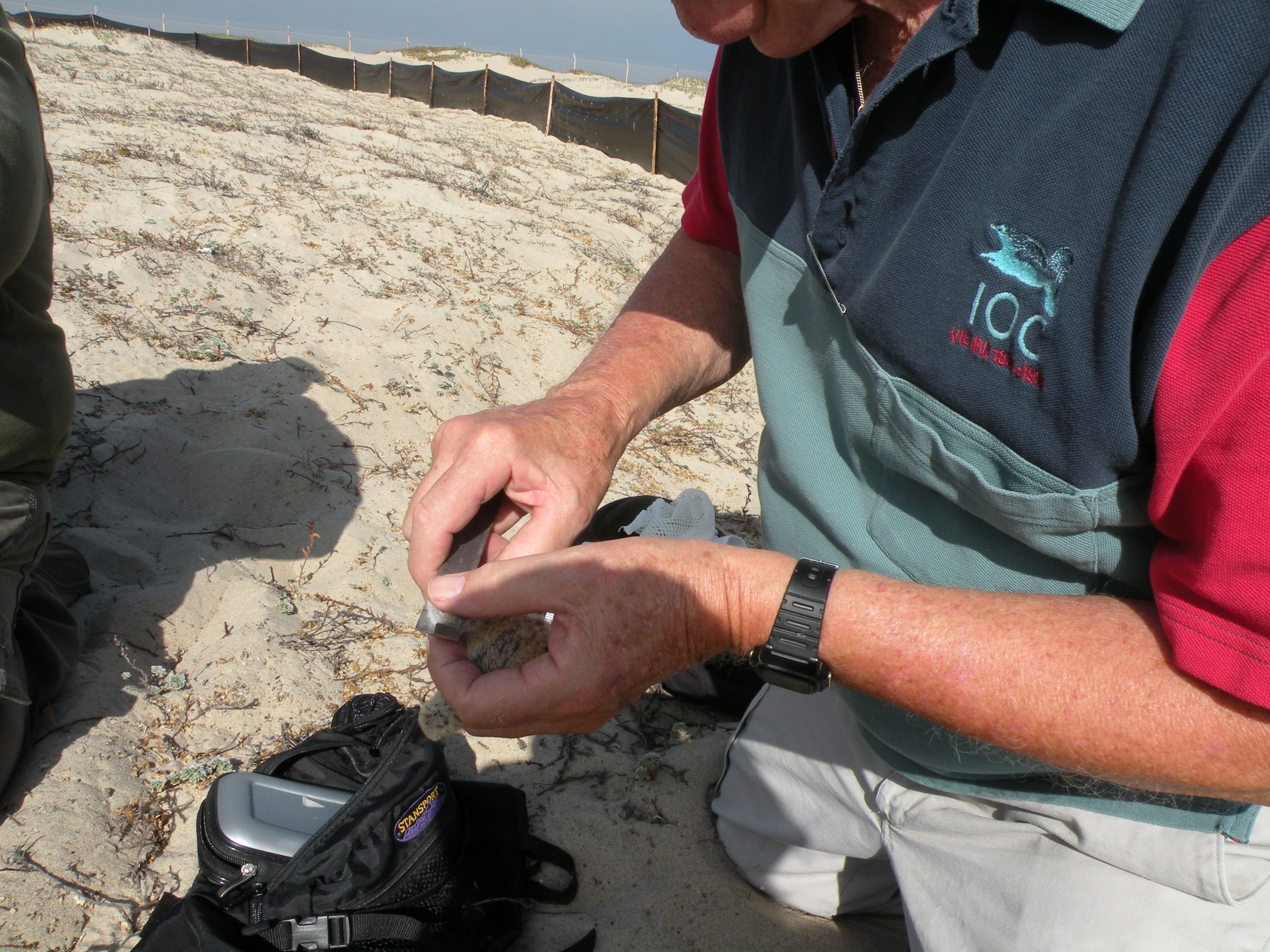
Next the chicks’ wings are measured.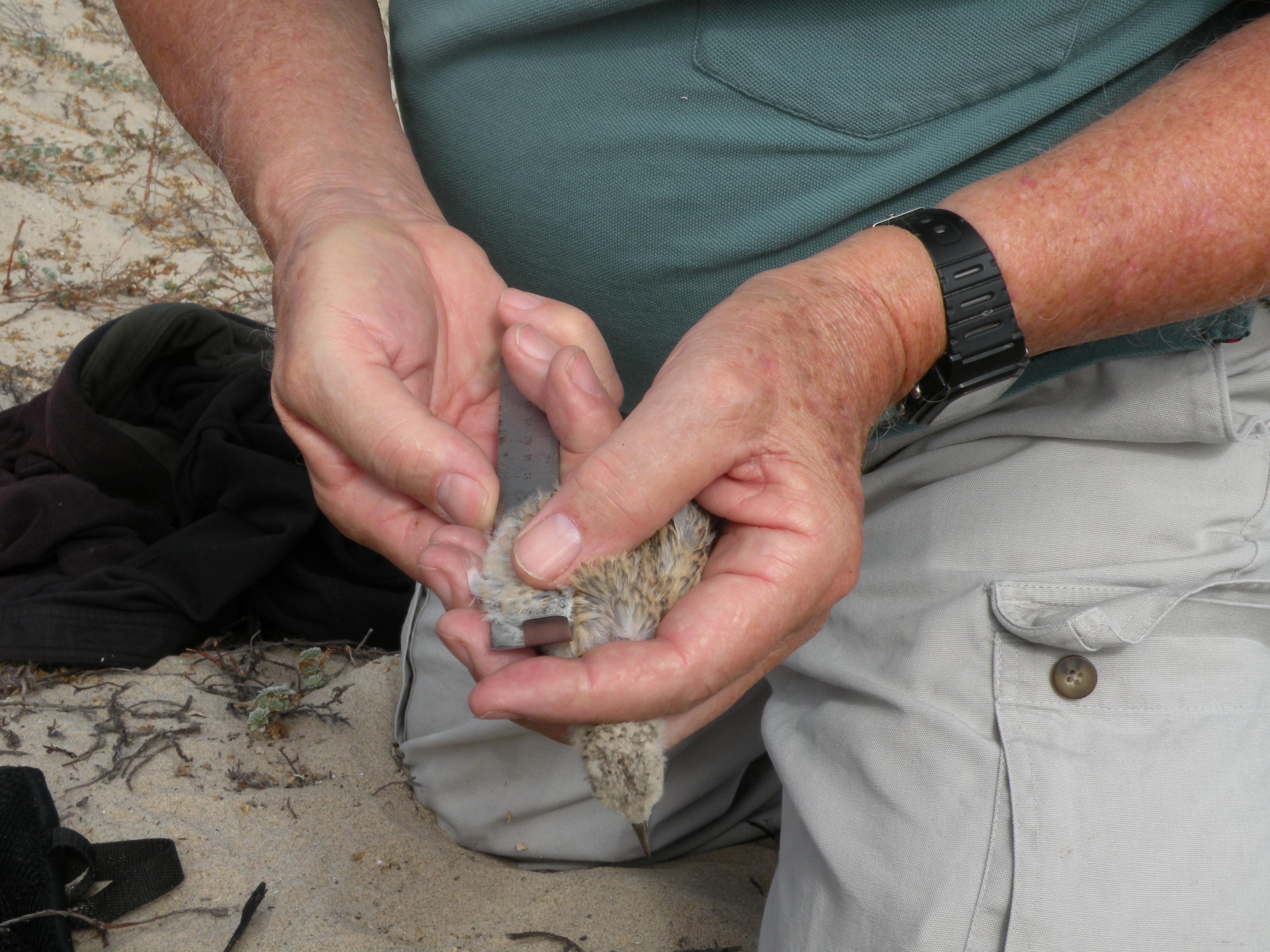
Once the chick is banded and it’s details taken, it is set all too willingly free. But after a week or two, the same chick may be corralled, and it’s growth and progress can be monitored, as in the case of this recaptured chick-
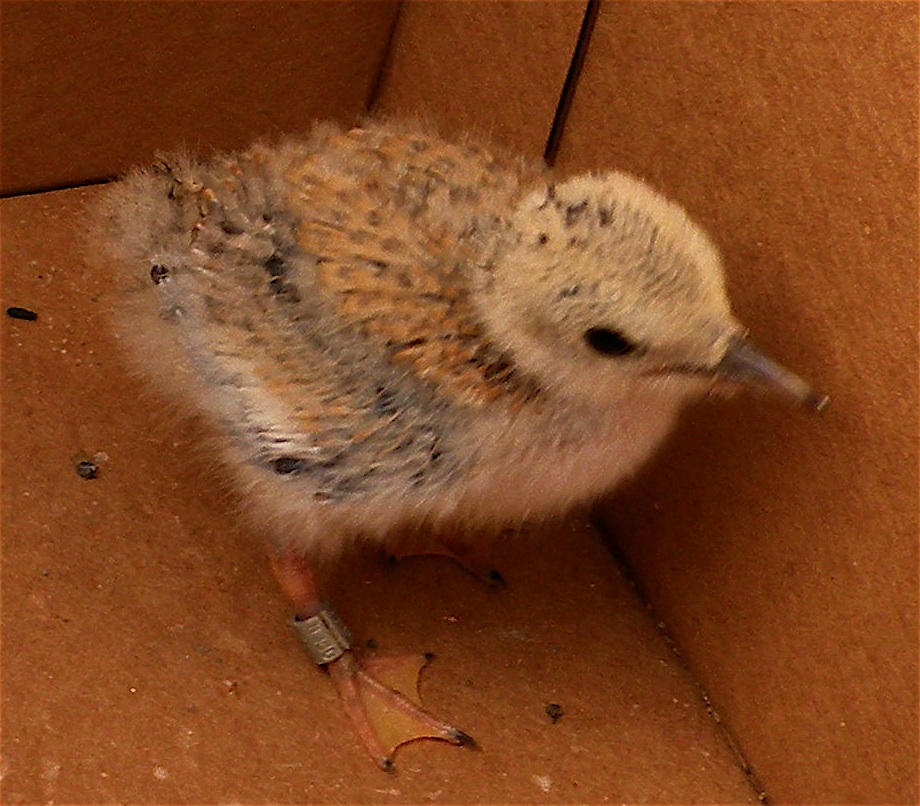
They soon start to look more like their parents-
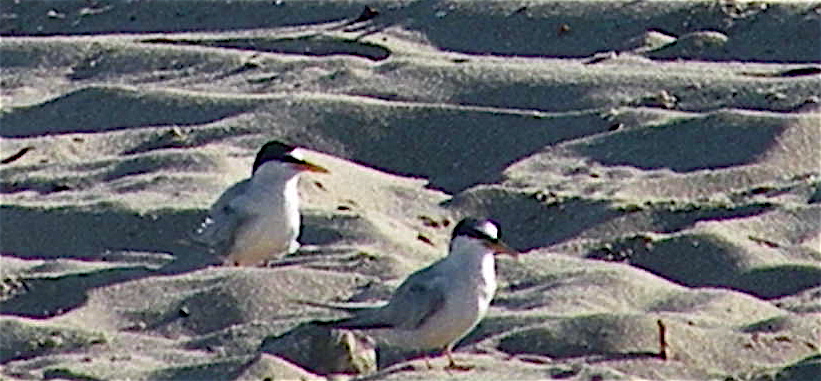
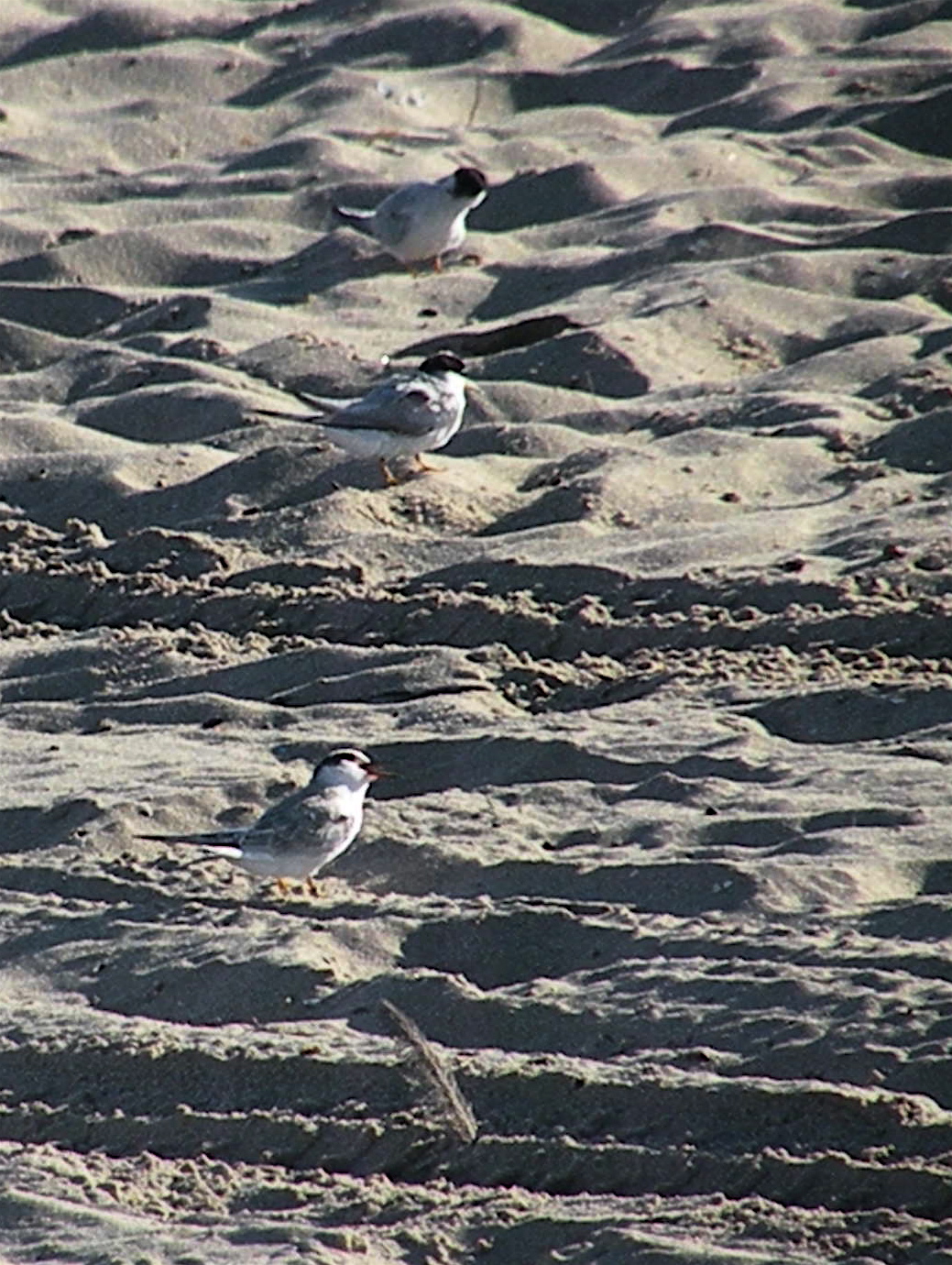
And get ready to fly off into the world-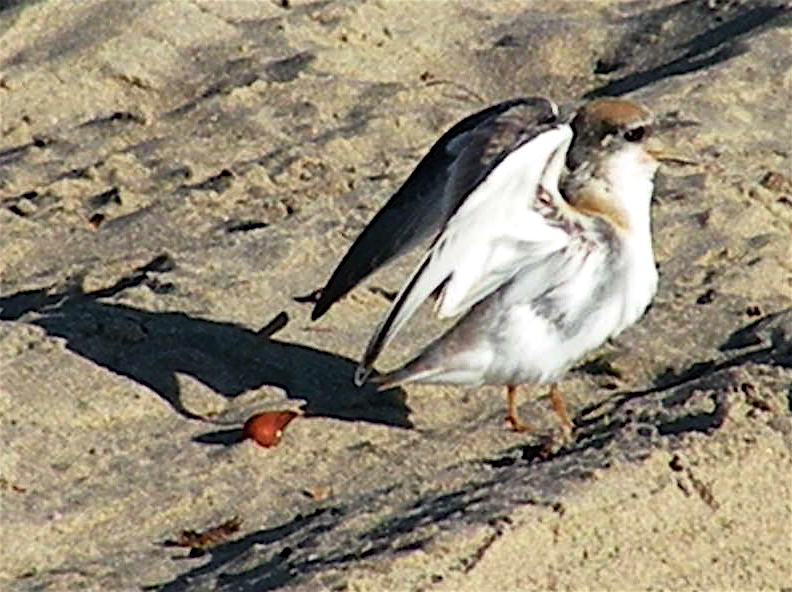
Ultimately, over 60 chicks were born this year.
Whether this is due to the right fish closer to shore or the electrified egg experament is unclear. But next year’s season looks very promising.
Meanwhile, 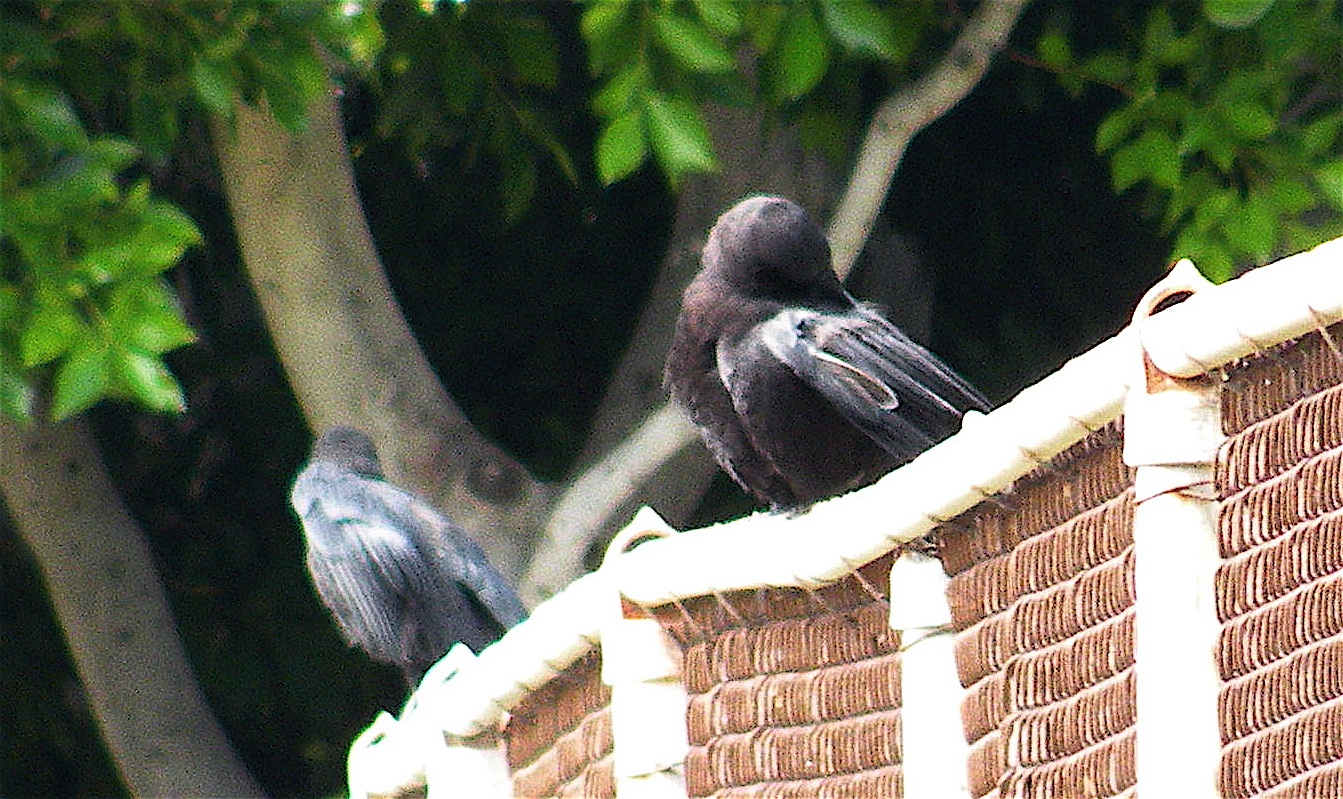 the next generation of crows are being born and fledged at the same time as the tern chicks….
To volunteer as a crow and tern monitor at the Venice Beach Tern Colony, contact
tern@laaudubon.org The 2015 breeding season promises to be an exciting one.
All photos taken by me during the 2014 breeding season.
Laurel Hoctor Jones, Education Chair
Bolsa Chica Trip Report: 11 October, 2014

A new species for California – Ridgway’s Rail!!! (formerly known as Clapper Rail)
(Kirsten Wahlquist 10/11/14)
Bolsa Chica ( little pocket, small purse or ***) is an Ecological Reserve in Orange County, separated from the beach by Pacific Coast Highway, and is a tidal inlet. We met on a lovely overcast morning with the temperature never above the low 70s and set out to see what we could see. We crossed the boardwalk admiring the splashing pelicans and diving terns. Our first surprise, a Ridgway’s Rail, was spotted in the pickleweed. We tracked it around the weeds, under the boardwalk and finally to the fence which it ducked under and vanished.
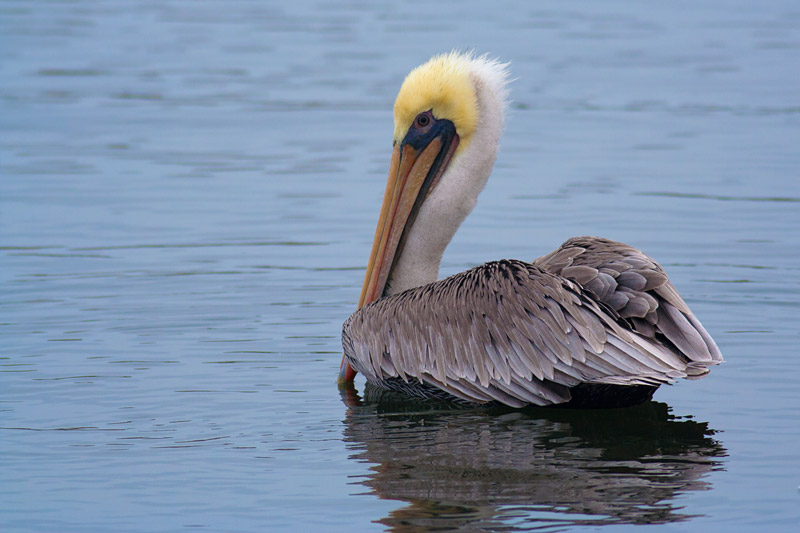
Brown Pelican in winter (basic) plumage (Kirsten Wahlquist 10/11/14)
We had a lazy day and saw several of our favorites – the Reddish Egrets – dancing and generally seeming to be enjoying the morning. We had another rail, many sparrows, Brown Pelicans, a White Pelican, a White-Faced Ibis and many others. We seemed to have the large shore birds : Marbled Godwits, Willets, Long Billed Curlews, Whimbrel, Black Bellied Plovers, Long-Billed Dowitchers and only a few little guys.

Humanoids from The Deep have invaded Bolsa Chica Lagoon
(Kirsten Wahlquist 10/11/14)
Our grebe count was interesting: at one point we had 63 Eared Grebes and several Pied-billed Grebes, but no Western Grebes. One of the most bizarre things we saw was a large hand draped in weeds coming out of the water – early Halloween ? or ??? We even had lots of Striped Mullet and Round Rays. As we came back to the parking lot, the tide was so high that most of the pickleweed was underwater and the birds had moved to drier ground. A beautiful Southern California day with good company and good birds. [Ellen Vahan]

Belding’s Savannah Sparrow is always found near pickleweed
(Kirsten Wahlquist 10/11/14)
***More on Bolsa Chica: It could also be “small bag.” On the other hand, Chica is often “girl” or “young woman”, while bolsa can be “bag,” “pocket,” “sack,” “purse,” etc., so it could mean “bag girl“, “pocket girl,” “sack girl.” Isn’t this fun? However, bolsa may also refer to a “market,” while chica is a diminutive adjective, so it could mean “small market.” Then again, it could mean “market girl,” or “young woman of the market.” As markets were usually “street markets”, maybe it means “young woman of the street” who may or may not be marketing something. What could she be marketing? Hmmm….Best to leave it there. [Editor]
| Bolsa Chica Reserve | 10/11 | 10/12 | 10/6 |
| Trip List | 2014 | 2013 | 2012 |
| Brant | X | ||
| American Wigeon | X | X | |
| Mallard | X | ||
| Blue-winged Teal | X | ||
| Cinnamon Teal | X | ||
| Northern Shoveler | X | ||
| Northern Pintail | X | ||
| Green-winged Teal | X | ||
| Redhead | X | ||
| Lesser Scaup | X | ||
| Ruddy Duck | X | X | X |
| Pied-billed Grebe | X | X | X |
| Eared Grebe | X | X | X |
| Western Grebe | X | X | |
| Double-crested Cormorant | X | X | |
| American White Pelican | X | X | X |
| Brown Pelican | X | X | X |
| Great Blue Heron | X | X | X |
| Great Egret | X | X | X |
| Snowy Egret | X | X | X |
| Reddish Egret | X | X | X |
| Green Heron | X | ||
| Black-crowned Night Heron | X | X | |
| White-faced Ibis | X | ||
| Turkey Vulture | X | X | X |
| Osprey | X | X | X |
| White-tailed Kite | X | X | |
| Northern Harrier | X | X | X |
| Red-tailed Hawk | X | X | |
| Ridgway’s Rail | X | ||
| American Coot | X | X | X |
| Black-bellied Plover | X | X | X |
| Semipalmated Plover | X | X | |
| Killdeer | X | X | |
| Greater Yellowlegs | X | X | |
| Willet | X | X | X |
| Lesser Yellowlegs | X | ||
| Whimbrel | X | X | X |
| Long-billed Curlew | X | X | X |
| Marbled Godwit | X | X | X |
| Ruddy Turnstone | X | X | |
| Red Knot | X | X | |
| Sanderling | X | X | |
| Western Sandpiper | X | X | X |
| Least Sandpiper | X | X | X |
| Dunlin | X | X | |
| Short Billed Dowitcher | X | X | X |
| Ring-billed Gull | X | X | |
| Western Gull | X | X | X |
| California Gull | X | ||
| Black Tern | X | ||
| Forster’s Tern | X | X | X |
| Royal Tern | X | ||
| Elegant Tern | X | X | X |
| Rock Pigeon | X | X | X |
| Mourning Dove | X | X | X |
| Anna’s Hummingbird | X | ||
| Allen’s Hummingbird | X | X | |
| Belted Kingfisher | X | X | X |
| Nuttall’s Woodpecker | X | ||
| Downy Woodpecker | X | ||
| American Kestrel | X | X | |
| Peregrine Falcon | X | ||
| Black Phoebe | X | X | X |
| Say’s Phoebe | X | X | X |
| Loggerhead Shrike | X | ||
| American Crow | X | X | |
| Bushtit | X | ||
| House Wren | X | X | |
| European Starling | X | X | |
| American Pipit | X | ||
| Common Yellowthroat | X | X | X |
| Yellow-rumped Warbler | X | ||
| California Towhee | X | ||
| Savannah (Belding’s) Sparrow | X | X | |
| Savannah Sparrow | X | X | X |
| Song Sparrow | X | ||
| White-Crowned Sparrow | X | X | X |
| House Finch | X | X | X |
| Total Species – 79 | 45 | 51 | 69 |
Since you’re taking out your lawn…
With our drought in full swing many of you are taking out those water-demanding lawns, and planting….NATIVES, of course!
What a better way to get a quick education in the ways and means of California natives than to go to the Native Plant Society’s annual fall sale. Yes, October is the best planting month for these new friends.
I just got the announcement, below.

The line-up of speakers is enticing!

Full Hunter’s Moon Update for October 8, 2014, 3:51 AM PDT
Here’s another update from SMBAS Blog on that large, disc-shaped, shining object which has frequently and mysteriously appeared in our nighttime sky this year (known to many as the moon).

Hunter’s Moon
(Paul Lungren – calendar.perfectduluthday.com)
Oct. 8, 3:51 a.m. PDT — Full Hunter’s Moon. With the leaves falling and the deer fattened, it is time to hunt. Since the fields have been reaped, hunters can ride over the stubble, and can more easily see the foxes and other animals that have come out to glean and can be caught for a Thanksgiving banquet after the harvest. [Test your Space Knowledge]
The year’s second total lunar eclipse occurs with this full moon; visible in its entirety over western North America, while for the central and eastern sections, moonset will intervene during the later part of the umbral stages. Totality lasts almost 59 minutes. [How Lunar Eclipses Work (Infographic)]
A Man in the Moon? – We in the west see a human face in the full moon, but the Chinese see a rabbit. If you gaze at the moon for a while , you can replace the face with a rabbit. Once you can do that, switch it back and forth between rabbit and man. See how quickly you can do it. No, it will not turn you into a lunatic.
Note: Pacific Daylight Time ends November 2, 2014 at 2 AM (becoming 1 AM).
The next significant full moon will occur on November 6, 2:23 p.m. PST.
Keep an eye on this spot for late-breaking news on this unprecedented event.
Have a nice moon photo? Send it to us at: misclists [AT] verizon [DOT] net, along with name to credit and time/location of photo.
This information comes to you courtesy of: http://www.space.com/24262-weird-full-moon-names-2014-explained.html
written by Joe Rao. Joe Rao serves as an instructor and guest lecturer at New York’s Hayden Planetarium. He writes about astronomy for Natural History magazine, the Farmer’s Almanac and other publications, and he is also an on-camera meteorologist for News 12 Westchester, N.Y.
But that’s waaay too long to type in, and besides, you don’t need to go there because SMBAS has done the work for you!
[Chuck Almdale]
Like Portland, like L.A. – Swifts!

Clouds of chimney-seeking swifts (from LAAS facebook page)
Some of our readers may have witnessed the great September gathering of Vaux’s Swifts at an elementary school in Portland that has become a big event as the birds descend for the night. A few years ago, Los Angeles birders discovered a local stopping place where we can see the excitement. Swift migration is on! Friday, 3 October, from 6 to 7:30 p.m. This is one event no LA bird enthusiast should miss. The Audubon Center at Debs Park is partnering with the Santa Monica Mountain Park Rangers to view a rare spectacle in the sky over downtown Los Angeles. At dusk, thousands of migrating Vaux’s Swifts – small, cigar-shaped birds with crescent wings – will cloud around one of the old brick chimneys on Broadway. When a couple of birds finally take the plunge, the rest of the flock will literally pour down the chimney and disappear for the night. This “swoop” of swifts is a rare treat, even rarer still in the urban environment of downtown Los Angeles.
WHEN: Friday, 3 October, between 6 & 7:30PM.
WHERE: Join us at one of two locations:
1) Top Floor of Joe’s Auto Park 440 S. Broadway, Los Angeles. Parking is $5.50, please park below level 5.
2). Spring Street Park 426 S. Spring Street, Los Angeles.
Audubon Staff, park rangers, and volunteers will be on site to share information, binoculars, etc. The event is free of charge. All ages are welcome.
BRING: A picnic, binoculars if you have them, and something to sit on.
MORE INFORMATION CALL: 323-221-2255



 SANTA MONICA BAY AUDUBON SOCIETY BLOG