Free email delivery
Please sign up for email delivery in the subscription area to the right.
No salesman will call, at least not from us. Maybe from someone else.
Malibu Lagoon Trip Report: 28 September, 2014
Surfers were few on the low and windblown waves, the beach noticeably narrowed from recent storm surges, sand swept away leaving bolders behind. But birds were relatively plentiful and over twenty-five birders showed up to see them. The area was still quite clean from our Coastal Cleanup efforts of a week earlier. We found her hidey-hole, but didn’t see the Black Widow spider at the topographical map. No volunteers came forward to entice her out.

Even Double-crested Cormorants rejoiced (L. Jones 9/28/14)
Ducks are still few and far between, but shorebird numbers are growing and a variety of migrant passerines were busy in the brush, flowers and grass, including: Willow & Pacific-slope Flycatchers, Say’s Phoebe, Cassin’s Kingbird, Warbling Vireo, House Wren, Cedar Waxwing, Orange-crowned and Yellow Warblers, White-crowned Sparrow, Bobolink, and Western Meadowlark.
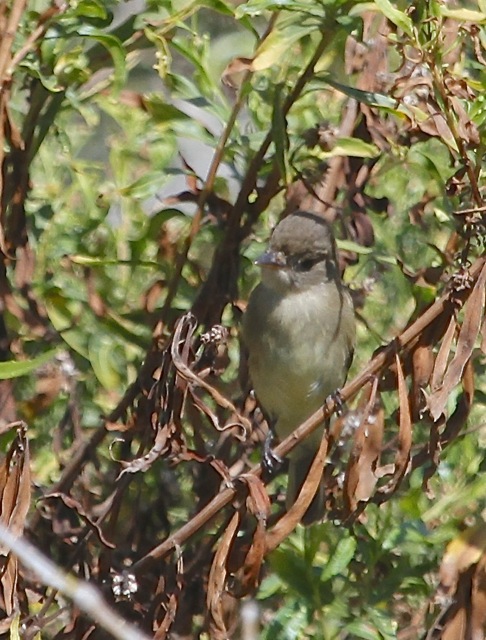
Willow Flycatcher, white throat & no eyering
(J. Waterman 9/28/14)
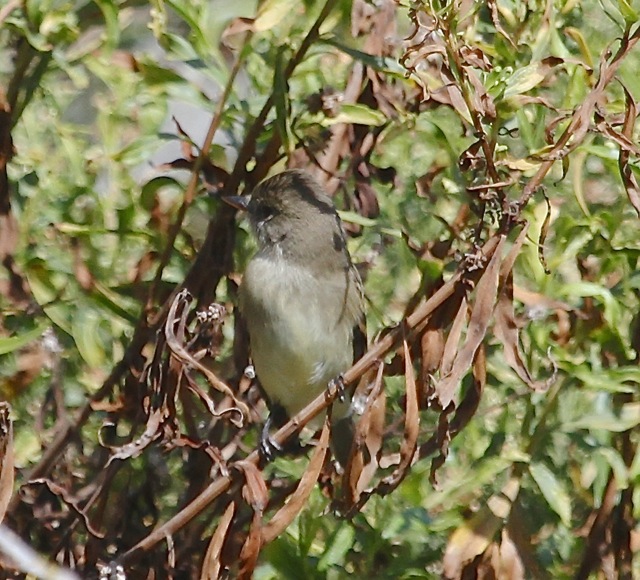
Willow Flycatcher, check the bill length
(J. Waterman 9/28/14)
The Willow Flycatcher was hotly debated. Most of those who saw it (I completely missed it) recognized it as a member of that tricky Empidonax genus of small, similar flycatchers, and some thought it was a Willow. Late September is at the end of their southward migration season, but the clearly outlined white throat above the gray breast, pale lower mandible and lack of visible eyering make that the most likely ID. I wound up measuring the bill and head in the photo to make sure it fell into the range for Willow, then sent it to Kimball Garrett, Birdskinmeister at the Natural History Museum, for a good, solid 85% probability (more-or-less) rating. This is the first Willow Flycatcher we’ve recorded on our walks.
We don’t have a picture of the Bobolink, an eastern member of the Blackbird family, which was heavily streaked with black on orange-yellow background, with pinkish bill and two wide black streaks on the head separated by an orange-yellow median crown stripe. Enough people saw it from different angles, as it skulked through brush and grass, that we were able to piece together an ID. We have one prior Bobolink record from 9/25/11.

Snowy Plover old-timer GG:AR fledged Summer 2011 at Oceano Dunes
(J. Waterman 9/28/14)
Forty Snowy Plovers rested on the beach, east of the lagoon, inland of the berm. Mary got them to stand at attention and we found two birds with leg-rings: GG:AR and VV:AW (see photos above & below). GG:AR is one of three identically ringed birds fledged at Oceano Dunes, up north near Pismo Beach, in the summer of 2011; this is the 9th time we’ve recorded it at the lagoon. VV:AW is a newbie, banded at Oceano Dunes this past summer. Both birds were seen on 8/31/14 by Bill Crowe of Simi Valley, along with WW:BW (not seen today), banded at Summerville Beach in Humboldt County, summer of 2012. Bill reported seeing an extraordinary 100 Snowy Plovers at that time. He also reported bird GA:OY on 10/3/14.
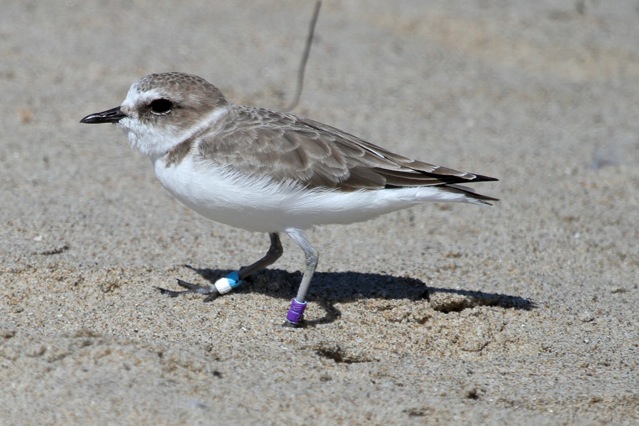
Newbie Snowy Plover VV:AW fledged Summer 2014 at Oceano Dunes
(J. Waterman 9/28/14)
Other birds (non-passerines) new for the season were: Eared Grebe, Turkey Vulture, Red-shouldered Hawk, American Kestrel, Ring-billed Gull, Yellow-chevroned Parakeet, Vaux’s Swift and Nuttall’s Woodpecker. Red-shouldered Hawks nest up Malibu Creek in the trees, but we do not often see them near the lagoon. Nanday (Black-Hooded) Parakeets nest in the canyons along the western half of the Santa Monica Mtns. and we’ve recorded them by the lagoon on five occasions, but Yellow-chevroned Parakeets usually stick to the surburban flatlands of the L.A. basin. Perhaps they’re moving westward? Both species are feral local breeders, descendants of escaped pets.

Winter visitor Say’s Phoebe with his ocraceous belly (R. Ehler 9/28/14)
We had a brief discussion on the Say’s Phoebe when I said that the belly color is described as “ocraceous”. This means ochre-colored; one may be lurking in your box of crayons.

DWP now hires professionals – their credentials are impeccable – to maintain their poles (Nuttall’s Woodpecker)
J. Waterman 9/28/14
Our next three scheduled field trips: Bolsa Chica Nature Reserve, 11 Oct, 8:30-noon; Santa Monica Mountains Bird Festival, 18 Oct, 8:30-4pm; Malibu Lagoon, 26 Oct, 8:30 & 10am.
Our next program: Tuesday, 7 Oct., 7:30 pm. Black-backed Woodpeckers and the Ecology of Forest Fires, presented by Dale Hanson.
NOTE: Our 10 a.m. Parent’s & Kids Birdwalk meets at the shaded viewing area. Watch for Willie the Weasel.
Links: Unusual birds at Malibu Lagoon
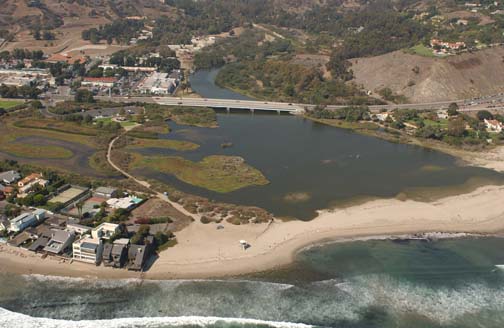
Aerial photo of Malibu Lagoon from 9/23/02.
Prior checklists:
2014: Jan-July
2013: Jan-June, July-Dec
2012: Jan-June, July -Dec
2011: Jan-June, July-Dec,
2010: Jan-June, July-Dec.
2009: Jan-June, July-Dec.

Snag-lovers (L. Jones 9/28/14)
The 10-year comparison summaries created during the project period remain available on our Lagoon Project Bird Census Page. Very briefly summarized, the results unexpectedly indicate that avian species diversification and numbers improved slightly during the period Jun’12-June’14. [Chuck Almdale]
| Malibu Census 2014 | 5/25 | 6/22 | 7/27 | 8/25 | 9/28 |
| Temperature | 64-69 | 68-74 | 66-72 | 72-80 | 68-75 |
| Tide Lo/Hi Height | H+3.94 | H+3.48 | H+4.21 | H+4.52 | H+5.35 |
| Tide Time | 0810 | 0712 | 1100 | 0954 | 1149 |
| Gadwall | 12 | 21 | 2 | 3 | |
| American Wigeon | 2 | ||||
| Mallard | 26 | 32 | 55 | 12 | 23 |
| Red-breasted Merganser | 3 | 2 | 3 | 2 | |
| Ruddy Duck | 6 | ||||
| Pacific Loon | 1 | ||||
| Common Loon | 1 | ||||
| Pied-billed Grebe | 2 | 1 | 6 | 6 | 11 |
| Eared Grebe | 6 | ||||
| Western Grebe | 1 | ||||
| Brandt’s Cormorant | 2 | 1 | 4 | 2 | 1 |
| Double-crested Cormorant | 31 | 37 | 35 | 58 | 45 |
| Pelagic Cormorant | 1 | 1 | 1 | 3 | |
| Brown Pelican | 37 | 63 | 78 | 29 | 42 |
| Great Blue Heron | 4 | 2 | 4 | 4 | 1 |
| Great Egret | 2 | 2 | 4 | 3 | 3 |
| Snowy Egret | 12 | 10 | 22 | 12 | 15 |
| Little Blue Egret | 1 | ||||
| Black-crowned N-Heron | 2 | 1 | 1 | 4 | 1 |
| Turkey Vulture | 1 | ||||
| Osprey | 1 | 1 | 1 | 1 | |
| White-tailed Kite | 1 | ||||
| Red-shouldered Hawk | 1 | ||||
| Red-tailed Hawk | 1 | 1 | 3 | ||
| American Kestrel | 1 | ||||
| American Coot | 2 | 4 | 14 | 9 | 85 |
| Black-bellied Plover | 25 | 93 | 95 | ||
| Snowy Plover | 16 | 39 | 40 | ||
| Semipalmated Plover | 1 | 3 | |||
| Killdeer | 4 | 10 | 8 | 5 | 18 |
| Spotted Sandpiper | 3 | 1 | 5 | 5 | |
| Willet | 1 | 5 | 14 | 45 | |
| Whimbrel | 4 | 5 | 28 | 17 | 9 |
| Marbled Godwit | 1 | 4 | |||
| Ruddy Turnstone | 2 | 9 | 12 | ||
| Black Turnstone | 3 | ||||
| Sanderling | 2 | 10 | |||
| Western Sandpiper | 1 | 1 | |||
| Least Sandpiper | 3 | 6 | 2 | ||
| Boneparte’s Gull | 1 | ||||
| Heermann’s Gull | 2 | 4 | 8 | 10 | 4 |
| Ring-billed Gull | 3 | ||||
| Western Gull | 64 | 57 | 71 | 89 | 95 |
| California Gull | 1 | 1 | |||
| Least Tern | 3 | 2 | |||
| Caspian Tern | 17 | 3 | |||
| Common Tern | 1 | ||||
| Forster’s Tern | 2 | ||||
| Royal Tern | 8 | 18 | 11 | 6 | 8 |
| Elegant Tern | 37 | 23 | 127 | 4 | 18 |
| Rock Pigeon | 6 | 6 | 16 | 5 | 15 |
| Mourning Dove | 2 | 2 | 2 | 1 | |
| Yellow-chevroned Parakeet | 2 | ||||
| Vaux’s Swift | 3 | ||||
| Anna’s Hummingbird | 1 | 2 | 2 | 1 | 1 |
| Allen’s Hummingbird | 5 | 4 | 3 | 4 | 6 |
| Nuttall’s Woodpecker | 1 | ||||
| Western Wood-Pewee | 1 | ||||
| Willow Flycatcher | 1 | ||||
| Pac.Slope Flycatcher | 1 | 1 | |||
| Black Phoebe | 6 | 3 | 11 | 9 | 12 |
| Say’s Phoebe | 3 | ||||
| Cassin’s Kingbird | 1 | ||||
| Warbling Vireo | 2 | ||||
| Western Scrub-Jay | 1 | ||||
| American Crow | 6 | 9 | 4 | 4 | 6 |
| Rough-winged Swallow | 2 | 8 | 7 | 15 | 3 |
| Barn Swallow | 19 | 40 | 35 | 45 | 1 |
| Cliff Swallow | 6 | 10 | 7 | 3 | |
| Bushtit | 8 | 2 | 7 | ||
| House Wren | 1 | ||||
| American Robin | 1 | 2 | |||
| Wrentit | 1 | ||||
| Northern Mockingbird | 3 | 3 | 6 | 9 | 3 |
| European Starling | 8 | 12 | 22 | 55 | 115 |
| Cedar Waxwing | 2 | ||||
| Phainopepla | 1 | ||||
| Orange-crowned Warbler | 1 | 3 | |||
| Yellow Warbler | 3 | ||||
| Common Yellowthroat | 3 | 1 | 3 | 9 | |
| Spotted Towhee | 2 | 1 | |||
| California Towhee | 3 | 3 | 3 | 3 | 4 |
| Song Sparrow | 11 | 10 | 11 | 8 | 7 |
| White-crowned Sparrow | 15 | ||||
| Bobolink | 1 | ||||
| Red-winged Blackbird | 6 | 30 | 8 | ||
| Western Meadowlark | 6 | ||||
| Great-tailed Grackle | 2 | 4 | 16 | 6 | 1 |
| Brown-headed Cowbird | 2 | 2 | |||
| Hooded Oriole | 2 | 1 | |||
| House Finch | 13 | 11 | 14 | 8 | 22 |
| Lesser Goldfinch | 2 | 2 | 4 | 6 | 15 |
| Totals by Type | May | Jun | July | Aug | Sep |
| Waterfowl | 49 | 55 | 58 | 16 | 26 |
| Water Birds-Other | 77 | 106 | 138 | 106 | 193 |
| Herons, Egrets | 20 | 15 | 32 | 23 | 20 |
| Raptors | 3 | 1 | 1 | 1 | 7 |
| Shorebirds | 11 | 16 | 90 | 198 | 240 |
| Gulls & Terns | 132 | 106 | 221 | 111 | 128 |
| Doves | 8 | 8 | 18 | 6 | 15 |
| Other Non-Pass. | 6 | 6 | 5 | 5 | 13 |
| Passerines | 104 | 152 | 161 | 172 | 242 |
| Totals Birds | 410 | 465 | 724 | 638 | 884 |
| Total Species | May | Jun | July | Aug | Sep |
| Waterfowl | 5 | 3 | 2 | 3 | 2 |
| Water Birds-Other | 8 | 5 | 6 | 7 | 7 |
| Herons, Egrets | 4 | 4 | 5 | 4 | 4 |
| Raptors | 3 | 1 | 1 | 1 | 5 |
| Shorebirds | 3 | 3 | 10 | 13 | 10 |
| Gulls & Terns | 8 | 6 | 6 | 5 | 5 |
| Doves | 2 | 2 | 2 | 2 | 1 |
| Other Non-Pass. | 2 | 2 | 2 | 2 | 5 |
| Passerines | 20 | 17 | 18 | 13 | 27 |
| Totals Species – 92 | 55 | 43 | 52 | 50 | 66 |
Coastal Cleanup at Malibu Lagoon: 20 September, 2014
This was our first cleanup since the Lagoon reconfiguration project began in 2012.

Setting up (L.Johnson 9/20/14)
My impression is that significant trash around the water’s edge was far less common than before. With the old channels, there were many spots where tiny pieces of plastic and styrofoam piled up. The west end of the south channel near the “mystery drain” outlet was especially bad – you could spend the entire three hour period trying to collect and count the crud, and still not get it all. But no more. The parking lot had the most trash; apparently when people exit their cars the piles of cigarette butts, candy wrappers, drink containers, burger boxes and miscellaneous detritus which accumulated on their laps while they drove, now tumbles out onto the ground and blows into the bushes. Who could have guessed?
We had 209 volunteers, which is a lot for this site. Many were individual people and families, but several organized groups showed up:
A Boy Scout Troop
Disney Corporation
El Camino Real Charter School of Woodland Hills – Humanitas Group: Dean Sodek, Teacher
Windward School of Mar Vista
Special thanks to the young men of El Camino School who hauled the trash and heavy lumber to the dumpster so the old geezers didn’t have to.
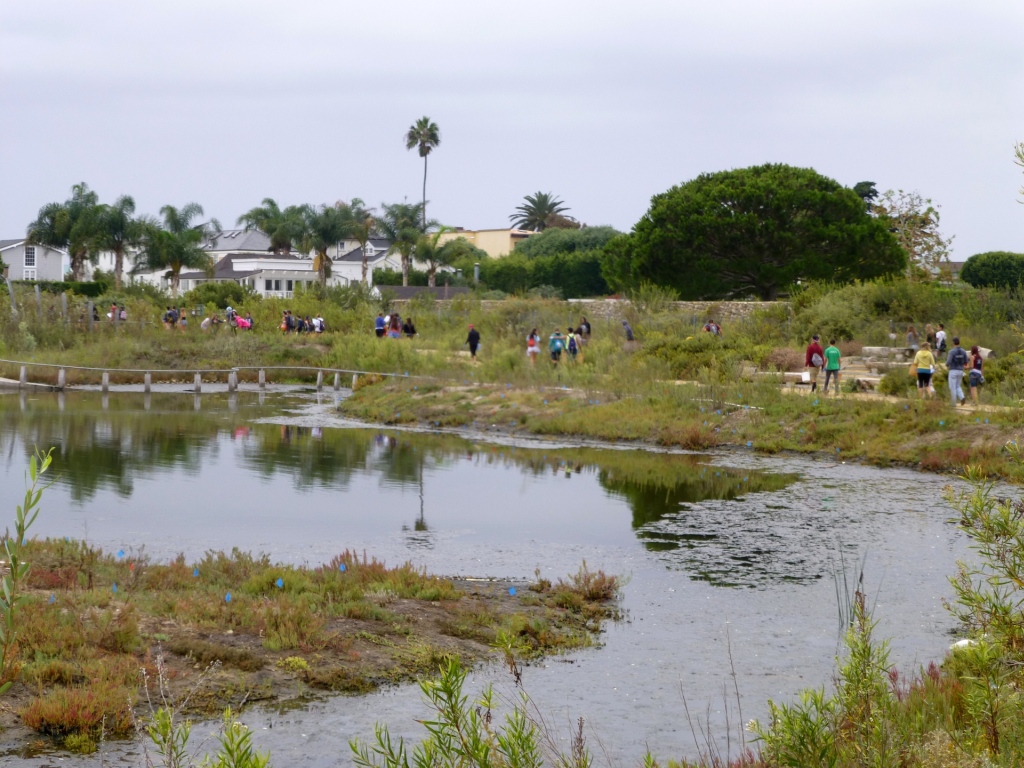
A line of trash-pickers heads for the lagoon (L.Johnson 9/20/14)
Six Santa Monica Bay Audubon Society volunteers ran the whole thing:
Captain Jean, Co-Captain Ellen, Weighmaster Chris, Lillian Mistress of Waivers, Jill-of-All-Trades Liz, and Trashmaster Chuck, Scourge of the Brush – are we pros or what ?
Some stats:
Total weight of trash = 760 lbs.
Total weight of recyclables = 11 lbs.
We found very few plastic bags (hooray – the ban just might be working ) and many many hundreds of cigarette butts (boo – isn’t smoking illegal at the beach?)

Chris deals with weighty matters (L.Johnson 9/20/14)
For Los Angeles County, Heal the Bay reports for 2014:
11,155 Volunteers at 49 locations
30,480 lbs. of debris (28,481 lbs. trash + 999 lbs. recyclables)
42.5 miles of coastline and river edge covered.
Over the past twenty-five years, Angelinos have picked up more than 1.7 million pounds of trash. Way to go!
Now, if we could only stop tossing it out there in the first place.
[Chuck Almdale]

Yours truly fills out the data card, his Giant Bucket O’ Butts always at hand.
(L.Johnson 9/20/14)
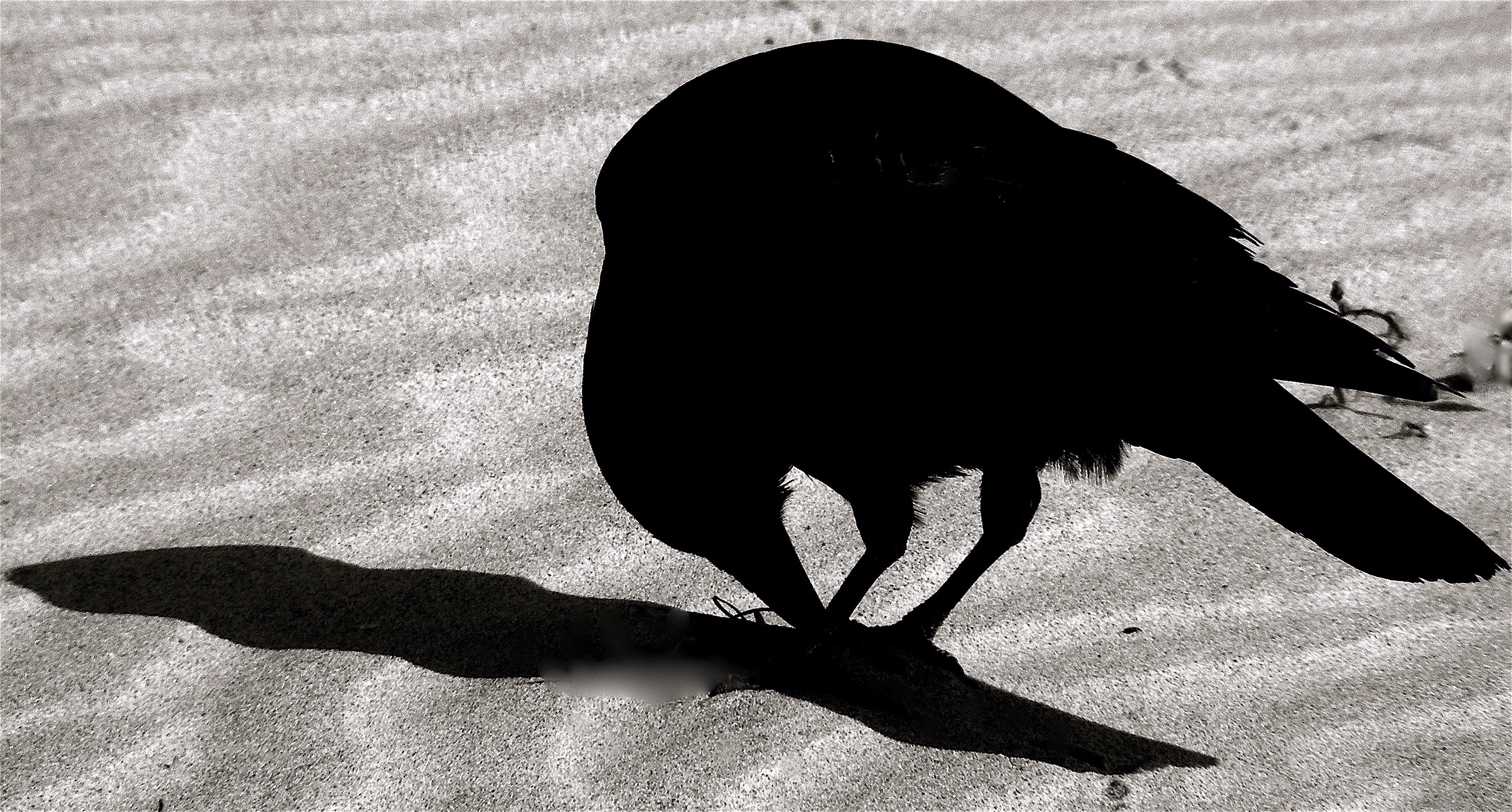
CROW VS. TERN PART I

TERNS BATLE CROWS: PHOTO RECAP PART I
On Venice Beach near the Marina del Rey breakwater stands a chain-link fence enclosure. It’s empty and silent these early fall days, but a few weeks ago marked the end of a five month drama that unfolds each year between local, year-round resident crows, and seasonal least terns.
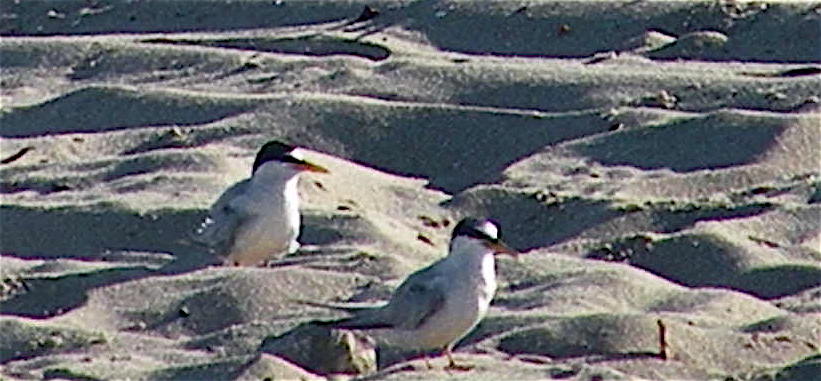
Local biologists and volunteers from around Los Angeles (including Santa Monica Bay Audubon) joined forces this breeding season to try a new way to mitigate predation by crows of least tern eggs and chicks, whose numbers have fallen or been non-existent in recent years.
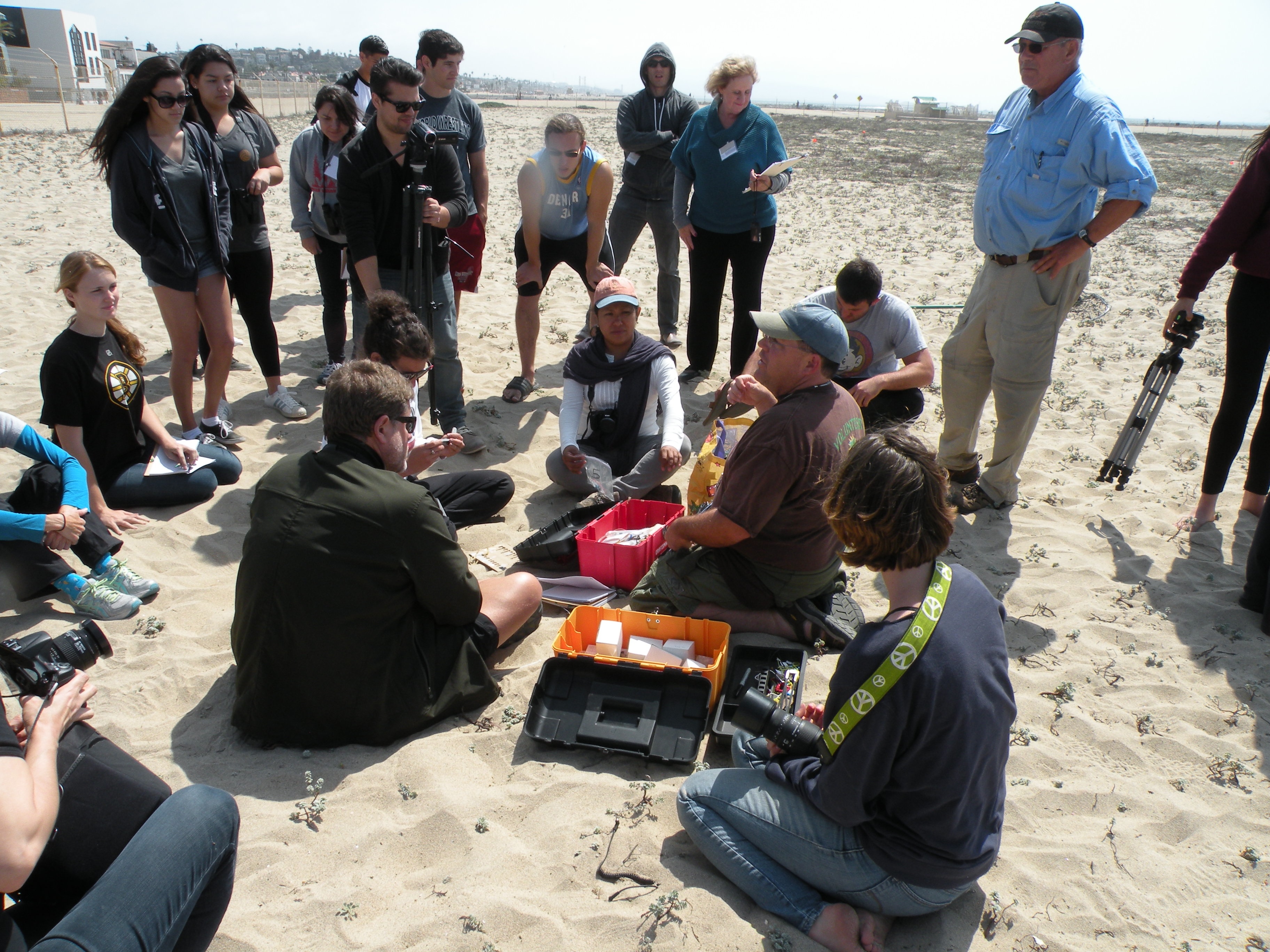
First up – the crow’s story – It all starts with banding the local crows–but first they have to be caught. Crows are highly intelligent and have complex social structures which enable them to outwit most enemies, but who can resist free peanuts…

The nuts are placed in an enclosure that’s easy to fly into but impossible to fly out. From there, the crows are removed to be banded and radio tagged by Loyola Marymount University biologists and Lead Least Tern biologist, Tom Ryan.

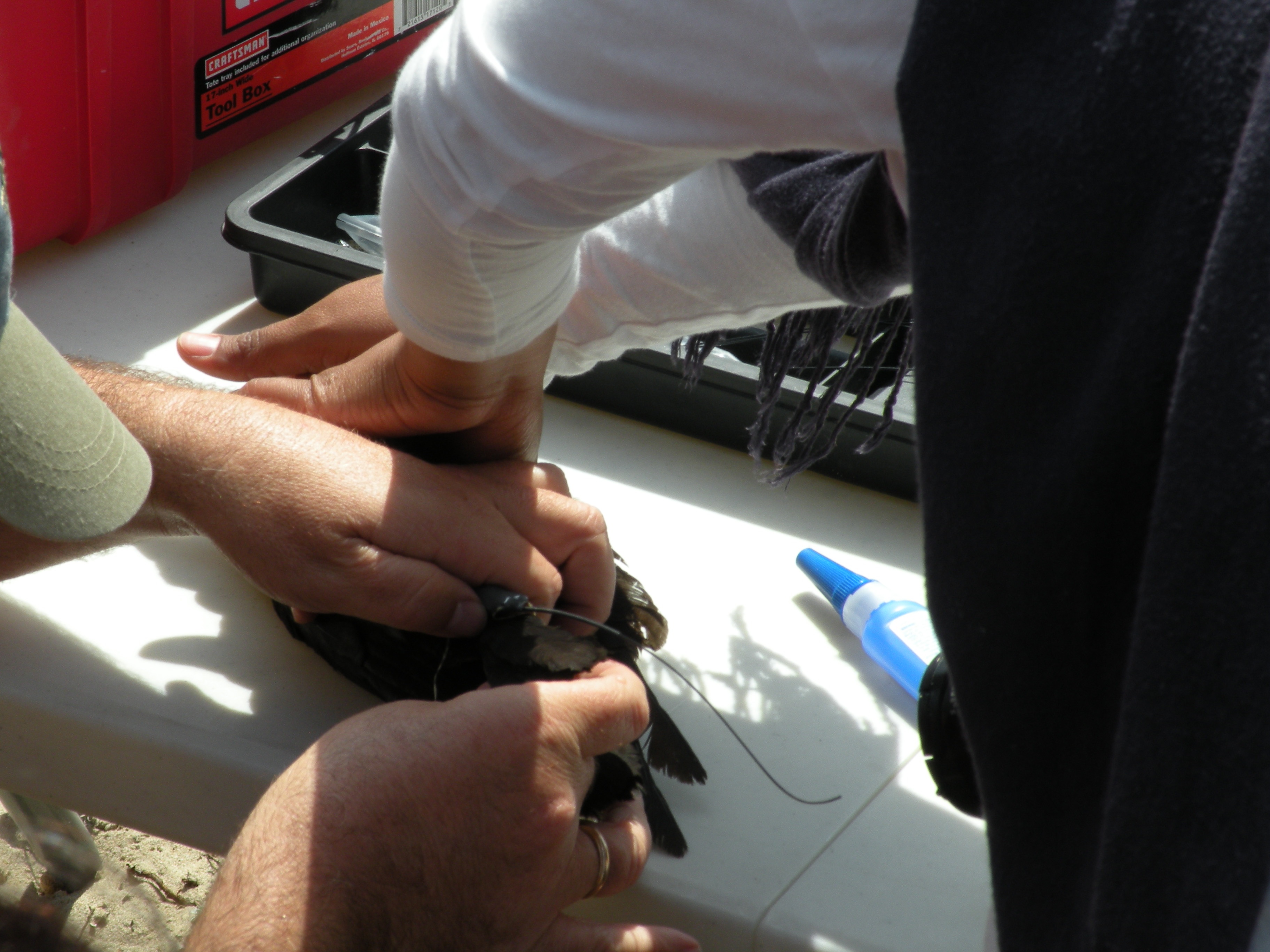
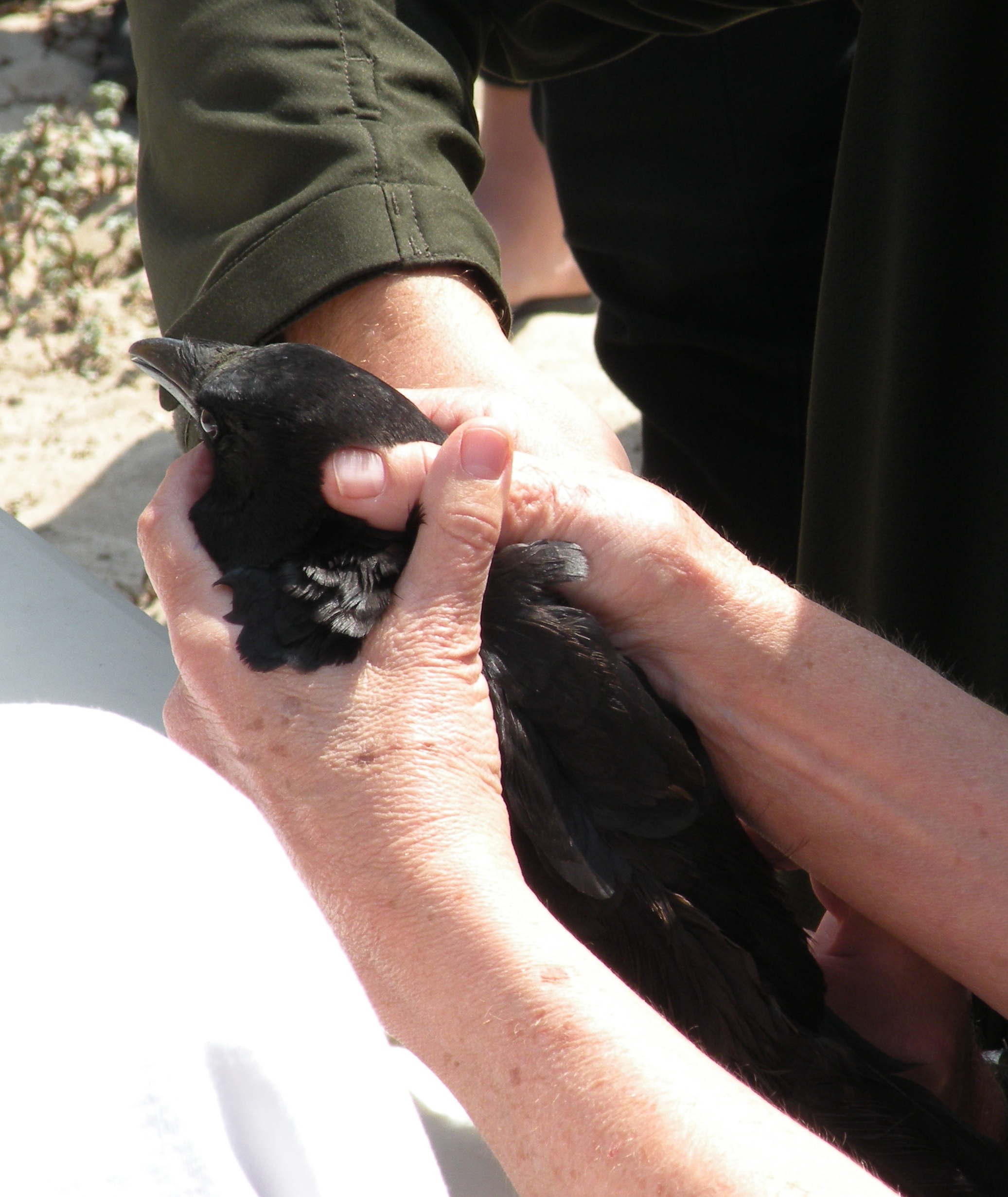
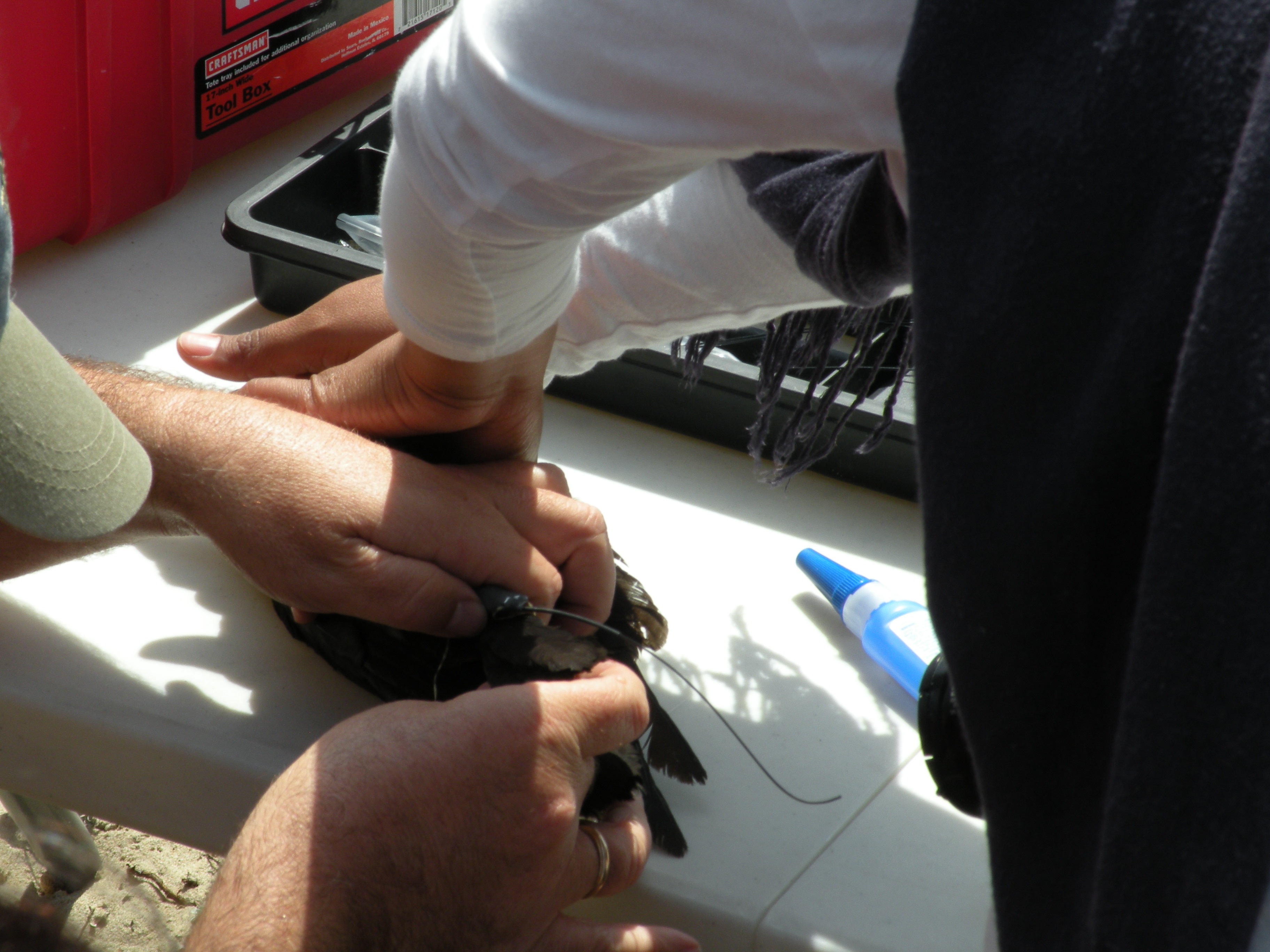
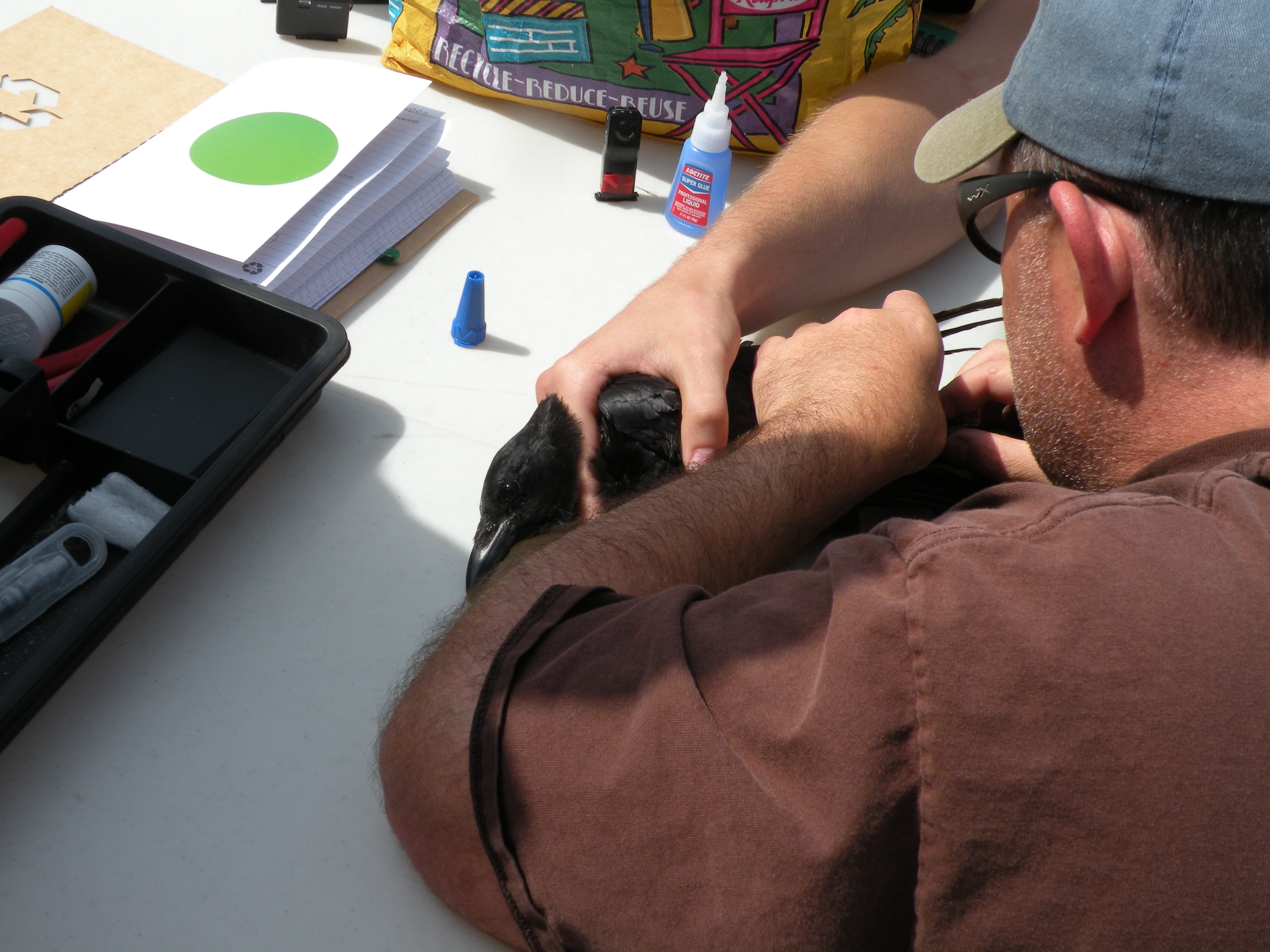

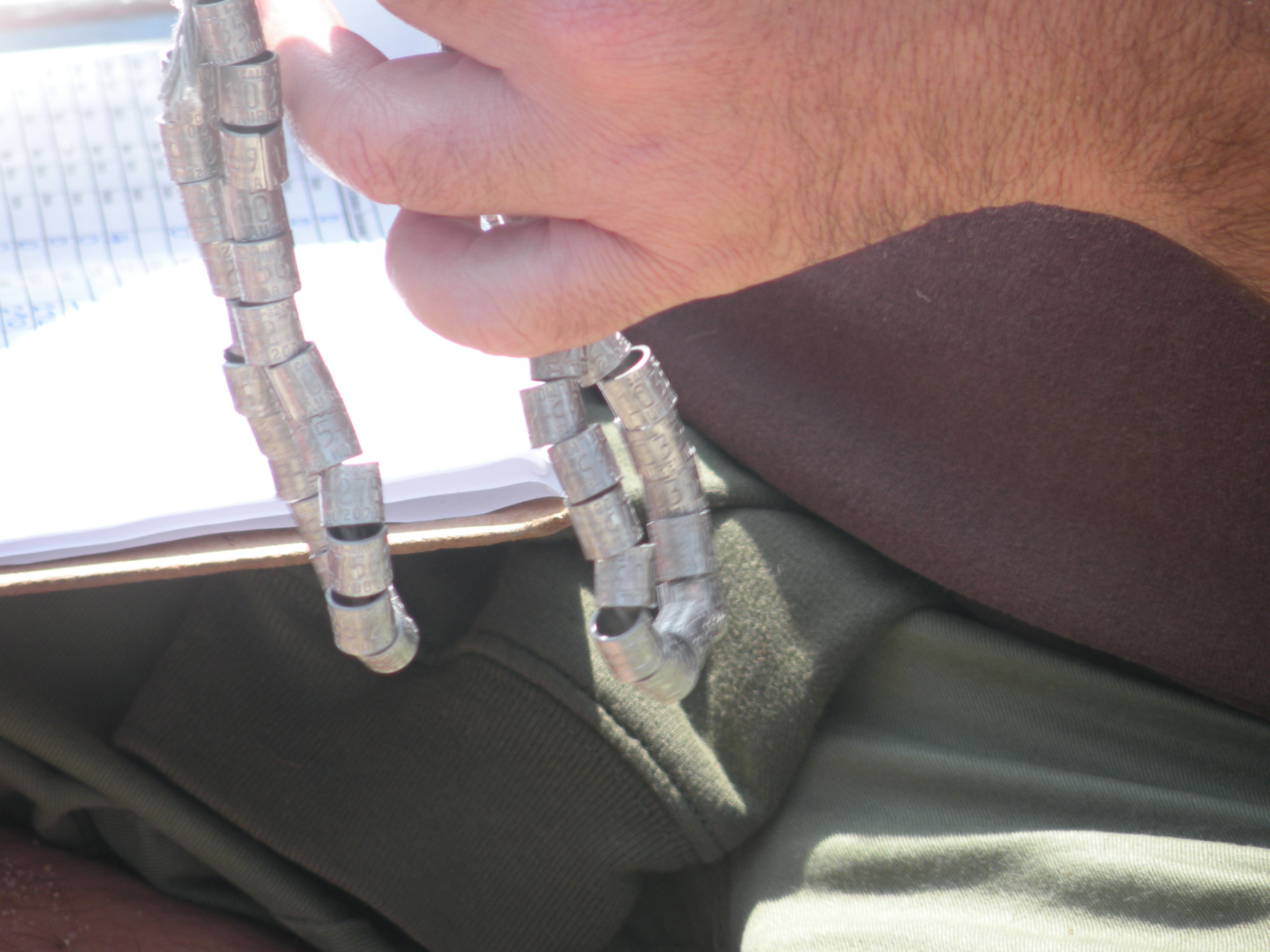
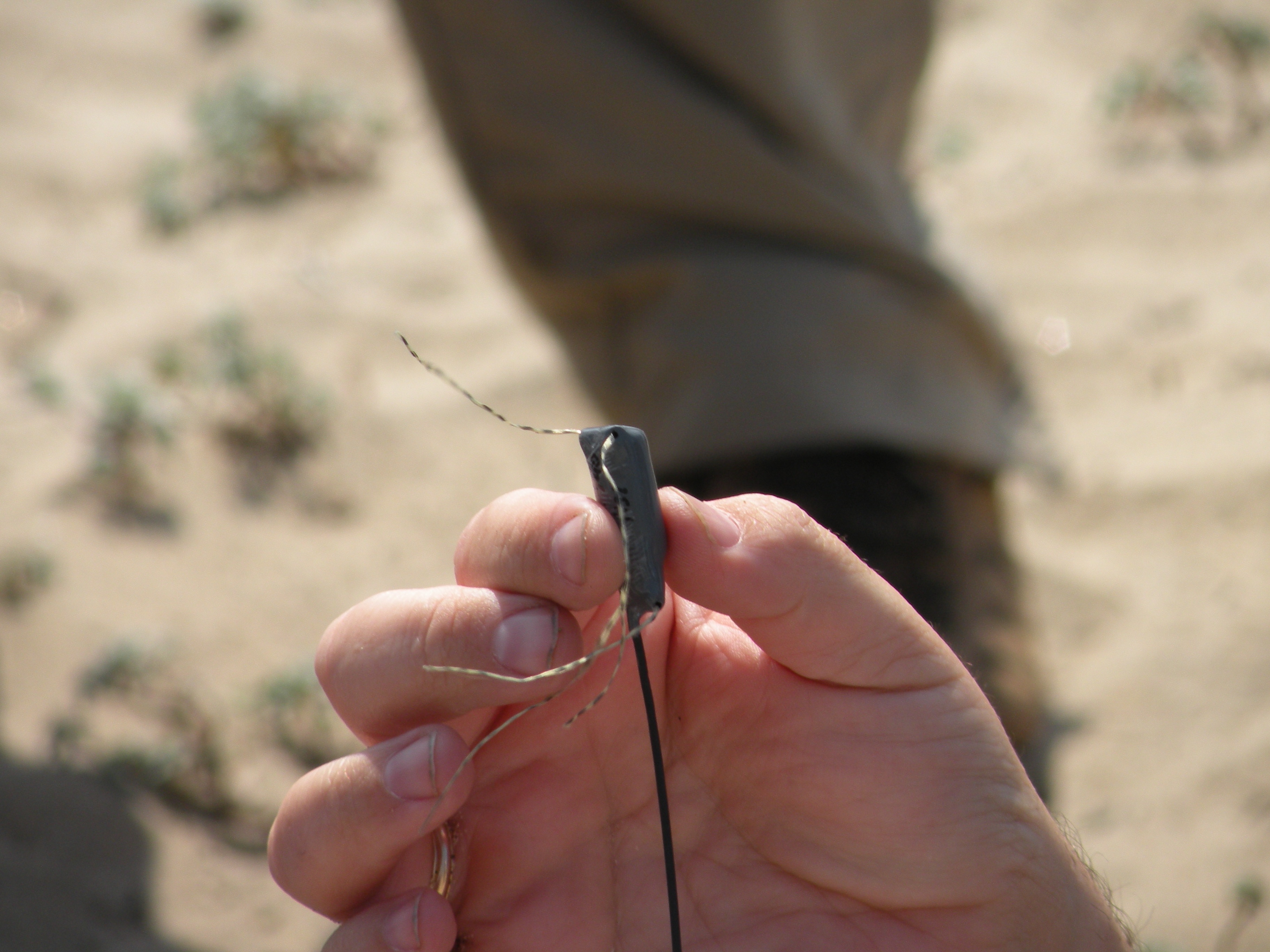
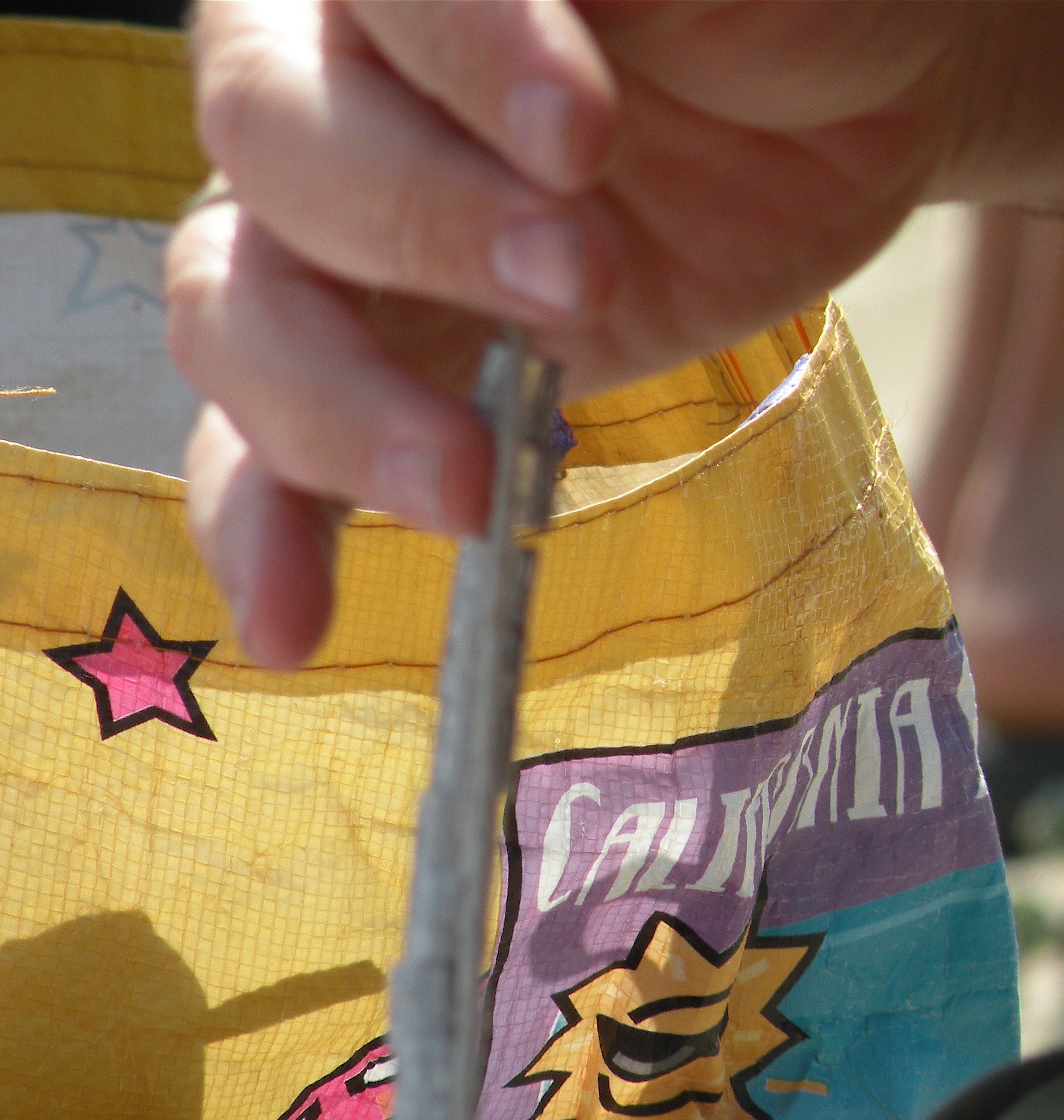
For the first time, artificial tern eggs equipped with a mild shocking device were placed throughout the colony to serve as an aversion technique to discourage crows from predating tern eggs.

Did it work?
Did the least terns have their first successul breeding season in many years or did the teamwork and intelligence of the crows win out again and end the breeding season with no chicks born? Find out soon in the tern’s story –
CROWS VS. TERNS PHOTO-RECAP PART II
Laurel Hoctor Jones, Education Chair
(All photos taken by me at the Venice Beach Least Tern Colony between April and September 2014)
SUMMER OF HERON LOVE PART II
For Part I of the Heron Rookery Photo-Recap, click here:
https://smbasblog.wordpress.com/2014/09/12/a-summer-of-heron-love-draws-to-a-close/
Photo-Recap Part II
The young Snowy Egrets, Great Egrets and Black Crowned Night Heron chicks grow rapidly and practice wing flapping from the nest-


Before trying it out over a cement landing-

Nests hold up to five chicks, so interaction is frequent-


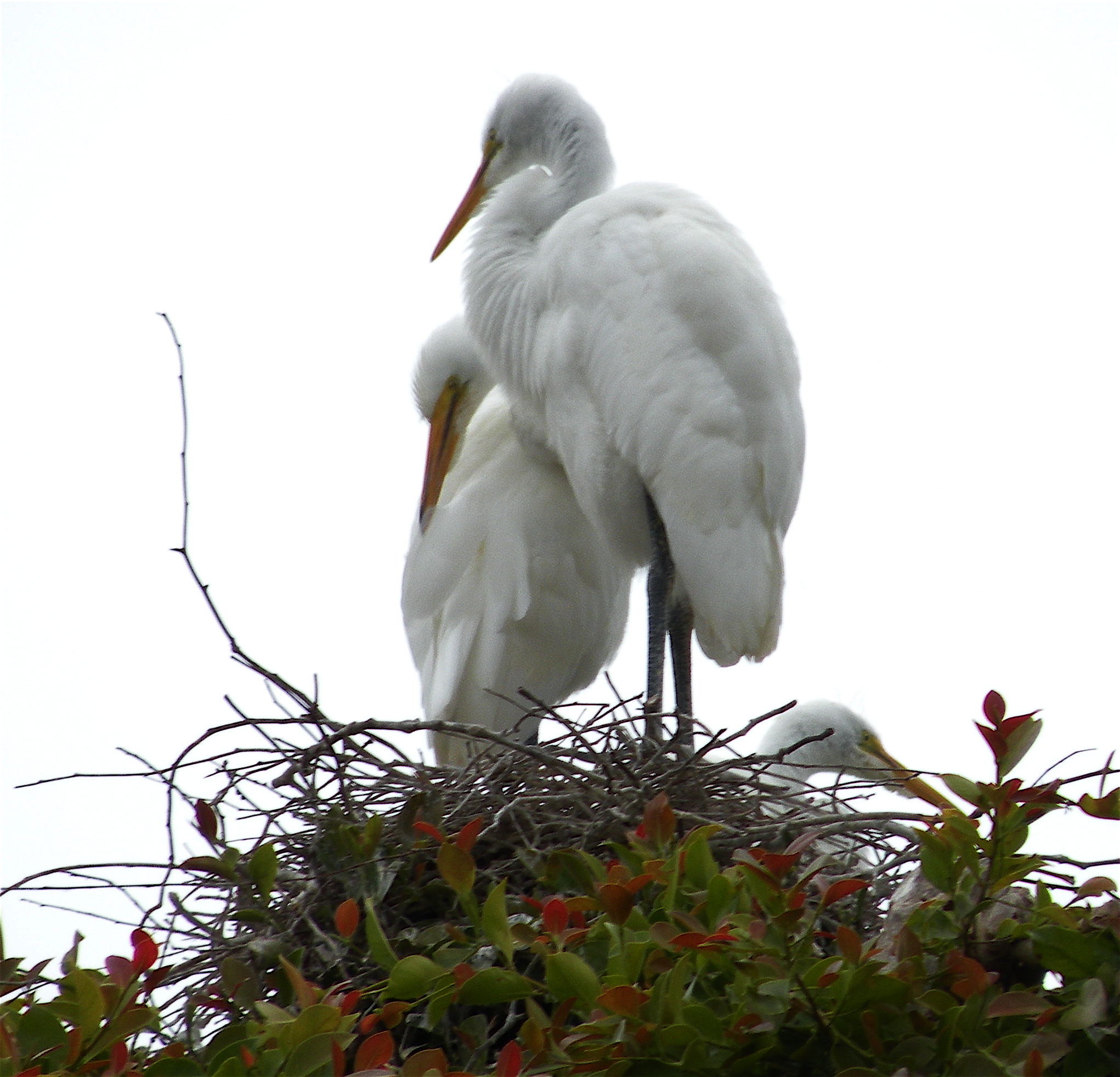
The chicks begin to develop adult plumage, but still retain downy feathers as they develop–

As they grow bigger and more confident with their wings–

They will fly across Pacific Coast Highway to Malibu Lagoon to forage for fish-

Other species of young birds at the lagoon also learn what to eat (and what not to)-
Eventually, most chicks will fly off to other feeding grounds since Malibu Lagoon will not support all the extra mouths. One favorite spot is the Marina del Rey channel-

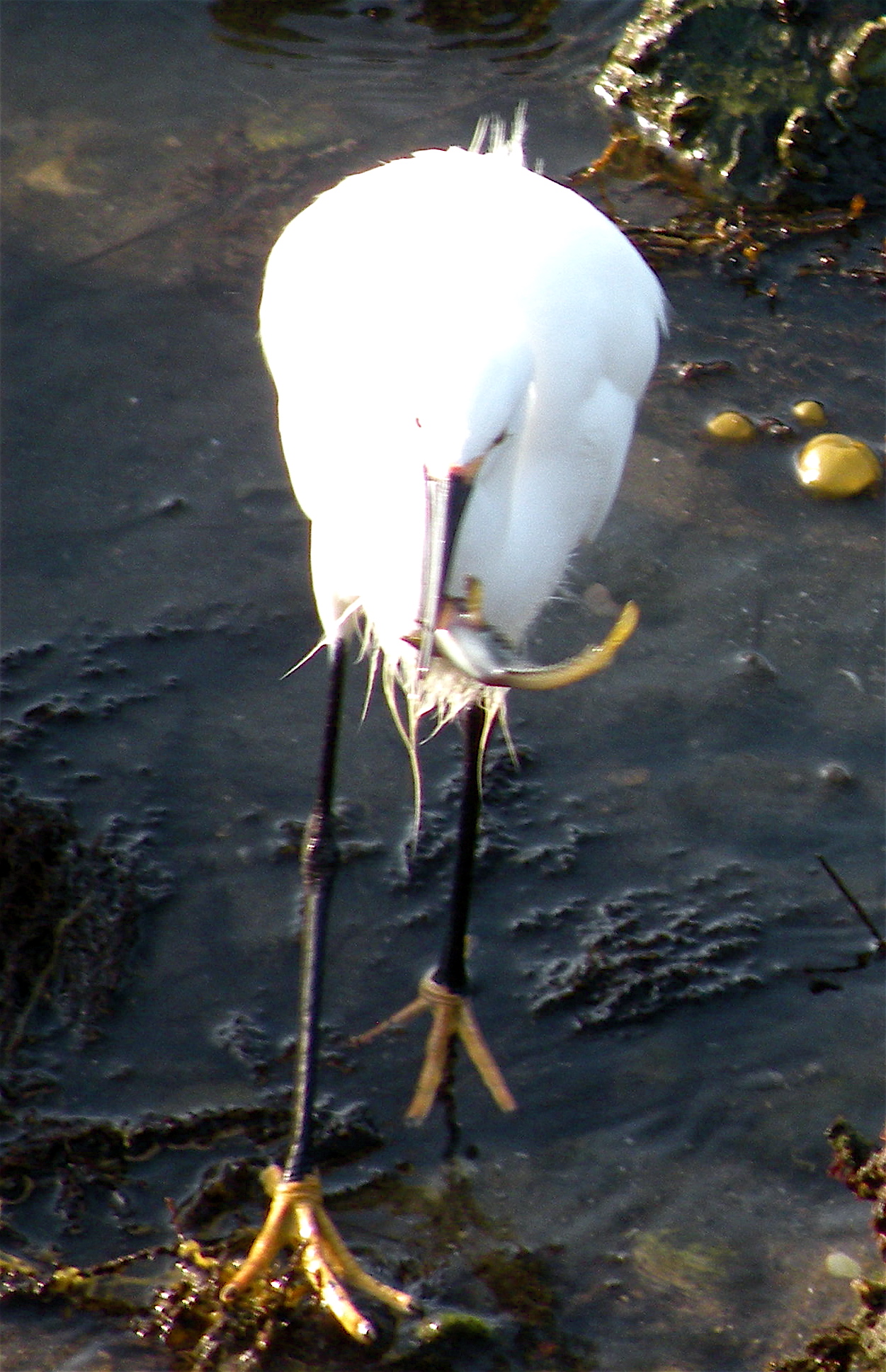
And as the chicks learn to hold their own in the world, the rookery season completes it’s nesting cycle. In April, it will all begin again at the Malibu Country Mart Heron and Cormorant Rookery. Most of the trees are adjacent to the Starbucks parking lot, so next spring, grab a latte and look up…


I took all of the photos between April 2014 and September 2014 at the Malibu Rookery (except for location as noted at Marina del Rey).
Laurel Hoctor Jones, Education Chair Read more…
A Summer of Heron Love Draws to a Close

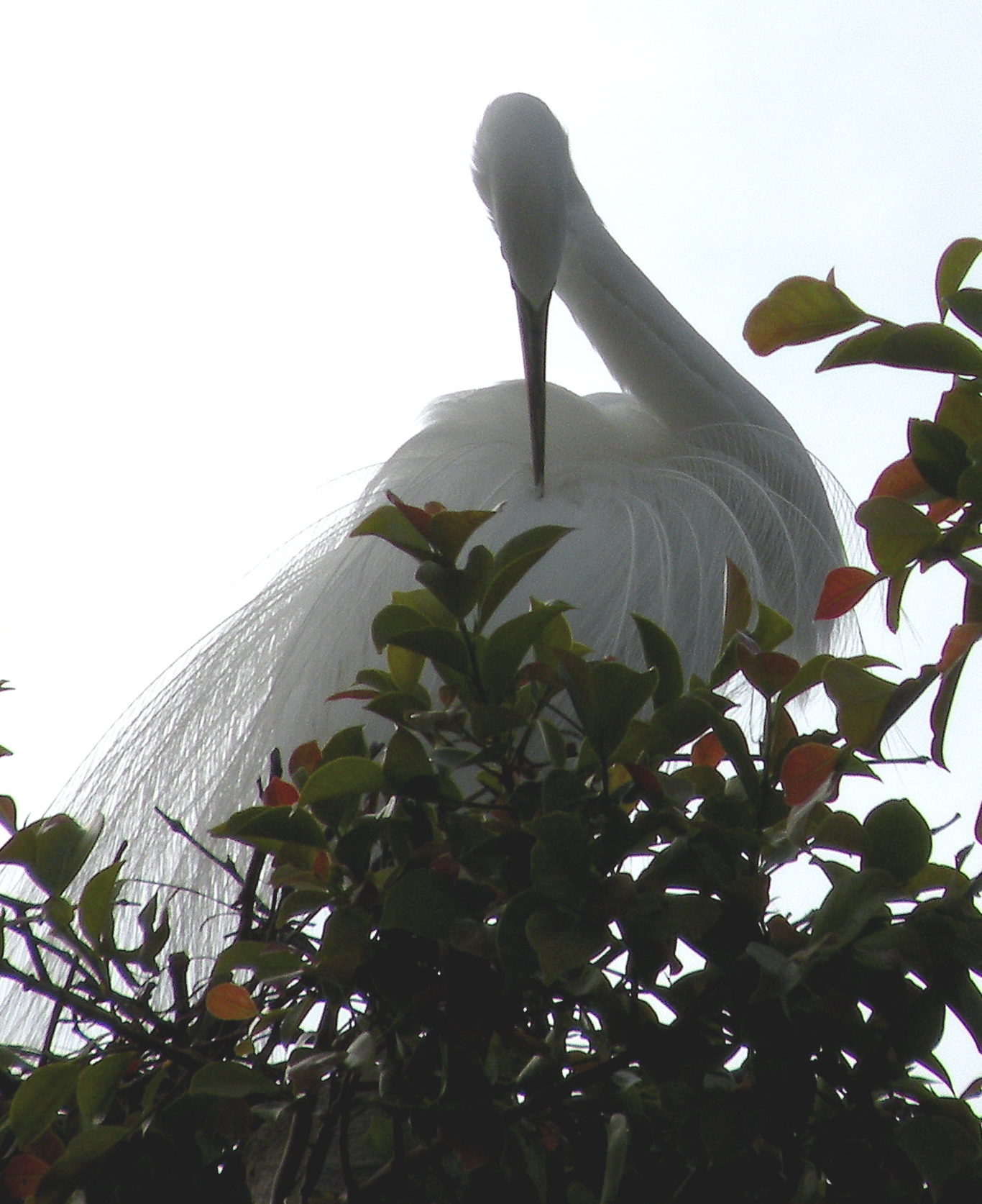 PHOTO RECAP – Part One
GRAB YOUR LATTE AND LOOK UP: The next time you pull into the parking lot of Starbuck’s across PCH from Malibu State Beach between April and September, cast your eyes to the adjacent trees. You are looking at a Heron and Cormorant Rookery that has been in this exact spot for at least 50 years. Herons here include Great Egrets, Snowy Egrets, Black Crowned Night Herons and Great Blue Herons.


Beginning around April, males arrive at the rookery to claim or build huge nests in the tree tops and flaunt the magnificent breeding plumage that once saw them to the brink of extinction for use in hats, (and incidentally led to the creation of the Audubon Society to protect them.)
The females arrive soon after, and courtship begins (and she does most of the work finishing the nest). Once mates are chosen, pair bonding follows.

Mating occurs in the nest.

And approximately three to four weeks later…

Across PCH at Malibu Lagoon, Heron parents forage food for their chicks, as Killdeer and other fledglings begin to appear.

Black Crown Night Heron chicks nest in trees next to the Egrets. The chicks are seriously noisy as they try out their wings.
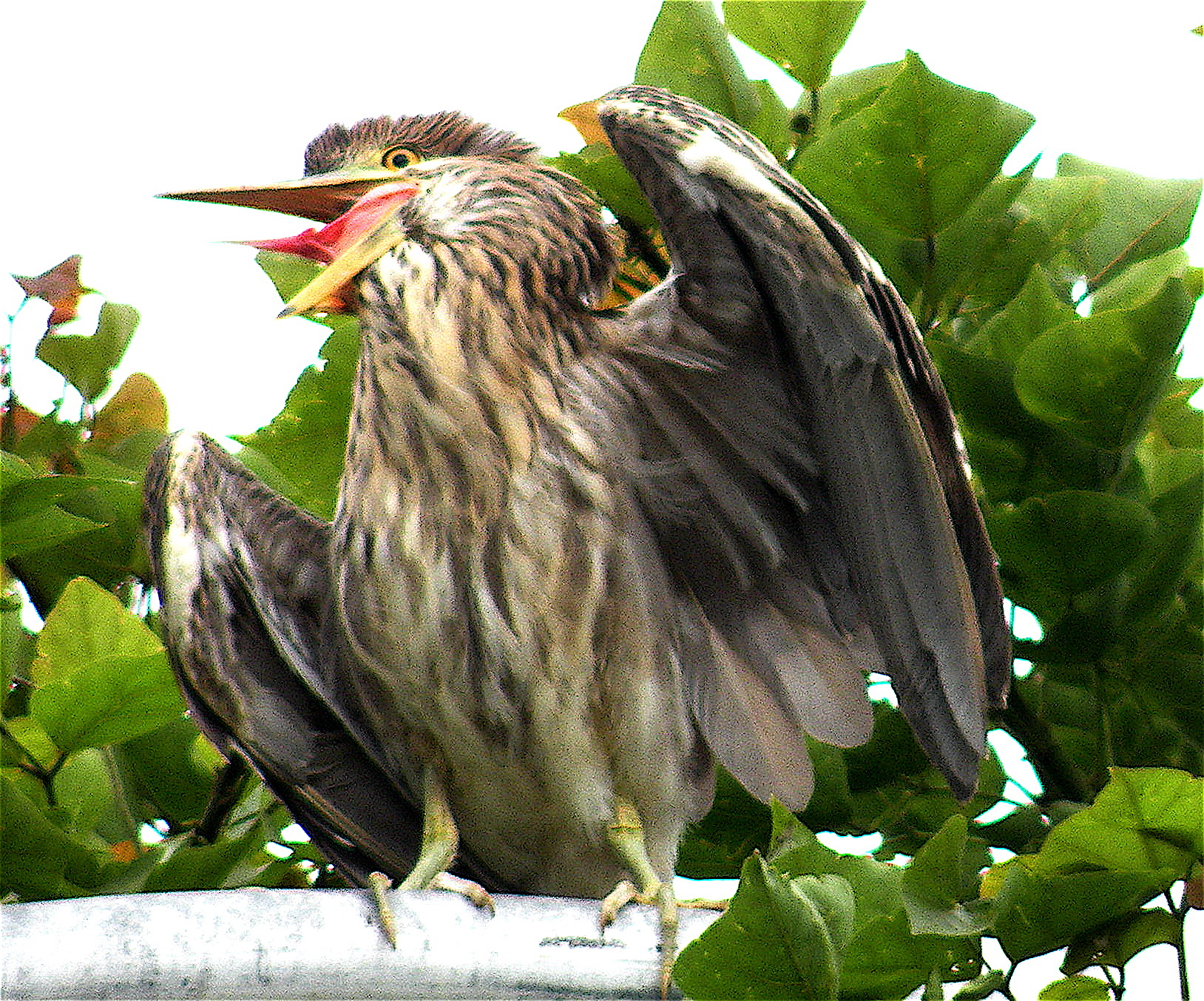
In the Photo Recap Part II the chicks learn to fly, forage and fly off into the world.
Laurel Hoctor Jones
Education Chair



 SANTA MONICA BAY AUDUBON SOCIETY BLOG