Free email delivery
Please sign up for email delivery in the subscription area to the right.
No salesman will call, at least not from us. Maybe from someone else.
Audubon Ballona Wetlands Education Program Update
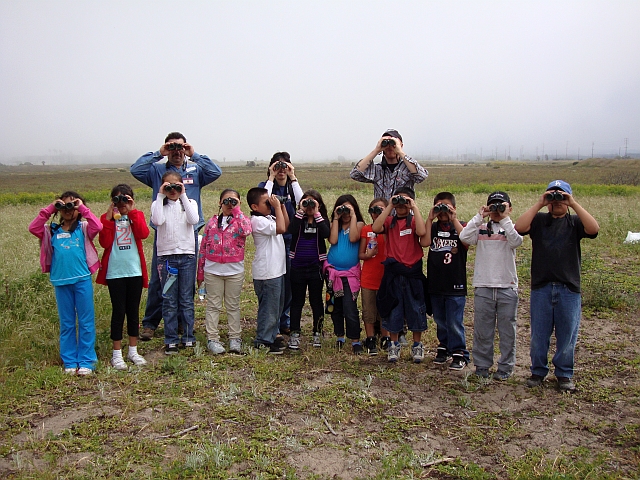
Here's lookin' at you, kids. (Leslie Davidson '10)
SMBAS continues our support of the Audubon Ballona Wetlands Education Program. We thank ALL the volunteers who gave their time last year to make the program a continuing success. An extra thank you to the docents who volunteered to be part of the team management system.
This next year SMBAS has increased our funding of the Abigail King Memorial Bus Scholarship to cover 10 buses. We also have funded the purchase of a digital projector for the pre-site visits.
Read more about this wonderful program in the following update from Cindy Hardin.
If you are interested in volunteering, please contact Cindy at 310-301-0050. Training begins in mid-September. [Lillian Johnson]
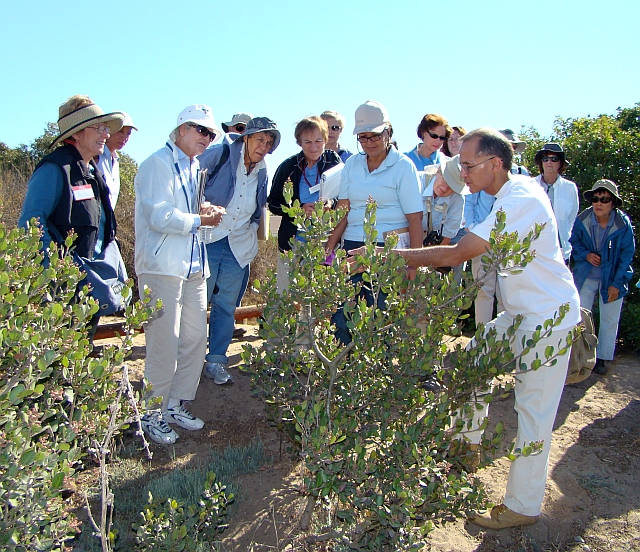
Guest instructor points out finer details of local plants to Docents (Leslie Davidson '08)
Audubon Ballona Wetlands Education Program Update
2010-2011
The Audubon Education Program at the Ballona Wetlands experienced profound changes in management, growth in student attendance, and number of visiting schools last year. Thanks to the efforts of many dedicated volunteers, the transition from one individual as coordinator to a team management system went smoothly.
Several committees now run the program. Four volunteers share Site Supervisor duties. A Speakers Committee makes a presentation to all schools before their visit. Several people take turns getting the tidal water samples for the microscope station. Our Correspondence Secretary handles all letters – including contribution thank-you notes – and tax forms. Our “Kinko’s Maven” takes care of all the teachers’ packets and observation forms for students. The Training Committee is planning docent training for the coming year. This year, docent training will focus more on actual tour approaches and strategies and less on the guest speakers’ technical knowledge. We plan to pair experienced docents with new volunteers in a one-on-one mentor program as a part of training.

Students and Docents (Leslie Davidson '11)
Previously Cindy Hardin handled all of these duties and received a small stipend for her efforts. The volunteers involved in the new committees decided that no pay would be provided for any of the duties preformed. The consensus was that the money would be better used to provide bus scholarships to underserved schools. This money was combined with donations from Santa Monica Bay Audubon Society and others to create the Abigail King Memorial Bus Scholarship Fund. We were able to provide eleven free busses to groups that otherwise would not have been able to visit the wetlands. The bus scholarship program enabled us to bring in some new schools from the Compton and Pico Rivera school districts that had never been on Ballona field trips before.
Another committee system innovation was a modernization and expansion of material for the pre-site/outreach visits. New items, such as an intact Bushtit nest, were added to our collection of teaching tools that are now displayed in Plexiglas boxes. The slideshow was digitized, enabling speakers to project the images via a PowerPoint presentation. The speakers committee had great ideas and put them into practice!
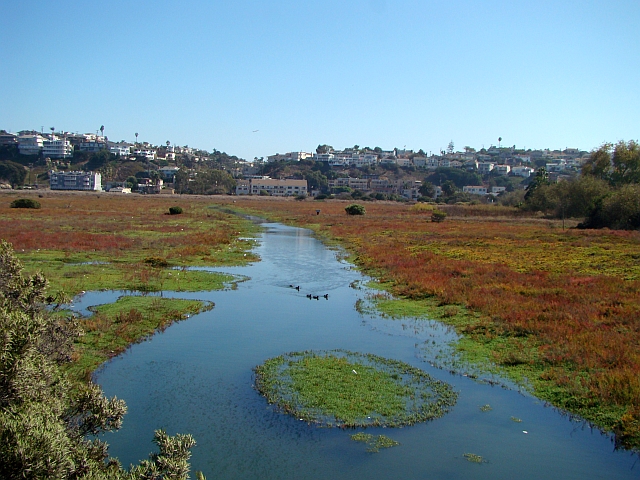
The main wetland channel looking south towards Culver Blvd. and Playa del Rey (Leslie Davidson '08)
We hosted over 2100 students from 30 different schools during the 2010-2011 school year. This was our highest number yet, and we look forward to more growth next year. One of our major goals is to extend the bus scholarship program to new schools. The energy and new ideas that have been brought to the program by all of the volunteers who have stepped up to help with management has kept the proceedings interesting and dynamic. We are excited to see what the next year brings as we continue to fine-tune the process.
WE are most thankful to Santa Monica Bay Audubon Society for their assistance and support of the Ballona Wetlands education Program. Any questions may be directed to Cindy Hardin at 310-301-0050.
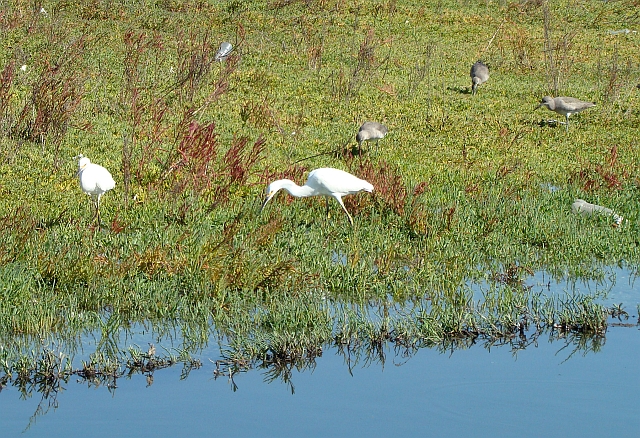
Snowy Egrets and Dowitchers in the salt marsh aren't bothered by people looking at them (Leslie Davidson '08)
Annual Planning Meeting: Summary of Minutes
On July 10, 2011, the full board of directors met at the home of Ellen Vahan for our annual planning meeting. In attendance were: Chuck Almdale, Lillian Johnson Almdale, Chuck Bragg, Jane Beseda, Adrian Douglas, Jean Garrett, Liz Galton, Chris Lord, Lu Plauzoles, Mary Prismon, Ellen Vahan (president).
The meeting was called to order at 10:21 am and adjourned at 2:22 pm, with a short break for lunch. Dessert was served after the meeting.
After Ellen welcomed the board, she read the mission statement of both NAS and SMBAS. “The National Audubon Society’s Mission is to conserve and restore natural ecosystems, focusing on birds and wildlife for the benefit of humanity and the earth’s biological diversity. As part of this, our chapter’s particular mission is to be a center for wildlife education, habitat protection, and conservation issues that involve birds.” There was no discussion.
Ellen welcomed Jane Beseda and Liz Galton to the board and expressed hope that Allan Kotin will rejoin the board at some future date as his schedule permits.
Budget 2011/2012 fiscal year – Lillian
Income: Most of our income comes from the annual appeal. Other income sources are our dues share from NAS (this is a fixed amount), the Beginning Bird Class, and other donations (usually in memory of someone or corporate matching).
Beginning Birding Class: It will offer her class in Feb, 2012.
Annual Appeal Letter: There was a discussion about the mailing of last years appeal in September with a copy of the full year calendar. While the total amount of donations was almost the same as last year, the number of donors was down. The board decided to send the appeal in November and include a calendar of events that runs from November 2011 to October 2012. Lillian and Ellen to handle.
Expenses: All expenses go to supporting the chapter goals to support education, protection and conservation issues.
Charities: Every year, the board votes on which charities we should support with donations. This year’s list includes: Student Conservation Association (SCA), Birders’ Exchange, Friends of Big Morongo, American Bird Conservancy (ABC), Endangered Habitats League, California State Parks Foundation, and Ballona Wetlands Audubon Education Program. We have doubled our funding to SCA. We have allocated enough money for the Ballona Education Program to provide 10 bus scholarships to underserved schools in the Los Angeles area and to purchase a digital projector for pre-site school visits. We increase our funding to ABC from subscriber to donor.
Link to August, 2010 blog on these groups, which includes links to the groups themselves.
Other Donations: Last December we donated funds to Wind Wolves Nature Preserve following a wonderful field trip. We sponsored two pages of the Los Angeles Breeding Bird Atlas (Royal Tern and Virginia Rail with a donation to Los Angeles Audubon Society.
We held the number of UCLA scholarships for PhD research at three. Lillian will follow up.
Field Trips – Chuck A.
Led the discussion about what field trips the chapter should offer and who the various leaders will be. (The entire calendar will be sent with the year-end appeal and posted on the website: http://smbas.atspace.com/smbascal.htm
Ellen reminded the board that Coastal Cleanup is Saturday, Sept, 17th 9am to noon, and that SMBAS will be heading up the efforts at Malibu Lagoon. She also noted that again this year recyclables will not be segregated.
Lillian brought up the lack of members attending our annual picnic. Discussion to be held at a future board meeting about location and format.
Conservation – Lu and Mary
Lu: Snowy Plovers are back on So Cal Beaches. No extra money is needed this year as SMBAS helped fund the fencing last year on Santa Monica beaches. Chuck Almdale mentioned that again this year the fence at Malibu Lagoon went up about 1 month before the birds left. He has talked to Stacey Vigallon about putting up signs mounted on weighted tires that could be moved off the beach during high tides and /or storm surges. This could be done earlier in the year when the plovers are around. Stacey thought this was a good idea, and said she would present it to State Parks. Chuck A asked to be informed if anything occurred.
Mary: More wind turbines are scheduled to be installed around Kelso Valley. Latest plans include Huffman Pass at the south end of Kelso Valley.
Jane: The National Park Service sponsored the Santa Monica Mountains Interpretive Plan Meeting. The purpose of the meeting was to involve partners and stakeholders in developing a long-range interpretive plan for the area (including other urban parks in LA). It was the first of a series of meetings that will result in a document called the Long Range Interpretive Plan, which covers 5-10 years into the future. The first draft will be circulated in about a month, and there is a follow-up meeting planned for Aug 30 that Jane will attend. The meeting was attended by NPS, Forest Service, State Parks, NGOs such as SMBAS and San Fernando Valley Audubon, and other interested stakeholders. A sample of the plan can be seen at: http://www.nps.gov/hfc/products/ip-lrip.htm
Membership: Chuck Bragg reported current membership is around 770.
Newsletter, Website and Blog – Chuck A and Chuck B
Newsletter: CB he is currently sending out 100 2 page imprints every 2 months, 5 times per year, this has cut our publication costs significantly. A pdf file of the newsletter is available at: http://smbas.atspace.com/smboldim.htm
The full calendar: http://smbas.atspace.com/smbascal.htm
Blog: CA will link field trip announcements to prior year field trip reports so interested parties can get a better idea about the field trip
Articles: CB & CA both request more articles posted to the blog on conservation and other “interesting” articles on “any” topic (ie birds, bird names, conservation in general, gardens for birds etc.
Blog Subscribers: CA reported 105-110. Largest viewing day was April 1. Congratulations were given to Chuck A for the good job of managing and writing the blog. Member feed back has been positive. https://smbasblog.wordpress.com/
Facebook: Jane & Lu In an attempt to reach a younger and different audience it has been suggested we try a Facebook page. Jane, Lu and Chuck A will work on a “test” page and then let the board have a look.
(Update: It is now up and running: This is a public page, you need not join Facebook to access the pages.)
http://www.facebook.com/pages/Santa-Monica-Bay-Audubon-Society/108132545950130?sk=wall
Programs – Adrian
Reported that all but two programs for the year are scheduled (to be included on the mailed calendar). Speakers are: Guy Commeau – twice, Kimball Garrett, John Montgomerie, and Lance Benner.
Chuck A will post the announcement on the Blog, Facebook, and LA County Birds.
Meeting Place: Lu has secured the Ken Edwards Center for Oct/Nov/Dec. Feb and March 2012 applications are due in Sept. Room rate may be increased.
Meetings: Will continue to be the 1st Tuesday of the month at KEC with dinner for the speaker before.
Hospitality – Chris Lord
Reported all is well. Lillian noted an article in the LA Times that the “corn based” cups we have been using are NOT recyclable. Next time we will just order regular cups.
Future Board Meeting dates: 2011 – 9/13, 11/22 2012 – 1/17, 3/20, 5/15
Next Planning Meeting: Summer 2012
[Lillian Johnson]
Malibu Lagoon Trip Report: 24 July, 2011

Brown-headed Cowbird (the bird formerly known as Buffalo Bird)(C.Bragg 2011)
The lagoon outlet is closed and the water was quite high. It looks like it might overflow the beach any day, but I doubt that it will. Evaporation from heat is usually quite significant in the summer, and water always percolates through the narrow beach into the ocean. So it may continue at a high level for several months, perhaps until our first storm.

The Usual Suspects rounded up yet again (C.Almdale 7/11)
Our local breeding birds were out in force, especially the various Swallows and the Black Phoebes. At one point there were 18 Barn Swallows resting on the reed stalks for a few minutes before they launched themselves again into the air. Brown Pelican nesting season is apparently over as more than 400 rested on the narrow sand island, with more arriving all morning long. Among other returning post-breeders were seven Ruddy Turnstones in beautiful plumage, accompanied by a single Black Turnstone, as well as four Black-bellied Plovers, still with black bellies. Egrets and herons were everywhere, 32 in total. A beautiful pair of Ruddy Ducks were afloat, the male all chestnut and black with a baby-blue bill.  The Elegant Terns were still…well, elegant is the best description. A small flock of Least Terns sat with the Snowy Plovers on the beach berm, uneasily, as the beach was crowded with people who rarely notice these diminutive and cryptic endangered and threatened (respectively) species.

Snowy Egret (C.Bragg 2011)
A family of Hooded Orioles – two adults and four young – worked over the Anise heads and flowers at the east edge of Maliby Colony. Later on I heard the song and finally saw a Wrentit not far from this spot. We’ve previously recorded Wrentit 11 times, but I suspect most of them were up the creek, the other side of the highway bridge, when that area was a bit safer to walk in. [Chuck Almdale]
Our next two field trips are: Malibu Lagoon 28 August; Lower L.A. River 10 September.
As a reminder to those coming to our 10 a.m. Parent’s & Kids birdwalk, it meets at the beach trail footbridge closest to the parking lot.

Killdeer - a lagoon resident (C.Bragg 2011)
Links: Unusual birds at Malibu Lagoon.
Aerial photo of Malibu Lagoon from 9/23/02.
Prior checklists: Jan-June’11, July-Dec ’10, Jan-June ’10, Jul-Dec ‘09, and Jan-June ‘09.
| Malibu Census 2011 |
24-Jul |
| Temperature |
65-72 |
| Tide Height |
+2.61 |
| Low/High &Time |
L:0947 |
| Mallard |
54 |
| Ruddy Duck |
2 |
| Pied-billed Grebe |
4 |
| Dble-crstd Cormorant |
31 |
| Pelagic Cormorant |
1 |
| Brown Pelican |
407 |
| Great Blue Heron |
6 |
| Great Egret |
4 |
| Snowy Egret |
11 |
| Blk-crwnd N-Heron |
11 |
| American Coot |
20 |
| Blk-bellied Plover |
4 |
| Snowy Plover |
13 |
| Semipalmated Plover |
2 |
| Killdeer |
2 |
| Ruddy Turnstone |
7 |
| Black Turnstone |
1 |
| Western Sandpiper |
2 |
| Least Sandpiper |
1 |
| Heermann’s Gull |
41 |
| Ring-billed Gull |
1 |
| Western Gull |
107 |
| Least Tern |
13 |
| Caspian Tern |
3 |
| Common Tern |
1 |
| Elegant Tern |
8 |
| Black Skimmer |
1 |
| Rock Pigeon |
6 |
| Mourning Dove |
3 |
| Anna’s Hummingbird |
3 |
| Allen’s Hummingbird |
3 |
| Black Phoebe |
8 |
| Western Kingbird |
1 |
| American Crow |
4 |
| Rough-wingd Swallow |
20 |
| Barn Swallow |
18 |
| Cliff Swallow |
25 |
| Bushtit |
8 |
| Bewick’s Wren |
1 |
| Wrentit |
1 |
| Northern Mockingbird |
2 |
| European Starling |
38 |
| Common Yellowthroat |
1 |
| California Towhee |
3 |
| Song Sparrow |
1 |
| Red-winged Blackbird |
17 |
| Great-tailed Grackle |
3 |
| Brwn-headed Cowbird |
6 |
| Hooded Oriole |
6 |
| House Finch |
4 |
| Totals by Type |
July |
| Waterfowl |
56 |
| Water Birds-Other |
463 |
| Herons, Egrets |
32 |
| Quail & Raptors |
0 |
| Shorebirds |
32 |
| Gulls & Terns |
175 |
| Doves |
9 |
| Other Non-Pass. |
6 |
| Passerines |
167 |
| Totals Birds |
940 |
| Total Species |
July |
| Waterfowl |
2 |
| Water Birds-Other |
5 |
| Herons, Egrets |
4 |
| Quail & Raptors |
0 |
| Shorebirds |
8 |
| Gulls & Terns |
8 |
| Doves |
2 |
| Other Non-Pass. |
2 |
| Passerines |
19 |
| Totals Species |
50 |
The lagoon outlet to the ocean was a tiny

Snubbed by a Brown Towhee (C.Almdale 6/11)
rivulet, so for the first time in many months we walked the beach to Adamson House. We didn’t find much there, but we saw what the winter had done to the beach where most of the surfers and sunbathers go – about 1/2 to 2/3rds of the sand was gone. But it was a great surfing day; the waves were jam packed with surfers.
As typical for June, both numbers and species were at the annual low point. Many of the remaining species are local breeders – Black Phoebes, Cliff & Barn Swallows, and Mallards (ducklings in tow) were the most visible – joined by breeders resting from

Western (Roof) Gull in eponymous habitat (C.Almdale 6/11)
foraging (Western Gulls and the few terns), and gulls too young to breed. Surprise of the day was two alternate (breeding) plumage Western Sandpipers who flew in and began to forage. They ought to be much farther north, I think.
It’s always fun to watch the families of Barn Swallows line up on reed-stems. Often three or four pile onto the same reed, bending it over until it seems they should slide off, like pearls falling from a broken necklace.
Outlet closure always means reduced

"What happened to my pie?," cries Jean. (C.Almdale 6/11)
water circulation in the lagoon and – especially – the channels, quickly followed by the appearance of clumpy masses of ugly gray algae. This stuff eventually sucks all the oxygen out of the water, making it very hard for any fish and invertebrates that are struggling to survive. It’ll be a tough summer for them.
After we got the umbrellas and chairs arranged around the food canopy,
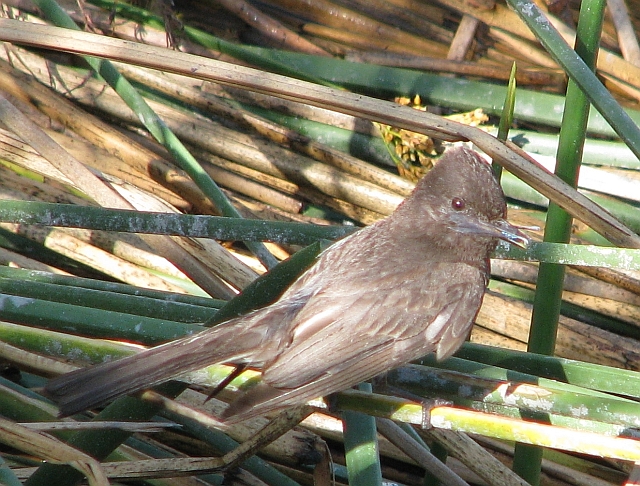
Black Phoebe came to picnic, but wouldn't share its Blue Dragonfly with anyone (C.Almdale 6/11)
we plowed into our picnic. Loads of delicious salads, fried chicken, several desserts (including Paula’s rice pudding, a personal favorite), bottled drinks and some homemade lemonade. We exchanged some books, mostly mysteries, and everyone loaded up on John’s blood oranges and gigantic grapefruit before heading home. [Chuck Almdale]
Our Summer field trips are both at Malibu Lagoon: 24 July, 28 August.
As a reminder to those who plan to come to our 10 a.m. Parent’s & Kids birdwalk, they meet at the beach trail footbridge closest to the parking lot.

Who says you can't get blood from an orange? (C.Almdale 6/11)
Links: Unusual birds at Malibu Lagoon.
Aerial photo of Malibu Lagoon from 9/23/02.
Prior checklists: July-Dec ’10, Jan-June ’10, Jul-Dec ‘09, and Jan-June ‘09.
| Malibu Census 2011 |
23-Jan |
27-Feb |
27-Mar |
24-Apr |
22-May |
26-Jun |
| Temperature |
68-75 |
45-60 |
54-61 |
59-68 |
64-68 |
68-72 |
| Tide Height |
+4.94 |
-0.41 |
+0.05 |
+0.19 |
-0.13 |
+3.0 |
| Low/High &Time |
H:1117 |
L:1243 |
L:1216 |
L:1014 |
L:0816 |
H:0754 |
| Canada Goose |
6 |
|||||
| Gadwall |
15 |
22 |
32 |
24 |
3 |
5 |
| American Wigeon |
4 |
|||||
| Mallard |
24 |
24 |
30 |
22 |
48 |
41 |
| Northern Shoveler |
4 |
2 |
||||
| Green-winged Teal |
12 |
17 |
10 |
2 |
||
| Surf Scoter |
8 |
8 |
||||
| Bufflehead |
5 |
2 |
||||
| Red-brstd Merganser |
6 |
8 |
4 |
|||
| Ruddy Duck |
40 |
33 |
15 |
3 |
||
| Pacific Loon |
1 |
1 |
15 |
20 |
||
| Common Loon |
1 |
1 |
||||
| Pied-billed Grebe |
3 |
2 |
1 |
3 |
||
| Horned Grebe |
1 |
|||||
| Eared Grebe |
3 |
|||||
| Western Grebe |
6 |
12 |
20 |
2 |
||
| Brandt’s Cormorant |
1 |
3 |
||||
| Dble-crstd Cormorant |
57 |
37 |
90 |
19 |
46 |
54 |
| Pelagic Cormorant |
4 |
3 |
1 |
2 |
||
| Brown Pelican |
42 |
23 |
89 |
740 |
81 |
28 |
| Great Blue Heron |
2 |
1 |
1 |
4 |
1 |
4 |
| Great Egret |
1 |
1 |
1 |
5 |
||
| Snowy Egret |
8 |
9 |
5 |
11 |
3 |
8 |
| Green Heron |
1 |
|||||
| Blk-crwnd N-Heron |
1 |
1 |
2 |
1 |
||
| Turkey Vulture |
3 |
|||||
| Osprey |
1 |
1 |
1 |
1 |
1 |
|
| Cooper’s Hawk |
1 |
|||||
| Red-shouldered Hawk |
1 |
|||||
| Red-tailed Hawk |
1 |
2 |
2 |
2 |
||
| Peregrine Falcon |
1 |
|||||
| Virginia Rail |
1 |
1 |
1 |
1 |
||
| Sora |
4 |
3 |
4 |
|||
| American Coot |
145 |
175 |
153 |
32 |
25 |
12 |
| Blk-bellied Plover |
1 |
65 |
3 |
|||
| Snowy Plover |
60 |
59 |
42 |
|||
| Semipalmated Plover |
25 |
|||||
| Killdeer |
3 |
4 |
2 |
8 |
2 |
5 |
| Black Oystercatcher |
1 |
|||||
| American Avocet |
4 |
|||||
| Spotted Sandpiper |
2 |
2 |
1 |
|||
| Willet |
1 |
7 |
3 |
|||
| Whimbrel |
1 |
5 |
1 |
3 |
||
| Ruddy Turnstone |
5 |
|||||
| Sanderling |
135 |
|||||
| Western Sandpiper |
2 |
12 |
2 |
|||
| Least Sandpiper |
10 |
18 |
20 |
25 |
||
| Short-billd Dowitcher |
1 |
|||||
| Boneparte’s Gull |
13 |
4 |
2 |
1 |
||
| Heermann’s Gull |
62 |
3 |
15 |
|||
| Mew Gull |
1 |
|||||
| Ring-billed Gull |
120 |
250 |
50 |
52 |
16 |
|
| Western Gull |
100 |
120 |
100 |
160 |
10 |
68 |
| California Gull |
2500 |
1050 |
1100 |
450 |
8 |
1 |
| Herring Gull |
1 |
|||||
| Glaucous-wingd Gull |
2 |
3 |
2 |
|||
| Caspian Tern |
5 |
61 |
4 |
10 |
||
| Forster’s Tern |
1 |
1 |
||||
| Royal Tern |
3 |
1 |
||||
| Elegant Tern |
4 |
12 |
12 |
|||
| Black Skimmer |
3 |
3 |
1 |
|||
| Rock Pigeon |
5 |
4 |
2 |
4 |
8 |
4 |
| Eur. Collared-Dove |
1 |
|||||
| Mourning Dove |
2 |
2 |
4 |
1 |
5 |
|
| Anna’s Hummingbird |
3 |
2 |
2 |
2 |
1 |
1 |
| Rufous Hummingbird |
1 |
|||||
| Allen’s Hummingbird |
6 |
3 |
4 |
2 |
4 |
1 |
| Belted Kingfisher |
1 |
1 |
1 |
|||
| Black Phoebe |
4 |
5 |
12 |
8 |
4 |
10 |
| Say’s Phoebe |
1 |
1 |
||||
| Cassin’s Kingbird |
1 |
|||||
| Western Kingbird |
2 |
|||||
| Western Scrub-Jay |
1 |
|||||
| American Crow |
6 |
4 |
6 |
5 |
3 |
4 |
| Rough-wingd Swallow |
2 |
16 |
2 |
1 |
||
| Tree Swallow |
8 |
1 |
||||
| Violet-green Swallow |
1 |
|||||
| Barn Swallow |
1 |
3 |
10 |
8 |
25 |
|
| Cliff Swallow |
1 |
31 |
15 |
|||
| Oak Titmouse |
1 |
|||||
| Bushtit |
9 |
6 |
4 |
8 |
||
| Bewick’s Wren |
2 |
1 |
2 |
|||
| House Wren |
1 |
|||||
| Marsh Wren |
1 |
|||||
| Northern Mockingbird |
1 |
2 |
1 |
2 |
2 |
3 |
| California Thrasher |
2 |
|||||
| European Starling |
35 |
40 |
21 |
|||
| Ornge-crwnd Warbler |
1 |
|||||
| Yellow-rumpd Warbler |
6 |
2 |
8 |
4 |
||
| Common Yellowthroat |
4 |
2 |
3 |
6 |
2 |
|
| California Towhee |
1 |
1 |
1 |
4 |
||
| Savannah Sparrow |
5 |
|||||
| Song Sparrow |
8 |
8 |
12 |
10 |
4 |
3 |
| White-crwnd Sparrow |
4 |
3 |
2 |
|||
| Red-winged Blackbird |
1 |
4 |
6 |
1 |
2 |
|
| Great-tailed Grackle |
1 |
2 |
16 |
3 |
||
| Brwn-headed Cowbird |
3 |
3 |
1 |
|||
| Hooded Oriole |
1 |
|||||
| House Finch |
5 |
3 |
20 |
10 |
8 |
14 |
| Lesser Goldfinch |
4 |
4 |
1 |
4 |
4 |
|
| American Goldfinch |
8 |
|||||
| House Sparrow |
2 |
|||||
| Totals by Type |
Jan |
Feb |
Mar |
Apr |
May |
Jun |
| Waterfowl |
106 |
126 |
99 |
51 |
51 |
46 |
| Water Birds-Other |
267 |
257 |
376 |
820 |
152 |
97 |
| Herons, Egrets |
11 |
12 |
7 |
16 |
6 |
19 |
| Quail & Raptors |
2 |
0 |
6 |
3 |
3 |
4 |
| Shorebirds |
82 |
301 |
71 |
74 |
5 |
7 |
| Gulls & Terns |
2785 |
1440 |
1270 |
743 |
51 |
96 |
| Doves |
7 |
4 |
4 |
9 |
9 |
9 |
| Other Non-Pass. |
10 |
6 |
8 |
4 |
5 |
2 |
| Passerines |
70 |
81 |
94 |
83 |
131 |
122 |
| Totals Birds |
3340 |
2227 |
1935 |
1803 |
413 |
402 |
| Total Species |
Jan |
Feb |
Mar |
Apr |
May |
June |
| Waterfowl |
7 |
10 |
6 |
4 |
2 |
2 |
| Water Birds-Other |
11 |
9 |
11 |
9 |
3 |
4 |
| Herons, Egrets |
3 |
4 |
3 |
3 |
3 |
5 |
| Quail & Raptors |
2 |
0 |
3 |
2 |
3 |
3 |
| Shorebirds |
8 |
10 |
7 |
6 |
2 |
2 |
| Gulls & Terns |
6 |
7 |
9 |
9 |
6 |
6 |
| Doves |
2 |
1 |
2 |
3 |
2 |
2 |
| Other Non-Pass. |
3 |
3 |
4 |
2 |
2 |
2 |
| Passerines |
17 |
15 |
18 |
17 |
16 |
19 |
| Totals Species – 102 |
59 |
59 |
63 |
55 |
39 |
45 |
Mt. Piños Update & CalFlora
Occasionally there is an error in a blog or we discover additional information after the blog is emailed to you. We usually don’t send you another email with the correction (you probably already have an inbox stuffed with less-than-critically-important email), but just correct the original blog. Unless you actually check the blogsite, you won’t know. Frankly, most of the time, it’s not terrifically important.
I made a minor correction to our Mt. Piños field trip blog concerning the Cassin’s Finch count. (Big deal.) But in researching our first picture of the unspecified Ceanothus, I ran across an interesting website which I want to mention to all the flower lovers out there.
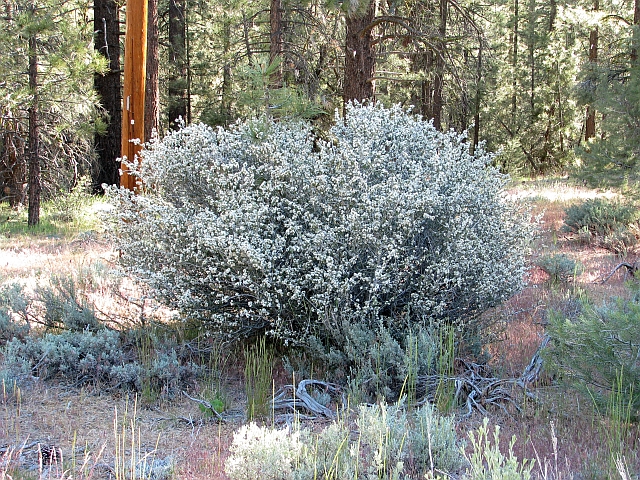
Mountain Whitethorn (L.Johnson 6/11)
It’s called CalFlora. Here’s their write-up of the Mountain Whitethorn, or Snow Bush, which is what we determined this beautifully flowering shrub to be. This website is packed with information, pictures, maps, specific locations of plants. When I notified the CalFlora sitemaster that I was mentioning their site and putting a link to it on our site, they sent me a link to one of their fascinating options called What Grows Here. Follow this link to discover What Grows Here for Mt. Piños. This site has information, pictures and site locations for some 527 plants that are recorded from the Mt. Piños vicinity.

Mountain Whitethorn (Snowbush), Ceanothus cordulatus in bloom near "the triangle" ~5500 ft. (L.Johnson 6/11)
I have no idea exactly how many sites they have in their data base, but I suspect it’s a lot. If you are interested in plants, where they’re found and what’s growing in a particular area, I highly recommend this website. [Chuck Almdale]



 SANTA MONICA BAY AUDUBON SOCIETY BLOG