Free email delivery
Please sign up for email delivery in the subscription area to the right.
No salesman will call, at least not from us. Maybe from someone else.
Backyard Birds
So…. I have been going about this backwards, but I have been enjoying my backyard birds for ages. My experiences would be enhanced, so I’ve been told, if I actually kept records… and maybe I will – next year – it is too late this year to start – that’s my excuse. So a New Year’s Resolution…. I have been trying to go the “natural” way. I have added water – two baths and a fountain – and have been trying to go more “native” with the plants in hope of enticing native birds and have not put out feeders.
I have noticed over the years that some birds just are not here any more. There used to be some of those cute doves with the dots on their neck on the front lawn. Long gone and I don’t know when. There used to be shrikes on the wire – not for years. There are, however, new guys on the block. Several years ago a Pacific Slope Flycatcher chose my front porch light as a nesting site. Who knows why, but I did take the lightbulb out so as to not inadvertently roast them. The little guys built their nest and laid an egg and one day all three of them were gone. I must admit that there was a little training in this exercise. I was trained to put those little bugs things (meal worms – easier than catching flies) in a feeder and many days between 11 + 1 a soft “pa-weet” would signal that it was time for lunch. That year was the only one that they nested in public, but I just heard the “pa-weet” so they are nearby.
This year it has been the usual California Towhees, Wrentit, Bewick’s Wrens, Song Sparrows, Bushtits, Spotted Towhees and the new stars – Juncos (officially – Oregon or Dark-Eyed). Several months ago I started noticing some movement in the Staghorn Fern outside my kitchen window. Something would zing in or out as I would get near the sink. To call these birds flighty would be (aside from a bad pun) an understatement. The little zoomers have been in and out and all around. If I am outside I would hear the little chip note of one of them keeping watch and warning. I love to watch the little white streamers at the edge of the tail. Well, it is June and the Juncos are still here. One just took a bath and then dropped down to the lawn to check out the possibility of lunch. They have been seen lately picking off something from spider webs (snacks ?) . They are still in and out of the fern. I assume there is a nest back there, but babies ? And shouldn’t they be moving on soon ?
So if I kept records I would know when who was where ?
Ellen Vahan
Thanks to our Donors
As the fiscal year draws to a close, it’s past time to thank those who donated to our Annual Appeal. We truly appreciate what you do for our chapter’s conservation and education programs.
Jim Akers, Aurelio Albaisda, Paul Almond, Edna R S Alvarez, Catherine Andrews, C. M. (Charles) Armstrong, Dr. Leopold & Michelle Avallone, Liz Bell, Maja Block, H. Abigail Bok, Jeannette Boller, Suzanne Borghei, Peggy Mueller Burhenn, Barbara & George Sarames Butler, Suzanne Clark, Neko Colevins, Bill & Brenda Colfer, Judy Curry, Berl Dahlstrom, Beverly Dalby, David J. Daniels, Conley Day, Terri de la Pena, Dr. Ronald Di Salvo, Ana Diaz-Ruiz, Bruce & Lynn Dickhoff, Adrian & Esme Douglas, Richards K. Farnham, Beatriz Ferguson, Joanna Frawley, Elizabeth Galton, Jean D. Garrett, Carol Gee, Robert Ginsburg, Robert Gurfield, Cindy Hardin, Margaret Huffman, Mona Iskandar, Gary Johnson, Nancy Johnson, Rose Kanno, Joy Kaufman, Paula Erde Kayton, Joan & John Keesey, James P. Kenney, Jean & Steve Kerr, Ian N. Kimbrey, Maurice A. Jr. King, Allan & Muriel Kotin, Edie Lah, William J. Layton, Anna Marie Lea, Ellen Lehman, Kinuyo Levin, Pat Lindqvist, Chris Lord, Kathryn W. Madara, Fredricka Martin, Karen Matteson, Ann Mc Garvey, Deborah McFarland, Andre Meade, Betty Medin, Melinda Mendel, John & Deirdre Montgomerie, Eleanor Osgood, Alan Pasqua, Ann & Lucien Plauzoles, Mary Prismon, Maila Putnam, Joan Rakley, Ray & Elizabeth Ray, Carol Rice, Monica & Ren Ridolfi, Jean F. Shank, Lael Shannon, Ms. Margaret Sheehan, Donald P. & Mary P. Smith, Robert W. Smith, Thomas B. Smith, Diana Spurlin, Edwin Stofel, William H. Stone, Sharan Street, Teresa Thompson, Ellen Vahan, Robert Van Meter, John Vanderhorst, Marc Weigensberg, Patricia Wheeler, Nancy Wilding, Elinor Willcockson, Elizabeth Wolf, David G. Youmans, Peter Zimmerman, The Capital Group Companies Charitable Foundation.
Malibu Lagoon Trip Report: 23 May, 2010

Breakers over outer Malibu rocks (C.Bragg 5/10)
We thought April was a chilly day! It never rains in SoCal in May, but today was our second rainy day this month. OK, it was maybe 1/10 of an inch, but around here, that constitutes a major shower this time of year. Fortunately no rain at the lagoon, but it was very windy, dark clouds threatened in the distance and we never got our jackets off. The surfers were out in great numbers as big breakers were rolling in, but they were a bit blown out at the tops.
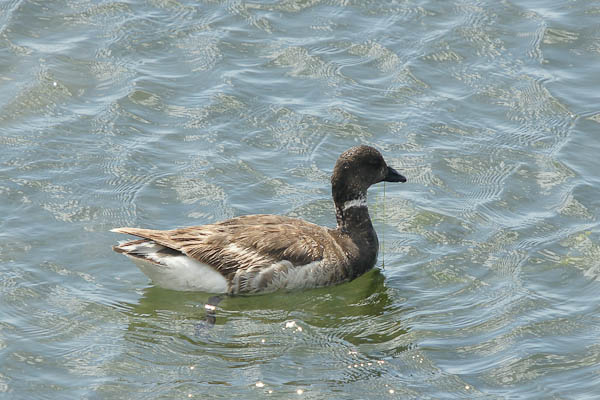
Brant (C.Bragg 5/10)
Numbers are definitely dwindling, as usual, heading for our usual low counts of June, the month when we often get the most people who want to look at birds. The swallows and Black Phoebes were very busy catching bugs. Some Mallard ducklings were closely trailing their parents around in the backs of the channels, and one Mockingbird was on the ground, busily hammering a hapless fence lizard into submission. The number of Brant had increased from April’s three to seven, all hanging out near the PCH bridge. In my 30 years of record keeping for the lagoon, this is the first time we’ve had more than three Brant at one time.

Caspian Terns (C.Bragg 5/10)
Out on the mudflat in the lagoon, there were still lots of Caspian Terns. One pair was busy courting: one brought the other a wriggling fish and not long afterwards he had mounted her. Afterwards, he remained standing on her back for what seemed longer than absolutely necessary, as if admiring the view from his lofty perch. Male and female seabirds are identical, so the only way for us to tell what sex they are is by who’s on top. There were also two Elegant Terns but – like last month – their numbers kept growing. I wonder if they might be feeding offshore nearby and come in to rest for a while, or if they’re sen route to a breeding ground farther north.

Plumy Snowy Egrets were in abundance (C.Bragg 5/10)
There wasn’t much birdlife at Adamson House (yes, the gate was open) but we spotted 32 Cedar Waxwings flying around overhead. They finally settled down somewhere across PCH. The end of May seems very late for these birds to still be here. Surprises never cease in the world of birding.
Links to 2009 Bird Counts: July-December 2009
| Malibu Bird Census | |||||
| for 2010 | Jan | Feb | Mar | Apr | May |
| Temperature | 45-65 | 55-61 | 68-80 | 62-70 | 54-62 |
| Tide Height | +.65 | +6.19 | +5.48 | +4.57 | +3.76 |
| Low/High & Time | L:1131 | H:0835 | H:0840 | H:0744 | H:0638 |
| (Black) Brant | 3 | 7 | |||
| Gadwall | 20 | 35 | 16 | 12 | 12 |
| American Wigeon | 12 | 14 | |||
| Mallard | 10 | 13 | 12 | 20 | 18 |
| Northern Shoveler | 4 | 8 | |||
| Green-winged Teal | 7 | 2 | 1 | ||
| Lesser Scaup | 1 | ||||
| Surf Scoter | 35 | 4 | 18 | ||
| Long-tailed Duck | 1 | ||||
| Bufflehead | 6 | ||||
| Red-brstd Merganser | 8 | 5 | 1 | 3 | |
| Ruddy Duck | 30 | 14 | |||
| Red-throated Loon | 1 | 1 | |||
| Pacific Loon | 1 | 1 | 5 | 4 | 5 |
| Common Loon | 1 | 3 | |||
| Pied-billed Grebe | 1 | 1 | 2 | ||
| Horned Grebe | 1 | ||||
| Eared Grebe | 3 | ||||
| Western Grebe | 15 | 6 | 27 | 35 | 1 |
| Brown Pelican | 35 | 81 | 184 | 182 | 124 |
| Brandt’s Cormorant | 1 | 2 | 2 | ||
| Dble-crstd Cormorant | 42 | 21 | 42 | 22 | 7 |
| Pelagic Cormorant | 1 | 1 | 1 | 1 | |
| Great Blue Heron | 2 | 2 | 2 | ||
| Great Egret | 3 | 3 | 2 | 2 | 2 |
| Snowy Egret | 15 | 4 | 7 | 13 | 12 |
| Blk-crwnd N-Heron | 1 | ||||
| Red-shouldered Hawk | 1 | ||||
| Red-tailed Hawk | 1 | 3 | 2 | 1 | |
| Peregrine Falcon | 2 | ||||
| Sora | 1 | 1 | 1 | 1 | |
| American Coot | 284 | 175 | 92 | 35 | 8 |
| Blk-bellied Plover | 45 | 59 | 25 | 7 | |
| Snowy Plover | 54 | 49 | 25 | ||
| Semipalmated Plover | 1 | 13 | |||
| Killdeer | 4 | 1 | 4 | 4 | |
| Black Oystercatcher | 2 | ||||
| American Avocet | 2 | 2 | |||
| Greater Yellowlegs | 1 | ||||
| Willet | 15 | 15 | 4 | 1 | |
| Spotted Sandpiper | 4 | 2 | 1 | 3 | |
| Whimbrel | 2 | 3 | 5 | 1 | |
| Marbled Godwit | 4 | 17 | 12 | 4 | |
| Ruddy Turnstone | 13 | 11 | 2 | 2 | |
| Surfbird | 3 | ||||
| Sanderling | 85 | 172 | |||
| Least Sandpiper | 21 | 14 | 30 | ||
| Boneparte’s Gull | 2 | 5 | |||
| Heermann’s Gull | 5 | 7 | 4 | 45 | 17 |
| Ring-billed Gull | 55 | 42 | 2 | 4 | 2 |
| California Gull | 875 | 45 | 27 | 108 | 95 |
| Western Gull | 45 | 74 | 48 | 105 | 68 |
| Glaucous-wingd Gull | 6 | 3 | 1 | 1 | |
| Caspian Tern | 2 | 30 | 25 | ||
| Royal Tern | 12 | 32 | 1 | ||
| Elegant Tern | 1 | 1 | 47 | 40 | 9 |
| Forster’s Tern | 1 | ||||
| Black Skimmer | 6 | 5 | |||
| Rock Pigeon | 8 | 4 | 4 | 4 | 6 |
| Mourning Dove | 2 | 2 | 6 | 6 | |
| Anna’s Hummingbird | 3 | 3 | 3 | 2 | 1 |
| Allen’s Hummingbird | 2 | 3 | 3 | 3 | 6 |
| Black Phoebe | 4 | 5 | 6 | 10 | 10 |
| Say’s Phoebe | 1 | 1 | |||
| Western Scrub-Jay | 1 | ||||
| American Crow | 5 | 4 | 4 | 4 | 4 |
| Rough-wingd Swallow | 1 | 3 | 10 | 1 | |
| Cliff Swallow | 2 | 12 | |||
| Barn Swallow | 2 | 8 | |||
| Oak Titmouse | 1 | ||||
| Bushtit | 4 | 5 | 4 | 6 | 4 |
| Bewick’s Wren | 2 | 1 | 1 | ||
| Northern Mockingbird | 2 | 3 | 2 | 2 | 4 |
| European Starling | 35 | 41 | 8 | 4 | 3 |
| Cedar Waxwing | 20 | 32 | |||
| Yellow-rumpd Warbler | 8 | 4 | 5 | 2 | |
| Common Yellowthroat | 3 | 1 | 1 | ||
| Wilson’s Warbler | 1 | ||||
| Spotted Towhee | 1 | 1 | 4 | ||
| California Towhee | 2 | 1 | 3 | 1 | |
| Song Sparrow | 3 | 6 | 8 | 12 | 10 |
| White-crwnd Sparrow | 4 | ||||
| Red-winged Blackbird | 3 | 2 | 1 | 4 | |
| Western Meadowlark | 1 | ||||
| Great-tailed Grackle | 1 | ||||
| Brwn-headed Cowbird | 2 | 1 | 1 | ||
| Hooded Oriole | 1 | ||||
| Bullock’s Oriole | 1 | ||||
| House Finch | 12 | 3 | 6 | 6 | 6 |
| Lesser Goldfinch | 4 | 2 | 2 | ||
| Totals by Type | Jan | Feb | Mar | Apr | May |
| Waterfowl | 134 | 73 | 70 | 38 | 37 |
| Water Birds-Other | 386 | 289 | 354 | 284 | 148 |
| Herons, Egrets | 20 | 7 | 12 | 15 | 16 |
| Quail & Raptors | 4 | 3 | 2 | 0 | 1 |
| Shorebirds | 251 | 328 | 87 | 73 | 5 |
| Gulls & Terns | 1006 | 209 | 133 | 339 | 216 |
| Doves | 10 | 4 | 6 | 10 | 12 |
| Other Non-Pass. | 5 | 6 | 6 | 5 | 7 |
| Passerines | 90 | 81 | 53 | 92 | 106 |
| Totals Birds | 1906 | 1000 | 723 | 856 | 548 |
| Total Species | Jan | Feb | Mar | Apr | May |
| Waterfowl | 11 | 6 | 7 | 4 | 3 |
| Water Birds-Other | 12 | 9 | 8 | 9 | 7 |
| Herons, Egrets | 3 | 2 | 4 | 2 | 3 |
| Quail & Raptors | 3 | 1 | 1 | 0 | 1 |
| Shorebirds | 12 | 9 | 9 | 11 | 2 |
| Gulls & Terns | 9 | 8 | 8 | 9 | 6 |
| Doves | 2 | 1 | 2 | 2 | 2 |
| Other Non-Pass. | 2 | 2 | 2 | 2 | 2 |
| Passerines | 16 | 15 | 14 | 18 | 19 |
| Totals Species – 90 | 70 | 53 | 55 | 57 | 45 |
Bird Gleanings from “Science News”
Alternative flame retardants leach into the environment
Supposedly safer chemicals are spotted in peregrine falcon eggs in California.
http://www.sciencenews.org/view/generic/id/57666/title/Alternative_flame_retardants
***********************
First songbird genome arrives with spring
The genome of a songbird has been decoded for the first time. Zebra finches join chickens as the only birds to have detailed maps of their genetic blueprints.
http://www.sciencenews.org/view/generic/id/57818/title/First_songbird_genome_arrives_with__spring
***********************
Pigeons usually let best navigator take the lead
One bird usually leads the flock, but sometimes another gets a turn at the helm.
Make sure you watch the short video.
http://www.sciencenews.org/view/generic/id/57997/title/Pigeons_usually_let_best_navigator_take_the_lead
***********************
Dinos molted for a new look
In one species, adolescents appear to have sprouted a new type of feathers as they matured.
http://www.sciencenews.org/view/generic/id/58693/title/Dinos_molted_for_a_new_look
***********************
Archaeopteryx fossil seen in new light
X-ray technique reveals original tissue in the feathers of a primitive bird fossil.
http://www.sciencenews.org/view/generic/id/59062/title/Archaeopteryx_fossil_seen_in_new_light_
***********************
Earliest birds didn’t make a flap
The feathers of Archaeopteryx and Confuciusornis probably were not strong enough to support sustained flight.
http://www.sciencenews.org/view/generic/id/59174/title/Earliest_birds_didnt_make_a_flap
North American Butterfly Association Count Program
SMBAS members:
As birders tend to appreciate all flying things (well…maybe not mosquitoes and houseflies so much) we’re passing this message along to you.

We invite you to join NABA’s Butterfly Count Program so that scientists studying butterfly distribution and population fluctuations will have the benefit of important data from your area. Now is the time to plan a new count – it’s a great way both to help the environment and to have an exciting day in the field with friends who enjoy the natural world.
Butterflies are ideal indicators of the health of the environment because they are exquisitely sensitive to small changes in their world. Yet surprisingly little is known about butterfly population fluctuations and distributions throughout North America. Gathering information about these important pollinators is the goal of the annual Butterfly Count Program organized by NABA, the North American Butterfly Association.
Celebrating its 36th year in 2010, the Butterfly Count Program is a long-term citizen-scientist project, involving almost 500 counts and thousands of volunteers throughout the United States, Canada, and Mexico. Volunteers select a count area with a 15-mile diameter count circle and assemble a group to conduct a one-day census of all butterflies sighted within that circle.
As a result of a variety of unfavorable weather conditions in 2009, many counts recorded declines of as much as 50% in the number of butterflies observed. Participants in the upcoming 2010 butterfly counts will provide important data on how butterfly numbers rebound.
Published annually in the NABA Count Report, count data provide critical information about the geographical distributions and population sizes of the species counted. Increasingly, these data are being used by scientists to help address a wide variety of topics, including the fall migration of Monarchs and the effects of habitat changes on butterflies.
If a count already exists in your area, we hope that you can participate in and facilitate the existing count. [There are five counts in the LA area. Map and contact info. is HERE . CVA] Location of all US counts and contact information for their compilers can be found on the NABA website at www.naba.org/counts/maps08.html.
Sincerely,



 SANTA MONICA BAY AUDUBON SOCIETY BLOG