Birds large & small: Malibu Lagoon: 26 April 2026
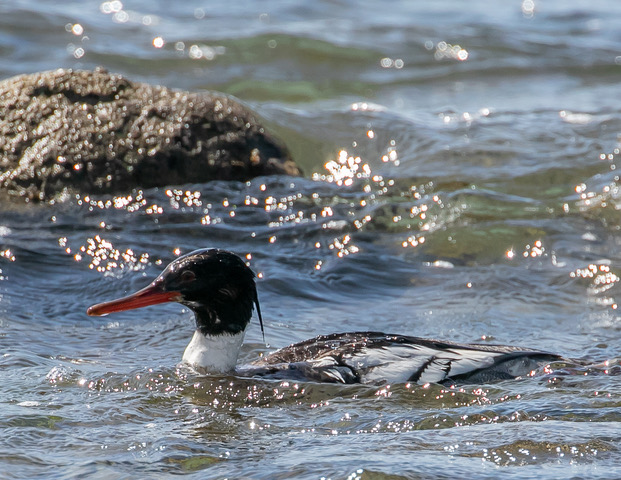
(Chris Tosdevin 4/26/26)
[By Chuck Almdale; photos by Ray Juncosa, Emily Roth & Chris Tosdevin]
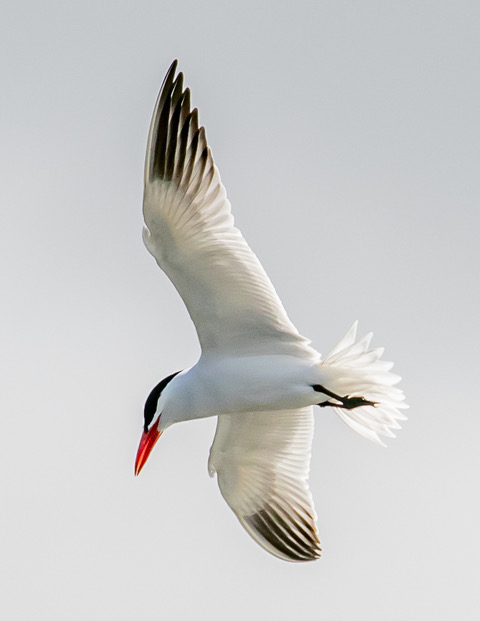
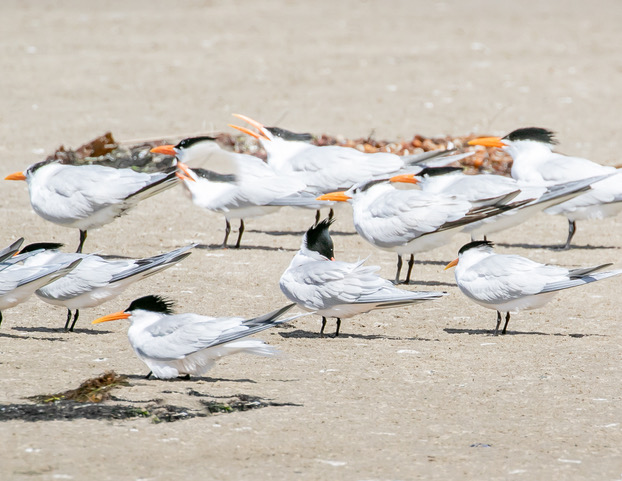
Most of our shorebirds have flown to points north. But the Elegant Terns have returned in force from the Sea of Cortez. An preliminary count shortly after I arrived at 8:15 am yielded about 150 terns and as many gulls. By the time I left three hours later, the gulls remained the same but the terns had exploded to almost 800 birds.
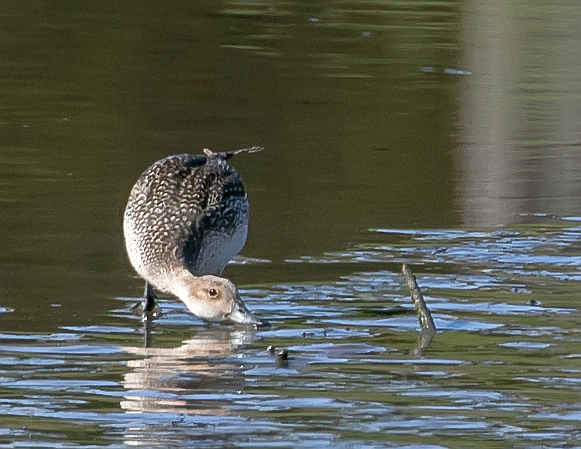
The tide was dropping from a high of +4.32 ft. at 6:24am to the low of +0.00 ft. at 1:06pm, so there was lots of damp mud and damp sand everywhere. In one of the slowly draining channels was a single female Pintail, probably the same lone female we saw last month in the same channel at the very same spot. We don’t get many Pintail: before last month the last Pintail was a single bird in October 2022. In fact we’ve had double-digit Pintail only three times: twice (12 and 10) in 1979, and 10 in January 2012. The wildlife refuges north of Sacramento during the winter have a lot more than Malibu Lagoon ever will.
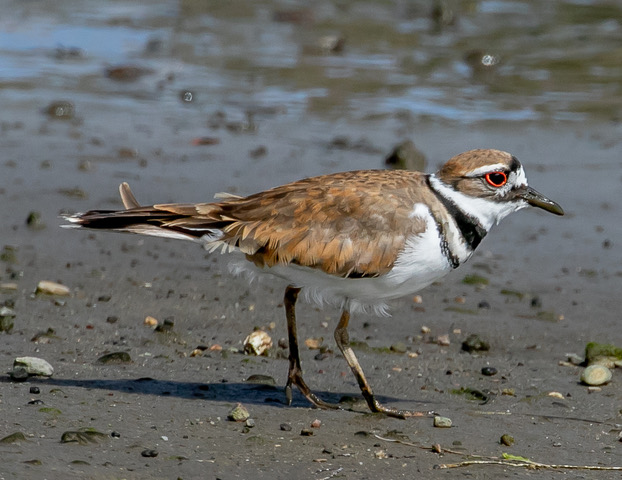
A handful of Killdeer were out and about. They have nested in the sandy soil surrounding the lagoon since at least the 1990s when I recorded a nest with eggs for the L.A. County Breeding Bird Atlas. So of course we’d like to see one for the new California Bird Atlas. But we didn’t.
People often ask about the odd name, Killdeer. These birds have nothing against deer. It’s one of those onomatopoetic names, as the call it makes when alarmed or in flight sounded to so some ears – not mine in particular – as “kill-deer” or “kill-dee” or at least it did back in the 1730s. It has also been called the noisy plover or chattering plover.
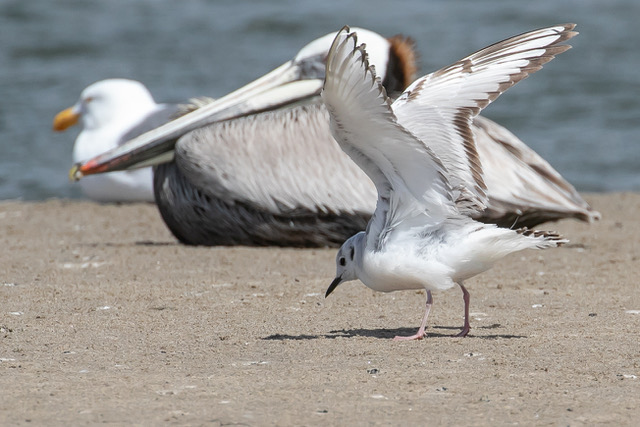
Brown Pelicans have an extended nesting season. West Anacapa Island and Santa Barbara Island are reportedly their only breeding location in the U.S.; most breed in Mexico. They have an “extended breeding season running from January to October. This is a bit misleading though, as most begin nesting in March or April, they incubate their 2-3 eggs for 4 weeks, the young begin to fly 5 weeks later, and they become independent of their parents not long thereafter. So each individual pair spend about 9 weeks nesting, but when they begin nesting is quite spread out. Malibu Lagoon is located 41 miles from both their SoCal breeding locations, and it is popular with them year-round. They are at the lagoon on all our trips in numbers ranging from a handful to 1500 birds. The last time they weren’t here was in July 2005; before that you have to go back to October 1983, when they were still having problems with DDT weakening their egg shells.
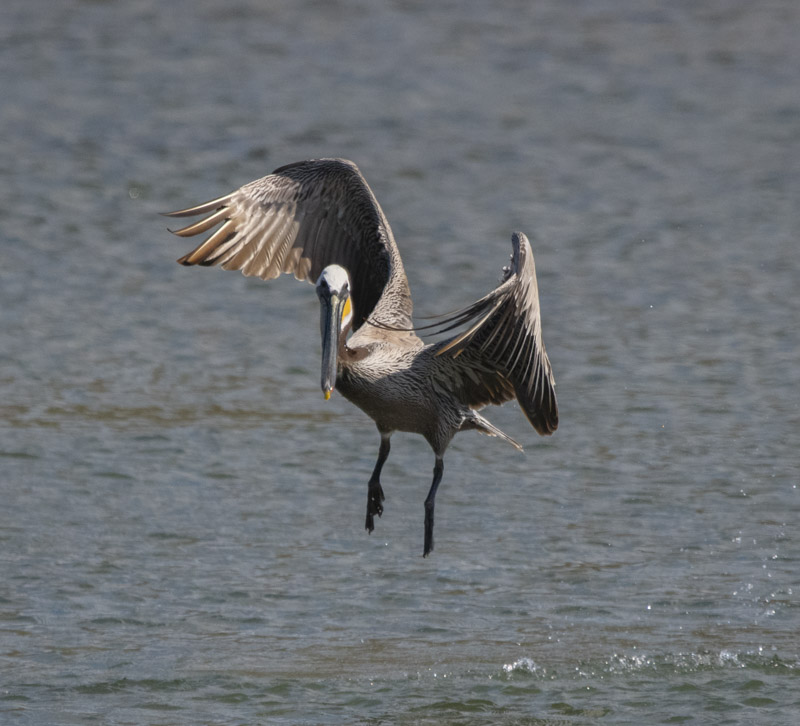
Below: from on of the largest to one of the smallest: Brown Pelican with wingspan up to 6.5 ft, length up to 5 ft. and weight to 11 pounds. Bonaparte’s Gull with wingspan up to 33″, length up to 15″ and weight up to 9 ounces.
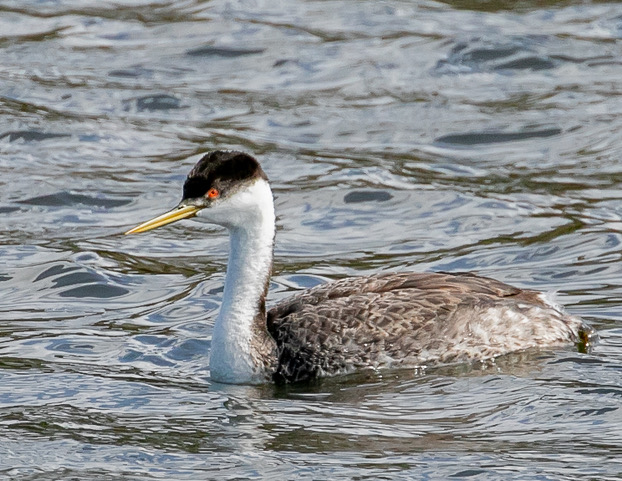
Western Grebes are still with us. There may still be a few with us in May, but I wouldn’t bet on it. Their presents peaks October to March. We had two Clark’s Grebes twice this winter, which is almost a record as in the winter of 2017-18 we had five. We’ve never had more than two at a time. In SoCal they prefer the fresh water of our reservoirs.
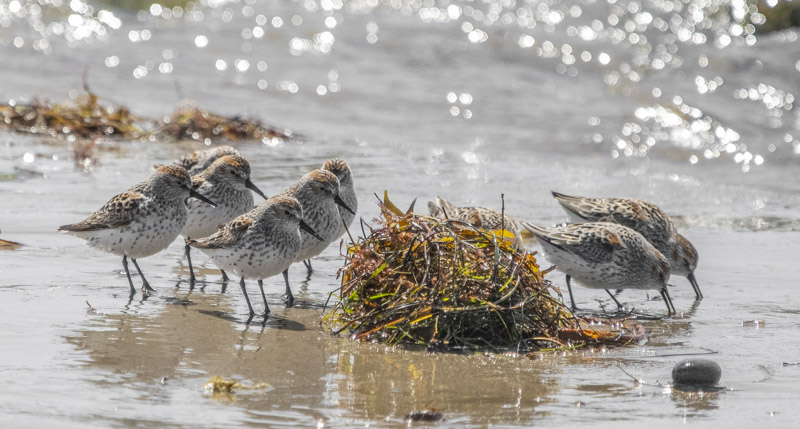
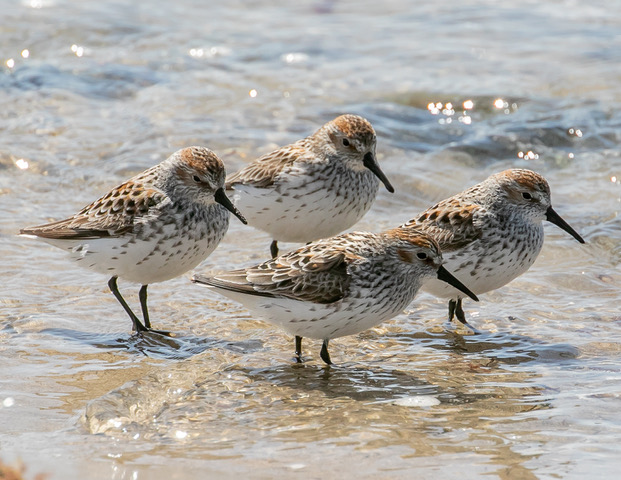
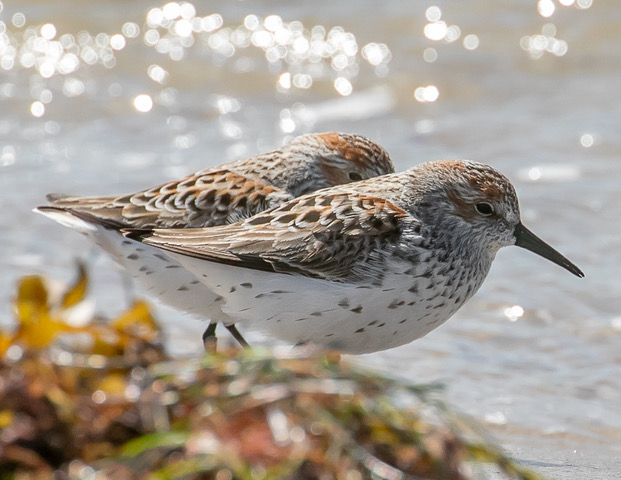
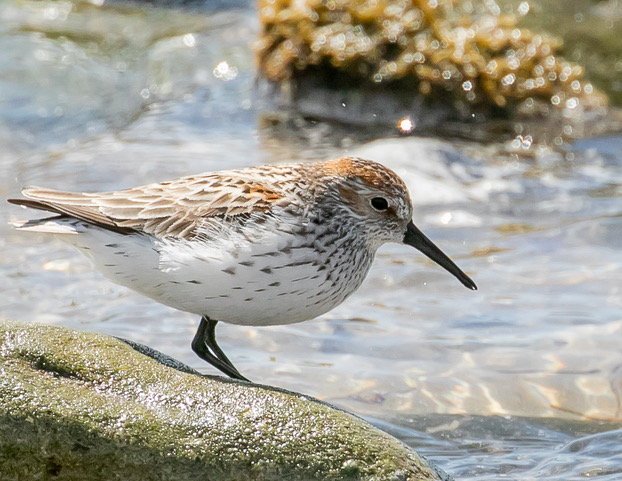
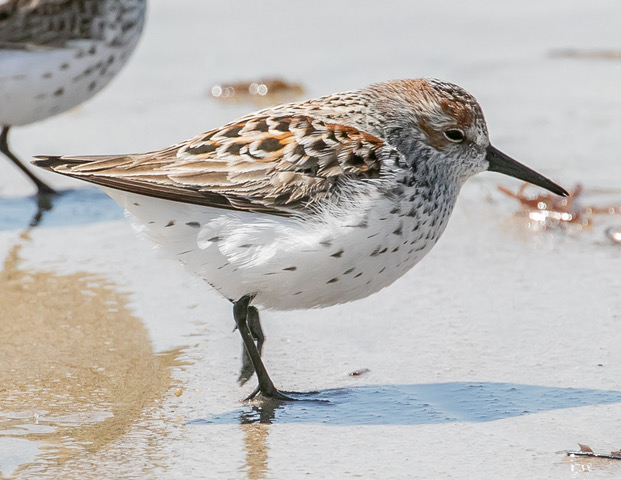
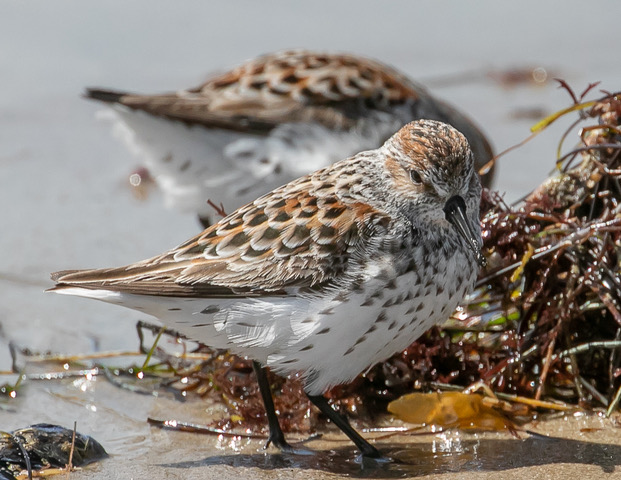
Western Sandpipers
Western Sandpiper presence at the lagoon is erratic. They’re mostly gone by late October and begin returning in March, disappearing again for May-June, returning again in July. The highest numbers are usually in March and April. In fact they can be seen in any month, but there might be only one or two of them. This visit started with one bird, which grew to nine, and just before I left another twenty flew in. Here’s a good look at Western Sandpipers in alternate (breeding) plumage, although some of them might develop a few more black spots or rusty tinges.
Beach walking can be hazardous for several reasons.
A few of our 800 terns.
Malibu Lagoon on eBird as of 4-29-26: 9372 lists, 3056 eBirders, 322 species
Most recent new species seen: Nelson’s Sparrow, 11/29/24 by Femi Faminu (SMBAS member).
Birds new for the season: Semipalmated Plover, Osprey, Nuttall’s Woodpecker, Peregrine Falcon, Hutton’s Vireo, Tree Swallow, Barn wallow, Cliff Swallow, Hooded Oriole. “New for the season” means it has been three or more months since last recorded on our trips..
Many, many thanks to photographers Ray Juncosa, Emily Roth, and Chris Tosdevin.
Upcoming SMBAS scheduled field trips; no reservations or Covid card necessary unless specifically mentioned:
- Black Rock & Morongo Canyon, Sat-Sun May 2-3.
- Franklin Canyon Sat. May 9 8 am Lu Plauzoles
- Malibu Lagoon, Sun. May 24, 8:30 am (adults) & 10 am (parents & kids)
- Malibu Creek State Park, Sat. June 13, 8 am
- These and any other trips we announce for the foreseeable future will depend upon expected status of the Covid/flu/etc. pandemic, not to mention landslides, fires, local flooding and atmospheric rivers at trip time. Any trip announced may be canceled shortly before trip date if it seems necessary. By now any other comments should be superfluous.
- Link to Programs & Field Trip schedule.
The next SMBAS Zoom program: Tuesday, May 5, 7:30pm; Evolution in Urban Dark-eyed Juncos, with Dr. Pamela Yeh & members of the Yeh Lab at UCLA.
The SMBAS 10 a.m. Parent’s & Kids Birdwalk has again resumed. Reservations not necessary for families, but for groups (scouts, etc.), please call Jean (213-522-0062).
Links: Unusual birds at Malibu Lagoon
9/23/02 Aerial photo of Malibu Lagoon
Aerial ‘film’ flying north over lagoon
More recent aerial photo
Prior checklists:
2025: Jan-June, July-Dec
2023: Jan-June, July-Dec 2024: Jan-June, July-Dec
2021: Jan-July, July-Dec 2022: Jan-June, July-Dec
2020: Jan-July, July-Dec 2019: Jan-June, July-Dec
2018: Jan-June, July-Dec 2017: Jan-June, July-Dec
2016: Jan-June, July-Dec 2015: Jan-May, July-Dec
2014: Jan-July, July-Dec 2013: Jan-June, July-Dec
2012: Jan-June, July-Dec 2011: Jan-June, July-Dec
2010: Jan-June, July-Dec 2009: Jan-June, July-Dec
The 10-year comparison summaries created during the Lagoon Reconfiguration Project period, remain available—despite numerous complaints—on our Lagoon Project Bird Census Page. Very briefly summarized, the results unexpectedly indicate that avian species diversification and numbers improved slightly during the restoration period June’12-June’14.
Many thanks to Femi Faminu, Chris Lord, Armando Martinez, Emily Roth, Chris Tosdevin and others for contributions made to this month’s census counts.
The species list below was re-sequenced as of 12/31/25 to agree with the eBird sequence. If part of the right side of the chart below is hidden, there’s a slider button inconveniently located at the bottom end of the list. The numbers 1-9 left of the species names are keyed to the nine categories of birds at the bottom. Updated lagoon bird check lists can be downloaded here.
[Chuck Almdale]
| Malibu Census 2025-26 | 11/23 | 12/28 | 1/25 | 2/22 | 3/22 | 4/26 | |
| Temperature | 59-65 | 60-69 | 47-55 | 49-63 | 65-76 | 55-64 | |
| Tide Lo/Hi Height | H+5.46 | L+1.35 | L+1.31 | L+0.65 | L-0.31 | H+4.32 | |
| Tide Time | 0939 | 1047 | 0846 | 0655 | 0640 | 0624 | |
| 1 | Brant (Black) | 1 | 1 | 1 | 1 | 1 | 1 |
| 1 | Canada Goose | 12 | 14 | 3 | 4 | 5 | 4 |
| 1 | Cinnamon Teal | 2 | |||||
| 1 | Northern Shoveler | 4 | 2 | ||||
| 1 | Gadwall | 14 | 20 | 34 | 35 | 15 | 25 |
| 1 | American Wigeon | 15 | 4 | 4 | 6 | ||
| 1 | Mallard | 1 | 12 | 5 | 7 | 14 | 8 |
| 1 | Northern Pintail | 1 | 1 | ||||
| 1 | Green-winged Teal | 5 | 11 | 8 | |||
| 1 | Surf Scoter | 22 | 4 | 3 | 6 | ||
| 1 | Bufflehead | 4 | 4 | ||||
| 1 | Red-breasted Merganser | 2 | 5 | 6 | 7 | 4 | 3 |
| 1 | Ruddy Duck | 5 | 11 | ||||
| 2 | Feral Pigeon | 5 | 4 | 2 | 8 | ||
| 2 | Mourning Dove | 1 | 3 | 1 | |||
| 2 | Anna’s Hummingbird | 3 | 1 | 1 | |||
| 2 | Allen’s Hummingbird | 4 | 3 | 3 | 3 | 5 | 2 |
| 3 | Sora | 1 | |||||
| 3 | American Coot | 25 | 25 | 50 | 55 | 4 | |
| 4 | Black Oystercatcher | 1 | 3 | ||||
| 4 | Black-bellied Plover | 64 | 62 | 34 | 20 | 6 | 3 |
| 4 | Killdeer | 10 | 4 | 4 | 6 | 5 | 6 |
| 4 | Semipalmated Plover | 6 | |||||
| 4 | Snowy Plover | 40 | 7 | 17 | 4 | 1 | |
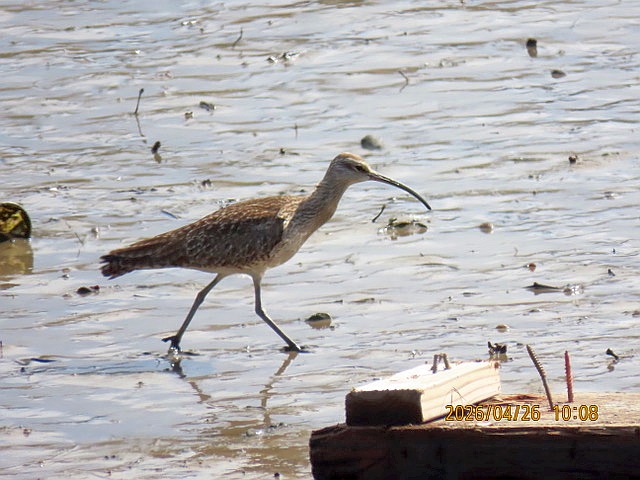
| 4 | Hudsonian Whimbrel | 8 | 4 | 3 | 4 | 6 | 6 |
| 4 | Marbled Godwit | 8 | 10 | 3 | 4 | 1 | |
| 4 | Long-billed Dowitcher | 1 | |||||
| 4 | Spotted Sandpiper | 1 | |||||
| 4 | Willet | 20 | 7 | 7 | 3 | 4 | |
| 4 | Ruddy Turnstone | 4 | 3 | 2 | 3 | ||
| 4 | Sanderling | 23 | 14 | 35 | 10 | ||
| 4 | Least Sandpiper | 6 | 10 | 20 | 20 | 8 | 3 |
| 4 | Western Sandpiper | 2 | 13 | 29 | |||
| 5 | Bonaparte’s Gull | 1 | 3 | 1 | |||
| 5 | Heermann’s Gull | 49 | 10 | 22 | 75 | ||
| 5 | Short-billed Gull | 1 | |||||
| 5 | Ring-billed Gull | 6 | 5 | 17 | 4 | 3 | |
| 5 | Western Gull | 55 | 85 | 45 | 41 | 61 | 40 |
| 5 | American Herring Gull | 1 | 1 | 1 | 1 | ||
| 5 | California Gull | 410 | 650 | 275 | 140 | 95 | 110 |
| 5 | Glaucous-winged Gull | 1 | |||||
| 5 | Caspian Tern | 3 | 11 | ||||
| 5 | Elegant Tern | 3 | 24 | 750 | |||
| 5 | Royal Tern | 22 | 25 | 12 | 28 | 34 | 18 |
| 6 | Pied-billed Grebe | 3 | 6 | 2 | 2 | 3 | 1 |
| 6 | Horned Grebe | 1 | |||||
| 6 | Eared Grebe | 3 | 1 | ||||
| 6 | Western Grebe | 8 | 10 | 45 | 4 | 24 | 4 |
| 6 | Clark’s Grebe | 2 | 2 | ||||
| 6 | Red-throated Loon | 2 | 2 | ||||
| 6 | Pacific Loon | 1 | 1 | 45 | |||
| 6 | Brandt’s Cormorant | 2 | 1 | 35 | 5 | 3 | |
| 6 | Pelagic Cormorant | 2 | 3 | 1 | 3 | 2 | |
| 6 | Double-crested Cormorant | 38 | 17 | 28 | 15 | 18 | 26 |
| 6 | Snowy Egret | 30 | 11 | 3 | 3 | 1 | 2 |
| 6 | Green Heron | 1 | 2 | ||||
| 6 | Great Egret | 2 | 1 | 1 | 1 | 2 | 2 |
| 6 | Great Blue Heron | 4 | 5 | 5 | 3 | 3 | 3 |
| 6 | Brown Pelican | 13 | 3 | 13 | 10 | 30 | 395 |
| 7 | Turkey Vulture | 1 | 2 | 2 | 2 | 3 | 4 |
| 7 | Osprey | 1 | 1 | 2 | 1 | ||
| 7 | Sharp-shinned Hawk | 1 | |||||
| 7 | Red-shouldered Hawk | 1 | 2 | ||||
| 7 | Red-tailed Hawk | 2 | 1 | 2 | 1 | ||
| 8 | Belted Kingfisher | 2 | 1 | 1 | 1 | 1 | |
| 8 | Downy Woodpecker | 1 | |||||
| 8 | Nuttall’s Woodpecker | 1 | 1 | ||||
| 7 | Peregrine Falcon | 1 | |||||
| 8 | Nanday Parakeet | 2 | |||||
| 9 | Black Phoebe | 3 | 1 | 3 | 3 | 2 | 2 |
| 9 | Say’s Phoebe | 1 | 1 | ||||
| 9 | Cassin’s Kingbird | 1 | 3 | ||||
| 9 | Hutton’s Vireo | 1 | 1 | ||||
| 9 | California Scrub-Jay | 1 | |||||
| 9 | American Crow | 7 | 6 | 11 | 10 | 6 | 2 |
| 9 | Common Raven | 1 | 2 | 1 | |||
| 9 | Oak Titmouse | 1 | 1 | 1 | 1 | ||
| 9 | Tree Swallow | 3 | |||||
| 9 | No. Rough-winged Swallow | 25 | 5 | ||||
| 9 | Barn Swallow | 8 | |||||
| 9 | Cliff Swallow | 25 | |||||
| 9 | Bushtit | 4 | 19 | 20 | 5 | 8 | 1 |
| 9 | Wrentit | 4 | 1 | 2 | 2 | 1 | 1 |
| 9 | Swinhoe’s White-eye | 2 | 2 | ||||
| 9 | Ruby-crowned Kinglet | 1 | |||||
| 9 | Blue-gray Gnatcatcher | 2 | 1 | ||||
| 9 | Northern House Wren | 1 | 1 | 1 | 1 | 1 | |
| 9 | Bewick’s Wren | 1 | |||||
| 9 | European Starling | 30 | 1 | 10 | 13 | ||
| 9 | Northern Mockingbird | 1 | 1 | ||||
| 9 | Western Bluebird | 1 | |||||
| 9 | Hermit Thrush | 2 | |||||
| 9 | American Robin | 1 | |||||
| 9 | Scaly-breasted Munia | 7 | |||||
| 9 | House Finch | 5 | 15 | 7 | 10 | 12 | 10 |
| 9 | Lesser Goldfinch | 2 | 2 | 7 | 2 | 6 | |
| 9 | American Goldfinch | 4 | |||||
| 9 | Dark-eyed Junco | 3 | 1 | 1 | 2 | ||
| 9 | White-crowned Sparrow | 12 | 18 | 6 | 5 | 10 | |
| 9 | Savannah Sparrow | 1 | |||||
| 9 | Song Sparrow | 4 | 3 | 5 | 7 | 6 | 6 |
| 9 | California Towhee | 2 | 2 | 3 | 2 | 3 | 1 |
| 9 | Western Meadowlark | 2 | |||||
| 9 | Hooded Oriole | 2 | |||||
| 9 | Great-tailed Grackle | 16 | 3 | 10 | 3 | 5 | |
| 9 | Orange-crowned Warbler | 2 | 1 | 1 | 1 | 1 | |
| 9 | Common Yellowthroat | 2 | 1 | 1 | 2 | 1 | |
| 9 | Yellow-rumped Warbler | 10 | 8 | 6 | 6 | 4 | |
| 9 | Black-throated Gray Warbler | 1 | |||||
| Totals Birds by Type | Nov | Dec | Jan | Feb | Mar | Apr | |
| 1 | Waterfowl & Quail | 61 | 95 | 67 | 74 | 48 | 42 |
| 2 | Doves, Swifts & Hummers | 7 | 9 | 3 | 8 | 11 | 11 |
| 3 | Rails & Coots | 26 | 25 | 50 | 55 | 4 | 0 |
| 4 | Shorebirds | 185 | 123 | 128 | 74 | 44 | 54 |
| 5 | Gulls & Terns | 547 | 777 | 349 | 214 | 247 | 1005 |
| 6 | Grebe, Loon, Heron, Pelican | 111 | 59 | 134 | 47 | 134 | 435 |
| 7 | Hawks & Falcons | 3 | 5 | 5 | 7 | 4 | 6 |
| 8 | Kingfish, Peckers & Parrots | 3 | 1 | 3 | 2 | 0 | 2 |
| 9 | Passerines | 122 | 91 | 86 | 77 | 116 | 70 |
| Totals Birds | 1065 | 1185 | 825 | 558 | 608 | 1625 | |
| Total Species by Group | Nov | Dec | Jan | Feb | Mar | Apr | |
| 1 | Waterfowl & Quail | 8 | 11 | 8 | 9 | 8 | 6 |
| 2 | Doves, Swifts & Hummers | 2 | 3 | 1 | 3 | 4 | 3 |
| 3 | Rails & Coots | 2 | 1 | 1 | 1 | 1 | 0 |
| 4 | Shorebirds | 10 | 11 | 10 | 9 | 8 | 7 |
| 5 | Gulls & Terns | 8 | 7 | 4 | 5 | 10 | 7 |
| 6 | Grebe, Loon, Heron, Pelican | 14 | 11 | 9 | 11 | 11 | 8 |
| 7 | Hawks & Falcons | 3 | 3 | 3 | 4 | 2 | 3 |
| 8 | Kingfish, Peckers & Parrots | 2 | 1 | 2 | 2 | 0 | 2 |
| 9 | Passerines | 22 | 21 | 17 | 22 | 23 | 16 |
| Totals Species | 71 | 69 | 55 | 66 | 67 | 52 |
Discover more from SANTA MONICA BAY AUDUBON SOCIETY BLOG
Subscribe to get the latest posts sent to your email.



Onomatopoetic. Excellent word, Chuck!
LikeLike
Onomatopoetic. Excellent word, Chuck!
LikeLike