Black Rock Campground Birding, May 2, 2026
[By Jean Garrett, additional comments by Chuck Almdale , photos by Chuck Almdale & Ray Juncosa]
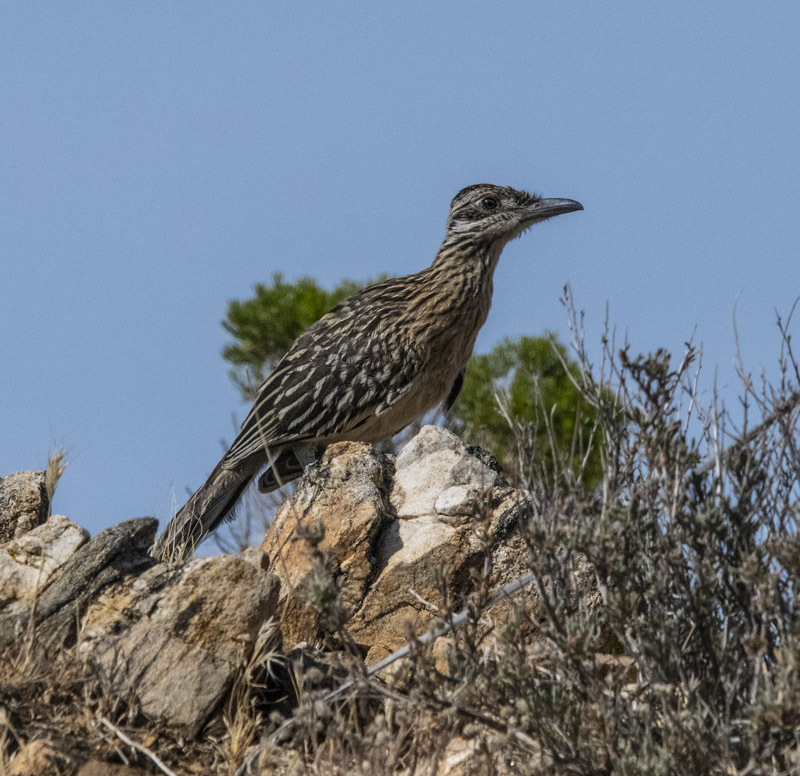
One of the things “they” say is “Any day with a roadrunner in it is a good day.”
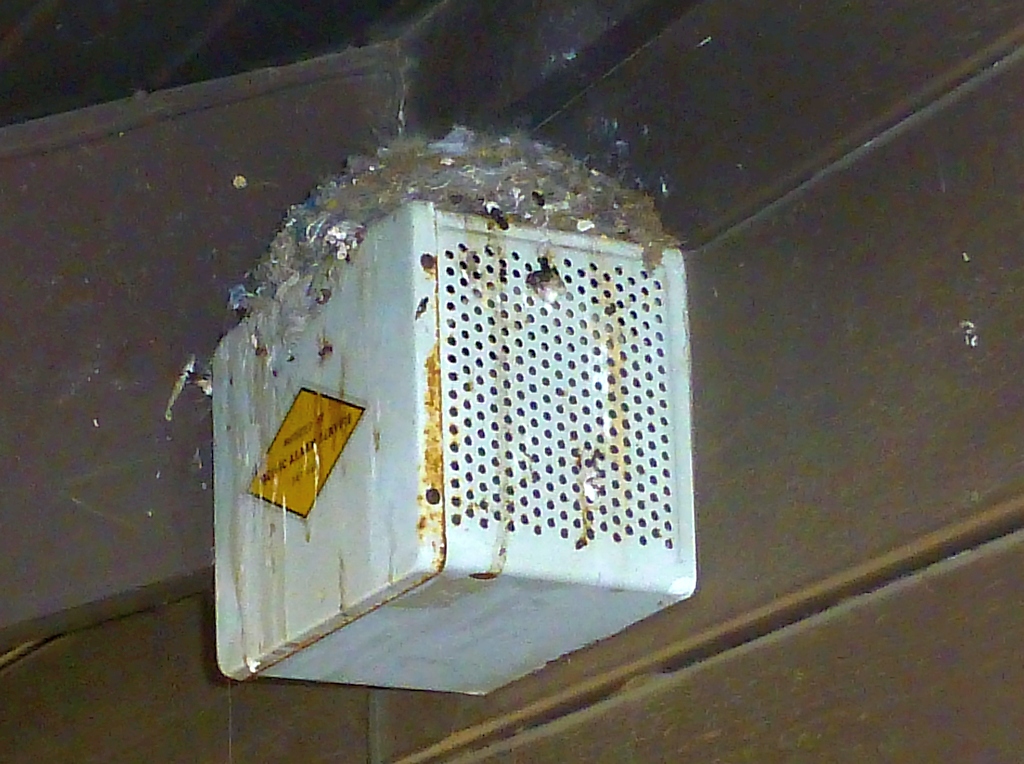
We arrived at 3:00 PM to a quiet scene at the campground. Again, a Say’s Phoebe family had their nest by the door of the nature preserve station. It must be a safe place!
Nearby, a Bewick’s Wren led us to his nest where we could hear the young ones chirping. A California Thrasher perched conveniently for us while we were looking at a male & female Ladderback Woodpecker accompanied by the sound of Black-throated Sparrows.
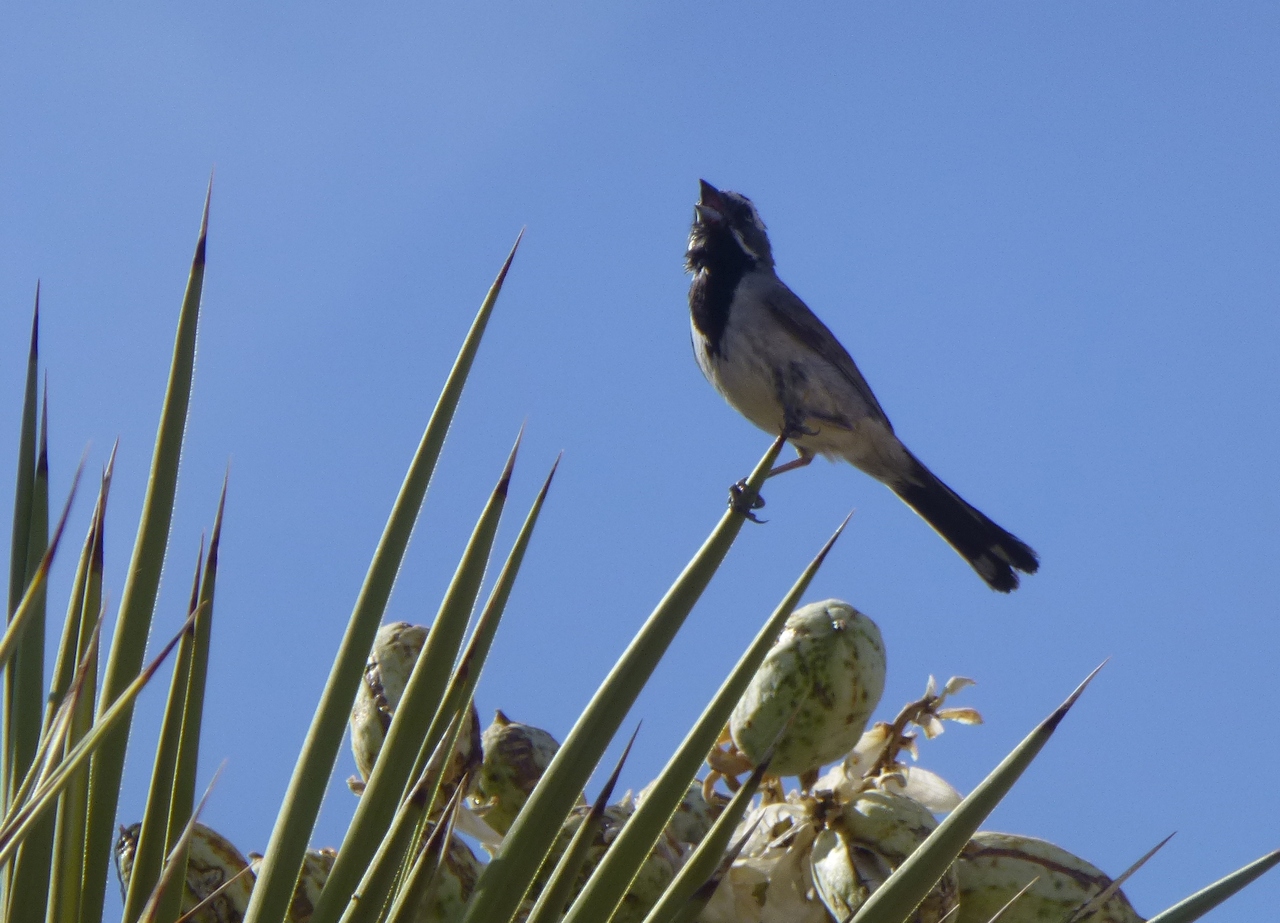
Little did we know that we would be seeing the Black-throated sparrows everywhere we went in the campground.
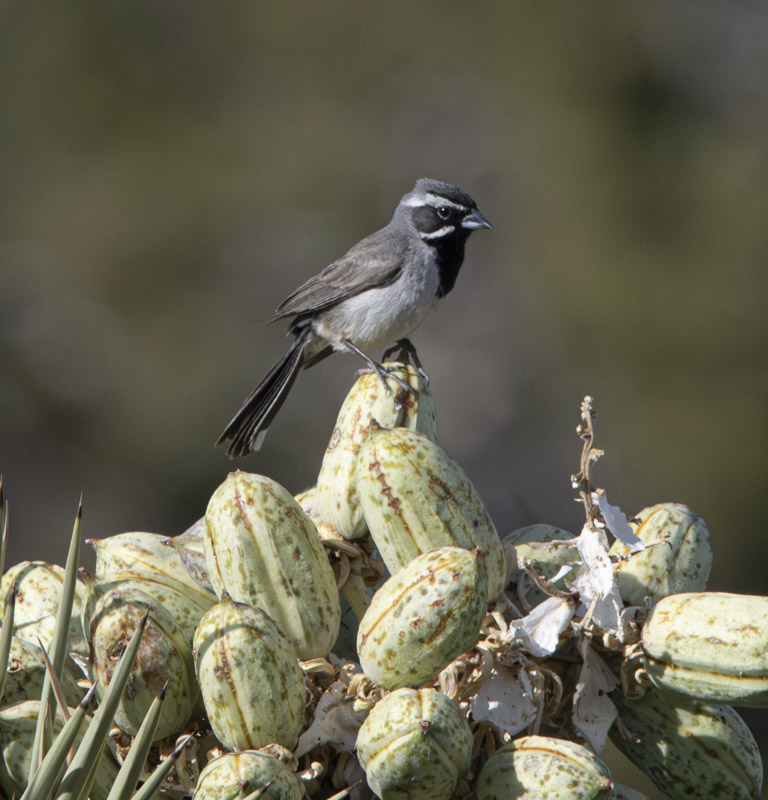
Although Black-throated Sparrows are highly-adapted to arid deserts, they will drink water when they can get it. But during the long, dry desert summers they can survive for long periods without it, getting necessary moisture from their diet of insects, succulent vegetation, and seeds.
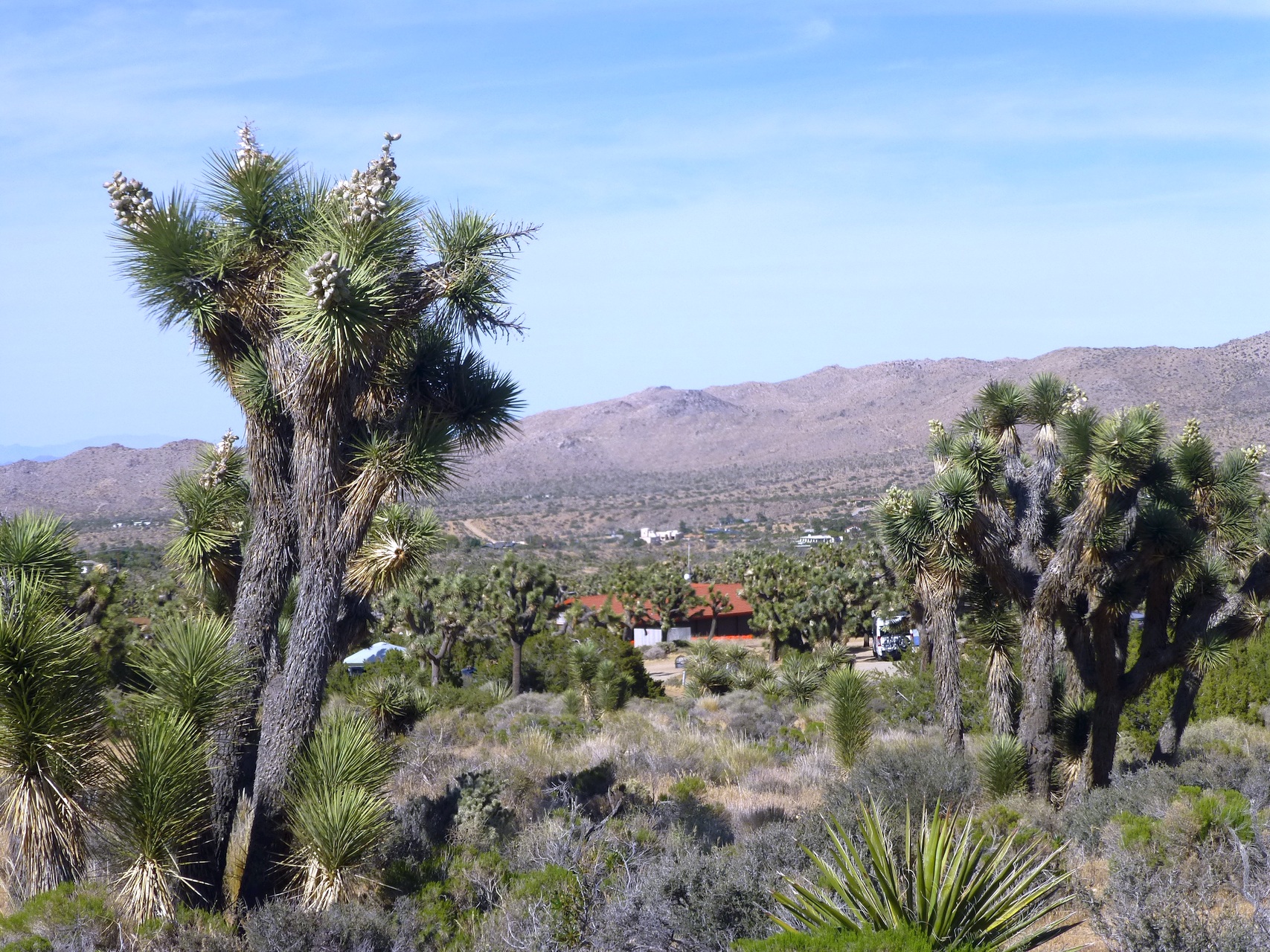
Another sound we could hear (besides House Finches) was the Gambel’s Quail whose call sounds so close to the California Quail’s “chi-ca-go”. But after settling the debate on the sound, the sentinel Gambel’s Quail finally showed itself.
The very best sighting for the day was a Roadrunner (photo at the top) standing on a rock and letting us see him for at least five minutes. All that was missing was to hear him sing.
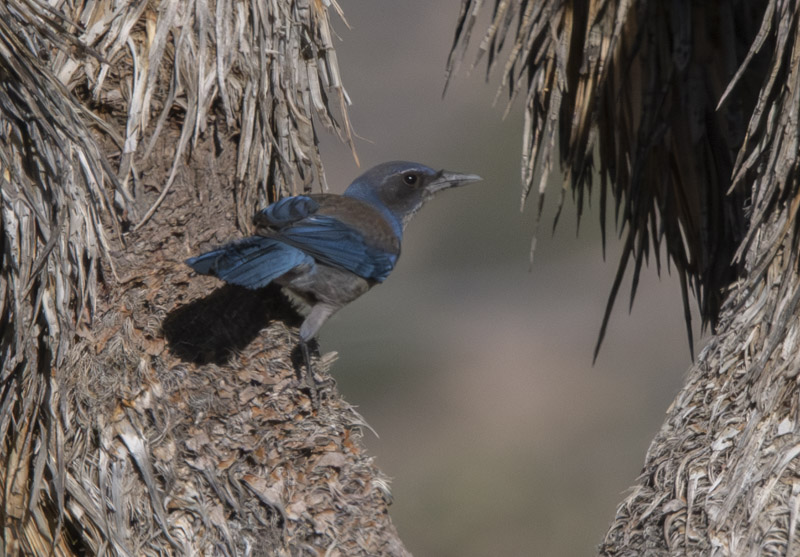
Scrub Jays bounded through the Joshua trees and Eurasian Collared-Doves gave background songs.
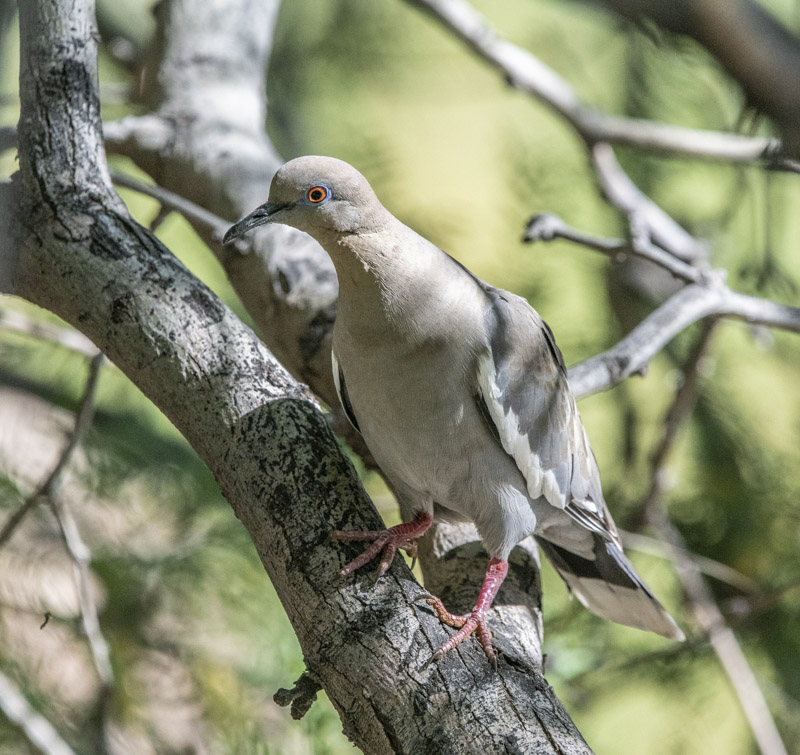
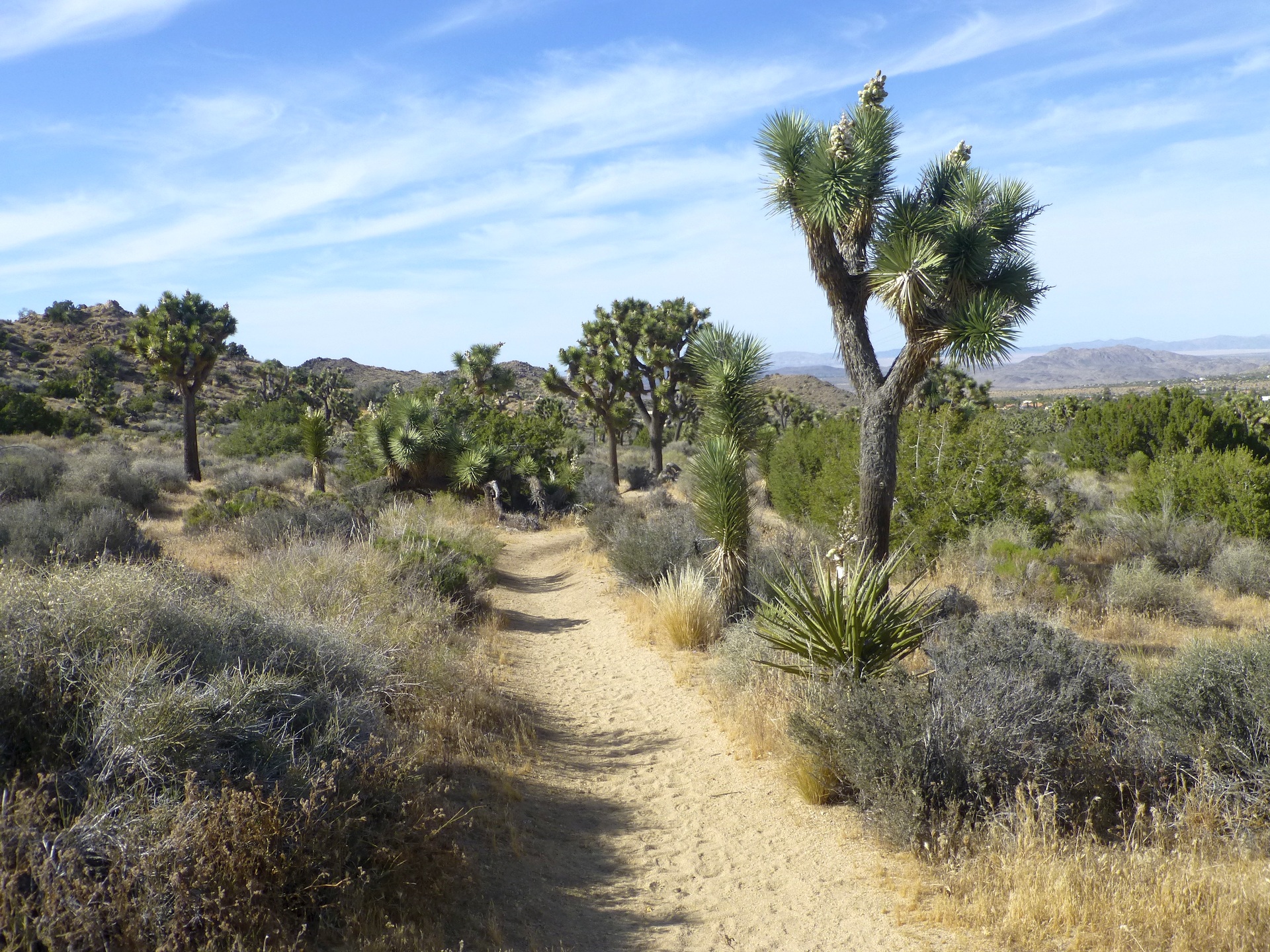
Looking up at the sky offered a glimpse of a Turkey Vulture and a Red-tailed Hawk. We finished our list with an American Kestrel and a couple of Cactus Wren nests but no bird. Judging by the lack of flowers and the maturity of the seed pods on the Joshua Trees, it seemed like spring had come early.
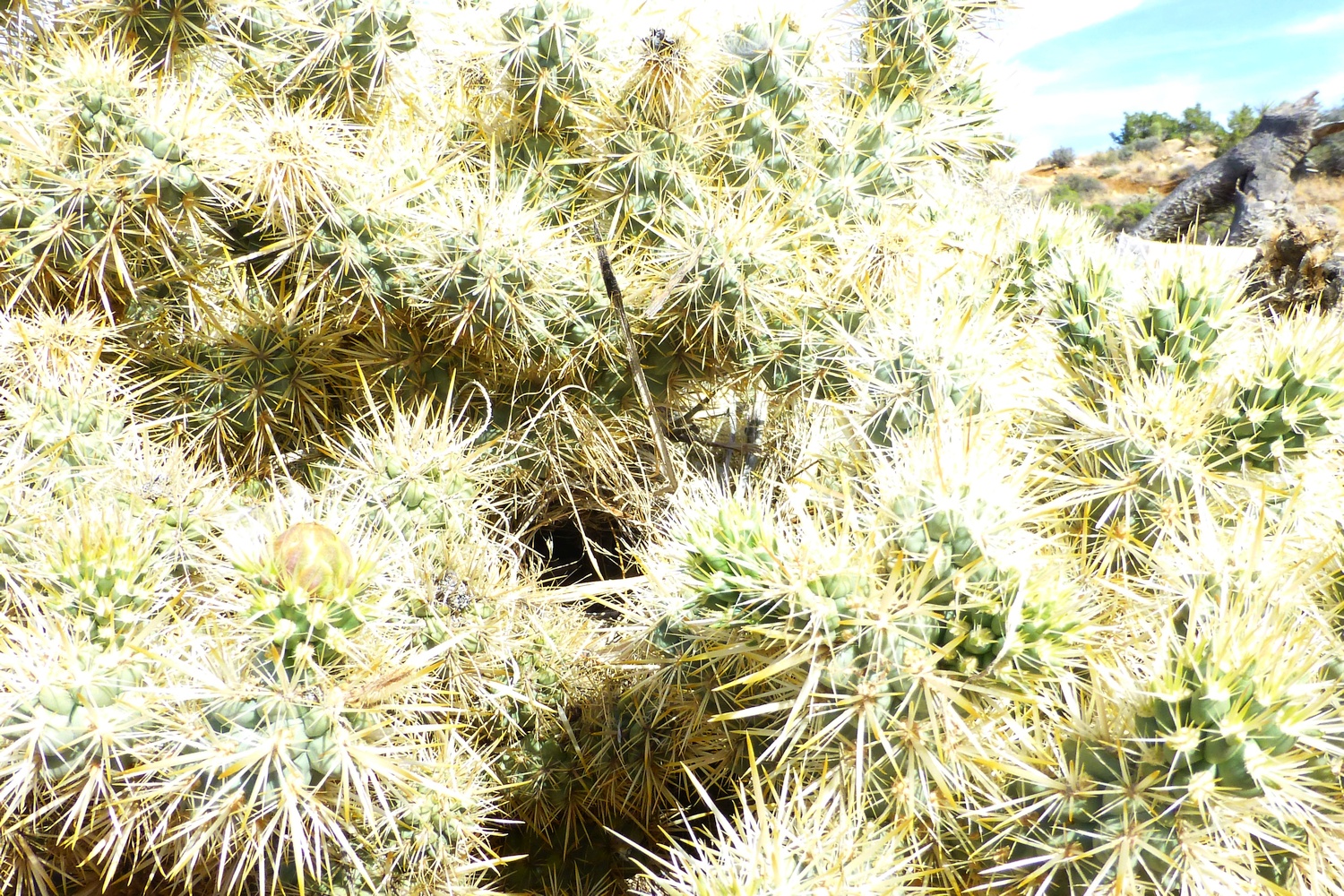
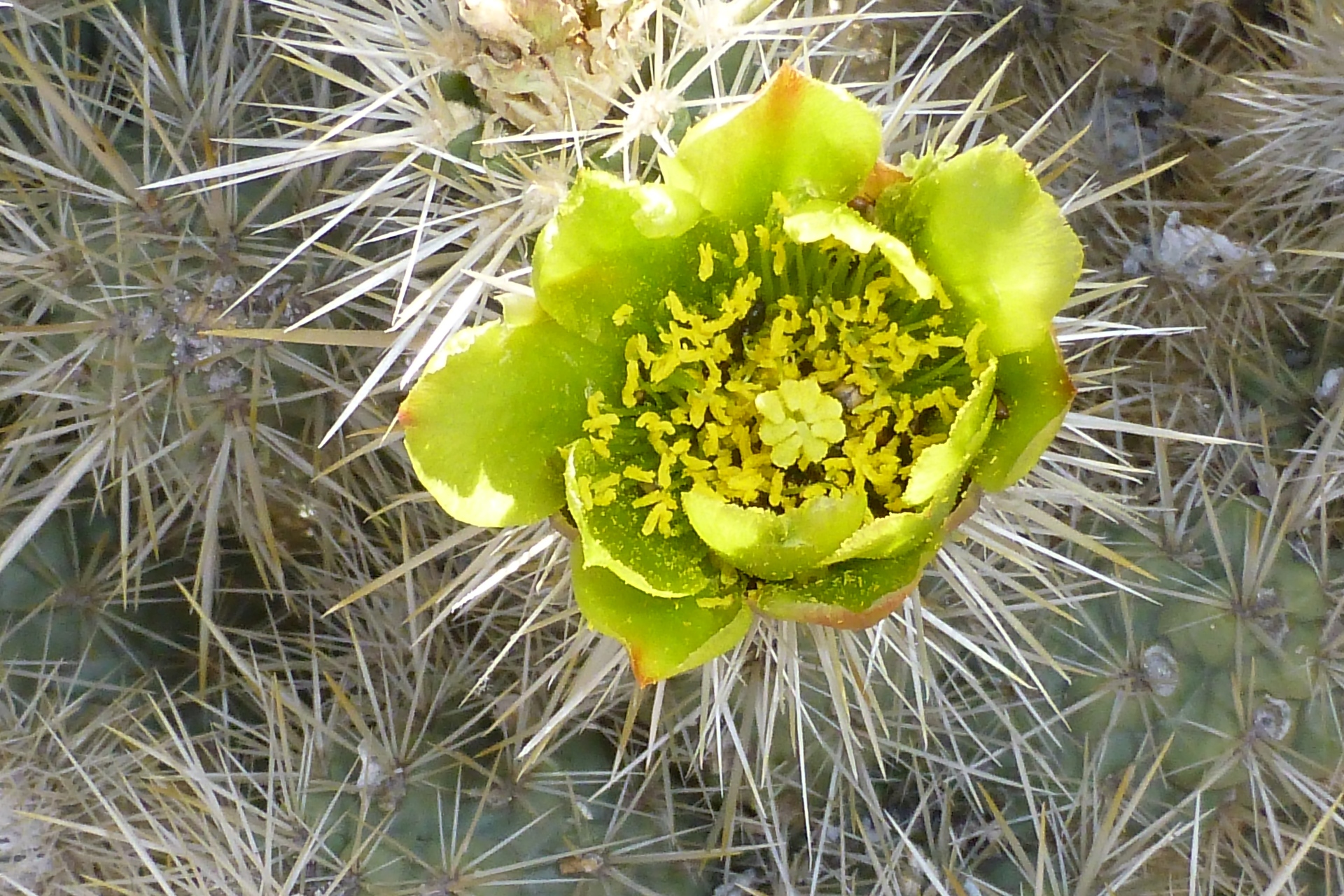
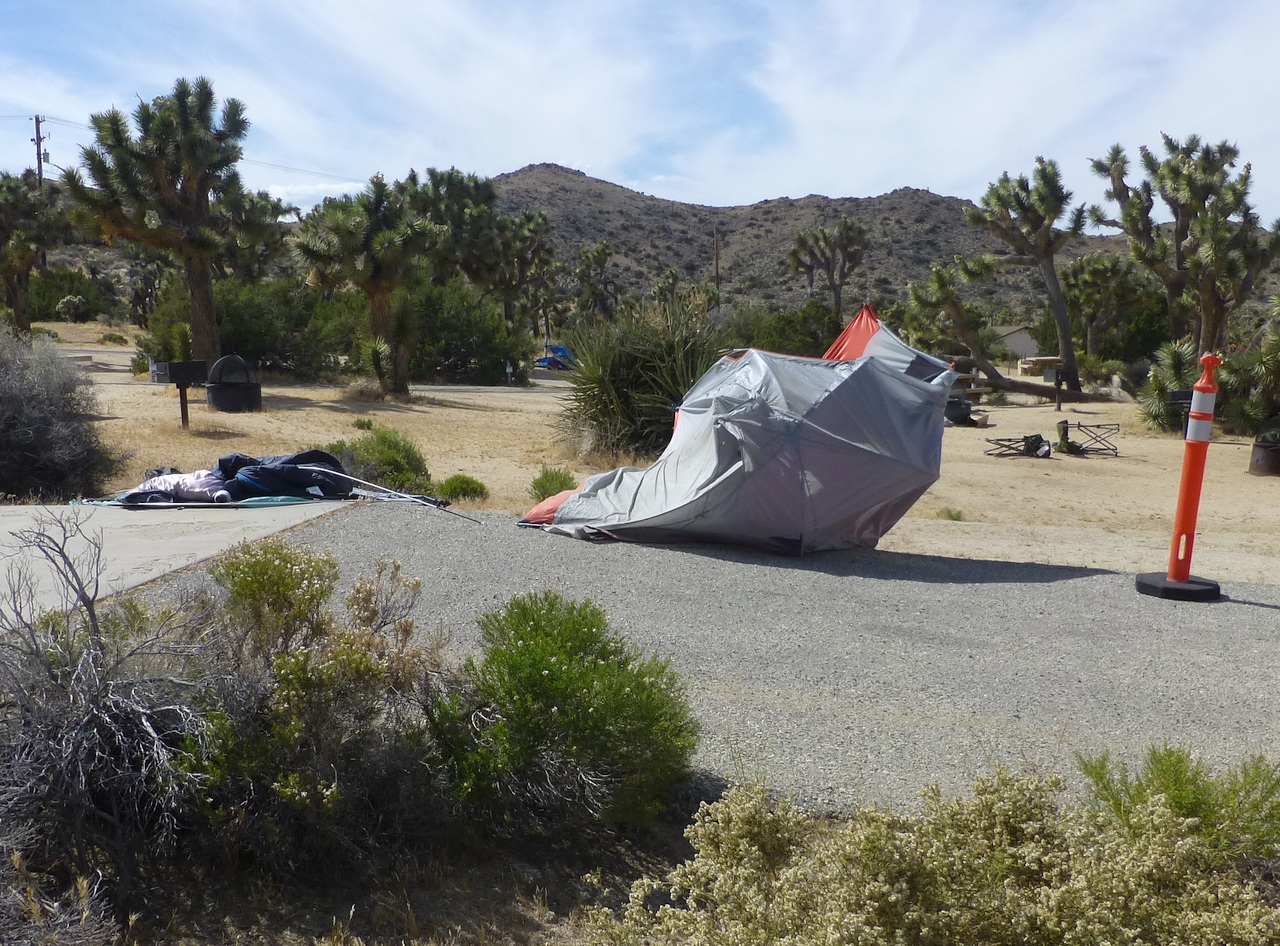
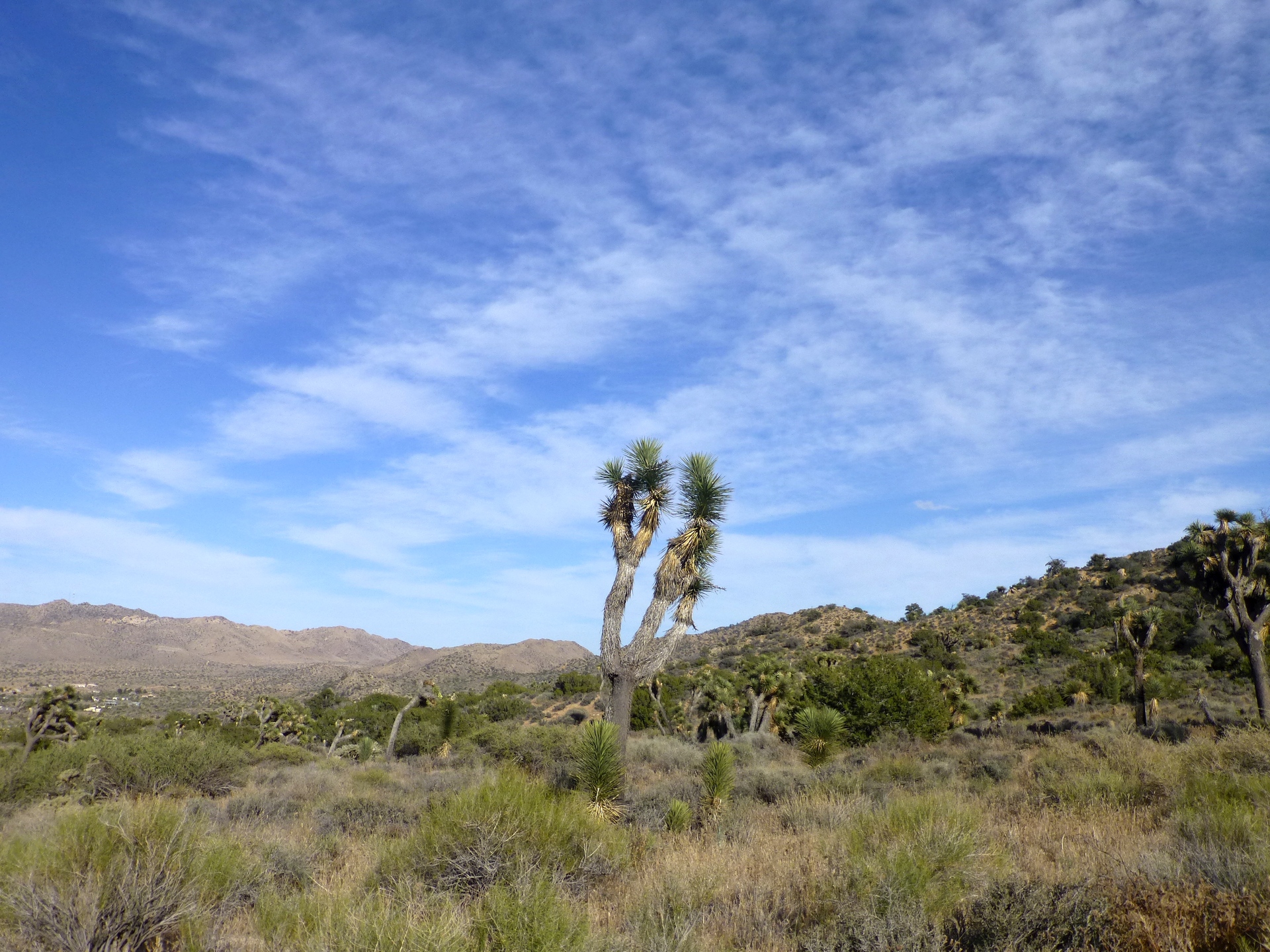
Black Rock campground is a great place to visit if you want to see what Joshua Tree National Park looks like, but are too thrifty or pinched for time to drive into the main park. It’s part of the National Park, but you don’t have to pay admission, you can park by the camp HQ and walk anywhere you want. You can camp (now $35!, reservation needed), it’s only a few miles to the town of Yucca Valley, and the habitat is much the same as the main park with lots of cactus you can admire at an appropriate distance. Many of the cholla cacti harbor old nests of Cactus Wrens. We stayed at a town motel, and can recommend Las Palmas Mexican Cuisine for dinner.
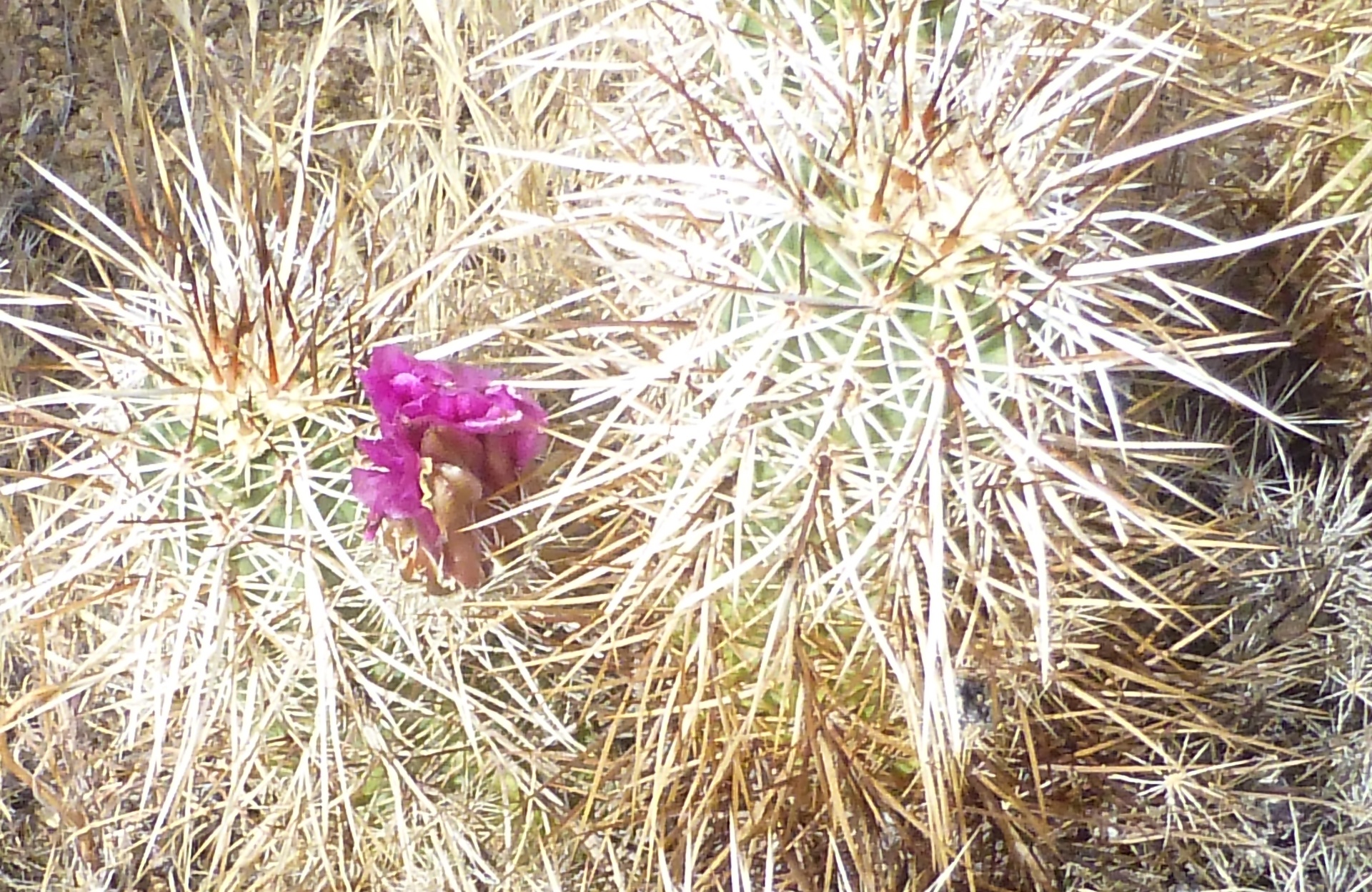
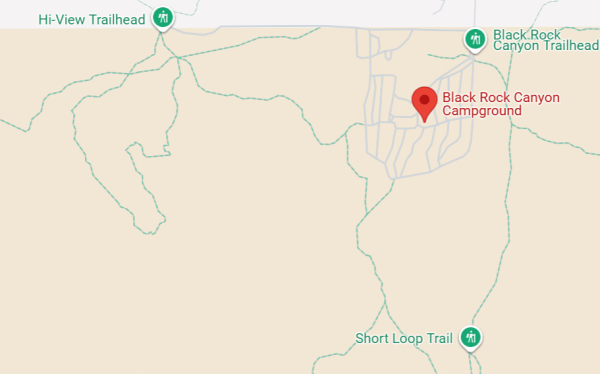
We then drove through the campground, past the rangers’ offices and left up the dirt road that leads to the Hi-View Trailhead, perhaps a mile up-canyon. As you can see on the map below, trails branch out in all directions. Wear appropriate shoes, or better, thick soled boots. Cholla cactus thorns are long and strong, very tough to pull out of your boot or ankle and they hide on the ground when the cactus joint falls off.
At the parking lot we found a large lizard sunning itself on a fence post. The dark mark on the neck identified it as a Desert Spiny Lizard, Sceloporus magister.
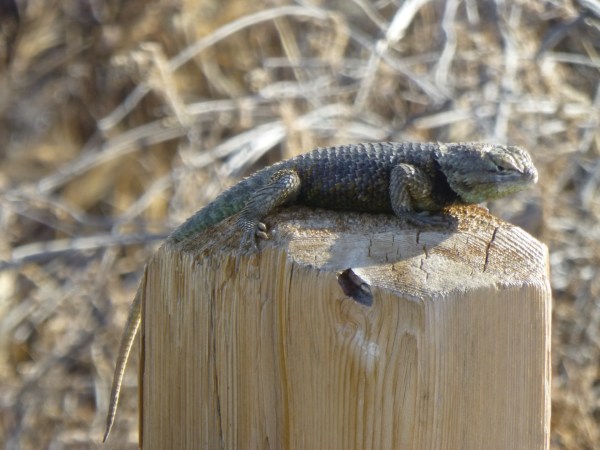
The Peterson Field Guide to Western Reptiles & Amphibians says this lizard is 3.5-5.5″ long, from snout to the vent by the rear legs. As the tail is definitely longer than the body, this makes it about a foot long.
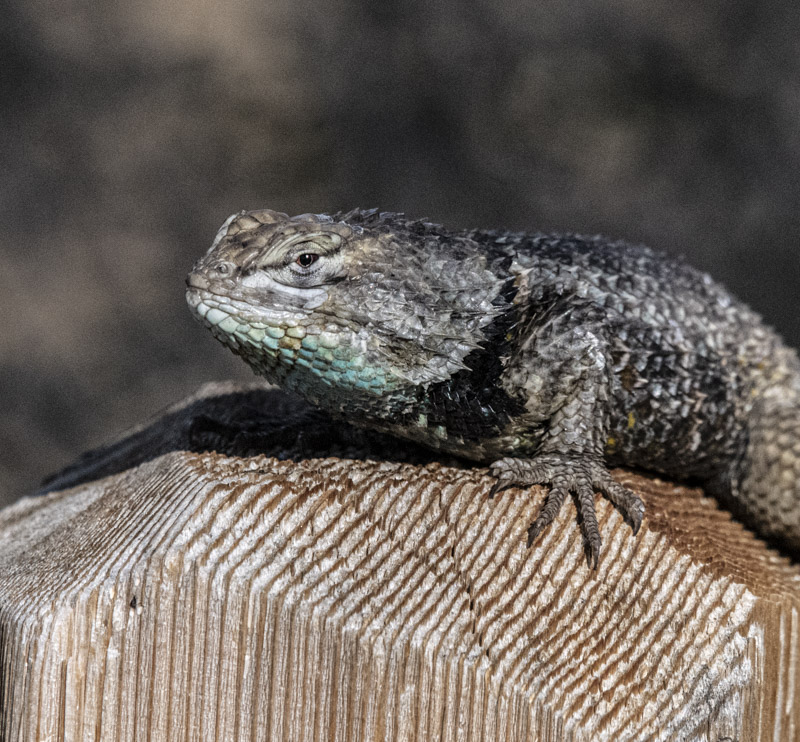
Note the blue-green throat.
The altitude here is slightly higher than in the campground and the trail we had just walked, and there were more short bushy juniper trees than there had been down slope.
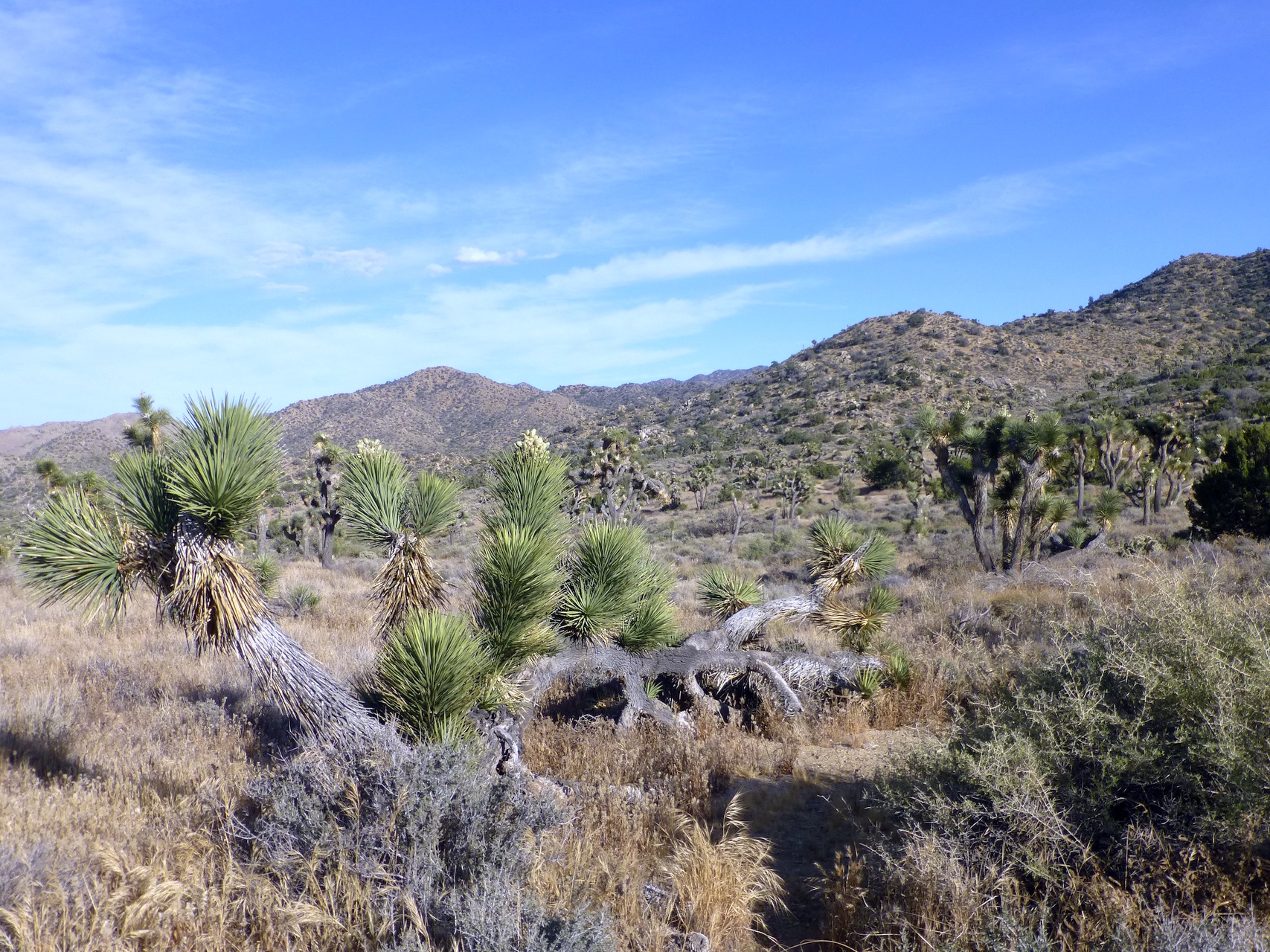
The trees became increasingly more numerous as we walked upslope. We hoped for Pinyon Jays to pass overhead as this is the edge of their Pinyon-Juniper habitat, and we often see them in the general Black Rock vicinity. Once, in the early morning, about 100 of them invaded the campground, perching on yuccas, joshua trees, poles, wires and picnic tables everywhere. But no such luck today.
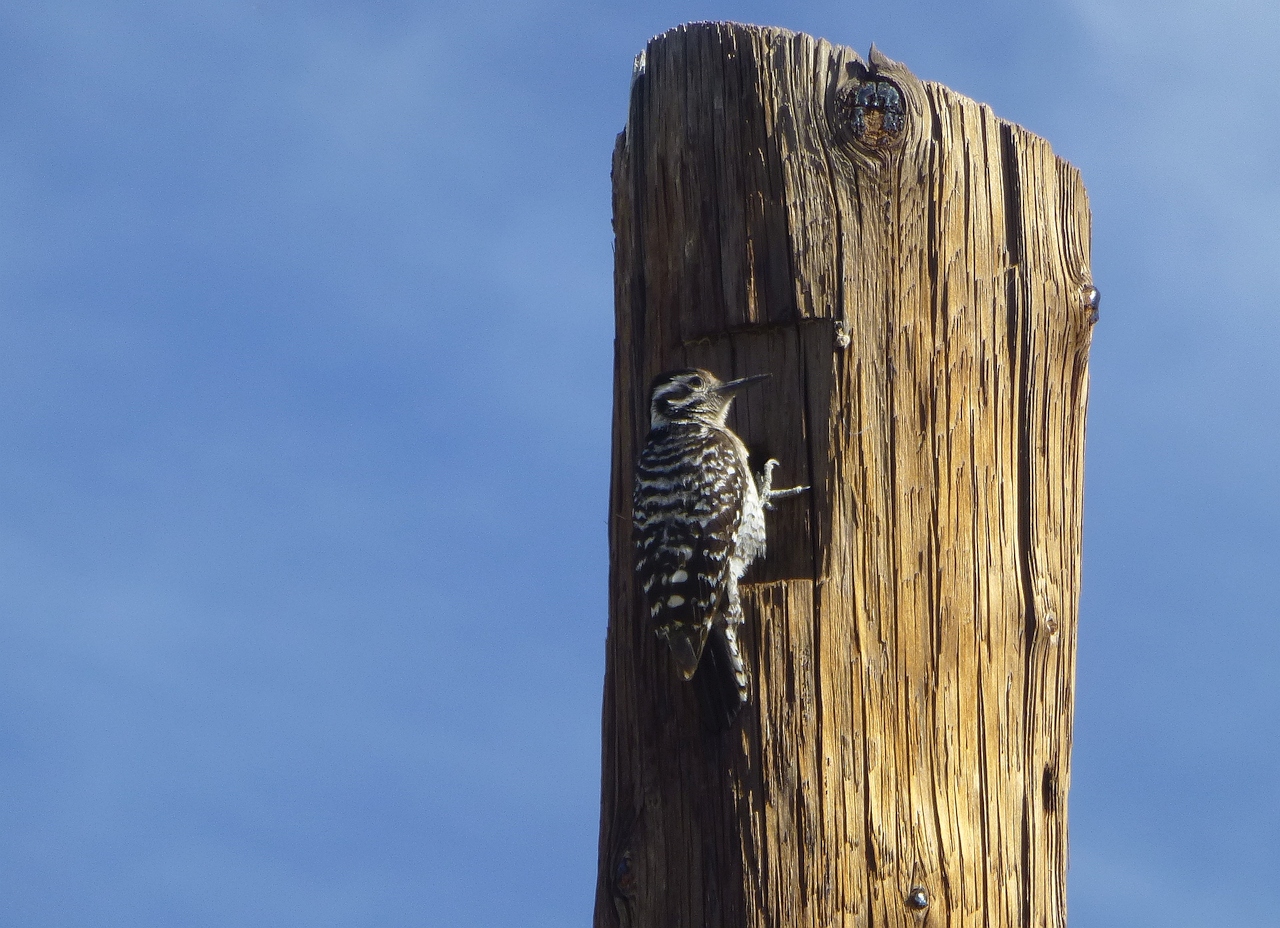
Our local “Nutterback*” Woodpecker hybrid: Ladderbacked x Nuttall’s
Ladderbacked Woodpeckers are resident in the arid deserts from SE California east to SE Colorado, West Oklahoma, the western half of Texas and nearly all of Mexico. Nuttall’s Woodpecker is the western damp riparian habitat version, resident from northern California to northern Baja California, from the ocean to the montaine forest of the Sierras and Cascades. These two are very similar in appearance, and for at least 20 years if not far longer, their hybridizing has been noted, particularly in this area near Joshua Tree National Park, and especially at Morongo Valley Preserve, which we visited the following day. Here all sorts of hybridization mixtures have appeared, as backcrosses have created what can be called a “wobbly (or ill-formed) spectrum” of variation, although there’s probably an official scientific term for what appears, when “good” types of Nuttall’s or Ladderbacked breed with one another, then with various hybrid offspring, and hybrids breed with one another until all sorts of genetic mixtures result in a mélange of plumage appearances.
I believe this bird is the first hybrid I’ve seen outside of the Morongo Valley Reserve and next-door-neighbor Covington Park, and it was on a pole near the Black Rock Campground HQ building. The pole wasn’t performing any function, but looked as if it once had a crossbar or something else placed on it. The hole (see photo below) may have held a long bolt to keep the crossbar in place.
The face pattern of this individual looks much like that of the juvenile Nuttall’s with the large white streak beginning over the eye and widening out as it descends onto the shoulder. But there is no red forecrown which juvenile Nuttall’s possess. The black face pattern also connects onto the black shoulder, as with Nuttall’s. The nasal feathers are very light brownish. Ladderbacked and female Nuttall’s can have brownish nasal feathers (or tuft), but the pattern here looks more like Ladderbacked..
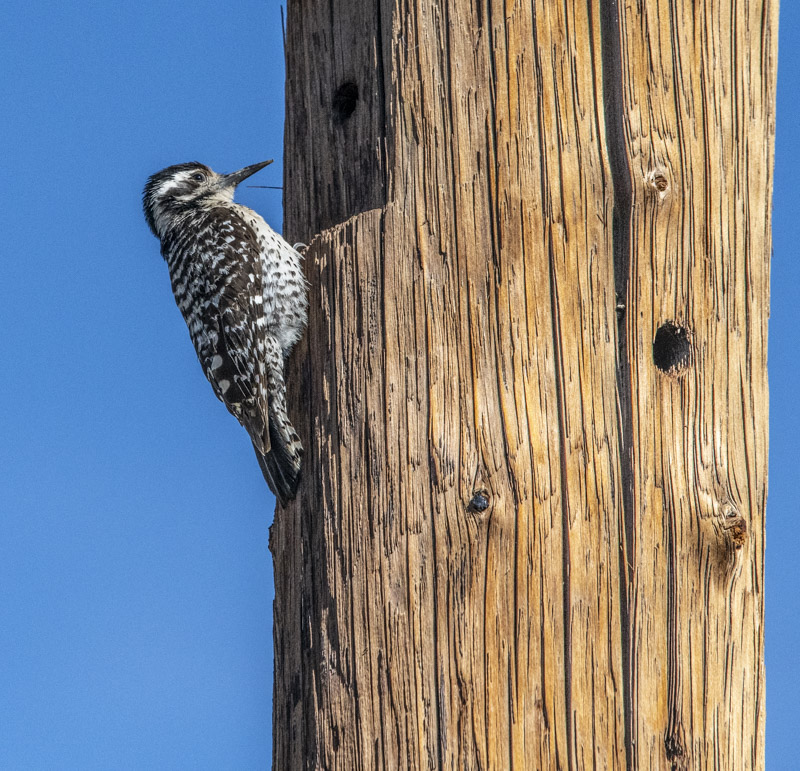
The black area at the top of the shoulder is not only narrow, as with Ladderbacked, but is irregular, possibly a result of gene mixture. The amount of black here looks almost intermediate between the two species. The pale areas on face and front are quite white, as with Nuttall’s. except for the previously mentioned nasal tuft, part of the neck and part of the upper breast, which have a brownish wash like that of the Ladderbacked. The back and wing streaks/spots seem more like Ladderbacked.
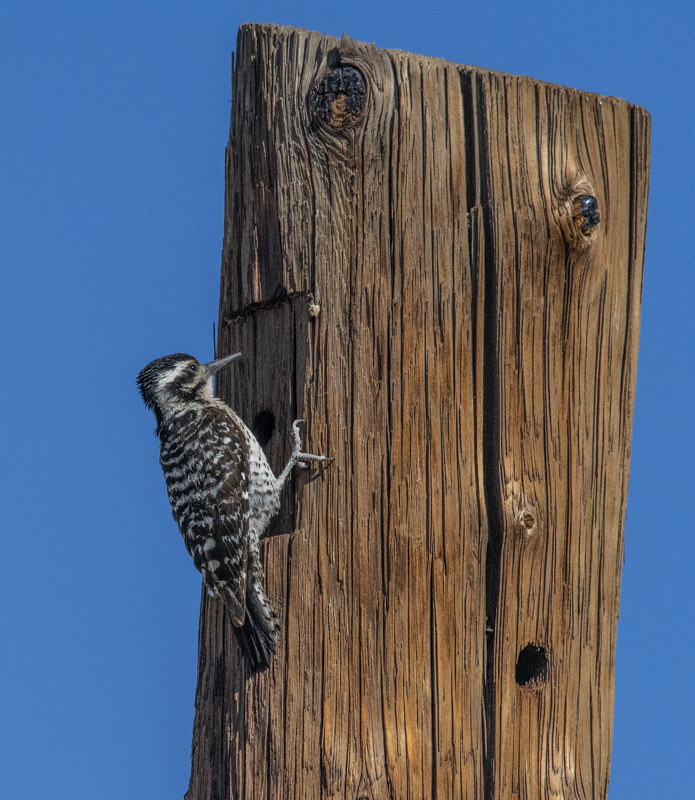
In the photo below, note the slight brownish wash, most noticeable above the bill, lighter on upper breast and very light on the neck. The black face pattern connects to the shoulder, and the black bar at the top of the striped back is moderately thin and irregular.
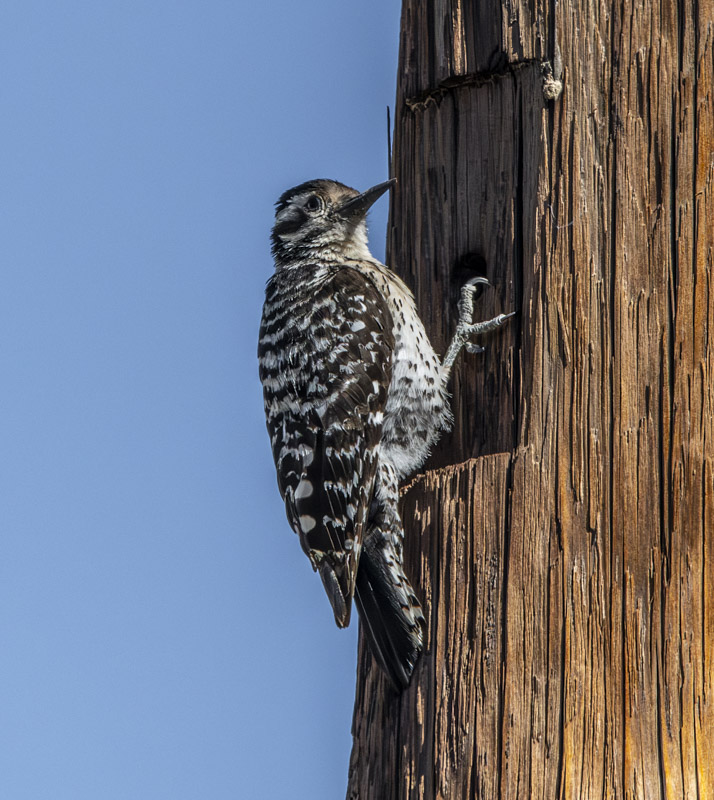
It seems that the results of this hybridization are moving out beyond their Morongo Valley Preserve homeland. Although I do conclude that this is a hybrid, we’ve previously seen more convincing hybrids at the preserve than this one.
The primary definition of species is the Biological Species Concept, which defines a species as a group of organisms that can successfully interbreed in nature and produce fertile offspring. Ladderbacked and Nuttall’s Woodpeckers are doing this, and the blended plumages of their fertile offspring are carrying the evidence. These species will probably be lumped in the not-too-distant future.
*Later Edit Note: Longtime reader, birder and poet carol prismon-reed, daughter of SMBAS board member emeritus Mary Prismon, proposed Nutterback Woodpecker for the eventually-lumped species after reading the email version of this blog. I think it’s perfect. So welcome to our new Nutterback Woodpecker!
Unfortunately we didn’t post any reports or keep a checklist for our trips between 2015 and 2026. We had many noticeable misses on this trip, particularly flycatchers, Cactus and other wrens, sparrows, Scott’s Oriole and warblers. Again, as was noted with the absence of wildflowers and the emptiness of Cactus Wren nests, perhaps spring arrived early here this year.
| Black Rock Campground | |||
| B – Present, H – Heard Only | |||
| Species List | 5/3/26 | 5/2/15 | 5/4/13 |
| Gambel’s Quail | 5 | B | B |
| Rock Pigeon | B | B | |
| Eurasian Collared-Dove | 3 | B | |
| White-winged Dove | 1 | B | B |
| Mourning Dove | B | B | |
| Greater Roadrunner | 1 | B | |
| Black-chinned Hummingbird | B | B | |
| Anna’s Hummingbird | B | B | |
| Costa’s Hummingbird | B | B | |
| Turkey Vulture | 3 | B | |
| Red-tailed Hawk | 1 | ||
| Ladder-backed Woodpecker | 2 | B | B |
| Woodpecker hybrid LB x Nut | 1 | B | B |
| American Kestrel | 2 | B | |
| Western Wood-Pewee | B | B | |
| Black Phoebe | B | B | |
| Say’s Phoebe | 1 | B | |
| Ash-throated Flycatcher | B | B | |
| Cassin’s Kingbird | B | ||
| Western Kingbird | B | ||
| Pinyon Jay | B | B | |
| California Scrub-Jay | 1 | B | B |
| Common Raven | 1 | B | B |
| Oak Titmouse | B | ||
| Verdin | B | ||
| Rock Wren | B | ||
| Bewick’s Wren | 2 | B | B |
| Cactus Wren | B | B | |
| European Starling | B | B | |
| California Thrasher | 1 | B | B |
| Northern Mockingbird | B | B | |
| Western Bluebird | B | B | |
| Phainopepla | B | B | |
| House Sparrow | B | B | |
| House Finch | 4 | B | B |
| Lesser Goldfinch | B | ||
| Brewer’s Sparrow | B | ||
| Black-throated Sparrow | 18 | B | |
| California Towhee | B | B | |
| Spotted Towhee | B | ||
| Scott’s Oriole | B | B | |
| Yellow Warbler | B | ||
| Yellow-rumped Warbler | B | ||
| Wilson’s Warbler | B | B | |
| Total Species – 44 | 15+1 | 36+1 | 32+1 |
Discover more from SANTA MONICA BAY AUDUBON SOCIETY BLOG
Subscribe to get the latest posts sent to your email.



