Morongo Valley Canyon Reserve birding, May 3, 2026
[By Jean Garrett, additional comments by Chuck Almdale, photos by Chuck Almdale & Ray Juncosa]
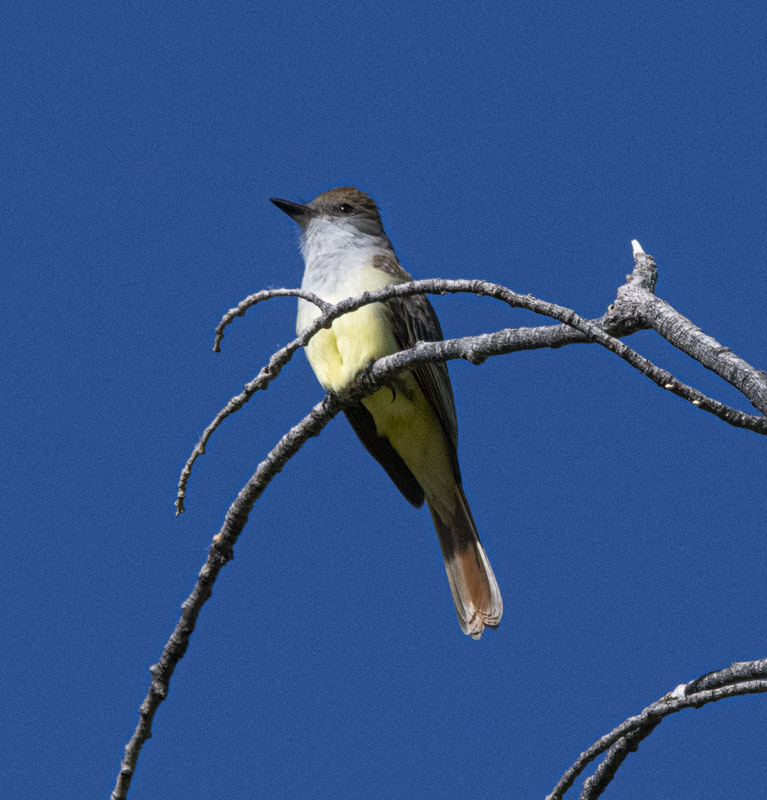
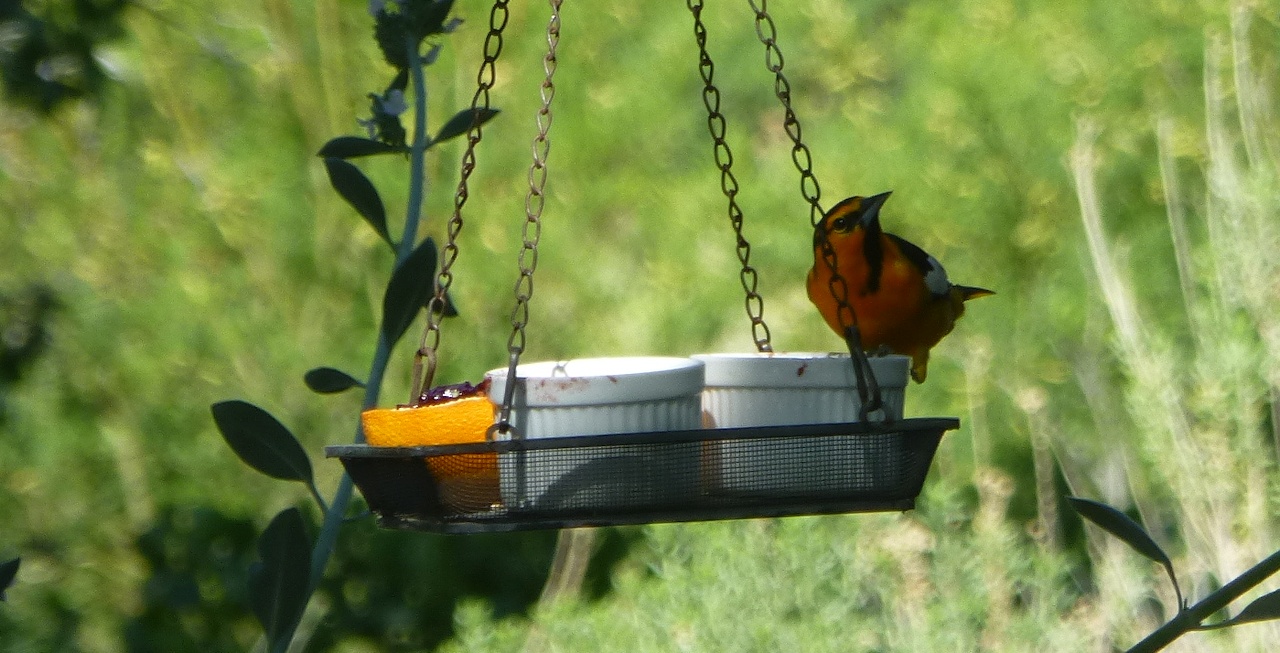
At Big Morongo Canyon Preserve, before we even left the parking lot, the sound of Yellow Warblers was everywhere but the first bird seen was the Vermilion Flycatcher, then the Yellow Warblers. Anna’s Hummingbirds were checking the last of the flowers and the Gambel’s Quails were out in the field. Wilson Warblers were the most common bird all day long followed by Western Tanagers. In previous years we would see lots of Summer Tanagers and just a few Western Tanagers. We got our share of Hooded Orioles and were lucky to also get some Bullock’s. The Brown-crested Flycatcher’s liquid “whit” kept us on the lookout and eventually the bird was seen.
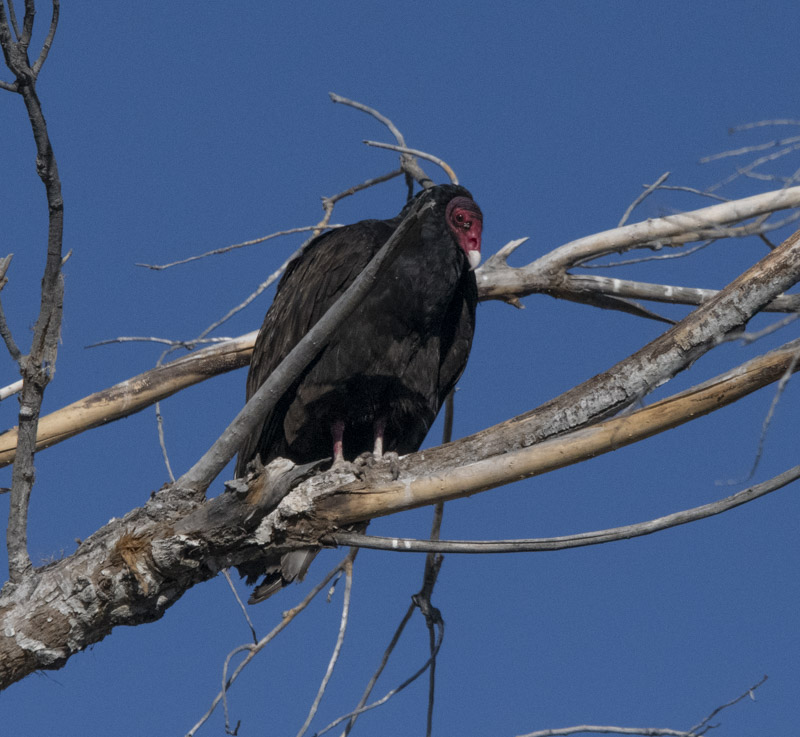
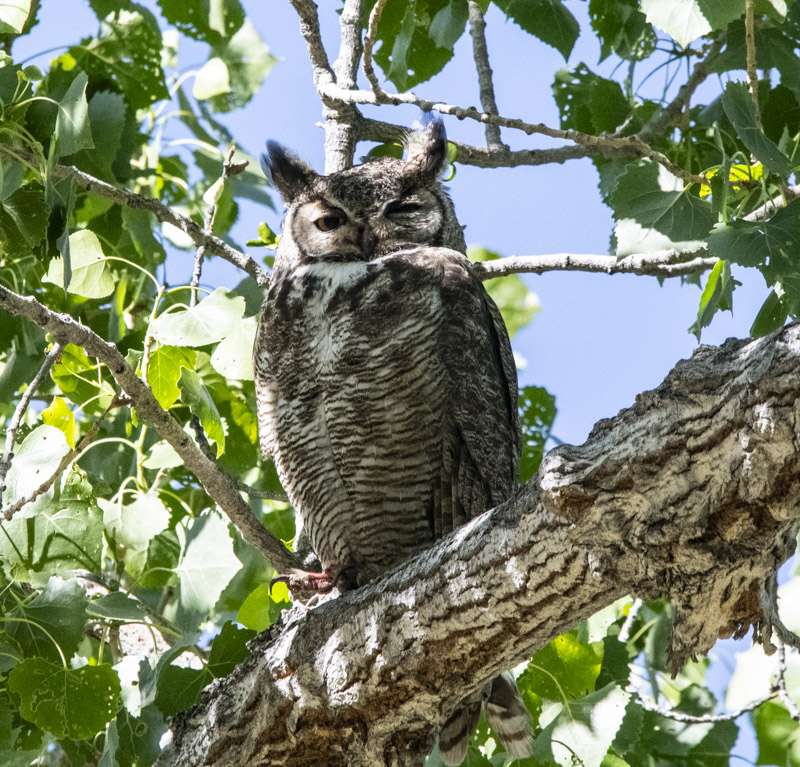
At Covington Park there was the male Horned Owl but we never found the owlets and mother that people said were there. Several Western Bluebirds and a two Cedar Waxwings were found in the park along with a Kestrel.
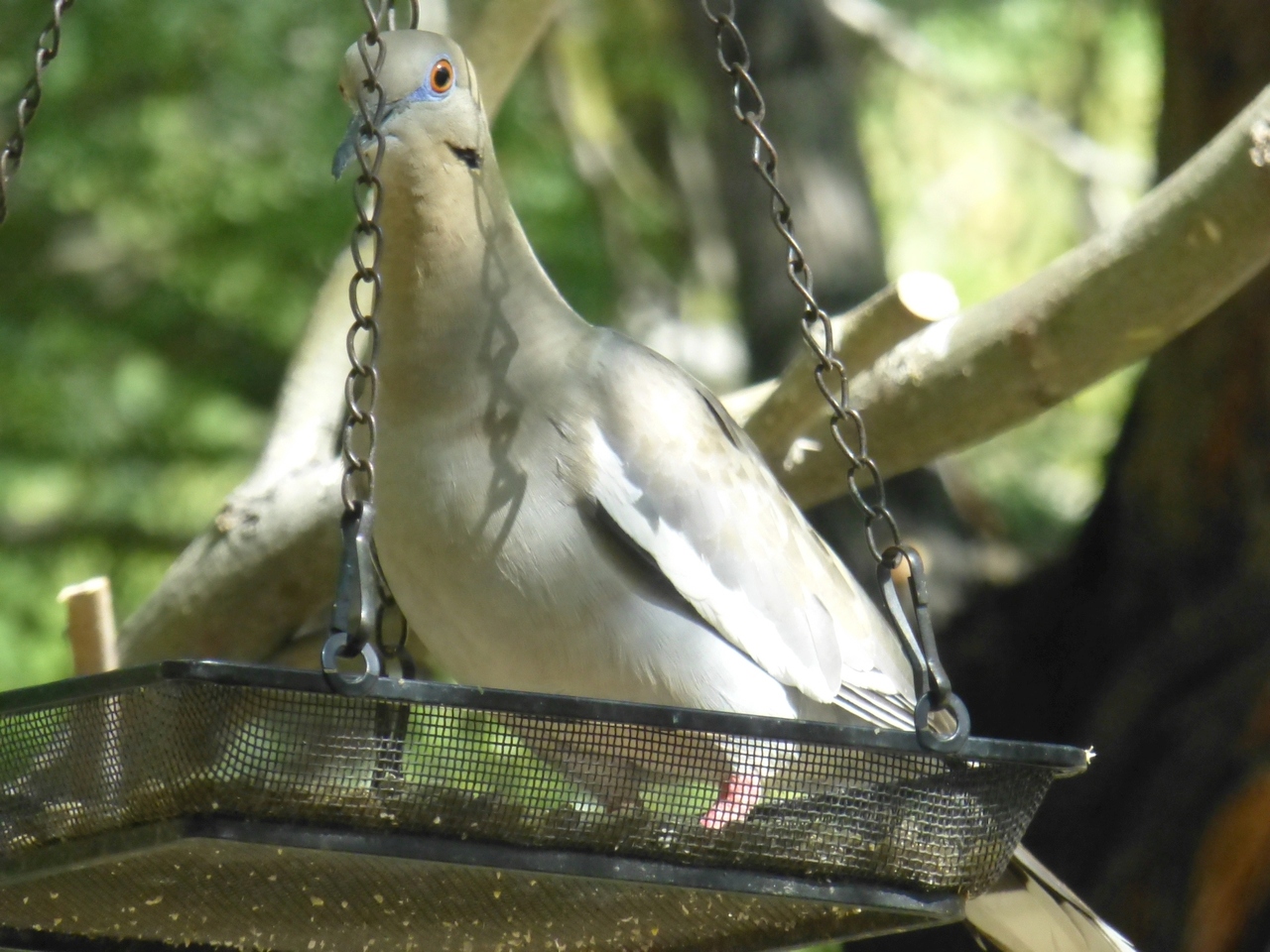
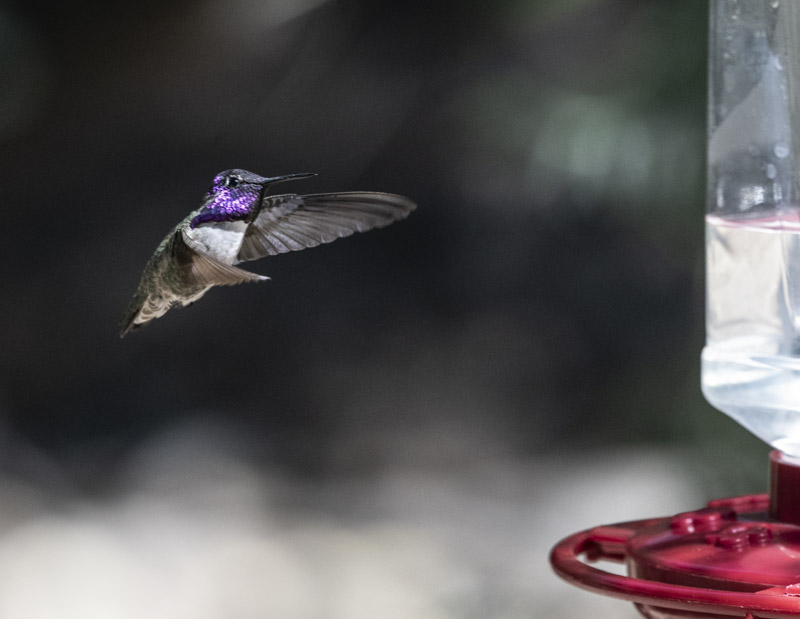
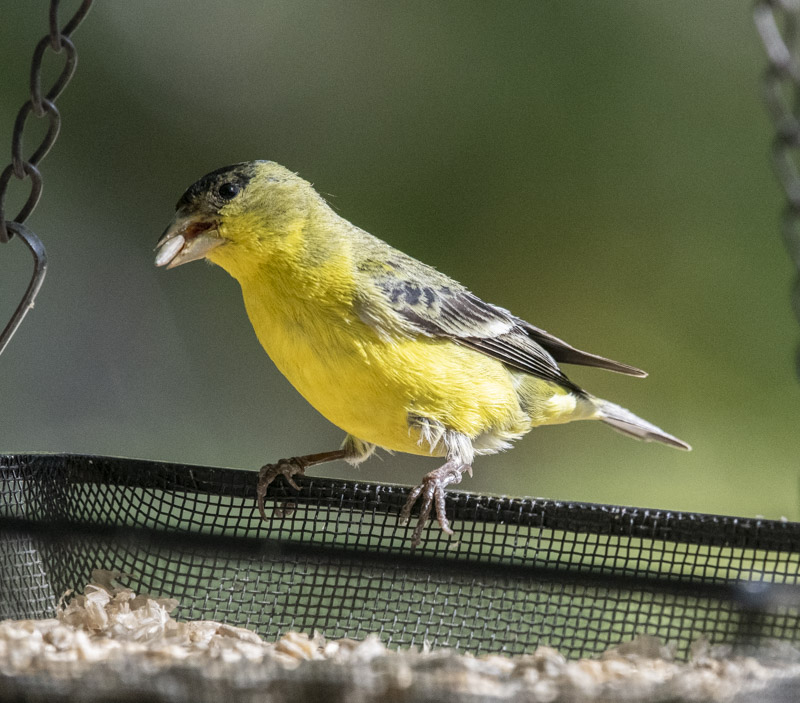
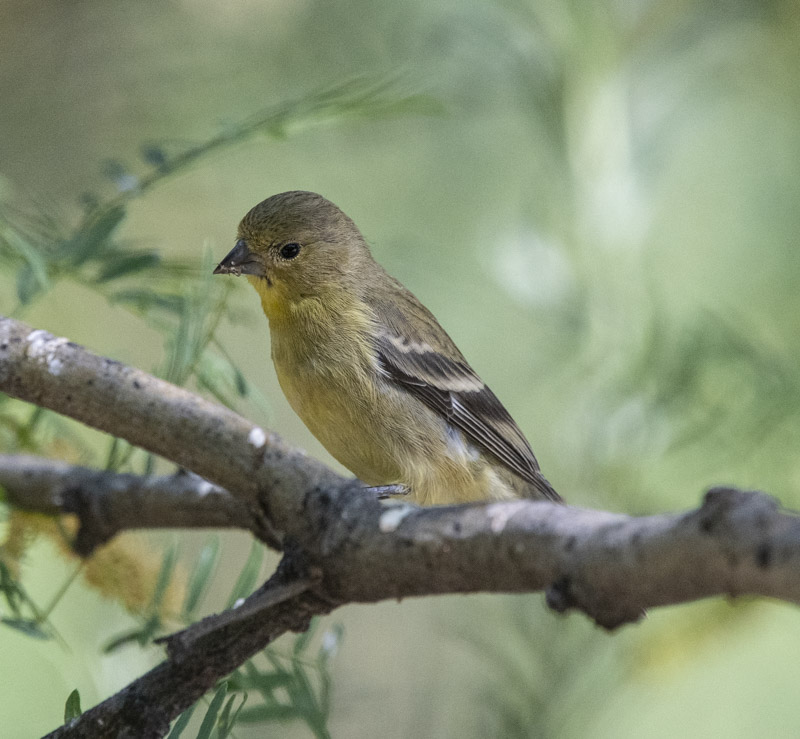
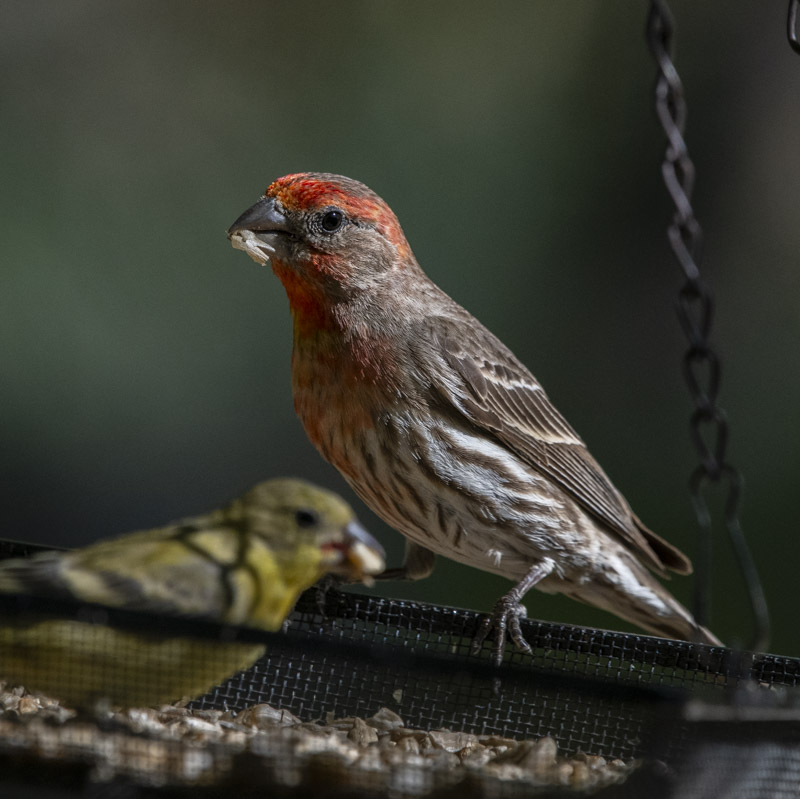
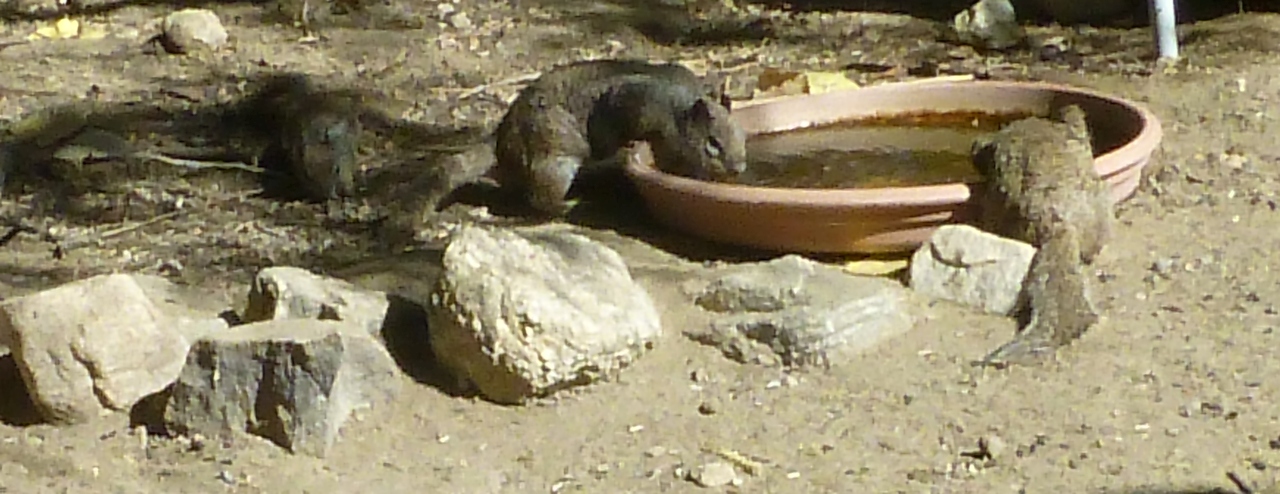
At the Preserve’s feeder station
Going back to the Preserve, only one Summer Tanager was spotted. At the feeders near the nature preserve, Anna’s and Costa’s Hummingbirds were there along with several young squirrels, lots of the above mentioned Orioles and California Towhees were on the ground. Even the Common Yellowthroat warbler enjoyed the water near the feeders.
Going back to the trail, the Yellow-breasted Chat was found in an area filled with Bushtits and a Swainson Thrush. Someone took us to where he had found a snake and it was a King Snake (which I thought I would never see). It was at least 4 feet long with creamy white and black (with deep maroon overtones) rings and was gorgeous.
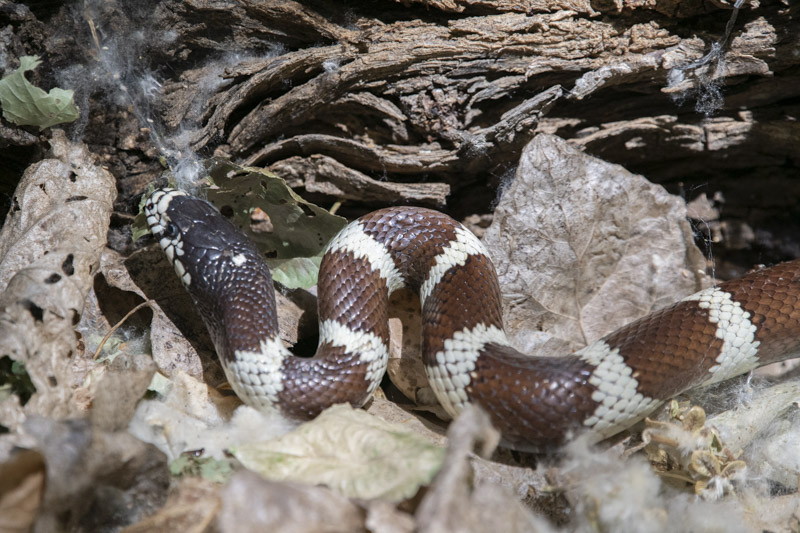
The head end of the snake
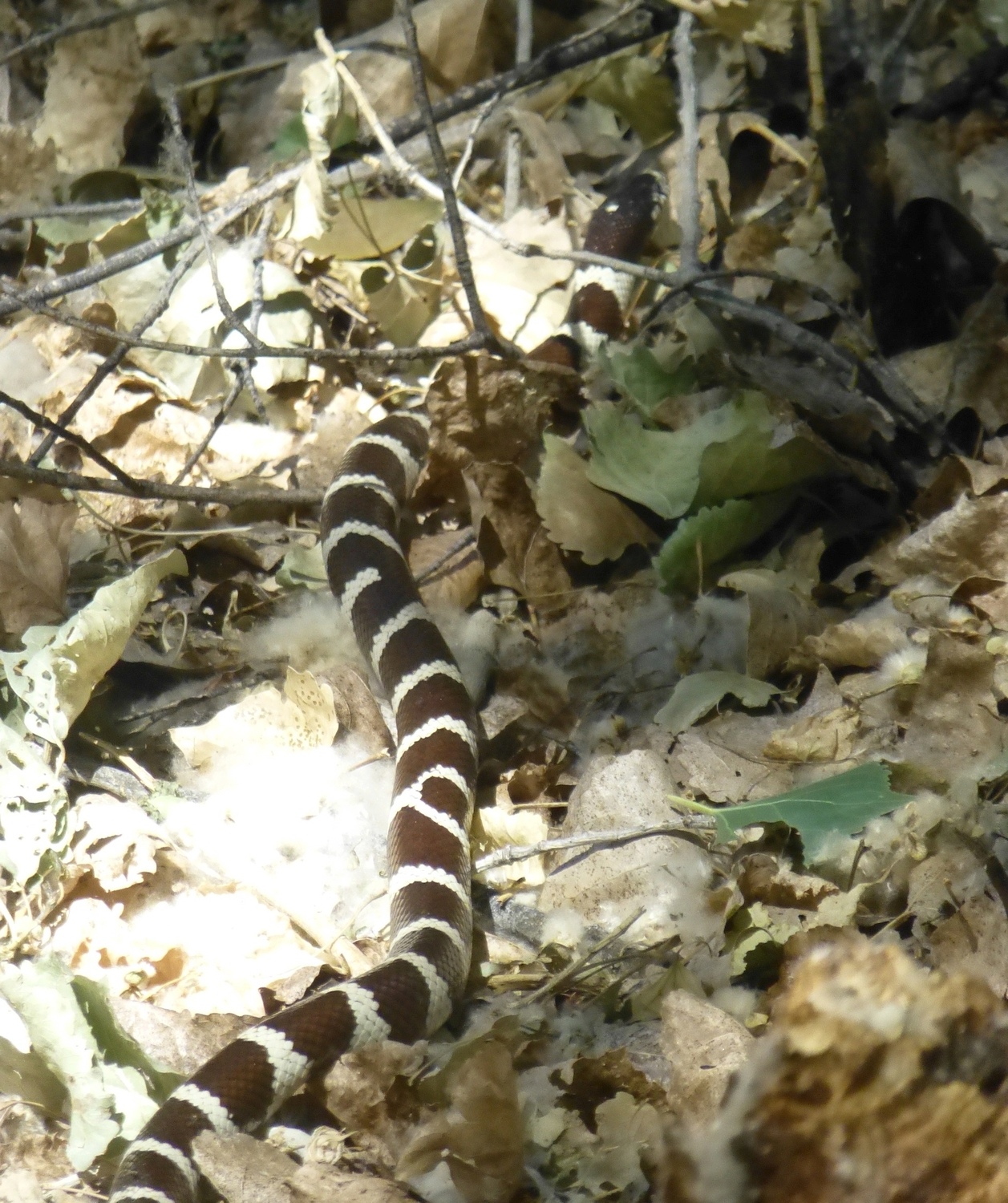
Front and middle of a snake that can be 30-80″ long.
The Hutton’s and the Warbling Vireos were in the wooded area and we finished with a Purple Finch. Not a lot of birds but like I said about Black Rock Campground the day before, it seems like spring came early so we may have missed some transient birds.
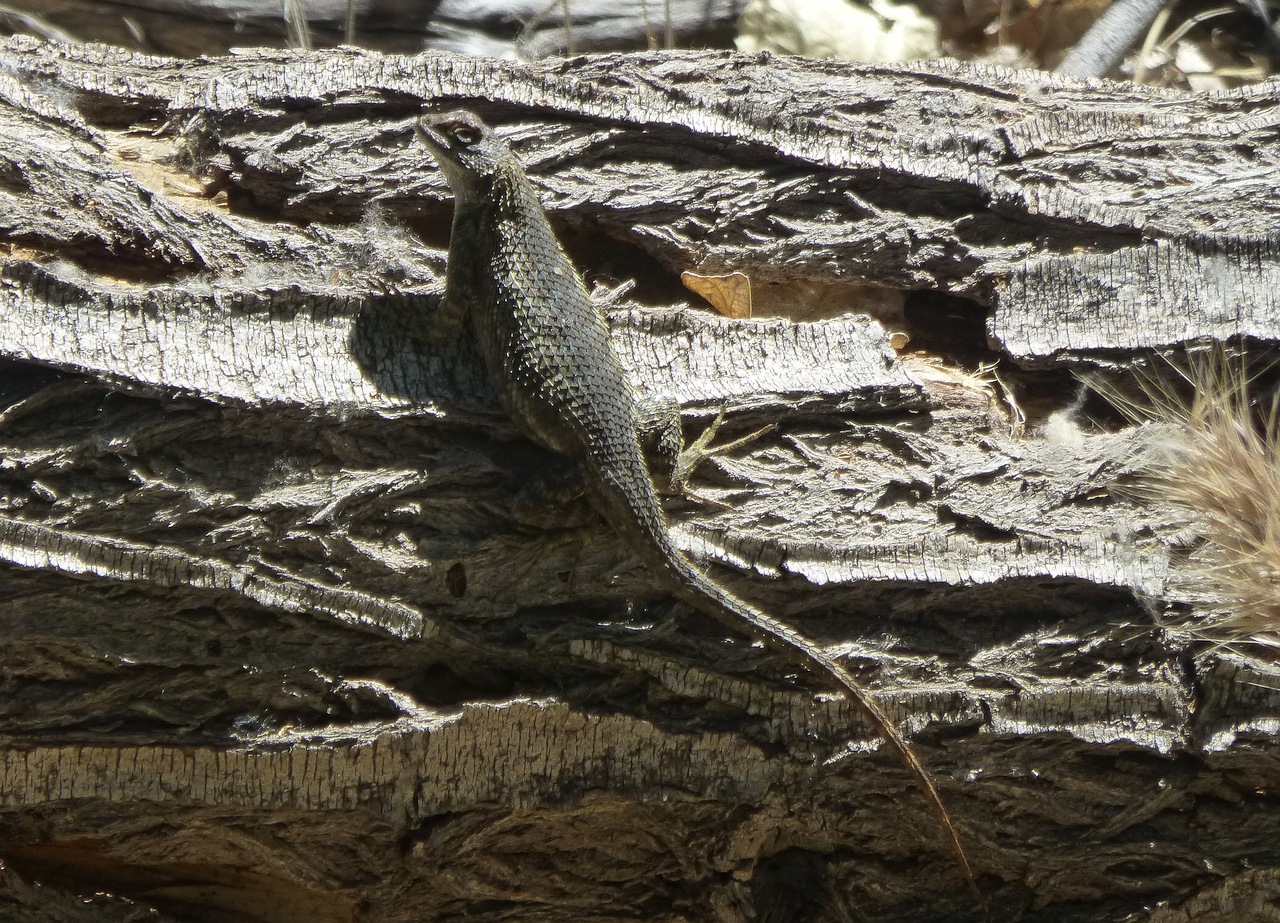
Ray Juncosa tipped me off that this dark, almost unmarked, lizard it was probably a Western Fence Lizard ssp. Great Basin, and suggested I check Wikipedia. I did, found all five subspecies listed and their photos of S.o. longipes closely matched this lizard. I find it interesting that this subspecies is also (supposedly) the local SoCal subspecies that runs around our yard in ever-increasing numbers, much to our delight. Our yard lizards have a brightly patterned brownish back and tail and looks very similar to the illustration in my lizard book, leading me to conclude it couldn’t be the one. Lesson: check more than one picture. So it goes.
According to the preserve’s unillustrated checklist, there are three amphibians, thirteen lizards, fourteen snakes and one tortoise.
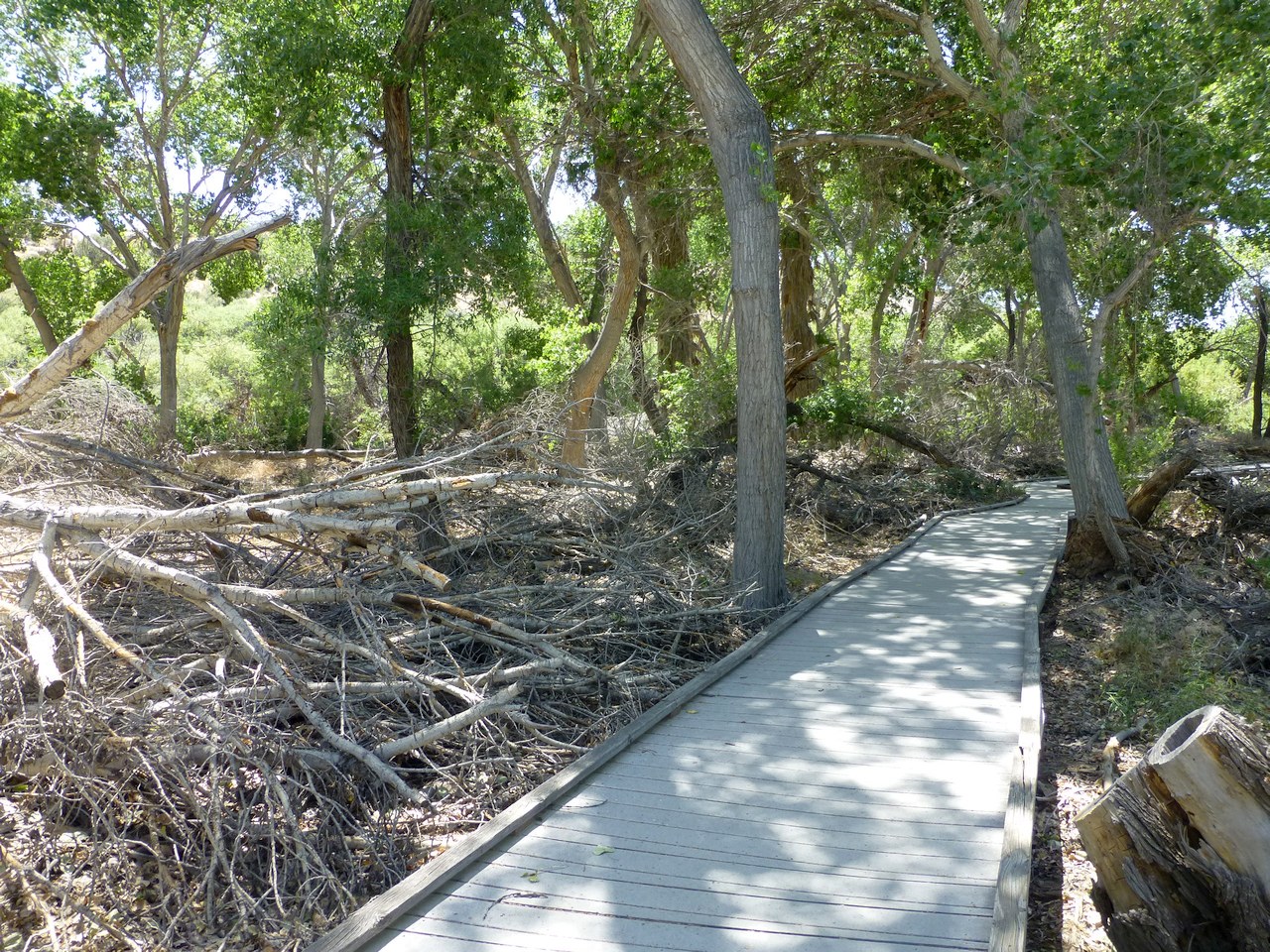
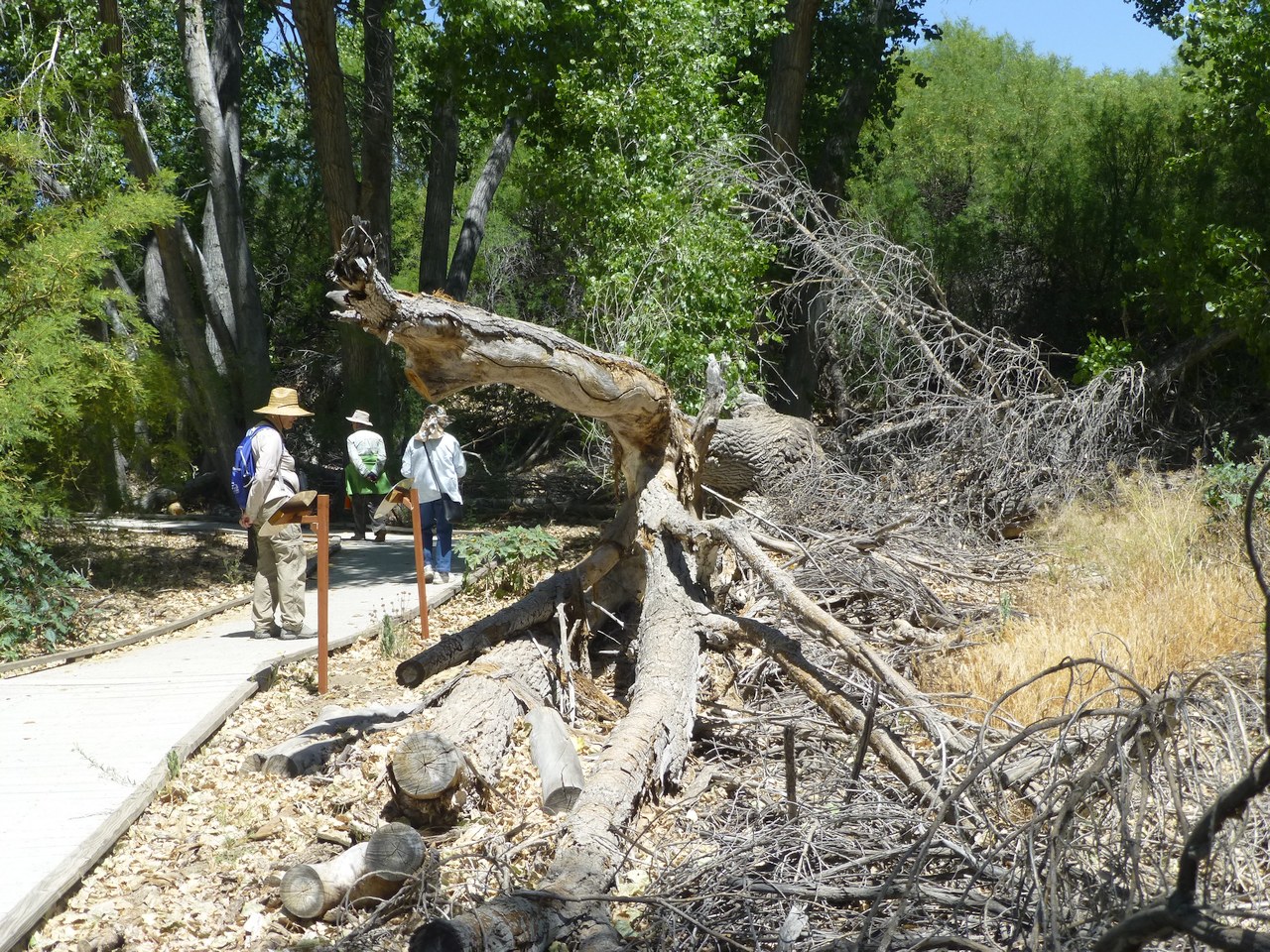
There was a heavy rainstorm and flooding in the preserve in August 2023, cause by the passage of tropical storm Hilary, originally predicted to be a hurricane. Five inches of rain brought mudslides, knocking over trees and severely damaging the boardwalk, and high winds broke off many limbs. The preserve partially reopened with limited trail access in September 2023. The damaged boardwalks were rebuilt and all trails officially reopened on March 4, 2026. There are still many fallen trees and branches in the northern section of the riparian area, especially along the western and northern sections of Marsh Trail, where these pictures were taken. In the southeastern section of Mesquite Trail, just above the north end of the West Canyon Trail, the large viewing platform is still inaccessible. But we had no trouble at all getting anywhere we wanted.
If you haven’t been to Morongo Valley before, the birding is best in April and May. We had a great many Wilson’s Warblers on this trip, and perhaps a dozen Northern Yellow Warblers, but not much else in the way of warblers. It’s the luck of the draw and bird abundance on any particular morning depends heavily on the winds or lack thereof the previous day and night in the Coachella Valley to the south. That’s where the birds are coming from.
Please note that the map below has north at the bottom.
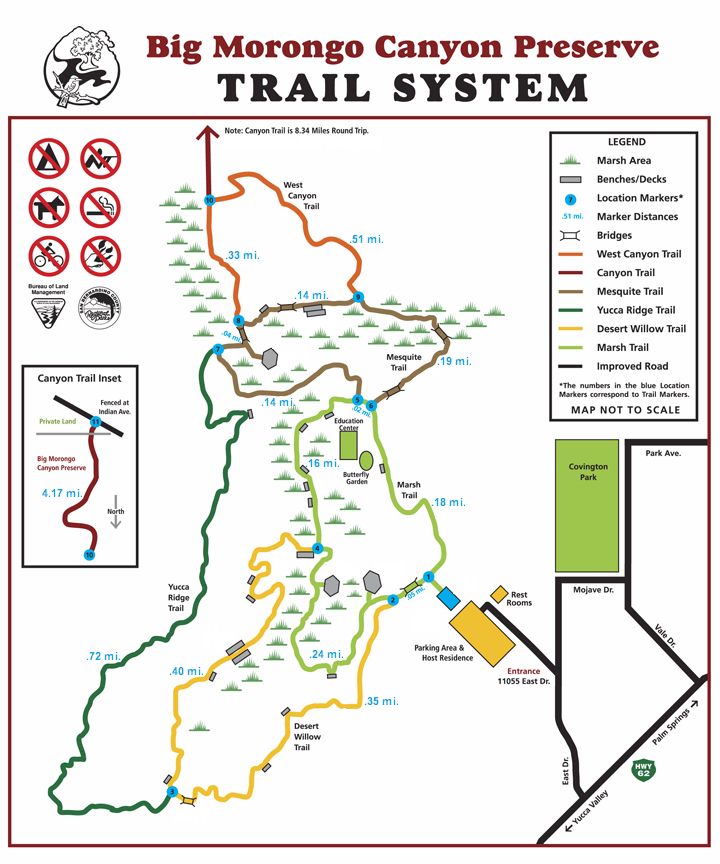
Covington Park is right next door to the preserve (look for the fence gate), shares most of the same habitat, and birding there can be just as good as at the preserve. (Stay away Easter mornings – Easter Egg hunt.) There are also several houses across the street (westward) from the park where the owners have feeders and water out for the birds. You never know what you’ll see or where it will show up, and rarities frequently appear. There are half-a-dozen places to get food in the small town of Morongo Valley. I can recommend the Morongo Valley Cafe on the SW corner of Hwy 62 and Park Avenue (no, not that Park Avenue!) where we ate lunch. Tell them you’re a birder and their place comes birder-recommended.
| Morongo Valley Canyon Preserve & Covington Park | |||
|---|---|---|---|
| M – Present H – Heard Only | |||
| Species List | 5/3/26 | 5/3/15 | 5/5/13 |
| Gambel’s Quail | 2 | M | M |
| Feral Pigeon | M | M | |
| Eurasian Collared-Dove | M | M | |
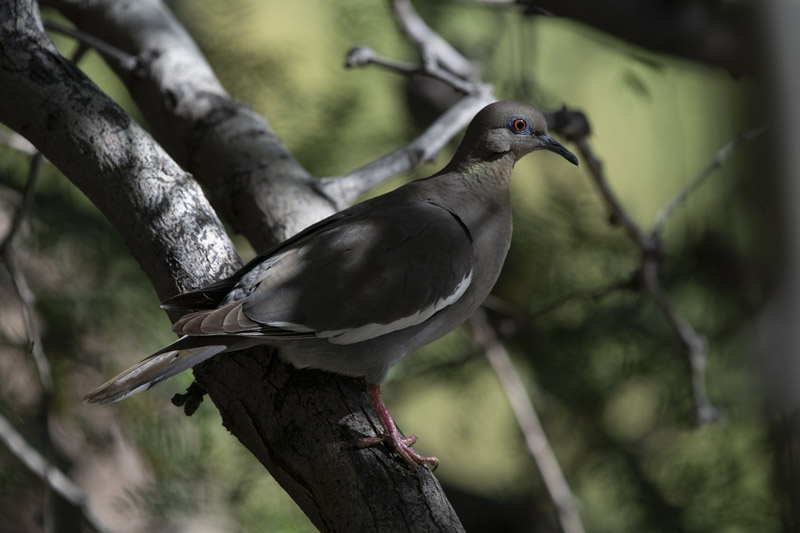
| White-winged Dove | 3 | M | M |
| Mourning Dove | M | M | |
| White-throated Swift | M | ||
| Black-chinned Hummingbird | M | M | |
| Anna’s Hummingbird | 4 | M | M |
| Costa’s Hummingbird | 1 | M | M |
| Calliope Hummingbird | M | ||
| Allen’s Hummingbird | M | ||
| Virginia Rail | M-H | M-H | |
| Green Heron | M | ||
| Turkey Vulture | 2 | M | M |
| Cooper’s Hawk | M | M | |
| Red-tailed Hawk | 1 | M | |
| Great-horned Owl | 1 | ||
| Nuttall’s Woodpecker | 2 | M | M |
| Ladder-backed Woodpecker | 3 | M | M |
| Woodpecker hybrid “Nutterback” | 1 | M | M |
| American Kestrel | 1 | M | |
| Olive-sided Flycatcher | M | ||
| Western Wood-Pewee | 2 | M | M |
| Willow Flycatcher | M | ||
| Western Flycatcher | M | M | |
| Black Phoebe | M | M | |
| Vermilion Flycatcher | 2 | M | M |
| Ash-throated Flycatcher | 1 | M | |
| Brown-crested Flycatcher | 2 | M | M |
| Cassin’s Kingbird | M | M | |
| Western Kingbird | M | ||
| Bell’s Vireo | M | M | |
| Hutton’s Vireo | 1 | ||
| Cassin’s Vireo | M | M | |
| Western Warbling Vireo | 2 | M | M |
| Loggerhead Shrike | M | ||
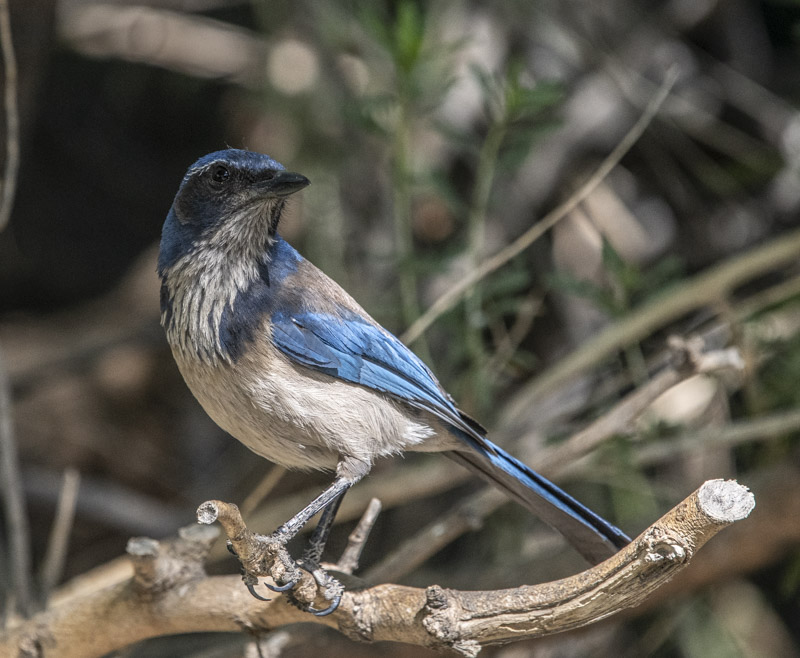
| California Scrub-Jay | M | M | |
| Common Raven | 5 | M | M |
| Mountain Chickadee | M | ||
| Oak Titmouse | 2 | M | M |
| Verdin | M | ||
| Bushtit | 5 | M | M |
| Blue-gray Gnatcatcher | M | ||
| House Wren | H | M | M |
| Bewick’s Wren | M | M | |
| European Starling | 5 | M | M |
| California Thrasher | M | M | |
| Western Bluebird | 4 | M | M |
| Townsend’s Solitaire | M | ||
| Swainson’s Thrush | 1 | M | |
| Hermit Thrush | M | ||
| Cedar Waxwing | 2 | ||
| Phainopepla | M | M | |
| House Sparrow | M | M | |
| House Finch | 6 | M | M |
| Purple Finch | 1 | ||
| Pine Siskin | M | ||
| Lesser Goldfinch | 1 | M | M |
| Lawrence’s Goldfinch | 2 | M | M |
| Song Sparrow | 4 | M | M |
| California Towhee | 2 | M | M |
| Spotted Towhee | M | ||
| Yellow-breasted Chat | 1 | M | M |
| Hooded Oriole | 4 | M | M |
| Bullock’s Oriole | 3 | M | M |
| Brown-headed Cowbird | M | M | |
| Great-tailed Grackle | M | ||
| Orange-crowned Warbler | M | M | |
| Nashville Warbler | M | ||
| Common Yellowthroat | 3 | M | M |
| Northern Yellow Warbler | 8 | M | M |
| Yellow-rumped Warbler | 4 | M | M |
| Black-throated Gray Warbler | M | ||
| Townsend’s Warbler | M | ||
| Hermit Warbler | M | ||
| Wilson’s Warbler | 30 | M | M |
| Summer Tanager | 1 | M | M |
| Western Tanager | 20 | M | M |
| Rose-breasted Grosbeak | 1 | ||
| Black-headed Grosbeak | 5 | M | M |
| Blue Grosbeak | M | ||
| Lazuli Bunting | M | ||
| Total Species: 81+1 | 41+1 | 57+1 | 69+1 |
Discover more from SANTA MONICA BAY AUDUBON SOCIETY BLOG
Subscribe to get the latest posts sent to your email.



 SANTA MONICA BAY AUDUBON SOCIETY BLOG