Free email delivery
Please sign up for email delivery in the subscription area to the right.
No salesman will call, at least not from us. Maybe from someone else.

Indian Paintbrush (G.Bando 5/10)
Great weather was the rule, although powerful, gusty winds on Highway 14 challenged control of my Dolphin RV on Friday evening. Three of us were en route to Sageland, in preparation for our Saturday morning meeting with the rest of our group at Butterbredt Spring.
Next morning, warmly dressed, we drove up and down through a frosty Butterbredt Canyon in Roxie’s 4WD hybrid Ford. We chose that route partly to test the road – which is often messed up by motorcycles and tricky to drive –but also to catch migrants. It was a hasty journey, but we heard unmistakable songs of Western Meadowlarks, briefly glimpsed a Mountain Quail scurrying up the hill, had a great look at a male Scott’s Oriole on a Joshua Tree, a Western Kingbird and a briefly perched Cooper’s Hawk. Approaching the spring, we saw large groups of migrants passing westward along the canyon’s sides and ridge, too quickly to count or even guess their names.

Western Kingbird (G.Bando 5/10)
We three – my daughter Roxane, my neighbor Linda Cady (retired Jr. High science teacher who loved camping with her students, is a nature enthusiast and new to birding) and I – met the rest of our group waiting at the Spring: Jean Garrett, Gloria Bando and Chris Lord. We later joined Keith Axelson at his Sageland Ranch where we camped and had dinner, including a cake to celebrate his 85th birthday on this trip, which he inaugurated many years ago. Many birders honor Keith as primarily responsible for establishing Butterbredt Spring as a premier birding destination and Sanctuary, supported by Santa Monica Bay Audubon.
8:15 a.m. is a little late to catch all the migrants, but we immediately found many species of birds. A beautiful male and female Black-throated Grey Warbler, Lesser Goldfinches, Chipping Sparrows, Dark-eyed Juncos, Wilson’s Warblers dripping off willow branches, male and female Black-headed Grosbeaks, Yellow-rumped Warblers in eye-popping breeding plumage and White-crowned Sparrows to list a few. Mourning Doves and House Finches were numerous. California Towhees, Bewick’s Wrens, House Wrens and Rock Wrens were all singing. Long-eared Owls and Roadrunners were absent, but maybe next year! Floral bonuses included: deep pink Beavertail Cactus on the slopes, many yellows, especially brilliant Biglow’s Coreopsis, Golden Bush, and other yellow composites. Purple Chia was also common, and deep blue, fragrant Bush Lupine warranted numerous pictures.
An interesting variety of difficult-to-identify lizards were a frequent distraction: we think they included a yellowish Southern Alligator Lizard, a Common Leopard Lizard, a Western Skink, a Whiptail and numerous Fence Lizards. I hesitate to speculate on butterflies, but American Ladies and small Blues were common.

Common Leopard Lizard. Cryptic, isn't it? (G.Bando 5/10)
While walking back up-canyon, Jean spotted a House Finch, seeming secure in its nest built in a very prickly cholla cactus. An Ash-throated Flycatcher perched and called. Hammond’s Flycatcher’s were in the Spring’s cottonwoods and along the trail. A couple of Loggerhead Shrikes sat on trailside Joshua trees. California and Mt. Quail and Chukar lurked and chattered in the shrubbery. The call of a male Mt. Quail tantalizingly, and invisibly, echoed down the canyon.
To our surprise we found both an out-of-place Acorn Woodpecker on a cottonwood tree in the desert canyon, and an excellent look at Green-tailed Towhee. Even more surprising was a Yellow-breasted Chat foraging low in trailside bushes and the base of willows beyond the large cottonwood. It was uncharacteristically silent, but willing to be seen!
Exploring independently around the spring, Chris found a MacGillivray’s Warbler, both Cassin’s and Warbling Vireos, and a Costa’s Hummingbird. We joined him and saw Hermit Thrushes working the ground and three Great Horned Owls in the trees. A Black-throated Sparrow was viewed singing.
Chris needed to leave early, so after lunch he took Jawbone Road to Sageland Ranch to say hi to Keith. Our two remaining vehicles tackled the sandy track back up Butterbredt Canon in hopes of eagles and other rarities. Jean, expertly driving her non-4WD car, managed the challenge. We saw Common Ravens and Red-tailed Hawks, but no Pinyon Jays or Golden Eagles by the time we exited onto Kelso Valley Rd. The pond and creek at Tunnel Well, which occasionally harbors Wilson’s Snipes, didn’t, but we added more Ruby-crowned Kinglets, Red-winged Blackbirds, a Killdeer and Spotted Towhee.
Welcomed at Sageland, we set up camp, explored the local canyon, relaxed and enjoyed observing the numerous nesting bird families as we added to our sightings. Of the dozens of wintering Pine Siskins, seven remained to swarm Keith’s finch feeders. Three nest boxes held active Western Bluebird families. One of the male bluebirds pounded a window periodically, as it had been doing for some weeks. A pair of Say’s Phoebes tended their nest under an eve. A pair of Phainopeplas displayed in the tree tops and an American Kestrel pair, nesting in the large box on the water tank, entertained us, with the male bringing lizards to feed his mate and spell her on egg duty. They eat a lot of lizards! At sundown, Kingbirds twittered as they settled to sleep in the trees, and groups of quail fluttered and chattered as they found their night’s roosts.
The Western Scrub-Jays patronized other feeders while small flocks of California Quails cleaned up below; the chipmunks vacuumed their share despite Keith’s black kitty watching for a chance to grab one.
The admirable Saki has learned never to make a move on a bird! He is probably one of the world’s few well-trained cats. Occasionally, a handsome little male Costa’s hummer with brilliant magenta georgette came to sip at the nectar feeder but, unfortunately, male or female Scott’s Orioles chose not to appear. A male Bullock’s Oriole did visit in the trees. Nuttall’s Woodpeckers, male and female, drummed to mark territory and find insects. More unique were the pair of Hairy Woodpeckers seen foraging in the grounds. I must mention the California Thrasher pouring out song up on the hillside, along with Bewick’s Wrens, and an Oak Titmouse sounding off. Morning calls included the unmistakable coo of a Eurasian Collared Dove, which has found its way to Keith’s land, and, of course, European Starlings.

Baby Blue Eyes on sandy soil (G.Bando 5/10)
Keith had prepared, mowed clear paths, cut away overgrown branches, improved the trail in his canyon for our safety and convenience. The stream flows continuously. It is an idyllic place. We were able to add Song Sparrow, Western Wood Pewee, Orange-crowned Warbler, Brewer’s Sparrow to our lists, if they had not been seen before, along with a debated empidonax flycatcher.
Townsend’s Warblers and a Plumbeous Vireo were seen later. At night, Western Screech-Owls gave their little warbling contact calls to prove their presence in a hollow cottonwood limb, where we hope they are raising a family. Also distant Great Horned Owls hooted under the ever brilliant desert starry sky.
On Sunday morning a pair of Ash-throated Flycatchers entertained us by continually examining the empty, for rent, nest boxes, bringing material with obvious thoughts of setting up housekeeping.
We we then hiked through fences and brush to Dove Spring Rd., admiring the flowers and checking Joshua Tree nest holes.

House Finch nest in Cholla cactus - Watch that first step when leaving! (G.Bando 5/10)
We found a pair of Cactus Wrens with a nest in progress in their favorite nesting location, a cholla cactus. We saw Western Kingbirds with similar intentions. Occasionally we needed to dodge roaring motorcycles (the only sour note in Paradise). Sadly, their idea of “fun” doesn’t merely miss the wonder of their surroundings but often defies all laws protecting that environment. Fortunately, the Friends of Jawbone Canyon, the BLM, and the SCA organization of young volunteers (which SMBAS supports financially), have made huge improvements in blocking and obliterating their illegal trails.
We also found a House Finch nest in a cholla. Theirs is an open-bowl nest unlike the Cactus Wren’s nest which is a roughly globe-shaped nest with a side entrance, always well-buried among the extremely thorny cholla branches. Incidentally, a cholla location did not save a wren nest last season when a bear came along, tore the nest and birds out of the cholla and devoured them!
As we hiked we could hear the melodic songs of distant Scott’s Orioles and the ever elusive Mt. Quail calling. We can be glad those are so cautious. Hunting season will test their survival strategies.
Most of our participants needed to head back to Los Angeles in the afternoon, but took with them, I believe, memories of a beautiful experience. I thank them, as does Keith, for joining us and making the outing a success.
I often think how very fortunate we are to have this tradition and connection to the real, wild world, where there is escape from the insanity, the violence, the unending consumerism, commercialism, and banal entertainments which currently dominate human society and destroy Nature. There, in the desert wilderness, one can escape to a haven of sanity, quiet, where all living things – animal, plant, and even the earth itself – are allowed to exist in peace, work out destiny, and, you can hear the birds sing!
All this peace may be gone at some point, of course, under the groaning rumble of wind turbines on the ridges (ask someone who lives near one; they are not as ecologically benign as touted.) Or when development creeps south along the valley road. But for now, we are greatly privileged. I am sorry some, who wanted to come, could not make it after all this year. Perhaps they and others will join us on another occasion. My species count may not be altogether complete. But it I will add it to almost 30 years of memorable Butterbredt Spring spring trips! Thanks, Keith, for having made them possible.
| Butterbredt Trip List | May 1-2, 2010 |
| Chukar | Western Bluebird |
| Mountain Quail | Hermit Thrush |
| California Quail | Northern Mockingbird |
| Cooper’s Hawk | California Thrasher |
| Red-tailed Hawk | European Starling |
| American Kestrel | Phainopepla |
| Killdeer | Orange-crowned Warbler |
| Eurasian Collared Dove | Yellow-rumped Warbler |
| Mourning Dove | Black-throated Grey Warbler |
| Western Screech-Owl | Townsend’s Warbler |
| Great Horned Owl | MacGillivray’s Warbler |
| Costa’s Hummingbird | Wilson’s Warbler |
| Acorn Woodpecker | Yellow-breasted Chat |
| Nuttall’s Woodpecker | Green-tailed Towhee |
| Hairy Woodpecker | Spotted Towhee. |
| Western Wood Pewee | California Towhee |
| Hammond’s Flycatcher | Chipping Sparrow |
| Say’s Phoebe | Brewer’s Sparrow |
| Ash-throated Flycatcher | Black-throated Sparrow |
| Western Kingbird | Song Sparrow |
| Loggerhead Shrike | White-crowned Sparrow |
| Plumbeous Vireo | Dark-eyed Junco |
| Cassin’s Vireo | Black-headed Grosbeak |
| Warbling Vireo | Red-winged Blackbird |
| Western Scrub Jay | Western Meadowlark |
| Common Raven | Brewers Blackbird |
| Oak Titmouse | Bullock’s Oriole |
| Cactus Wren | Scott’s Oriole |
| Rock Wren | House Finch |
| Bewick’s Wren | Pine Siskin |
| House Wren | Lesser Goldfinch |
| Ruby-crowned Kinglet | 63 Species |
Recommended: The Two-Fisted Birder
We recently ran across a writer, Mike Lubow, whose blog TwoFistedBirdwatcher.com has lots of interesting stories, funny stuff, very short pieces, pictures and challenges. We recommend that you check out his website for yourself, but to whet your appetite, here’s one of his stories, reprinted by permission.
The Ferruginous Hawk
Dad had already left, and I was just finishing my breakfast when Grandfather came into the kitchen, pulled out a chair and sat. Right on time again. Funny how an old man keeps such a regular schedule.
As he always does at this time, he pushed the book toward me and said, “Pick a good one today.”
Mom set a plate of food down and said, “Eat your breakfast, Grandfather.”
I looked at her. Mom in the morning. Her rollers. Her impassive voice. So flat, so mechanical. I thought, funny that she always calls him Grandfather. He’s my grandfather. It was just her way.
“Pick a good one,” Grandfather said.
It was a beat-up and well used old bird book. He knew all the birds in it by heart. As was our little custom, I closed my eyes, flipped through the pages and poked my finger suddenly down onto one.
We both looked to see what bird I picked for him.
“Ferruginous Hawk?” he said.
“First time I ever gave you that one.”
“A challenge, all right,” he said.
“Eat your breakfast, Grandfather,” Mom said.
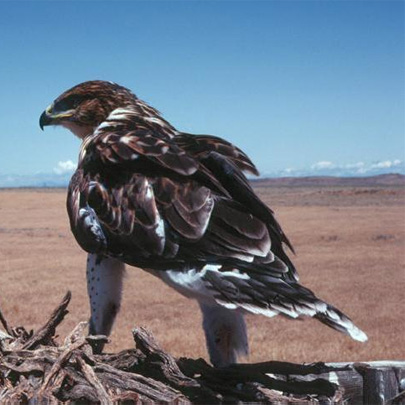
Ferruginous Hawk
*
When my grandfather was my age, he liked the birds, and knew their names. Since he retired, he’d taken up bird watching again. It got him out of the house so Mom could do her work during the day.
To make it interesting for him, one morning long ago, I kiddingly picked a bird at random from the old book and said, “See if you can spot this guy.”
Every day after that we played the same game. Evenings at dinner, I’d ask him how he did, and he’d lie, “No problem, kiddo. Just gotta know where to look.”
Mom would say, “Eat your dinner,” to both of us.
*
That evening, on the day I’d given him “Ferruginous Hawk,” Grandfather didn’t come back. When Dad came home from work, we went to look.
“Damn foolish, this bird thing of his,” Dad said. And I could see he was worried more than mad.
Grandfather’s tracks were easy to follow, and they went on for more than a mile. When we found him, he was barely alive.
He was lying bareheaded on the ground, his face awfully gray, his breath shallow and raspy.
“I saw one,” he said to me, his excitement plainly there under the weakness.
“Let’s get him back,” Dad said. We collected Grandfather’s things, got him up and breathing better, and led him home.
“I saw one,” he said again.
We were still feeling worried and serious, so I didn’t say anything back. I was tempted to say, “Ferruginous Hawk?”
It could wait.
*
Once inside, Grandfather’s breathing became completely normal, and his strength returned. He went directly to the kitchen table, sat, and began leafing through his bird book, looking at it harder than I’d ever seen him look at it before.
Dad sat and said, “Pop, this bird thing, it’s gone too far. You’ve got to stop.”
Grandfather didn’t even look at him, but just kept studying the book, turning its pages and looking at them one by one.
“Pop?”
“Shhhh.”
“Eat your dinner, Grandfather,” Mom said.
Then Grandfather closed the book and put it down gently on the table.
“I saw one,” he said to me, and smiled. But it wasn’t his usual smile.
I didn’t know what to say now.
Dad said, “Saw one what?”
Mom said, “Eat your dinner, Grandfather.”
Grandfather threw the bird book at Mom then, and when it hit, it hit hard, exploding, and all those brittle old pages flew around the room, scattering themselves over the floor.
Grandfather stood, and in one smooth movement, surprising for an old man, kicked Mom in the side hard enough to knock her off her rollers.
She fell onto her side with a clang. Sparks flared under her. And the room smelled of hot ozone.
“Eat your breakfast, Grandfather,” Mom said, her voice flat. Then she said it again, and Dad had to get up and switch her off.
*
“What’s gotten into you, Pop! First you practically kill yourself, going around without your air helmet. Then you break the robot!”
“I saw one.”
“One what?” Dad screamed.
“One bird.”
“There aren’t any birds, Dad. Not for at least fifty years!”
“What kind was it, Grandfather?” I said.
Dad said, “Stay out of this, son.”
Grandfather looked at me and laughed. “It wasn’t no Ferruginous Hawk, I’ll tell you that much.”
Malibu Lagoon Trip Report: 25 April, 2010
Some of our wintering birds have left and some migrants arrived. I thought that the cool (for April) weather may have kept the passerine numbers below normal, so I checked back over the past five years and found that the totals for species and total birds were not unusual:
2005: 52 species 643 birds 2008: 61 species 807 birds
2006: 69 species 786 birds 2009: 56 species 1202 birds
2007: 70 species 922 birds 2010: 57 species 826 birds
Among the arrivals were: Common Loon and Pied-billed Grebe (both of which are usually around all winter), a Greater Yellowlegs which dropped in just as we were leaving, 3 Surfbirds which appeared on the outer rocks after the tide dropped, their sixth appearance in 20 years, a few locally nesting Cliff and Barn Swallows, 20 Cedar Waxwings (previously seen only once on 5/26/06), and a male Wilson’s Warbler by the first footbridge.
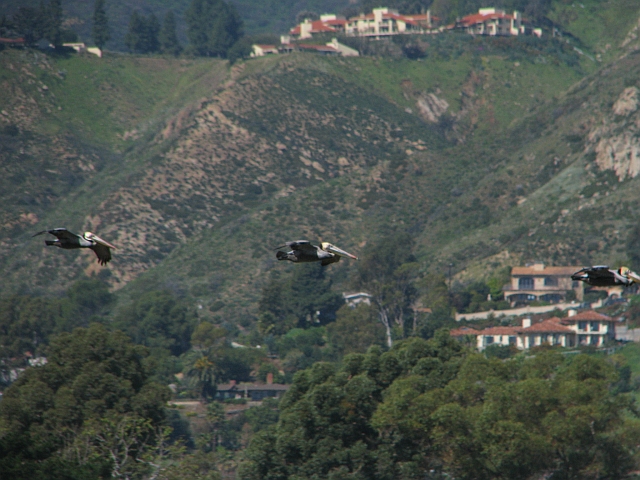
Brown Pelicans landing, Malibu hillside in distance (C.Almdale)
Our Snowy Plovers were gone. In half of the past 10 years, they’ve left before our April birdwalk, so their absence was not unexpected, but the enclosure looked a bit bereft. Most of the ducks have left as well. Poking about in the seaweed wrack was our only Willet, in a very attractive breeding plumage, highly unusual to see at the lagoon. I usually describe the winter Willet, when on the ground, as “remarkable for having no remarkable characteristics,” but that didn’t apply to this bird with it’s scaly barring on breast and back.
The group of terns kept increasing while we were there, growing from about 10 to about 70. We managed to find one Royal Tern in non-breeding plumage among the many beautiful Elegants and the much larger Caspians. Some of the Elegant Terns had pinkish breasts. This pink color comes from a shrimpy diet; the color gets into their oil gland and they spread it on their breast. The five Bonaparte’s Gulls displayed all possible plumages from dead-of-winter non-breeding to full, black-headed breeding. Birding at Malibu Lagoon is a lovely, peaceful, exciting, entertaining and rewarding pastime, but somebody has to do it, so it might as well be us.
| Malibu Bird Census | 2010 | 2010 | 2010 | 2010 |
| for 2010 | Jan | Feb | Mar | Apr |
| Temperature | 45-65 | 55-61 | 68-80 | 62-70 |
| Tide Height | +.65 | +6.19 | +5.48 | +4.57 |
| Low/High & Time | L:1131 | H:0835 | H:0840 | H:0744 |
| Gadwall | 20 | 35 | 16 | 12 |
| American Wigeon | 12 | 14 | ||
| Mallard | 10 | 13 | 12 | 20 |
| Northern Shoveler | 4 | 8 | ||
| Green-winged Teal | 7 | 2 | 1 | |
| Lesser Scaup | 1 | |||
| Surf Scoter | 35 | 4 | 18 | |
| Long-tailed Duck | 1 | |||
| Bufflehead | 6 | |||
| Red-brstd Merganser | 8 | 5 | 1 | 3 |
| Ruddy Duck | 30 | 14 | ||
| Red-throated Loon | 1 | 1 | ||
| Pacific Loon | 1 | 1 | 5 | 4 |
| Common Loon | 1 | 3 | ||
| Pied-billed Grebe | 1 | 1 | ||
| Horned Grebe | 1 | |||
| Eared Grebe | 3 | |||
| Western Grebe | 15 | 6 | 27 | 35 |
| Brown Pelican | 35 | 81 | 184 | 182 |
| Brandt’s Cormorant | 1 | 2 | 2 | |
| Dble-crstd Cormorant | 42 | 21 | 42 | 22 |
| Pelagic Cormorant | 1 | 1 | 1 | |
| Great Blue Heron | 2 | 2 | ||
| Great Egret | 3 | 3 | 2 | 2 |
| Snowy Egret | 15 | 4 | 7 | 13 |
| Blk-crwnd N-Heron | 1 | |||
| Red-shouldered Hawk | 1 | |||
| Red-tailed Hawk | 1 | 3 | 2 | |
| Peregrine Falcon | 2 | |||
| Sora | 1 | 1 | 1 | 1 |
| American Coot | 284 | 175 | 92 | 35 |
| Blk-bellied Plover | 45 | 59 | 25 | 7 |
| Snowy Plover | 54 | 49 | 25 | |
| Semipalmated Plover | 1 | 13 | ||
| Killdeer | 4 | 1 | 4 | |
| Black Oystercatcher | 2 | |||
| American Avocet | 2 | 2 | ||
| Greater Yellowlegs | 1 | |||
| Willet | 15 | 15 | 4 | 1 |
| Spotted Sandpiper | 4 | 2 | 1 | 3 |
| Whimbrel | 2 | 3 | 5 | |
| Marbled Godwit | 4 | 17 | 12 | 4 |
| Ruddy Turnstone | 13 | 11 | 2 | 5 |
| Surfbird | 3 | |||
| Sanderling | 85 | 172 | ||
| Least Sandpiper | 21 | 14 | 30 | |
| Bonaparte’s Gull | 2 | 5 | ||
| Heermann’s Gull | 5 | 7 | 4 | 45 |
| Ring-billed Gull | 55 | 42 | 2 | 4 |
| California Gull | 875 | 45 | 27 | 108 |
| Western Gull | 45 | 74 | 48 | 105 |
| Glaucous-wingd Gull | 6 | 3 | 1 | 1 |
| Caspian Tern | 2 | 30 | ||
| Royal Tern | 12 | 32 | 1 | |
| Elegant Tern | 1 | 1 | 47 | 40 |
| Forster’s Tern | 1 | |||
| Black Skimmer | 6 | 5 | ||
| Rock Pigeon | 8 | 4 | 4 | 4 |
| Mourning Dove | 2 | 2 | 6 | |
| Anna’s Hummingbird | 3 | 3 | 3 | 2 |
| Allen’s Hummingbird | 2 | 3 | 3 | 3 |
| Black Phoebe | 4 | 5 | 6 | 10 |
| Say’s Phoebe | 1 | 1 | ||
| Western Scrub-Jay | 1 | |||
| American Crow | 5 | 4 | 4 | 4 |
| Rough-wingd Swallow | 1 | 3 | 10 | |
| Cliff Swallow | 2 | |||
| Barn Swallow | 2 | |||
| Bushtit | 4 | 5 | 4 | 6 |
| Bewick’s Wren | 2 | 1 | ||
| Northern Mockingbird | 2 | 3 | 2 | 2 |
| European Starling | 35 | 41 | 8 | 4 |
| Cedar Waxwing | 20 | |||
| Yellow-rumpd Warbler | 8 | 4 | 5 | 2 |
| Common Yellowthroat | 3 | 1 | 1 | |
| Wilson’s Warbler | 1 | |||
| Spotted Towhee | 1 | 1 | 4 | |
| California Towhee | 2 | 1 | 3 | |
| Song Sparrow | 3 | 6 | 8 | 12 |
| White-crwnd Sparrow | 4 | |||
| Red-winged Blackbird | 3 | 2 | 1 | |
| Western Meadowlark | 1 | |||
| Great-tailed Grackle | 1 | |||
| Brwn-headed Cowbird | 2 | 1 | ||
| House Finch | 12 | 3 | 6 | 6 |
| Lesser Goldfinch | 4 | 2 | ||
| Totals by Type | Jan | Feb | Mar | Apr |
| Waterfowl | 134 | 73 | 70 | 38 |
| Water Birds-Other | 386 | 289 | 354 | 284 |
| Herons, Egrets | 20 | 7 | 12 | 15 |
| Quail & Raptors | 4 | 3 | 2 | 0 |
| Shorebirds | 251 | 328 | 87 | 73 |
| Gulls & Terns | 1006 | 209 | 133 | 339 |
| Doves | 10 | 4 | 6 | 10 |
| Other Non-Pass. | 5 | 6 | 6 | 5 |
| Passerines | 90 | 81 | 53 | 92 |
| Totals Birds | 1906 | 1000 | 723 | 856 |
| Total Species* | Jan | Feb | Mar | Apr |
| Waterfowl | 11 | 6 | 7 | 4 |
| Water Birds-Other | 12 | 9 | 8 | 9 |
| Herons, Egrets | 3 | 2 | 4 | 2 |
| Quail & Raptors | 3 | 1 | 1 | 0 |
| Shorebirds | 12 | 9 | 9 | 11 |
| Gulls & Terns | 9 | 8 | 8 | 9 |
| Doves | 2 | 1 | 2 | 2 |
| Other Non-Pass. | 2 | 2 | 2 | 2 |
| Passerines | 16 | 15 | 14 | 18 |
| Totals Species | 70 | 53 | 55 | 57 |
Saying Good-Bye and Good Luck to Maja Block
After more than thirty years as a member of SMBAS, and most of that time also on the Board of Directors, Maja is leaving us to move to Hawaii to be nearer her son.
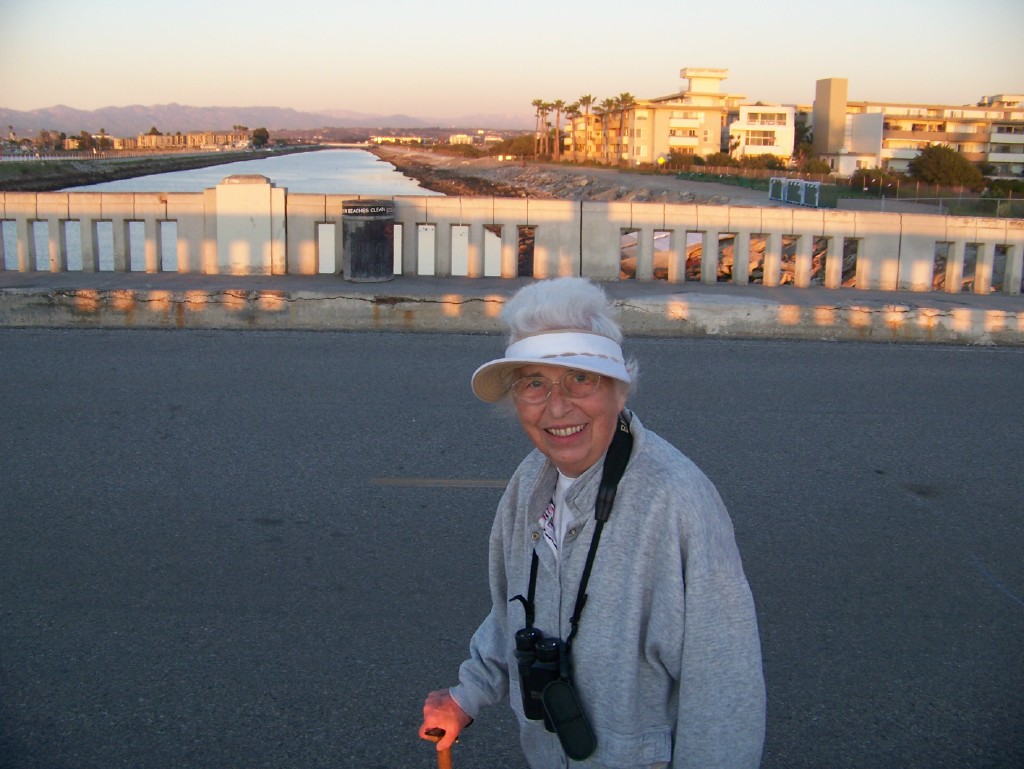
Maja on the Ballona Creek Bridge
She joined the board in 1982 as Field Trip Chair and served until 1988. In 1988, she was elected Chapter President, simultaneously served as Education Chair with responsibility for Audubon Adventures. After serving as President for three years and then Past President for three more years, she served us yummy refreshments at our general meetings as Hospitality Chair from 1994 to 2000. Since 2000, Maja has been responsible for organizing the superb programs we have seven times a year. She made sure we were not just entertained with programs about birding trips but also educated about the environment and the sciences surrounding us. She set a high bar as Program Chair, but we will try to follow her leads to have a schedule of interesting and varied programs.
During all this time, she raised two wonderful children, Michelle and Kevin, worked as a school nurse, and traveled the world. Her birding adventures took her as close by as Malibu Lagoon, Butterbredt Spring, Morongo Valley, and Arizona, and as far afield as Antarctica, New Zealand, Australia, and of course England and Germany.
Thank you Maja for all your years of service to Santa Monica Bay Audubon Society and the world of birds.
We will miss you and wish you all the best in Hawaii. Perhaps, sometime you will come back and drop in at one of our meetings. With email and the internet, you need never be far away.
Lillian Johnson Almdale
April, 2010
Naturalized Hummingbirds and the Native Plants they Love
Do two good deeds in one and have fun into the bargain by using native plants to draw hummingbirds to your garden. First, of course, you’ll enjoy the hummingbirds that feast on the nectar and the insects that love your native plants. Hundreds more insects, in fact, enjoy native plants than are attracted to cultivars. Second, native plants help return the environment to its original, pre-cultivar state, and this helps other plants and animals, including other birds.
What native plants are good for hummingbirds? Some that enjoy our climate and are relatively easy to grow are:
- paintbrush (castillija affinis ) – flowers in spring to summer
- red-flowered larkspur (delphinium cardinale) – flowers in summer to autumn
- California fuchsia (epilobium canum) – flowers in autumn
- island snapdragon (galvesia speciosa) – flowers in spring to autumn
- heart-leafed penstemon (keckelia cordifolia) – flowers in summer to autumn
- scarlet monkeyflower (mimulus cardimalis) – flowers in spring to autumn
- red monkeyflower (mimulus puniceus) – flowers in spring to summer
- chaparral currant (ribes malvaceum) – flowers in spring to summer
- fuchsia-flowered gooseberry (ribes speciosum) – flowers in spring to autumn
- hummingbird sage (salvia spathecea) – flowers in spring to summer
Notice that native plants don’t bloom in winter. One reason is because all hummingbirds used to migrate south in winter and the birds weren’t around for winter pollination.
There’s nothing wrong with feeding hummingbirds except that you encourage them to depend on an artificial (and often messy or even dirty) source of food.
You can rely on native plants to do all of the feeding, but then you eschew the pleasure of seeing the birds’ antics up close.



 SANTA MONICA BAY AUDUBON SOCIETY BLOG