‘Pipers at the Gates of Dawn: Lower L.A. River trip: 29 Aug 26
[By Chuck Almdale]
We hadn’t done this trip in quite a while (2018 and no one wrote a report) so we decided to go take a look at the Lower Los Angeles River, specifically the areas close to Willow St. in Long Beach, and next to DeForest Park in northern Long Beach. As with Glendale Narrows, these two locations almost always have a lot of vegetation and sediment on the bottom, and birds accumulate.
As expected, we had a lot of shorebirds, but no river otters*. The ‘pipers filled the air with their music and conversation throughout the morning. Someone new was always chiming in.
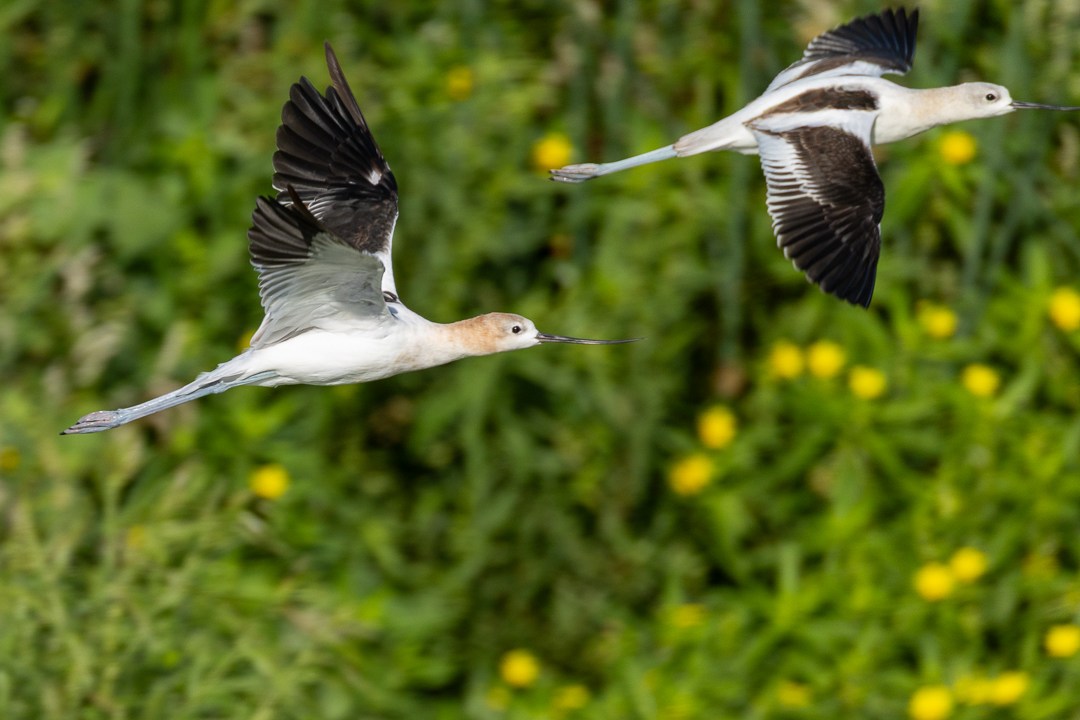
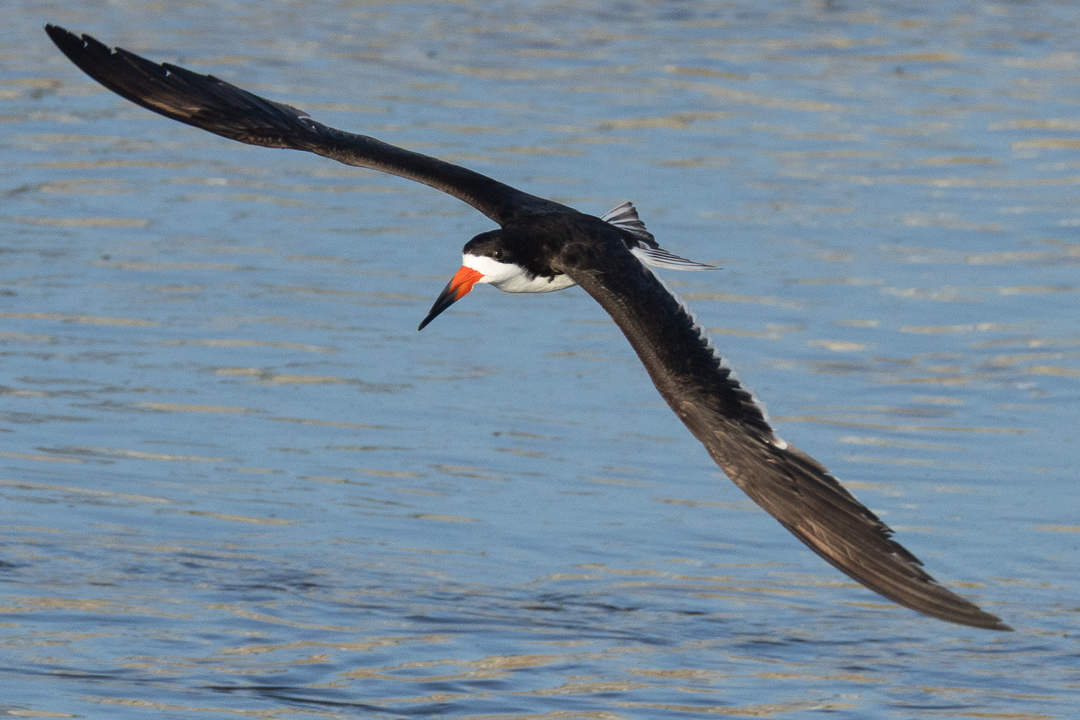
I find it quite amazing that this skimmer (aka schnozz-bird) below managed to just fill the photograph frame corner-to-corner. Skimmers are more of a tropical bird, but they’ve been moving up from Baja California in greater numbers for the past few decades. In the 80’s we had to go to lower San Diego Bay to find them. They need calm waters, not open ocean waters, in order to feed, which they do by skimming the surface – flying very close to the surface with their lower bill, longer than the upper bill, slicing through the water. If they encounter something edible, the bill snaps up like lightning. I’m always afraid they’ll hit something solid and flip tail over head, tumbling across the water, but in 50 years I’ve never yet seen it happen. Upper Newport Bay and Bolsa Chica are two areas favorable to them.
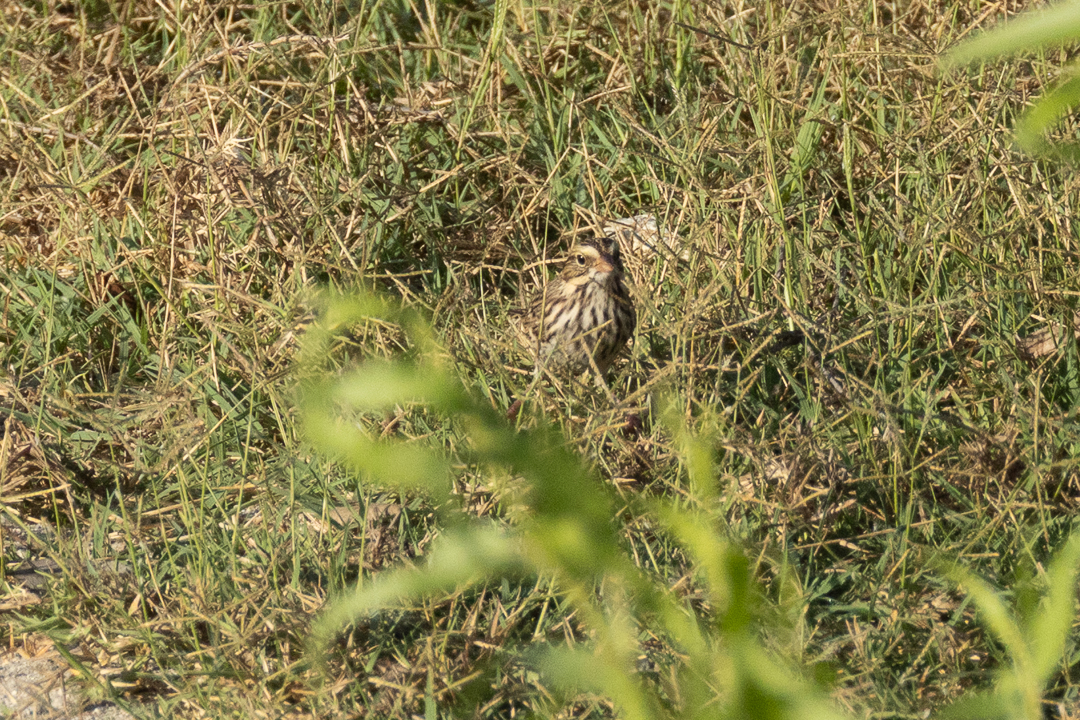
This Savannah Sparrow was in a grassy patch down in the channel, which we spotted in the distance. After looking at Armando’s photo below for a while, I came to the conclusion that it may well be Passerculus sandwichensis rostratus, aka “Large-billed” Savannah Sparrow. This subspecies – and some people think it should be split off as a separate species – breeds in northern Baja California with some birds wintering at the Salton Sea and along the coast of Southern California. We’ve seen them several times along the jetty between Ballona Creek and the Marina del Rey channel, gleaning something-or-other off the exposed rocks. I hadn’t heard of any in the Lower L.A. River, but I’m not shocked to see them there, if indeed that is what it was.
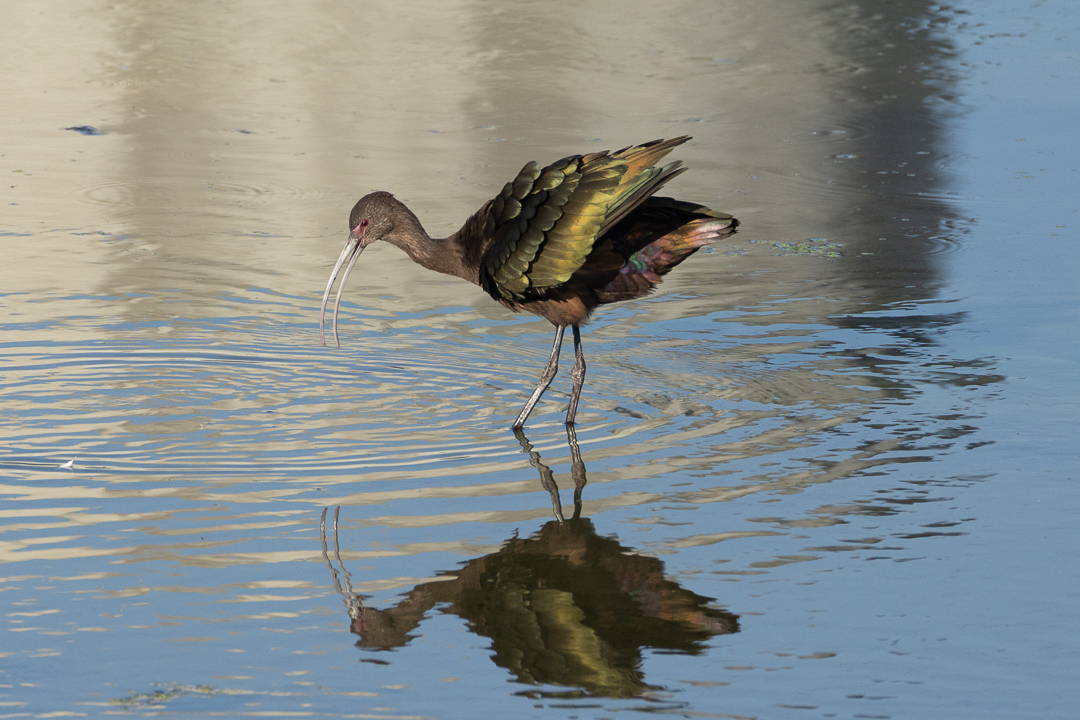
This ibis below may be exceptionally glossy (or iridescent) but it is not a Glossy Ibis, but a White-faced Ibis, albeit absent any significant white face. Go figure. The “rest of the story,” as one newscaster used to say, is that the white face of the White-faced Ibis is never extensive and consists only of a white line bordering the the entire base of the bill during their breeding period. The bird below has a hint of this in the lores between red eye and top of the bill. The Glossy and White-faced Ibises are very similar and hybrids are “not rare” (as NGS field guide, 8th ed. puts it). The ornithological community might have to revisit these two (or this single) species sometime soon.
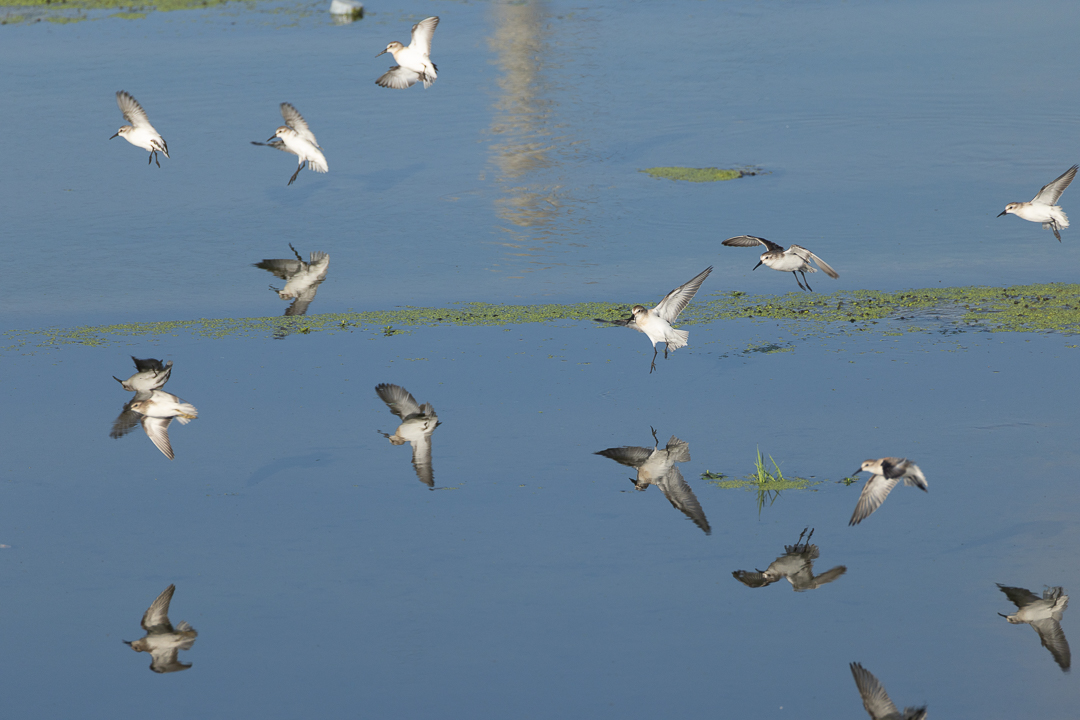
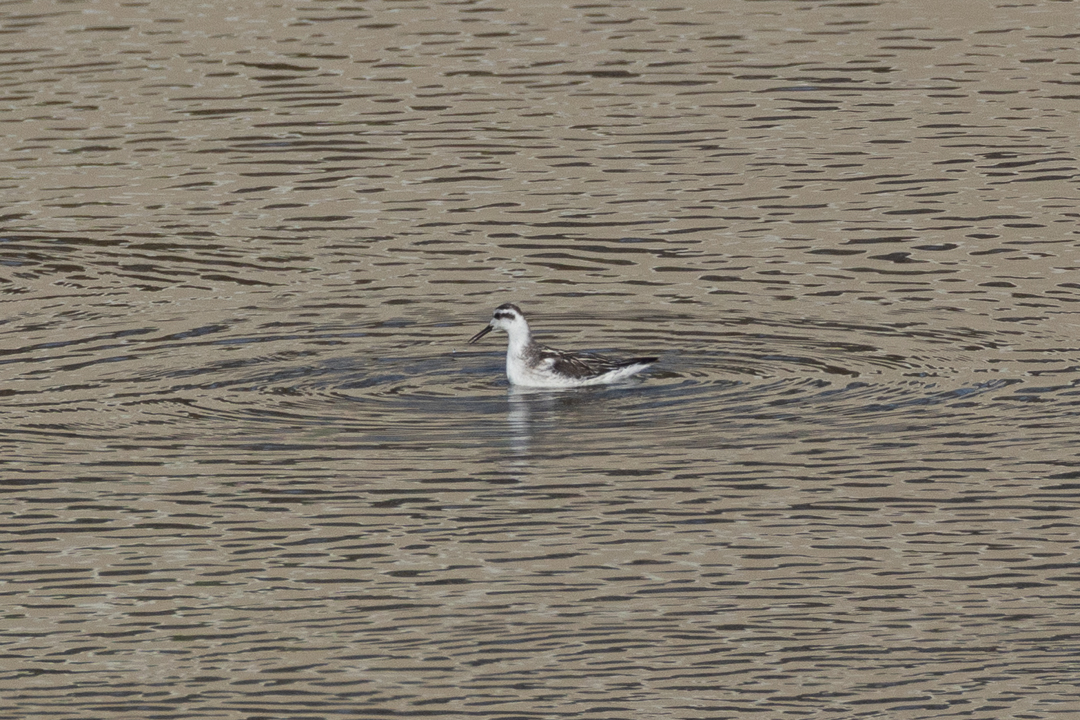
Phalaropes are one of the hoped-for species at this location and we managed to find two, with one of them just outside the left frame of this photo. You can tell that because of the pattern of circular ripples they make in the water by spinning in circles. This spinning creates a vortex which brings deeper invertebrates up to the surface where these bird can pick them off with their needle-like bill. The Red-necked Phalarope is the “intermediate” phalarope as the length of their bill is a key field mark in differentiating the three species. All phalarope species are among the few “polyandrous exhibiting sexual dimorphism reversal” species. I counted somewhere around 35 such species out of over 11,000 in the world, but there may be more. If this phrase is unfamiliar, read this. During migration there can be flocks of several thousand phalaropes, mostly Red-necked, not far offshore of Palos Verdes Peninsula, so it’s not surprising that a few might wander over to the L.A. River channel, or get a little lost en route and follow the channel down from the San Fernando Valley..
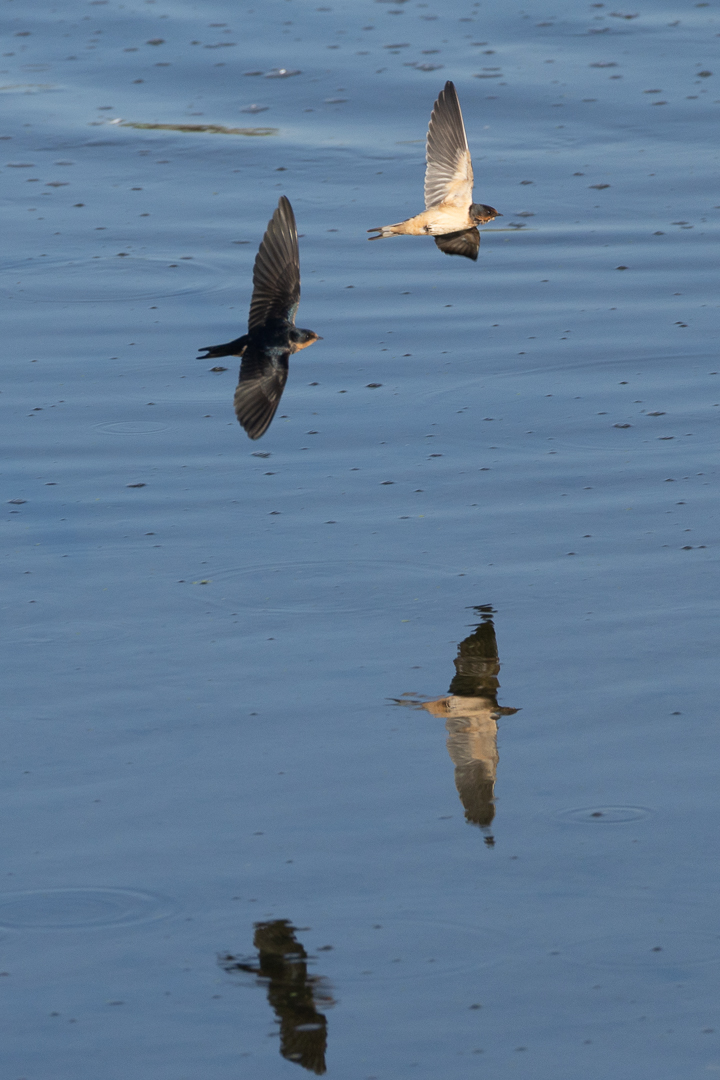
The mouth of the swallow is very short, but very very wide, not a welcome sight to any fly.
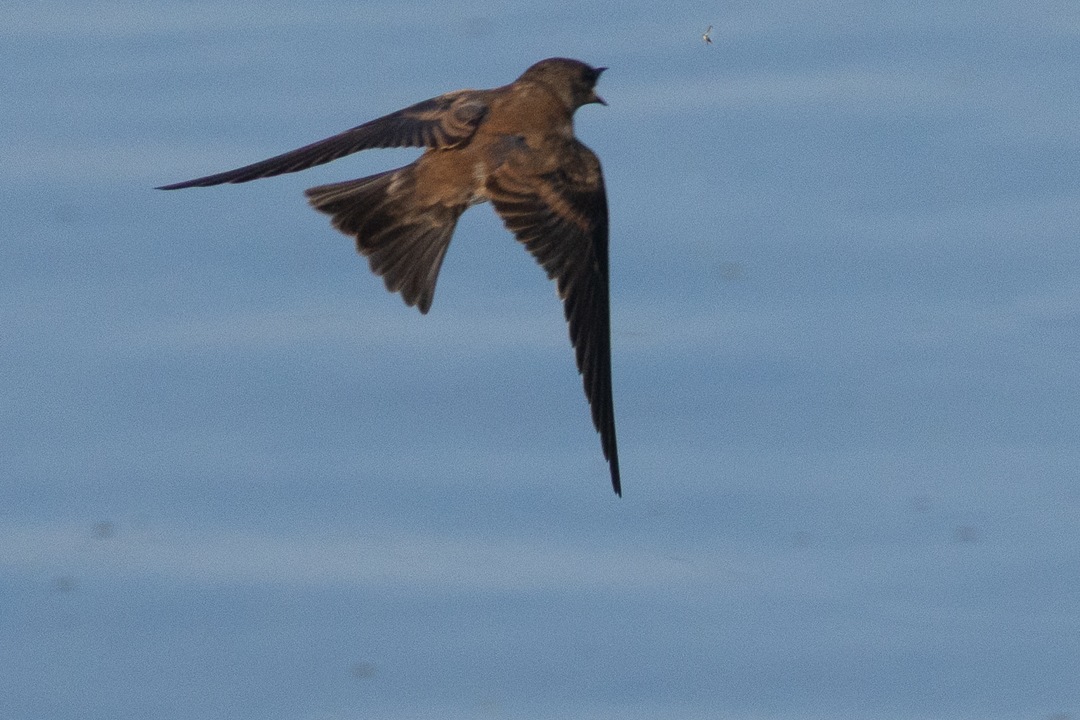
If you didn’t know what “swallow-winged” meant before, look below.
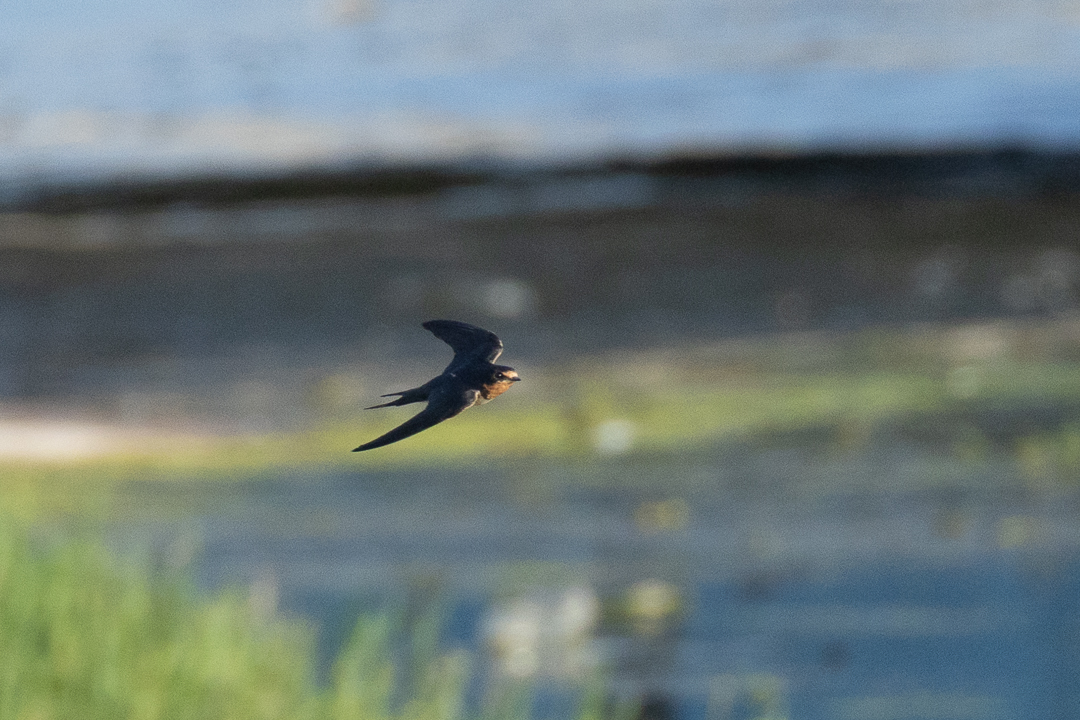
Two pairs of Barn Swallows.
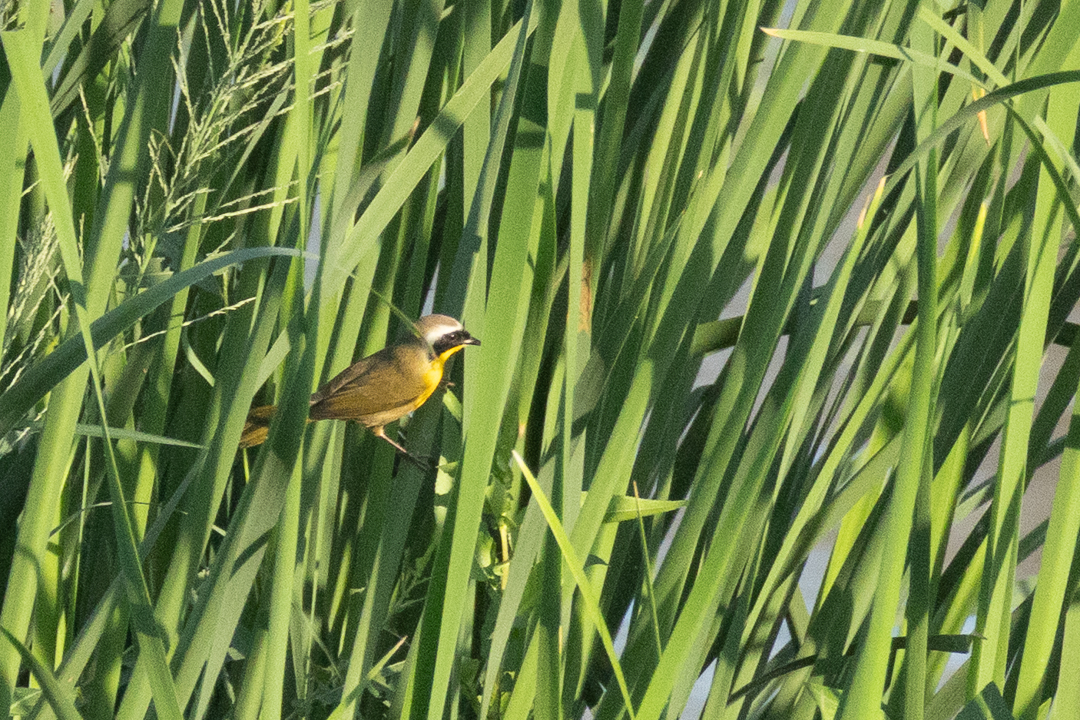
There were bound to be some Common Yellowthroats in the brush or grass in or near the channel. I’m surprised we didn’t see more than this single male, but we were mostly looking at the shorebirds.
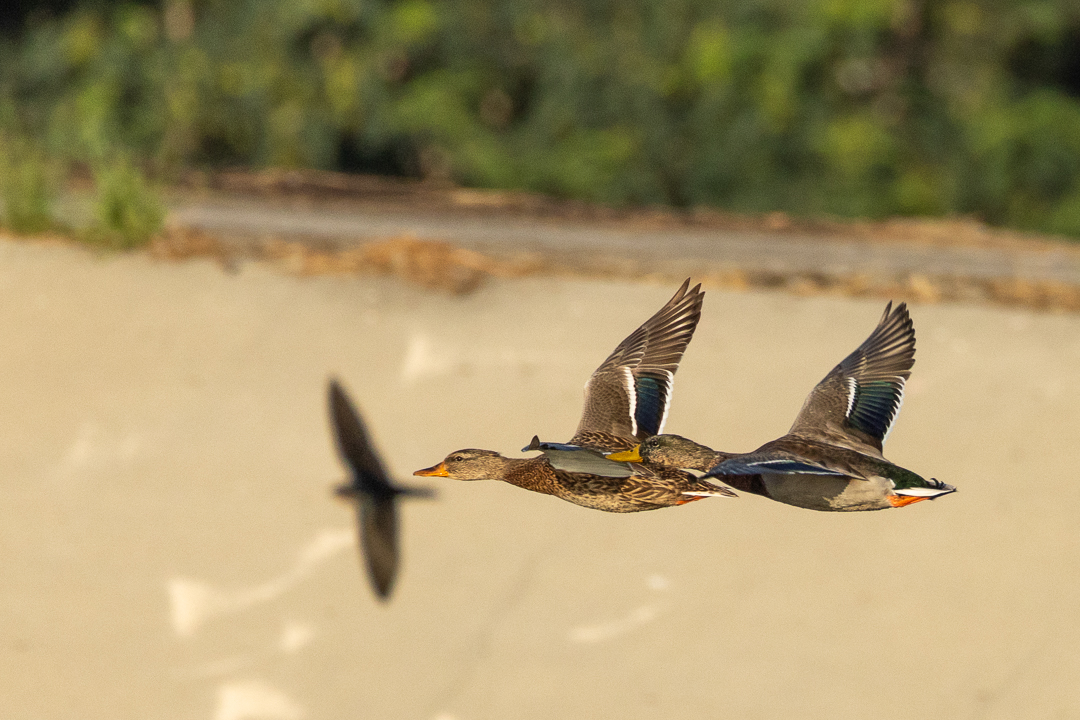
There were plenty of Mallards present, and even more Canada Geese. [Or are they now American Geese? I haven’t heard.] It’s easy to see their iridescent purple (some say cobalt) speculum bordered by white when they fly, unlike when they’re sitting or swimming at Malibu Lagoon. That shadow seemingly in front of them is also interesting.
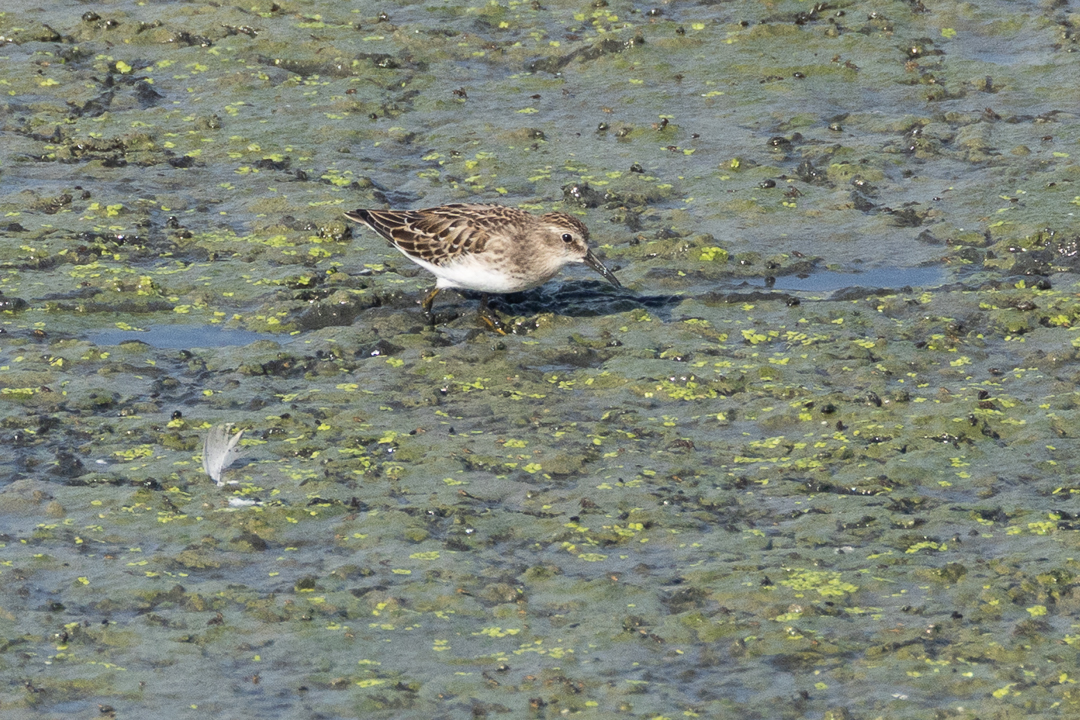
There weren’t many Least Sandpipers on the river. Most of them were on the algae coating the surface in places, or in the grass on the tiny “islands.”
There were a lot more Western Sandpipers.
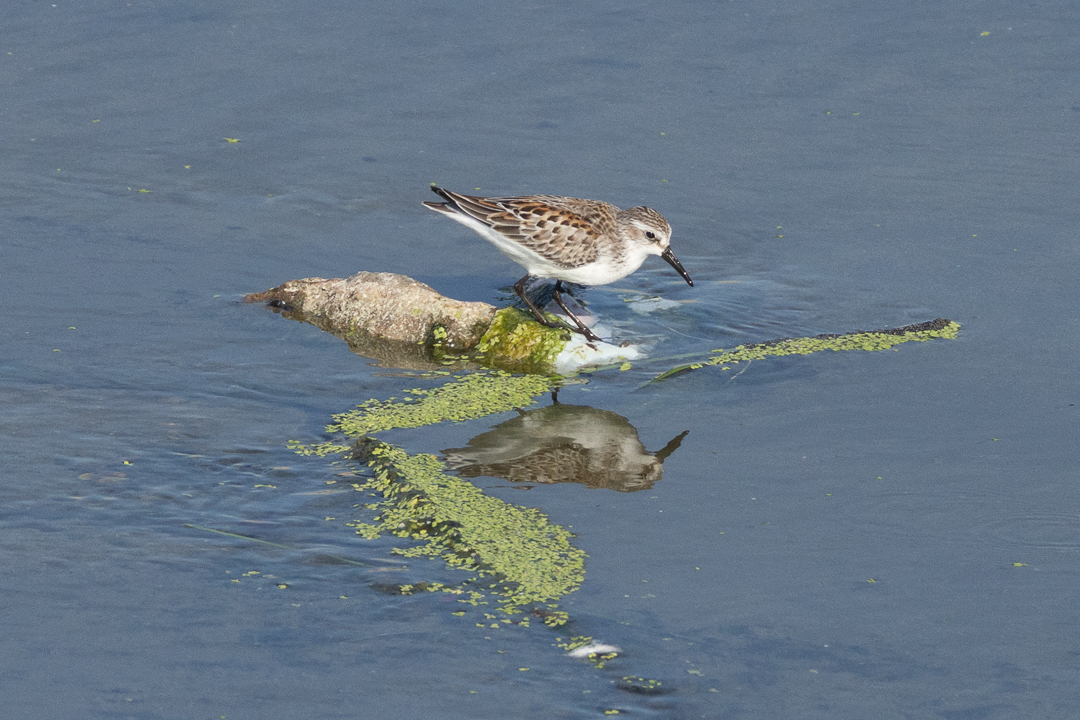
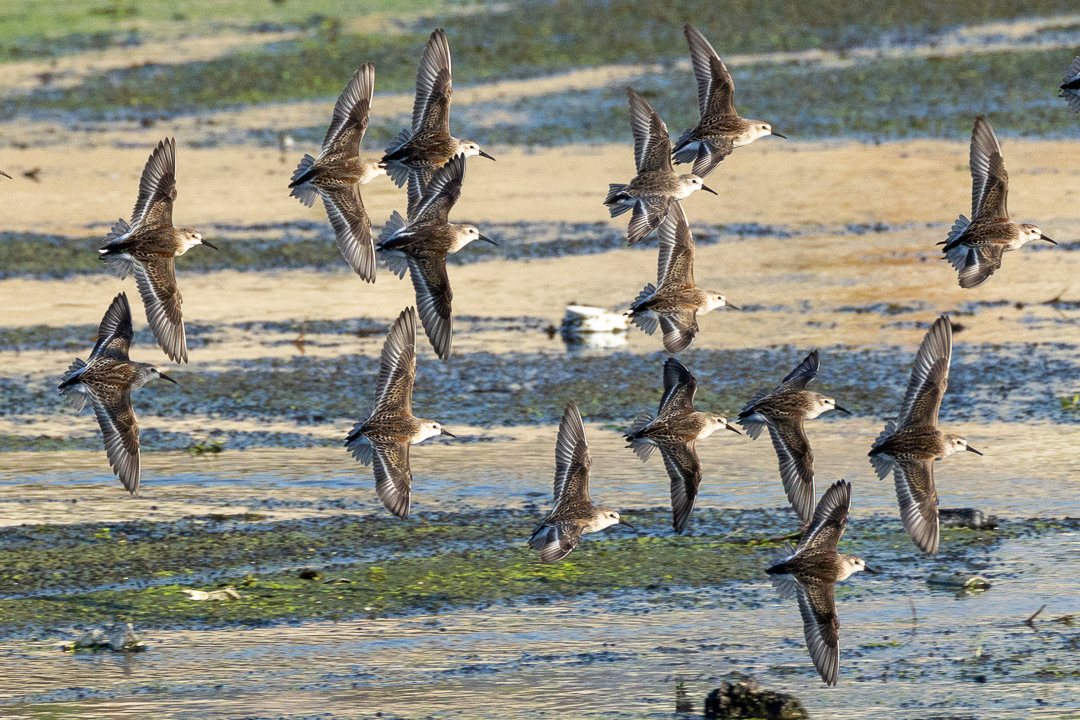
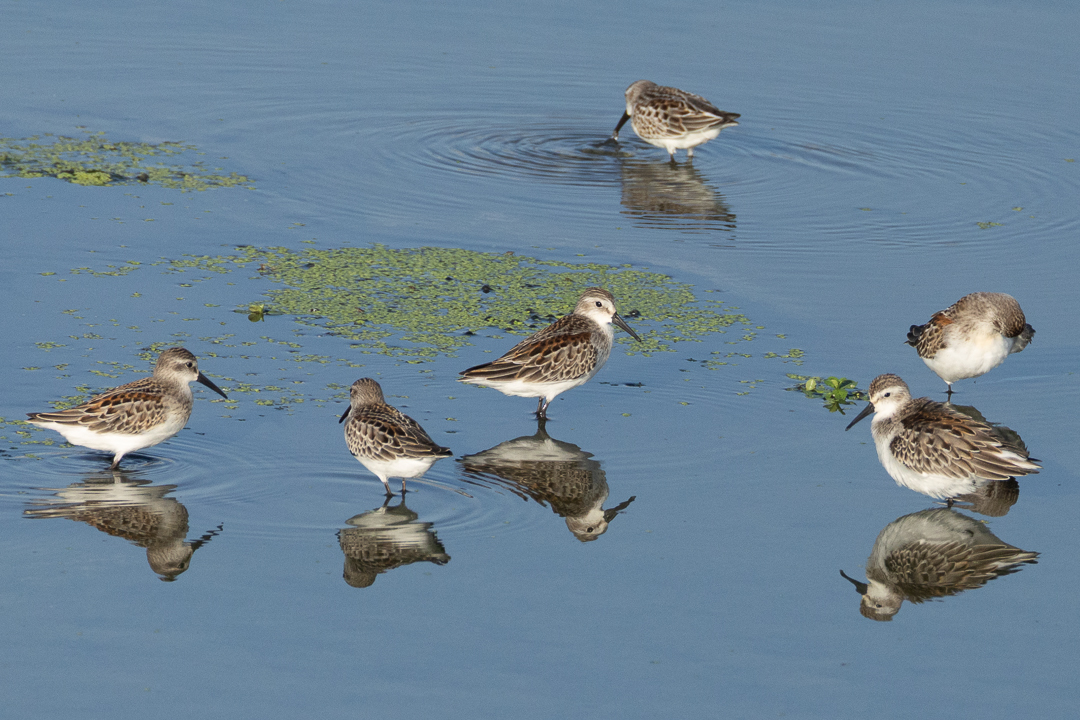
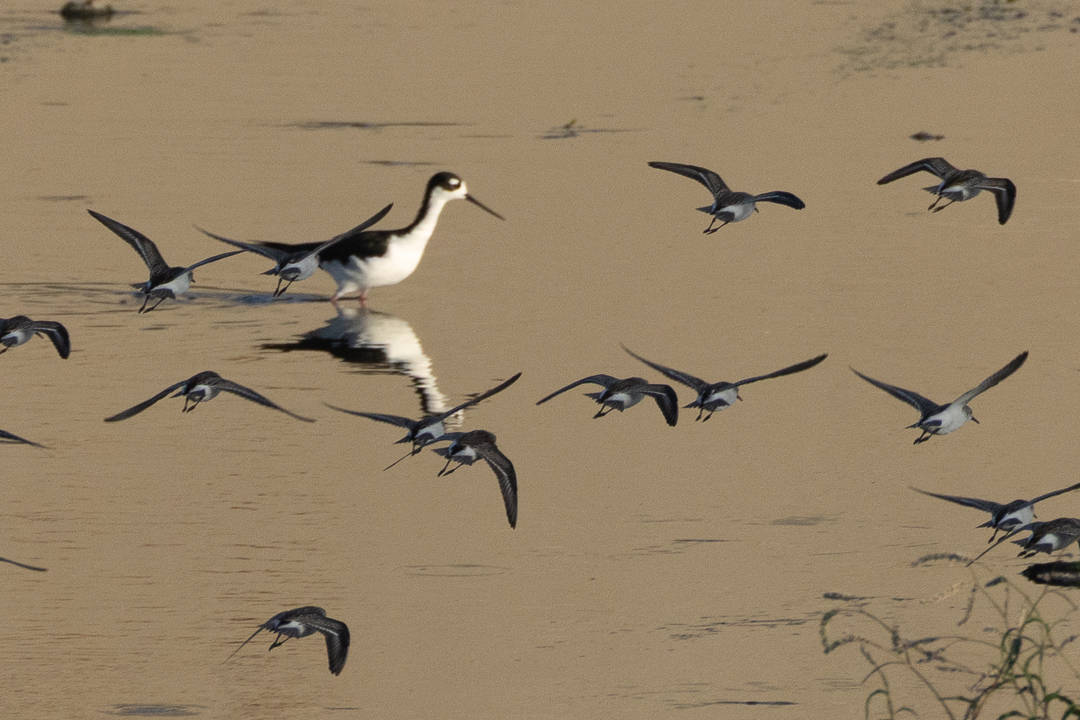
Three leggy species in one shot below. Here’s a question for birders. All field guides give the lengths of all the birds, but what exactly constitutes “length?” Think about it before looking it up or reading on. And which of these three birds below is the “longest,” or “lengthiest” if you prefer? Don’t read the next paragraph until you guess.
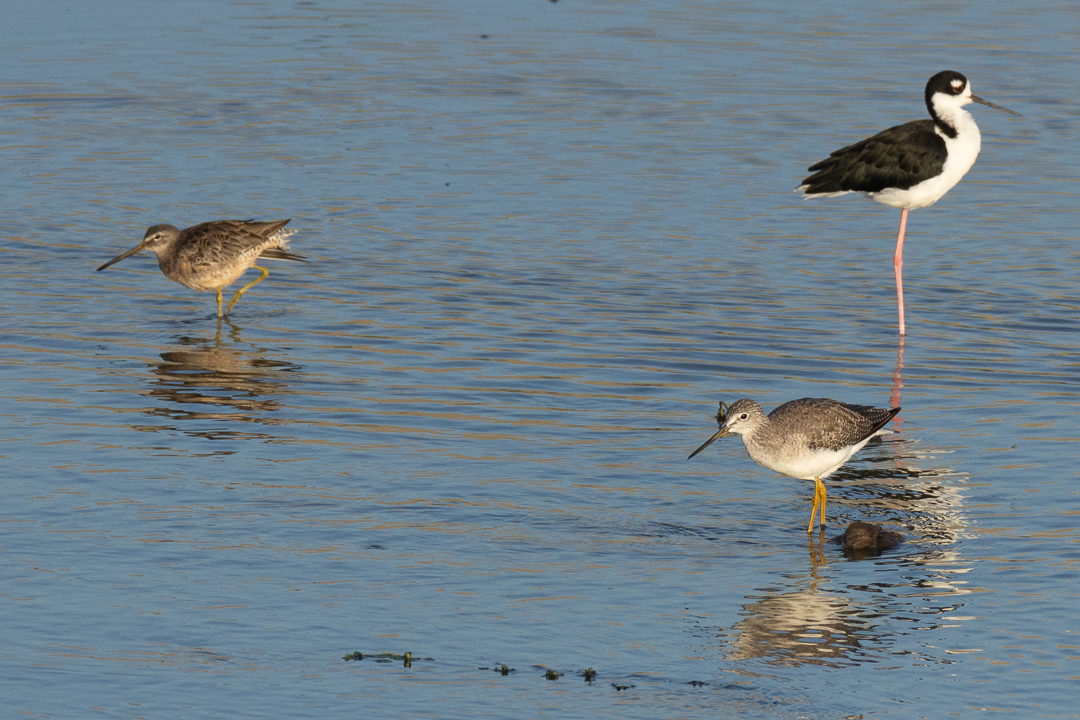
Guess the longest bird above before reading below.
The lengths (per NGS 8th ed, 2025) left to right, are Long-billed Dowitcher 11.5″, Greater Yellowlegs 14″, Black-necked Stilt 14″. This seems absurd to me, but the lengths in bird literature is bill-tip to tail-tip, even when the bird – comfortably lying on its back in a museum tray as they tend to do – has feet sticking far past the end of the tail. So a Sandhill Crane is 41-48″ “long” and a Great Blue Heron is 46″ “long.” Forget the legs, they don’t count.
Humans were defined (or described) as “featherless bipeds” by none other than Plato. Supposedly, after hearing this definition, the irascible and cynical Diogenes plucked a chicken and brought it to Plato’s Academy shouting “Behold! I’ve brought you a man.” Always flexible and adaptable to correction, Plato amended his definition to include “with broad, flat nails.” Who knew that ancient Greek philosophers were such jokers and pranksters?
As we share our bipedality, shouldn’t we and the birds be measured in the same manner? Working within that system, can you guess how “long” you are? I’m 34″, far smaller than a 46″ Great Blue Heron, shockingly smaller than the 39″ Great Egret, barely larger than the 30″ Reddish Egret. How humiliating!
Reflections can play tricks on your eyes. At first glance these dowitchers may seem to be standing on mid-river rocks.
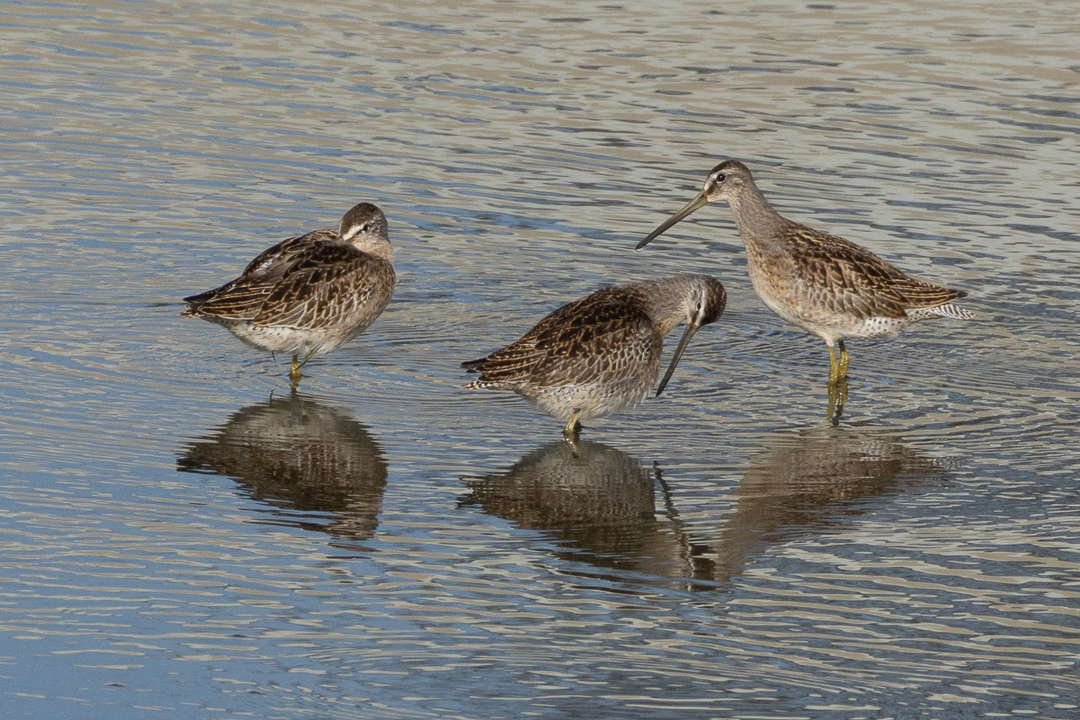
The low angle of the sun sometimes creates weird effects with the light.
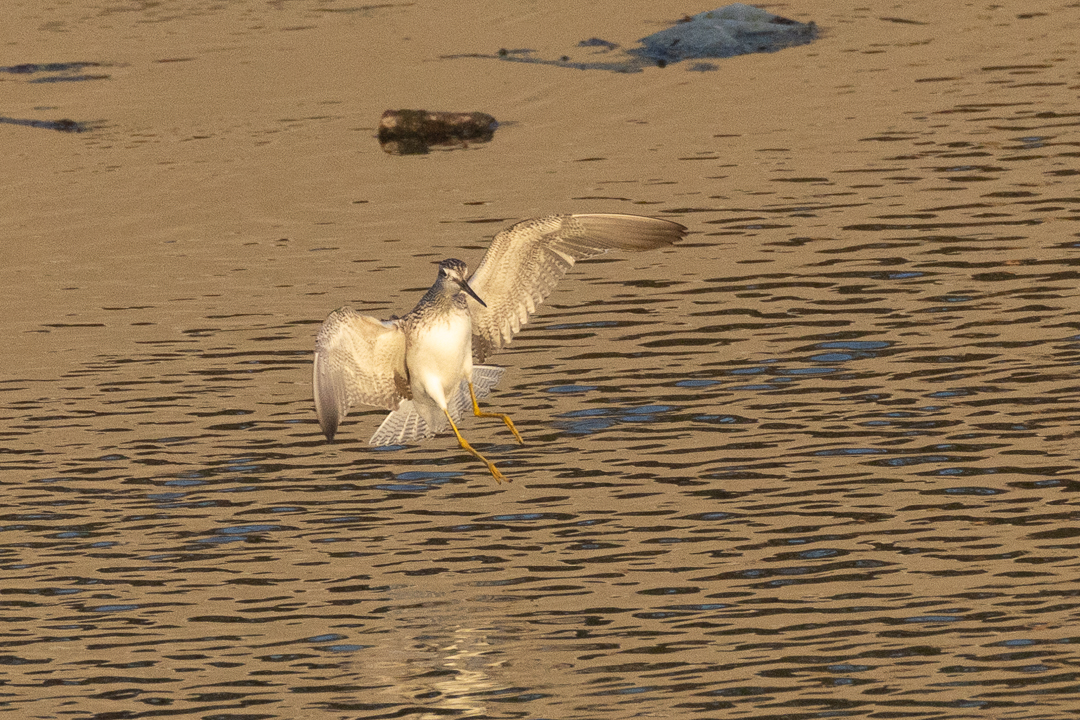
All birds are variable in appearance, but their variability is variable from species to species. Here we have both Yellowlegs species, one Lesser next to two Greaters. [Ignore those two birds in the back. They are not the birds you seek.] The bills on the two Greaters are significantly different, but I still think they are both Greaters; the one in the middle is a juvenile with a shorter straighter bill, and the one on the right is an adult with a longer slightly upcurved bill. The bills on long-billed birds often taken extra months to get to their final adult length after the rest of their body is sufficiently large and strong to fly. I don’t know if this also applies to the legs on long-legged species.
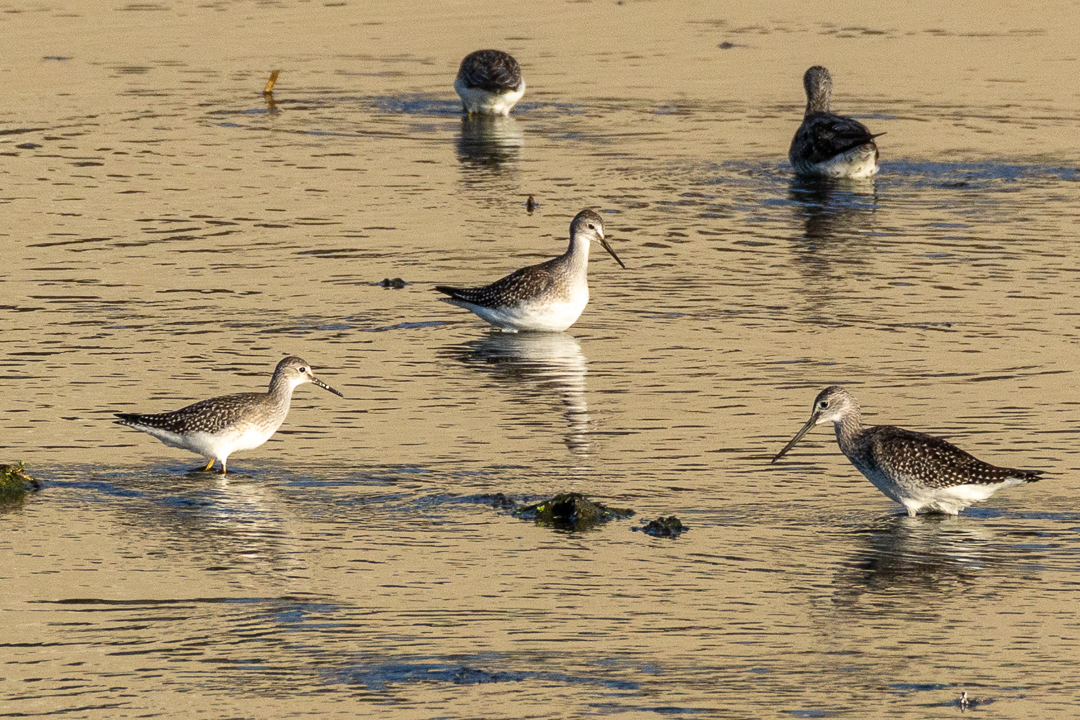
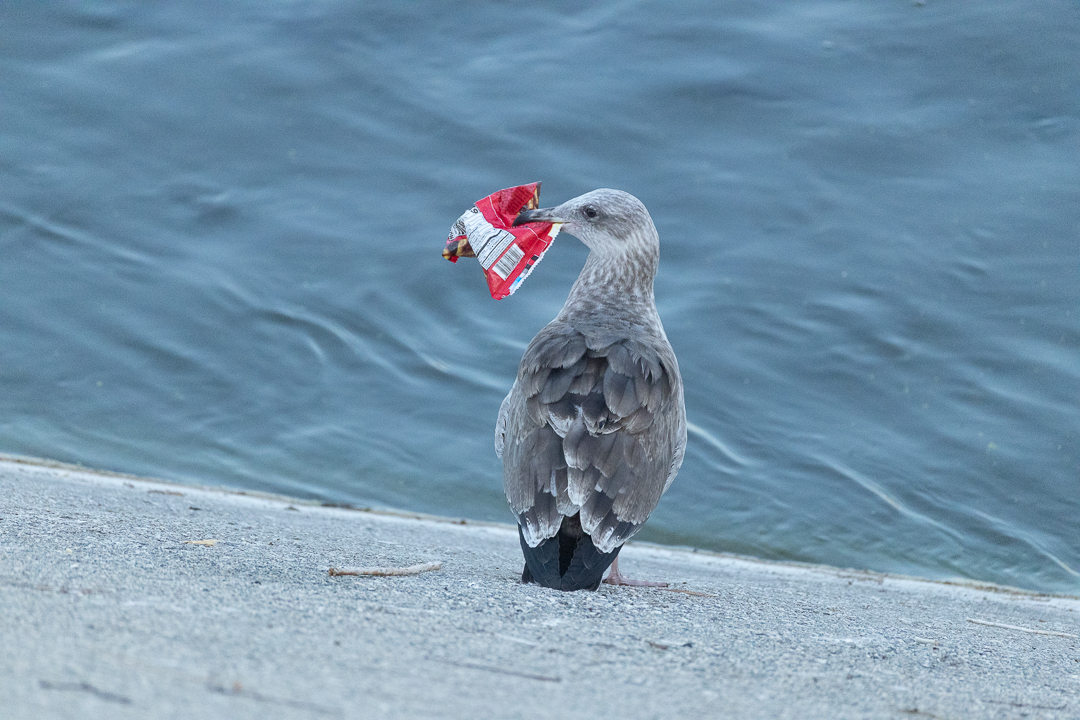
All I have to say to this guy is, “I didn’t put it there, but if you give it to me, I’ll see that it’s disposed of properly.”
Two people had to leave early. The rest of us drove up to DeForest Park but our cars got separated. After locating the only access to the river at the south end of the park at the intersection of Deforest Ave. and East Osgood St., I walked up the embankment stairs to the river where I found green algae covering the river channel bottom but not a single bird on it except a group of gulls 3/4-mile away by the Artesia Blvd. bridge. I walked close enough to them to see that there was nothing there but Western Gulls, and returned to my car. Here I found Armando and passengers who had stopped at the park pickleball area and saw a few tree birds. But the list below includes only the Willow St. birds.
*River Otters: See The Wind in the Willows, chapter seven, and the first Pink Floyd album.
A google map of the area follows the checklist below.
| Lower LA River 2026 & 2014 | 2026 | 2014 |
| Date | 6-Sep | 30-Aug |
| Temperatures | 75-81°F | 70-88°F |
| *Estimated for numbers >50 | ||
| Canada Goose* | 60 | |
| Egyptian Goose | 3 | |
| Cinnamon Teal | 3 | 5 |
| Northern Shoveler | 8 | |
| Gadwall | 2 | |
| Mallard* | 30 | 110 |
| Bufflehead | 1 | |
| Feral Pigeon* | 20 | 130 |
| Eurasian Collared-Dove | 1 | 3 |
| Mourning Dove | 4 | |
| White-throated Swift | 6 | |
| Allen’s Hummingbird | 2 | |
| Common Gallinule | 1 | |
| American Coot | 25 | |
| Black-necked Stilt* | 200 | 425 |
| American Avocet* | 30 | 160 |
| Killdeer | 15 | 65 |
| Semipalmated Plover | 1 | 2 |
| Short-billed Dowitcher | 30 | |
| Long-billed Dowitcher* | 40 | 200 |
| Red-necked Phalarope | 2 | |
| Spotted Sandpiper | 1 | 14 |
| Lesser Yellowlegs | 2 | 2 |
| Willet | 1 | |
| Greater Yellowlegs | 30 | 4 |
| Least Sandpiper* | 20 | 490 |
| Pectoral Sandpiper | 1 | |
| Western Sandpiper* | 400 | 100 |
| Ring-billed Gull | 20 | |
| Western Gull* | 80 | 100 |
| California Gull* | 6 | 50 |
| Caspian Tern | 1 | 2 |
| Pied-billed Grebe | 1 | |
| Double-crested Cormorant | 8 | 6 |
| White-faced Ibis | 20 | |
| Black-crowned Night-Heron | 1 | 2 |
| Snowy Egret | 4 | 5 |
| Green Heron | 1 | |
| Great Egret | 2 | |
| Great Blue Heron | 2 | 2 |
| Osprey | 1 | |
| American Kestrel | 2 | |
| Yellow-chevroned Parakeet | 7 | |
| Black Phoebe | 4 | 2 |
| American Crow | 30 | 6 |
| Tree Swallow | 4 | |
| No. Rough-winged Swallow | 15 | |
| Barn Swallow* | 50 | 45 |
| Cliff Swallow | 2 | |
| Swinhoe’s White-eye | 2 | |
| European Starling | 40 | |
| House Finch | 12 | |
| Savannah Sparrow | 1 | 1 |
| Yellow-headed Blackbird | 1 | |
| Red-winged Blackbird | 20 | |
| Great-tailed Grackle | 4 | 3 |
| Common Yellowthroat | 1 | |
| Orange Bishop | 1 | |
| Totals Birds | ||
| Species | 36 | 48 |
| Total birds | 1097 | 2119 |
Discover more from SANTA MONICA BAY AUDUBON SOCIETY BLOG
Subscribe to get the latest posts sent to your email.



