More birds than beach at Malibu Lagoon: 25 October 2026
[By Chuck Almdale; photos by Ray Juncosa, Armando Martinez, Grace Murayama & Chris Tosdevin]
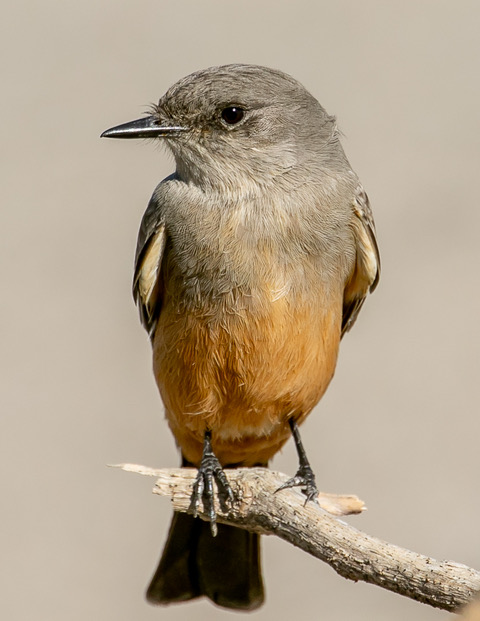
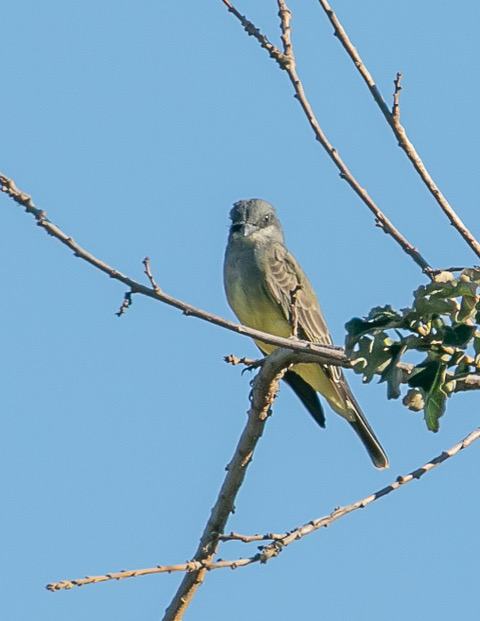
Say’s Phoebes are back, as are Cassin’s Kingbirds. The Say’s begin arriving in September and stay with us through February. Cassin’s begin arriving in September, slack off for a couple of months, then reappear in February and March. As they are also local nesters, they have a population boomlet in June.
Many of us expected that last week’s rain – mostly on Wednesday and Thursday with a little more on Friday – especially when coiciding with high tides, would blow through the beach, just as it always does this time of year, particularly when rainfall is an inch or more. What we found when we got there looked more like the picture below. This was taken from the Pacific Coast Highway (PCH) bridge about half an hour after high tide, but we had much the same impression from lagoon and channel level.
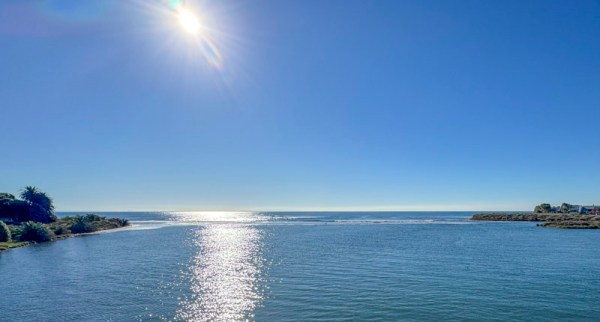
So…what’s the big deal? It looks like any other nice calm sunny Southern California day. Can’t see any damage to the beach.
And that’s it. You can’t see any beach damage because you can’t see any beach. The entire width of the beach from high point to high point just vanished, with barely a ripple remaining. That bushy-topped little cliff at the right (west) end is about nine feet high and is normally 50-100 yards from the ocean. As I stood by that cliff at 8 am this morning, waves from the ocean were breaking inland of me, well into the lagoon. The high area on the left ( east side) is partially protected by the rocky riprap surrounding Adamson House. This was the worst blowout I’ve seen in 47 years, since I began censusing the lagoon birds in October 1979.
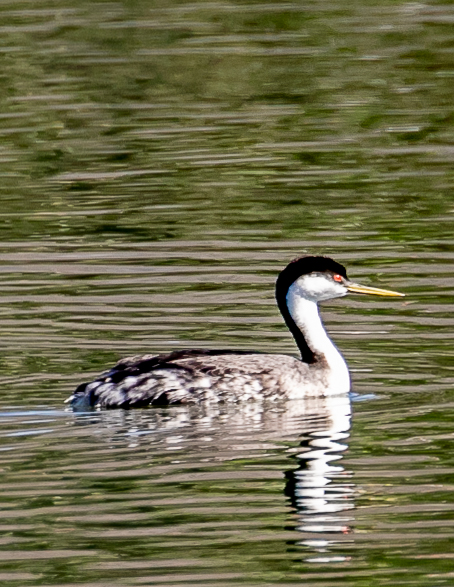
A dozen Western Grebes had gathered in the large pool inland of the PCH bridge. They usually stay offshore, diving out past the surf zone.
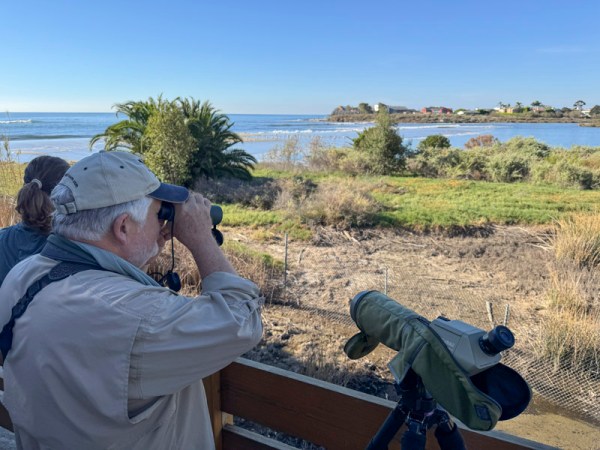
After the group gathered, I gave a brief eulogy for Mary Prismon, a beloved long-time SMBAS member and local instigator of the Western Snowy Plover censusing program, who recently passed away at the age of 100. [A blog on Mary is being written.] We then walked over to the viewpoint near the PCH bridge. Water, water everywhere.
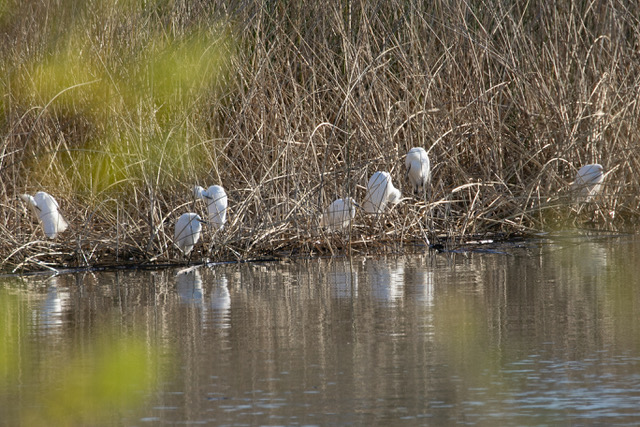
It was obvious the usual route west-to-east across the beach was completely inundated and impassable. Waves were still breaking within the lagoon. We reversed our usual monthly route, crossing the PCH bridge first and birding around the Adamson House grounds until we saw that the tide was receding from it’s high of +6.11 ft. (plus a foot or two for warm water, storm surges and Kelvin wave) at 8:51 am, heading for its low of -0.34 ft at 3:44 pm. Birds were beginning to fly from the grassy high ground down onto the emerging sand.
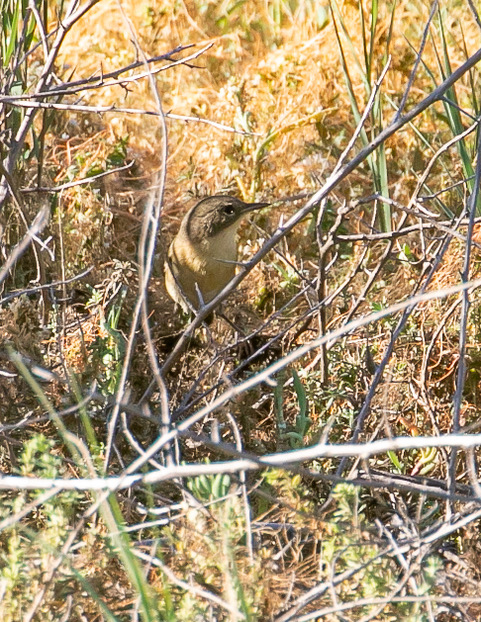
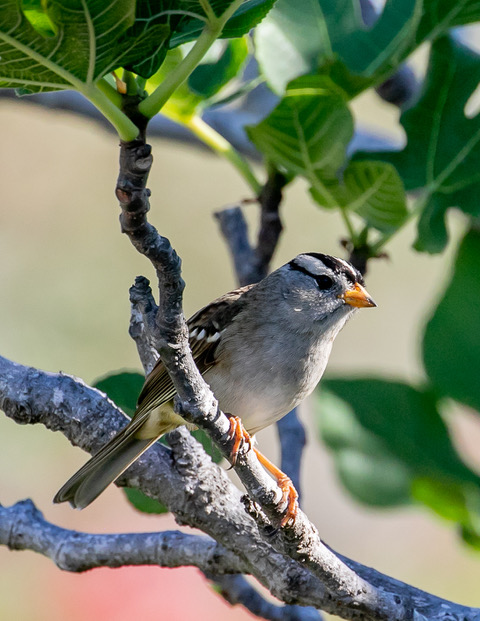
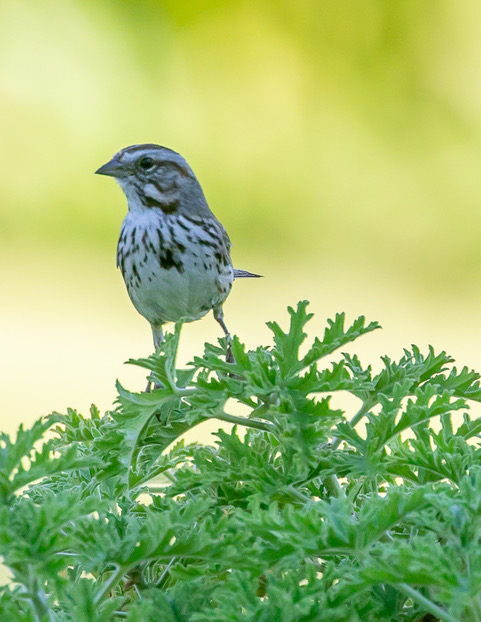
On the grounds of Adamson House we found a nice variety of sparrows and warblers.
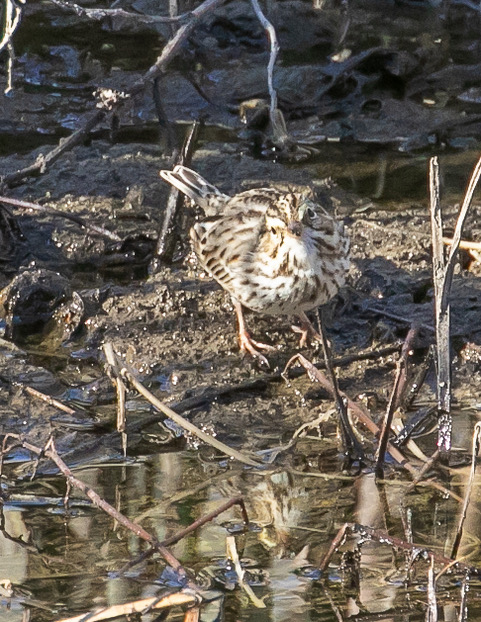
In the foreground below, the sand is beginning to emerge.
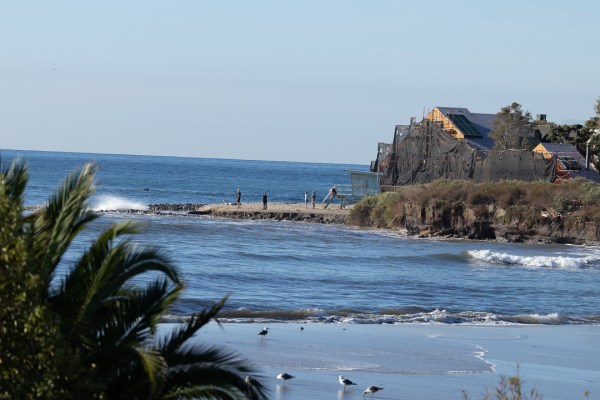
The above photo also shows the drop-off in the beach near the lifeguard station, as well as the brushy cliff.
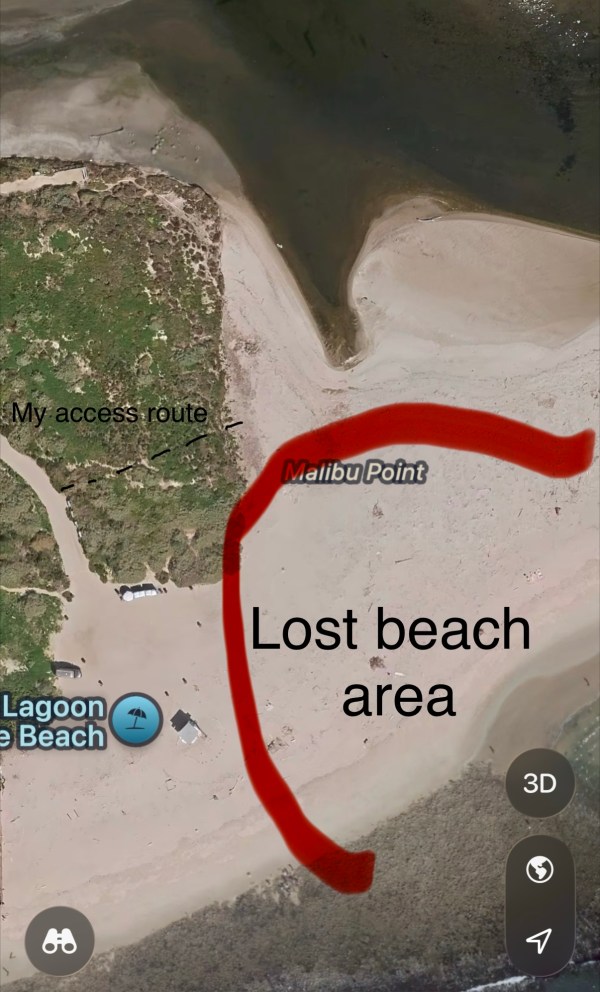
Either the State Parks or Surfrider’s Foundation people had posted an aerial photo at the park entrance explaining that beach access was limited. This is the main part of the beach ripped out by the storm a month earlier. Lagoon is at top, ocean at bottom.
Cassin’s Kingbird was catching flies and calling from a tree in the center of the Adamson House lawn.
Seeing that the sand was emerging and attracting the birds, we continued on to the surfer’s favorite beach just west of Malibu Pier, planning on using the exposed sand to get closer to the birds, perhaps find some Western Snowy Plovers, and maybe, just maybe, be able to cross the gap to the west side of the lagoon. However, about a 40-yard section of beach was still inundated right in front of Adamson House, and a set of higher waves rolled in, putting the water to above knee level at the bottom of the breakwater. Two of our members took off their shoes and skittered between waves to reach the drying sand, but the rest of us, burdened by cameras and telescopes and old age, declined. Instead we left the beach and re-crossed PCH bridge.
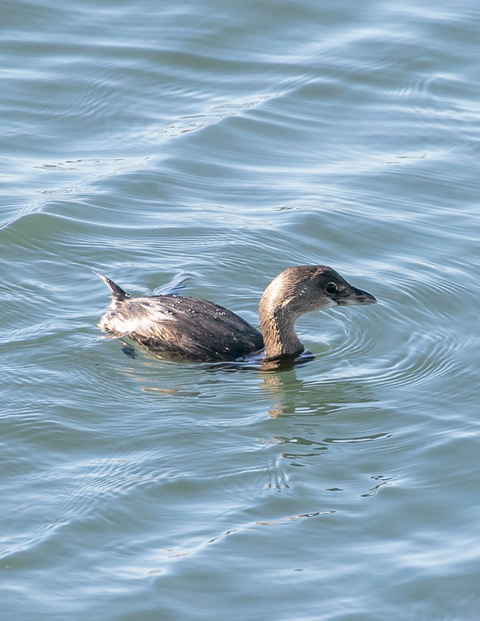
Mullet were still jumping in the lagoon and channels, and the Osprey was still hungry.
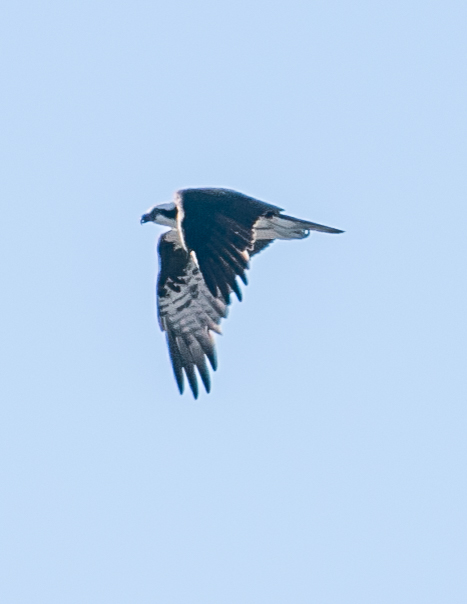
We found hawks both Red-tailed and Red-shouldered in the trees near Pacific Coast Highway.
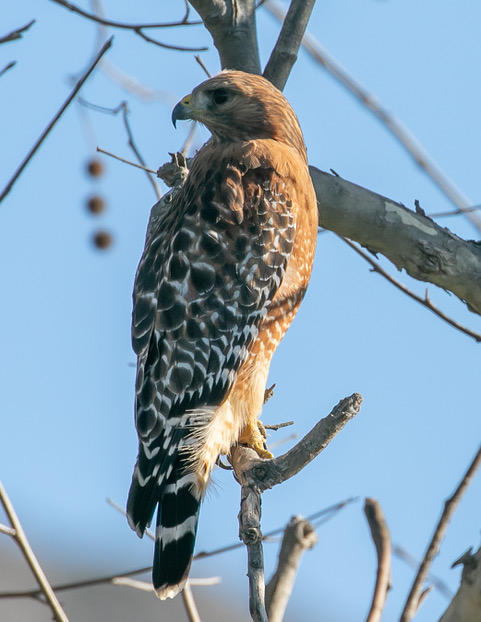
When we got back to the lagoon parking lot, some of us crossed PCH and went to legacy park near city hall. The rest of us went back out to the west end beach along our usual route.
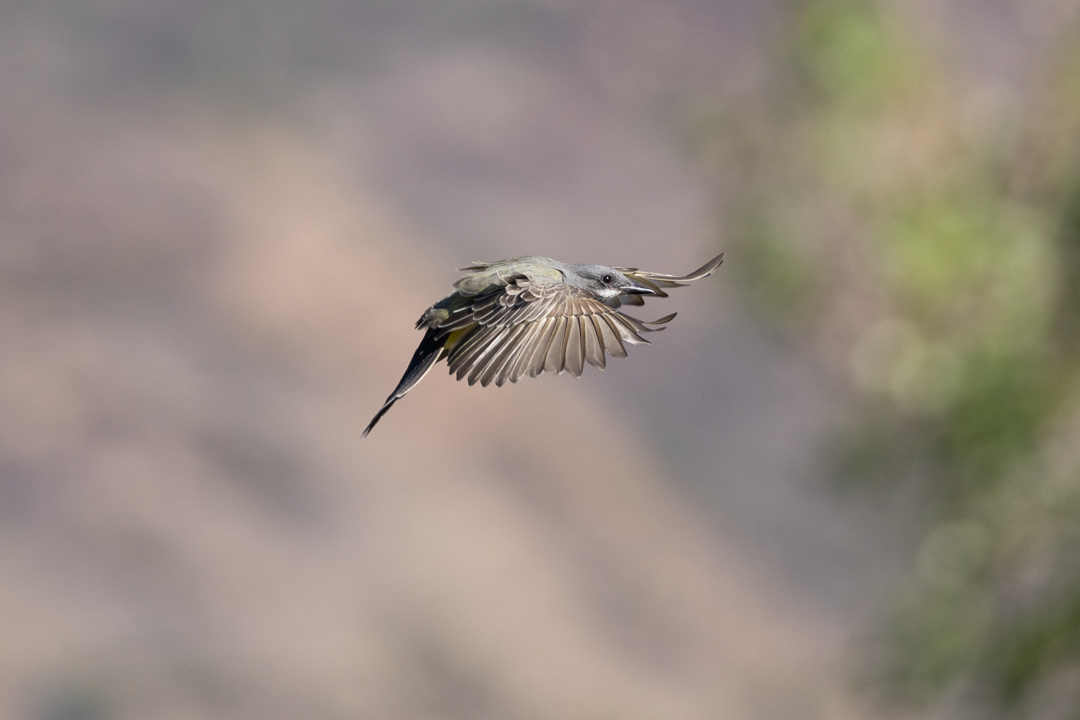
At Legacy Par, another Cassin’s Kingbird was caught in an awkward pose above the reed beds.
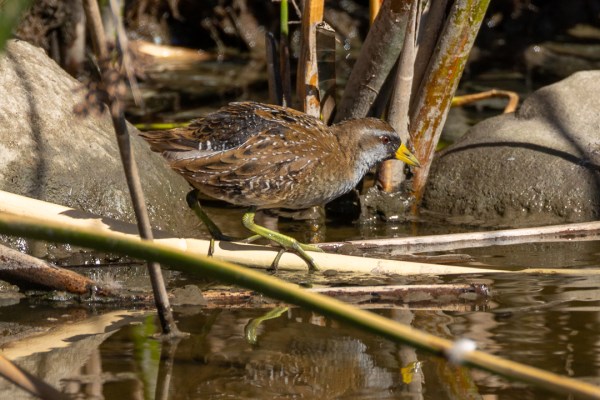
At the edge of the reed beds below was a Sora, now frequently a wintering bird in the large reed beds.
By the time we reached the ocean again, the birds had redistributed themselves a bit.
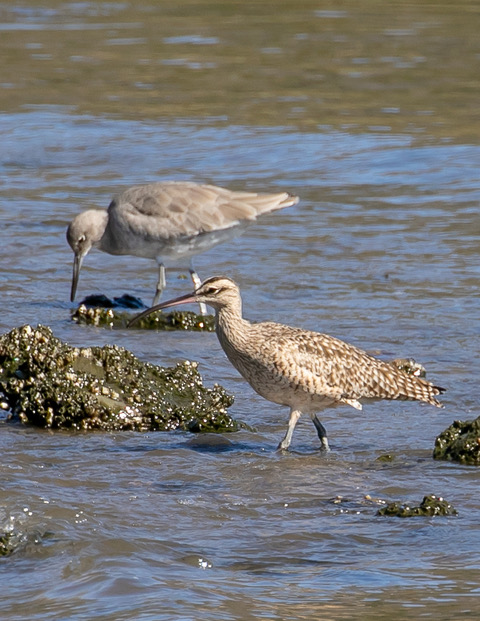
(Chris Tosdevin 10/25/26)
The two following photos were taken by Grace Murayama and Larry Loeher, who have regularly censused and watched the Western Snowy Plovers on Malibu Beach and Zuma Beach for several decades. These photos were taken two days earlier on Friday 10/23/26, last day of the rainfall, around 2:12 pm. Low tide that day of +0.75 ft. was slightly later at 2:27 pm.
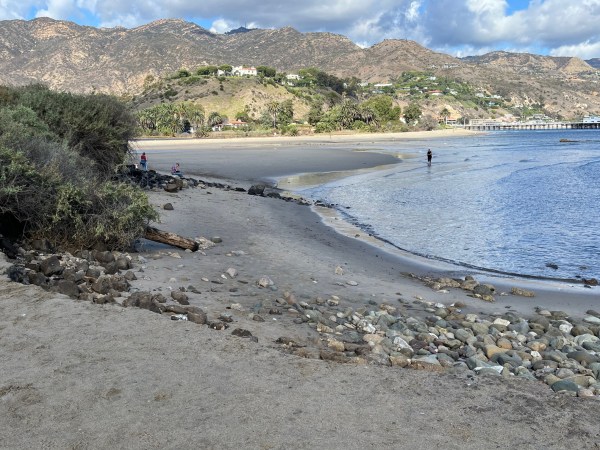
The “cliff” seen from the Adamson boat house in an earlier photo and shown below is on the left.
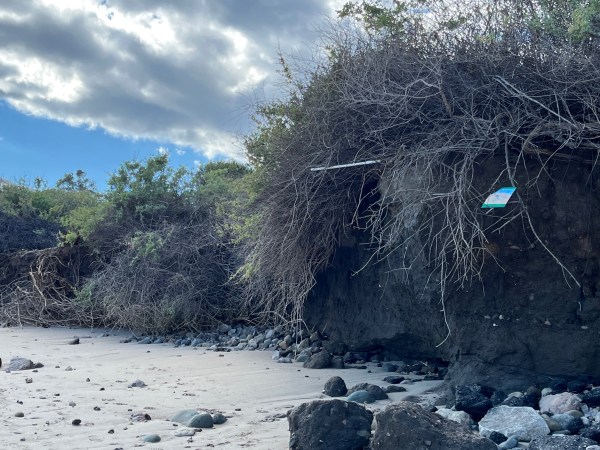
The “cliff” is roughly 6 ft. high, not counting the bushes. Below is a closeup of one of our Snowy Plover Virtual Fence enclosure signs, somehow partially embedded in the cliffside. The white pole to the left may have been one of the fence supports.
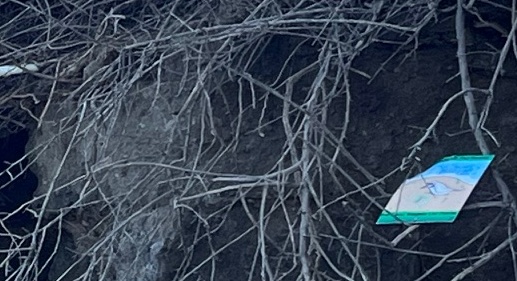
On the 23rd at low tide Grace and Larry counted (at least) 17 Snowy Plovers. Among them was one bird banded vg:ow, banded farther north at Oceano Dunes in 2024. We couldn’t find any Snowy Plovers on the 25th, but they may have been hiding near the east side grass and brush which we failed to get to.
And of course there were more birds along the path to and from the beach.
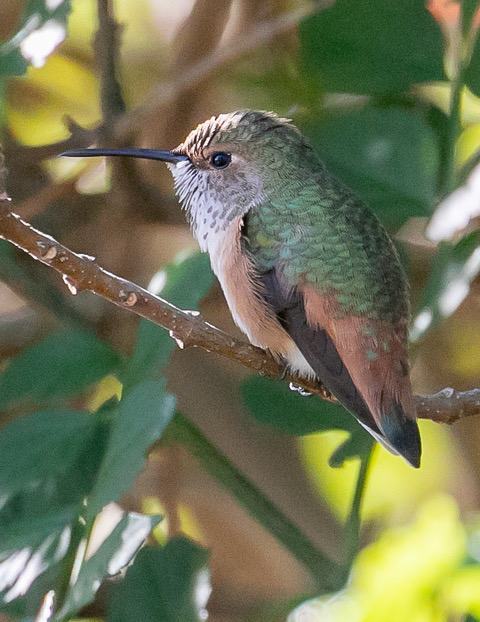
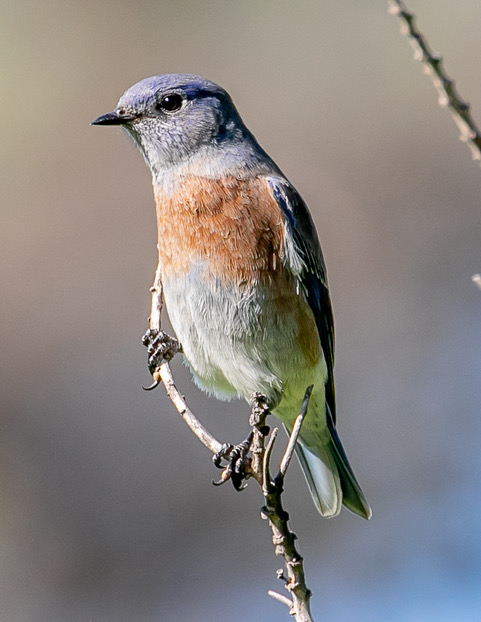
Western Bluebirds seem to be everywhere, in small numbers.
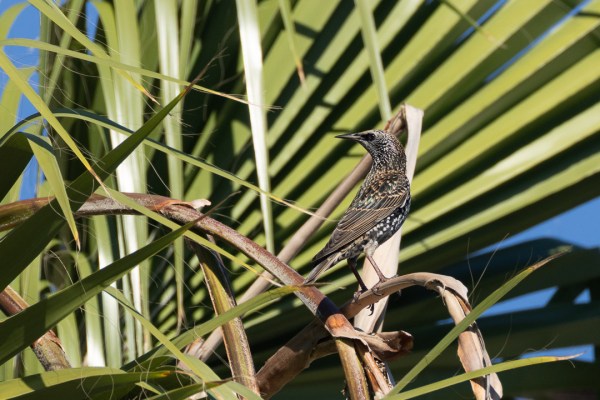
And an exceptionally starry European Starling, which often nest and find shelter within our many palms.
Malibu Lagoon on eBird as of 10-28-26: 9750 lists, 3209 eBirders, 325 species. https://ebird.org/hotspot/L597658
Most recent new species:
Northern Parula: 9/23/26 by Dessi Sieburth (no photo). https://ebird.org/atlascalifornia/checklist/S395608570
Red-footed Booby: 9/13/26 by Susan Gulliland, photos. https://ebird.org/checklist/S392641130
Canyon Wren, 06/11/26 by Judith Olsen (no photo). https://ebird.org/checklist/S355993537
Birds new for the season: Mourning Dove, Western Grebe, Turkey Vulture, Cassin’s Kingbird, Oak Titmouse, Ruby-crowned Kinglet, Hermit Thrush, Savannah Sparrow, Nashville Warbler, Yellow-rumped Warbler, Townsend’s Warbler. “New for the season” means it has been three or more months since last recorded on our trips.
Many, many thanks to photographers: Ray Juncosa, Armando Martinez, Grace Murayama & Chris Tosdevin
Upcoming SMBAS scheduled field trips; no reservations or Covid card necessary unless specifically mentioned:
- Malibu Creek State Park, Nov 7, 8 am
- Malibu Lagoon, Sun. Nov 22, 8:30 am (adults) & 10 am (parents & kids)
- Newport Back Bay, Sat. Dec 12, 8 am
- Malibu Lagoon, Sun. Dec 27, 8:30 am (adults) & 10 am (parents & kids)
- These and any other trips we announce for the foreseeable future will depend upon expected status of the Covid/flu/etc. pandemic, not to mention landslides, fires, local flooding and atmospheric rivers at trip time. Any trip announced may be canceled shortly before trip date if it seems necessary. By now any other comments should be superfluous.
- Link to Programs & Field Trip schedule.
The next SMBAS Zoom program, one week later than usual: Tuesday, November 10, 7:30pm; From Backyard Birds to Global Change: Citizen science at scale, with Dr. Morgan Tingley.
The SMBAS 10 a.m. Parent’s & Kids Birdwalk has again resumed. Reservations not necessary for families, but for groups (scouts, etc.), please call Jean (213-522-0062).
Links: Unusual birds at Malibu Lagoon
9/23/02 Aerial photo of Malibu Lagoon
Aerial ‘film’ flying north over lagoon
More recent aerial photo
Prior checklists:
2025: Jan-June, July-Dec 2026: Jan-June
2023: Jan-June, July-Dec 2024: Jan-June, July-Dec
2021: Jan-July, July-Dec 2022: Jan-June, July-Dec
2020: Jan-July, July-Dec 2019: Jan-June, July-Dec
2018: Jan-June, July-Dec 2017: Jan-June, July-Dec
2016: Jan-June, July-Dec 2015: Jan-May, July-Dec
2014: Jan-July, July-Dec 2013: Jan-June, July-Dec
2012: Jan-June, July-Dec 2011: Jan-June, July-Dec
2010: Jan-June, July-Dec 2009: Jan-June, July-Dec
The 10-year comparison summaries created during the 2012-13 Lagoon Reconfiguration Project period, remain available—despite numerous complaints—on our Lagoon Project Bird Census Page. Very briefly summarized, the results unexpectedly indicate that avian species diversification and numbers improved slightly during the restoration period June’12-June’14. We also have a newly-refurbished slide show of the reconfiguration from just before it started until the recent 13-year celebration.
Many thanks to Marie Barnidge-McIntyre, Femi Faminu, Chris Lord, Chris Tosdevin and others for contributions made to this month’s census counts.
The species list below was re-sequenced as of 12/31/25 to agree with the eBird sequence. If part of the right side of the chart below is hidden, there’s a slider button inconveniently located at the bottom end of the list. The numbers 1-9 left of the species names are keyed to the nine categories of birds at the bottom. Updated lagoon bird check lists can be downloaded here.
[Chuck Almdale]
| Malibu Census 2026 | 5/24 | 6/28 | 7/26 | 8/23 | 9/27 | 10/25 | |
| Temperature | 60-63 | 61-66 | 72-76 | 67-81 | 71-79 | 62-73 | |
| Tide Lo/Hi Height | L+0.42 | H+3.35 | H+3.49 | H+3.64 | H+5.71 | H+6.11 | |
| Tide Time | 1126 | 1034 | 0949 | 0858 | 1001 | 0851 | |
| 1 | Brant (Black) | 2 | |||||
| 1 | Cackling Goose | 1 | |||||
| 1 | Gadwall | 18 | 10 | 11 | 15 | 3 | 2 |
| 1 | Mallard | 12 | 15 | 35 | 6 | 4 | 5 |
| 1 | Surf Scoter | 1 | 1 | 1 | 8 | ||
| 1 | Red-breasted Merganser | 1 | |||||
| 2 | Feral Pigeon | 10 | 2 | 1 | 6 | ||
| 2 | Mourning Dove | 3 | 2 | 3 | 1 | ||
| 2 | Black-chinned Hummingbird | 1 | |||||
| 2 | Anna’s Hummingbird | 2 | 1 | 3 | 1 | 2 | |
| 2 | Allen’s Hummingbird | 6 | 3 | 6 | 4 | 3 | 5 |
| 3 | American Coot | 3 | 2 | 4 | 20 | 3 | |
| 4 | Black-bellied Plover | 3 | 2 | 35 | 50 | 25 | 25 |
| 4 | Killdeer | 3 | 3 | 2 | 8 | 6 | 2 |
| 4 | Semipalmated Plover | 1 | |||||
| 4 | Snowy Plover | 17 | 20 | 3 | |||
| 4 | Hudsonian Whimbrel | 7 | 11 | 2 | 2 | 3 | |
| 4 | Long-billed Curlew | 1 | |||||
| 4 | Marbled Godwit | 6 | 8 | ||||
| 4 | Spotted Sandpiper | 1 | 1 | 1 | 1 | ||
| 4 | Prairie Willet | 9 | 1 | 6 | 6 | 10 | |
| 4 | Ruddy Turnstone | 1 | 2 | 1 | 2 | ||
| 4 | Sanderling | 7 | 3 | ||||
| 4 | Dunlin | 1 | 2 | ||||
| 4 | Least Sandpiper | 2 | 7 | ||||
| 5 | Heermann’s Gull | 2 | 18 | 9 | 1 | 5 | |
| 5 | Western Gull | 22 | 29 | 68 | 51 | 21 | 31 |
| 5 | American Herring Gull | 1 | |||||
| 5 | California Gull | 6 | 1 | 2 | 4 | 58 | |
| 5 | Caspian Tern | 3 | 5 | 1 | 1 | ||
| 5 | Elegant Tern | 185 | 3 | 12 | 4 | 3 | |
| 5 | Royal Tern | 3 | 3 | 9 | 31 | 2 | 6 |
| 6 | Pied-billed Grebe | 6 | 3 | 4 | 7 | 4 | 2 |
| 6 | Eared Grebe | 1 | |||||
| 6 | Western Grebe | 35 | 1 | 15 | |||
| 6 | Red-throated Loon | 1 | |||||
| 6 | Pacific Loon | 1 | |||||
| 6 | Common Loon | 1 | 1 | ||||
| 6 | Brandt’s Cormorant | 4 | 2 | 1 | |||
| 6 | Pelagic Cormorant | 1 | 2 | 1 | 1 | 1 | 1 |
| 6 | Double-crested Cormorant | 25 | 10 | 30 | 21 | 9 | 9 |
| 6 | Yellow-crowned Night-Heron | 1 | |||||
| 6 | Black-crowned Night-Heron | 3 | |||||
| 6 | Snowy Egret | 3 | 2 | 8 | 7 | 6 | 14 |
| 6 | Green Heron | 1 | 1 | 1 | |||
| 6 | Great Egret | 1 | 2 | 2 | 1 | ||
| 6 | Great Blue Heron | 1 | 3 | 2 | 2 | 5 | 4 |
| 6 | Brown Pelican | 28 | 64 | 15 | 2 | 4 | 3 |
| 7 | Turkey Vulture | 10 | 2 | 2 | 1 | ||
| 7 | Osprey | 1 | 1 | 1 | |||
| 7 | Red-shouldered Hawk | 1 | 1 | 1 | |||
| 7 | Red-tailed Hawk | 1 | 1 | 2 | 1 | ||
| 8 | Belted Kingfisher | 2 | 1 | ||||
| 7 | American Kestrel | 1 | |||||
| 7 | Peregrine Falcon | 1 | |||||
| 8 | Nanday Parakeet | 1 | |||||
| 9 | Western Flycatcher | 1 | |||||
| 9 | Black Phoebe | 4 | 2 | 1 | 3 | 3 | 4 |
| 9 | Say’s Phoebe | 2 | 1 | ||||
| 9 | Vermilion Flycatcher | 2 | |||||
| 9 | Cassin’s Kingbird | 1 | 1 | ||||
| 9 | Cassin’s Vireo | 1 | |||||
| 9 | California Scrub-Jay | 2 | 1 | 1 | 1 | 2 | 2 |
| 9 | American Crow | 8 | 8 | 4 | 5 | 5 | 10 |
| 9 | Common Raven | 1 | 1 | ||||
| 9 | Oak Titmouse | 1 | 3 | 2 | 1 | ||
| 9 | Violet-green Swallow | 2 | |||||
| 9 | No. Rough-winged Swallow | 3 | 2 | 10 | |||
| 9 | Barn Swallow | 12 | 15 | 35 | 15 | ||
| 9 | Cliff Swallow | 20 | 3 | 5 | 2 | ||
| 9 | Bushtit | 10 | 25 | 8 | 15 | 20 | 14 |
| 9 | Wrentit | 2 | 2 | 1 | 1 | ||
| 9 | Swinhoe’s White-eye | 1 | |||||
| 9 | Ruby-crowned Kinglet | 2 | |||||
| 9 | Northern House Wren | 1 | 6 | 4 | |||
| 9 | Marsh Wren | 1 | 1 | 1 | |||
| 9 | European Starling | 2 | 6 | 5 | 12 | 30 | 8 |
| 9 | Northern Mockingbird | 2 | 1 | ||||
| 9 | Western Bluebird | 3 | 5 | 4 | |||
| 9 | Hermit Thrush | 1 | |||||
| 9 | American Robin | 1 | |||||
| 9 | Scaly-breasted Munia | 3 | 2 | ||||
| 9 | House Finch | 9 | 7 | 22 | 6 | 6 | 10 |
| 9 | Lesser Goldfinch | 2 | 5 | 4 | |||
| 9 | Dark-eyed Junco | 1 | 2 | 8 | |||
| 9 | White-crowned Sparrow | 1 | 13 | ||||
| 9 | Savannah Sparrow | 3 | |||||
| 9 | Song Sparrow | 4 | 4 | 3 | 4 | 5 | 4 |
| 9 | California Towhee | 2 | 2 | 1 | 1 | 2 | 2 |
| 9 | Spotted Towhee | 1 | |||||
| 9 | Hooded Oriole | 4 | 1 | ||||
| 9 | Red-winged Blackbird | 2 | 5 | 4 | |||
| 9 | Great-tailed Grackle | 4 | 8 | 1 | 3 | 4 | |
| 9 | Orange-crowned Warbler | 1 | 1 | 1 | 3 | 2 | |
| 9 | Nashville Warbler | 1 | |||||
| 9 | Common Yellowthroat | 4 | 7 | 4 | |||
| 9 | Yellow Warbler | 1 | |||||
| 9 | Yellow-rumped Warbler | 15 | |||||
| 9 | Townsend’s Warbler | 1 | |||||
| 9 | Black-headed Grosbeak | 1 | |||||
| Totals Birds by Type | May | Jun | Jul | Aug | Sep | Oct | |
| 1 | Waterfowl & Quail | 35 | 25 | 47 | 22 | 15 | 7 |
| 2 | Doves, Swifts & Hummers | 21 | 6 | 15 | 4 | 5 | 14 |
| 3 | Rails & Coots | 0 | 3 | 2 | 4 | 20 | 3 |
| 4 | Shorebirds | 6 | 22 | 70 | 97 | 58 | 56 |
| 5 | Gulls & Terns | 221 | 60 | 99 | 90 | 30 | 100 |
| 6 | Grebe, Loon, Heron, Pelican | 105 | 91 | 63 | 46 | 33 | 48 |
| 7 | Hawks & Falcons | 11 | 3 | 3 | 3 | 4 | 4 |
| 8 | Kingfish, Peckers & Parrots | 0 | 0 | 0 | 0 | 3 | 1 |
| 9 | Passerines | 92 | 96 | 100 | 81 | 123 | 128 |
| Totals Birds | 491 | 306 | 399 | 347 | 291 | 361 | |
| Total Species by Group | May | Jun | Jul | Aug | Sep | Oct | |
| 1 | Waterfowl & Quail | 6 | 2 | 3 | 3 | 3 | 2 |
| 2 | Doves, Swifts & Hummers | 4 | 3 | 5 | 1 | 3 | 4 |
| 3 | Rails & Coots | 0 | 1 | 1 | 1 | 1 | 1 |
| 4 | Shorebirds | 2 | 5 | 8 | 9 | 10 | 9 |
| 5 | Gulls & Terns | 6 | 7 | 5 | 6 | 4 | 4 |
| 6 | Grebe, Loon, Heron, Pelican | 10 | 10 | 8 | 11 | 10 | 7 |
| 7 | Hawks & Falcons | 2 | 2 | 2 | 3 | 3 | 4 |
| 8 | Kingfish, Peckers & Parrots | 0 | 0 | 0 | 0 | 2 | 1 |
| 9 | Passerines | 21 | 19 | 17 | 15 | 26 | 29 |
| Totals Species – 100 | 51 | 49 | 49 | 49 | 62 | 61 |
Discover more from SANTA MONICA BAY AUDUBON SOCIETY BLOG
Subscribe to get the latest posts sent to your email.