Skip to content

Free email delivery

Please sign up for email delivery in the subscription area to the right.
No salesman will call, at least not from us. Maybe from someone else.

Voices: Common Loon | Cornell Lab of Ornithology

February 20, 2019

Experience the quintessential sound of the North Woods as described by Macaulay Library Audio Curator, Greg Budney.

A film from the Cornell Lab of Ornithology. If no film or link appears in this email, go to the blog to view it by clicking on the blog title above. If the film stops & starts in an annoying manner, press pause (lower left double bars ||) to let it buffer and get ahead of you. The Lab is a member-supported organization; they welcome your membership and support.  [Chuck Almdale]

Roadrunner Fun Facts

February 19, 2019

This is about real roadrunners, not that erstwhile new roadrunner species I wrote about some years back.
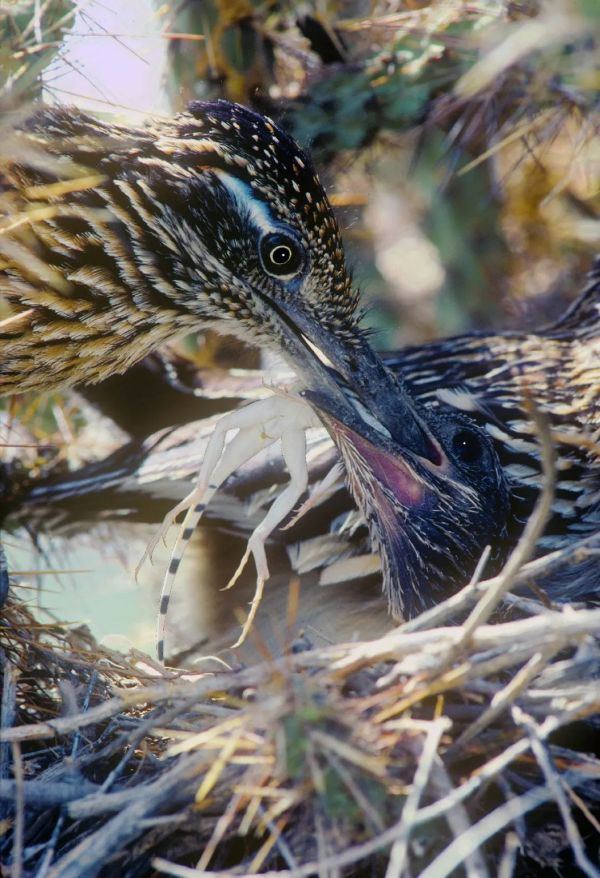
Roadrunner feeding the nestling
(James W. Cornett, Desert Magazine)

From the Desert Sun, written by James W. Cornett of Desert Magazine: “Why do Roadrunners disappear from the desert each winter. This ecologist has a guess.

It addresses questions like:

  • How many kinds of roadrunners are there?
  • Can they fly, or just run?
  • How fast can they run?
  • What do they eat?
  • How do they deal with snakes?
  • Do they enjoy visiting humans in their homes?
  • And most critically, do they migrate south for the winter, and if not, where are they?

You will enjoy it.
[Chuck Almdale]

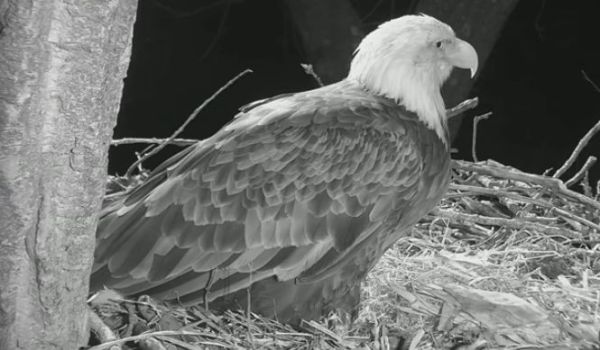
Eagle Lays Egg

February 17, 2019
by

Have your little ones been pestering you with “Where do babies come from, Mommy/Daddy?”

If you think they’re ready for lesson one about the birds and the bees, and you want to start with the birds (bee reproduction can get really tricky to explain, what with all those sisters happily working for mom, and no men in sight) look no further.
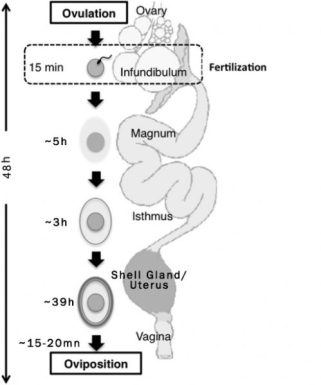
Plop them down in from of the computer screen and let them read this. If the text is a little difficult, read it to them.
This comes from those friendly folks at The Raptor Resource Project.

Don’t forget to start the video of the eagle laying an egg so it buffers. It’s 34 minutes long. HINT: Start it at 6 minutes in. Nothing happens until then, when the bird is alerted by a car driving by.

HINT #2: If you looking for something that includes “Mommy and Daddy Eagle love each other very much, so they’ve decided to have a baby!” this is quite definitely NOT it.

This is technical stuff. Very likely they’ll never ask you for another explanation on anything.

You’re welcome. No gifts please. Virtue is its own reward.
[Chuck Almdale]
This Adorable Sea Slug is a Sneaky Little Thief | Deep Look Video

February 15, 2019

Nudibranchs may look cute, squishy and defenseless … but watch out. These brightly-colored sea slugs aren’t above stealing weapons from their prey.

This is another installment of the PBS Deep Look series; this installment is adapted from the “It’s OK to be Smart” series. If no film or link appears in this email, go to the blog to view it by clicking on the blog title above. If the film stops & starts in an annoying manner, press pause (lower left double bars ||) to let it buffer and get ahead of you.   [Chuck Almdale]

Great Backyard Bird Count Feb. 18-18, 2019

February 14, 2019

A message from the friendly folks at Project Feeder Watch.
The Great Backyard Bird Count is upon us: February 15-18, 2019!


FeederWatchers: take part in the Great Backyard Bird Count! Email not displaying correctly?
View it in your browser.
 

Project FeederWatch eNews

February 14, 2019

Count birds for the Great Backyard Bird Count

Similar to Project FeederWatch, the Great Backyard Bird Count (GBBC) helps scientists learn about the distribution and abundance of birds. But the GBBC works a little differently and takes place over four days only—from February 15 through 18.

For the GBBC, you count the number of individuals of each species you see during a single counting session, and you submit a checklist for each counting session (not a two-day tally like you do for FeederWatch). You can count in more than one location—just submit a separate checklist for each location each time you count. You can report the same birds to GBBC that you are reporting to Project FeederWatch as well as any other birds you see, even those birds flying overhead that don’t count for FeederWatch.

This year’s counts are more likely to include sightings of winter finches and grosbeaks that are moving farther south than usual in what’s called an “irruption.” This type of movement is often sparked by poor cone, seed, and berry crops in parts of Canada. “This year is a very exciting one for backyard birders in the East, headlined by the largest Evening Grosbeak movement in at least two decades,” says the Cornell Lab of Ornithology’s Marshall Iliff, a leader of the eBird program.

During the 2018 count, bird watchers from more than 100 countries submitted more than 180,000 bird checklists reporting a record 6,456 species–more than half the known bird species in the world. “With the finch irruption this year, we’re hoping for record bird numbers and another record-breaking year for Canadian participation,” says Jon McCracken, Bird Studies Canada’s National Program Director. “In search of a bit of relief from our cold winters, many Canadians become ‘snow birds’ at this time of year, and spend a bit of time birding somewhere warm. While I always strongly encourage counts in our own snowy Canadian backyards, don’t forget that you can participate anywhere in the world. Last year, I did my count in Florida’s Corkscrew Swamp, and had a fantastic day.”

Learn more about how to take part in the Great Backyard Bird Count at birdcount.org. The GBBC is a joint project of the Cornell Lab of Ornithology and the National Audubon Society with partner Bird Studies Canada and is made possible in part by founding sponsor Wild Birds Unlimited.

Project FeederWatch is a joint project of the Cornell Lab of Ornithology and Bird Studies Canada. Project FeederWatch is sponsored in the U.S. and Canada by Wild Birds Unlimited and in Canada by Armstrong Bird Food.

The Cornell Lab of Ornithology is a nonprofit organization supported by friends and members. Our mission is to interpret and conserve the earth’s biological diversity through research, education, and citizen science focused on birds.

Bird Studies Canada is our country’s leading national charitable organization dedicated to bird research and conservation. Our mission is to conserve wild birds of Canada through sound science, on-the-ground actions, innovative partnerships, public engagement, and science based advocacy.

Update your information, manage subscriptions, or unsubscribe from any Cornell Lab eNewletters.

Project FeederWatch Contact Information

For U.S. participants:
Cornell Lab of Ornithology
Project FeederWatch
159 Sapsucker Woods Rd.,
Ithaca, NY 14850
(607) 254-2427
feederwatch@cornell.edu
https://feederwatch.org

For Canadian participants:
Bird Studies Canada/Etudes d’Oiseaux Canada
P.O. Box 160,
Port Rowan, ON N0E 1M0
(519) 586-3531
pfw@birdscanada.org
Toll Free: 1-888-448-BIRD (2473)
www.birdscanada.org/pfw
