Free email delivery
Please sign up for email delivery in the subscription area to the right.
No salesman will call, at least not from us. Maybe from someone else.
Least Tern Monitoring in L.A. County
Stacey Vigallon reports on this year’s Least Tern monitoring:

Terrifically cute Least Tern chick
1) The Least Terns arrived like clockwork in April at the Venice Beach colony enclosure. As happens every year, predation of the eggs by crows is happening, but the terns are still doing their best, and they’re definitely roosting there at night. The terns seem to be spending a considerable amount of time away from the colony, which may possibly indicate that food resources are not conveniently close or plentiful this year. In short, we’ve done what we can to make sure the Venice colony enclosure has great habitat for nesting, but there are factors out of our control (crows, food resources) that definitely affect the terns. We’ve been told that other colonies in Southern California have also experienced lower numbers of Least Terns this year. As the nesting season progresses, we will likely start to see groups of Least Tern adults and fledglings from other colonies arriving at the Venice colony and adjacent beach in mid to late July. To ID the fledglings, keep an eye out for the Least Terns that don’t have the crisp uniform of black cap and yellow bill – juvenile Least Terns are pretty much adult-size but they’re sloppier dressers.
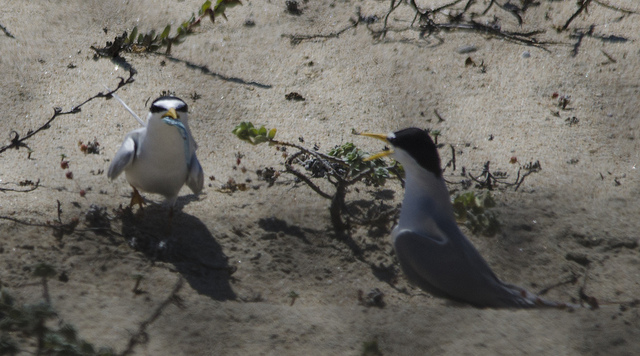
Least Tern brings fish gift to prospective mate
(Wendy Miller – Huntington Beach – May’13)
2) Crows… Every year they present a challenge, and every year we get lots of questions about them. Crows and their relatives, ravens and jays (collectively called “corvids”), can be predators pretty much wherever their range overlaps with any other nesting species. Whether it’s plovers and terns on southern California beaches, marbled murrelets in Pacific Northwest forests, or baby tortoises in the Mojave desert, predation by corvids can be a real problem. They are extremely smart and typically well-adapted to humans and the way we alter the landscape. In Los Angeles, we have created excellent crow habitat where none previously existed by replacing coastal sage scrub and wetland habitat with lawns (which means year-round water and invertebrate food sources), trees for nesting, and plentiful food waste. We have worked with wildlife management agencies at the Venice site for years, and everyone is very well aware of the problem.
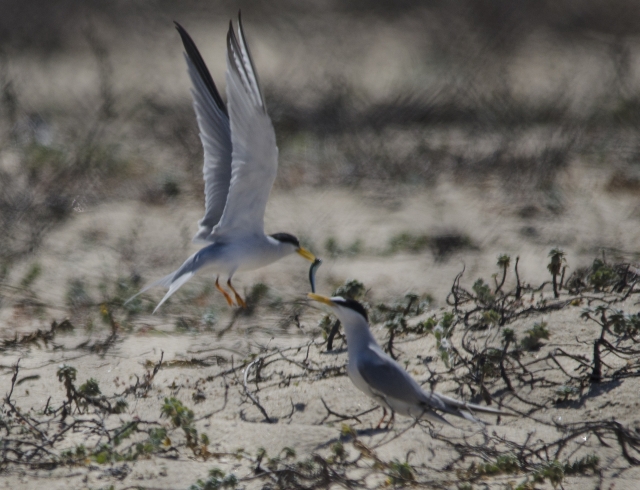
More fish business
(Wendy Miller – Huntington Beach – May’13)
3) But, what we currently lack in tern-viewing, we can make up for in other bird species… If you have time to branch out from the beach, LA Audubon will be offering guided (free!) birdwalks at Topanga State Park, Franklin Canyon Park, and the Ballona Wetlands in July. Here’s a link to info about birdwalks:
http://losangelesaudubon.org/index.php/recreation-mainmenu-189/bird-walks-mainmenu-190/486-bird-walks

Even more fish business
(Wendy Miller – Huntington Beach – May’13)
If you want a more intensive birding experience, check out the LA Audubon field trips too. The August 3rd shorebird ID trip along the LA River is also free and it can really get you started identifying shorebirds. Here’s a link:
http://losangelesaudubon.org/index.php/component/jevents/icalrepeat.detail/2013/08/03/721/309/lower-la-river-shorebird-migration-field-trip-with-larry-allen?Itemid=1
[Stacey Vigallon – Los Angeles Audubon Society Least Tern Monitoring Project World HQ]
Santa Monica Bay Audubon will again be offering a field trip – focusing on shorebirds – in the latter half of August to the lower Los Angeles River. Details to be posted on this blog. [Chuck Almdale]
The final four photos on this blog were kindly shared with us by Wendy Miller, Least Tern Monitor Volunteer at the Huntington Beach colony in Orange county. Check out the rest of her many photos here on Flickr. I have also placed a permanent link to these photos in the “Bird Links” section on the right sidebar.

Adult Least Tern with chick
(Wendy Miller – Huntington Beach – May’13)
Malibu Lagoon Trip lists January – June 2013
This list was created at a later date in order to have a complete record on the blog site. [Chuck Almdale]
| Malibu Census 2013 | 1/27 | 2/24 | 3/24 | 4/28 | 5/26 | 6/23 |
| Temperature | 52-62 | 55-65 | 60-75 | 57-68 | 63-64 | 62-75 |
| Tide Lo/Hi Height | H +5.76 | H +5.50 | H +4.90 | L -1.10 | H +4.08 | H +4.22 |
| Tide Time | 0849 | 0802 | 0806 | 0609 | 1138 | 1037 |
| Brant | 15 | 3 | 1 | |||
| Gadwall | 34 | 13 | 13 | 12 | 2 | 2 |
| American Wigeon | 7 | |||||
| Mallard | 45 | 14 | 28 | 30 | 5 | 59 |
| Northern Shoveler | 22 | 22 | 2 | 1 | ||
| Northern Pintail | 4 | 2 | ||||
| Green-winged Teal | 19 | 1 | ||||
| Surf Scoter | 15 | 5 | ||||
| Bufflehead | 10 | 14 | ||||
| Common Merganser | 6 | |||||
| Red-brstd Merganser | 6 | 3 | 12 | 3 | ||
| Ruddy Duck | 55 | 41 | 55 | 20 | ||
| Red-throated Loon | 2 | 2 | 2 | |||
| Pacific Loon | 5 | 2 | 3 | 1 | ||
| Common Loon | 1 | |||||
| Pied-billed Grebe | 2 | 2 | 4 | 6 | 3 | 8 |
| Horned Grebe | 2 | 1 | ||||
| Eared Grebe | 7 | 1 | ||||
| Western Grebe | 46 | 2 | 1 | 28 | ||
| Clark’s Grebe | 1 | |||||
| Blk-vented Shearwater | 200 | |||||
| Brandt’s Cormorant | 7 | 4 | 1 | 7 | 2 | |
| Dble-crstd Cormorant | 33 | 40 | 15 | 22 | 9 | 17 |
| Pelagic Cormorant | 2 | 1 | ||||
| Brown Pelican | 73 | 10 | 35 | 34 | 7 | 52 |
| Great Blue Heron | 4 | 1 | 1 | 2 | 2 | 2 |
| Great Egret | 1 | 1 | 2 | 3 | 2 | |
| Snowy Egret | 9 | 1 | 5 | 9 | 3 | 8 |
| Blk-crwnd N-Heron | 1 | 1 | 2 | |||
| Turkey Vulture | 1 | 2 | ||||
| Osprey | 1 | 1 | ||||
| White-tailed Kite | 1 | 1 | 1 | |||
| Cooper’s Hawk | 1 | 1 | ||||
| Red-shouldered Hawk | 1 | |||||
| Red-tailed Hawk | 1 | 2 | 1 | 2 | ||
| Merlin | 1 | |||||
| American Coot | 270 | 82 | 170 | 58 | 1 | 6 |
| Blk-bellied Plover | 62 | 50 | ||||
| Snowy Plover | 61 | 36 | 33 | 6 | 1 | |
| Semipalmated Plover | 8 | 2 | ||||
| Killdeer | 2 | 1 | 2 | 2 | 6 | 4 |
| Black Oystercatcher | 2 | |||||
| American Avocet | 3 | |||||
| Spotted Sandpiper | 3 | 1 | 2 | |||
| Willet | 7 | 1 | 16 | 1 | 1 | |
| Whimbrel | 3 | 28 | 8 | 1 | ||
| Long-billed Curlew | 2 | |||||
| Marbled Godwit | 15 | 2 | 12 | |||
| Ruddy Turnstone | 10 | 1 | ||||
| Sanderling | 17 | 170 | ||||
| Western Sandpiper | 2 | |||||
| Short-billd Dowitcher | 2 | |||||
| Heermann’s Gull | 12 | 14 | 35 | 18 | ||
| Mew Gull | 2 | |||||
| Ring-billed Gull | 90 | 120 | 25 | 1 | ||
| Western Gull | 75 | 40 | 35 | 112 | 22 | 62 |
| California Gull | 480 | 280 | 30 | 25 | 1 | 1 |
| Herring Gull | 1 | 1 | ||||
| Glaucous-wingd Gull | 1 | 2 | 1 | 3 | ||
| Caspian Tern | 6 | 2 | 6 | |||
| Royal Tern | 2 | 3 | 3 | 5 | 3 | |
| Elegant Tern | 2 | 134 | 121 | 14 | ||
| Black Skimmer | 2 | |||||
| Rock Pigeon | 8 | 1 | 25 | 12 | 9 | |
| Band-tailed Pigeon | 5 | |||||
| Mourning Dove | 2 | 5 | 2 | |||
| Blk-hooded Parakeet | 4 | |||||
| White-throated Swift | 1 | |||||
| Anna’s Hummingbird | 1 | 1 | 1 | 1 | 1 | 2 |
| Allen’s Hummingbird | 5 | 3 | 5 | 4 | 1 | 10 |
| Belted Kingfisher | 1 | 1 | 1 | |||
| Black Phoebe | 4 | 5 | 7 | 2 | 12 | |
| Say’s Phoebe | 1 | |||||
| Cassin’s Kingbird | 1 | 1 | ||||
| Western Scrub-Jay | 1 | 1 | 1 | 1 | ||
| American Crow | 3 | 7 | 8 | 4 | 3 | 8 |
| Common Raven | 1 | |||||
| Rough-wingd Swallow | 12 | 10 | 1 | |||
| Tree Swallow | 10 | |||||
| Barn Swallow | 1 | 6 | 6 | 23 | ||
| Cliff Swallow | 12 | 14 | 2 | |||
| Oak Titmouse | 2 | 1 | 1 | 1 | ||
| Bushtit | 10 | 5 | 4 | 10 | 1 | |
| Bewick’s Wren | 1 | 1 | 1 | |||
| Ruby-crowned Kinglet | 3 | |||||
| American Robin | 1 | |||||
| Wrentit | 1 | |||||
| Northern Mockingbird | 2 | 2 | 2 | 5 | 3 | 6 |
| European Starling | 22 | 52 | 16 | 4 | 3 | 65 |
| Ornge-crwnd Warbler | 1 | 7 | ||||
| Yellow-rumpd Warbler | 14 | 2 | ||||
| Common Yellowthroat | 3 | 2 | ||||
| Spotted Towhee | 1 | |||||
| California Towhee | 1 | 2 | 2 | 1 | 6 | |
| Savannah Sparrow | 2 | |||||
| Song Sparrow | 8 | 2 | 8 | 15 | 8 | 15 |
| Lincoln’s Sparrow | 1 | |||||
| White-crwnd Sparrow | 6 | 4 | 5 | |||
| Red-winged Blackbird | 9 | 2 | ||||
| Brewer’s Blackbird | 1 | 2 | ||||
| Great-tailed Grackle | 5 | 7 | 5 | 4 | 4 | |
| Brwn-headed Cowbird | 3 | |||||
| Hooded Oriole | 1 | |||||
| House Finch | 2 | 3 | 2 | 8 | 3 | 14 |
| Lesser Goldfinch | 1 | 2 | 4 | 2 | ||
| House Sparrow | 5 | |||||
| Totals by Type | Jan | Feb | Mar | Apr | May | Jun |
| Waterfowl | 217 | 131 | 115 | 68 | 9 | 61 |
| Water Birds-Other | 649 | 142 | 234 | 160 | 20 | 85 |
| Herons, Egrets | 13 | 3 | 7 | 14 | 9 | 14 |
| Raptors | 3 | 3 | 6 | 1 | 2 | 3 |
| Shorebirds | 183 | 260 | 92 | 32 | 10 | 9 |
| Gulls & Terns | 663 | 445 | 94 | 297 | 189 | 104 |
| Doves | 8 | 1 | 25 | 14 | 5 | 16 |
| Other Non-Pass. | 7 | 5 | 11 | 5 | 2 | 13 |
| Passerines | 75 | 114 | 89 | 75 | 76 | 169 |
| Totals Birds | 1818 | 1104 | 673 | 666 | 322 | 474 |
| Total Species | Jan | Feb | Mar | Apr | May | Jun |
| Waterfowl | 10 | 10 | 6 | 5 | 4 | 2 |
| Water Birds-Other | 12 | 7 | 11 | 10 | 4 | 5 |
| Herons, Egrets | 2 | 3 | 3 | 4 | 4 | 4 |
| Raptors | 3 | 2 | 5 | 1 | 2 | 2 |
| Shorebirds | 10 | 6 | 6 | 9 | 4 | 4 |
| Gulls & Terns | 8 | 5 | 6 | 7 | 8 | 6 |
| Doves | 1 | 1 | 1 | 2 | 1 | 3 |
| Other Non-Pass. | 3 | 3 | 4 | 2 | 2 | 3 |
| Passerines | 16 | 15 | 19 | 16 | 17 | 19 |
| Totals Species – 106 | 65 | 52 | 61 | 56 | 46 | 48 |
Malibu Lagoon Trip Report: 23 June, 2013
It seems weird when June at the beach is cold, but 62-75° is actually fairly common – June gloom, and all that. A light breeze made it downright chilly, although if you’re not a SoCal resident, being chilled at 62° may seem absurd. So it goes. All things are relative; some are more relative than others.
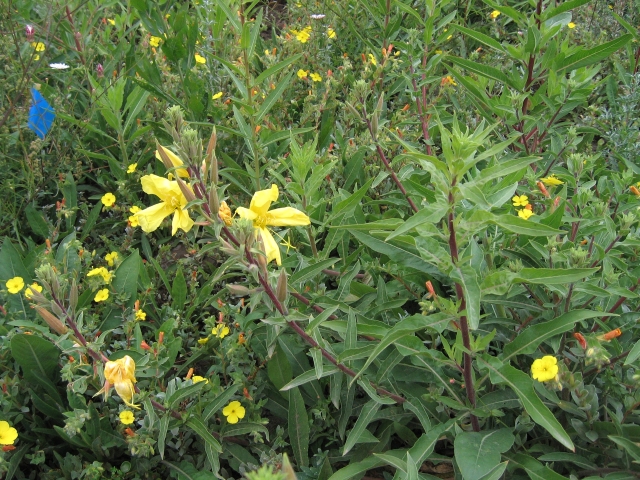
Vegetating hillside flowers (L. Johnson 6/23/13)
The beach breach had filled in, although most of Surfrider Beach seemed to be missing. Rocks and timbers from long-vanished piers were exposed, and a 6-ft cliff of sand was just below the lifeguard station near the pier. Waves from the most recent high tide had washed completely across the beach and into the lagoon. Speaking of the lagoon, the newly enlarged channel seems to have developed a sizable mat of floating greenish-brown algae. The now-superseded narrow channels also sported thick summer coatings of algae, but more surface area seems to mean more algae. I hope this stuff doesn’t turn into the stinking cesspool we used to get. Flowers are popping up everywhere, but the need for weeding has also become quite evident.
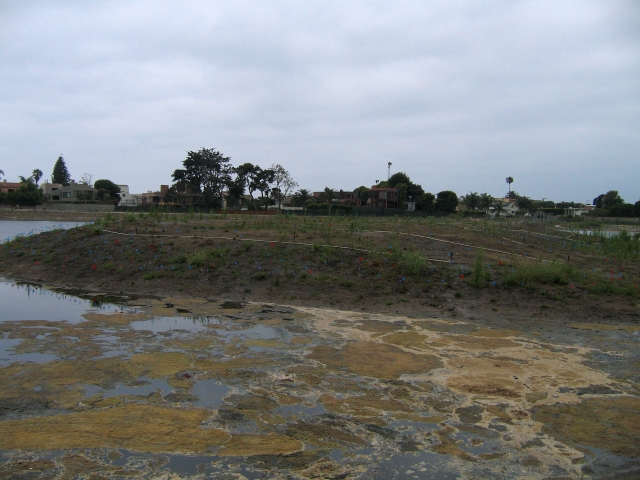
View towards colony across channel island & algae
(L. Johnson 6/23/13)
Most of the ducks (see trip list below) were in the channel and on it’s several islands when we arrived, as were the Pied-billed Grebes and the few coots. I think the ducks spend the night on the islands, surrounded by the security of water as islands (by definition) typically are. By 10am on they had spread all over the lagoon and channel. I had just gotten my binoculars out of the trunk when two Long-billed Curlew glided in from the west to settle on the channel shore. But they prefer grassy fields or deep, invertebrate-filled mud for feeding, and they soon moved on. Several pairs of Killdeer also strolled the channel shore; we searched for little Killdeer (Killdeerettes?) but they’re extremely cryptic at best, and we could see none, if indeed any were present. Crows – who ate the eggs which Least Terns recently laid in the Snowy Plover enclosure – relish chicks just as much as they do eggs. The terns gave it up as a bad bet and moved on to safer pastures.
Brown Pelican numbers may be beginning to recover – 52 was more than we’ve seen since last January, but still well below the 177 average for 2007-12. Gull & tern numbers also remain well below average, with 104 total birds less than half of the average 229 for 2007-12. Barn Swallows, however, swarmed the beach, scooping up the abundant “flies” springing from clumps of kelp-wrack, and a few birders were reminded that just because they’re not “all rusty” underneath doesn’t mean they’re not Barn Swallows. The Mallards rebounded from May’s count of 5 to 59; most were juveniles, and were probably literally “up the creek” last month, when we found only 5, as they sure didn’t fly in from anywhere. Speaking of ‘elsewhere’, there were 22 herons & egrets in the nesting tree behind Starbucks across the street who are not included in the census below.
Unexpected and uncommon at the lagoon – besides the curlews – were five Band-tailed Pigeons perched on a snag near PCH and a juvenile American Robin at Adamson House. The lower half of this bird’s breast was a typical rusty-red, while the top half was reddish spots on a pale background.

Heermann’s and Western Gulls (L. Johnson 6/23/13)
A few people brought their lunches and had a get-together after the walk, but there was no official picnic, per se. We learned afterwards that a few families came for the 10am Parents & Kids birdwalk, but couldn’t find anyone in the parking lot and left. For future reference, the leaders for all walks will start from the metal-shaded gathering area next to the parking lot, which is where they waited this time, apparently invisible from the parking lot through the ever-growing thicket of willows.
Our next three field trips: Mt. Piños Birds & Butterflies, 29-30 June; Malibu Lagoon, 28 July, 8:30am; Malibu Lagoon, 25 August, 8:30am.
Our next program: Tuesday, 1 Oct., 7:30 pm. Blog-announced, as usual.
NOTE: Our 10 a.m. Parent’s & Kids Birdwalk has resumed, meeting at the shaded viewing area near the parking lot.
Links: Unusual birds at Malibu Lagoon
Aerial photo of Malibu Lagoon from 9/23/02.
Prior checklists: July-Dec’11, Jan-June’11, July-Dec ’10, Jan-June ’10, Jul-Dec ‘09, and Jan-June ‘09.
Comments on Bird Lists Below (No count available for June 2008)
Total Birds: June total birds of 474 are 24% below the 6-year average, which is an improvement from the previous 4 months; low numbers are mainly in Brown Pelicans and Gulls & Terns (-104 each).
Summary of total birds from the 6-year average so far: June +36%, July -9%, Aug. -9%, Sep. +12%, Oct. +3%, Nov -5%, Dec +30%, Jan -20%, Feb -29%, March -30%, April -34%, May -37%, June -24%. Recovering?
Species Diversity: June 2013 with 48 species was 13% above the 6-year average of 42.7.
Summary of species diversity from the 6-year average so far: June -10%, July +10%, Aug. -6%, Sep. -20%, Oct. +5%, Nov +2%, Dec -4%, Jan +2%, Feb -8%, March +9%, April -2%, May +3%, June +13%.
10-year comparison summaries are available on our Lagoon Project Bird Census Page. [Chuck Almdale]
| Malibu Census | 2007 | 2009 | 2010 | 2011 | 2012 | 2013 | |
| 2007-2013 |
6/24 | 6/28 | 6/27 | 6/26 | 6/24 | 6/23 | |
| Temperature | 68-75 | 65-75 | 68-76 | 70-76 | 62-75 | ||
| Tide Lo/Hi Height | L -0.3 | L +0.4 | H +3.81 | H +3.0 | L +0.07 | H +4.22 | Ave. |
| Tide Time | 0640 | 0838 | 1139 | 0754 | 0714 | 1037 | Birds |
| Brant | 1 | 1 | 11 | 2.2 | |||
| Gadwall | 14 | 15 | 4 | 5 | 2 | 2 | 7.0 |
| Mallard | 40 | 25 | 40 | 41 | 24 | 59 | 38.2 |
| Red-brstd Merganser | 1 | 0.2 | |||||
| Ruddy Duck | 6 | 7 | 2.2 | ||||
| Pied-billed Grebe | 4 | 2 | 2 | 3 | 4 | 8 | 3.8 |
| Clark’s Grebe | 1 | 0.2 | |||||
| Brandt’s Cormorant | 2 | 0.3 | |||||
| Dble-crstd Cormorant | 6 | 22 | 5 | 54 | 17 | 17 | 20.2 |
| Pelagic Cormorant | 1 | 3 | 0.7 | ||||
| Brown Pelican | 239 | 71 | 205 | 28 | 340 | 52 | 155.8 |
| Great Blue Heron | 3 | 8 | 6 | 4 | 1 | 2 | 4.0 |
| Great Egret | 4 | 3 | 2 | 5 | 2 | 2.7 | |
| Snowy Egret | 8 | 14 | 14 | 8 | 4 | 8 | 9.3 |
| Little Blue Egret | 1 | 0.2 | |||||
| Green Heron | 3 | 1 | 0.7 | ||||
| Blk-crwnd N-Heron | 5 | 3 | 6 | 1 | 2 | 2.8 | |
| Osprey | 1 | 1 | 0.3 | ||||
| White-tailed Kite | 1 | 1 | 0.3 | ||||
| Cooper’s Hawk | 1 | 1 | 0.3 | ||||
| Red-shouldered Hawk | 1 | 0.2 | |||||
| Red-tailed Hawk | 1 | 1 | 2 | 2 | 1.0 | ||
| Peregrine Falcon | 1 | 0.2 | |||||
| American Coot | 20 | 22 | 5 | 12 | 4 | 6 | 11.5 |
| Blk-bellied Plover | 15 | 2.5 | |||||
| Killdeer | 2 | 5 | 1 | 4 | 2.0 | ||
| Black Oystercatcher | 1 | 0.2 | |||||
| Willet | 3 | 3 | 1 | 1.2 | |||
| Whimbrel | 5 | 8 | 2.2 | ||||
| Long-billed Curlew | 2 | 0.3 | |||||
| Western Sandpiper | 1 | 2 | 0.5 | ||||
| Short-billed Dowitcher | 2 | 0.3 | |||||
| Boneparte’s Gull | 2 | 0.3 | |||||
| Heermann’s Gull | 16 | 48 | 17 | 15 | 44 | 18 | 26.3 |
| Ring-billed Gull | 7 | 1.2 | |||||
| Western Gull | 380 | 72 | 61 | 68 | 84 | 62 | 121.2 |
| California Gull | 1 | 1 | 1 | 0.5 | |||
| Caspian Tern | 3 | 9 | 10 | 1 | 6 | 4.8 | |
| Forster’s Tern | 4 | 0.7 | |||||
| Royal Tern | 6 | 2 | 1 | 4 | 3 | 2.7 | |
| Elegant Tern | 25 | 15 | 4 | 240 | 14 | 49.7 | |
| Black Skimmer | 5 | 1 | 1.0 | ||||
| Rock Pigeon | 4 | 6 | 4 | 4 | 3 | 9 | 5.0 |
| Band-tailed Pigeon | 5 | 0.8 | |||||
| Mourning Dove | 4 | 4 | 5 | 1 | 2 | 2.7 | |
| White-throated Swift | 1 | 0.2 | |||||
| Anna’s Hummingbird | 1 | 2 | 2 | 1 | 3 | 2 | 1.8 |
| Allen’s Hummingbird | 1 | 4 | 1 | 8 | 10 | 4.0 | |
| Belted Kingfisher | 1 | 0.2 | |||||
| Downy Woodpecker | 1 | 0.2 | |||||
| Black Phoebe | 2 | 15 | 2 | 10 | 5 | 12 | 7.7 |
| Cassin’s Kingbird | 1 | 1 | 0.3 | ||||
| Western Scrub-Jay | 1 | 1 | 0.3 | ||||
| American Crow | 6 | 12 | 4 | 4 | 4 | 8 | 6.3 |
| Rough-wingd Swallow | 4 | 6 | 6 | 1 | 2.8 | ||
| Barn Swallow | 30 | 8 | 40 | 25 | 4 | 23 | 21.7 |
| Cliff Swallow | 8 | 7 | 30 | 15 | 4 | 2 | 11.0 |
| Oak Titmouse | 1 | 1 | 0.3 | ||||
| Bushtit | 9 | 4 | 8 | 1 | 3.7 | ||
| Marsh Wren | 1 | 0.2 | |||||
| American Robin | 1 | 0.2 | |||||
| Wrentit | 1 | 0.2 | |||||
| Northern Mockingbird | 3 | 2 | 2 | 3 | 6 | 6 | 3.7 |
| European Starling | 8 | 20 | 65 | 21 | 5 | 65 | 30.7 |
| Common Yellowthroat | 3 | 1 | 1 | 1 | 2 | 1.3 | |
| Spotted Towhee | 2 | 0.3 | |||||
| California Towhee | 1 | 4 | 1 | 6 | 2.0 | ||
| Song Sparrow | 4 | 6 | 3 | 3 | 6 | 15 | 6.2 |
| Red-winged Blackbird | 1 | 55 | 2 | 9.7 | |||
| Great-tailed Grackle | 3 | 3 | 2 | 4 | 2.0 | ||
| Brwn-headed Cowbird | 1 | 1 | 2 | 1 | 3 | 1.3 | |
| Hooded Oriole | 4 | 1 | 1 | 1.0 | |||
| Bullock’s Oriole | 1 | 2 | 0.5 | ||||
| House Finch | 5 | 6 | 4 | 14 | 8 | 14 | 8.5 |
| Lesser Goldfinch | 2 | 4 | 2 | 1.3 | |||
| House Sparrow | 8 | 2 | 1.7 | ||||
| Totals by Type | 6/24 | 6/28 | 6/27 | 6/26 | 6/24 | 6/23 | Ave. |
| Waterfowl | 62 | 41 | 62 | 46 | 26 | 61 | 50 |
| Water Birds-Other | 271 | 117 | 217 | 97 | 368 | 85 | 193 |
| Herons, Egrets | 24 | 28 | 28 | 19 | 5 | 14 | 20 |
| Raptors | 2 | 3 | 1 | 4 | 1 | 3 | 2 |
| Shorebirds | 3 | 9 | 2 | 7 | 25 | 9 | 9 |
| Gulls & Terns | 433 | 139 | 105 | 96 | 373 | 104 | 208 |
| Doves | 4 | 10 | 8 | 9 | 4 | 16 | 9 |
| Other Non-Pass. | 2 | 6 | 3 | 2 | 12 | 13 | 6 |
| Passerines | 96 | 93 | 220 | 122 | 49 | 169 | 125 |
| Totals Birds | 897 | 446 | 646 | 402 | 863 | 474 | 621 |
| 2007 | 2009 | 2010 | 2011 | 2012 | 2013 | ||
| Total Species | 6/24 | 6/28 | 6/27 | 6/26 | 6/24 | 6/23 | Ave. |
| Waterfowl | 5 | 3 | 4 | 2 | 2 | 2 | 3.0 |
| Water Birds-Other | 6 | 4 | 4 | 4 | 5 | 5 | 4.7 |
| Herons, Egrets | 6 | 4 | 4 | 5 | 2 | 4 | 4.2 |
| Raptors | 2 | 3 | 1 | 3 | 1 | 2 | 2.0 |
| Shorebirds | 1 | 3 | 1 | 2 | 4 | 4 | 2.5 |
| Gulls & Terns | 6 | 5 | 7 | 6 | 5 | 6 | 5.8 |
| Doves | 1 | 2 | 2 | 2 | 2 | 3 | 2.0 |
| Other Non-Pass. | 2 | 2 | 2 | 2 | 3 | 3 | 2.3 |
| Passerines | 15 | 16 | 15 | 19 | 13 | 19 | 16.2 |
| Totals Species – 76 | 44 | 42 | 40 | 45 | 37 | 48 | 42.7 |
Least Terns at Malibu Lagoon
Here’s a message from Stacey Vigallon at the LAAS Least Tern HQ:
Terrifically cute Least Tern chick
We had some exciting weeks at Malibu Lagoon with Least Terns attempting to nest in the Snowy Plover enclosure in late May and early June. This was the first known nesting at the lagoon since 1940! Though it looks like the Least Terns have moved on from Malibu, we’d still love your help with keeping eyes on the beach periodically at this site. There are still about two months in the nesting season, so anything could happen!
In the past, Least Terns who fledged young at other colonies have brought their families to Malibu Lagoon just before heading back to Mexico and South America. If you’ll be birding Malibu Lagoon (or know people who will be birding this site) in the coming summer months, please let us know if you see any Least Terns. We’re coordinating with management agencies to monitor this area, and any information you could provide this summer would be extremely helpful.
Please contact the Los Angeles Audubon Volunteer Coordinator at 323 481 4037 or tern@laaudubon.org. Thank you!
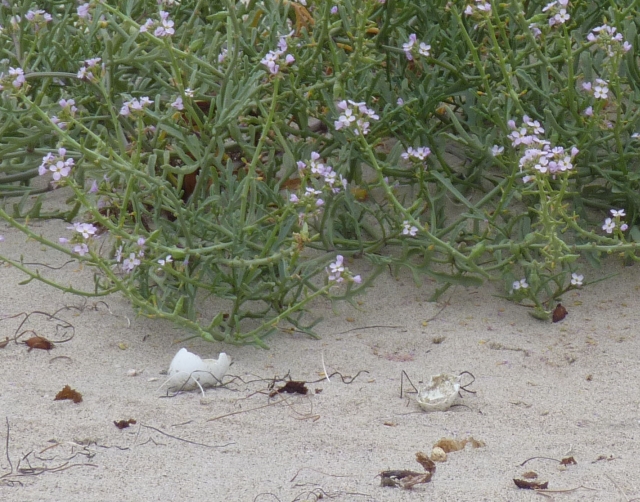
Broken egg found within enclosure may – or may not – have been a Least Tern egg (A Albaisa 6/14/13)
Plover Welcome To Be Improved
After a meeting at the site of the Western Snowy Plover roost on Santa Monica’s north beach, City officials agreed today in principal to try to erect the protective and educational fencing for the birds in July rather than in September or October. This represents major progress in the protection of those little birds who usually arrive on “our” shores in mid-July and stay until late April most years.
The observed number of birds in the flock has grown over the 13 seasons we have monitored this area near the Annenberg Community Beach House along Santa Monica’s Gold Coast. In the first survey, coordinated by our own Chuck Almdale in 2001, I was elated to find two plovers. Since then, because of the protection afforded by the City’s fencing and the greater proliferation of the species at Central California breeding beaches, we have observed up to 56 birds in a typically loose flock at or near the enclosure. The plovers are spending 39 to 44 weeks on these local L.A. County beaches. The coastal population of the species is around 10,000 birds and it is listed as “threatened” under the Endangered Species Act.

(above, a banded Snowy Plover on Santa Monica Beach , 2010 LP photo)
Even though the plovers have not bred on an L.A. County beach for nearly 60 years, they spend up to 84% of their lives here. Researchers have started turning their attention to the survival of the birds in their “wintering” habitat. Erection of the snow fencing on Santa Monica Beach at the time of their arrival, when they have lost considerable weight in migration, should result in reduced human harassment, healthier birds, and we hope, a higher over-wintering survival rate.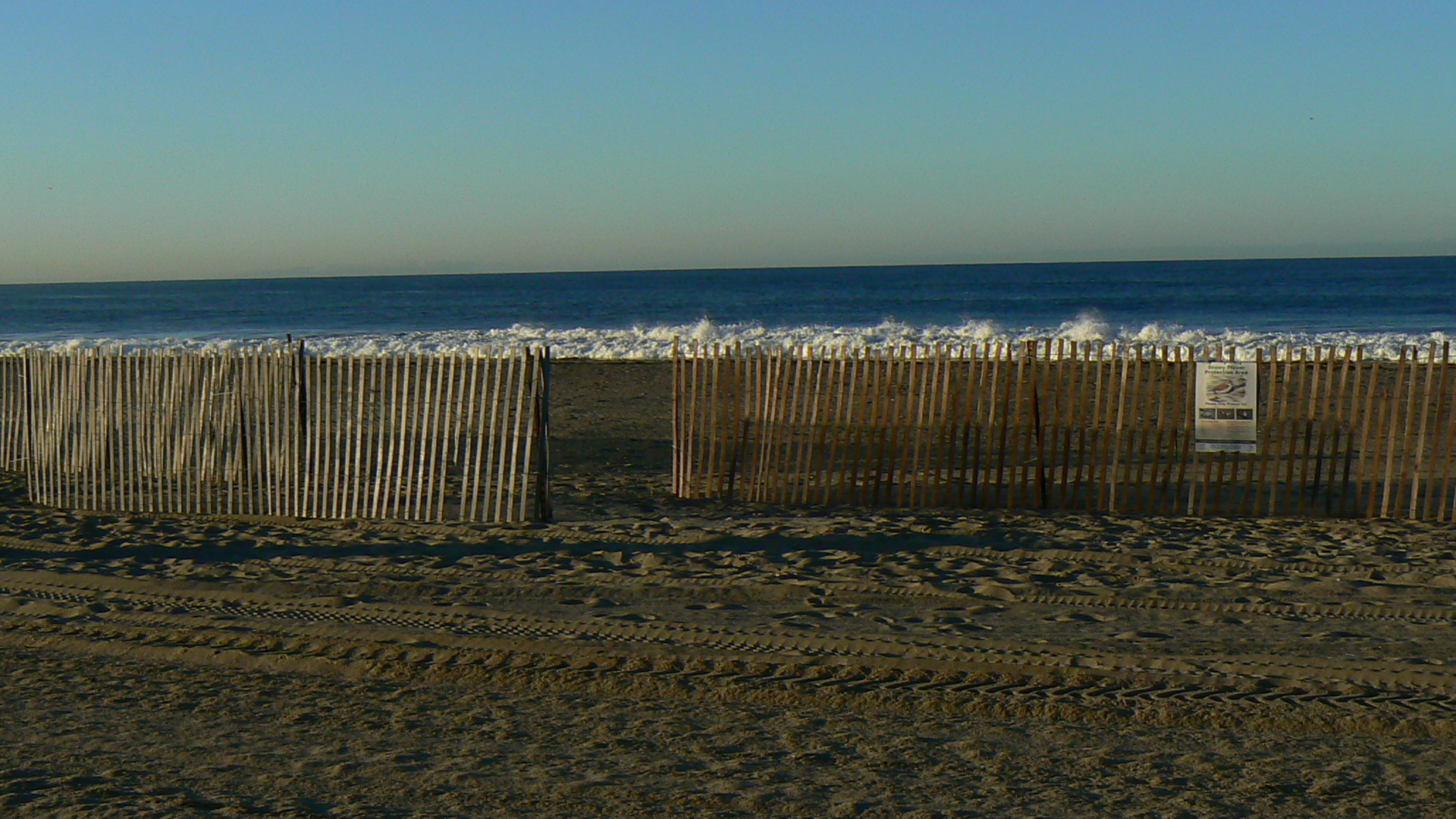
Our thanks to the City of Santa Monica will take the form of an SMBAS subsidy for fencing material for the next ten years. If you wish to contribute to the effort, please send your check payable to SMBAS to our P.O. Box with the mention “plovers”.
Lu Plauzoles Co-chair, Conservation



 SANTA MONICA BAY AUDUBON SOCIETY BLOG