Free email delivery
Please sign up for email delivery in the subscription area to the right.
No salesman will call, at least not from us. Maybe from someone else.
Recommended: The Two-Fisted Birder
We recently ran across a writer, Mike Lubow, whose blog TwoFistedBirdwatcher.com has lots of interesting stories, funny stuff, very short pieces, pictures and challenges. We recommend that you check out his website for yourself, but to whet your appetite, here’s one of his stories, reprinted by permission.
The Ferruginous Hawk
Dad had already left, and I was just finishing my breakfast when Grandfather came into the kitchen, pulled out a chair and sat. Right on time again. Funny how an old man keeps such a regular schedule.
As he always does at this time, he pushed the book toward me and said, “Pick a good one today.”
Mom set a plate of food down and said, “Eat your breakfast, Grandfather.”
I looked at her. Mom in the morning. Her rollers. Her impassive voice. So flat, so mechanical. I thought, funny that she always calls him Grandfather. He’s my grandfather. It was just her way.
“Pick a good one,” Grandfather said.
It was a beat-up and well used old bird book. He knew all the birds in it by heart. As was our little custom, I closed my eyes, flipped through the pages and poked my finger suddenly down onto one.
We both looked to see what bird I picked for him.
“Ferruginous Hawk?” he said.
“First time I ever gave you that one.”
“A challenge, all right,” he said.
“Eat your breakfast, Grandfather,” Mom said.
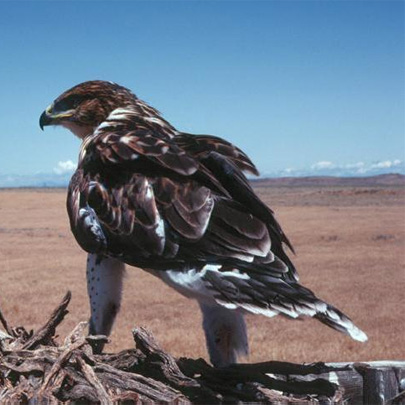
Ferruginous Hawk
*
When my grandfather was my age, he liked the birds, and knew their names. Since he retired, he’d taken up bird watching again. It got him out of the house so Mom could do her work during the day.
To make it interesting for him, one morning long ago, I kiddingly picked a bird at random from the old book and said, “See if you can spot this guy.”
Every day after that we played the same game. Evenings at dinner, I’d ask him how he did, and he’d lie, “No problem, kiddo. Just gotta know where to look.”
Mom would say, “Eat your dinner,” to both of us.
*
That evening, on the day I’d given him “Ferruginous Hawk,” Grandfather didn’t come back. When Dad came home from work, we went to look.
“Damn foolish, this bird thing of his,” Dad said. And I could see he was worried more than mad.
Grandfather’s tracks were easy to follow, and they went on for more than a mile. When we found him, he was barely alive.
He was lying bareheaded on the ground, his face awfully gray, his breath shallow and raspy.
“I saw one,” he said to me, his excitement plainly there under the weakness.
“Let’s get him back,” Dad said. We collected Grandfather’s things, got him up and breathing better, and led him home.
“I saw one,” he said again.
We were still feeling worried and serious, so I didn’t say anything back. I was tempted to say, “Ferruginous Hawk?”
It could wait.
*
Once inside, Grandfather’s breathing became completely normal, and his strength returned. He went directly to the kitchen table, sat, and began leafing through his bird book, looking at it harder than I’d ever seen him look at it before.
Dad sat and said, “Pop, this bird thing, it’s gone too far. You’ve got to stop.”
Grandfather didn’t even look at him, but just kept studying the book, turning its pages and looking at them one by one.
“Pop?”
“Shhhh.”
“Eat your dinner, Grandfather,” Mom said.
Then Grandfather closed the book and put it down gently on the table.
“I saw one,” he said to me, and smiled. But it wasn’t his usual smile.
I didn’t know what to say now.
Dad said, “Saw one what?”
Mom said, “Eat your dinner, Grandfather.”
Grandfather threw the bird book at Mom then, and when it hit, it hit hard, exploding, and all those brittle old pages flew around the room, scattering themselves over the floor.
Grandfather stood, and in one smooth movement, surprising for an old man, kicked Mom in the side hard enough to knock her off her rollers.
She fell onto her side with a clang. Sparks flared under her. And the room smelled of hot ozone.
“Eat your breakfast, Grandfather,” Mom said, her voice flat. Then she said it again, and Dad had to get up and switch her off.
*
“What’s gotten into you, Pop! First you practically kill yourself, going around without your air helmet. Then you break the robot!”
“I saw one.”
“One what?” Dad screamed.
“One bird.”
“There aren’t any birds, Dad. Not for at least fifty years!”
“What kind was it, Grandfather?” I said.
Dad said, “Stay out of this, son.”
Grandfather looked at me and laughed. “It wasn’t no Ferruginous Hawk, I’ll tell you that much.”
Malibu Lagoon Trip Report: 25 April, 2010
Some of our wintering birds have left and some migrants arrived. I thought that the cool (for April) weather may have kept the passerine numbers below normal, so I checked back over the past five years and found that the totals for species and total birds were not unusual:
2005: 52 species 643 birds 2008: 61 species 807 birds
2006: 69 species 786 birds 2009: 56 species 1202 birds
2007: 70 species 922 birds 2010: 57 species 826 birds
Among the arrivals were: Common Loon and Pied-billed Grebe (both of which are usually around all winter), a Greater Yellowlegs which dropped in just as we were leaving, 3 Surfbirds which appeared on the outer rocks after the tide dropped, their sixth appearance in 20 years, a few locally nesting Cliff and Barn Swallows, 20 Cedar Waxwings (previously seen only once on 5/26/06), and a male Wilson’s Warbler by the first footbridge.
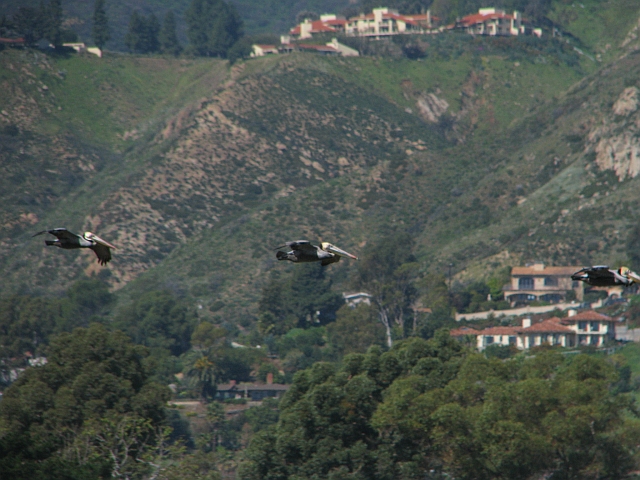
Brown Pelicans landing, Malibu hillside in distance (C.Almdale)
Our Snowy Plovers were gone. In half of the past 10 years, they’ve left before our April birdwalk, so their absence was not unexpected, but the enclosure looked a bit bereft. Most of the ducks have left as well. Poking about in the seaweed wrack was our only Willet, in a very attractive breeding plumage, highly unusual to see at the lagoon. I usually describe the winter Willet, when on the ground, as “remarkable for having no remarkable characteristics,” but that didn’t apply to this bird with it’s scaly barring on breast and back.
The group of terns kept increasing while we were there, growing from about 10 to about 70. We managed to find one Royal Tern in non-breeding plumage among the many beautiful Elegants and the much larger Caspians. Some of the Elegant Terns had pinkish breasts. This pink color comes from a shrimpy diet; the color gets into their oil gland and they spread it on their breast. The five Bonaparte’s Gulls displayed all possible plumages from dead-of-winter non-breeding to full, black-headed breeding. Birding at Malibu Lagoon is a lovely, peaceful, exciting, entertaining and rewarding pastime, but somebody has to do it, so it might as well be us.
| Malibu Bird Census | 2010 | 2010 | 2010 | 2010 |
| for 2010 | Jan | Feb | Mar | Apr |
| Temperature | 45-65 | 55-61 | 68-80 | 62-70 |
| Tide Height | +.65 | +6.19 | +5.48 | +4.57 |
| Low/High & Time | L:1131 | H:0835 | H:0840 | H:0744 |
| Gadwall | 20 | 35 | 16 | 12 |
| American Wigeon | 12 | 14 | ||
| Mallard | 10 | 13 | 12 | 20 |
| Northern Shoveler | 4 | 8 | ||
| Green-winged Teal | 7 | 2 | 1 | |
| Lesser Scaup | 1 | |||
| Surf Scoter | 35 | 4 | 18 | |
| Long-tailed Duck | 1 | |||
| Bufflehead | 6 | |||
| Red-brstd Merganser | 8 | 5 | 1 | 3 |
| Ruddy Duck | 30 | 14 | ||
| Red-throated Loon | 1 | 1 | ||
| Pacific Loon | 1 | 1 | 5 | 4 |
| Common Loon | 1 | 3 | ||
| Pied-billed Grebe | 1 | 1 | ||
| Horned Grebe | 1 | |||
| Eared Grebe | 3 | |||
| Western Grebe | 15 | 6 | 27 | 35 |
| Brown Pelican | 35 | 81 | 184 | 182 |
| Brandt’s Cormorant | 1 | 2 | 2 | |
| Dble-crstd Cormorant | 42 | 21 | 42 | 22 |
| Pelagic Cormorant | 1 | 1 | 1 | |
| Great Blue Heron | 2 | 2 | ||
| Great Egret | 3 | 3 | 2 | 2 |
| Snowy Egret | 15 | 4 | 7 | 13 |
| Blk-crwnd N-Heron | 1 | |||
| Red-shouldered Hawk | 1 | |||
| Red-tailed Hawk | 1 | 3 | 2 | |
| Peregrine Falcon | 2 | |||
| Sora | 1 | 1 | 1 | 1 |
| American Coot | 284 | 175 | 92 | 35 |
| Blk-bellied Plover | 45 | 59 | 25 | 7 |
| Snowy Plover | 54 | 49 | 25 | |
| Semipalmated Plover | 1 | 13 | ||
| Killdeer | 4 | 1 | 4 | |
| Black Oystercatcher | 2 | |||
| American Avocet | 2 | 2 | ||
| Greater Yellowlegs | 1 | |||
| Willet | 15 | 15 | 4 | 1 |
| Spotted Sandpiper | 4 | 2 | 1 | 3 |
| Whimbrel | 2 | 3 | 5 | |
| Marbled Godwit | 4 | 17 | 12 | 4 |
| Ruddy Turnstone | 13 | 11 | 2 | 5 |
| Surfbird | 3 | |||
| Sanderling | 85 | 172 | ||
| Least Sandpiper | 21 | 14 | 30 | |
| Bonaparte’s Gull | 2 | 5 | ||
| Heermann’s Gull | 5 | 7 | 4 | 45 |
| Ring-billed Gull | 55 | 42 | 2 | 4 |
| California Gull | 875 | 45 | 27 | 108 |
| Western Gull | 45 | 74 | 48 | 105 |
| Glaucous-wingd Gull | 6 | 3 | 1 | 1 |
| Caspian Tern | 2 | 30 | ||
| Royal Tern | 12 | 32 | 1 | |
| Elegant Tern | 1 | 1 | 47 | 40 |
| Forster’s Tern | 1 | |||
| Black Skimmer | 6 | 5 | ||
| Rock Pigeon | 8 | 4 | 4 | 4 |
| Mourning Dove | 2 | 2 | 6 | |
| Anna’s Hummingbird | 3 | 3 | 3 | 2 |
| Allen’s Hummingbird | 2 | 3 | 3 | 3 |
| Black Phoebe | 4 | 5 | 6 | 10 |
| Say’s Phoebe | 1 | 1 | ||
| Western Scrub-Jay | 1 | |||
| American Crow | 5 | 4 | 4 | 4 |
| Rough-wingd Swallow | 1 | 3 | 10 | |
| Cliff Swallow | 2 | |||
| Barn Swallow | 2 | |||
| Bushtit | 4 | 5 | 4 | 6 |
| Bewick’s Wren | 2 | 1 | ||
| Northern Mockingbird | 2 | 3 | 2 | 2 |
| European Starling | 35 | 41 | 8 | 4 |
| Cedar Waxwing | 20 | |||
| Yellow-rumpd Warbler | 8 | 4 | 5 | 2 |
| Common Yellowthroat | 3 | 1 | 1 | |
| Wilson’s Warbler | 1 | |||
| Spotted Towhee | 1 | 1 | 4 | |
| California Towhee | 2 | 1 | 3 | |
| Song Sparrow | 3 | 6 | 8 | 12 |
| White-crwnd Sparrow | 4 | |||
| Red-winged Blackbird | 3 | 2 | 1 | |
| Western Meadowlark | 1 | |||
| Great-tailed Grackle | 1 | |||
| Brwn-headed Cowbird | 2 | 1 | ||
| House Finch | 12 | 3 | 6 | 6 |
| Lesser Goldfinch | 4 | 2 | ||
| Totals by Type | Jan | Feb | Mar | Apr |
| Waterfowl | 134 | 73 | 70 | 38 |
| Water Birds-Other | 386 | 289 | 354 | 284 |
| Herons, Egrets | 20 | 7 | 12 | 15 |
| Quail & Raptors | 4 | 3 | 2 | 0 |
| Shorebirds | 251 | 328 | 87 | 73 |
| Gulls & Terns | 1006 | 209 | 133 | 339 |
| Doves | 10 | 4 | 6 | 10 |
| Other Non-Pass. | 5 | 6 | 6 | 5 |
| Passerines | 90 | 81 | 53 | 92 |
| Totals Birds | 1906 | 1000 | 723 | 856 |
| Total Species* | Jan | Feb | Mar | Apr |
| Waterfowl | 11 | 6 | 7 | 4 |
| Water Birds-Other | 12 | 9 | 8 | 9 |
| Herons, Egrets | 3 | 2 | 4 | 2 |
| Quail & Raptors | 3 | 1 | 1 | 0 |
| Shorebirds | 12 | 9 | 9 | 11 |
| Gulls & Terns | 9 | 8 | 8 | 9 |
| Doves | 2 | 1 | 2 | 2 |
| Other Non-Pass. | 2 | 2 | 2 | 2 |
| Passerines | 16 | 15 | 14 | 18 |
| Totals Species | 70 | 53 | 55 | 57 |
Saying Good-Bye and Good Luck to Maja Block
After more than thirty years as a member of SMBAS, and most of that time also on the Board of Directors, Maja is leaving us to move to Hawaii to be nearer her son.
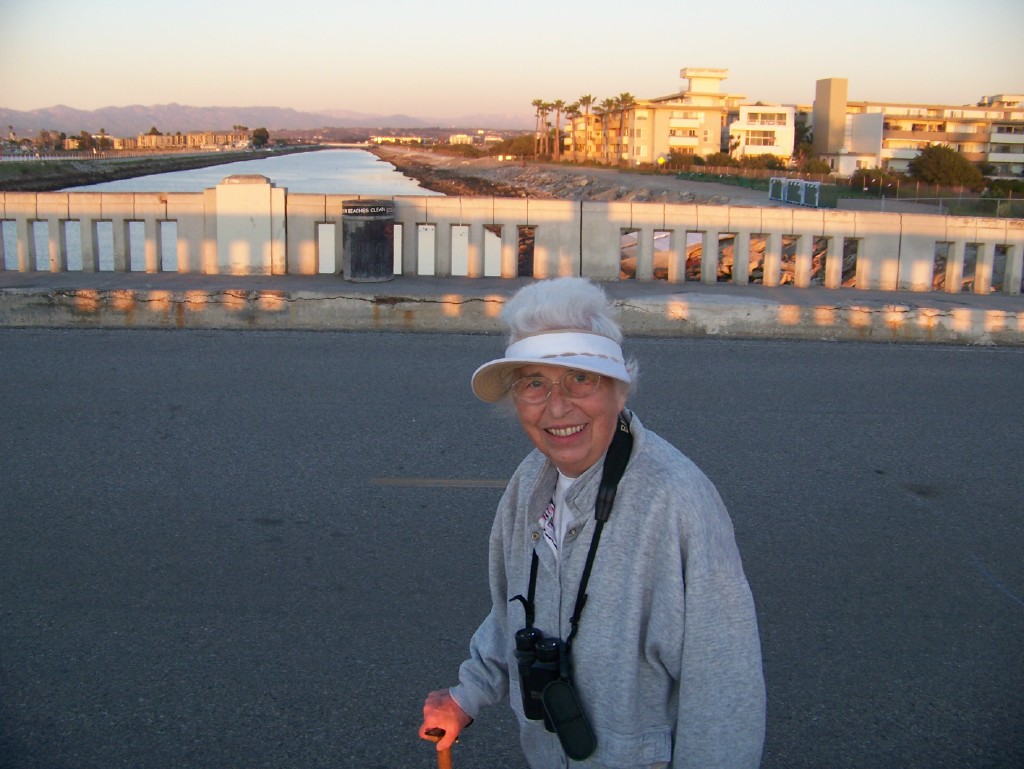
Maja on the Ballona Creek Bridge
She joined the board in 1982 as Field Trip Chair and served until 1988. In 1988, she was elected Chapter President, simultaneously served as Education Chair with responsibility for Audubon Adventures. After serving as President for three years and then Past President for three more years, she served us yummy refreshments at our general meetings as Hospitality Chair from 1994 to 2000. Since 2000, Maja has been responsible for organizing the superb programs we have seven times a year. She made sure we were not just entertained with programs about birding trips but also educated about the environment and the sciences surrounding us. She set a high bar as Program Chair, but we will try to follow her leads to have a schedule of interesting and varied programs.
During all this time, she raised two wonderful children, Michelle and Kevin, worked as a school nurse, and traveled the world. Her birding adventures took her as close by as Malibu Lagoon, Butterbredt Spring, Morongo Valley, and Arizona, and as far afield as Antarctica, New Zealand, Australia, and of course England and Germany.
Thank you Maja for all your years of service to Santa Monica Bay Audubon Society and the world of birds.
We will miss you and wish you all the best in Hawaii. Perhaps, sometime you will come back and drop in at one of our meetings. With email and the internet, you need never be far away.
Lillian Johnson Almdale
April, 2010
Naturalized Hummingbirds and the Native Plants they Love
Do two good deeds in one and have fun into the bargain by using native plants to draw hummingbirds to your garden. First, of course, you’ll enjoy the hummingbirds that feast on the nectar and the insects that love your native plants. Hundreds more insects, in fact, enjoy native plants than are attracted to cultivars. Second, native plants help return the environment to its original, pre-cultivar state, and this helps other plants and animals, including other birds.
What native plants are good for hummingbirds? Some that enjoy our climate and are relatively easy to grow are:
- paintbrush (castillija affinis ) – flowers in spring to summer
- red-flowered larkspur (delphinium cardinale) – flowers in summer to autumn
- California fuchsia (epilobium canum) – flowers in autumn
- island snapdragon (galvesia speciosa) – flowers in spring to autumn
- heart-leafed penstemon (keckelia cordifolia) – flowers in summer to autumn
- scarlet monkeyflower (mimulus cardimalis) – flowers in spring to autumn
- red monkeyflower (mimulus puniceus) – flowers in spring to summer
- chaparral currant (ribes malvaceum) – flowers in spring to summer
- fuchsia-flowered gooseberry (ribes speciosum) – flowers in spring to autumn
- hummingbird sage (salvia spathecea) – flowers in spring to summer
Notice that native plants don’t bloom in winter. One reason is because all hummingbirds used to migrate south in winter and the birds weren’t around for winter pollination.
There’s nothing wrong with feeding hummingbirds except that you encourage them to depend on an artificial (and often messy or even dirty) source of food.
You can rely on native plants to do all of the feeding, but then you eschew the pleasure of seeing the birds’ antics up close.
Help Monitor Least Terns at Venice Beach!
The California Least Tern is listed as endangered by both Federal and California state authorities, and Los Angeles Audubon Society is looking for dedicated volunteers to help monitor them at Venice Beach.
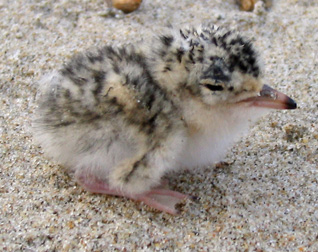
Least Tern chick
In Los Angeles County, this species has only two breeding colonies: Venice Beach and the Port of Los Angeles. L.A. Audubon works with project biologists and the California Department of Fish & Game studying the tern colony in Venice by coordinating a community-based science monitoring program during the nesting season. Volunteers receive training and then help monitor the colony for one hour each week from mid-April to mid-August. This is a great opportunity for families looking for a way to learn about nature together, for students looking to gain some field experience in environmental science, or anyone who’d like to know more about urban wildlife. Many Santa Monica Bay Audubon chapter members have volunteered in previous years.
If you’re interested, then they’d love to meet you at one of the following training sessions:
Monday, April 26th, 6:30 p.m. to 7:30 p.m.
Saturday, May 1st, 9:00 a.m. to 10:00 a.m.
Training Location: The sessions will take place at the Least Tern Colony enclosure on Venice Beach, located a few short blocks north of the Ballona Channel at the southern end of Venice Beach. There is metered parking along the channel where Pacific Ave. turns into Via Marina, and there’s a public pay lot at the intersection of Via Marina and Captain’s Row. There’s free parking along Pacific Ave. but the spots disappear quickly.
Volunteers need attend only one of these sessions, though you’re welcome to attend both. Binoculars are essential to monitoring, so please bring them with you if you own them. If you don’t own any, they can lend you a pair for the season. If neither of these dates work for you, please let them know and they’ll see if they can arrange an alternative training session.
Questions? Please contact the Volunteer Coordinator at (323) 481-4037 or email: tern@laaudubon.org.
From: Stacy Vigallon



 SANTA MONICA BAY AUDUBON SOCIETY BLOG