Free email delivery
Please sign up for email delivery in the subscription area to the right.
No salesman will call, at least not from us. Maybe from someone else.
Bird Count aka GBBC
February 12 – 15th is the 13th Great Backyard Count – count for Fun, Count for the Future hosted by Cornell Lab of Ornithology and National Audubon Society – last year 94,165 checklists were submitted, 620 species were observed – which is about 2/3 of all species ever observed in the U.S., and 11,566,638 birds tallied – wow! You do not have to be a member of NAS to do this and all you have to have is a window to participate… you can do more – you can stay home, you can go out to a park, a school, a beach, any place – you can do many lists on all four days or you can do one on the day of your choice – global warming making a difference ? This may help show changes. So go to www.birdcount.org and spend your Valentine’s day with things we all love, birds.
South-end Salton Sea Trip Report: 6-7 Feb. 2010
Caliche. Ka-LEE-chay. Also know as hardpan. It’s a layer of calcium carbonate, impenetrable to water, near the top of the soil. It’s common in deserts and it’s good to know about when birding the south-end Salton Sea area during or after a rainstorm. When wet, this stuff glues itself to your tires (shoes, too!) in a layer an inch or more thick, immediately turning them into slicks for as long as you remain on dirt. Back on pavement, you’ll think you’re driving through gravel as it flies off your tires and rattles your floorboards. Loads of fun.
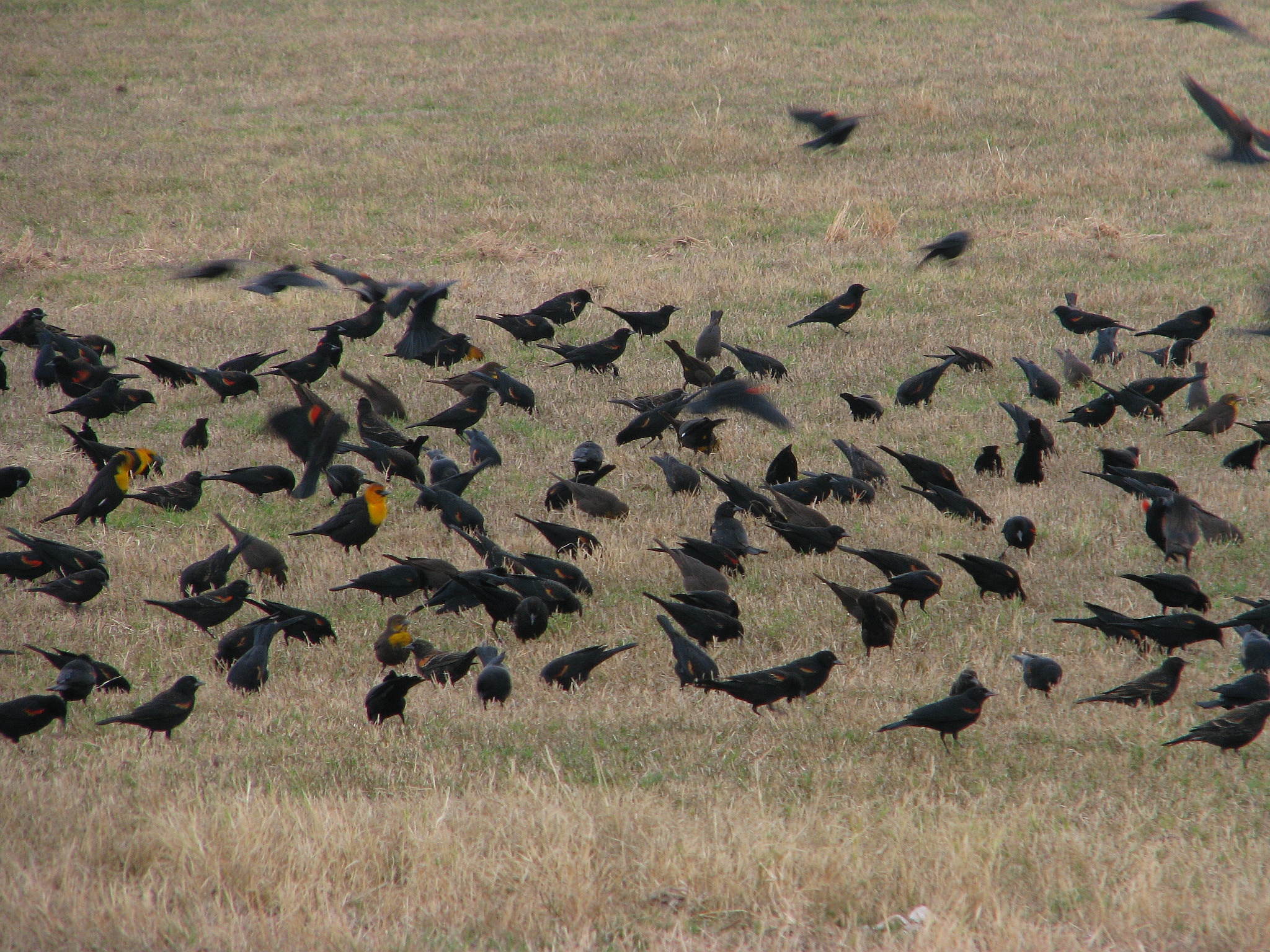
Red-winged & Yellow-headed Blackbirds (L.Johnson 2/10)
But the birds were good. We found many of the local target birds in between the light showers. Some, like Snow Goose and Cattle Egret, were in huge numbers. Others, such as No. Shoveler, No. Pintail, White Pelican, White-faced Ibis, Long-billed Curlew, Ring-billed Gull and Red-winged Blackbird are common around LA County, but not in such huge numbers. Even the Gambel’s Quail, Sandhill Crane, Mountain Plover, Yellow-footed Gull, Common Ground-Dove, Burrowing Owl and Abert’s Towhee were in larger than usual numbers. Saturday’s birding ended at Unit 1 in the SW corner of the sea: the cranes and geese ululating and honking; the geese and White Pelicans swirling in the sky. The Clapper Rail, calling from it’s reedy haunt, would not come out despite our enticing clicks and croaks.

Sandhill Cranes & Geese (L.Johnson 2/10)
Dinner was at Christina’s, a little Mexican restaurant with delicious food to which we were introduced a couple of years ago, located a few blocks east of the tracks in Brawley on the north side of Hwy 78 (Main St.). I highly recommend it.
After breakfast, Sunday birding started at Ramer Lake, searching for Crissal Thrashers to no avail. We skipped Finney Lake, expecting it would be caliche-impassable, so we set off towards the Calipatria Prison where we found a field full of Killdeer and Mountain Plover about a half mile south of the prison. In an attempt to get closer to the MoPl’s, we came close to getting bogged in the caliche. While looking for a suitable spot to turn the cars around we stumbled on our only Lapland Longspur and 2 Mountain Bluebirds.
The day ended before noon where it often does, in Brawley’s Cattle Call Park. Gila Woodpeckers in the palms, Vermilion Flycatcher busy at work, a Prairie Falcon in the distance and, just before we left, a Zone-tailed Hawk flew in and perched in a tree. It’s hard to top that, so we left. We stopped at Oasis Date Gardens in Indio (old Hwy 195 between Airport Rd. and Ave. 62, a few miles north of Mecca) for a date shake and burgers. We’ve gotten them here for years, but recently discovered that Shield’s Date Gardens (Indio, Hwy 111 between Jefferson & Monroe) makes a better shake. Both places have great selections of delicious dates.
Except for the Sandhill Cranes, the numbers higher than 20 in the list below are estimates, sometimes merely wild guesses. Birds of particular interest are in bold.
| Snow Goose | 6,000 | Long-billed Dowitcher | 200 |
| Ross’s Goose | 500 | Ring-billed Gull | 5,000 |
| Gadwall | 10 | Yellow-footed Gull | 4 |
| American Wigeon | 30 | Caspian Tern | 3 |
| Mallard | 60 | Rock Pigeon | 10 |
| Blue-winged Teal | 2 | Eur. Collared-Dove | 60 |
| Cinnamon Teal | 4 | White-winged Dove | 4 |
| Northern Shoveler | 1,000 | Mourning Dove | 300 |
| Northern Pintail | 1,000 | Com. Ground-Dove | 20 |
| Green-winged Teal | 30 | Greater Roadrunner | 1 |
| Redhead | 4 | Burrowing Owl | 9 |
| Lesser Scaup | 100 | Anna’s Hummingbird | 2 |
| Ruddy Duck | 300 | Costa’s Hummingbird | 1 |
| Gambel’s Quail | 16 | Belted Kingfisher | 1 |
| Am. White Pelican | 300 | Gila Flicker | 2 |
| Brown Pelican | 20 | Northern Flicker | 1 |
| Dbl-crestd Cormorant | 200 | Black Phoebe | 10 |
| Great Blue Heron | 10 | Say’s Phoebe | 3 |
| Great Egret | 20 | Vermilion Flycatcher | 1 |
| Snowy Egret | 4 | Loggerhead Shrike | 2 |
| Cattle Egret | 1,000 | Common Raven | 20 |
| Blk-crwned Night-Heron | 1 | Horned Lark | 100 |
| White-faced Ibis | 400 | Tree Swallow | 20 |
| Turkey Vulture | 15 | Verdin | 3 |
| Osprey | 1 | Cactus Wren | 2 |
| White-tailed Kite | 1 | Marsh Wren | 3 |
| Northern Harrier | 20 | Blue-gray Gnatcatcher | 2 |
| Sharp-shinned Hawk | 1 | Mountain Bluebird | 2 |
| Zone-tailed Hawk | 1 | Northern Mockingbird | 2 |
| Red-tailed Hawk | 25 | European Starling | 50 |
| American Kestrel | 20 | American Pipit | 100 |
| Peregrine Falcon | 1 | Yellow-rumped Warbler | 20 |
| Prairie Falcon | 1 | Abert’s Towhee | 12 |
| Clapper Rail (H) | 1 | Savannah Sparrow | 4 |
| Sora | 1 | Song Sparrow | 4 |
| American Coot | 500 | White-crownd Sparrow | 50 |
| Sandhill Crane | 185 | Lapland Longspur | 1 |
| Killdeer | 100 | Red-winged Blackbird | 10,000 |
| Mountain Plover | 60 | Tricolored Blackbird | 1 |
| Black-necked Stilt | 100 | Western Meadowlark | 200 |
| American Avocet | 30 | Yellow-head Blackbird | 30 |
| Greater Yellowlegs | 2 | Brewer’s Blackbird | 200 |
| Lesser Yellowlegs | 1 | Great-tailed Grackle | 40 |
| Long-billed Curlew | 500 | Brown-headed Cowbird | 20 |
| Marbled Godwit | 40 | House Finch | 30 |
| Least Sandpiper | 50 | House Sparrow | 30 |
Malibu Lagoon Trip Report: 24 January, 2010
Clear and cold conditions at the start:
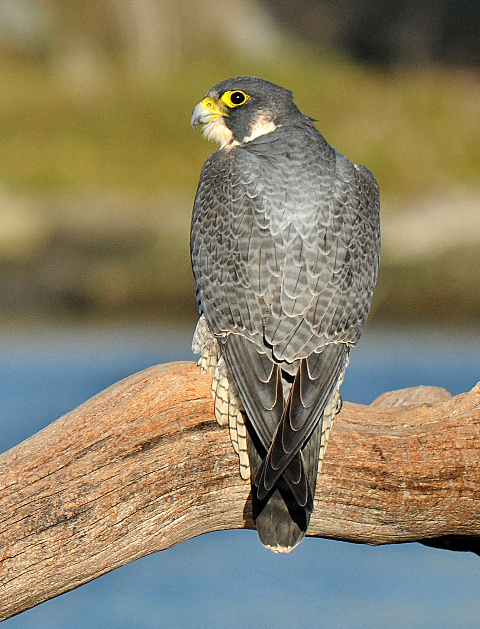
Peregrine Falcon (prob. ss. anatum) [James Kenney 1/24/10
| Malibu Bird Census | 2010 | |
| Collected by | Jan | |
| SMBAS Members | ||
| For Year 2010 | ||
| Species | ||
| 1 | Gadwall | 20 |
| 2 | American Wigeon | 12 |
| 3 | Mallard | 10 |
| 4 | Northern Shoveler | 4 |
| 5 | Green-winged Teal | 7 |
| 6 | Lesser Scaup | 1 |
| 7 | Surf Scoter | 35 |
| 8 | Long-tailed Duck | 1 |
| 9 | Bufflehead | 6 |
| 10 | Red-brstd Merganser | 8 |
| 11 | Ruddy Duck | 30 |
| 12 | Red-throated Loon | 1 |
| 13 | Pacific Loon | 1 |
| 14 | Common Loon | 1 |
| 15 | Pied-billed Grebe | 1 |
| 16 | Horned Grebe | 1 |
| 17 | Eared Grebe | 3 |
| 18 | Western Grebe | 15 |
| 19 | Brown Pelican | 35 |
| 20 | Brandt’s Cormorant | 1 |
| 21 | Dble-crstd Cormorant | 42 |
| 22 | Great Blue Heron | 2 |
| 23 | Great Egret | 3 |
| 24 | Snowy Egret | 15 |
| 25 | Red-shouldered Hawk | 1 |
| 26 | Red-tailed Hawk | 1 |
| 27 | Peregrine Falcon | 2 |
| 28 | Sora | 1 |
| 29 | American Coot | 284 |
| 30 | Blk-bellied Plover | 45 |
| 31 | Snowy Plover | 54 |
| 32 | Killdeer | 4 |
| 33 | Black Oystercatcher | 2 |
| 34 | American Avocet | 2 |
| 35 | Willet | 15 |
| 36 | Spotted Sandpiper | 4 |
| 37 | Whimbrel | 2 |
| 38 | Marbled Godwit | 4 |
| 39 | Ruddy Turnstone | 13 |
| 40 | Sanderling | 85 |
| 41 | Least Sandpiper | 21 |
| 42 | Heermann’s Gull | 5 |
| 43 | Ring-billed Gull | 55 |
| 44 | California Gull | 875 |
| 45 | Western Gull | 45 |
| 46 | Glaucous-wingd Gull | 6 |
| 47 | Royal Tern | 12 |
| 48 | Elegant Tern | 1 |
| 49 | Forster’s Tern | 1 |
| 50 | Black Skimmer | 6 |
| 51 | Rock Pigeon | 8 |
| 52 | Mourning Dove | 2 |
| 53 | Anna’s Hummingbird | 3 |
| 54 | Allen’s Hummingbird | 2 |
| 55 | Black Phoebe | 4 |
| 56 | Say’s Phoebe | 1 |
| 57 | American Crow | 5 |
| 58 | Bushtit | 4 |
| 59 | Bewick’s Wren | 2 |
| 60 | Northern Mockingbird | 2 |
| 61 | European Starling | 35 |
| 62 | Yellow-rumpd Warbler | 8 |
| 63 | Common Yellowthroat | 3 |
| 64 | Spotted Towhee | 1 |
| 65 | California Towhee | 2 |
| 66 | Song Sparrow | 3 |
| 67 | Red-winged Blackbird | 3 |
| 68 | Great-tailed Grackle | 1 |
| 69 | House Finch | 12 |
| 70 | Lesser Goldfinch | 4 |
| Totals by Type | ||
| Waterfowl | 134 | |
| Water Birds-Other | 386 | |
| Herons, Egrets | 20 | |
| Quail & Raptors | 4 | |
| Shorebirds | 251 | |
| Gulls & Terns | 1006 | |
| Doves | 10 | |
| Other Non-Pass. | 5 | |
| Passerines | 90 | |
| Totals Birds | 1906 | |
| Total Species* | ||
| Waterfowl | 11 | |
| Water Birds-Other | 12 | |
| Herons, Egrets | 3 | |
| Quail & Raptors | 3 | |
| Shorebirds | 12 | |
| Gulls & Terns | 9 | |
| Doves | 2 | |
| Other Non-Pass. | 2 | |
| Passerines | 16 | |
| Totals Species | 70 |
Winter Snowy Plover Survey
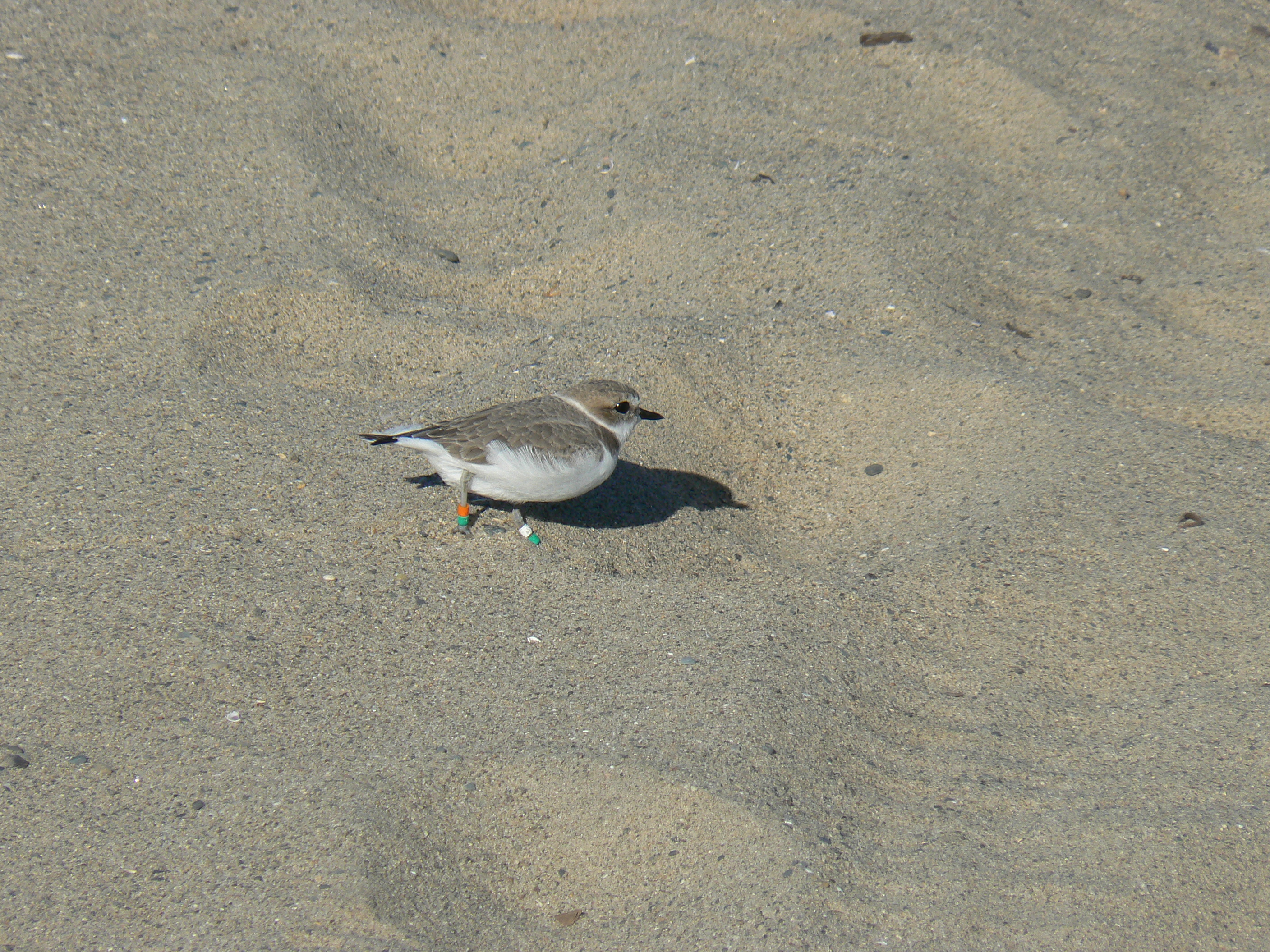
Banded Snowy Plover on SM beach 2009.
The range-wide survey of wintering birds started today along the entire Pacific Coast from Washington to the Tijuana Slough. It continues through the 23rd of January. There may also be some counts conducted in Mexico. This effort is led by the US Fish and Wildlife Service whose Arcata, CA office has become the de facto nerve center for the recovery effort of the threatened species. Locally in Los Angeles County there are 6 sites considered key because of repeated sightings of the birds from late July through April each year. Zuma Beach is the northernmost and hosts the largest population. Malibu Lagoon is often the second most populous, but, by this morning’s count, Santa Monica Beach with 49 birds, may become the second largest roost. Thanks to counters Erin Rowan and Allison Brandin for their assistance with the Santa Monica Beach count. Lu Plauzoles
Bird Articles from “Science News”
Bird feeding, migration change may split a species
http://www.sciencenews.org/view/generic/id/50358/title/Bird_feeding%2C_migration_change__may_split_a_species
German birds that spend the off-season at U.K. birdfeeders now look slightly different from neighbors that migrate to Spain
From Science News Online 12/4/09
Another livestock drug endangers vultures
http://www.sciencenews.org/view/generic/id/50556/title/Another_livestock_drug_endangers_vultures
After one veterinary NSAID almost wiped out vultures in South Asia, one of the possible replacements turns out to be toxic too.
From Science News Online 12/9/09
For coots, hatching order is crucial ID
http://www.sciencenews.org/view/generic/id/50881/title/For_coots%2C_hatching_order_is_crucial_ID
When birds sneak eggs into others’ nest, mom and dad can learn to find their own.
From Science News Online 12/17/09
Sexual conflict takes shape in ducks
http://www.sciencenews.org/view/generic/id/51448/title/Sexual_conflict_takes_shape_in_ducks
Up-close view of male ducks reveals extreme speed and extreme conflict.
From Science News Online 12/24/09



 SANTA MONICA BAY AUDUBON SOCIETY BLOG