Free email delivery
Please sign up for email delivery in the subscription area to the right.
No salesman will call, at least not from us. Maybe from someone else.
More Monarchs | Los Angeles Times
[Posted by Chuck Almdale]

The L.A. Times seems to publish something on Monarch Butterflies every 3-4 months in their Saturday Section, and they’re always worthwhile reading. This one is largely about the annual census as seen from the eyes of one counter, with some additional comments from scientists.
To Glimpse a Butterfly or here
A day in the life of an L.A. Monarch counter, as he looks for the elusive endangered insects.
Los Angeles Times | Jeanette Marantos | 15 Jan 2022 | 8 minute read
It also has useful advice for you, the home butterfly & bird aficionado:
- Plant Native Milkweed: Tropical milkweed supports parasites that affect the butterflies; native milkweed doesn’t.
- Use Milkweed Plants Without Pesticides: I hope you aren’t shocked, shocked! to learn that pesticides on the plant surface or in the plant tissue have adverse effects on caterpillar and butterfly, such as: a) killing them, b) dead.
- Browse Native Plant Nurseries: Where better to buy native plants?
- Plant Nectar Producing Flowers: Only the caterpillars eat milkweed; adult butterflies (the ones with wings, fluttering around) feed on many other flowers, but not on milkweed.
- Do Not Raise Monarchs: For some reason, they’re often diseased and will spread their disease to wild monarchs.
Link to Western Monarch Count website – They don’t have the Nov-Dec 2021 data posted yet (coming soon), but you might want to sign up for the 2022 counts, or just learn more.
Early results from Nov-Dec 2021 seem to indicate that the population rebounded from the horribly awful 2020 census counts. According to BayNature.org.
“We’re well over 100,000 butterflies at this point,” said Emma Pelton, the Xerces Society’s senior endangered species conservation biologist and western monarch lead.
Data from over 200 monitoring sites show significantly greater numbers than last year. For example, more than 10,000 monarchs were counted at overwintering sites in Pacific Grove, Pismo Beach, and Big Sur. Last year, those three sites had less than 300 butterflies total. Similar trends are being reported from sites in Santa Cruz, Ventura, and Los Angeles. “We definitely haven’t seen an increase of this magnitude before,” Pelton said. The final numbers from the count overall are expected to be reported sometime in January.
Though this rebound gives cause for hope for the struggling monarch population, it does beg the question: How did it happen?
“That’s the question of the day,” Pelton said. “I would love to know.”
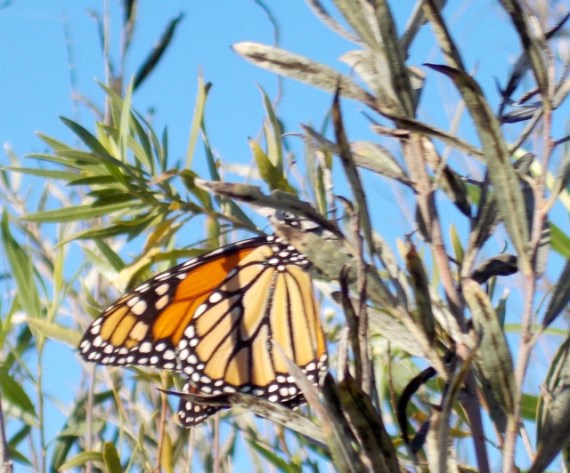

Wanted: Proofreader
[Posted by Chuck Almdale, submitted by Ellen Vahan]
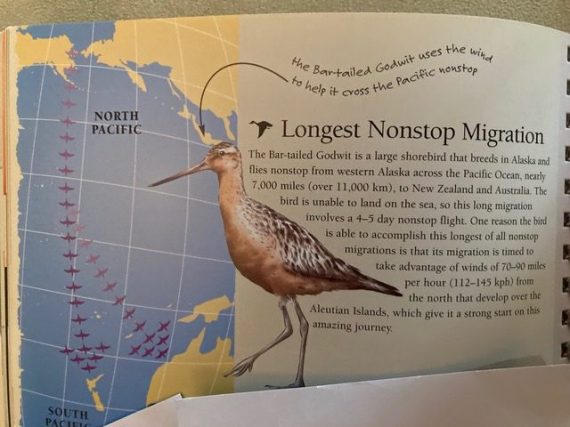
Submit application to editor.
Update: This was a joke. Look at the picture.
Red-necked Stint 2021: Oregon on 9-Aug, SoCal on 22-Aug
[Posted by Chuck Almdale]
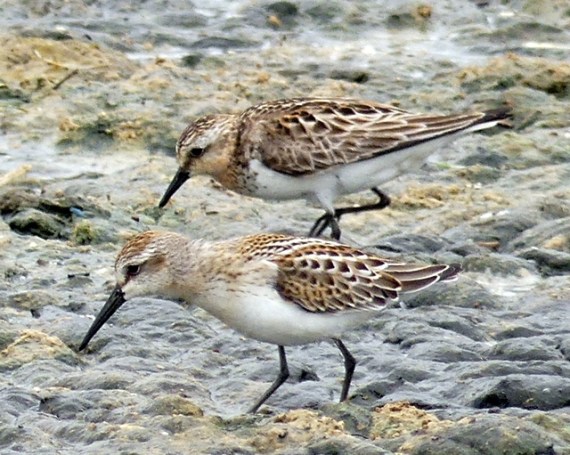
One or more Red-necked Stints appeared on the west coast this fall. We have five photos of the single Oregon bird, taken 9-Aug-2021 at DeLaura Beach Access, Clatsop, OR, and twelve of the Malibu Lagoon, Malibu CA, taken on 22-Aug and 25-Aug, 2021. We don’t know if these are of the same bird, but they are a selection of those taken at both locations on three days.
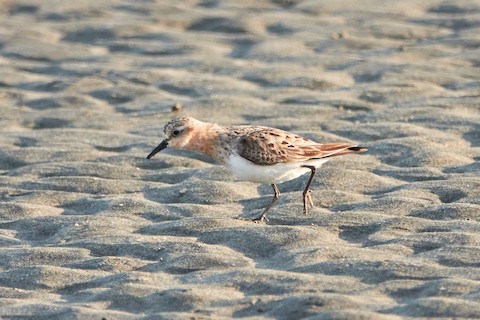

Compare to the Malibu Lagoon bird 22-Aug-2021.

Back to the 9-Aug-2021 Oregon bird.
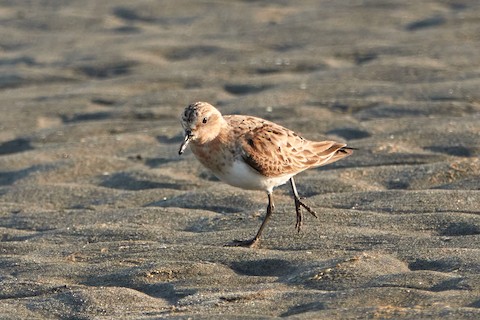
Compare to the Malibu Lagoon bird 22-Aug-2021.
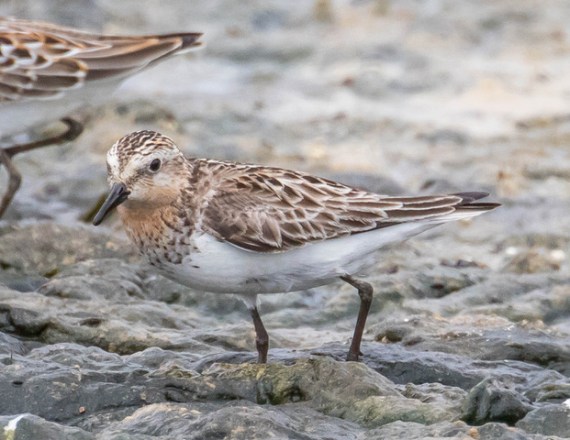
Two more photos of the Oregon bird 9-Aug-2021.
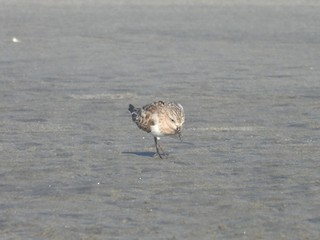

The following photos of the Red-necked Stint are all of the single Southern California bird, taken 13 days later, on 22 Aug 2021. This was reportedly the 4th historical sighting of Red-necked Stint in Los Angeles County.

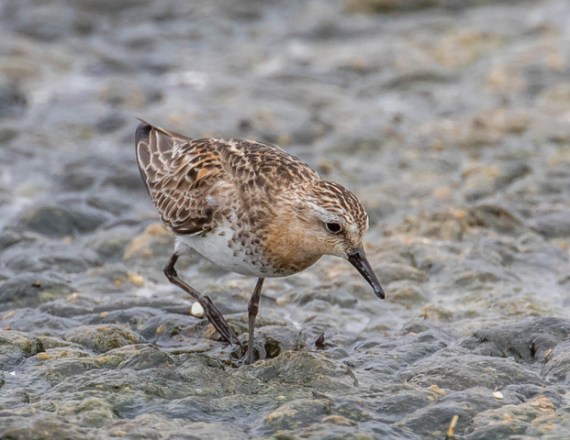
Red-necked Stint, approaching. Malibu Lagoon (Photo: Chris Tosdevin, 8-22-21, time: 10:01:11)
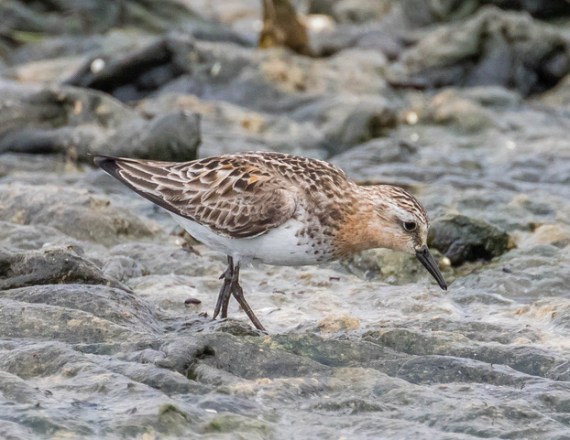
The following photos of the same Red-necked Stint were taken three days later, on 25-Aug-2021, at the same location, Malibu Lagoon, Los Angeles County, CA.

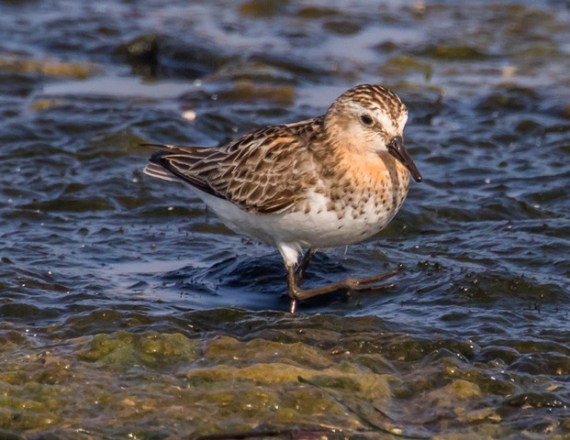


There you go. We report, you decide. I don’t know enough about plumage changes in shorebirds in general and Red-necked Stints in particular to make an informed judgement as to whether this is the same bird. Photography and lighting have a lot to do with how a bird can look. The first three Oregon photos appear to be taken in “golden light” of early morning or late afternoon, enhancing reddish colors. Same thing for many of the Malibu Lagoon photos.
Additional photos of the Oregon bird are here:
https://ebird.org/media/catalog?taxonCode=rensti&sort=rating_rank_desc&mediaType=p®ionCode=US-OR-007
Additional photos of the Malibu Lagoon bird are here:
https://smbasblog.com/2021/08/24/red-necked-stint-at-malibu-lagoon-8-22-21/
and
https://ebird.org/media/catalog?taxonCode=rensti&yr=YCUSTOM&mr=M8TO11&mediaType=p&sort=obs_date_asc&ey=2021&hotspot=Malibu%20Lagoon,%20Los%20Angeles,%20US-CA&hotspotCode=L597658&by=2021
49 Bird Bird Quiz | ABC
[Posted by Chuck Almdale]
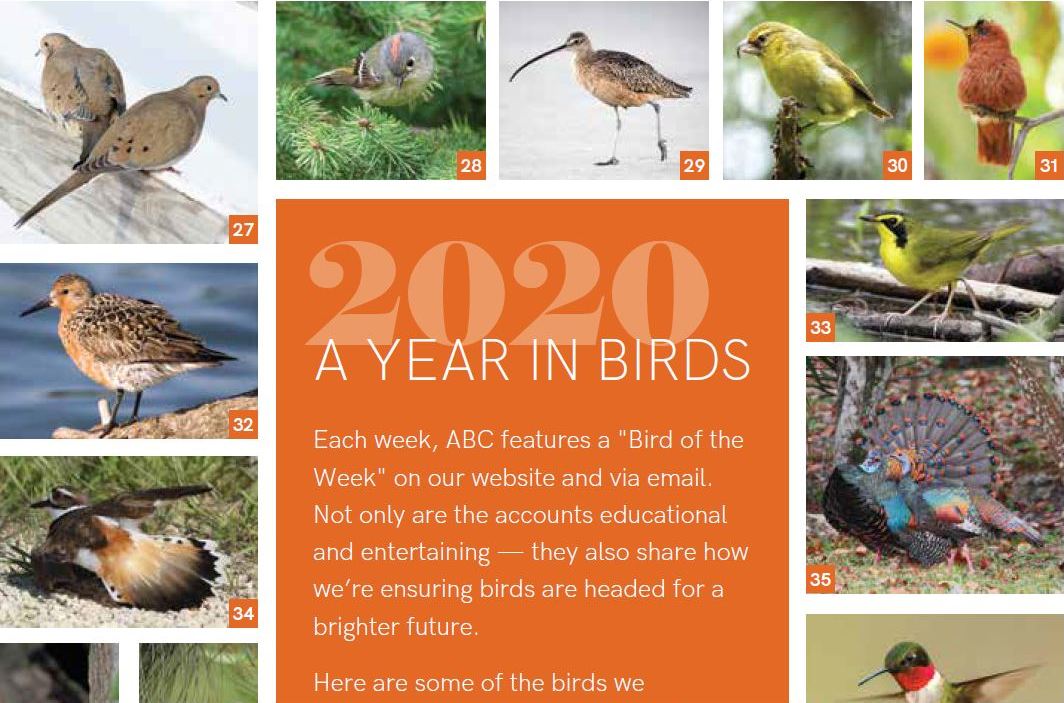
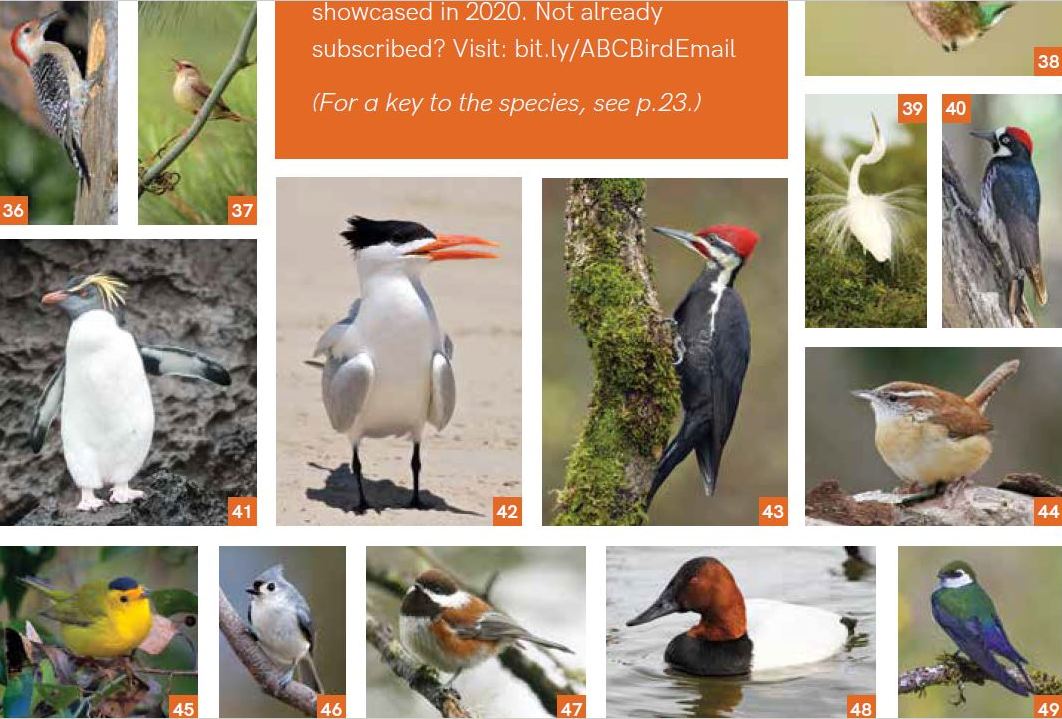
I snipped the following from the 2020 Annual Report of American Bird Conservancy. They send me this every year because I send them money every year. It’s a worthy organization, deserving of your support, which in turn supports bird and bird habitat projects throughout the Americas, frequently through partnering with local organizations such as Fundación Jocotoco of Ecuador. Bird conservation projects received 69% of their expenditures in 2020, Education and Outreach another 4%, and they blew only 3% on fundraising. Charity Navigator gives them four stars, their highest rating. I think giving you this information is fair exchange for my borrowing their bird quiz, which I promise to return.
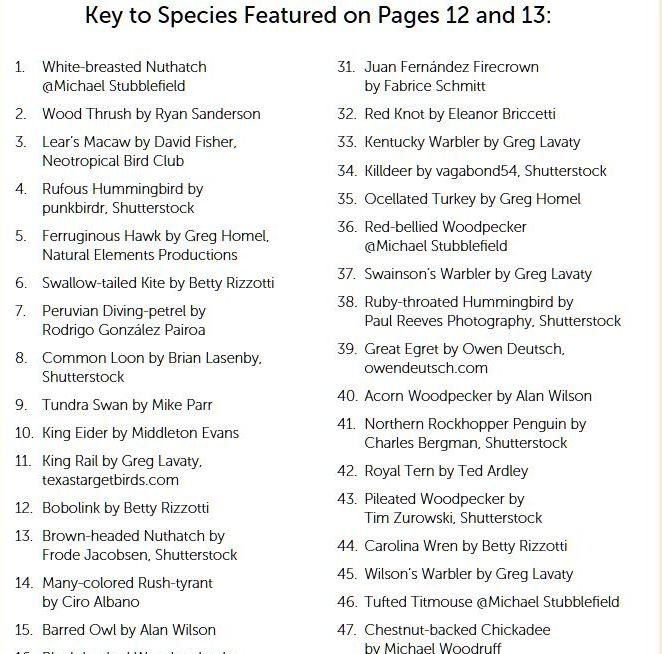
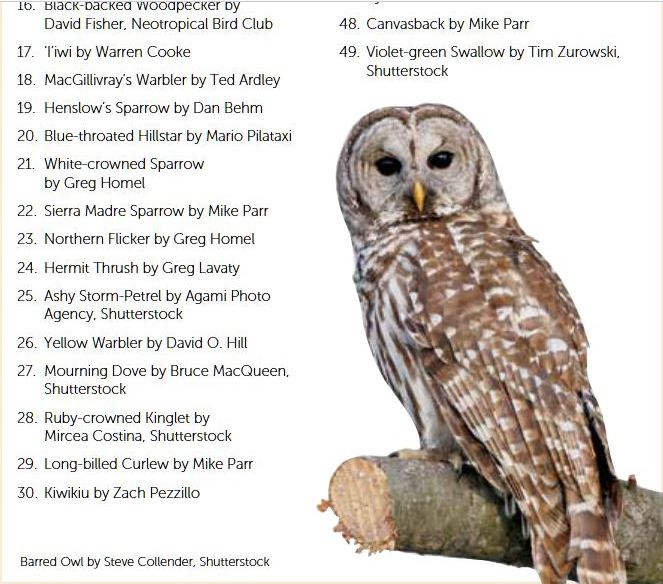
All 49 species are birds of the Americas, but I’ll give you an almost useless hint and tell you that over 10% of them are not found in the wild within the 50 U.S. states or Canada. Answers follow the two pages of birds. Reproduction by ‘snip’ is imperfect, but I think the photos are sufficiently clear for identification.
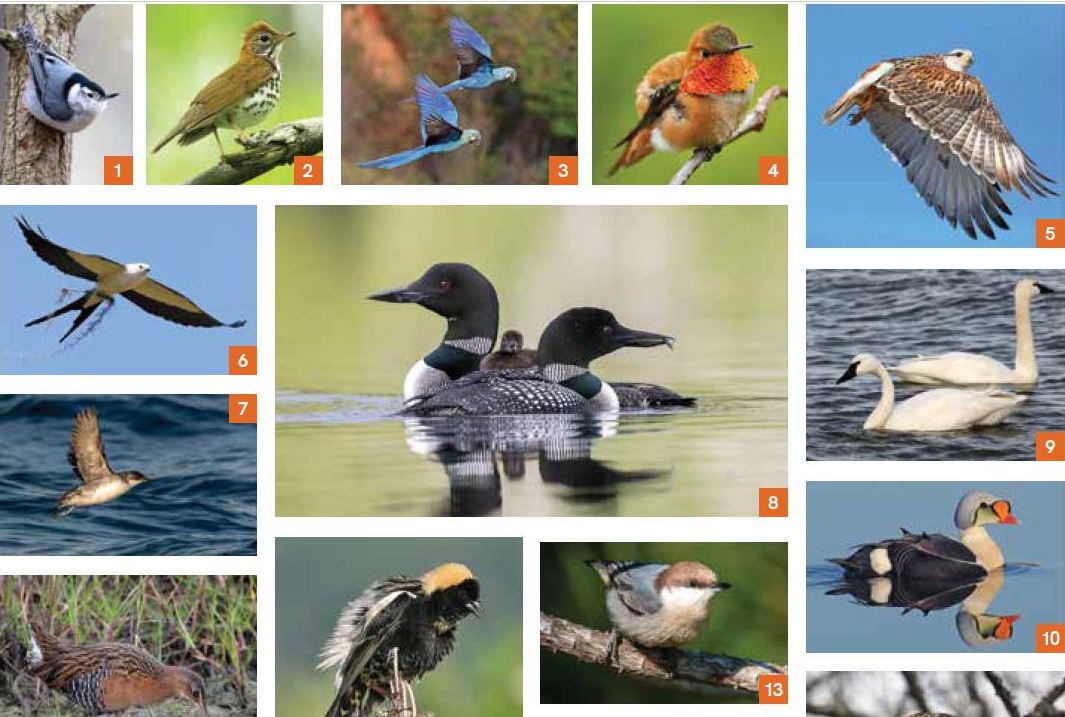
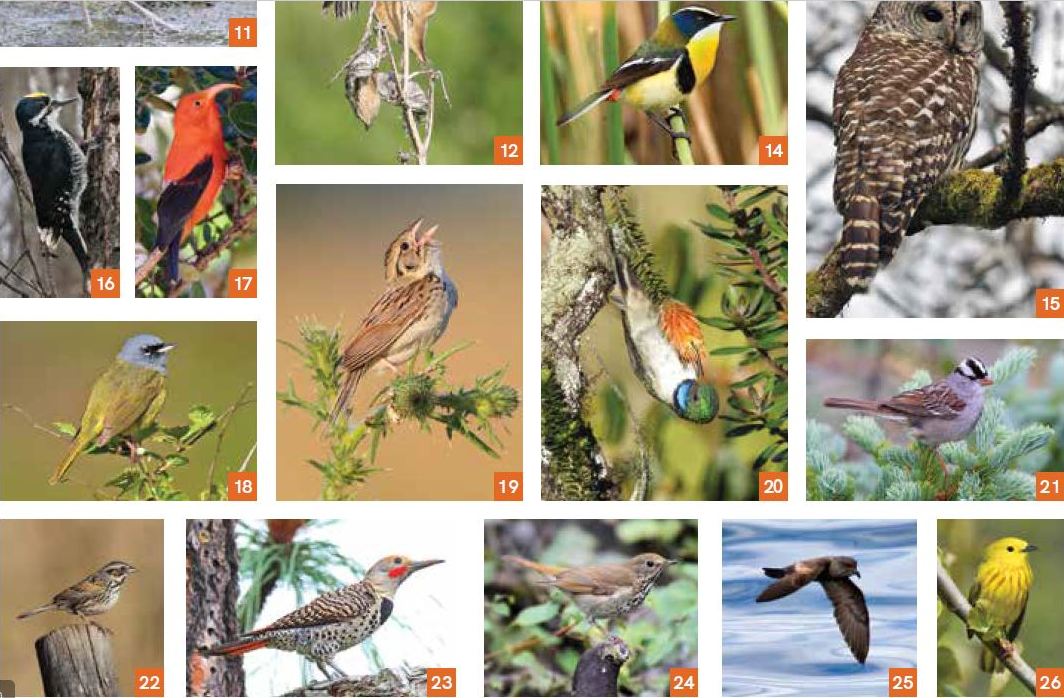
Link to ABC’s Bird of the Week: https://abcbirds.org/birds/bird-of-the-week/
No peeking!
Low tide down, High tide up: Repeat
[Posted by Chuck Almdale, photos by Ray Juncosa]
Here’s another offering in our never-ending effort to document tidal fluctuations in Malibu Lagoon. Future oceanographic historians will be enormously grateful, no doubt.
Ray commented on his photo shooting:
I was stopped by a couple who wondered if I came to the lagoon frequently – they could have sworn you could walk from the west lifeguard station all the way back past the Adamson House to Surfrider’s Beach and were surprised that they needed to do a u-turn.
Sometimes you can, sometime you can’t. Depends on the storms and tides.
Look below.
The ‘Winter Ramp – Summer Clock‘ sidewalk is inundated when water levels are high. This is intentional. There are tiles along part of the sidewalk showing the height above mean low low sea level.


The following set shows where Malibu flows out under Pacific Coast Highway. When the bridge was replaced several decades ago, due to very high flows and trees coming down the creek in an El Nino winter, the Cliff Swallows stopped nesting under it. They moved over to the brick or cement walls of the shopping and civic center buildings a few hundred yards away. The water is deepest just the other side of the bridge.

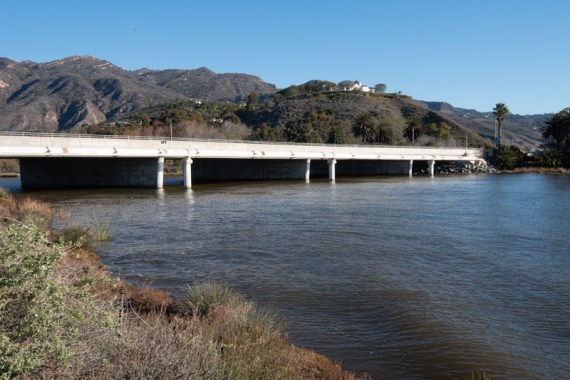
Pacific Coast Highway (Hwy #1) bridge and Malibu Lagoon as seen from near Malibu Colony.
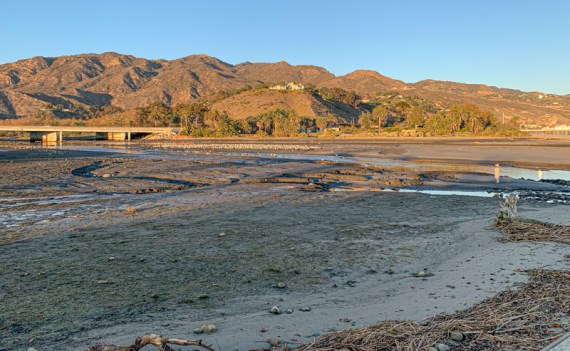

The west end of the public part of Surfrider’s Beach begins here, where the Malibu Colony houses end. Cormorants, seals and shorebirds that prefer rocks to sand can be found here, but not at high tide.


The south channel looking back towards the Winter Ramp sidewalk, with Pepperdine University and Hughes Research Lab on the distant hills.
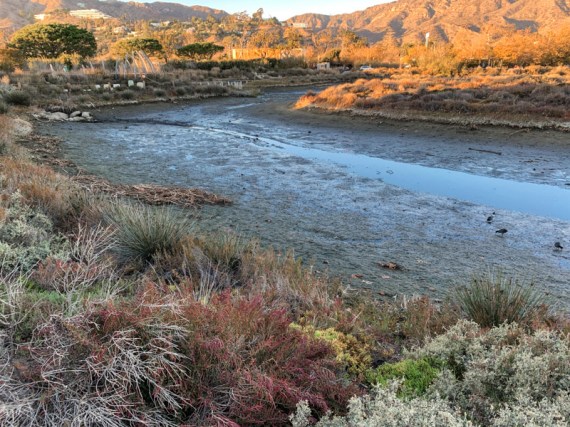

Looking east across the lagoon towards Adamson House on east side.


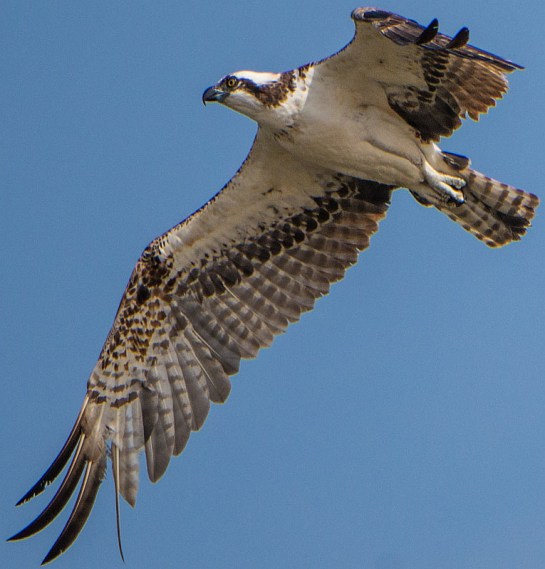
A regular denizen.



 SANTA MONICA BAY AUDUBON SOCIETY BLOG