Free email delivery
Please sign up for email delivery in the subscription area to the right.
No salesman will call, at least not from us. Maybe from someone else.
Puffins! Live! and other Wildlife Cameras
Puffins were the first birds ever to capture my interest. Starting at age 10, I collected postage stamps for a couple of years, and my favorites were a series of puffin stamps issued by the short-lived independent nation of Puffin Island, which in reality was a small islet somewhere off the coast of England. Apparently its independence lasted just long enough to run off a load of stamps before the British government landed a boat and shut them down. Their validity as true postage stamps was a bit “dodgy” as the Brits might say, but they were lovely portraits of beautiful birds. Alas, long since gone, as is the nation which issued them.
However, you can see live Atlantic Puffins right now, in the comfort of your very own home as they cavort on the rocks of Seal Island National Wildlife Refuge off the coast of Maine, accompanied, of course, by their friends the terns. There are a few decoys in the bunch which will never move, and occasionally the camera freezes up. Be patient, or re-load the site, and you will be rewarded.
http://explore.org/#!/live-cams/player/puffin-loafing-ledge-cam
What’s more, you can see one fuzzball puffin chick, doodling about in it’s burrow, waiting for the occasional feeding from a parent.
http://explore.org/#!/live-cams/player/puffin-burrow-cam
If for some reason those links don’t work for you – they occasionally go wonky – here’s the main Audubon page for all their live cams. I counted 51 different cams. http://explore.org/#!/live-cams/player
Now go and while away the hours.
[Chuck Almdale]
The Plovers are coming! The plovers are coming!
As close to Independence Day as we’ve recorded in L.A. County. The vanguard of the Snowy Plover flock made its appearance at two beaches today. I was surprised to see a female land right in front of Lifeguard Station 6 on Santa Monica Beach this afternoon, a good 10 days earlier than the first record of the year in my memory. When I sent a text message to Stacey Vigallon, the LA Audubon coordinator, she answered that she had seen Plovers at Malibu Lagoon this morning. They are expected to live on our beaches through the month of April. Welcome, Little Guys!
Kestrel Photoshow
Go to the blog to see all 21 pictures in the slideshow. For the most part the photos are self-explanatory.
With two exceptions, the photos were taken on June 17, 2013. Two nests were involved, with significant age differences between the two groups of nestlings.
Kestrel Team Leader, Don McCartney, provided the following comment on Kestrel chick meals, which sheds light on some of the pictures.
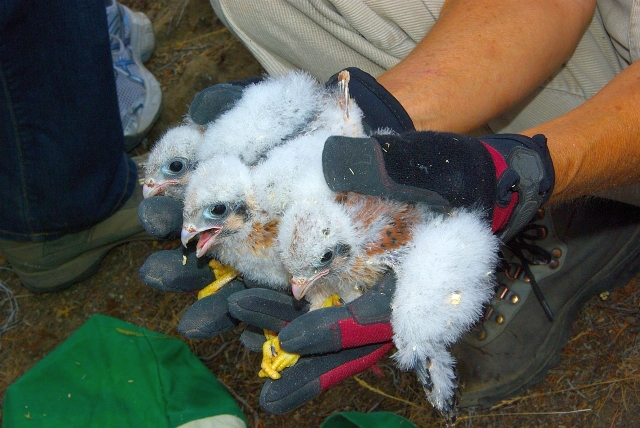
Quite a handful – now I know why the parents build nests
(Don & Diana Roberts 6/17/13)
We have documented some of the rather amazing eating habits of nestling Kestrels. One photo, taken in Wisconsin in 2005, shows an approximately 18-day old female slooowly devouring a snake. Another photo shows a little glutton on the Crooked River Ranch, who was being retrieved for banding from its nestbox by volunteer Marilynne Keyser. Several photos show close-ups of the bird as it devours a western fence lizard. It’s too bad that we didn’t have the time to check on the progress of the nestling/lizard situation a day or two later.
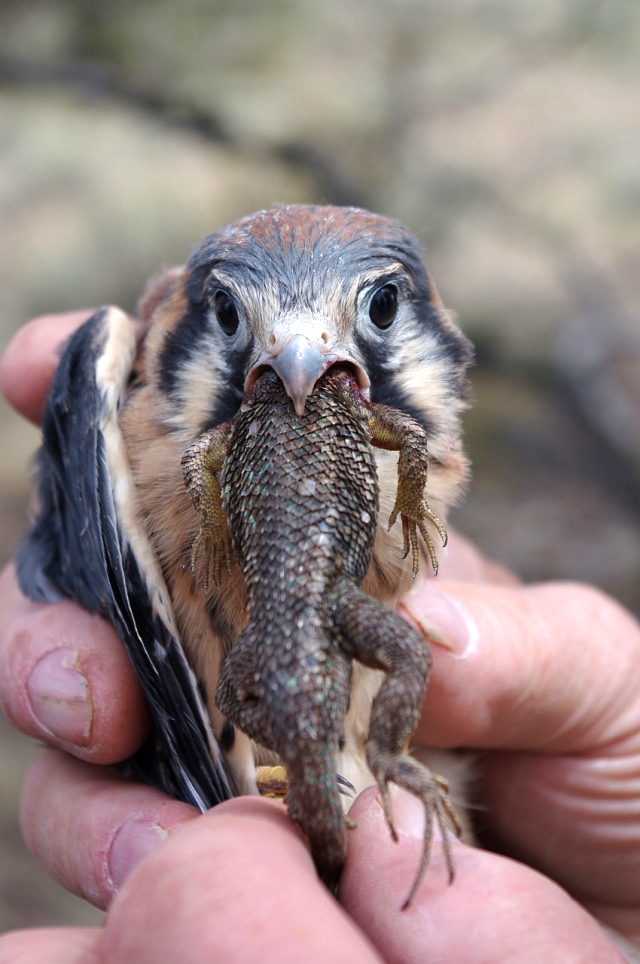
It’s a western fence lizard
(Don & Diana Roberts 6/17/13)
How do they do this? Once the chicks reach a certain size, the adults drop the intact reptile in the box rather than tearing them to pieces. Specialized mouth parts, including the median ridge, keep the prey progressing inward while allowing the nestling to breathe. It is very often interesting to check the remains of prey in the boxes to discover the animals on which the Kestrels have been dining.
*****************
Photographers Don & Diana Roberts live in the small town of Prineville, northeast of Bend, Oregon, just east of the central Cascade Mountains. Don is a professional fly fisherman, photographer and writer; Diana is an avid birder and photographer, as is Marilynne Keyser, the intrepid bird-handler in many of the photos. The fellow in the straw hat and holding the ID booklet is Don McCartney; when Jim Anderson isn’t checking wings and ringing the legs of birds, he’s resting in his portable lawn chair. [Chuck Almdale]
Least Tern Monitoring in L.A. County
Stacey Vigallon reports on this year’s Least Tern monitoring:

Terrifically cute Least Tern chick
1) The Least Terns arrived like clockwork in April at the Venice Beach colony enclosure. As happens every year, predation of the eggs by crows is happening, but the terns are still doing their best, and they’re definitely roosting there at night. The terns seem to be spending a considerable amount of time away from the colony, which may possibly indicate that food resources are not conveniently close or plentiful this year. In short, we’ve done what we can to make sure the Venice colony enclosure has great habitat for nesting, but there are factors out of our control (crows, food resources) that definitely affect the terns. We’ve been told that other colonies in Southern California have also experienced lower numbers of Least Terns this year. As the nesting season progresses, we will likely start to see groups of Least Tern adults and fledglings from other colonies arriving at the Venice colony and adjacent beach in mid to late July. To ID the fledglings, keep an eye out for the Least Terns that don’t have the crisp uniform of black cap and yellow bill – juvenile Least Terns are pretty much adult-size but they’re sloppier dressers.
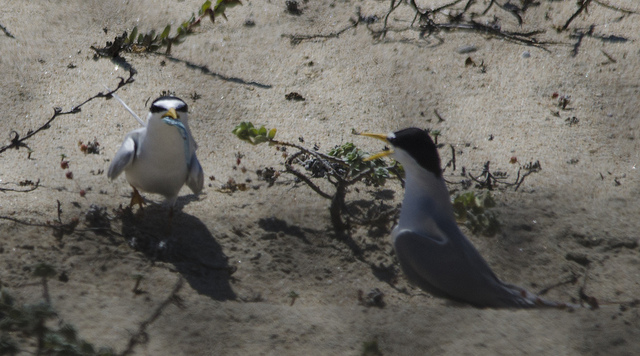
Least Tern brings fish gift to prospective mate
(Wendy Miller – Huntington Beach – May’13)
2) Crows… Every year they present a challenge, and every year we get lots of questions about them. Crows and their relatives, ravens and jays (collectively called “corvids”), can be predators pretty much wherever their range overlaps with any other nesting species. Whether it’s plovers and terns on southern California beaches, marbled murrelets in Pacific Northwest forests, or baby tortoises in the Mojave desert, predation by corvids can be a real problem. They are extremely smart and typically well-adapted to humans and the way we alter the landscape. In Los Angeles, we have created excellent crow habitat where none previously existed by replacing coastal sage scrub and wetland habitat with lawns (which means year-round water and invertebrate food sources), trees for nesting, and plentiful food waste. We have worked with wildlife management agencies at the Venice site for years, and everyone is very well aware of the problem.
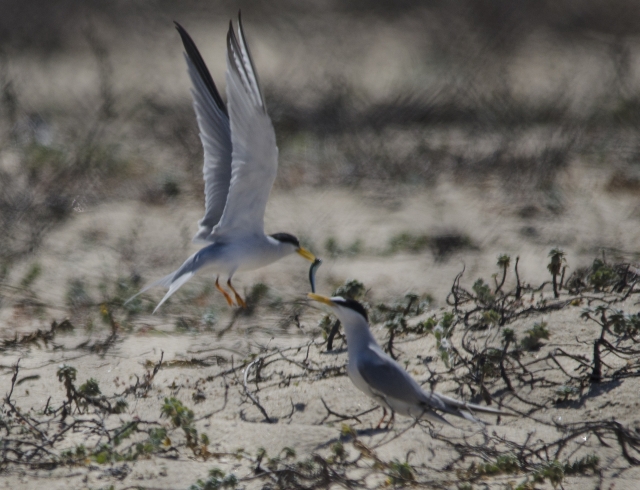
More fish business
(Wendy Miller – Huntington Beach – May’13)
3) But, what we currently lack in tern-viewing, we can make up for in other bird species… If you have time to branch out from the beach, LA Audubon will be offering guided (free!) birdwalks at Topanga State Park, Franklin Canyon Park, and the Ballona Wetlands in July. Here’s a link to info about birdwalks:
http://losangelesaudubon.org/index.php/recreation-mainmenu-189/bird-walks-mainmenu-190/486-bird-walks

Even more fish business
(Wendy Miller – Huntington Beach – May’13)
If you want a more intensive birding experience, check out the LA Audubon field trips too. The August 3rd shorebird ID trip along the LA River is also free and it can really get you started identifying shorebirds. Here’s a link:
http://losangelesaudubon.org/index.php/component/jevents/icalrepeat.detail/2013/08/03/721/309/lower-la-river-shorebird-migration-field-trip-with-larry-allen?Itemid=1
[Stacey Vigallon – Los Angeles Audubon Society Least Tern Monitoring Project World HQ]
Santa Monica Bay Audubon will again be offering a field trip – focusing on shorebirds – in the latter half of August to the lower Los Angeles River. Details to be posted on this blog. [Chuck Almdale]
The final four photos on this blog were kindly shared with us by Wendy Miller, Least Tern Monitor Volunteer at the Huntington Beach colony in Orange county. Check out the rest of her many photos here on Flickr. I have also placed a permanent link to these photos in the “Bird Links” section on the right sidebar.

Adult Least Tern with chick
(Wendy Miller – Huntington Beach – May’13)
Malibu Lagoon Trip lists January – June 2013
This list was created at a later date in order to have a complete record on the blog site. [Chuck Almdale]
| Malibu Census 2013 | 1/27 | 2/24 | 3/24 | 4/28 | 5/26 | 6/23 |
| Temperature | 52-62 | 55-65 | 60-75 | 57-68 | 63-64 | 62-75 |
| Tide Lo/Hi Height | H +5.76 | H +5.50 | H +4.90 | L -1.10 | H +4.08 | H +4.22 |
| Tide Time | 0849 | 0802 | 0806 | 0609 | 1138 | 1037 |
| Brant | 15 | 3 | 1 | |||
| Gadwall | 34 | 13 | 13 | 12 | 2 | 2 |
| American Wigeon | 7 | |||||
| Mallard | 45 | 14 | 28 | 30 | 5 | 59 |
| Northern Shoveler | 22 | 22 | 2 | 1 | ||
| Northern Pintail | 4 | 2 | ||||
| Green-winged Teal | 19 | 1 | ||||
| Surf Scoter | 15 | 5 | ||||
| Bufflehead | 10 | 14 | ||||
| Common Merganser | 6 | |||||
| Red-brstd Merganser | 6 | 3 | 12 | 3 | ||
| Ruddy Duck | 55 | 41 | 55 | 20 | ||
| Red-throated Loon | 2 | 2 | 2 | |||
| Pacific Loon | 5 | 2 | 3 | 1 | ||
| Common Loon | 1 | |||||
| Pied-billed Grebe | 2 | 2 | 4 | 6 | 3 | 8 |
| Horned Grebe | 2 | 1 | ||||
| Eared Grebe | 7 | 1 | ||||
| Western Grebe | 46 | 2 | 1 | 28 | ||
| Clark’s Grebe | 1 | |||||
| Blk-vented Shearwater | 200 | |||||
| Brandt’s Cormorant | 7 | 4 | 1 | 7 | 2 | |
| Dble-crstd Cormorant | 33 | 40 | 15 | 22 | 9 | 17 |
| Pelagic Cormorant | 2 | 1 | ||||
| Brown Pelican | 73 | 10 | 35 | 34 | 7 | 52 |
| Great Blue Heron | 4 | 1 | 1 | 2 | 2 | 2 |
| Great Egret | 1 | 1 | 2 | 3 | 2 | |
| Snowy Egret | 9 | 1 | 5 | 9 | 3 | 8 |
| Blk-crwnd N-Heron | 1 | 1 | 2 | |||
| Turkey Vulture | 1 | 2 | ||||
| Osprey | 1 | 1 | ||||
| White-tailed Kite | 1 | 1 | 1 | |||
| Cooper’s Hawk | 1 | 1 | ||||
| Red-shouldered Hawk | 1 | |||||
| Red-tailed Hawk | 1 | 2 | 1 | 2 | ||
| Merlin | 1 | |||||
| American Coot | 270 | 82 | 170 | 58 | 1 | 6 |
| Blk-bellied Plover | 62 | 50 | ||||
| Snowy Plover | 61 | 36 | 33 | 6 | 1 | |
| Semipalmated Plover | 8 | 2 | ||||
| Killdeer | 2 | 1 | 2 | 2 | 6 | 4 |
| Black Oystercatcher | 2 | |||||
| American Avocet | 3 | |||||
| Spotted Sandpiper | 3 | 1 | 2 | |||
| Willet | 7 | 1 | 16 | 1 | 1 | |
| Whimbrel | 3 | 28 | 8 | 1 | ||
| Long-billed Curlew | 2 | |||||
| Marbled Godwit | 15 | 2 | 12 | |||
| Ruddy Turnstone | 10 | 1 | ||||
| Sanderling | 17 | 170 | ||||
| Western Sandpiper | 2 | |||||
| Short-billd Dowitcher | 2 | |||||
| Heermann’s Gull | 12 | 14 | 35 | 18 | ||
| Mew Gull | 2 | |||||
| Ring-billed Gull | 90 | 120 | 25 | 1 | ||
| Western Gull | 75 | 40 | 35 | 112 | 22 | 62 |
| California Gull | 480 | 280 | 30 | 25 | 1 | 1 |
| Herring Gull | 1 | 1 | ||||
| Glaucous-wingd Gull | 1 | 2 | 1 | 3 | ||
| Caspian Tern | 6 | 2 | 6 | |||
| Royal Tern | 2 | 3 | 3 | 5 | 3 | |
| Elegant Tern | 2 | 134 | 121 | 14 | ||
| Black Skimmer | 2 | |||||
| Rock Pigeon | 8 | 1 | 25 | 12 | 9 | |
| Band-tailed Pigeon | 5 | |||||
| Mourning Dove | 2 | 5 | 2 | |||
| Blk-hooded Parakeet | 4 | |||||
| White-throated Swift | 1 | |||||
| Anna’s Hummingbird | 1 | 1 | 1 | 1 | 1 | 2 |
| Allen’s Hummingbird | 5 | 3 | 5 | 4 | 1 | 10 |
| Belted Kingfisher | 1 | 1 | 1 | |||
| Black Phoebe | 4 | 5 | 7 | 2 | 12 | |
| Say’s Phoebe | 1 | |||||
| Cassin’s Kingbird | 1 | 1 | ||||
| Western Scrub-Jay | 1 | 1 | 1 | 1 | ||
| American Crow | 3 | 7 | 8 | 4 | 3 | 8 |
| Common Raven | 1 | |||||
| Rough-wingd Swallow | 12 | 10 | 1 | |||
| Tree Swallow | 10 | |||||
| Barn Swallow | 1 | 6 | 6 | 23 | ||
| Cliff Swallow | 12 | 14 | 2 | |||
| Oak Titmouse | 2 | 1 | 1 | 1 | ||
| Bushtit | 10 | 5 | 4 | 10 | 1 | |
| Bewick’s Wren | 1 | 1 | 1 | |||
| Ruby-crowned Kinglet | 3 | |||||
| American Robin | 1 | |||||
| Wrentit | 1 | |||||
| Northern Mockingbird | 2 | 2 | 2 | 5 | 3 | 6 |
| European Starling | 22 | 52 | 16 | 4 | 3 | 65 |
| Ornge-crwnd Warbler | 1 | 7 | ||||
| Yellow-rumpd Warbler | 14 | 2 | ||||
| Common Yellowthroat | 3 | 2 | ||||
| Spotted Towhee | 1 | |||||
| California Towhee | 1 | 2 | 2 | 1 | 6 | |
| Savannah Sparrow | 2 | |||||
| Song Sparrow | 8 | 2 | 8 | 15 | 8 | 15 |
| Lincoln’s Sparrow | 1 | |||||
| White-crwnd Sparrow | 6 | 4 | 5 | |||
| Red-winged Blackbird | 9 | 2 | ||||
| Brewer’s Blackbird | 1 | 2 | ||||
| Great-tailed Grackle | 5 | 7 | 5 | 4 | 4 | |
| Brwn-headed Cowbird | 3 | |||||
| Hooded Oriole | 1 | |||||
| House Finch | 2 | 3 | 2 | 8 | 3 | 14 |
| Lesser Goldfinch | 1 | 2 | 4 | 2 | ||
| House Sparrow | 5 | |||||
| Totals by Type | Jan | Feb | Mar | Apr | May | Jun |
| Waterfowl | 217 | 131 | 115 | 68 | 9 | 61 |
| Water Birds-Other | 649 | 142 | 234 | 160 | 20 | 85 |
| Herons, Egrets | 13 | 3 | 7 | 14 | 9 | 14 |
| Raptors | 3 | 3 | 6 | 1 | 2 | 3 |
| Shorebirds | 183 | 260 | 92 | 32 | 10 | 9 |
| Gulls & Terns | 663 | 445 | 94 | 297 | 189 | 104 |
| Doves | 8 | 1 | 25 | 14 | 5 | 16 |
| Other Non-Pass. | 7 | 5 | 11 | 5 | 2 | 13 |
| Passerines | 75 | 114 | 89 | 75 | 76 | 169 |
| Totals Birds | 1818 | 1104 | 673 | 666 | 322 | 474 |
| Total Species | Jan | Feb | Mar | Apr | May | Jun |
| Waterfowl | 10 | 10 | 6 | 5 | 4 | 2 |
| Water Birds-Other | 12 | 7 | 11 | 10 | 4 | 5 |
| Herons, Egrets | 2 | 3 | 3 | 4 | 4 | 4 |
| Raptors | 3 | 2 | 5 | 1 | 2 | 2 |
| Shorebirds | 10 | 6 | 6 | 9 | 4 | 4 |
| Gulls & Terns | 8 | 5 | 6 | 7 | 8 | 6 |
| Doves | 1 | 1 | 1 | 2 | 1 | 3 |
| Other Non-Pass. | 3 | 3 | 4 | 2 | 2 | 3 |
| Passerines | 16 | 15 | 19 | 16 | 17 | 19 |
| Totals Species – 106 | 65 | 52 | 61 | 56 | 46 | 48 |



 SANTA MONICA BAY AUDUBON SOCIETY BLOG