Free email delivery
Please sign up for email delivery in the subscription area to the right.
No salesman will call, at least not from us. Maybe from someone else.
New Year’s at Malibu Lagoon
On the day that most people are watching the Rose Parade and wondering why they live in New Hampshire (“Live, Freeze, or Die”) we went down to the lagoon and took a few photos.
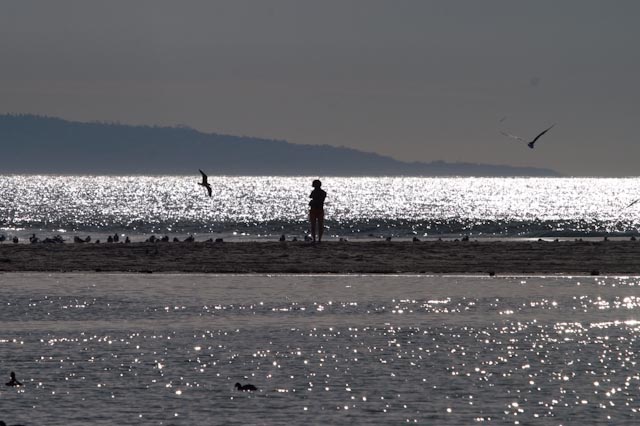
Person and Birds in low winter sun.
At the first bridge we found an old friend. Soras seem to be year-round residents – will we ever see any young ones?
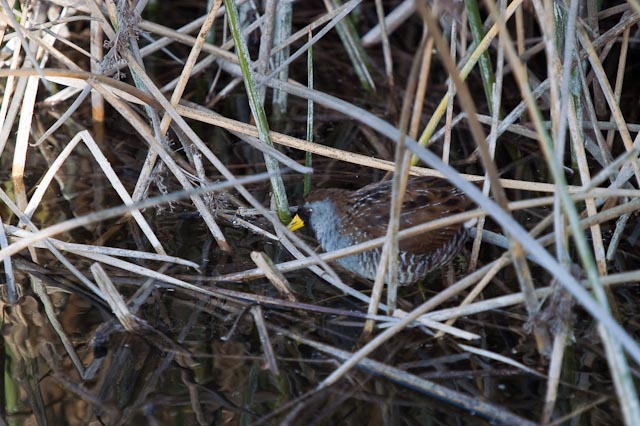
Sora (Porzana carolina)
There were about 50 Snowy Egrets on the banks of the lagoon – the water was so high it was too deep to wade for them.
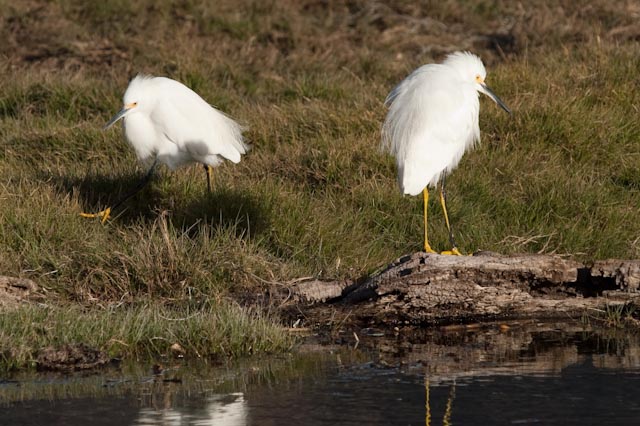
Snowy Egret (Egretta thula)
Well, all right, the kestrel was up at the Pepperdine Ponds, not down at the beach. There was a pair hunting grasshoppers on the golf course.
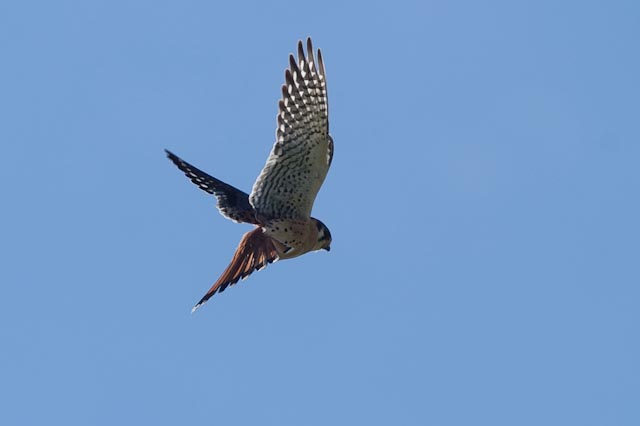
American Kestrel (Falco sparverius)
And while we were at the ponds, we found the Most Unusual birds of the day, a single Ross’ Goose with a single Snow Goose.
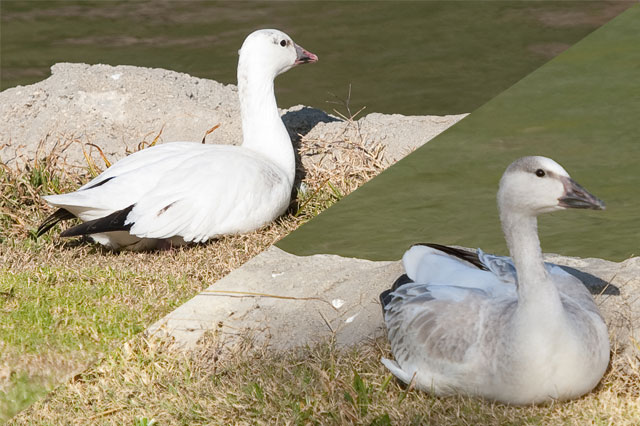
Ross' Goose (Chen rossi) & Snow Goose (Chen caerulescens)
Since it was a holiday, nobody argued as to whether these were Royal or Elegant Terns.
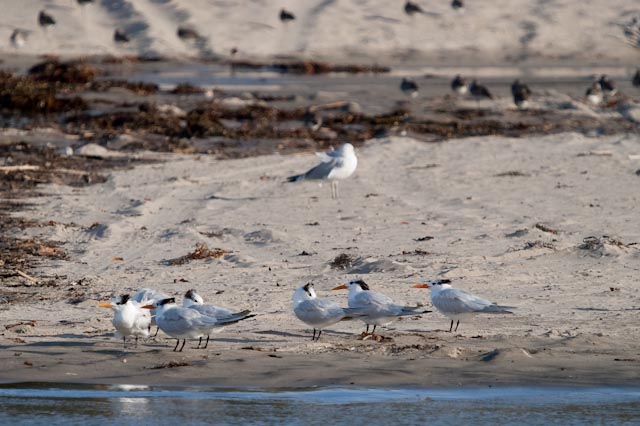
Royal Tern (Thalasseus maximus)
As mentioned, the water was at the highest of hide tide marks, which covered the cormorants’ favored perches, such as the larger offshore rocks. This perplexed juvenile just sat and watched from a safe place on the beach.
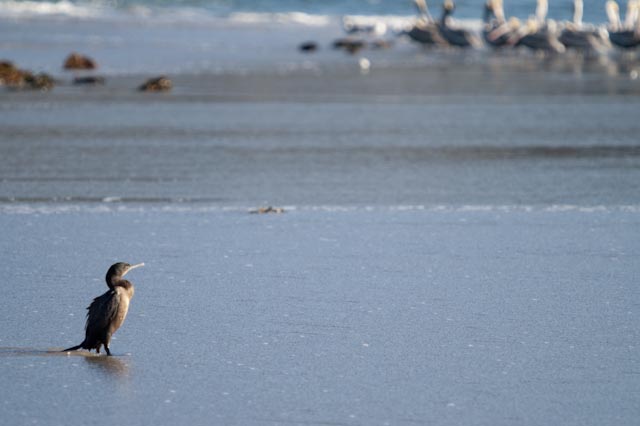
Double-crested Cormorant (Phalacrocorax auritus)
If you wait long enough, some gull will walk close enough to get you a full-frame photo. Who says bird photography is hard?
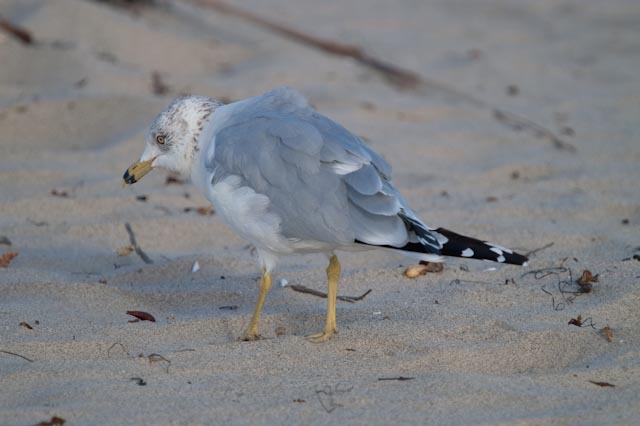
Ring-billed Gull (Larus delawarensis)
SMBAS Enables Donation to Audubon Ballona Wetlands Education Program
With great pleasure we share the following letter from Cindy Hardin, Audubon Ballona Wetlands Education Program Coordinator.
This letter was received December 31, 2009
*********
The Audubon Ballona Wetlands Education Program is the delighted recipient of a $4000.00 grant through the organization Fulbright Canada. Fulbright Canada has recently established an “Eco Leadership Program”, which is designed to support environmental programs located in the host communities of Fulbright scholars. Grant criteria includes level of community involvement and the environmental impact based on dollars spent.
Patrick Belanger, a Vancouver, Canada resident who is currently completing his doctorate at USC, was our sponsor for the grant. Mr. Belanger attended a monthly meeting of the Santa Monica Bay Audubon Society, where he met Chuck and Lillian Almdale. The Almdales referred him to the Ballona program as a possible grant candidate. Mr. Belanger then contacted program coordinator Cindy Hardin, who arranged for him to attend a presentation to students at Grant Elementary in Santa Monica regarding their upcoming field trip to the Ballona Wetlands. Mr. Belanger and his wife Michelle also participated in several events on-site at the salt marsh, including a field trip visit from Braddock Elementary School.
The grants offered by the Fulbright Eco Leadership Program range in amounts of $2000.00 to $4000.00. There were 50 applicants for the grants; only a handful were chosen. Of those chosen, The Audubon Ballona Program was the only one to receive the full amount possible.
The money was used to acquire two new spotting scopes, two new microscopes and twelve new pairs of binoculars. These additional optics were needed, as class sizes have recently increased due to budget cuts, and we now have larger groups visiting Ballona with each field trip. The remainder of the award was set aside to help fund bus scholarships for cash strapped schools.
The Audubon Ballona Program is thrilled and most grateful to receive this support and recognition. Special thanks are also in order for the continued support of the Santa Monica Bay Audubon Society, to the Almdales for their referral and to Mr. Belanger for his efforts in seeking us out and administration of the grant.
*********


Since the inception of the Audubon Ballona Wetlands Education Program well over a decade ago, SMBAS has supported it with member volunteer time and money. We feel it is an exceptionally worthy project. Every year, classes from dozens of elementary schools are able to experience Ballona salt marsh and learn about its wildlife, plants and ecology. If are looking for a local organization into which to put your volunteer time or dollars, they’re hard to beat.
The project gets a lot of thank-you letters and drawings from the kids. These and more can be seen on our website. — Chuck

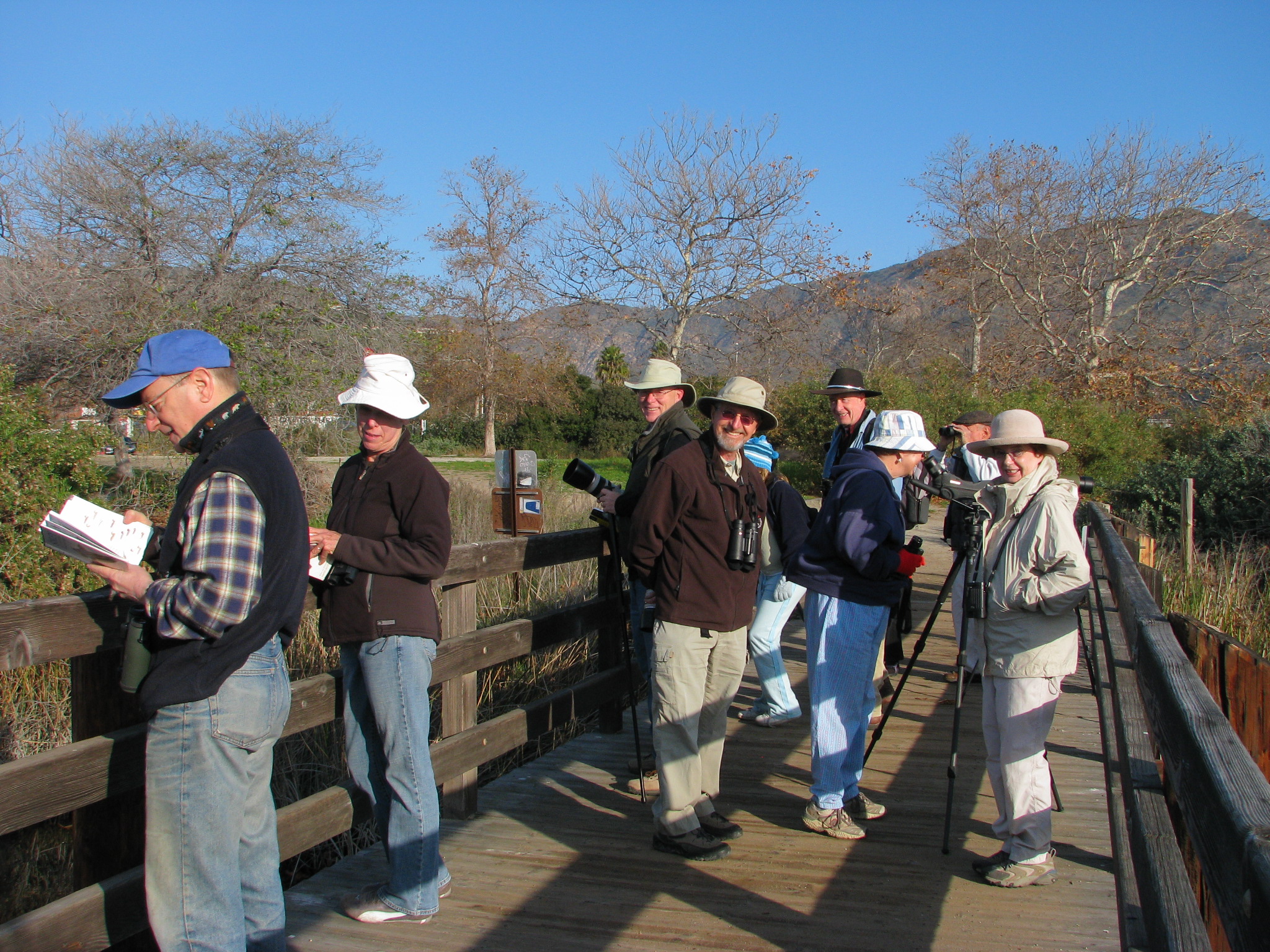
The few, the happy few, the band of brothers & sisters on St. Crispin's Day (C.Almdale 12/09)
Cool and cloudy weather greeted those who ventured out, but the birding was great and the weather warmed up to be quite pleasant. Loads of gulls, shorebirds and ducks. Surfers were out in force as the waves were great (storm warning issued for 3 p.m.) but the water was very cold. I found this out when I waded across the outlet stream to count Snowy Plovers – 59 birds, including the banded bird “brown, orange : white, white” now spending his/her 3rd month at the lagoon. The tide was far out with more rocks showing than I can previously recall.
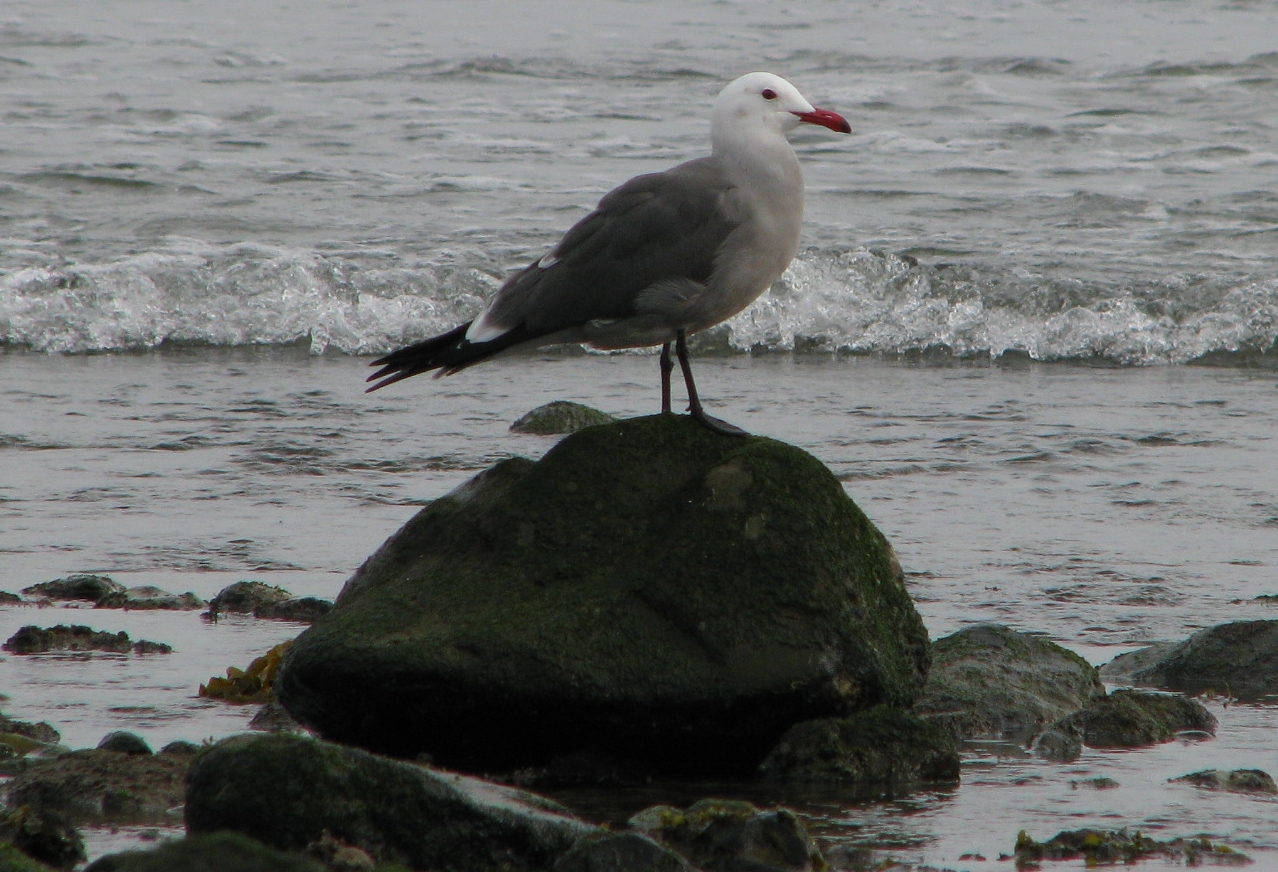
Adult Heermann's Gull (C.Almdale 12/09)
They were mostly covered with California Gulls but 4 Black Oystercatchers were among them, only the 8th time we’ve had them at the lagoon. (They’ve been there since Christmas Day, apparently.) One Glaucous-winged Gull among the Western Gulls. Those who stayed to the end got scope views of the distant Long-tailed Duck (aka Oldsquaw) hanging out with a small flotilla of Surf Scoters over by the Malibu Pier. This was a life bird for some and a new bird for the lagoon area. After counting plovers, I headed towards the pier to photo it, but it headed out to sea. Altogether we had 2,638 birds in 63 species. See the chart below for the details.
Here is a record of the period July-December for the lagoon. Six visits, 105 species total with 6,791 individual birds counted. Not too shabby! Link to January-June 2009 sightings.
| Malibu Bird Census | 2009 | 2009 | 2009 | 2009 | 2009 | 2009 |
| For 2009 | Jul 26 |
Aug 23 |
Sep 27 |
Oct 25 |
Nov 22 |
Dec 27 |
| Temperature | 68-75 | 65-75 | 72-80 | 60-74 | 60-72 | 50-60 |
| Tide Height | +0.4 | +5.7 | +3.9 | +3.5 | +4.6 | +0.2 |
| Low/High & Time | L:0704 | H:1201 | H:0731 | L:0941 | H:1137 | L:1241 |
| Wood Duck | 1 | |||||
| Gadwall | 4 | 11 | 4 | 7 | 23 | |
| American Wigeon | 8 | 10 | 6 | 26 | ||
| Mallard | 25 | 35 | 22 | 24 | 15 | 16 |
| Northern Shoveler | 8 | 25 | 5 | 15 | ||
| Northern Pintail | 1 | 1 | ||||
| Green-winged Teal | 4 | 6 | 8 | |||
| Greater Scaup | 1 | |||||
| Surf Scoter | 50 | |||||
| Long-tailed Duck | 1 | |||||
| Bufflehead | 5 | 25 | ||||
| Red-brstd Merganser | 1 | 3 | ||||
| Ruddy Duck | 1 | 18 | 20 | 25 | ||
| Red-throated Loon | 3 | |||||
| Pacific Loon | 5 | |||||
| Common Loon | 1 | 1 | 2 | |||
| Pied-billed Grebe | 6 | 7 | 4 | 10 | 5 | 5 |
| Eared Grebe | 6 | 1 | ||||
| Western Grebe | 2 | 20 | 15 | 4 | ||
| Brown Pelican | 40 | 185 | 12 | 8 | 12 | 56 |
| Brandt’s Cormorant | 1 | 2 | ||||
| Dble-crstd Cormorant | 15 | 12 | 14 | 25 | 29 | 35 |
| Pelagic Cormorant | 3 | 1 | 3 | |||
| Great Blue Heron | 3 | 7 | 5 | 4 | 3 | 4 |
| Great Egret | 5 | 5 | 3 | 1 | 1 | |
| Snowy Egret | 40 | 17 | 14 | 15 | 8 | 20 |
| Green Heron | 1 | |||||
| Blk-crwnd N-Heron | 2 | 3 | 4 | 1 | ||
| Cooper’s Hawk | 1 | |||||
| Red-shouldered Hawk | 1 | |||||
| Red-tailed Hawk | 1 | 1 | 1 | 2 | ||
| Merlin | 1 | |||||
| Peregrine Falcon | 1 | |||||
| Sora | 2 | 4 | 6 | 2 | ||
| Virginia Rail | 1 | 1 | ||||
| American Coot | 20 | 147 | 266 | 295 | 403 | |
| Blk-bellied Plover | 71 | 102 | 114 | 89 | 45 | |
| Snowy Plover | 1 | 36 | 33 | 61 | 48 | 59 |
| Semipalmated Plover | 10 | 2 | ||||
| Killdeer | 3 | 4 | 5 | 3 | 4 | |
| Black Oystercatcher | 4 | |||||
| Black-necked Stilt | 2 | |||||
| Lesser Yellowlegs | 1 | |||||
| Willet | 1 | 16 | 33 | 40 | 18 | 12 |
| Spotted Sandpiper | 2 | 1 | 4 | 2 | 2 | |
| Whimbrel | 1 | 29 | 6 | 6 | 5 | 4 |
| Marbled Godwit | 2 | 4 | 25 | 14 | 14 | |
| Ruddy Turnstone | 11 | 4 | 12 | 13 | 18 | |
| Black Turnstone | 1 | 2 | ||||
| Sanderling | 105 | 41 | 145 | 155 | 115 | |
| Western Sandpiper | 1 | 8 | 5 | |||
| Least Sandpiper | 3 | 3 | 12 | 35 | ||
| Pectoral Sandpiper | 2 | |||||
| Dunlin | 2 | 4 | ||||
| Short-billd Dowitcher | 3 | 6 | 20 | |||
| Wilson’s Snipe | 1 | |||||
| Heermann’s Gull | 12 | 21 | 14 | 12 | 13 | 24 |
| Ring-billed Gull | 2 | 2 | 14 | 50 | 360 | |
| California Gull | 2 | 1 | 15 | 123 | 58 | 1060 |
| Herring Gull | 1 | 1 | ||||
| Western Gull | 30 | 132 | 84 | 82 | 67 | 68 |
| Glaucous-wingd Gull | 1 | |||||
| Caspian Tern | 1 | 1 | 1 | |||
| Royal Tern | 3 | |||||
| Elegant Tern | 1 | 5 | 11 | 1 | ||
| Forster’s Tern | 1 | |||||
| Least Tern | 1 | |||||
| Rock Pigeon | 1 | 6 | 4 | 6 | 6 | 4 |
| Eur. Collared-Dove | 1 | |||||
| Mourning Dove | 1 | 4 | 2 | 10 | 3 | 2 |
| Anna’s Hummingbird | 1 | 1 | 3 | 1 | 4 | 3 |
| Allen’s Hummingbird | 3 | 2 | 2 | 2 | 2 | 2 |
| Belted Kingfisher | 1 | 1 | 1 | 1 | ||
| Black Phoebe | 6 | 6 | 7 | 6 | 6 | 5 |
| Say’s Phoebe | 1 | 1 | 2 | |||
| Western Kingbird | 2 | |||||
| American Crow | 1 | 3 | 6 | 5 | 6 | 2 |
| Tree Swallow | 1 | |||||
| Rough-wingd Swallow | 2 | 3 | ||||
| Cliff Swallow | 24 | 2 | ||||
| Barn Swallow | 12 | 25 | 2 | |||
| Oak Titmouse | 1 | |||||
| Bushtit | 6 | 7 | 40 | |||
| Bewick’s Wren | 5 | 1 | ||||
| House Wren | 3 | 1 | ||||
| Marsh Wren | 2 | 1 | 2 | |||
| Wrentit | 1 | |||||
| Northern Mockingbird | 3 | 2 | 3 | 3 | 1 | 1 |
| European Starling | 6 | 8 | 8 | 12 | 6 | 10 |
| Ornge-crwnd Warbler | 1 | |||||
| Yellow-rumpd Warbler | 2 | 3 | 6 | 12 | ||
| Common Yellowthroat | 2 | 1 | 3 | 3 | 5 | 5 |
| Spotted Towhee | 1 | |||||
| California Towhee | 2 | 2 | 2 | |||
| Savannah Sparrow | 2 | 8 | 3 | |||
| Song Sparrow | 1 | 4 | 4 | 6 | 4 | 4 |
| White-crwnd Sparrow | 4 | 4 | 1 | |||
| Red-winged Blackbird | 2 | 1 | ||||
| Western Meadowlark | 4 | 1 | ||||
| Brewer’s Blackbird | 1 | |||||
| Great-tailed Grackle | 2 | 3 | ||||
| Brwn-headed Cowbird | 1 | 1 | ||||
| Hooded Oriole | 2 | |||||
| House Finch | 24 | 5 | 4 | 4 | 6 | 6 |
| Lesser Goldfinch | 1 | 7 | ||||
| Totals by Type | Jul | Aug | Sep | Oct | Nov | Dec |
| Waterfowl | 26 | 39 | 51 | 86 | 65 | 193 |
| Water Birds – Other | 81 | 204 | 185 | 341 | 367 | 519 |
| Herons, Egrets & Ibis | 50 | 32 | 27 | 20 | 13 | 24 |
| Quail & Raptors | 1 | 1 | 1 | 2 | 3 | 1 |
| Shorebirds | 4 | 303 | 243 | 455 | 347 | 313 |
| Gulls & Terns | 44 | 162 | 120 | 244 | 190 | 1515 |
| Doves | 3 | 10 | 6 | 16 | 9 | 6 |
| Other Non-Passerines | 5 | 3 | 6 | 3 | 7 | 6 |
| Passerines | 95 | 64 | 61 | 66 | 92 | 61 |
| Total Birds | 309 | 818 | 700 | 1233 | 1093 | 2638 |
| Total Species | Jul | Aug | Sep | Oct | Nov | Dec |
| Waterfowl | 2 | 2 | 6 | 7 | 8 | 11 |
| Water Birds – Other | 4 | 3 | 8 | 9 | 10 | 11 |
| Herons, Egrets & Ibis | 4 | 4 | 5 | 3 | 4 | 2 |
| Quail & Raptors | 1 | 1 | 1 | 2 | 2 | 1 |
| Shorebirds | 4 | 16 | 14 | 14 | 9 | 12 |
| Gulls & Terns | 3 | 8 | 5 | 7 | 6 | 7 |
| Doves | 3 | 2 | 2 | 2 | 2 | 2 |
| Other Non-Passerines | 3 | 2 | 3 | 2 | 3 | 3 |
| Passerines | 16 | 13 | 18 | 17 | 15 | 14 |
| Totals – Species | 40 | 51 | 62 | 63 | 59 | 63 |
Holiday Decorations – Toxic or No ?
The resources for this topic are Margaret Huffman, our native plant expert, and a dandy little book Poisonous Plants of California by Fuller and McClintock.
1) Starting off with an easy one – the song… and “a partridge in a pear tree” – pear – Pyrus communis : toxic or non-toxic ? Not toxic. Do birds eat them – yes – the fruit.
2) Ivy -Hedera helix – English Ivy as in the old carol “the holly and the ivy” and which many of us have holding our hillsides and lawns together ? Yes – can be – leaves and berries – gastroenteritis and allergic contact dermatitis.
Do birds eat – yes, particularly the berries.
3) Toyon- Heteromeles arbutifolia -the lovely native with the glorious red berries ? Member of the rose family. Toxic – Seeds or kernel and the leaves especially when damaged by frost. Toxin called by old name of prussic acid. Large amounts can kill livestock. Do birds eat the berries ? Yes when they are “ dead ripe”. Margaret’s comment is that we know they are ripe when they are gone (the birds figure this out first).
4) Poinsettia – Euphorbia pulcherrima – the holiday house plant (red is the choice of 90% according to surveys) – and can be grown in some yards here.. Toxic – yes, leaves, stems and milky sap. Touched – irritant dermatitis and ingested may cause gastritis, but generally not known to be fatal. To be fatal a person must eat 600-700 leaves. Beware of red salads!
5) Mistletoe -Phoradendron tomentosum – the California native – the druids’ favorite plant and the kissing plant. Entire plant is toxic. A few berries can cause moderate abdominal pain etc., while a tea made from leaves can be fatal. Birds, however, eat seeds/berries and propagate the plant.
6) Pyracantha – Firethorn – toxic – yes. Seeds are known to produce small amounts of hydrogen cyanide. As with the Toyon, birds eat seed when the berries are “dead ripe”. How do people know…. the berries are gone.
7) English Yew ,Taxus baccata, is cultivated in California…. this Yew is fatal (can cause death) and was also famous for being the wood of the longbows of England in the 100 years war (1337-1453). The bark of the Pacific Yew, Taxus brevifolia, however, is used to produce tamoxifen ,a breast cancer treatment, and lacks toxic alkaloids. Birds can eat the berries.
So……. use these festive plants as decoration, be careful of berries around children and pets – birds may eat the berries, but people probably should not and remember this number # 1-800-222-1222 which is the United State National Poison Hotline.. they will automatically connect you with the nearest poison center – 1-800-222-1222.
Happy Holidays.
Ellen Vahan
Birding TV Show & Bird Articles from “Science News”
Birding Adventures is a new show broadcast locally by Fox Sports West (and FSN West HD) at Saturday, 7:30 a.m. For us in the north San Fernando Valley with DirecTV, that’s channel 652 but check your local listings for your area and provider. If you don’t have either cable or satellite TV, you probably can’t receive it. During each 30-minute show host James Currie focuses on a different locale and “target bird,” but they get in plenty of other birds, non-birds, and local culture. So far we’ve seen: Island Scrub Jay, California Condor and Yellow-billed Magpie (California), Sun Parakeet and Guinan Cock-of-the-Rock (Guiana), and Black-crowned Antpitta (Panama). Coming up, I don’t know when, they’ll be in Suriname looking for Ornate Hawk-Eagle, Gray-winged Trumpeter (one of my favorite SoAmer birds) and Black Curassow. Set your electronic robot to record it. The show’s website is: http://www.birdingadventures.com/index.php
And now for some magazine articles:
Birds’ eyes, not beaks, sense magnetic fields
http://www.sciencenews.org/view/generic/id/48895/title/Birds_eyes%2C_not_beaks%2C_sense_magnetic_fields
A new study pinpoints migratory songbirds’ magnetic compass in a specific brain region.
From Science News Online 10/29/09
Macaws bred far from tropics during pre-Columbian times
http://www.sciencenews.org/view/generic/id/49308/title/Macaws_bred_far_from_tropics_during_pre-Columbian_times
Colorful birds possibly raised for ceremonial and trade purposes long before Spanish arrival.
From Science News Online 11/7/09
Penguin DNA evolving faster than thought
http://www.sciencenews.org/view/generic/id/49671/title/Penguin_DNA_evolving_faster_than_thought
Comparing the DNA in modern birds to that in ancient generations shows molecular evolution happens at varying rates, and that each species has its own rate of evolution.
From Science News Online 11/18/09



 SANTA MONICA BAY AUDUBON SOCIETY BLOG