Free email delivery
Please sign up for email delivery in the subscription area to the right.
No salesman will call, at least not from us. Maybe from someone else.
Red-necked Stint 2021: Oregon on 9-Aug, SoCal on 22-Aug
[Posted by Chuck Almdale]
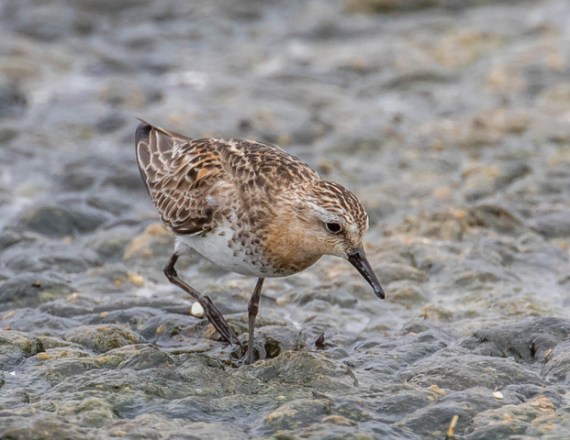
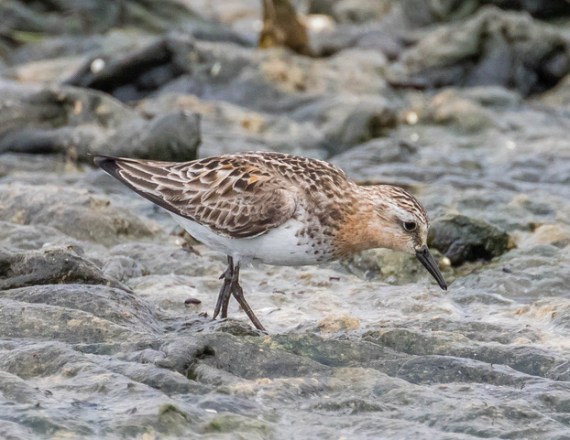
One or more Red-necked Stints appeared on the west coast this fall. We have five photos of the single Oregon bird, taken 9-Aug-2021 at DeLaura Beach Access, Clatsop, OR, and twelve of the Malibu Lagoon, Malibu CA, taken on 22-Aug and 25-Aug, 2021. We don’t know if these are of the same bird, but they are a selection of those taken at both locations on three days.
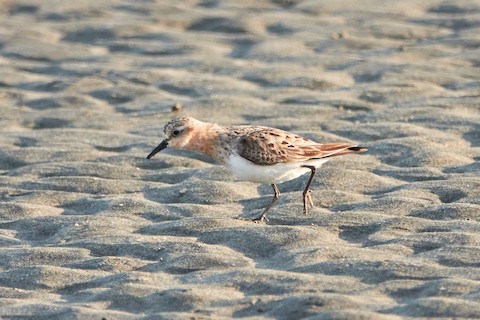

Compare to the Malibu Lagoon bird 22-Aug-2021.

Back to the 9-Aug-2021 Oregon bird.
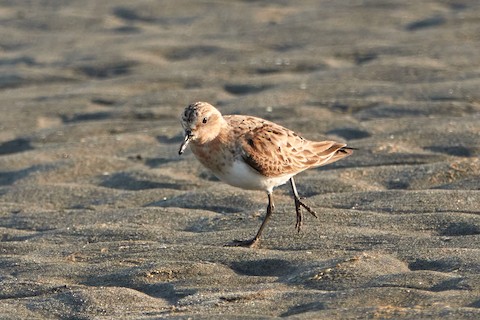
Compare to the Malibu Lagoon bird 22-Aug-2021.
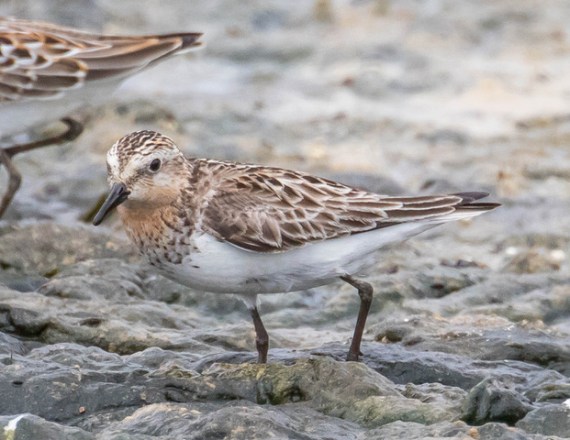
Two more photos of the Oregon bird 9-Aug-2021.
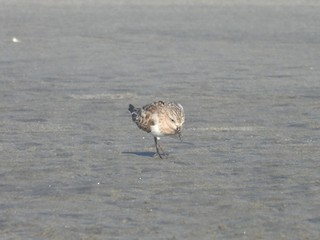

The following photos of the Red-necked Stint are all of the single Southern California bird, taken 13 days later, on 22 Aug 2021. This was reportedly the 4th historical sighting of Red-necked Stint in Los Angeles County.

Red-necked Stint, approaching. Malibu Lagoon (Photo: Chris Tosdevin, 8-22-21, time: 10:01:11)
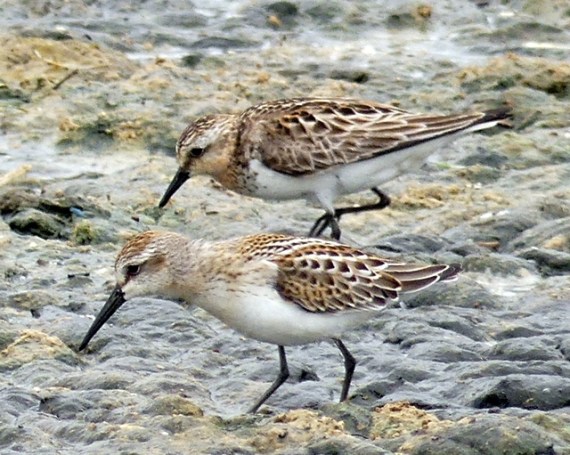
The following photos of the same Red-necked Stint were taken three days later, on 25-Aug-2021, at the same location, Malibu Lagoon, Los Angeles County, CA.

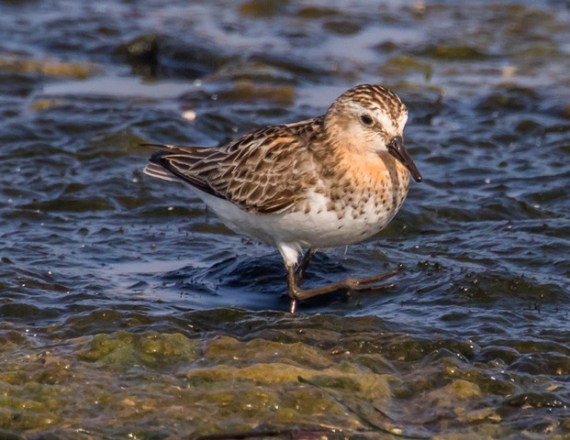


There you go. We report, you decide. I don’t know enough about plumage changes in shorebirds in general and Red-necked Stints in particular to make an informed judgement as to whether this is the same bird. Photography and lighting have a lot to do with how a bird can look. The first three Oregon photos appear to be taken in “golden light” of early morning or late afternoon, enhancing reddish colors. Same thing for many of the Malibu Lagoon photos.
Additional photos of the Oregon bird are here:
https://ebird.org/media/catalog?taxonCode=rensti&sort=rating_rank_desc&mediaType=p®ionCode=US-OR-007
Additional photos of the Malibu Lagoon bird are here:
https://smbasblog.com/2021/08/24/red-necked-stint-at-malibu-lagoon-8-22-21/
and
https://ebird.org/media/catalog?taxonCode=rensti&yr=YCUSTOM&mr=M8TO11&mediaType=p&sort=obs_date_asc&ey=2021&hotspot=Malibu%20Lagoon,%20Los%20Angeles,%20US-CA&hotspotCode=L597658&by=2021
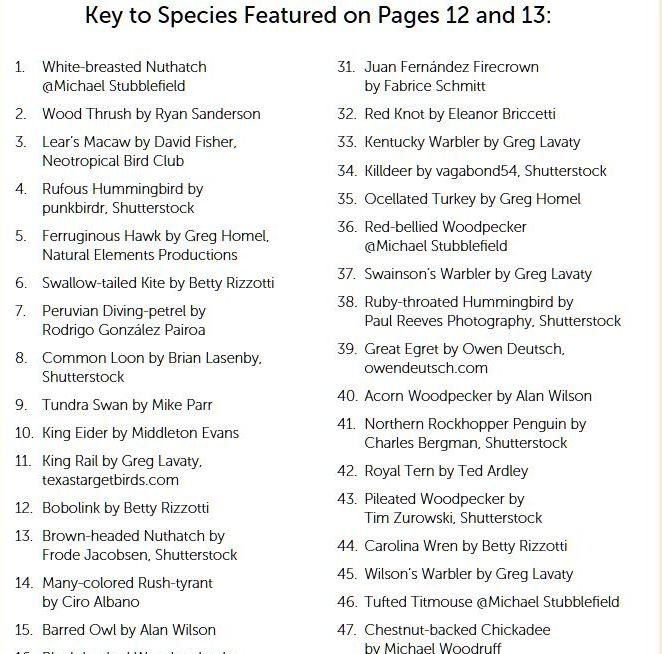
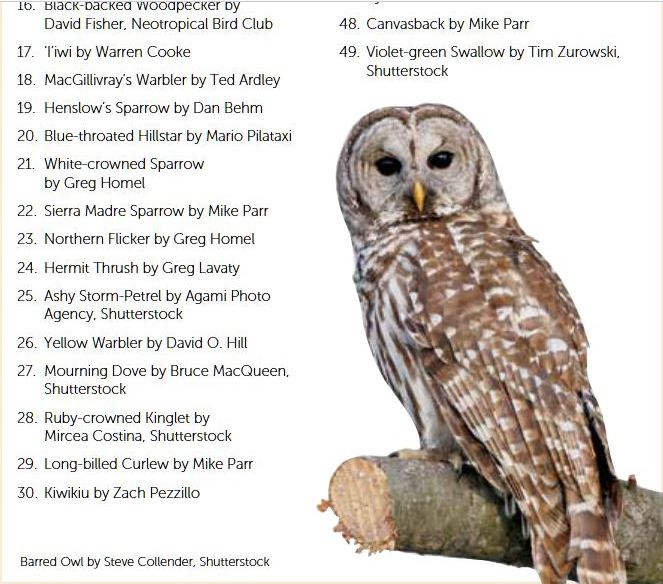
49 Bird Bird Quiz | ABC
[Posted by Chuck Almdale]
I snipped the following from the 2020 Annual Report of American Bird Conservancy. They send me this every year because I send them money every year. It’s a worthy organization, deserving of your support, which in turn supports bird and bird habitat projects throughout the Americas, frequently through partnering with local organizations such as Fundación Jocotoco of Ecuador. Bird conservation projects received 69% of their expenditures in 2020, Education and Outreach another 4%, and they blew only 3% on fundraising. Charity Navigator gives them four stars, their highest rating. I think giving you this information is fair exchange for my borrowing their bird quiz, which I promise to return.
All 49 species are birds of the Americas, but I’ll give you an almost useless hint and tell you that over 10% of them are not found in the wild within the 50 U.S. states or Canada. Answers follow the two pages of birds. Reproduction by ‘snip’ is imperfect, but I think the photos are sufficiently clear for identification.
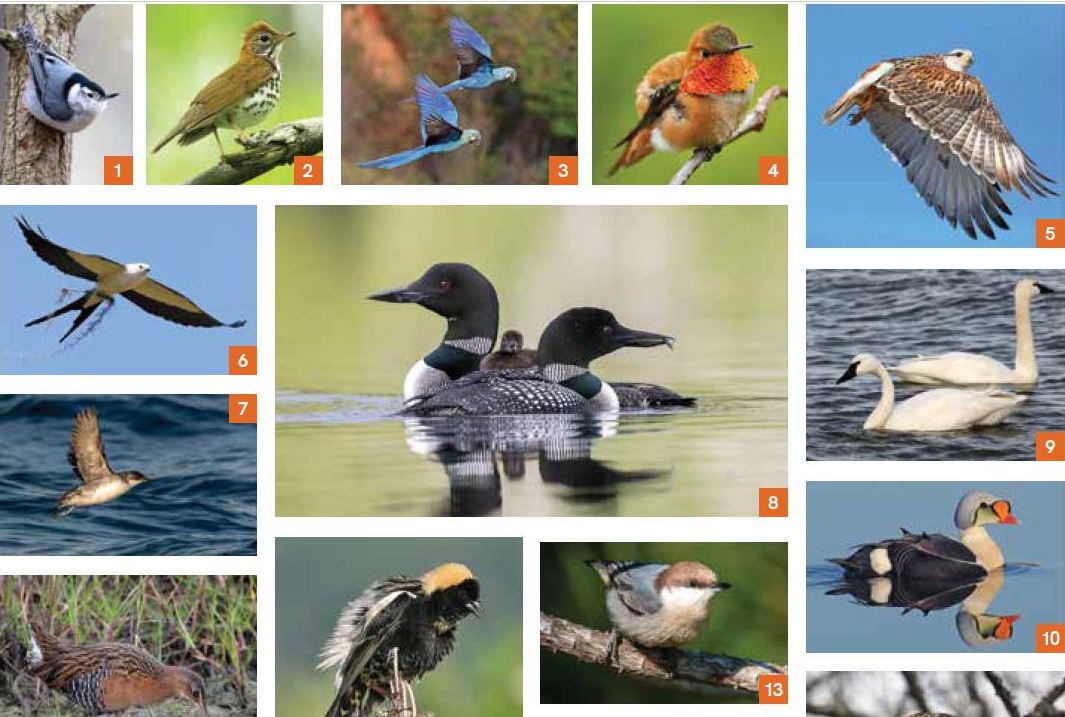
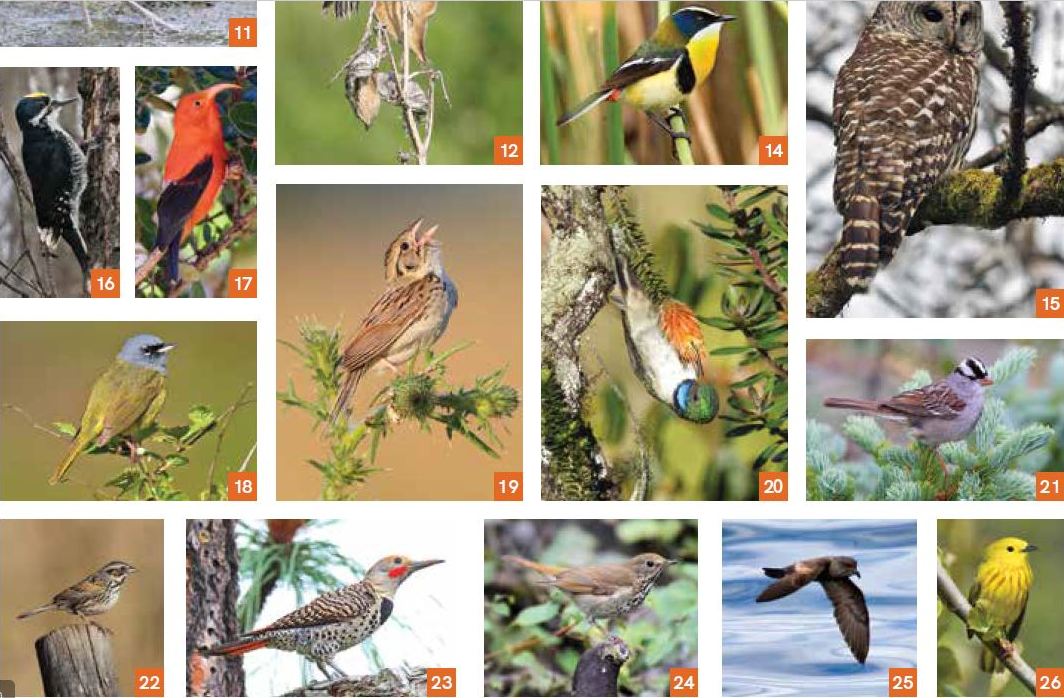
Link to ABC’s Bird of the Week: https://abcbirds.org/birds/bird-of-the-week/
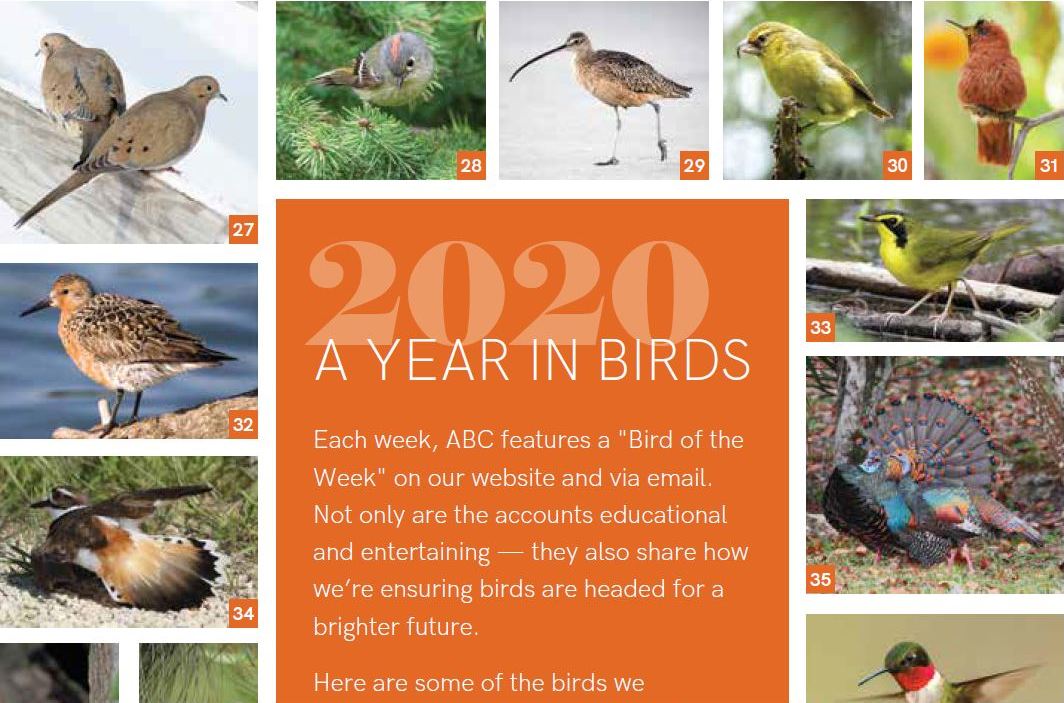
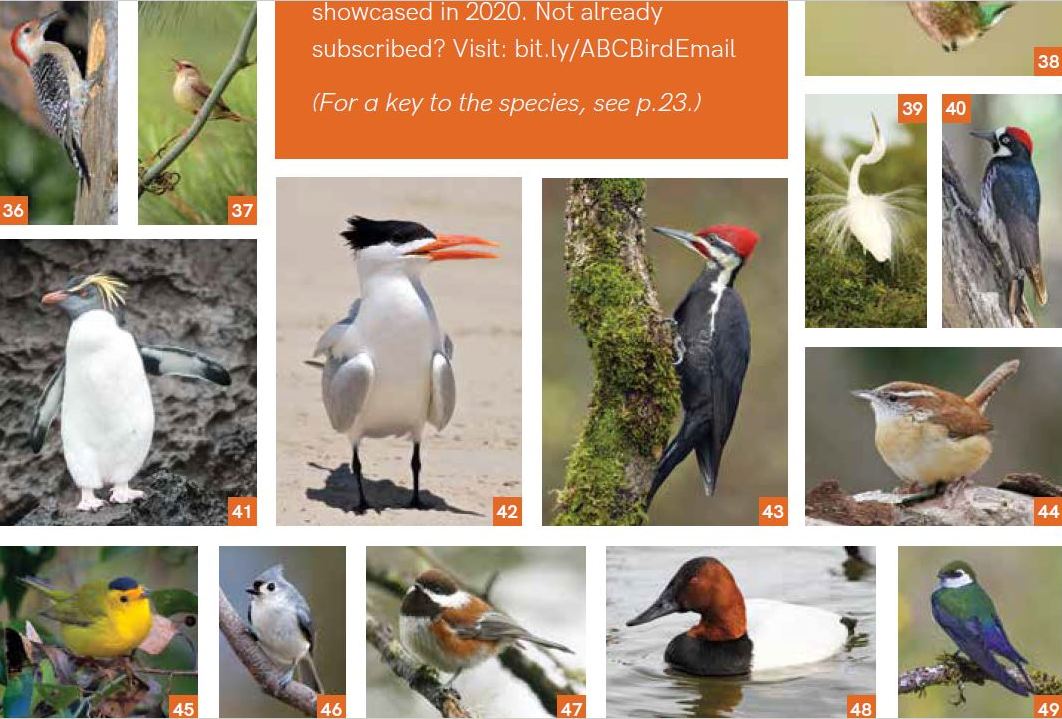
No peeking!
Low tide down, High tide up: Repeat
[Posted by Chuck Almdale, photos by Ray Juncosa]
Here’s another offering in our never-ending effort to document tidal fluctuations in Malibu Lagoon. Future oceanographic historians will be enormously grateful, no doubt.
Ray commented on his photo shooting:
I was stopped by a couple who wondered if I came to the lagoon frequently – they could have sworn you could walk from the west lifeguard station all the way back past the Adamson House to Surfrider’s Beach and were surprised that they needed to do a u-turn.
Sometimes you can, sometime you can’t. Depends on the storms and tides.
Look below.
The ‘Winter Ramp – Summer Clock‘ sidewalk is inundated when water levels are high. This is intentional. There are tiles along part of the sidewalk showing the height above mean low low sea level.


The following set shows where Malibu flows out under Pacific Coast Highway. When the bridge was replaced several decades ago, due to very high flows and trees coming down the creek in an El Nino winter, the Cliff Swallows stopped nesting under it. They moved over to the brick or cement walls of the shopping and civic center buildings a few hundred yards away. The water is deepest just the other side of the bridge.

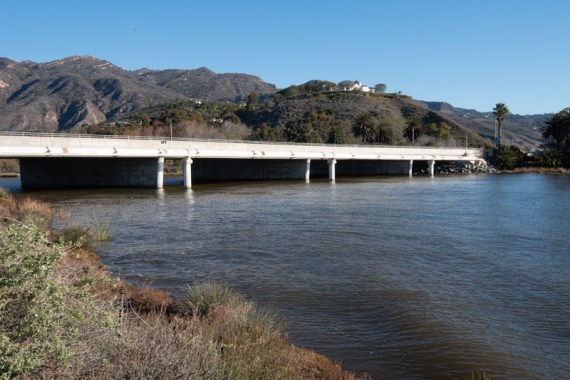
Pacific Coast Highway (Hwy #1) bridge and Malibu Lagoon as seen from near Malibu Colony.
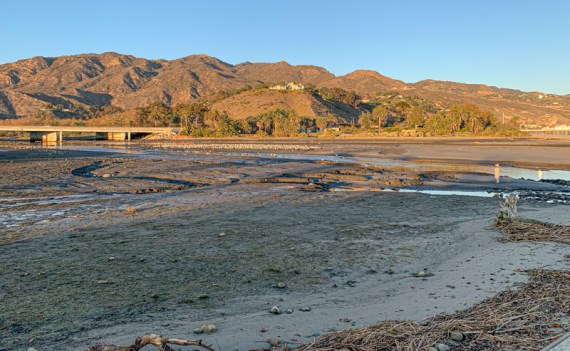

The west end of the public part of Surfrider’s Beach begins here, where the Malibu Colony houses end. Cormorants, seals and shorebirds that prefer rocks to sand can be found here, but not at high tide.


The south channel looking back towards the Winter Ramp sidewalk, with Pepperdine University and Hughes Research Lab on the distant hills.
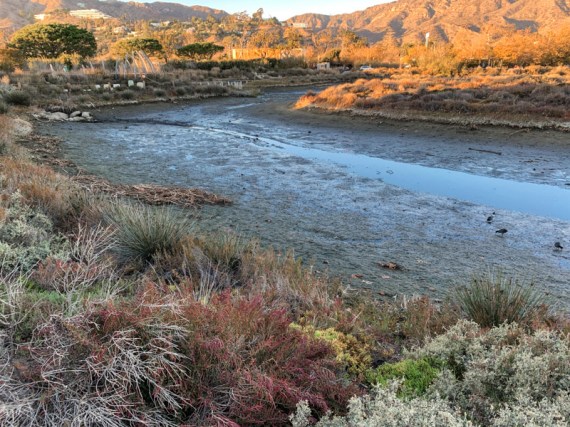

Looking east across the lagoon towards Adamson House on east side.


A regular denizen.
Bird Checklists for California & Los Angeles County
[Posted by Chuck Almdale]
California Bird Checklist
The latest update to the Official California Checklist — as per the California Bird Records Committee — is always here: https://www.californiabirds.org/checklist.asp. It’s a multi-page list, not a handy pocket-sized checklist.
Kimball Garrett posted this recent update (5 Jan 2022) to the list:
The California Bird Records Committee has completed a review of two more naturalized bird species and has now officially added them to the California state list: Mitred Parakeet (Psittacara mitratus) and Lilac-crowned Parrot (Amazona finschi).
These two additions bring the state list to 679 species of which 15 are established introductions. Following the AOS Checklist, they are placed on the California list under family Psittacidae in the following order:
Mitred Parakeet (Psittacara mitratus)
[Yellow-chevroned Parakeet]
[Red-crowned Parrot]
Lilac-crowned Parrot (Amazona finschi)The CBRC web site has been updated to reflect these additions: https://www.californiabirds.org/
The Committee is also reviewing proposals to add Nanday Parakeet (Aratinga nenday) and Red-masked Parakeet (Psittacara erythrogenys) to the state list; those proposals are still in review.
Los Angeles County Bird Checklist
The closest I could find to the equivalent of the Calif. checklist is this PDF file, also from Kimball Garrett, of 523 species as of April 2017:
https://nhm.org/sites/default/files/2019-05/avifauna_la_checklistnew2016aou.pdf
It’s also a multi-page list, not a handy pocket-sized checklist.
The prior LA County checklist from 2006, which actually looks like a checklist, is available on the San Fernando Valley Audubon website here.
Kimball Garrett posted this recent update (5 Jan 2022) to the LA County list:
The CBRC has recently added Mitred Parakeet (Psittacara mitratus) and Lilac-crowned Parrot (Amazona finschi) to the official California state list as naturalized non-native species. Since both of these species are well-established in Los Angeles County, they are now officially added to the county bird list as well.
Also, the CBRC accepted a record of Mexican Duck (Anas diazi) from Los Angeles County: a bird shot by a hunter (specimen photographed) at Piute Ponds on 18 December 2019. This adds another species to the county list. [Two other county reports of Mexican Duck, from the San Gabriel Coastal Basin Spreading Grounds 23-26 December 2014 and from Santa Fe Dam 1 May 2016 received much support from the CBRC in the first round of circulation but are going through another round of voting.]
New Year’s Day Birding – Malibu Lagoon to King Gillette
[Chuck Almdale]

Just to kick off the new year right — or wrong, depending on one’s point of view — a few of us decided impromptuishly to tuck a few year-birds under our proverbial birders’ belts. Nothing major — shore/sea birds, creek birds, small park birds, big park birds.
Maybe we’d hit 100 species — a number with lots of roundness to it. Probably not. Merely rising early on New Year’s Day doesn’t offset one’s inherent laziness, albeit along a spectrum of laziness, to be sure.

It hit 34°F passing by Malibu Creek State Park in the Santa Monica Mountains enroute to the lagoon, our low for the day, but at the beach a few miles away it was a roasty toasty 50°.
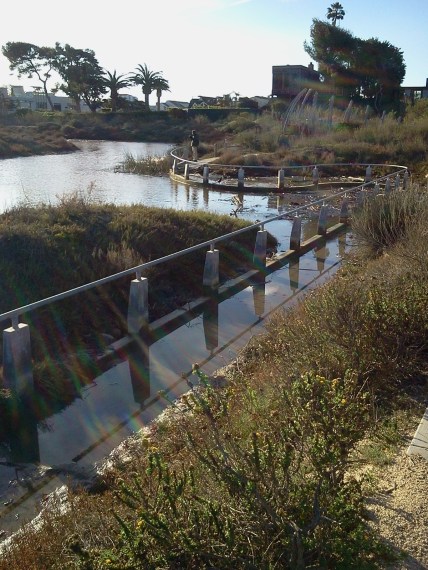
Breezy, chilly — thin gloves a comfort. Still, surfers in the water, kicking the year off right, waiting for that great big set outside.
I thought perhaps we’d be efficient, find all the birds quickly and move on to the next location. Ha! Not a chance! Three-and-a-half hours for lagoon, upcreek and circling the small Legacy Park pond, where one of us added one whole species – Blue-gray Gnatcatcher. By the time we arrived at King Gillette State Park, it was already time to knock off for lunch.
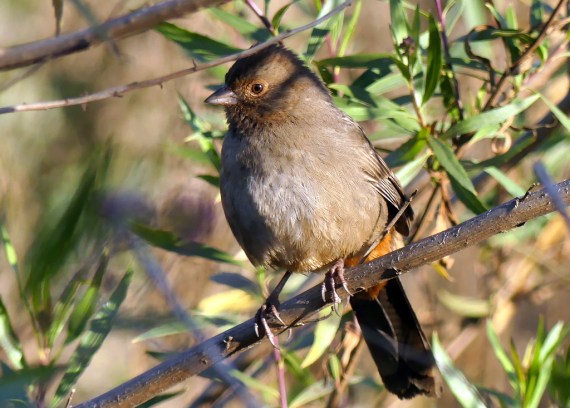
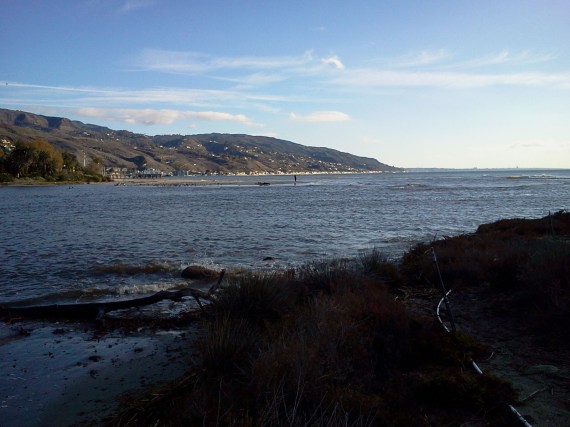
The tide was high and the lagoon was full, the beach was gone and most of the birds stood in the water and on damp sand at the far side of the wide outlet stream. Floating wood choked the southern channel and the western edge of the outlet, almost certainly washed down the creek during the recent storm.
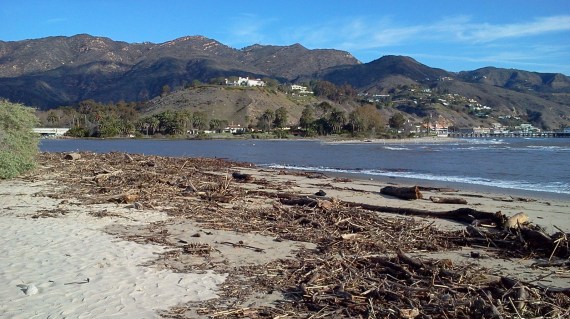
Still we picked out seven species of gull and Royal Tern. I’m sure that Marbled Godwit and Snowy Plover were over there but we couldn’t find them.
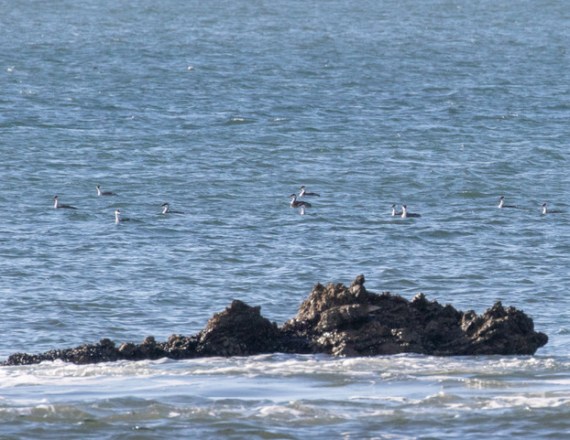
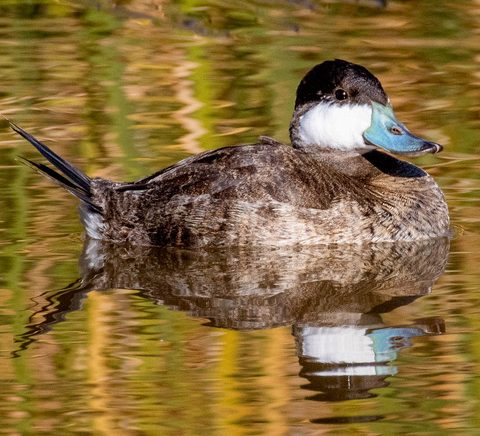
Western Grebe are common in SoCal nearshore waters in flotillas of varying sizes. Loons appear in small numbers: a Pacific Loon today, but a Red-throated Loon last Sunday. Small flocks of Surf Scoter dotted the water, several svelte Pelagic Cormorant dove in the surf zone, and – more unexpected at sea – a nice-looking Red-breasted Merganser about 100-200 yards out.

The Hooded Mergansers had left, to our great disappointment, no doubt because millions of gallons of water came charging down the creek earlier in the week. Not very pleasant for diving ducks who prefer still waters.
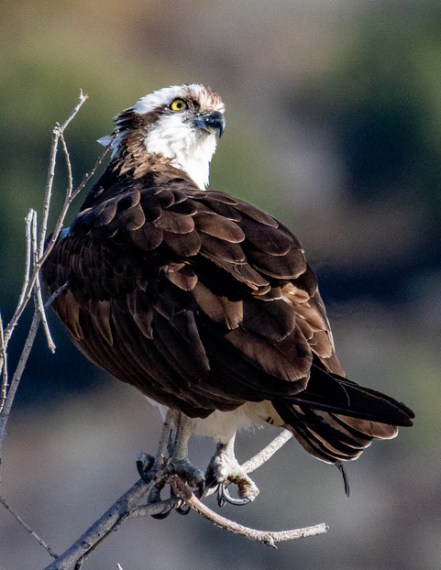

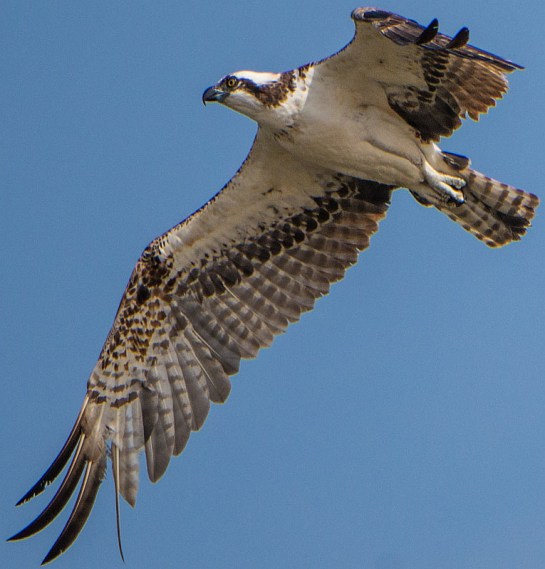
An Osprey sat perched on a low metal pole for hours. Shortly after we arrived Malibu Creek-side, just the other side of PCH bridge, it flew over for a closer look. After seeing those talons up close, I have a better understanding how it hangs on so securely to those thrashing mullet when using only one claw.
Two Green Herons, seven Black-crowned Night-Herons (2 adult), a female Belted Kingfisher (with rust on sides of the breast), and a Spotted Sandpiper, which we hadn’t seen in months in the lagoon proper — all were nice to see.

I wrote an essay a while back about “Sexual Dimorphism Reversal and Polyandry” which I mention now only because Belted Kingfisher is one of very few avian species in which the female is more colorful than the male, but has no noticeable tendencies towards polyandry (female has multiple mates). This has been widely noticed and remarked upon, but no one has figured out why. Several conjectures are offered:
- Many males maintain year-round territories, fending off other males. The bright cinnamon band of the females, returning from migration, signals the males to welcome, not attack.
- In breeding season, females tend to be more aggressive and territorial than males. Their testosterone levels may be higher-than-normal testosterone levels, and may affect how pigment (specifically carotinoids) is incorporated into their plumage.
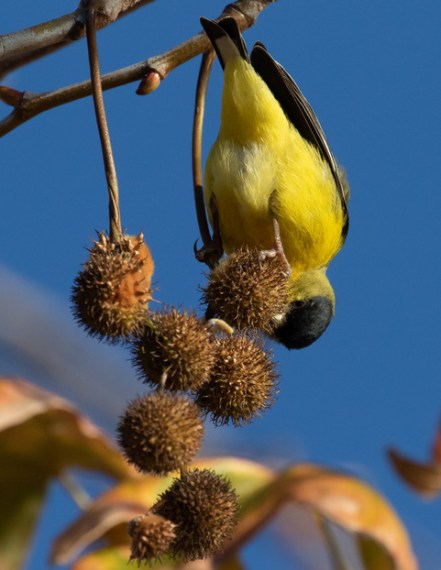
There was surprisingly little activity at Legacy Park, other than a small girl feeding seed to the Mallards. Generally speaking, Sora and Wilson’s Snipe are more common there than they now are at the lagoon, as are a few fresh-water ducks, and even oddballs like Red-whiskered Bulbul pop in and out — the last bird mostly out, as in somewhere else, in my experience. Nope. Nada. Nil. Femi visited there earlier and found a Blue-Gray Gnatcatcher, which the rest of us missed.

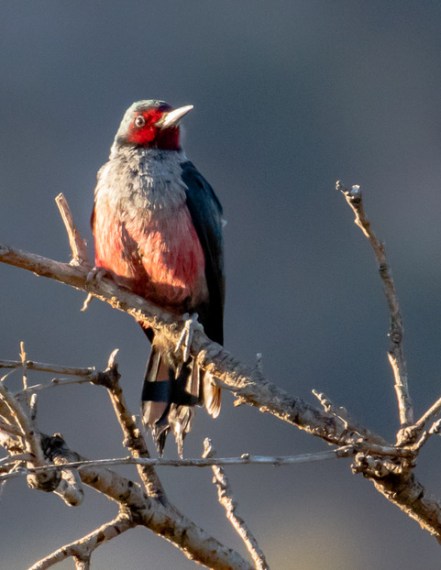
(C. Tosdevin, King Gillette 1-1-22)
Chris Lord and I stopped at the SW corner of Mulholland Drive and Las Virgenes road and found seven Lewis’ Woodpeckers, where I’d found a bunch four days earlier. Over fifty have been reported from the general area, including Malibu Creek State Park where Lillian and I saw about a dozen last Tuesday. Quite an irruption; the most I’ve every heard of in this area.
Lunchtime at King Gillette (named for the razor blade magnate) brought towhees, kinglets, titmice, Yellow-rumped Warblers, two Red-tailed Hawks and foreboding Turkey Vultures. Do they like peanut-butter sandwiches? I hope not. No Nanday Parakeets though, which are usually around.
King Gillette set up a very weird drive-through display for Christmas. The fronts (only the fronts) of little houses and stores, animals of wicker (see checklist below), fake snow, Santas and elves in abundance, little lights everywhere. Drive through it at night with the lights all aglow and it would look quite cheery and festive and a delight for children of all ages, as they say. I suppose. In daylight it just looked weird.
In the middle of all this excitement was a pine tree with a roosting Barn Owl. Chris and Ruth have been peeking at it for months. There are sometimes two, in two adjacent trees, but only one today, peeking at us, squinty-eyed.

Nuttall’s Woodpecker are a near-endemic species of California; their breeding range extends down into northern Baja California and they occasionally wander north into Oregon. Not a large range, but common enough within it. We heard their rattle more often than we saw the bird.

(F. Faminu, King Gillette 1-1-22)
I originally put “raindeer” on the list and several people felt compelled to send me a correction to “reindeer.” Now duly corrected. But that piqued my etymological curiosity. I can understand deer in the rain being called (erroneously) “raindeer,” but are they “reindeer” because the Saami (Santa Claus’ Laplandian native tribe (not)) make them haul their sleighs around, controlled with reins by the driver?
Nope.
The word comes not from rain-deer or rein-deer, but from (most likely) an Old Norse word ‘hreindyri,’ which divides into hreinn + dyr. ‘Dyr’ means ‘animal’ while ‘hreinn‘ is — and this is really helpful — the Old Norse name for the reindeer. This seems a bit strange, as I’m sure the Old Norse could discern that a reindeer was an animal, so appending ‘animal’ onto a perfectly adequate name for an animal doesn’t make much sense. To me. They weren’t always whacked out on mead. And I wonder if ‘hreinn‘ might not be cognate with ‘horn.’ ‘Horn-deer’ makes a lot more sense than ‘reindeer animal.’ Further searching quickly led me into repetitive and viciously cyclical self-referential entries about proto-Germanic and proto-Indo-European languages, folk and fake etymologies, without any satisfactory enlightenment.
Anyone out there care to take a look at ‘reindeer’ and ‘hreindyri‘, and get back to us?
Lu stopped by Malibu Creek State Park, across Las Virgenes Hwy. from King Gillette after meeting us for lunch, and then by Sepulveda Basin Nature Reserve on his way back home, and picked up a few additional birds at both locations (see list below).
One person sighted a swallow which they identified as a Violet-green. Problem with that ID is that this species is quite uncommon in SoCal in December, whereas Tree Swallow is abundant in some areas. The two are easily confused because they are both glossy, have pale faces and prominent white areas on their sides between the tail and the rear of the wings—their fuselage, so to speak. So I put it down as a Tree/Violet-green Swallow.

Superficially swallow-like (C. Tosdevin, Legacy Park 1-1-22)
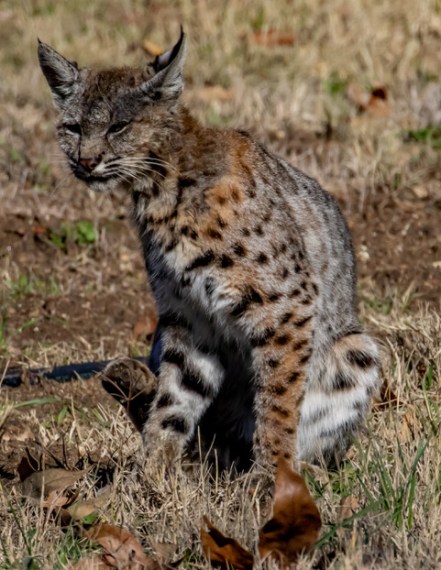
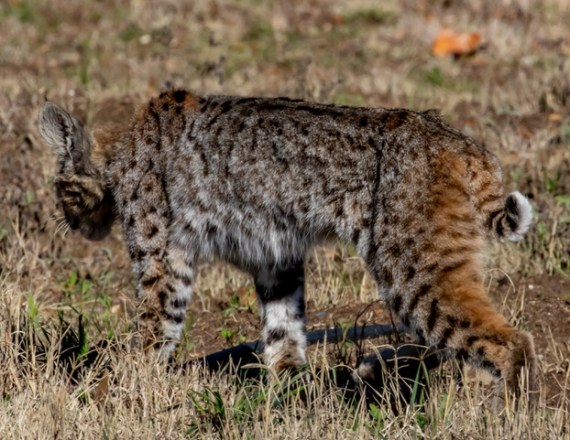
Last but far from least was an excellent sighting of a Bobcat at King Gillette. We’ve seen them before in various parks in this part of the Santa Monica Mountains, but they always beat a hasty retreat, vanishing over the hill or into the brush. This Bobcat was sitting in the sun on the ground squirrel-festooned lawn at King Gillette, near the brush at the northern border of the property, quite close to one of Santa’s Little Helper-houses, and did not look at all like it was thinking about moving just because a few pesky humans had come along. We all looked at each other for a few minutes, then it roused itself and stretched-staggered-slunk into the brush, not far from the California Quail who had been enjoying the sun not far away. The Bobcat’s tail was short and curly.
| Birder’s Outing | Malibu | Malibu | Legacy | King | Malibu | Sepul. | |
| New Year’s Day 1-1-22 | Lagoon | Creek | Park | Gillette | Ck. SP | Basin | |
| 1 | Gr. White-fronted Goose | X | |||||
| 1 | Canada Goose | X | |||||
| 1 | Northern Shoveler | X | |||||
| 1 | Gadwall | X | X | X | |||
| 1 | American Wigeon | X | X | ||||
| 1 | Mallard | X | X | X | X | ||
| 1 | Green-winged Teal | X | |||||
| 1 | Ring-necked Duck | X | |||||
| 1 | Surf Scoter | X | |||||
| 1 | Bufflehead | X | |||||
| 1 | Red-breasted Merganser | X | X | ||||
| 1 | Ruddy Duck | X | X | ||||
| 4 | California Quail | X | |||||
| 2 | Pied-billed Grebe | X | |||||
| 2 | Eared Grebe | X | |||||
| 2 | Western Grebe | X | |||||
| 7 | Feral Pigeon | X | X | X | |||
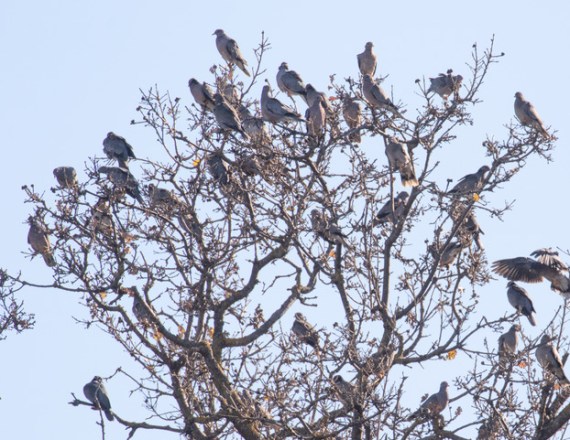
| 7 | Band-tailed Pigeon | X | |||||
| 7 | Mourning Dove | X | X | X | |||
| 8 | White-throated Swift | X | X | ||||
| 8 | Anna’s Hummingbird | X | X | ||||
| 8 | Allen’s Hummingbird | X | X | X | |||
| 2 | American Coot | X | X | X | |||
| 5 | Black-bellied Plover | X | |||||
| 5 | Killdeer | X | X | ||||
| 5 | Whimbrel | X | |||||
| 5 | Ruddy Turnstone | X | |||||
| 5 | Sanderling | X | |||||
| 5 | Least Sandpiper | X | |||||
| 5 | Spotted Sandpiper | X | |||||
| 5 | Willet | X | |||||
| 6 | Bonaparte’s Gull | X | |||||
| 6 | Heermann’s Gull | X | |||||
| 6 | Ring-billed Gull | X | |||||
| 6 | Western Gull | X | X | ||||
| 6 | California Gull | X | |||||
| 6 | Herring Gull | X | |||||
| 6 | Glaucous-winged Gull | X | |||||
| 6 | Royal Tern | X | |||||
| 2 | Pacific Loon | X | |||||
| 2 | Black-vented Shearwater | X | |||||
| 2 | Double-crested Cormorant | X | X | ||||
| 2 | Pelagic Cormorant | X | |||||
| 2 | American White Pelican | X | |||||
| 2 | Brown Pelican | X | |||||
| 3 | Great Blue Heron | X | |||||
| 3 | Great Egret | X | X | ||||
| 3 | Snowy Egret | X | X | ||||
| 3 | Green Heron | X | X | ||||
| 3 | Black-crowned Night-Heron | X | X | X | |||
| 4 | Turkey Vulture | X | X | X | X | ||
| 4 | Osprey | X | X | ||||
| 4 | Northern Harrier | X | |||||
| 4 | Red-shouldered Hawk | X | X | ||||
| 4 | Red-tailed Hawk | X | X | X | X | ||
| 8 | Barn Owl | X | |||||
| 8 | Belted Kingfisher | X | |||||
| 8 | Acorn Woodpecker | X | |||||
| 8 | Lewis’ Woodpecker | X | |||||
| 8 | Nuttall’s Woodpecker | X | X | X | |||
| 8 | Downy Woodpecker | X | X | ||||
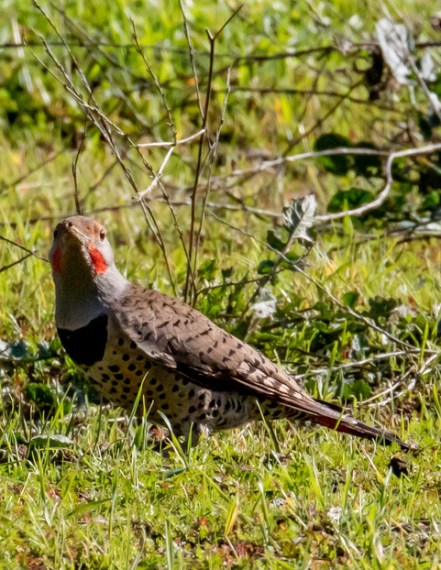
| 8 | North.(Red-shafted) Flicker | X | |||||
| 9 | Black Phoebe | X | X | X | |||
| 9 | Say’s Phoebe | X | |||||
| 9 | Cassin’s Kingbird | X | |||||
| 9 | California Scrub-Jay | X | X | ||||
| 9 | American Crow | X | X | X | X | ||
| 9 | Common Raven | X | X | ||||
| 9 | Tree/Violet-green Swallow | X | |||||
| 9 | Oak Titmouse | X | |||||
| 9 | Bushtit | X | X | ||||
| 9 | Marsh Wren | X | |||||
| 9 | White-breasted Nuthatch | X | |||||
| 9 | Blue-gray Gnatcatcher | X | |||||
| 9 | Ruby-crowned Kinglet | X | X | ||||
| 9 | Western Bluebird | X | |||||
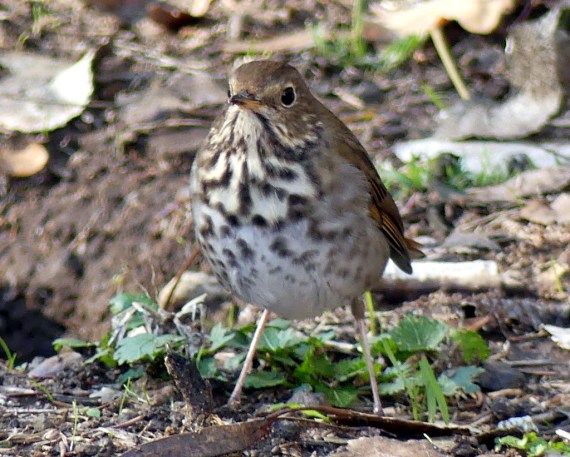
| 9 | Hermit Thrush | X | X | ||||
| 9 | Northern Mockingbird | X | |||||
| 9 | European Starling | X | X | X | |||
| 9 | House Finch | X | X | X | X | ||
| 9 | Lesser Goldfinch | X | X | X | |||
| 9 | Spotted Towhee | X | |||||
| 9 | California Towhee | X | X | X | |||
| 9 | Song Sparrow | X | X | ||||
| 9 | White-crowned Sparrow | X | X | X | |||
| 9 | Golden-crowned Sparrow | X | |||||
| 9 | Dark-eyed Junco | X | X | ||||
| 9 | Western Meadowlark | X | X | ||||
| 9 | Red-winged Blackbird | X | X | ||||
| 9 | Great-tailed Grackle | X | |||||
| 9 | Orange-crowned Warbler | X | |||||
| 9 | Common Yellowthroat | X | X | X | |||
| 9 | Yellow-rumped Warbler | X | X | X | |||
| Malibu | Malibu | Legacy | King | Malibu | Sepul. | ||
| Total Species | Lagoon | Creek | Park | Gillette | Creek SP | Basin | |
| 1 | Waterfowl | 10 | 4 | 3 | 2 | 0 | 1 |
| 2 | Water Birds – Other | 9 | 0 | 2 | 1 | 0 | 1 |
| 3 | Herons, Egrets & Ibis | 5 | 2 | 1 | 1 | 0 | 1 |
| 4 | Quail & Raptors | 4 | 3 | 2 | 4 | 1 | 0 |
| 5 | Shorebirds | 7 | 1 | 1 | 0 | 0 | 0 |
| 6 | Gulls & Terns | 8 | 0 | 1 | 0 | 0 | 0 |
| 7 | Doves | 2 | 0 | 2 | 3 | 0 | 0 |
| 8 | Other Non-Passerines | 5 | 2 | 3 | 6 | 1 | 0 |
| 9 | Passerines | 18 | 1 | 15 | 22 | 4 | 0 |
| Totals Species – 93 | 68 | 13 | 30 | 39 | 6 | 3 | |
| Bobcat | 1 | ||||||
| Wicker Reindeer | 7 | ||||||
| Wicker Bear | 3 | ||||||
| Suger Plum Fairy | 4,842 | ||||||
| Ground Squirrel (minimum) | 25 |



 SANTA MONICA BAY AUDUBON SOCIETY BLOG